

We use cookies to ensure our website works properly and to personalise your experience. Cookies policy
Department of Pharmacy, Nagpur College of Pharmacy, Nagpur
The idea of health consciousness is rapidly gaining popularity, leading to increased reliance on herbal remedies with fewer adverse effects compared to modern medicines. Bauhinia purpurea L. is a prominent medicinal species traditionally utilized for its antidiarrheal, anticancer, and thyroid gland-stimulating properties. The flowers of this plant are particularly rich in phytoconstituents, making them a valuable source for pharmaceutical applications. This study aimed to identify and quantify the flavonoids, specifically quercetin, present in the ethanolic flower extract of B. purpurea using Reversed-Phase High-Performance Liquid Chromatography (RP-HPLC). The extraction was performed using Soxhlet, maceration, and sonication methods, with the Soxhlet extraction yielding 23.07% crude extract. Preliminary phytochemical screening confirmed the presence of flavonoids and phenolics. Thin Layer Chromatography (TLC) utilizing a mobile phase of toluene : chloroform : ethyl acetate (2:2:0.5) successfully separated quercetin, demonstrating an R_f value between 0.47 and 0.60. Further, an efficient RP-HPLC method was developed using a C18 column and a mobile phase of methanol : acetonitrile (7:3) with 0.1% formic acid. The standard quercetin exhibited a retention time (R_t) of 5.52 to 5.62 min, while the sample extract confirmed its presence with a matching R_t of 5.68 to 5.70 min. The study confirms that B. purpurea flowers are a promising natural source of bioactive flavonoids, supporting their potential therapeutic and nutraceutical use.
The idea of health consciousness is currently gaining popularity among both urban and rural populations. In order to attain this level of health, people have been taking herbal remedies either by itself or in conjunction with other goods, keeping in mind the negative health impacts of modern medicine. There are significant financial gains linked to the growth and application of medicinal plants and their derivatives in indigenous remedies for illness, suggesting that the avenues for the herbal renaissance are expanding. According to World Health Organization (WHO) data, 70% to 80% of the world's population uses various plants for therapeutic reasons to meet their basic healthcare needs. Approximately 53,000 types of plants have been used since prehistoric times.1
Flavonoids are a significant class of natural products; in specifically, they are a class of secondary metabolites of plants with a polyphenolic structure that are commonly present in fruits, vegetables, and flowers. They have a variety of beneficial biochemical and antioxidant properties linked to a number of illnesses, including cancer, Alzheimer's disease, atherosclerosis, etc. . Flavonoids are an essential part of many pharmacological, nutraceutical, medical, and cosmetic uses and are linked to a wide range of health-promoting properties. This is due to their ability to regulate important cellular enzyme processes as well as their antioxidative , anti-inflammatory, anti-mutagenic, and anti-carcinogenic qualities.2
Plants produce flavonoids from the aromatic amino acids phenylalanine, tyrosine, and malonate. The flavan nucleus, which is made up of 15 carbon atoms organized in three rings (C6-C3-C6), is the fundamental structure of flavonoids. The flavan nucleus, which is made up of 15 carbon atoms organized in three rings (C6-C3-C6), is the fundamental structure of flavonoids. Typically found in plants as glycosylated derivatives, flavonoids give leaves, flowers, and fruits their vivid blue, red, and orange .In addition to a variety of fruits and vegetables, flavonoids may be found in seeds, nuts, grains, spices, and many medicinal plants.3
Antioxidant Activity: Although flavonoids have a variety of biochemical characteristics, their ability to function as antioxidants is the most well-described characteristic of nearly all flavonoid groups. The arrangement of functional groups around the nuclear structure determines the antioxidant activity of flavonoids; the configuration, substitution, and total number of hydroxyl groups significantly affect various mechanisms of antioxidant activity, such as radical scavenging and metal ion chelation ability. Although flavonoids have a wide range of biochemical characteristics, their ability to function as antioxidants is the most well-documented characteristic of nearly all flavonoid groups.4
Hepatoprotective Activity: A number of flavonoids, including catechin, apigenin, quercetin, naringenin, rutin, and venoruton, have been shown to have hapatoprotective properties .. Numerous flavonoids have been shown to have hapatoprotective properties, including catechin, apigenin, quercetin, naringenin, rutin, and venoruton Hepatic clinical symptoms can occur as a result of several chronic disorders, including diabetes.4
Antimicrobial action. Since plants are known to produce flavonoids in response to microbial infection, it should come as no surprise that they have been shown to be potent antimicrobial agents against a variety of microbes in vitro. Antibacterial activity has been demonstrated for flavonoid-rich plant extracts from several species . Strong antibacterial action has been demonstrated for a number of flavonoids, including apigenin, galangin, flavone and flavonol glycosides, isoflavones, flavanones, and chalcones. 4
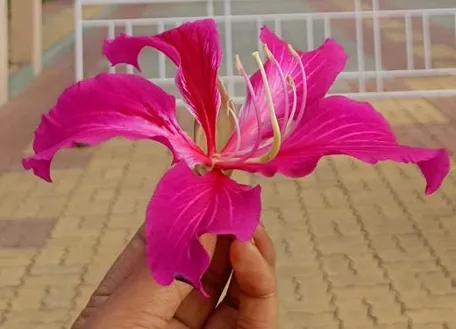
Figure No. 1: Flower of Bauhinia purpurea Linn.
Bauhinia purpurea:
There are around fifteen species in the genus Bauhinia of the family Cesalphiniacea that are found in India; some are climbers, while others are trees or shrubs. There are around fifteen species of Cesalphiniacea found in India. While some of them are climbers, others are trees or shrubs. In the past, all valuable medicinal preparations were derived from plants, whether in the form of simple plant parts or more complex forms of crude extract. Bauhinia purpurea .L is one of the most important species used to treat several ailments in the traditional system of medicine. Bauhinia purpurea Lwas reported for its antidiarrheal, anticancer, and thyroid gland stimulating properties. Because the flowers are rich in phytoconstituents, it was considered a principle source in the pharmaceutical industries. Bauhinia purpurea L a most important species used to treat several ailments in traditional system of medicine. The antidiarrheal, anticancer, and thyroid gland-stimulating qualities of Bauhinia purpurea L have been shown. The flowers were regarded as a primary source in the pharmaceutical and nutraceutical sectors due to their abundance of phytoconstituents. Historically, all valuable medicinal preparations were derived from plants, whether in the simple form of plant parts or more complex form of crude extract.5 Bauhinia Purpurea also shows some other therapeutic uses in psychotic syndrome , burnind sensation, disorders of blood .7
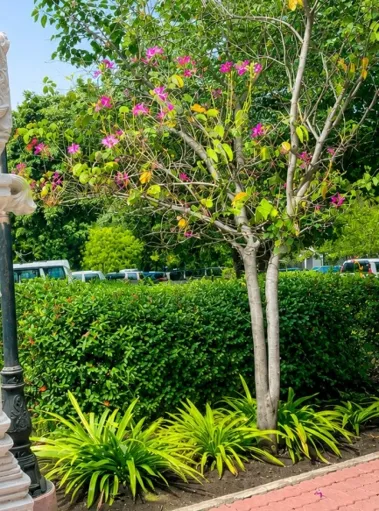
Figure No. 2 : Tree of Bauhinia purpurea Linn.
Table No .1 : Table of Plant information
|
Parameter |
Details |
|
Plant Name |
Bauhinia Purpurea |
|
Family |
Cesalphiniacea |
|
Common Name |
Kachnar |
|
Part used |
Flower |
|
Collection Place |
Wanadongri, Hingana |
|
Collection time |
December |
HPLC :
High-performance liquid chromatography (HPLC) is now recognized as the most practical technique for separating and identifying flavonoids using a variety of detection systems.In terms of quantitative analysis, a lot of data has been published in recent years confirming the technique's suitability for simultaneous determination of flavonoid compounds in various samples, which provides an insight into the distribution of flavonoids in the studied material.Regarding the quantitative analysis, a lot of information has been released in recent years that attests to the technique's usefulness for the simultaneous determination of flavonoid compounds in different samples, which provides insight into the distribution of flavonoids in the material under study.6
Literature Review
MATERIALS AND METHODS
1. Collection and Authentication
Fresh flowers of Bauhinia purpurea Linn. were collected from the Herbal Garden of Data Meghe Ayurvedic Medical College , Nagpur during the flowering season in the month of November and December .The plant is authenticated by recognized Botanist and the a voucher specimen was preserved for future reference The collected flowers were washed thoroughly with distilled water to remove dust and foreign particles. The flowers were shade dried at room temperature for 3 to 4 days and then pulverized using a mechanical grinder to obtain coarse powder. The powdered material was stored in an airtight container until further use.
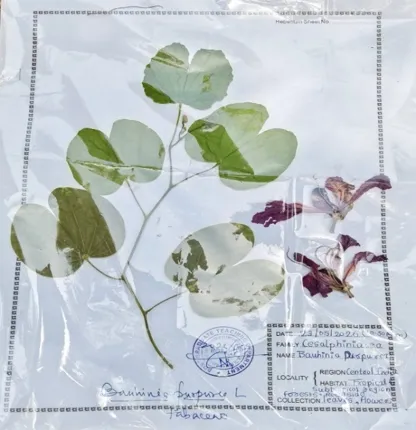
Figure No. 3 : Authentication of Plant
2. Chemicals and Instruments
All chemicals and solvents used in the study were of analytical and HPLC grade.
All instrument used in the analytical study
3. Preparation of Extract
Ethanolic Extraction:
A total yield of 130 g of coarse powder was obtained from the dried flower, which was subsequently utilized for extraction procedures including maceration, sonication-assisted extraction, and Soxhlet extraction.
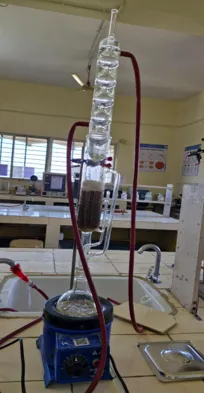
Figure No. 4: Soxhlet Apparatus
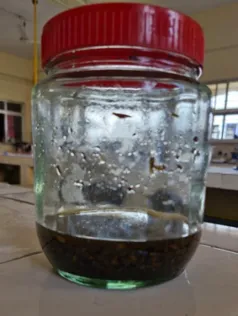
Figure No. 5 : Extraction by Maceration
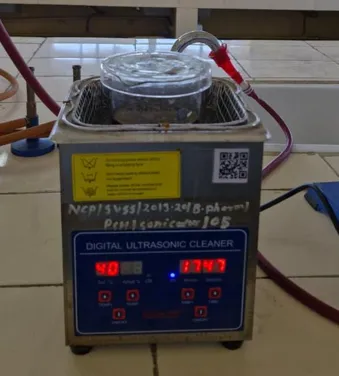
Figure No. 6: Sonication Instrument
4. Preliminary Phytochemical Screening
The ethanolic extract was subjected to preliminary phytochemical tests for identification of various phytoconstituents such as flavonoids and phenolic compounds using standard procedures.
Test for Flavonoids
To the extract, a small quantity of magnesium turnings and concentrated hydrochloric acid were added. Formation of pink or reddish coloration indicated the presence of flavonoids.
One or two drops of strong hydrochloric acid and zinc dust were added to the extract. A favorable outcome was signaled by the presence of red.
Test for Phenolic compounds
A few drops of a 5% ferric chloride solution were added to a tiny volume of the extract and thoroughly stirred.Phenolic chemicals are indicated by the development of bluish-black, dark green, or violet .
Potassium dichromate solution was added to the extract. The production of brown precipitate indicated a successful outcome.
1% gelatin solution with 10% sodium chloride was added to the extract. White precipitate production demonstrated a favorable outcome.
5. TLC Separation Parameters:
TLC (Thin Layer Chromatography) parameters you can use for flavonoid separation from flower extract of Bauhinia purpurea.
Stationary phase: Silica gel
Plate size: 10 × 10 cm or 20 × 20 cm
Plate type: glass plates
Use 5–10 µL for spotting.
Mobile Phase (Solvent System) : Toluene : Chloroform : Ethyl Acetate (2:2:0.5)
Detection / Visualization:
Observe plates under:
UV light 254 nm
UV light 366 nm
Rf Value :
6. Preparation of Standard Solution:
A stock solution of quercetin standard was prepared by dissolving 10 mg of quercetin in 10 mL methanol to obtain a concentration of 1000 µg/mL. From the stock solution, working standard solutions of concentrations 10, 20, 30 and 40 ppm were prepared by suitable dilution with methanol.
7. Preparation of Sample Solution:
About 10 mg of dried ethanolic extract was dissolved in 10 mL HPLC-grade methanol and sonicated for 10 minutes for complete dissolution. Then further dilutions were prepared of concentrations of 10,20,30 and 40ppm with methanol .The solution was filtered through a 0.45 µm membrane filter before HPLC analysis.
8. HPLC Analysis:
Instrumentation: Shimadzu LabSolutions
HPLC analysis was carried out using an HPLC system equipped with UV-Visible detector, quaternary pump, auto sampler, and data acquisition software.
Chromatographic Conditions:
Column: Reverse Phase C18 column (250 mm × 4.6 mm, 5 µm)
Mobile Phase: Methanol : Acetonitrile (7:3), Formic acid 0.1% v/v in water .
Flow Rate: 1.0 mL/min
Detection Wavelength: 254nm
Injection Volume: 5 µL
Column Temperature: 26 °C
Run Time: 20 minutes
The mobile phase was filtered through 0.45 µm membrane filter and degassed before use.
9. Calibration Curve Preparation:
Different concentrations of standard quercetin solutions were injected into the HPLC system and chromatograms were recorded. Peak area obtained for each concentration was plotted against concentration to obtain the calibration curve.
The amount of flavonoid present in the sample extract was determined using the linear regression equation obtained from the calibration curve.
10. Identification and Quantification of Flavonoids:
Identification of flavonoids in the extract was carried out by comparing the retention time (Rt) of sample peaks with those of standard quercetin .
Quantification was performed based on peak area measurements using the calibration curve method.
11. Statistical Analysis:
All experiments were carried out in triplicate and results were expressed as mean ± standard deviation (SD).
Data obtained from HPLC analysis were analyzed statistically using suitable software such as Microsoft Excel .
12. Results and Discussion :
Extract Yield % = Weight of Extract Obtained / Weight of Raw Material used * 100
=30/130*100
Extract Yield %=23.07%
Table No. 2 : Percentage Yield of Extract
|
Weight of Powder |
Extract Obtained |
% Yield (w/w) |
|
130g |
30g |
23.07% |
Phytochemical screening results:
Table No. 3 : Phytochemical test for Flavanoid
|
Test Name |
Reagents |
Observation |
|
Shinoda test |
Magnesium turnings + concentrated HCl |
Pink, red or orange color appears |
|
Zinc Dust Test |
Zinc Dust + Concentrated HCl |
Red Color Develops |
Table No. 4 : Phytochemical test for Phenolic content
|
Test Name |
Reagents |
Observation |
|
Ferric Chloride test |
5% ferric chloride solution |
Blue,green ,purple, black coloration |
|
Potassium Dichromate test |
Potassium dichromate solution |
Brown precipitate forms |
|
Gelatin test |
Gelatin solution +10%NaCl |
White precipitate forms |
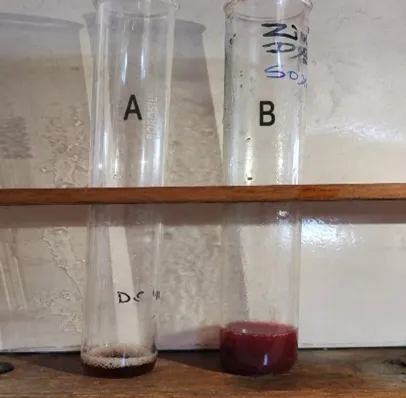
Figure No.7 : Test for Flavanoid
A: Shinoda test
B: Zinc test
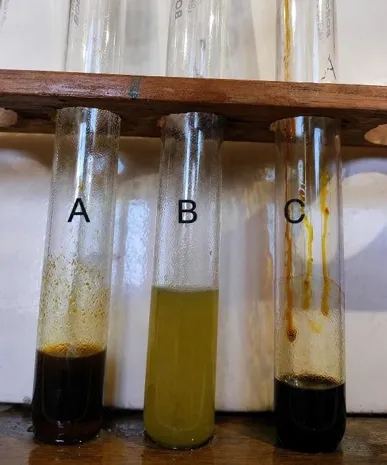
Figure No. 8 : Test for Phenolic content
A: Potassium Dichromate test
B: Gelatin test
C: Ferric Chloride test
TLC Separation with Results :
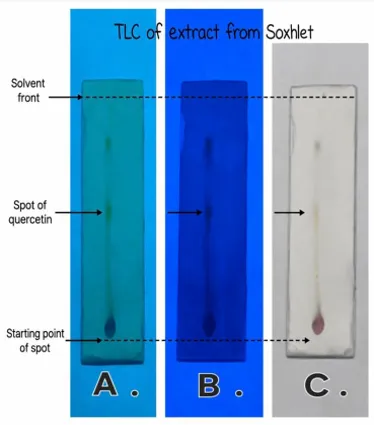
Figure No. 9 : TLC of extract from Soxhlet
A : TLC plate under shorter wavelength UV light
B : TLC plate under longer wavelength UV light
C : TLC plate under Visible light
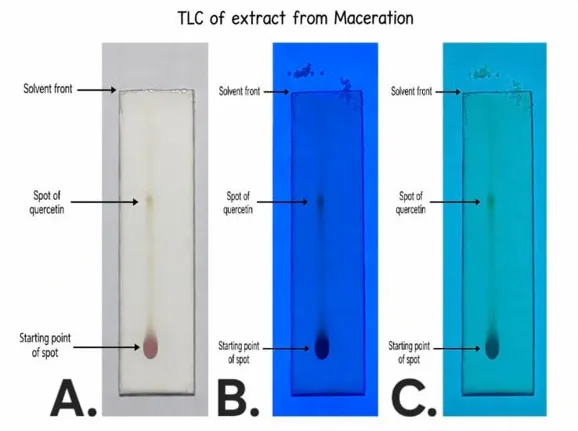
Figure No. 10 : TLC of extract from Maceration
A : TLC plate under Visible light
B : TLC plate under longer wavelength UV light
C : TLC plate under shorter wavelength UV light
Rf Value = 0.60
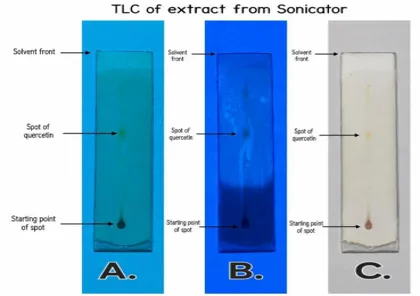
Figure No. 11 : TLC of extract from Sonicator
A : TLC plate under shorter wavelength UV light
B : TLC plate under longer wavelength UV light
C : TLC plate under Visible light
Rf Value = 0.47
HPLC Analysis:
Table No. 5 : HPLC Standard Calibration Data of Quercetin
|
Standard Concentration |
Peak Area |
Retention Time (Rt) |
|
10ppm |
826974 |
5.622 min |
|
20ppm |
2675575 |
5.569 min |
|
30ppm |
4112808 |
5.552 min |
|
40ppm |
5364659 |
5.526 min |
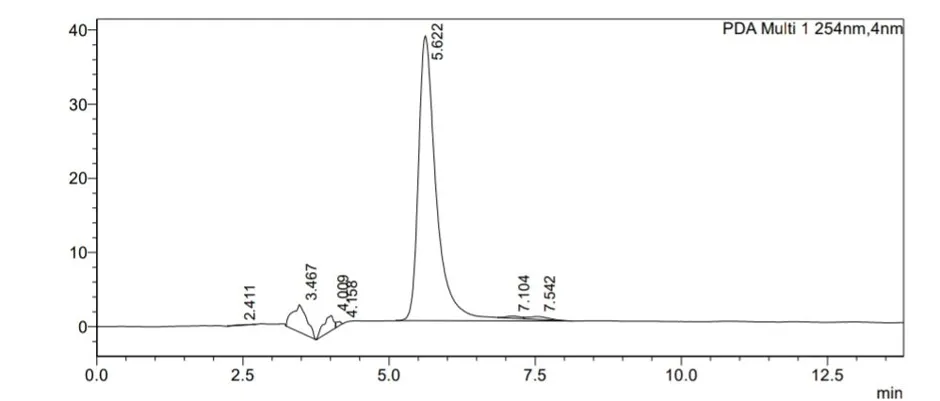
Figure No. 12 : Chromatogram of Standard 10ppm of Quercetin
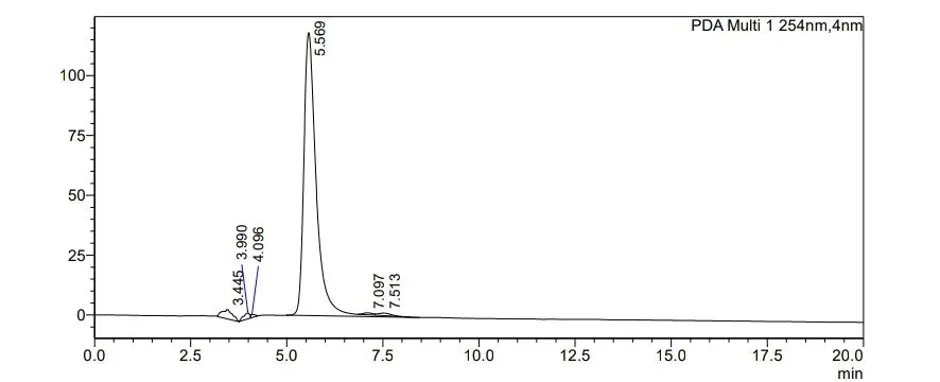
Figure No. 13 : Chromatogram of Standard 20ppm of Quercetin
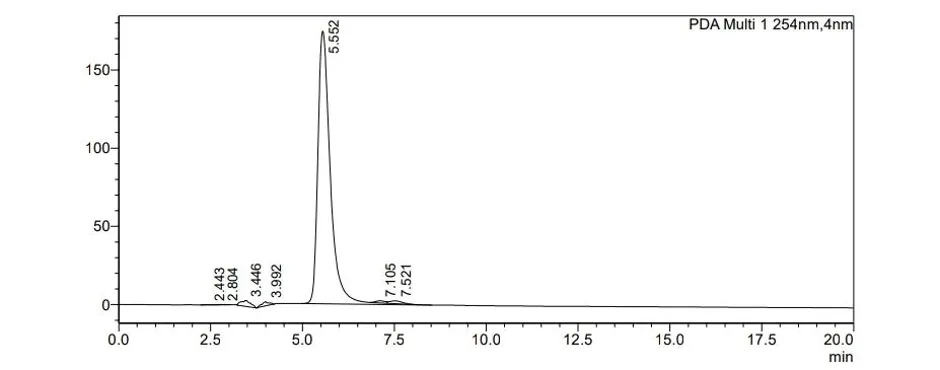
Figure No. 14 : Chromatogram of Standard 30ppm of Quercetin
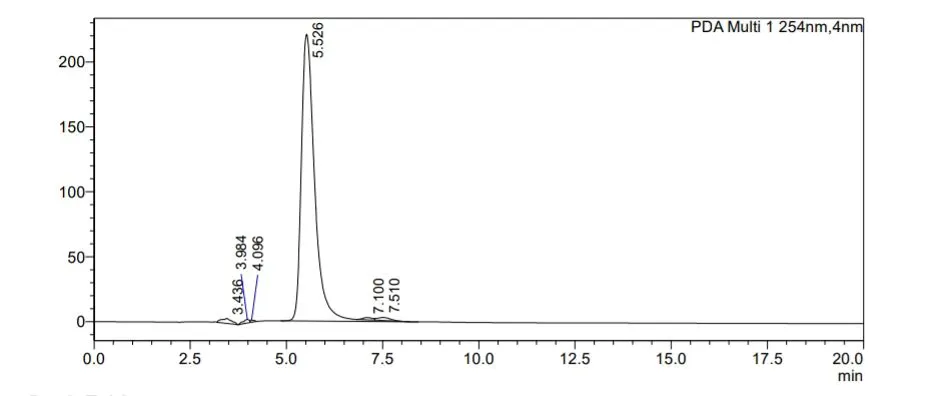
Figure No 15 : Chromatogram of Standard 40ppm of Quercetin
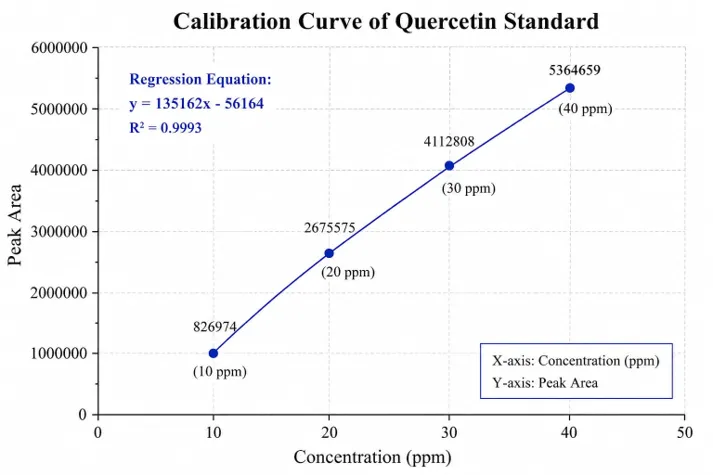
Figure No. 16: Calibration Curve of Quercetin Standard
Observation :
The calibration curve shows a linear relationship between concentration and peak area over the range of 10-40ppm.Detection wavelength: 370nm
Regression Equation :
y =133512x-58161
R2=0.9996
Table No. 6 : HPLC Sample Calibration Data of Quercetin
|
Sample Concentration |
Peak Area |
Retention time (Rt) |
|
10ppm |
48832 |
5.697 |
|
20ppm |
66112 |
5.705 |
|
30ppm |
35005 |
5.686 |
|
40ppm |
51338 |
5.702 |
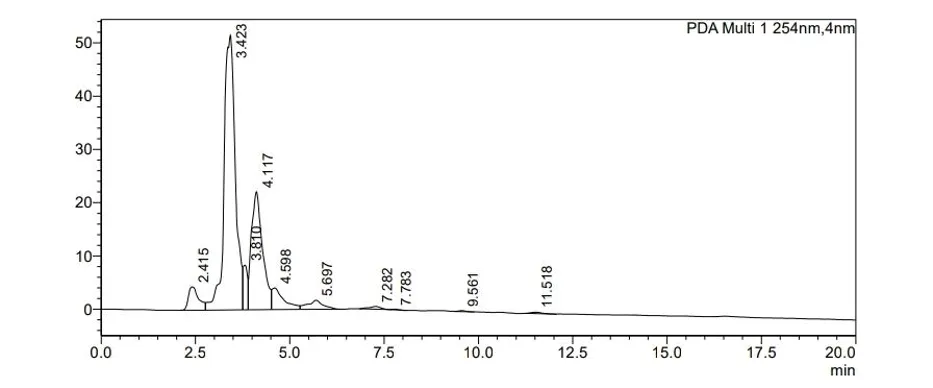
Figure No 17 : Chromatogram of sample of 10ppm concentration
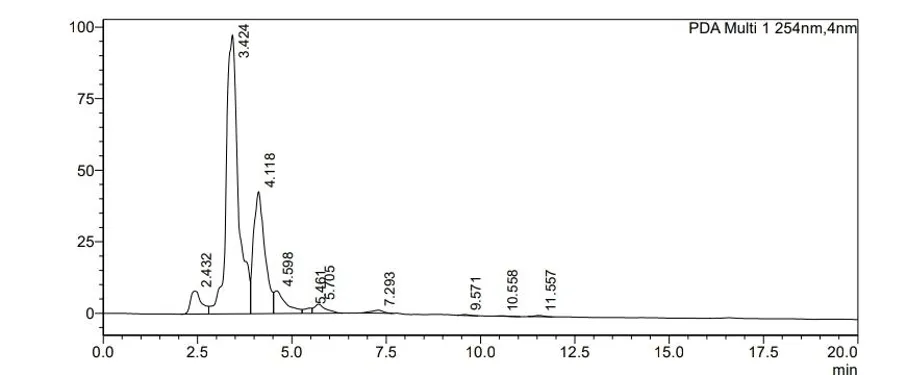
Figure No 18 : Chromatogram of sample of 20ppm concentration
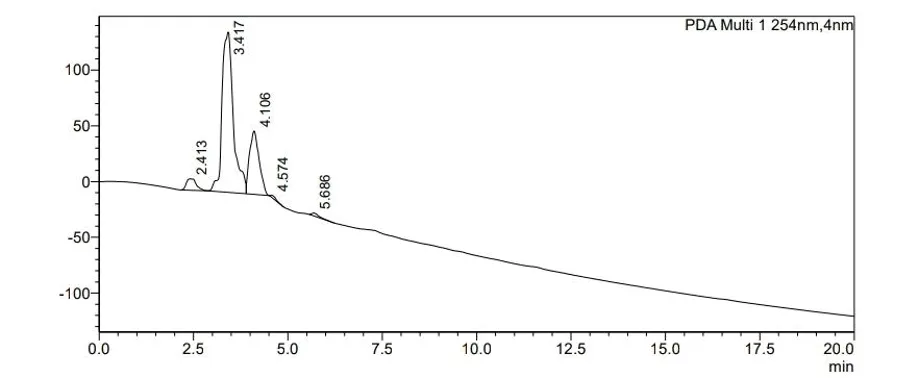
Figure No. 19 : Chromatogram of sample of 30ppm concentration
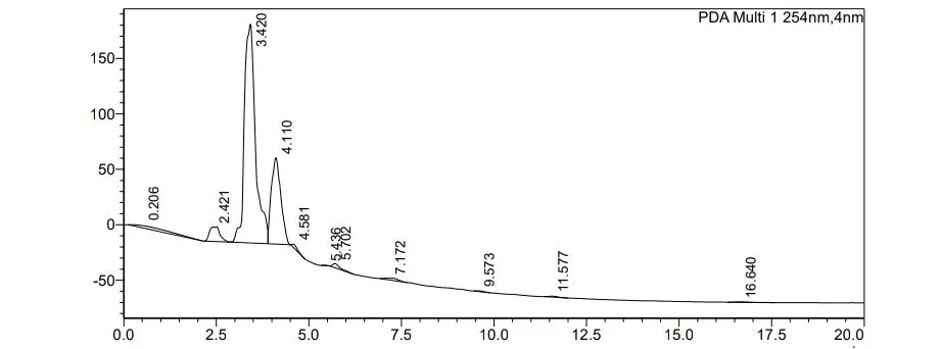
Figure No .20 : Chromatogram of sample of 40ppm concentration
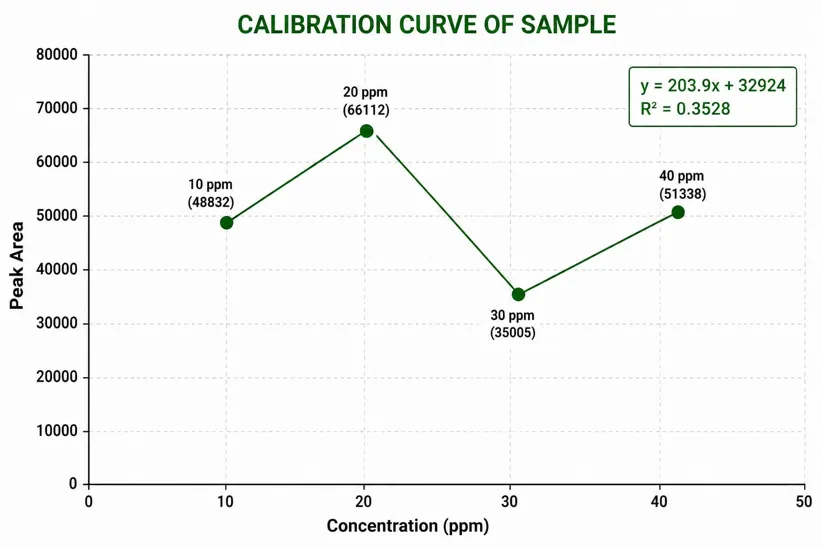
Figure No. 21 : Calibration curve of sample
Observation:
Sample chromatograms show peaks with retention times around 5.68-5.70 min, close to quercetin standard(near 5.5-5.6 min), confirming the presence of flavanoid compounds in the extract.
Regression Equation :
y= 203.9x+32924
R2=0.3528
Result of HPLC Analysis :
The HPLC analysis of quercetin standard and sample was performed at 254 nm using Shimadzu LabSolutions. The standard showed a major peak at 5.622 min, while the sample showed a similar peak at 5.697 min, confirming the presence of quercetin in the sample of concentration 10ppm. The method showed good peak separation and was found suitable for quercetin identification and analysis.
In The standard chromatogram of concentration 20 ppm showed a prominent peak at retention time around *5.569 min*, confirming the characteristic peak of quercetin. In the sample chromatogram, major peaks were observed at different retention times, with significant peak intensity at 5.705 min, indicating the presence of quercetin and related phytoconstituents in the sample.The comparison between standard and sample chromatograms suggests that the prepared sample contains quercetin compound.
The standard Quercetin (30 ppm) showed a sharp, well-defined peak at RT 5.552 min with an area of 4,112,808, confirming its retention behaviour under optimized conditions. On comparison, the sample (30 ppm) showed a dominant peak at RT 3.417 min along with other minor peaks, indicating the presence of quercetin ( peak at 5.686 min)with co-existing compounds in the sample matrix.
The standard Quercetin (40 ppm) showed a sharp, well-defined peak(5.526 min) confirming its retention behaviour under optimized conditions. On comparison, the sample chromatogram showed the presence of quercetin (at 5.702min) along with other co-existing compounds, indicating the complex nature of the sample matrix. It can be concluded that the developed RP-HPLC method is accurate, precise, and reliable for the qualitative and quantitative estimation of Quercetin and can be successfully employed for routine quality control analysis of pharmaceutical and herbal formulations.
RESULT AND DISCUSSION:
The ethanolic extract of Bauhinia purpurea flowers was successfully produced using extraction techniques, with an extractive yield of 23.07% (30 g from 130 g powdered material).
Preliminary phytochemical screening and TLC separation confirmed the presence of flavonoids and phenolic compounds. The Shinoda, Zinc-HCl, Ferric chloride, Potassium dichromate, and Gelatin assays yielded positive findings. and providing Rf values in the range of 0.4 to 0.6. This suggests that quercetin, a flavanoid, is present.
The usual retention times of 5.5–5.7 minutes for both standard and sample chromatograms in the HPLC analysis using quercetin as the standard demonstrated the presence of flavonoid components in the extract. The calibration approach based on peak area and concentration assisted both the qualitative and quantitative assessment of flavonoids in the sample.
CONCLUSION:
The current study showed that Bauhinia purpurea flowers are a promising natural source of phenolic compounds and flavonoids.
Phytochemical screening verified the presence of significant bioactive components, and ethanolic extraction yielded a good result.
And by using TLC separation the presence of quercetin is verified .
Flavonoid chemicals in the floral extract were effectively identified by HPLC analysis using quercetin as a reference standard.
The results corroborate the traditional therapeutic significance of Bauhinia purpurea and imply that its floral extract may have beneficial pharmacological characteristics linked to flavonoids, including hepatoprotective, antibacterial, and antioxidant effects.
As a result, Bauhinia purpurea flowers may be used in medicinal, nutraceutical, and herbal applications.
REFERENCES


Arya Gujarkar, Parth Jibhakate, Research on HPLC-Based Flavonoid Fingerprinting and Quantitative Analysis of Bauhinia purpurea Linn. Flower Extract, Int. J. of Pharm. Sci., 2026, Vol 4, Issue 9, 3773-3789. https://doi.org/10.5281/zenodo.23022931
 10.5281/zenodo.23022931