

We use cookies to ensure our website works properly and to personalise your experience. Cookies policy
1.Department of Pharmaceutics, Delonix Society's Baramati College of Pharrmacy, Barhanpur, Tal - Baramati, Dist - Pune, Maharashtra, India.
2.Department of Pharmaceutics, Delonix Society's Baramati College of Pharrmacy, Barhanpur, Tal - Baramati, Dist - Pune, Maharashtra, India.
3.Department of Pharmaceutics, Delonix Society's Baramati College of Pharrmacy, Barhanpur, Tal - Baramati, Dist - Pune, Maharashtra, India.
4.Department of Pharmaceutics, Delonix Society's Baramati College of Pharrmacy, Barhanpur, Tal - Baramati. Dist - Pune. Maharashtra. India
Hypertension remains a major global health challenge despite the long-standing availability of antihypertensive drugs. Limitations such as poor solubility and low oral bioavailability of certain bioactive compounds necessitate the development of advanced drug delivery systems. In this context, the present study focuses on the design, development, and characterization of a Self-Emulsifying Nano emulsion (SEN) system to enhance the therapeutic efficacy of an antihypertensive bioactive compound. The SEN formulation was developed using the phase inversion temperature method, incorporating suitable oils and self-emulsifying agents. The optimized formulation was evaluated for various physicochemical properties, including droplet size, distribution, and stability. The developed Nano emulsion exhibited a nonmetric mean droplet size with a monomodal, Gaussian-like distribution, indicating uniformity. Additionally, the formulation demonstrated excellent stability under different storage conditions. In-vitro drug release studies revealed a sustained and controlled release profile, suggesting improved dissolution and potential enhancement in oral bioavailability. Furthermore, pharmacokinetic evaluation in an appropriate animal model indicated significantly increased absorption and prolonged systemic circulation compared to conventional formulations. These findings were supported by enhanced antihypertensive activity, confirming the improved therapeutic performance of the SEN system.In conclusion, the developed Self-Emulsifying Nanoemulsion system shows significant promise as an effective drug delivery approach for antihypertensive bioactive compounds. It offers improved solubility, enhanced bioavailability, and superior therapeutic outcomes, making it a potential alternative strategy for the efficient management of hypertension
Hypertension (HTN) is a chronic disease characterized by persistent hypertensive (HT) levels of blood pressure (BP). As it is recognized as one of the major cardiovascular disease (CVD).This is not only a major risk factor, but also one of the biggest public health challenges in the world. Surprisingly, actually, more than 50 % of the individuals with hypertension are observed to have additional cardiovascular disease (CVD) risk factors, such as Obesity, overweight, diabetes mellitus, metabolic syndrome, hyperlipidemia etc. ( Sindhu R et al 2021). 1
Mechanisms: ( Ibrarz N et al 2022)
Renin- angiotensin aldosterone system is a cascade peptidergic systems in the management of renal, adrenal and cardiovascular homeostasis. Angiotensin peptide Renin cleaves angiotensinogen (produced by the liver and filtered) to Ang I Angiotensin I is also adhered in the circulatory system by enzymes( e.g., Angiotensin converting enzyme) to form different peptides that ultimately act in colorful organs. Among these fractionalization peptides, the function of angiotensin II has been illustrated the most. Angiotensin II binds to angiotensin II receptor in several organs and directly leads to vasoconstriction, water- sodium retention, and myocardial redoing. In addition, when angiotensin II acts on the order, it further stimulates aldosterone stashing and exacerbates water- sodium retention. RAAS inhibitors are one of the three cornerstones of existing antihypertension medications, and are also the drugs of first-line.
Commonly used to manage hypertension.
In addition, natural bioactive compounds from foods such as grains, vegetables, fruits, dairy products, meat, fish, soybean, tea, and mushrooms also show antihypertensive effects.
These foods contain important constituents like ACE inhibitory peptides, vitamins C and E, flavonoids, polyphenols, tannins, resveratrol, fiber, saponins, and minerals such as potassium and calcium. They help reduce blood pressure through mechanisms like ACE inhibition, antioxidant activity, vasodilation, and calcium channel blocking.
Bioactive compounds like flavonoids, terpenoids, phenolic acids, and glucosinolates are especially found in green-colored foods and contribute to various physiological functions. 2
Types and sources of bioactive compound :
1.Flavonoids :
Flavonoids are a major group of polyphenols known for their anti-inflammatory and cardiovascular protective effects. They are classified into flavonols, flavanones, flavan-3-ols, flavones, anthocyanins, and isoflavones. Studies have shown that flavonoids, such as those from Brazilian green propolis, exhibit significant antihypertensive activity.3
2. Tannins :
Tannins are water-soluble polyphenols with astringent properties that bind to proteins and other macromolecules. They act as plant defense compounds and are stored in vacuoles. Tannins from plants like Magnolia species have shown antihypertensive effects and can lower blood pressure in experimental models.
3. Carotenoids :
Carotenoids are lipid-soluble pigments (red, yellow, orange) found in chloroplasts. They include xanthophylls (oxygenated forms). They act as antioxidants, support enzyme activity, and help prevent cardiovascular diseases such as stroke and coronary heart disease. They also show anticancer potential.4
4. Plant Sterols (Phytosterols):
Plant sterols are plant-derived fatty compounds found in free and esterified forms. They help reduce cholesterol levels and lower the risk of coronary heart disease.
5. Polyphenols (Anthocyanins) :
Anthocyanins are water-soluble polyphenols present in fruits, flowers, leaves, and roots. They are responsible for red, blue, and purple colors in plants and possess antioxidant and health-protective properties.5
Self-Nano Emulsifying Drug Delivery System (SNEDDS)
SNEDDS is an isotropic mixture of oils (natural or synthetic), surfactants, and co-surfactants that forms a fine oil-in-water nanoemulsion when exposed to aqueous media with mild agitation. The globule size is typically less than 100 nm.SNEDDS, along with SMEDDS and SEDDS, is widely used to improve the solubility and bioavailability of poorly water-soluble drugs. It works by dispersing medium-chain triglyceride oils into nano-sized droplets using non-ionic surfactants, enhancing drug absorption.
SNEDDS and Role of Surfactants are essential in oral SNEDDS as they enhance drug dissolution and absorption. SNEDDS is a thermodynamically stable, clear or translucent system composed of oils, surfactants, and co-surfactants that forms a stable oil-in-water (o/w) nanoemulsion under mild agitation in aqueous media, improving drug plasma concentration.
Suitable Drug Candidates for SNEDDS. SNEDDS is a novel approach to improve the oral bioavailability of poorly water-soluble drugs. According to the Biopharmaceutical Classification System (BCS), drugs are divided into four classes based on solubility and permeability. Class II and Class IV drugs have low solubility and benefit most from SNEDDS.SNEDDS enhances solubility, absorption, and bioavailability.6
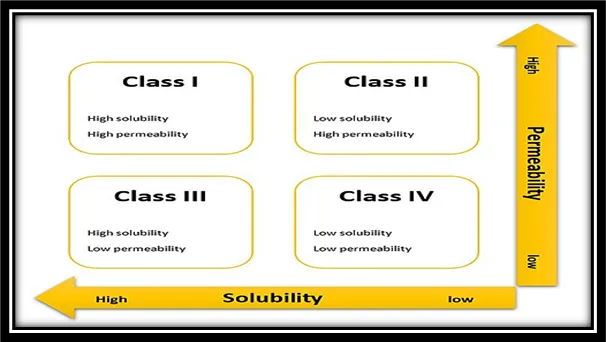
Fig. No 1: Biopharmaceutical Classification System.
Types of SNEDDS (Nanoemulsions)
Advantages of SNEDDS
Disadvantages of SNEDDS
Factors Affecting SNEDDS
Not suitable for drugs requiring very high doses.
Limitations of SNEDDS
Drugs with low water solubility are suitable, but highly lipophilic drugs may be difficult to administer.
Composition of SNEDDS
1.Drug (in SNEDDS)
Mainly used for poorly water-soluble drugs.
Suitable for BCS Class II & IV drugs.
Examples: Itraconazole, Nifedipine, Simvastatin, Ketoconazole, Carbamazepine, Cyclosporine, Amphotericin B.8
2. Oil
3.Surfactant
Surfactants used in SNEDDS are of four types:
Methods of Preparation of SNEDDS (Morakul et al., 2020):
1.High Energy Approach:
Nanoemulsions are prepared by mixing oil, surfactant, co-surfactant, and cosolvent, followed by applying external energy (e.g., mechanical stirring or homogenization). This energy helps reduce droplet size and form a stable nanoemulsion.10
2. High-Pressure Homogenization:
In this method, the mixture is passed through a homogenizer at very high pressure. Intense shear stress, turbulence, and cavitation reduce droplet size to around 100 nm. Adequate surfactant ensures stability by preventing droplet coalescence. The high velocity of the resultant mixture gives the liquid a lot ofEnergy, which causes severe turbulent eddies the same size as the mean diameter droplet (MDD) within the homogenizer valve. Droplets were aside from Eddie currents resulting in a Reduction in droplet size. At the same time, the pressure across the valve drops, cavitation Occurs, and more eddies and disruption droplets form. By reducing the gap size, the pressure Of the droplet is increased, leading to a higher degree of cavitation. Emulsion droplets with Diameters as small as 100 nm are commonly generated using this method whether there is Enough surfactant present to completely cover the oil-water interface formed and thus the Adsorption kinetics were high enough to prevent droplet coalescence..11
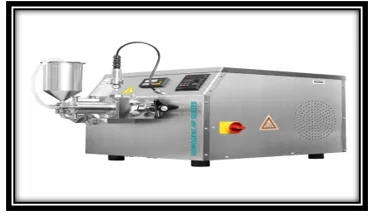
Fig.No.2. High pressure Homogenizer
3. Micro fluidization:
It is an important tool for identifying and preparing Nano emulsion. A device is known as a Micro Fluidizer" and it is used in Micro fluidization technology. This kind of device is used in a high-pressure positive displacement pump (500-300 PSI) that forces the product through the interaction chamber. Micro channels are small channels droplets that are used in highpressure positive displacement pumps.The product was driven through micro channels and impinged on the impingement area, and formed a very small submicron particle. In the inline homogenizer, two solutions having a mixture of aqueous and oil phase systems are combined and produced, and formation of a course emulsion. The coarse emulsion is processed in a micro fluidizer and then further processed to produce a homogeneous, transparent, and stable nano emulsion.12
4.Sonication Method:
Sonication is a technique used to reduce droplet size in emulsions using ultrasonic waves. The sound energy creates cavitation forces that break larger droplets into nano-sized droplets. It is mainly suitable for small batch preparation of nanoemulsions.
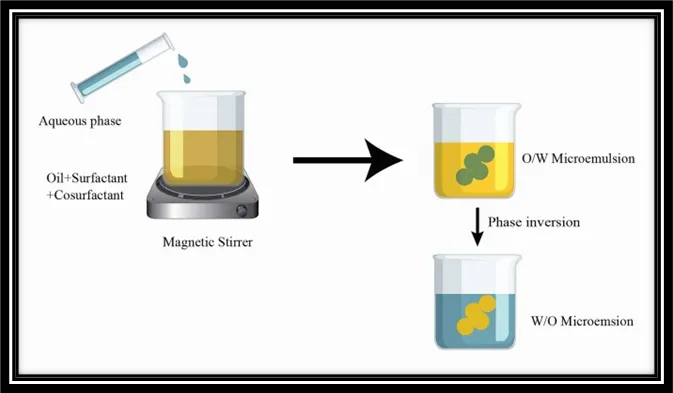
Fig.No.3. Sonication method
5.Phase Inversion Method :
Phase inversion is used to prepare nanoemulsions and microemulsions by changing temperature or composition. In this method, non-ionic surfactants respond to temperature changes, causing a shift from oil-in-water (o/w) emulsion at low temperature to water-in-oil (w/o) emulsion at high temperature. This transition helps form stable nano-sized droplets.13
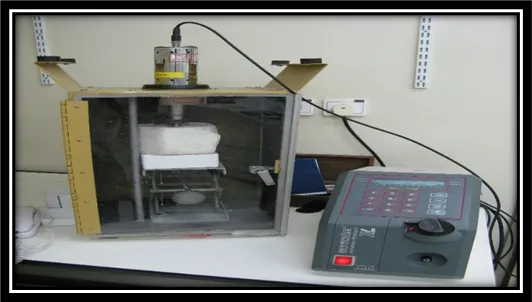
Fig.No.4. Phase Inversion
6.Pseudo ternary Phase Diagram:
Pseudo ternary phase diagram is important for determination of SNEDDS. It’s diagrammatic representation of oil, surfactant and co-surfactant, water is known as Pseudo ternary phase dingram. It can be constructed by using the Phase titration und Phase inversion methods Preparing solutions is step in the process. These solutions, which contained oil and hence had variable surfactant-to-co-surfactant weight ratios, such as 1:1, 2: 1, 3:1, and so on, were vortexed for five minutes, producing in an isotropic mixture. This is then examined to see if they’re turbid or clear. The appearance of turbidity in the samples indicates the formation of a coarse emulsion, whereas the appearance of a clear or transparent isotropic solution indicates the formation of a Nano emulsion (SNEDDS) Percentage of oil, and water. Pseudo ternary phase diagram is created using the values. This diagram corner con illustrate a 100%
concentration of each phase’s material. The diagram is helpful for presenting information on binary mixtures of two components, such as surfactants/cosurfactant, water/drug, or oil/drug. The Pseudo ternary phase diagram is represented mixture of surfactant, co-surfactant, oil, and water phase.14
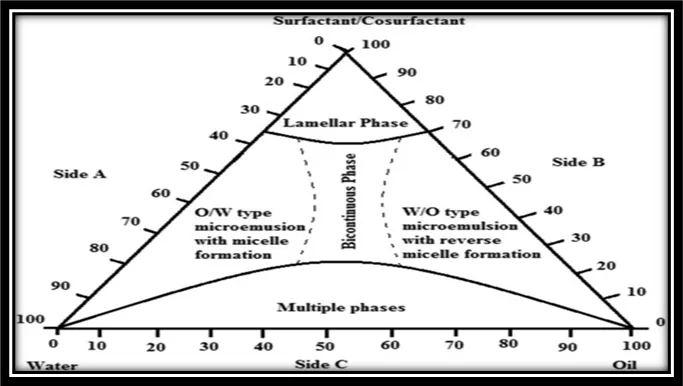
Fig No 5 : Pseudo ternary phase diagram
EVALUATION OF NANOEMULSION: (Alhasani K et al 2019)
1. Drug content:
UV visible spectroscopic method is suitable to measure the drug content of nanoemulsion formulation. The 2 ug/ml aliquot was prepared using nanoemulsion formulation with using diluting solvents. The sample were measured at 278.2nm by using UV VISIBLE spectroscopy. The average of triplicate result were taken into consideration.
2. pH :
Another important parameter of nanoemulsion is pH. The excipients used in the formulation decide the pH of the final Preparation and hence the route of administration. The Change in the pH may affect the zeta potential of the Formulation which in turn can affect the stability of Preparation. The pH of the formulations was measured using Digital pH meter. Results were taken in triplicate and the Average was taken in to consideration. 15
3.Viscosity:
To determine rheological Properties of formulations the viscosity was measured. Brookfield Rheometer viscometer at 30°C with a CPE 61 Spindle at 30 rpm was used to determine the viscosity. Results Were taken in triplicate and the average was taken into consideration.
4. Dilution tests:
In nanoemulsion if the continuous phase will added, it will not Crack or separate into phases. Maximum amount of water And oil were added to o/w and w/o formulations respectively And then observed visually for clarity and phase separation. Here 50 and 100 times aqueous dilution of the formulation Were visually observed and checked for phase separation and clarity. Results were taken in triplicate and the average was taken into consideration.
5. Globules size and zeta potential analysis:
The formulation of nanoemulsion was diluted 50 times and 100 Tomes with distilled water. The final resultant samples were Prepared by gentle agitation for 5 minutes using a magnetic Stirrer. In addition, globule size distribution (PSD) and zeta Potential of the final nanoemulsion were determined using Dynamic light scattering technique by Malvern zetasizer (NANOZS). Results were taken in triplicate and the average Was taken in to consideration. 16
6. Stability of Drug Nanoemulsion:
Drug nanoemulsion formulations samples was sealed in Ampoules and then kept in Stability chambers at different Temperature conditions i.e., room temperature (250?) and Accelerated temperature (40±20?) for 2 months. Duplicate Samples were withdrawn at 0,1 and 2 months to evaluate Their physical and chemical stabilities. By visual inspection the physical stability Was checked for physical changes (such as phase separation and drug precipitation), and a Globule size analyzer used to determine the mean Globule size and zeta potential after Dilution with water. Chemical stability was expressed as the content of Drug Determined by UV visible spectroscopic method at 257 nm.17
7. Thermodynamic stability tests:
Thermodynamic stability tests it includes the centrifugation studies, heating-cooling cycle and Freeze thawing cycle. It is performed to evaluate the phase separation and temperature effect Variation on SNEDDS formulation stability. In this the formulations are diluted with water to Check if they are stable as single phase system. For three times the formulation incubated at 4 Degree Celsius and 45 degree Celsius for 48 hrs . After that the formulation incubated for Three times between 20 to 25 degree Celsius for 48 hrs. It is performed to evaluated the Effect of temperature and phase separation on formulation. 18
CONCLUSION:
Self Nano-Emulsifying Drug Delivery Systems (SNEDDS) are a modern approach used to improve the delivery of drugs with poor water solubility. They consist of a uniform (isotropic) mixture of oils, surfactants, co-surfactants, and co-solvents. When introduced into an aqueous environment with mild agitation, SNEDDS rapidly form fine oil-in-water nanoemulsions.This system increases the surface area of the drug, leading to enhanced absorption and improved oral bioavailability, especially for lipophilic drugs. SNEDDS also allow easier oral administration and can be modified (e.g., with polymers) to prolong drug release.Overall, SNEDDS offer a promising and industrially viable strategy for delivering bioactive compounds, particularly in the management of hypertension, by overcoming challenges related to solubility, stability, and bioavailability
REFERENCES




Amrata Mantri, Namrata Bichitkar*, Ashitosh Chavan, Pooja Chopade., Review of SNEDDS on Antihypertensive Drug for Treatment of Hypertension, Int. J. of Pharm. Sci., 2026, Vol 4, Issue 7, 1553-1561. https://doi.org/ 10.5281/zenodo.21260588
 10.5281/zenodo.21260588