Breast cancer is the most common cancer occurring in women. In addition to the hereditary factors that lead to this type of cancer there are a variety of lifestyle factors which affect both the risk of occurrence and the outcome of the condition. This brief review presents an overview of the breast cancer risk profiling and discusses the importance of maintaining healthy lifestyle habits for its prevention. Personalized risk assessment based on one's family history, genetic factors, reproductive history, breast density and the exposure to other modifiable risk factors allows early identification of people at high risk of developing the disease. Physical exercise, healthy weight, proper nutrition, moderation in alcohol consumption, non-smoking and the stress reduction have proven to reduce the risk and improve survivorship from the condition.
Keywords
Breast cancer, Risk profiling, Lifestyle modification, Prevention, Physical activity, Nutrition.
Introduction
×
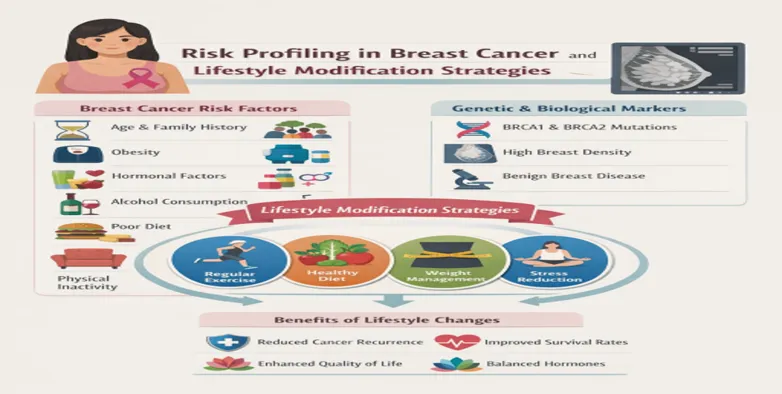
The development of breast cancer results from the interplay of several genetic, hormonal, environmental and the lifestyle factors. Although aging and genetic predisposition can not be altered there are numerous well-documented risks that are avoidable. Sedentary behavior, obesity and poor diet in the population have led to increased occurrence of this disease. This highlights the importance of preventative approaches focused on the healthy lifestyles.
Risk Profiling:
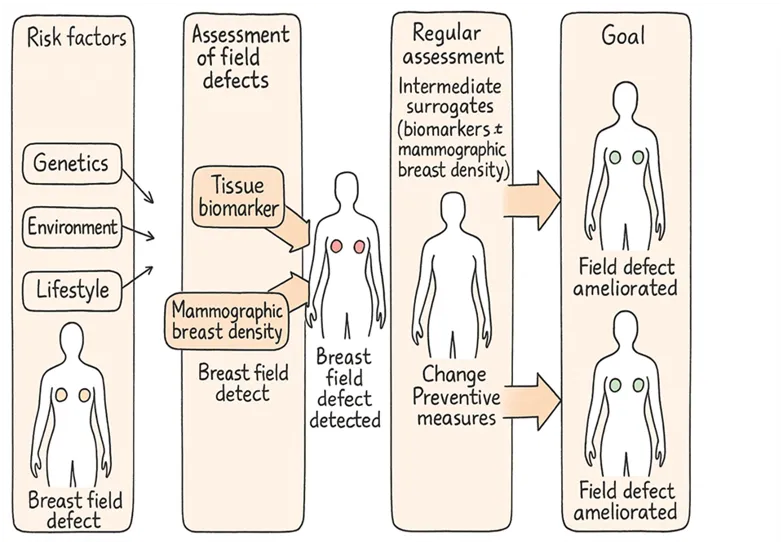
Current risk assessments combine the clinical risk factors with the biomarkers to determine the likelihood of a patient developing breast cancer. Key risk factors are age, family history, presence of mutations in BRCA1 and BRCA2, among others as well as a reproductive history, breast density and the hormonal factors. Risk assessments can be used by health professionals to individualize screening programs and make the genetic counseling recommendations for at-risk patients.
Lifestyle Modification:
There are several lifestyle modifications that can be effective at any stage of breast cancer development. Physical activity positively affects insulin sensitivity, inflammation and the immunity. A Mediterranean diet correlates with good metabolic health and lowers risk factors for the cancer. Staying within the normal weight range is especially important for postmenopausal women due to production of additional estrogen in fat tissue.
CONCLUSION
Prevention of breast cancer involves proper risk evaluation along with behavioral modification in terms of the lifestyle. The combination of personalized screening and healthy diet along with regular exercise, maintaining weight, not smoking, drinking less alcohol and stress relief can serve as an effective method for the prevention.
REFERENCES
Hamer, J., & Warner, E. (2017). Lifestyle modifications for patients with breast cancer to improve prognosis and optimize overall health. CMAJ, 189(7), E268–E274. https://doi.org/10.1503/cmaj.160464
National Cancer Institute. (2023). Breast cancer prevention (PDQ®)–patient version. https://www.cancer.gov/types/breast/patient/breast-prevention-pdq
Figueroa, J. D., Gierach, G. L., Duggan, M. A., Fan, S., Pfeiffer, R. M., Wang, Y., Falk, R. T., Loudig, O., Abubakar, M., Ginsberg, M., Kimes, T. M., Richert-Boe, K., Glass, A. G., & Rohan, T. E. (2021). Risk factors for breast cancer development by tumor characteristics among women with benign breast disease. Breast Cancer Research, 23(1), 34. https://doi.org/10.1186/s13058-021-01410-1
Pashayan, N., Antoniou, A. C., Ivanus, U., Esserman, L. J., Easton, D. F., French, D., Sroczynski, G., Hall, P., Cuzick, J., Evans, D. G., Simard, J., Garcia-Closas, M., Schmutzler, R., Wegwarth, O., Pharoah, P., Moorthie, S., De Montgolfier, S., Baron, C., Herceg, Z., Turnbull, C., & Widschwendter, M. (2020). Personalized early detection and prevention of breast cancer: ENVISION consensus statement. Nature Reviews Clinical Oncology, 17(11), 687–705. https://doi.org/10.1038/s41571-020-0388-9
Schoemaker, M. J., Nichols, H. B., Wright, L. B., Brook, M. N., Jones, M. E., O’Brien, K. M., Adami, H. O., Baglietto, L., Bernstein, L., Bertrand, K. A., Boutron-Ruault, M. C., Chen, Y., Connor, A. E., Dossus, L., Eliassen, A. H., Giles, G. G., Gram, I. T., Hankinson, S. E., Kaaks, R., Key, T. J., & Swerdlow, A. J. (2020). Adult weight change and premenopausal breast cancer risk: A prospective pooled analysis. International Journal of Cancer, 147(5), 1306–1314. https://doi.org/10.1002/ijc.32892
Heath, A. K., Muller, D. C., van den Brandt, P. A., Papadimitriou, N., Critselis, E., Gunter, M., Vineis, P., Weiderpass, E., Fagherazzi, G., Boeing, H., Ferrari, P., Olsen, A., Tjønneland, A., Arveux, P., Boutron-Ruault, M. C., Mancini, F. R., Kühn, T., Turzanski-Fortner, R., Schulze, M. B., Karakatsani, A., & Tzoulaki, I. (2020). Nutrient-wide association study of foods and nutrients and breast cancer risk. Breast Cancer Research, 22(1), 5. https://doi.org/10.1186/s13058-019-1244-7
Ho, P. J., Lau, H. S. H., Ho, W. K., Wong, F. Y., Yang, Q., Tan, K. W., Tan, M. H., Chay, W. Y., Chia, K. S., Hartman, M., & Li, J. (2020). Incidence of breast cancer attributable to breast density and modifiable risk factors. Scientific Reports, 10, 503. https://doi.org/10.1038/s41598-019-57341-7
Ho, P. J., Ho, W. K., Khng, A. J., Yeoh, Y. S., Tan, B. K., Tan, E. Y., Lim, G. H., Tan, S. M., Tan, V. K. M., Yip, C. H., Mohd-Taib, N. A., Wong, F. Y., Lim, E. H., Ngeow, J., Chay, W. Y., Leong, L. C. H., Yong, W. S., Seah, C. M., Tang, S. W., Ng, C. W. Q., & Hartman, M. (2022). Overlap of high-risk individuals predicted by breast cancer risk models. BMC Medicine, 20(1), 150. https://doi.org/10.1186/s12916-022-02334-z
Horne, H. N., Oh, H., Sherman, M. E., Palakal, M., Hewitt, S. M., Schmidt, M. K., Milne, R. L., Hardisson, D., Benitez, J., Blomqvist, C., & Figueroa, J. D. (2018). E-cadherin expression, risk factors and survival in breast cancer. Scientific Reports, 8, 6574. https://doi.org/10.1038/s41598-018-23733-4
Zhang, J., Wang, N., Zheng, Y., Yang, B., Wang, S., Wang, X., Pan, B., & Wang, Z. (2023). Chronic psychological stress-induced breast cancer progression via estrogen metabolism. Journal of Advanced Research, 47, 189–207. https://doi.org/10.1016/j.jare.2022.06.006
Endogenous Hormones and Breast Cancer Collaborative Group. (2013). Sex hormones and risk of breast cancer in premenopausal women. The Lancet Oncology, 14(10), 1009–1019. https://doi.org/10.1016/S1470-2045(13)70301-2
Han, Y., Otegbeye, E. E., Stoll, C., Hardi, A., Colditz, G. A., & Toriola, A. T. (2024). Weight gain since age 18 and breast cancer risk: A meta-analysis. Breast Cancer Research, 26(1), 39. https://doi.org/10.1186/s13058-024-01804-x
Karavasiloglou, N., Hüsing, A., Masala, G., van Gils, C. H., Turzanski Fortner, R., Chang-Claude, J., & Kühn, T. (2019). Adherence to cancer prevention recommendations and in situ breast cancer risk. BMC Medicine, 17(1), 221. https://doi.org/10.1186/s12916-019-1444-0
Drummond, A. E., Swain, C. T. V., Milne, R. L., English, D. R., Brown, K. A., & Lynch, B. M. (2022). Physical activity, insulin signaling, and breast cancer risk. Cancer Epidemiology, Biomarkers & Prevention, 31(12), 2116–2125. https://doi.org/10.1158/1055-9965.EPI-22-0505
Vachon, C. M., Scott, C. G., Tamimi, R. M., Thompson, D. J., & Garcia-Closas, M. (2019). Mammographic density and polygenic risk score in breast cancer. Breast Cancer Research, 21(1), 68. https://doi.org/10.1186/s13058-019-1138-8
Paige, J. S., Lee, C. I., Wang, P. C., & Elmore, J. G. (2023). Variability among breast cancer risk classification models. Journal of General Internal Medicine, 38(11), 2584–2592. https://doi.org/10.1007/s11606-023-08043-4
Biganzoli, L., Cardoso, F., Beishon, M., Cameron, D., & Poortmans, P. (2020). Requirements of a specialist breast centre. The Breast, 51, 65–84. https://doi.org/10.1016/j.breast.2020.02.003
Singleton, A., Raeside, R., Partridge, S. R., Hayes, M., & Redfern, J. (2021). Lifestyle-focused intervention for women after breast cancer. Journal of Medical Internet Research, 23(6), e27076. https://doi.org/10.2196/27076
Abolhasanzadeh, N., Sarabandi, S., Dehghan, B., & Nourazarian, A. (2024). miRNA dysregulation and environmental chemicals in breast cancer. Frontiers in Immunology, 15, 1333563. https://doi.org/10.3389/fimmu.2024.1333563
Jacobs, I., Taljaard-Krugell, C., Wicks, M., Cubasch, H., & Huybrechts, I. (2022). Degree of food processing and breast cancer risk. British Journal of Nutrition, 128(11), 2278–2289. https://doi.org/10.1017/S0007114522000423
Furmaniak, A. C., Menig, M., & Markes, M. H. (2016). Exercise for women receiving adjuvant therapy for breast cancer. Cochrane Database of Systematic Reviews, (9), CD005001. https://doi.org/10.1002/14651858.CD005001.pub3
Reference
Hamer, J., & Warner, E. (2017). Lifestyle modifications for patients with breast cancer to improve prognosis and optimize overall health. CMAJ, 189(7), E268–E274. https://doi.org/10.1503/cmaj.160464
National Cancer Institute. (2023). Breast cancer prevention (PDQ®)–patient version. https://www.cancer.gov/types/breast/patient/breast-prevention-pdq
Figueroa, J. D., Gierach, G. L., Duggan, M. A., Fan, S., Pfeiffer, R. M., Wang, Y., Falk, R. T., Loudig, O., Abubakar, M., Ginsberg, M., Kimes, T. M., Richert-Boe, K., Glass, A. G., & Rohan, T. E. (2021). Risk factors for breast cancer development by tumor characteristics among women with benign breast disease. Breast Cancer Research, 23(1), 34. https://doi.org/10.1186/s13058-021-01410-1
Pashayan, N., Antoniou, A. C., Ivanus, U., Esserman, L. J., Easton, D. F., French, D., Sroczynski, G., Hall, P., Cuzick, J., Evans, D. G., Simard, J., Garcia-Closas, M., Schmutzler, R., Wegwarth, O., Pharoah, P., Moorthie, S., De Montgolfier, S., Baron, C., Herceg, Z., Turnbull, C., & Widschwendter, M. (2020). Personalized early detection and prevention of breast cancer: ENVISION consensus statement. Nature Reviews Clinical Oncology, 17(11), 687–705. https://doi.org/10.1038/s41571-020-0388-9
Schoemaker, M. J., Nichols, H. B., Wright, L. B., Brook, M. N., Jones, M. E., O’Brien, K. M., Adami, H. O., Baglietto, L., Bernstein, L., Bertrand, K. A., Boutron-Ruault, M. C., Chen, Y., Connor, A. E., Dossus, L., Eliassen, A. H., Giles, G. G., Gram, I. T., Hankinson, S. E., Kaaks, R., Key, T. J., & Swerdlow, A. J. (2020). Adult weight change and premenopausal breast cancer risk: A prospective pooled analysis. International Journal of Cancer, 147(5), 1306–1314. https://doi.org/10.1002/ijc.32892
Heath, A. K., Muller, D. C., van den Brandt, P. A., Papadimitriou, N., Critselis, E., Gunter, M., Vineis, P., Weiderpass, E., Fagherazzi, G., Boeing, H., Ferrari, P., Olsen, A., Tjønneland, A., Arveux, P., Boutron-Ruault, M. C., Mancini, F. R., Kühn, T., Turzanski-Fortner, R., Schulze, M. B., Karakatsani, A., & Tzoulaki, I. (2020). Nutrient-wide association study of foods and nutrients and breast cancer risk. Breast Cancer Research, 22(1), 5. https://doi.org/10.1186/s13058-019-1244-7
Ho, P. J., Lau, H. S. H., Ho, W. K., Wong, F. Y., Yang, Q., Tan, K. W., Tan, M. H., Chay, W. Y., Chia, K. S., Hartman, M., & Li, J. (2020). Incidence of breast cancer attributable to breast density and modifiable risk factors. Scientific Reports, 10, 503. https://doi.org/10.1038/s41598-019-57341-7
Ho, P. J., Ho, W. K., Khng, A. J., Yeoh, Y. S., Tan, B. K., Tan, E. Y., Lim, G. H., Tan, S. M., Tan, V. K. M., Yip, C. H., Mohd-Taib, N. A., Wong, F. Y., Lim, E. H., Ngeow, J., Chay, W. Y., Leong, L. C. H., Yong, W. S., Seah, C. M., Tang, S. W., Ng, C. W. Q., & Hartman, M. (2022). Overlap of high-risk individuals predicted by breast cancer risk models. BMC Medicine, 20(1), 150. https://doi.org/10.1186/s12916-022-02334-z
Horne, H. N., Oh, H., Sherman, M. E., Palakal, M., Hewitt, S. M., Schmidt, M. K., Milne, R. L., Hardisson, D., Benitez, J., Blomqvist, C., & Figueroa, J. D. (2018). E-cadherin expression, risk factors and survival in breast cancer. Scientific Reports, 8, 6574. https://doi.org/10.1038/s41598-018-23733-4
Zhang, J., Wang, N., Zheng, Y., Yang, B., Wang, S., Wang, X., Pan, B., & Wang, Z. (2023). Chronic psychological stress-induced breast cancer progression via estrogen metabolism. Journal of Advanced Research, 47, 189–207. https://doi.org/10.1016/j.jare.2022.06.006
Endogenous Hormones and Breast Cancer Collaborative Group. (2013). Sex hormones and risk of breast cancer in premenopausal women. The Lancet Oncology, 14(10), 1009–1019. https://doi.org/10.1016/S1470-2045(13)70301-2
Han, Y., Otegbeye, E. E., Stoll, C., Hardi, A., Colditz, G. A., & Toriola, A. T. (2024). Weight gain since age 18 and breast cancer risk: A meta-analysis. Breast Cancer Research, 26(1), 39. https://doi.org/10.1186/s13058-024-01804-x
Karavasiloglou, N., Hüsing, A., Masala, G., van Gils, C. H., Turzanski Fortner, R., Chang-Claude, J., & Kühn, T. (2019). Adherence to cancer prevention recommendations and in situ breast cancer risk. BMC Medicine, 17(1), 221. https://doi.org/10.1186/s12916-019-1444-0
Drummond, A. E., Swain, C. T. V., Milne, R. L., English, D. R., Brown, K. A., & Lynch, B. M. (2022). Physical activity, insulin signaling, and breast cancer risk. Cancer Epidemiology, Biomarkers & Prevention, 31(12), 2116–2125. https://doi.org/10.1158/1055-9965.EPI-22-0505
Vachon, C. M., Scott, C. G., Tamimi, R. M., Thompson, D. J., & Garcia-Closas, M. (2019). Mammographic density and polygenic risk score in breast cancer. Breast Cancer Research, 21(1), 68. https://doi.org/10.1186/s13058-019-1138-8
Paige, J. S., Lee, C. I., Wang, P. C., & Elmore, J. G. (2023). Variability among breast cancer risk classification models. Journal of General Internal Medicine, 38(11), 2584–2592. https://doi.org/10.1007/s11606-023-08043-4
Biganzoli, L., Cardoso, F., Beishon, M., Cameron, D., & Poortmans, P. (2020). Requirements of a specialist breast centre. The Breast, 51, 65–84. https://doi.org/10.1016/j.breast.2020.02.003
Singleton, A., Raeside, R., Partridge, S. R., Hayes, M., & Redfern, J. (2021). Lifestyle-focused intervention for women after breast cancer. Journal of Medical Internet Research, 23(6), e27076. https://doi.org/10.2196/27076
Abolhasanzadeh, N., Sarabandi, S., Dehghan, B., & Nourazarian, A. (2024). miRNA dysregulation and environmental chemicals in breast cancer. Frontiers in Immunology, 15, 1333563. https://doi.org/10.3389/fimmu.2024.1333563
Jacobs, I., Taljaard-Krugell, C., Wicks, M., Cubasch, H., & Huybrechts, I. (2022). Degree of food processing and breast cancer risk. British Journal of Nutrition, 128(11), 2278–2289. https://doi.org/10.1017/S0007114522000423
Furmaniak, A. C., Menig, M., & Markes, M. H. (2016). Exercise for women receiving adjuvant therapy for breast cancer. Cochrane Database of Systematic Reviews, (9), CD005001. https://doi.org/10.1002/14651858.CD005001.pub3
Rutuja Bhande
Corresponding author
Dr. D.Y. Patil College of Pharmacy, Akurdi, Pune 411044
Sanika More
Co-author
Dr. D.Y. Patil College of Pharmacy, Akurdi, Pune 411044
Prathamesh Telavekar
Co-author
Dr. D.Y. Patil College of Pharmacy, Akurdi, Pune 411044
Bidisha Lahkar
Co-author
Dr. D.Y. Patil College of Pharmacy, Akurdi, Pune 411044
Ashvini Gavali
Co-author
Dr. D.Y. Patil College of Pharmacy, Akurdi, Pune 411044
Rutuja Bhande, Sanika More, Prathamesh Telavekar, Bidisha Lahkar, Ashvini Gavali, Risk Profiling in Breast Cancer and the Role of Lifestyle Modification: An Analytical Perspective, Int. J. of Pharm. Sci., 2026, Vol 4, Issue 7, 4021-4024. https://doi.org/10.5281/zenodo.21461732





 10.5281/zenodo.21461732