

We use cookies to ensure our website works properly and to personalise your experience. Cookies policy
1B. Pharmacy Student, P.S.G.V.P. Mandal's College of Pharmacy, Shahada, Maharashtra, India.
2Assistant Professor, Department of Pharmaceutical Quality Assurance, P.S.G.V.P. Mandal's, College of Pharmacy, Shahada, Maharashtra, India.
3,4Assistant Professor, Department of Pharmaceutics, P.S.G.V.P. Mandal's College of, Pharmacy, Shahada, Maharashtra, India.
5Principal, P.S.G.V.P. Mandal's College of Pharmacy, Shahada, Maharashtra, India.
Musculoskeletal (MSK) pain is a major global health concern that affects quality of life, physical function, and daily activities. Common musculoskeletal conditions include osteoarthritis, rheumatoid arthritis, gout, psoriatic arthritis, and fibromyalgia. Conventional treatments, including non-steroidal anti-inflammatory drugs (NSAIDs), analgesics, and local anesthetics, are widely used; however, their prolonged use may be associated with adverse effects. Therefore, topical phytotherapy has gained attention as a potential complementary approach for managing musculoskeletal pain. Medicinal plants contain bioactive phytoconstituents, including curcuminoids, capsaicinoids, menthol, 1,8-cineole, and boswellic acids, which possess potential analgesic and anti-inflammatory properties. These compounds may act through modulation of inflammatory mediators, inhibition of cyclooxygenase (COX) and lipoxygenase (LOX) pathways, regulation of NF-?B signalling, and interaction with transient receptor potential (TRP) channels. Topical formulations such as gels, creams, ointments, sprays, and patches offer local delivery of active constituents. Their effectiveness depends on skin permeability, formulation characteristics, and physicochemical properties. This review discusses the pathophysiology of musculoskeletal pain, medicinal plants, mechanisms of action, topical formulations, and factors influencing skin permeation and therapeutic efficacy.
Musculoskeletal (MSK) pain has a major impact on people’s quality of life. It is this pain that drives people with MSK conditions to seek medical care. The most common MSK conditions include osteoarthritis (OA), autoimmune inflammatory arthritis, such as rheumatoid arthritis (RA), crystal-induced inflammatory arthritis, including gout, and fibromyalgia. Irrespective of the diagnosis, chronic pain is the predominant complaint of people living with these MSK conditions. While there have been relatively few comparisons of the pain experience across MSK conditions, what evidence does exist suggests more similarities than differences. As in other chronic pain conditions, a number of key contextual factors influence the downstream impact of pain in MSK conditions. These include the presence of comorbid health problems.[1] Musculoskeletal complaints are major health concerns around the world and topical analgesics such as non-steroidal anti-inflammatory drugs (NSAIDs) and local anesthetics are used to relieve pain in muscles, joints and tendons. However, NSAIDs are associated with significant risk of serious gastrointestinal adverse events in chronic use and local anesthetics may cause cardiovascular, CNS toxicity and allergic reactions. [2] Pharmacological treatments of MSDs include topical or oral analgesics (non-steroidal anti-inflammatory drugs (NSAIDs), paracetamol, tramadol, and opioids), chondroitin sulphate, glucocorticoids, disease-modifying ant rheumatic drugs (DMARDs) and other drugs. Painkillers may have serious side effects, especially in the case of long-term usage (in chronic disorders) and in the case of high doses [3]. The focus of medicinal plant research has mostly been on the pharmacological and medical properties of botanical extracts and their metabolites, including their uses in traditional medicine and often as a part of drug discovery programs. The Botanical materials originating from plants, including plant parts, plant exudates, extracts, and enriched fractions derived from these drugs, which contain both pharmacologically active and inactive metabolites.[4] A well-chosen, evidence-based phytotherapy could be beneficial in pain treatment because it can reduce the amount of the necessary analgesic medicines or prolong the length of the effective treatment before the loss of efficacy in pain management. Essential oils (EOs) are complex secondary metabolites that are produced by aromatic plants; they are composed of many a polar or semi-polar volatile constituents with low molecular mass. The largest group of them are terpenoids, but phenolic compounds are also dominant. An EO generally consists of 10–50 compounds with various structures, which can be carbohydrates or oxygen-containing compounds such as alcohols, ketones, aldehydes, ethers and esters [3] Essential oils are a class of natural products with promising biological properties and are traditionally used in aromatherapy for various purposes. Pharmacological and clinical studies have demonstrated the profile of these compounds as drug candidates [5]. Medicinal plants have long been used to manage inflammation, pain, and oxidative stress, which are central to many musculoskeletal diseases. These plants contain a wide variety of bioactive compounds, such as flavonoids, alkaloids, terpenoids, and phenolic acids that exert anti-inflammatory and analgesic effects through various signalling pathways. Medicinal plants such as Turmeric (Curcuma longa), Ginger (Zingiber officinale), Long pepper (Piper longum), Aloe vera (Aloe barbadensis), Liquorice (Glycyrrhiza glabra) etc. have demonstrated strong anti-inflammatory properties. The active compound Curcumin in turmeric reduces inflammation by modulating TLRs and key pathways like NF-κB, MAPK and JAK/STAT, and inhibiting the NLRP3 inflammasome. It lowers pro-inflammatory mediators such as IL-1 and TNF-α and rebalances the Th17/Treg ratio to control immune responses. [6] The analgesic action of herbal components is primarily due to the inhibition of pro inflammatory mediators like prostaglandins, cytokines, and nitric oxide. Phytochemicals such as eugenol, menthol, and curcumin are known to modulate COX-2 and NF-κB pathways, reducing inflammation and pain perception. Additionally, some herbs exert counter-irritant effects by stimulating thermo receptors and improving local blood circulation. When applied topically, these herbal extracts penetrate the skin layers and interact with nociceptors, resulting in localized pain relief. The synergistic combination of different herbal agents enhances therapeutic efficacy while minimizing side effects. [7]
Musculoskeletal Pain:
The primary cause of disability globally is chronic musculoskeletal pain, particularly low back pain. Acute or chronic pain affecting bones, muscles, ligaments, tendons, and even nerves is referred to as musculoskeletal (MSK) pain. Pain related to MSK disorders is a prevalent medical and socioeconomic issue globally.[8] Conditions affecting the body's support system, which includes the muscles, bones, joints, tendons, ligaments, nerves, and surrounding connective tissues, are referred to as musculoskeletal disorders (MSDs). In addition to decreased mobility and poorer dexterity, these illnesses can result in either acute or permanent pain, which ultimately limits functional abilities and involvement in everyday life. [9] injuries or pain in the human musculoskeletal system, which includes the joints, ligaments, muscles, nerves, tendons, and structures supporting the limbs, neck, and back, are referred to as musculoskeletal disorders (MSDs). MSDs can result from abrupt exertion (such as carrying a large object), repetitive strain from doing the same actions again, or repeated exposure to stress, vibration, or awkward posture. [8]
Osteoarthritis (OA): It is a degenerative joint disease that is not inflammatory and is mostly linked to mechanical wear and tear. It includes varying degrees of synovitis, osteophyte production, subchondral bone sclerosis, and gradual loss of articular cartilage. OA is closely linked to obesity, aging, and excessive joint use. [10] Hyaline articular cartilage, subchondral bone, ligaments, capsule, and periarticular muscles all gradually deteriorate in osteoarthritis, an age-related degenerative disorder that destroys joints. [11]
Rheumatoid arthritis (RA): It is an immune-mediated inflammatory disease that is symmetrical, persistent, and mainly affects the synovial joints. It usually first affects tiny joints, such the hands and feet, but it can eventually spread to bigger articulations. [10] Particularly affecting the tiny joints, RA is a devastating symmetric polyarthritis. Resulting in a low quality of life due to chronic pain and loss of physical functions or disability. [12]
Gout: It is an inflammatory arthropathy brought on by the accumulation of monosodium urate (MSU) crystals in soft tissues and joints as a result of persistent hyperuricemia. Acute episodes of severe monoarticular joint inflammation, usually involving the first metatarsophalangeal (MTP) joint, are accompanied by erythema, swelling, and excruciating pain. [10]
Psoriatic arthritis (PsA): The elbows and knees are the main areas affected by psoriasis, a chronic inflammatory skin disorder. Among other parts of the body, it can sometimes affect the umbilical and intergluteal regions. 2-4% of Western individuals have psoriasis, and 20–30% go on to develop psoriatic arthritis. A persistent, inflammatory musculoskeletal condition linked to psoriasis is called psoriatic arthritis (PsA). Up to 30% of people with psoriasis may have PsA for the rest of their life. Peripheral arthritis, spondylitis, dactylitis, and enthesitis (inflammation of a tendon, ligament, or joint capsule placed into the bone) are among the musculoskeletal symptoms that PsA can induce. [10]
Mechanism of Action of Musculoskeletal Pain:
Nociceptive: Nociceptive pain can be divided into two categories: visceral pain, which usually appears as a diffuse and indistinct sensation felt in the body's midline, particularly around the lower sternum or upper abdomen, and somatic nociceptive pain, which is usually localized precisely at the dermal level and characterized as pungent, lacerating, and burning. A type of nociceptive pain known as chronic inflammatory pain results from nociceptor hypersensitivity brought on by immune system activation after tissue damage or infection, which releases inflammatory mediators. [13]
Transduction: The process by which environmental stimuli are transformed into electrical signals that can be interpreted as pain is known as nociceptive transduction. The human body would not be able to taste, touch, hear, see, or feel pain without transduction, which is an essential component of the process for sensing external stimuli. Transduction happens when somatosensory processes help ion-gated channels open in reaction to a physical input. [14]
Transmission: Only unpleasant stimuli, such as mechanical distortion, local acidosis, or a rise in intramedullary pressure, can activate the quiet Aδ (A-delta) and C-sensory fibers in bone. When a bone fracture occurs, the periosteum's highly innervated Aδ mechano-transducers are triggered, resulting in an acute, stabbing pain. A lower-intensity, dull, aching pain that is communicated via the slower C-fibers of the periosteum, bone, and marrow typically replaces this first pain, which normally goes away shortly. ASICs and Aδ mechano-gated receptors that react to high-intensity stretch stimuli have also been linked to pain transmission in joint tissues. [15]
Modulation: The hyper-excitability of central neurons has been explained by various methods. Four weeks following a bone fracture, the spinal dorsal horn releases more SP, CGRP, and inflammatory cytokines. Spinal bradykinin receptors are activated when the endogenous opioid peptide dynorphin, which is linked to chronic pain, is expressed more. Patients with persistent musculoskeletal pain have been shown to have altered neuronal morphology, function, and distribution in subcortical and cortical areas like the thalamus, primary somatosensory cortex, and primary motor cortex. The cingulate cortex, amygdala, insulate, nucleus accumbens, medial prefrontal cortex, and dorsolateral prefrontal cortex are among the brain regions activated by tonic muscular discomfort. The cognitive affective elements of pain, such as behavioral responses, fear, aversive conditioning, and caution, are influenced by these mesolimbic–prefrontal structures. Additionally, these areas influence descending pain inhibition, which plays a significant part in aberrant pain processing as previously mentioned. [15]
Peripheral Sensitization: Although their precise involvement in the genesis of nociplastic pain is still up for debate, peripheral mechanisms are probably involved. Neutrophils are essential for the development of increased pain sensitivity and the sensitization of dorsal horn cells to damaging stimuli in fibromyalgia. These effects were shown to be reversible upon neutrophil depletion, supporting a theory that CNS sensitization is dependent on neutrophil activity. These studies all agree that the DRG may be a major factor in the pain hypersensitivity shown in nociplastic pain models. Furthermore, the participation of sodium channels. [13]
Central Sensitization: Although the exact mechanisms causing nociplastic pain are yet unknown, it is thought that altered pain regulation and increased sensitivity to pain in the central nervous system and sensory input are important components. Imbalances in excitatory and inhibitory neurotransmitters within spinal and brain regions have been shown to be closely linked to the development of nociplastic pain in both animal models and patients with this condition. The pathophysiology of central sensitization is characterized by increased excitatory signalling through glutamate and decreased GABA expression. [13]
Concept of Topical Phytotherapy:
Herbal medicines are defined as completed, labelled pharmaceutical products that, whether in their raw form or as plant preparations, comprise aerial or subterranean plant parts, other plant material, or mixtures of these as active components.[16] A class of natural compounds with potential biological qualities, essential oils have long been employed for a variety of purposes in aromatherapy. These chemicals' profile as potential drugs has been shown by pharmacological and clinical investigations. This range of pharmacological actions and probably the different modes of action of their chemical elements may be attributed to the chemical diversity present in essential oils. These results show that aromatic herbs and their essential oils have analgesic properties in addition to supporting their traditional use. [5] There are several forms of topical NSAIDs, such as gels, sprays, creams, and patches. In order to have the intended impact on soft tissue and connective tissue, they must penetrate both the epidermis and dermis when applied directly to the affected area. Compared to the skin of the appendages or trunk, which have a thinner epidermis and a bigger body surface area, areas of the body with a thicker layer of epidermis, such as the palms of hands or the soles of feet, are more difficult to penetrate. Topical anti-inflammatory drugs can either directly penetrate the articular lining or enter the dermal capillaries and be deposited into the synovial fluid from the blood to relieve joint discomfort. There is a great deal of variation in the rate of diffusion through the skin since skin penetration is influenced by a number of parameters, such as age, sex, skin temperature, hydration, obesity, and application site. For instance, ketoprofen's physicochemical characteristics enable superior transdermal distribution, and local concentrations are greater than plasma concentrations. Ibuprofen and celecoxib topical preparations effectively added these NSAIDs to synovial fluid at levels comparable to those found in circulation. [17]
Medicinal Plant Used in Topical Phytotherapy:
1.Capsicum /Capsaicin:
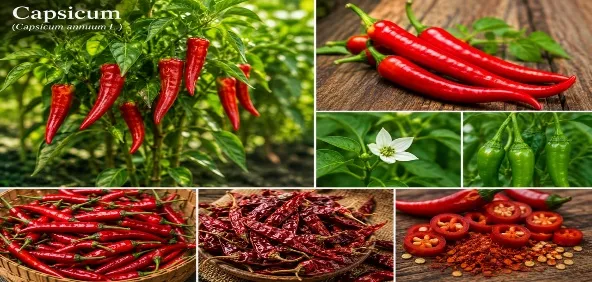
Figure 1: Capsicum Annuum
The substance that gives chilli peppers their searing and irritating properties is called capsaicin. Capsaicin is a useful tool in the study of pain since it causes pain in addition to the feeling of heat. Even though new methods have significantly improved our understanding of pain pathways, experimental instruments are still very important and frequently utilized. Consider capsaicin to be one of the most significant sources of information in the field of pain research among these fundamental experimental instruments for the investigation of pain processes and the creation of new analgesics. Strangely, a lot of recent research. [18] The substance in chilli peppers that gives them their "hot" taste, capsaicin, attaches itself to nociceptors in the skin, creating an initial neuronal stimulation and a brief period of increased sensitivity. This is believed to be caused by selective activation of afferent C fibers and the release of substance P. It is typically felt as burning, prickling, or itching along with cutaneous vasodilation. The ensuing hypalgesia is linked to the degradation of epidermal nerve fibers, according to studies. This is followed by a refractory period with decreased sensitivity and, following repeated applications, chronic desensitization, which may be caused by substance P.1 depletion. [19]
Synonyms: Chilli, Chilli Pepper, Red Pepper, Hot Pepper, Bell Pepper.
Active Chemical Constituents: The phenolic component capsaicin (8-methyl-N-vanillyl-6-nonenamide) in chilli peppers gives them their distinct flavour and pungency. With the exception of Capsicum annum, every plant in the Capsicum genus produces varying levels of capsaicin, which has been used as a spice ingredient and ingested by humans for more than 6000 years. [18] Capsaicinoids are a type of bioactive chemical that give C. annuum fruits their characteristic sharp flavour. Ninety percent of the intense, sharp flavour of pepper fruits was attributed to two primary capsaicinoids: capsaicin and dihydrocapsaicin. Peppers have been found to contain at least nine minor capsaicinoids in addition to capsaicin and dihydrocapsaicin. [20]
Geographical Sources: One of the most widely used and oldest crops is pepper (Capsicum spp.). It is thought to have originated in America and has been used for a very long period. There are more than 200 species in the genus Capsicum, and each fruit has a very different flavour and scent. Capsicum annuum, C. baccatum, C. Chinese, C. frutescens, and C. pubescens are the five main varieties of capsicum that are referenced in published publications. The tropical and humid regions of Central and South America are home to peppers belonging to the Capsicum species, which are highly valuable economically. [20]
2. Mentha /Menthol:
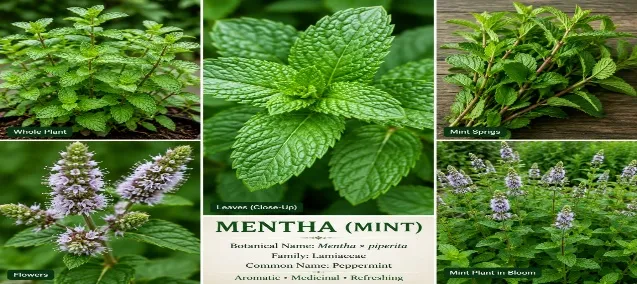
Figure 2: Mentha (Mint)
Peppermint, or Mentha × piperita L., is a sterile hybrid plant that was created by crossing M. aquatic with M. spicata. Originally from the Mediterranean region, this perennial herbaceous herb is grown as a significant hybrid in Iran. One of the most well-known genera in the Lamiaceae family, Mentha is named after the mythical Greek character "Minthe." Mint has been used for over 2,000 years and is a symbol of hospitality in many cultures. Ancient societies made considerable use of this plant, from traditional medicine to non-medical applications including cooking and aromatherapy. This plant's metabolites are widely utilized in the food industry as flavouring for meals and confections, as well as in the production of cosmetics, pain relievers, fever remedies, headaches, and colds. Mints' essential oils are marketed because of their economic, commercial, and health advantages. Numerous different chemo types make up these substances. The content of essential oils varies significantly depending on a number of elements, such as the harvest season, growing area, weather, genetic background, and extraction technique. Particularly on the leaf surface, glandular trichomes in members of the genus Mentha produce aromatic essential oils. The most common method for physically extracting essential oils is steam distillation, which involves crushing the leaves. [21]
Synonyms: Pudina, Brandy mint, Lamb mint, Peppermint oil.
Biological Sources: The fresh flowering tops of Mentha piperita and Mentha officinalis, both members of the Lamiaceae family, yield a variety of mint and peppermint oils that are used to make menthol, a monoterpene alcohol. [10]
Active Chemical Constituents: The essential oil content of M. piperita entire dried leaves is at least 12 mL/kg. The essential oil content of the chopped dried leaves is at least 9 mL/kg. Essential oils are secondary metabolites of aromatic plants that collect in the oil ducts, resin ducts, glands, or trichomes of plants. They have a complicated composition made up of a variety of chemical components, primarily hydrocarbons and oxygenated molecules. [22]
Geographical Sources: Mint plants, particularly Mentha piperita, which is native to Asia and Europe, are the primary source of menthol. [10]
3. Turmeric (Curcuma Longa):
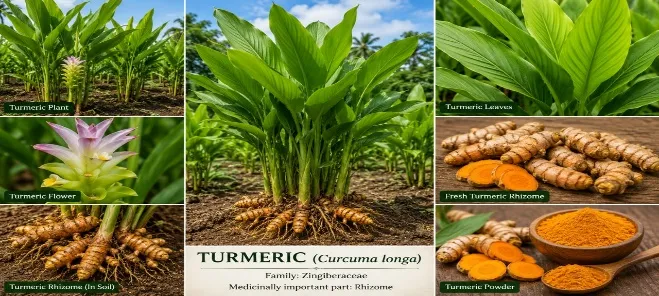
Figure 3: Turmeric (Curcuma Longa)
Numerous species of turmeric (Curcuma longa), a well-known member of the Zingiberaceae family—also referred to as the ginger family—have substantial ethnomedical and commercial importance. It is mostly a perennial herbaceous plant that is distinguished by its characteristic yellow rhizomes, which are the subterranean stems that are frequently used for industrial, culinary, and medicinal applications. Curcuminoids are the main bioactive components of turmeric, with curcumin being the most prevalent and well-researched. Turmeric's distinctive yellow hue is attributed to curcumin, a polyphenolic molecule with a wide range of biological properties. Curcumin's powerful antioxidant, anti-inflammatory, and anticancer activities have been demonstrated by contemporary pharmacological research, which has validated many traditional claims. In terms of taxonomy, Curcuma longa belongs to the genus Curcuma, which contains a number of species with similar morphologies but different chemical and geographical characteristics, including Curcuma zanthorrhiza (temulawak), Curcuma caesia (blue curcuma), and others. [23]
Synonyms: Curcuma Longa, Halad, Haldi.
Biological Sources: The presence of curcuminoids, a class of polyphenolic chemicals that give turmeric its distinctive colour and bioactivity, gives its thick, meaty rhizomes a vivid yellow to orange-yellow tint. [23]
Active Chemical Constituents: The concentration of active compounds, especially curcuminoids, which include curcumin, demethoxycurcumin, and bisdemethoxycurcumin, varies significantly among the kinds of turmeric (Curcuma longa). Curcumin levels ranged from 0.41% to 2.17%, demethoxycurcumin from 0.38% to 1.45%, and bisdemethoxycurcumin from 0.37% to 1.24%, according to a thorough analysis of 200 Indian turmeric accessions. [23]
Geographical Sources: India leads the world in both crop area and production of turmeric (Curcuma longa), which is mostly found in Bangladesh, Cambodia, Thailand, China, Malaysia, Indonesia, and the Philippines. Humid tropical settings that offer the warm temperatures and steady rainfall necessary for the plant's growth are ideal for its growth. For example, according to the ICAR-National Bureau of Soil Survey and Land Use Planning criteria, Kerala, India, a major producer of turmeric, has a climate with moderate to high humidity and evenly distributed rainfall [23]
4. Eucalyptus Plant:
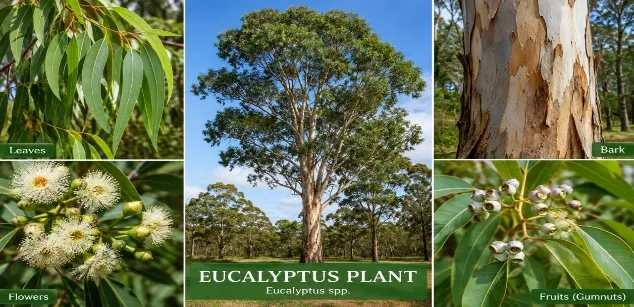
Figure 4: Eucalyptus Spp.
As rich sources of structurally diverse bioactive chemicals with a wide range of therapeutic potential, medicinal plants continue to play a significant role in both traditional and modern healthcare systems. The medicinal uses of eucalyptus species, especially E. globulus (Blue Gum), are well known. E. globulus is frequently used as an expectorant to reduce the symptoms of respiratory diseases including asthma and bronchitis. It is a common component of cough syrups and lozenges because of its effectiveness in treating minor respiratory tract inflammation. The main ingredient, 1,8-cineole (eucalyptol), is frequently added to mouthwashes and topical pain treatment formulations due to its anti-inflammatory qualities.[24] Folk medicine uses eucalyptus, a member of the Myrtaceae family, to treat a variety of illnesses and health issues. The plant or essential oil has been used to treat bronchial infections, rhinitis, and fever. [26] Eucalyptus is a member of the myrtle family and is categorized as an aromatic medicinal plant. The pharmaceutical and cosmetic industries frequently employ the essential oils of several Eucalyptus species because of their antibacterial and antioxidant qualities. The Council of Europe and the US Food and Drug Administration have assessed the widespread usage of eucalyptus species and their essential oils as safe and non-toxic. [25]
Synonyms: Blue gum, Tasmanian blue gum, Nilgiri/ Nilgiri tree.
Biological Sources: The perennial leaves of eucalyptus trees are fragrant due to the production and storage of essential oils (EOs) in secretary cells. These EOs are spicy, fragrant, and colourless or pale yellow, while some investigations have found a brownish or greenish hue. [26]
Active Chemical Constituents: Because of its many applications, the essential oil extracted from the leaves of this tree is among the most significant of all woody and non-woody trees. Esters, monoterpenes, aldehydes and ketones, or monoterpenes and sesquiterpenes are only a few of the compounds found in plant essential oils. These chemical compositions have a role in plants' defensive mechanisms against microbes and pests. The main components of EGEO are collected all summer long, and the time of plant organ harvesting is one of the most important factors influencing the amount of medicinal plant potency. Eucalyptus is widely used in traditional medicine, and its essential oil is one of the most well-liked and potent drugs. The active ingredient, 1,8-cineole, is probably responsible for many of these effects. The key component that all Eucalyptus species have in common is the oxygenated monoterpene composition of 1,8-cineole; a comparison of the active the primary ingredients of EGEO are harvested throughout the summer, and one of the most significant elements impacting the quantity of medicinal plant efficacy is the period of plant organ harvesting. [25]
5. Boswellia plant:
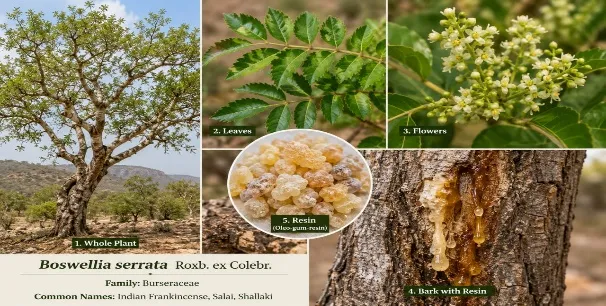
Figure 5: Boswellia Serrata:
One of the oldest and most prized herbs in Ayurveda is boswellia serrata. Boswellia is sometimes known by the Sanskrit name "Gajabhakshya," which implies that elephants like eating this herb. [27] The oleogum resin known as frankincense, or olibanum, is extracted from a variety of Boswellia trees. The ancient French term "frankincense," which means "pure incense," is where the word "frankincense" originates. Other names for frankincense include "luban" in Arabic, which means "white" or "cream," "libanos" in Greek, and "etan" in Ethiopia. Since ancient times, frankincense, or obbanum, has been used as incense. It has played a significant role in the creation of perfumes and cosmetics in recent years. Additionally, olibanum has antibacterial, sedative, anti-inflammatory, and anti-hyperlipidemic properties in traditional Chinese and Unani (Islamic) medicines. [28]
Synonyms: Indian Frankincense, Guggulu, Boswellia globra Roxb.
Biological Sources: The presence of essential oils gives the resins a fragrant scent, which explains their commercial significance. Gum-resin essential oil is one of the most often used oils in paints, varnishes, and aromatherapy. Pure oleo gum-resin that is harvested at the best time of year solidifies gradually while maintaining its transparency and golden hue. However, the colour can range from golden brown to dark brown to dark greenish-brown based on the area, time of year, tree size, wound surface, collection method, and storage. Additionally, autoxidation, polymerization, and enzymatic processes cause the colour of resin to darken. After the tree is injured in March or April, the resin is often harvested during the summer and fall. The Boswellia tree can only generate high-quality exudates for three years. The obtained resin's quality significantly declines after this time. As a result, following the harvesting season, the tree should be let to rest for a few years. [27]
Active Chemical Constituents: 5–9% oil, 60–70% alcohol-soluble fraction, and 25–30% water fraction makeup frankincense gum resin. Terpenoids, particularly the medicinally significant class of boswellic acids (BAs), are abundant in the lipophilic portion. Lipid-soluble blends of volatile and non-volatile terpenoids make up plant resins. The most significant substances in Boswellia sacra resin are boswellic acids and their derivatives, which provide the plant several therapeutic qualities. [29] The availability of natural resources is under strain due to the rising demand for frankincense, which eventually leads to the use of inferior materials or adulteration and substitution. The standard index for evaluating the quality of boswellia gum resin and its products was the content of six boswellic acids: keto boswellic acid (1), 3-O-Acetyl 11-keto β-boswellic acid (2), α-Boswellic acid (3), β-Boswellic acid (4), 3-O-Acetyl-ß-boswellic acid (5), and 3-O-Acetyl-β-boswellic acid (6). [30]
Geographical Sources: About 25 species of Boswellia (Burseraceae) plants are used as sources of frankincense resin, which is released from incisions in the bark of these trees. These species are found throughout the northeastern coast of Africa, India, and Arabia. According to earlier reports, the trees referred described as "true frankincense-producing trees" could actually be any of a number of major Boswellia species, depending on the region in question. These species are mentioned below. [31]
Important Constituents and Mechanisms:
Curcuminoids: Curcumin is a pleiotropic chemical with several modes of action. Through a variety of mechanisms, it suppresses the mRNA expression of inflammatory mediators such as matrix metalloproteinases (MMPs), interleukin-1β (IL-1β), and tumor necrosis factor-α (TNF-α). Curcumin inhibits the cytoplasmic phospholipase A2 (cPLA2), cyclooxygenase 2 (COX-2), and 5-lipoxygenase (5-LOX) pathways, protects IL-1β-induced apoptotic chondrocytes, and reduces the early degenerative changes of articular cartilage. Curcumin guaranties quicker muscle recovery and helps lessen muscle discomfort and injury, as seen by the decrease in lactate dehydrogenase (LDH) levels. By regulating pro-inflammatory cytokines such TNF-α, IL-6, and IL-8, it has an anti-inflammatory and antioxidant effect. [32]
Capsaicinoids: TRPV1 cDNA. In neurons, cation (Ca2+) influx through TRPV1 causes membrane depolarization, leading to the activation of voltage-gated sodium channels and the generation of an action potential. It was very recently reported that the capsaicin-evoked action potentially follows a physical interaction between TRPV1 and anoctamin 1, a calcium-activated chloridchannel, resulting from the entry of Ca2+ through the TRPV1 pore and that such interaction is relevant for the enhancement of nociception. There has been discussion about the potential presence of additional capsaicin receptor targets due to some of the TRPV1-independent pharmacological actions. Although the lowest active dose (50 µM) required to inhibit STAT3 is much higher than the concentration (1–5 µM) typically required to stimulate TRPV1, there is conflicting evidence regarding the possibility that capsaicin may be an inhibitor of signal transducer and activator of transcription 3 (STAT3). [33]
Menthol: Targeting thermo-TRPs, which are ion channels in the transient receptor potential (TRP) super family that are triggered by specific temperature thresholds, is a new and exciting approach to pain management. Two of these channels (TRPA1 and TRPM8) are sensitive to cold, while four (TRPV1–TRPV4) react to heat. The ion channel TRPM8 modifies the amount of potassium and sodium that passes through these nerve cells' membranes. These ions' concentrations regulate how much glutamate is released by cells. Other nerve cells that transmit pain signals can be inhibited by glutamate produced from TRPM8-containing nerve cells. Therefore, the transmission of pain signals is blocked when cooling chemicals activate TRPM8 nerve cells. [34]
Boswellic Acid: The pro-inflammatory enzyme 5-lipoxygenase (5-LO), which produces 5-hydroxyeicosatetraenoic acid (5-HETE) and leukotriene B4 (LTB-4) and causes bronchoconstriction, chemotaxis, and increased vascular permeability, was found to be inhibited by boswellic acids. While boswellic acids appear to be a specific 5-LO inhibitor, other anti-inflammatory plant components like quercetin also block this enzyme, but they do so more broadly as an antioxidant. 5-LO produces inflammatory leukotrienes, which promote calcium dislocation, free radical damage, cell adhesion, and the migration of inflammatory cells to the affected area of the body. Boswellic acids have been demonstrated to considerably decrease glycosaminoglycan breakdown, in contrast to non-steroidal anti-inflammatory medicines (NSAIDS), which are widely known to interfere with glycosaminoglycan synthesis, hence speeding articular damage in arthritic conditions. [27]
CONCLUSION:
Musculoskeletal pain is a major health concern that affects the quality of life, mobility, and daily functioning of individuals. Although conventional pharmacological treatments, such as non-steroidal anti-inflammatory drugs (NSAIDs) and analgesics, are commonly used for pain management, their prolonged use may be associated with adverse effects. Therefore, topical phytotherapy has emerged as a promising complementary approach for managing musculoskeletal pain by delivering plant-derived bioactive compounds directly to the affected area. Medicinal plants such as turmeric (Curcuma longa), Capsicum species, peppermint (Mentha × piperita), eucalyptus (Eucalyptus globulus), and Boswellia serrata contain important phytoconstituents, including curcuminoids, capsaicinoids, menthol, 1, 8-cineole, and boswellic acids. These compounds exhibit potential analgesic, anti-inflammatory, and antioxidant activities through mechanisms involving the modulation of inflammatory mediators, inhibition of inflammatory signalling pathways, and regulation of pain-related sensory receptors. Topical formulations such as gels, creams, ointments, sprays, and patches may improve localized drug delivery and offer an alternative or complementary option to conventional treatments. However, the therapeutic effectiveness of these formulations depends on the quality and concentration of phytoconstituents, formulation characteristics, skin permeation, stability, and safety. Despite promising pharmacological findings, further research is necessary to establish their clinical efficacy, optimal concentrations, and long-term safety through standardized formulations and well-designed clinical trials.
REFERENCES





D. R. Vasave, J. K. Chavan, M. D. Pendharkar, N. P. Patil, S. P. Pawar, Topical Phytotherapy for Musculoskeletal Pain: A Comprehensive Review of Formulation, Skin Permeation and Clinical Efficacy, Int. J. of Pharm. Sci., 2026, Vol 4, Issue 11, 3582-3593. https://doi.org/10.5281/zenodo.24394080
 10.5281/zenodo.24394080