

We use cookies to ensure our website works properly and to personalise your experience. Cookies policy
Pharmaceutical Chemistry Department, Amar Shaheed Baba Ajit Singh Jujhar Singh Memorial College of Pharmacy, BELA (An Autonomous College), Rupnagar, Punjab 140111.
Indapamide and propranolol hydrochloride are active pharmaceutical ingredients used to treat cardiovascular disorder. For the simultaneous determination, a reliable analytical method is required to obtain adequate chromatographic separation and reproducible quantitative result. The present study was undertaken to develop and validate a simple, reliable, accurate and precise RP-HPLC method for simultaneous quantitative determination of propranolol hydrochloride and indapamide. Chromatographic conditions were optimised to provide adequate separation and satisfactory peak characteristics of both analytes. The developed method was validated for linearity, accuracy, precision, limit of detection, limit of quantification and robustness. Both drugs were tested for linearity over the concentration range of 10–60 µg/mL. The optimised RP-HPLC method gave well resolved peaks of propranolol hydrochloride and indapamide with retention times of 3.717 min and 13.208 min respectively. Both analytes showed good linearity within the investigated concentration range with reported coefficients of determination (R2) of 0.99986 for propranolol hydrochloride and 0.9991 for indapamide. The %RSD was found to be less than 2% in precision studies and recovery was found to be in the acceptable range of 95-105% in accuracy studies. The method also showed satisfactory robustness towards intentional changes in some chromatographic parameters. The developed RP-HPLC method was successfully validated and found to be linear, accurate, precise and robust for the simultaneous quantitative determination of propranolol hydrochloride and indapamide. The method can be employed as a suitable analytical procedure for the quantitative analysis of these drugs in pharmaceutical quality-control applications.
High-Performance Liquid Chromatography (HPLC) is one of the most powerful tools in analytical chemistry. It can separate , identify and quantify the compounds present in a liquid sample [1]. Analytical method development and validation is important in pharmaceutical analysis which covers discovery, development and manufacturing of pharmaceutical products. HPLC is frequently applied in pharmaceutical analysis, providing reliable separation and quantitative determination of drug substances and their formulations[2]. Propranolol hydrochloride is used for some heart problems. It is indicated in the treatment of hypertension, angina pectoris and cardiac dysrhythmias[3]. Propranolol is a non-selective beta-adrenergic receptor blocker. It blocks β1 and β2 receptors causing a decrease in heart rate and cardiac output. It decreases the amount of oxygen that the heart requires and lowers blood pressure[3][4].Indapamide is a diuretic used for the treatment of hypertension, either alone or in combination with other anti-hypertensive agents Indapamide works on the nephron, especially at the proximal part of the distal convoluted tubule[5]. It inhibits the Na⁺/Cl⁻ cotransporter and thereby reduces sodium reabsorption. The chemical structures of propranolol hydrochloride and indapamide are presented in Figure 1[3][6]. This promotes the urinary excretion of sodium and water and contributes to its antihypertensive effect[7]. The different physicochemical properties, such as polarity, solubility, pKa values, and UV absorption behaviour of propranolol hydrochloride and indapamide, make their simultaneous estimation a challenge from an analytical point of view[8]. Therefore, high-performance liquid chromatography (HPLC) especially, reversed-phase HPLC (RP-HPLC) is the method of choice because it provides good selectivity, sensitivity, accuracy and reproducibility for the analysis of multicomponent pharmaceutical formulations.Various analytical methods have been reported for determination of propranolol hydrochloride and indapamide alone or in combination with other pharmaceutical compounds[9]. However, simultaneous analysis of both drugs requires chromatographic conditions that provide adequate separation of their peaks while maintaining satisfactory peak shape and reproducible quantitative response. Selection and optimization of the mobile phase, pH, flow rate, detection wavelength, and other chromatographic parameters are therefore important for obtaining reliable simultaneous determinationIn view of these analytical considerations, the present study was undertaken to develop and validate an optimized RP-HPLC method for the simultaneous quantitative determination of propranolol hydrochloride and indapamide[8]. The developed method was evaluated for its linearity, accuracy, precision, limit of detection, limit of quantification, and robustness to establish its suitability for pharmaceutical analytical applications[10].
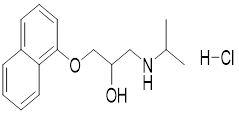
Propranolol hydrochloride
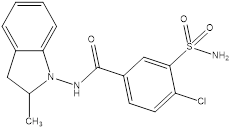
Indapamide
Figure 1
MATERIAL AND METHODS
Reagents and Solvents
Propranolol hydrochloride and indapamide reference standards were used for development and validation of the proposed RP-HPLC technique. HPLC-grade solvents and reagents were used throughout the analytical procedure.
Table 1. List of reagents
|
Reagents/ Solvents |
Source |
|
Propranolol hydrochloride |
BDL |
|
Indapamide |
BDL |
|
Methanol |
Merck Lifescience |
|
Acetonitrile |
Merck Lifescience |
|
HPLC water |
Merck Lifescience |
|
Potassium dihydrogen phosphate |
Aventor Performance Material Pvt Ltd |
Instrumentation
Table 2. List of instruments
|
Instrument |
Make/ model |
|
HPLC |
Shimadzu LC2010CHT |
|
Vortex shaker |
Remi CM 101 |
|
Analytical balance |
Ohaus EX225D |
|
Water purification system |
Elga Q7 |
|
pH meter |
Thermo Scientific |
|
Bath sonicator |
PCI |
|
Cooling centrifuge |
Remi Scientific Instrument |
|
FTIR spectroscopy |
Perkin Elmer |
Blank: 0.5ml of Diluent was filtered through the 0.22 µ Millipore membrane filters and injected to HPLC.
Standard solution preparation: Standard stock solution containing Propranolol HCl and Indapamide(100µg/ml) was prepared with Diluent. Preparation of standard solution: 100ml Diluent was taken and Propranolol HCl (10mg) and Indapamide (10mg) were added in it.
Stock solution: 5ml of supernatant was taken into 50ml volumetric flask and volume was made to 50mL with diluent to obtain a stock solution of 100µg/ml for HPLC analysis.
Working solution: 0.4ml of stock solution was accurately measured and diluted with diluent to a final volume of 1mL to give the solution of 40µg/ml (100%). The prepared solution was filtered through a 0.22 µm Millipore membrane filter to remove any particles and injected into the HPLC system for analysis.
RESULT AND DISCUSSION
Chromatographic method development:
The chromatographic method was developed by conducting a series of trials to achieve suitable separation of propranolol hydrochloride and indapamide. The optimized RP-HPLC conditions were isocratic elution with 10 mM KH2PO4 and acetonitrile (62:38, v/v) and the mobile phase was adjusted to pH 3.0 with orthophosphoric acid. Detection was performed at 270 nm, with a flow rate of 1 mL/min, injection volume of 20 µL, column temperature of 30°C and total run time of 17 minutes. Methanol was the diluent. Under these conditions, retention times of 3.717 min for propranolol hydrochloride and 13.208 min for indapamide were reported which indicated their separation in the selected chromatographic system.
Table 3. Optimisation of Chromatographic Conditions in the Development of RP-HPLC Method
|
Trial |
Mobile phase |
Detection wavelength |
Flow rate |
Observation |
|
Trial 1 |
KH₂PO₄:ACN (40:60, v/v), pH 3.0 |
254 nm |
1.0 mL/min |
A clear peak at approximately 5.98 min was observed for the primary analyte, while no distinct peak was observed for indapamide. |
|
Trial 2 |
KH₂PO₄:ACN (60:40, v/v), pH 3.0 |
270 nm |
1.0 mL/min |
Inadequate separation was observed, with early elution and interference for indapamide. |
|
Trial 3 |
KH₂PO₄:ACN (70:30, v/v), pH 3.0 |
270 nm |
1.0 mL/min |
Multiple overlapping and closely eluting peaks were observed, indicating poor separation. |
|
Optimized method |
KH₂PO₄:ACN (62:38, v/v), pH 3.0 |
270 nm |
1.0 mL/min |
Clear and distinguishable peaks were obtained for both analytes. |
Optimized Chromatographic Conditions:
Table 4. Condition for optimized chromatographic method
|
Stationary Phase |
C18 column (250mm X 4.6, 5µm ) |
|
Elution Mode |
Isocratic Mode |
|
Mobile phase |
10mM KH2PO4:ACN (62:38) pH 3.0 adjust pH with OPA |
|
Detector |
UV |
|
Absorption maxima |
270nm |
|
Column Temperature |
30 ᵒC |
|
Flow rate |
1ml/min |
|
Injection volume |
20µl |
|
Run Time |
17 min |
|
Diluent |
Methanol |
Table 5. Retention time and area of working solution (40µg/ml) of Propranolol HCl and Indapamide
|
Analyte |
Test concentration |
Retention time |
|
Propranolol hydrochloride |
40 µg/mL |
3.717 min |
|
Indapamide |
40 µg/mL |
13.208 min |
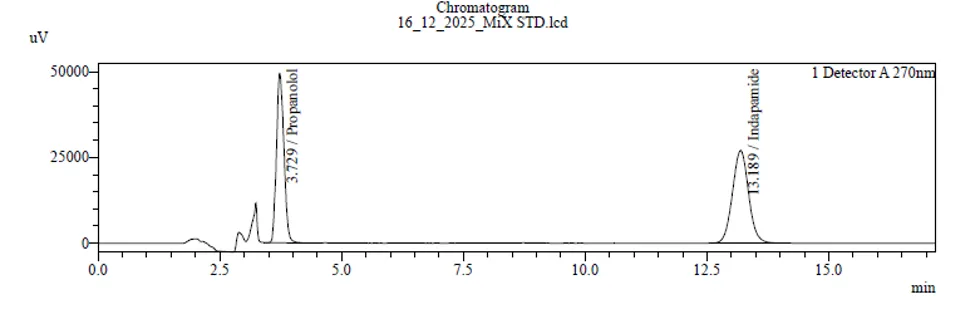
Figure 2.Chromatogram of Optimized method
Determination of chromatogram of Blank & Standard (Propranolol HCl and Indapamide)
The HPLC analysis of the standard solutions of Propranolol HCl and Indapamide at 40µg/ml was optimized and examined in accordance with the suggested methodology.
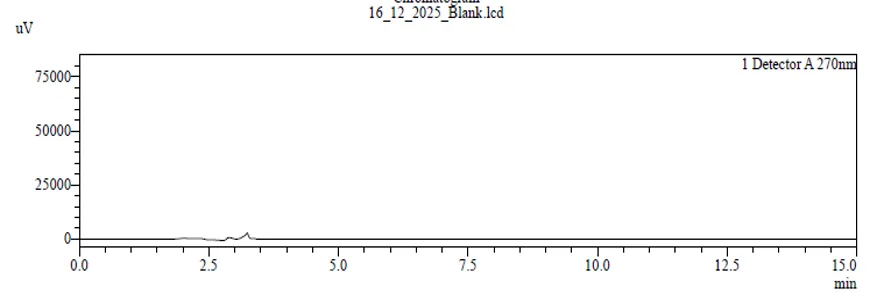
Figure 3. Chromatogram of blank
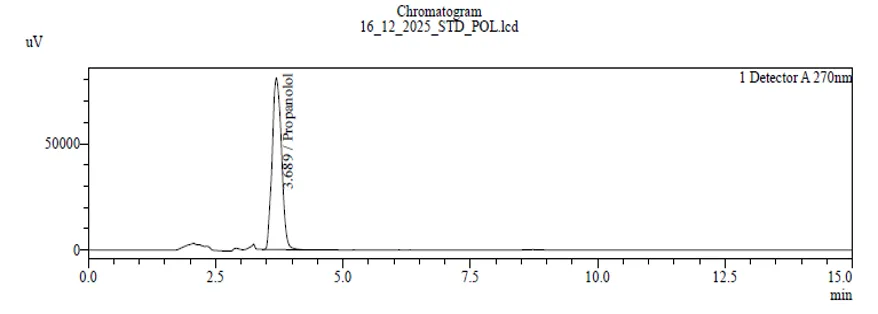
Figure 4. Chromatogram of Propranolol HCl
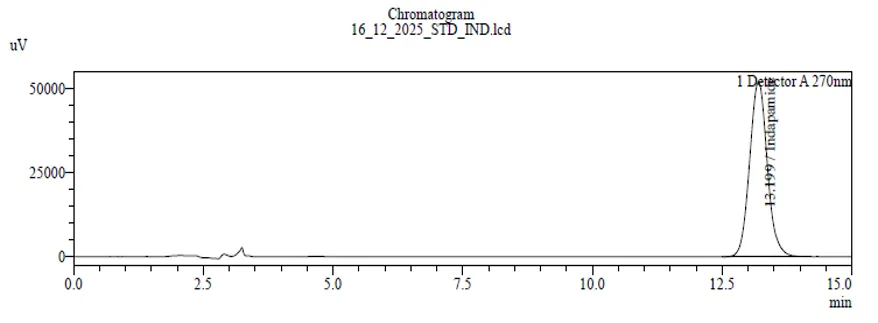
Figure 5. Chromatogram of Indapamide
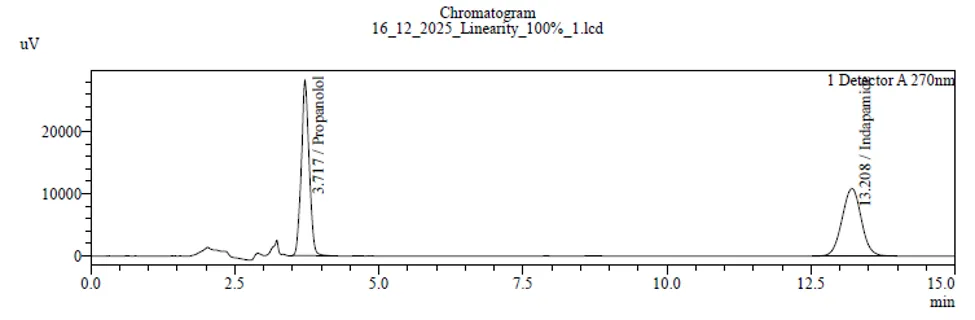
Figure 6. Chromatogram of working solution 40(µg/ml) of Propranolol HCl and Indapamide
Pre-formulation Studies
The aim of preformulation studies is to investigate the physical and chemical properties of the drug Propranolol Hydrochloride and Indapamide.
Organolaptic Properties
Both Propranolol Hydrochloride and Indapamide were found to be fine, odourless powders, with Propranolol Hydrochloride appearing off-white and Indapamide white, confirming their typical organoleptic characteristics as reported in literature.
Melting Point
The melting point of Propranolol Hydrochloride and Indapamide was determined by capillary tube method. Propranolol Hydrochloride exhibited a melting point between 163–164°C while Indapamide showed 161-162°C, indicating that both compounds were thermally stable and free from major impurities
UV Spectroscopy
The absorption maxima of Propranolol HCl and Indapamide were found as 270nm and 240nm, respectively similar to literature. Overlain spectra of Propranolol HCl and Indapamide were showing Isobestic points at 280nm.
Calibration curve
Table 6. Calibration curve of Propranolol hydrochloride
|
Sr. No. |
Concentration (µg/ml) |
Area ± SD |
|
1 |
10 |
22708±285.2128 |
|
2 |
20 |
115515±2120.83 |
|
3 |
30 |
227978±1740.10 |
|
4 |
40 |
343687±1745.93 |
|
5 |
50 |
461761±625.263 |
|
6 |
60 |
568141±1570.69 |
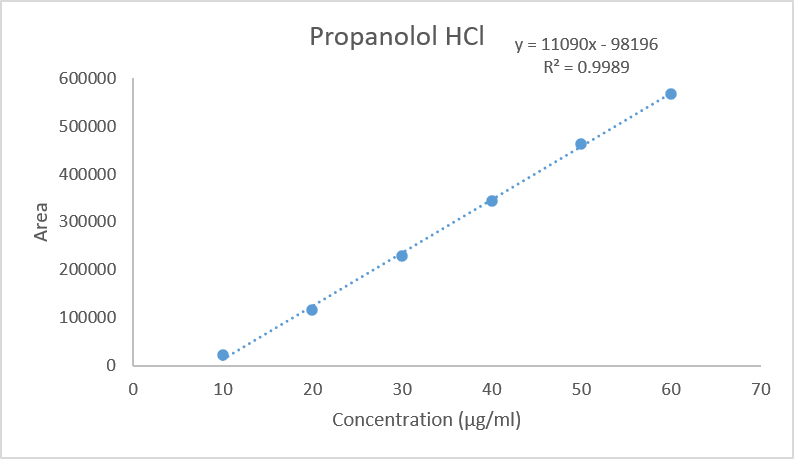
Figure 7 Graph of standard calibration curve of Propranolol HCl by RP-HPLC
Table 7. Calibration curve of Propranolol HCl
|
Statistical parameters |
Results |
|
Regression equation Y=mx-C |
Y= 11090x-98196 |
|
Slope |
11090 |
|
Intercept |
98196 |
|
Correlation Coefficient r2 |
0.99986 |
Result: -The calibration curve for Propranolol HClwas prepared ranging 10 to 60µg/ml solution. The calibration curve indicated the regression equation Y= 11090x-98196 and R2 value 0.99986 showed good linearity
Table 8. Calibration curve of Indapamide
|
Sr. No. |
Concentration (µg/ml) |
Area ± SD |
|
1 |
10 |
20386±138.68 |
|
2 |
20 |
112603±1226.3 |
|
3 |
30 |
225988±1568.7 |
|
4 |
40 |
341381±1224.5 |
|
5 |
50 |
454051±1980.04 |
|
6 |
60 |
563611±2218.77 |
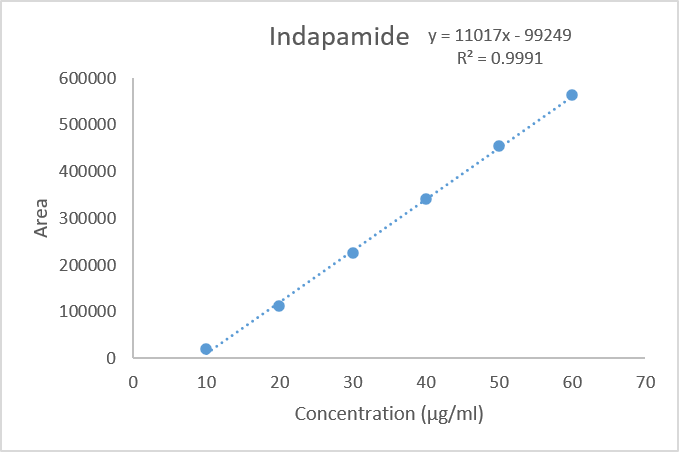
Figure 8. Graph of standard calibration curve of by Indapamide RP-HPLC
Table 9 Statistical parameters for estimation of Indapamide
|
Statistical parameters |
Results |
|
Y= mx+C |
Y=11017x-99249 |
|
Slope (m) |
11017 |
|
Intercept (C) |
99249 |
|
Correlation Coefficient(r2) |
0.9991 |
Result: -The calibration curve for Indapamidewas prepared ranging 10 to 60µg/ml solution. The calibration curve indicated the regression equation YY=11017x-99249 and R2 value 0.9991 showed good linearity.
Linearity
The suggested RP-HPLC technique was found to be linear for propranolol hydrochloride and indapamide in the concentration range of 10-60µg/mL. Each drug exhibited a similar concentration dependant response with the analytical response increasing with increasing drug concentration. The calibration datashowed strong coefficients of determination (R 2 =0.99986 for propranolol hydrochloride and 0.9991 for indapamide) suggesting good linear connection between concentration of the analytes and their respective peak regions. To summarize, the results confirmed that the method devised achieved good linearity in the given concentration range.
Accuracy
Table 10. Accuracy study of Propranolol hydrochloride and Indapamide
|
Analyte |
Level |
Concentration |
Mean recovery (%) |
%RSD |
|
Propranolol HCl |
50% |
20 µg/mL |
100.84 |
0.50 |
|
Propranolol HCl |
100% |
40 µg/mL |
100.18 |
0.37 |
|
Propranolol HCl |
150% |
60 µg/mL |
100.48 |
0.54 |
|
Indapamide |
50% |
20 µg/mL |
99.15 |
0.26 |
|
Indapamide |
100% |
40 µg/mL |
99.02 |
0.38 |
|
Indapamide |
150% |
60 µg/mL |
98.74 |
0.23 |
Result: The accuracy was calculated through percentage recovery of the Propranolol HCl and Indapamide. The percentage recovery of Propranolol HCl and Indapamide was found to be more than 95% indicating good accuracy of the developed method. It is pertinent to add here that the% RSD in each case was found less than 2 indicating the results were repeatable.
Precision
Table 11. Precision study of Propranolol hydrochloride and Indapamide
|
Analyte |
Study |
Mean recovery (%) |
%RSD |
|
Propranolol HCl |
Intra-day |
100.31 |
0.14 |
|
Propranolol HCl |
Repeatability |
99.55 |
0.51 |
|
Propranolol HCl |
Inter-day |
100.05 |
0.14 |
|
Indapamide |
Intra-day |
99.34 |
0.30 |
|
Indapamide |
Repeatability |
99.30 |
0.12 |
|
Indapamide |
Inter-day |
99.26 |
0.04 |
The precision results indicated good reproducibility for both analytes. For propranolol hydrochloride, the percentage relative standard deviation (%RSD) was 0.14% for intra-day precision, 0.51% for repeatability and 0.14% for inter-day precision. The %RSD values for indapamide were 0.30% for intra-day precision, 0.12% for repeatability and 0.04% for inter-day precision. The low %RSD values achieved for both drugs indicate that the developed analytical method has satisfactory precision and reproducibility.
LOD and LOQ
The LOD and LOQ of developed method were studied as per ICH guidelines
Table 12. Data of LOD and LOQ
|
Sr. no. |
Name |
LOD (µg/ml) |
LOQ (µg/ml) |
|
1 |
Propranolol HCl |
0.28 |
0.35 |
|
2 |
Indapamide |
0.86 |
1.06 |
Robustness
Table 13. Robustness of Propranolol hydrochloride and Indapamide with deliberate change in flow rate
|
Analyte |
Condition |
Mean recovery (%) |
%RSD |
|
Propranolol HCl |
Flow rate 0.9 mL/min |
100.16 |
0.048 |
|
Propranolol HCl |
Flow rate 1.1 mL/min |
100.46 |
0.138 |
|
Indapamide |
Flow rate 0.9 mL/min |
99.19 |
0.14 |
|
Indapamide |
Flow rate 1.1 mL/min |
99.53 |
0.116 |
|
Propranolol HCl |
269 nm |
100.19 |
0.179 |
|
Propranolol HCl |
272 nm |
100.40 |
0.123 |
|
Indapamide |
269 nm |
99.23 |
0.049 |
|
Indapamide |
272 nm |
99.44 |
0.258 |
There shouldn't be a percentage RSD more than 2. It was discovered that the %RSD for the wavelength and flow rate change was less than 2, falling inside the acceptable range. Thus, the approach was reliable because all the reported %RSD values were below 2%
Comparison with previous analytical work
Literature review explained the previous work on RP-HPLC method with propranolol hydrochloride and indapamide as individual and in combination of other drugs. One of the cited literature is a validated RP-HPLC method for indapamide in bulk and tablet dosage form . Other recent HPLC studies in other pharmaceutical combinations show the continued relevance of systematic method optimization and validation. In this work a simultaneous standard-solution procedure for the two selected analytes is reported . A direct numerical comparison with other methods is only appropriate where the published methods use comparable analyte concentrations, matrices, stationary phases and validation designs.
DISCUSSION
The present study was aimed at developing and validating an RP-HPLC method for simultaneous estimation of propranolol hydrochloride and indapamide. The analytical method was developed by systematic study of the physicochemical properties of drug substances, UV absorption behavior and chromatographic separation and then validated the optimized method.Propranolol hydrochloride was obtained as off white fine powder and indapamide as white fine powder. Both were odorless. The melting-point ranges obtained for propranolol hydrochloride and indapamide were 163–164 °C and 161–162 °C, respectively, and were within the reported ranges. These observations were in line with the expected properties of the two drug substances
The chromatographic development required several trials because the initial conditions did not provide adequate separation of both analytes. In the preliminary trials, either a distinct response for one analyte was absent or the compounds showed early elution, closely spaced peaks, and inadequate resolution. Such chromatographic behaviour would make reliable simultaneous quantification difficult. Following optimization of the chromatographic conditions, clearly distinguishable peaks were obtained for both compounds. The optimized method produced retention times of 3.717 min for propranolol hydrochloride and 13.208 min for indapamide at a working concentration of 40 µg/mL.The method demonstrated concentration-dependent response for both analytes in the studied concentration range of 10–60 μg/mL. The correlation between the analyte concentration and chromatographic response was good, as evidenced by the coefficients of determination of 0.99986 for propranolol hydrochloride and 0.9991 for indapamide. Thus the selected concentration range was suitable for the quantitative determination of both drugs. The results of accuracy studies indicated that the method produced results close to the expected concentrations at the selected levels of recovery. The mean recovery of propranolol hydrochloride was 100.84%, 100.18% and 100.48% at 50%, 100% and 150% levels respectively. The respective mean indapamide recoveries were 99.15%, 99.02% and 98.74%. The small variation seen in these experiments demonstrates the accuracy of the method for determination of both analytes in the studied range.Sensitivity of the method was evaluated by determination of LOD and LOQ using the equations described in the thesis. The values obtained were 0.28 and 0.35 µg/mL for propranolol hydrochloride and 0.86 and 1.06 µg/mL for indapamide, respectively. The results showed that the developed procedure was sensitive enough to detect and quantify both analytes at concentrations below the lowest level studied during the linearity study
Robustness studies were carried out by intentionally changing the wavelength and flow rate around the optimised conditions. The %RSD values obtained were still lower than the stated acceptance criterion of 2%. The small changes in analytical response with these deliberate variations suggest that the method was not sensitive to the chromatographic conditions investigated to a large extent. This property is useful for routine laboratory work, where small changes in operating conditions may occur from day to day.
The results obtained as a whole suggest that the developed RP-HPLC method was able to achieve satisfactory separation, with acceptable linearity, accuracy, precision, sensitivity and robustness for propranolol hydrochloride and indapamide. The optimised retention times and consistent validation results demonstrated the potential of the method for routine quantitative analysis of the two drugs in combined pharmaceutical formulations. Therefore, the study offers an analytical procedure that can be considered suitable for further application in pharmaceutical quality-control analysis, within the scope of the conditions investigated
CONCLUSION
An RP-HPLC procedure was developed and evaluated for simultaneous estimation of propranolol hydrochloride and indapamide. The selected chromatographic condition employed a C18 column, phosphate buffer-acetonitrile mobile phase at a 62:38 ratio, pH 3.0, a flow rate of 1.0 mL/min, UV detection at 270 nm, a 20-µL injection volume and a 30°C column temperature. The reported retention times were 3.717 min for propranolol hydrochloride and 13.208 min for indapamide.
Both analytes exhibited strong linear response between 10 and 60 µg/mL. Recovery experiments gave values close to the nominal concentrations, while repeatability, intra-day precision and inter-day precision produced low RSD values. The reported LOD and LOQ values support the sensitivity observed in the standard-solution experiments. Robustness testing showed limited variation after the investigated changes in flow rate and detection wavelength.
Overall, the experimental results support the suitability of the investigated procedure for quantitative determination of propranolol hydrochloride and indapamide in the tested standard solutions. Before claiming routine analysis of a marketed combined dosage form, the corresponding assay results should be inserted and verified from the original laboratory records. Similarly, a stability-indicating claim should be made only when the relevant forced-degradation results are available.
ACKNOWLEDGMENT
Both authors feel thankful to director sir and management committee of pharmacy for providing facility for research work.
CONFLICT OF INTEREST: No
REFERENCES


Amisha Bansanwal, Suman Lata, RP-HPLC Method Optimization and Validation for the Simultaneous Determination of Propranolol Hydrochloride and Indapamide, Int. J. of Pharm. Sci., 2026, Vol 4, Issue 8, 5302-5312. https://doi.org/10.5281/zenodo.22219119
 10.5281/zenodo.22219119