
View Article

Abstract

Spherical cocrystal technology is an advanced approach used to improve the performance of pharmaceutical drugs, especially those with poor solubility and flow properties. In this technique, an active pharmaceutical ingredient (API) is combined with a suitable coformer to form cocrystals, which are then shaped into spherical particles. The addition of polymers plays a crucial role in this process by improving the stability, uniformity, and surface characteristics of the particles. Polymers help in controlling crystal growth, preventing aggregation, and enhancing wettability, which leads to better solubility and dissolution rate of the drug.Moreover, spherical cocrystals exhibit improved flowability and compressibility, making them highly suitable for tablet formulation without the need for additional excipients. This reduces manufacturing complexity and cost. Polymers such as HPMC, PVP, and PEG are commonly used due to their biocompatibility and effectiveness in modifying drug properties. Overall, polymer-assisted spherical cocrystal technology offers a promising strategy to overcome limitations of poorly soluble drugs and enhance their bioavailability and processing characteristics in pharmaceutical development

Keywords

Spherical cocrystals, Polymers, Solubility enhancement, Flowability, Compressibility

Introduction

× Popup Image

Spherical cocrystal technology is an emerging and innovative approach in pharmaceutical formulation aimed at improving the physicochemical and mechanical properties of drug substances. Many active pharmaceutical


ingredients (APIs) suffer from poor solubility, low flowability, and inadequate compressibility, which can limit their effectiveness and complicate manufacturing processes.1-2 To overcome these challenges, cocrystallization is used, where an API is combined with a suitable coformer to form a stable crystalline structure without altering its pharmacological activity. In spherical cocrystal technology, these cocrystals are further modified into spherical agglomerates using techniques such as spherical crystallization. This transformation improves particle size distribution, surface morphology, and micromeritic properties. The spherical shape enhances powder flow and packing ability, making the material more suitable for direct compression into tablets.3

Polymers play a vital role in this technology by acting as crystallization modifiers and stabilizers. They help control nucleation and crystal growth, prevent aggregation, and improve wettability and dissolution behavior. As a result, spherical cocrystals not only enhance drug solubility and bioavailability but also simplify downstream processing.4-5

Direct tableting of active pharmaceutical ingredients (APIs) is possible when powders have a good flow property and compression characteristics, which is a problem for major of the active ingredients that have poor compressibility and flow. However, on addition of excess amount of diluents or by wet or dry granulation satisfactory results can be obtained.6-8 The addition of excess amount of directly compressible diluents is not favored, as they may increase the compressibility but may not increase the flow property of powder blend while wet granulation is a process that consumes time, energy, and required maintenance of lot of documentation.9 The spherical crystallization (SC) is a technique, which has shown promising results in the improvement of particle size, flowability and compression characteristics of active pharmaceutical agents. The SC by the spherical agglomeration (SA) method is defined as an agglomeration process that transforms crystals directly into a compacted spherical form during the crystallization stage and this process also ensures the tablet size reduction by omitting the use of large amounts of fillers.10 The direct compression method for tablet manufacturing is cost efficient and easy to validate. Various other techniques such as hydrotropy, sono crystallization, hot melt extrusion technique, steam aided granulation, floating granulation, dried nano suspensions, liquisolid technology, and cryo techniques are available for improvement of solubility, but SA technique not only increases the dissolution it also improves the powder characteristics of the active ingredient.

2 Spherical Crystallization Techniques

2.1 Spherical agglomeration method

In this process, drug is dissolved in a system of water, ethanol and chloroform behaving as poor solvent, good solvent, and bridging liquid, respectively.11 As the drug solution is poured in the poor solvent simultaneous crystallization of the API takes place, a third liquid known as bridging liquid that has low miscibility with the poor solvent but having a good affinity with the drug is added in a controlled manner to the crystallization vessel.12 Therefore, it forms a bridge between the particles and cause binding of the particles.13 In this process, it should be taken care of that the good solvent and poor solvent should have greater affinity than drug affinity of drug and the good solvent.14-15 The process is shown in Figure 1.
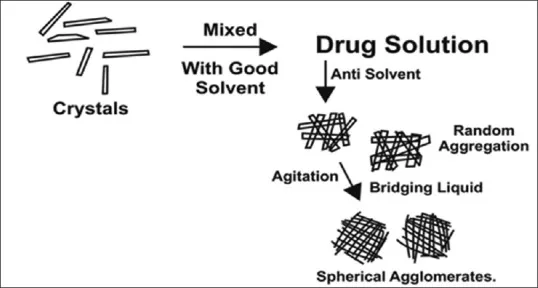


Fig 1. Process of spherical agglomeration2


2.2 Crystallo-co-agglomeration

As the crystallo-co-agglomeration (CCA) fig 2 name suggests, the crystallization takes place in the presence of an external inert material or diluents.16 SC technique17 limited its applicability only to the high dose pharmaceuticals whereas CCA was effective in case of low dose active ingredients utilizing another active ingredient or a diluent such as talc, sodium starch glycolate, and starch. Some researchers have utilized another pharmaceutical entity as a substrate for developing mixed dose spherical crystals.18
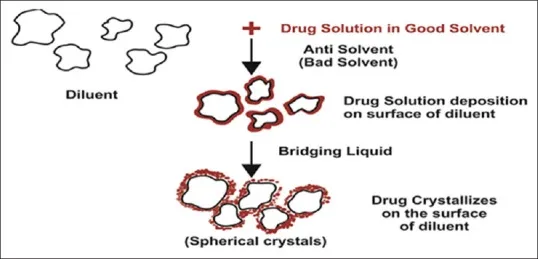


Fig 2. Crytsallo-co-agglomeration process for preparation of spherical crystals2


2.3 Ammonia diffusion system

In this technique, ammonia water acts both, as a good solvent and a bridging liquid in one single step.19 API's which are zwitterionic in nature, are soluble in acidic and alkaline solution but insoluble in neutral and organic solvents, by virtue of which, makes it difficult to use the general SA techniques.20 Ammonia water (predominantly alkaline) solution of drug when added to the mixture of a water miscible and immiscible organic solvent, the ammonia water diffuses out to the outer layer of organic solvents, the residual ammonia water acts as bridging liquid thereby binding the crystals simultaneously and producing larger uniform shaped particles.21


  1. Role of Polymers in Enhancing Physicochemical and Mechanical Properties of Drugs

Polymers play a very important role in modern pharmaceutical formulation. Many drugs, especially new chemical entities, have problems like poor solubility, low stability, poor flowability, and weak compressibility. These issues can reduce drug effectiveness and create difficulties during manufacturing. To overcome these challenges, polymers are widely used as excipients because they can modify and improve both physicochemical and mechanical properties of drugs.22

What are Polymers?

Polymers are large molecules made up of repeating units called monomers. In pharmaceuticals, polymers can be natural (like starch, cellulose), semi-synthetic (like HPMC), or synthetic (like PVP, PEG). They are safe, biocompatible, and widely used in drug delivery systems.

  1. Role of Polymers in Enhancing Physicochemical Properties

4.1 Solubility Enhancement23-24

Many drugs are poorly soluble in water, which reduces their bioavailability. Polymers help improve solubility by:

  1. Forming solid dispersions
  2. Improving wettability
  3. Reducing crystallinity of drugs

For example, PVP and PEG increase the dissolution rate of poorly soluble drugs.

4.2 Stability Improvement

Drugs can degrade due to heat, light, and moisture. Polymers protect drugs by:

  1. Forming a protective matrix
  2. Preventing oxidation and hydrolysis
  3. Stabilizing amorphous forms

4.3 Control of Drug Release

Polymers help in controlled and sustained drug release by:

  1. Forming gel layers (e.g., HPMC)
  2. Controlling diffusion of drug molecules
  3. Extending drug action

4.5 Improvement in Bioavailability25-26

By enhancing solubility and dissolution, polymers increase the amount of drug absorbed in the body.


Table 1: Role of Polymers in Physicochemical Properties

Property

Role of Polymer

Example Polymer

Solubility

Improves wettability and dissolution

PVP, PEG

Stability

Protects from degradation

HPMC, Eudragit

Drug Release

Controls release rate

HPMC, Carbopol

Bioavailability

Enhances absorption

PEG, PVP


  1. Role of Polymers in Enhancing Mechanical Properties27-28

Mechanical properties are important for manufacturing processes like tablet compression and capsule filling.

5.1 Flowability Improvement

Poor flow of powders leads to uneven filling during tablet production. Polymers:

  1. Improve particle size and shape
  2. Reduce interparticle friction
  3. Enhance flow properties

5.2Compressibility Enhancement

Compressibility is the ability of powder to form tablets. Polymers:

  1. Act as binders
  2. Improve cohesion between particles
  3. Produce strong tablets

5.3Particle Size Modification

Polymers help in forming spherical particles or granules, improving:

  1. Uniformity
  2. Packing ability
  3. Handling propertie

5.4Reduction of Dust Formation

Polymers reduce fine particle formation, making handling safer and easier.


Table 2: Role of Polymers in Mechanical Properties29

Property

Role of Polymer

Example Polymer

Flowability

Reduces friction, improves flow

PEG, MCC

Compressibility

Acts as binder, forms strong tablets

PVP, HPMC

Particle Size

Helps in granulation and agglomeration

Carbopol, PEG

Dust Reduction

Reduces fine particles

HPMC


Table 3: Commonly Used Polymers in Pharmaceuticals

Polymer Name

Type

Application

PVP

Synthetic

Solubility enhancer, binder

PEG

Synthetic

Plasticizer, solubility enhancer

HPMC

Semi-synthetic

Controlled release, binder

Carbopol

Synthetic

Gel formation, controlled release

MCC

Natural

Filler, compressibility enhancer

Eudragit

Synthetic

Controlled and targeted drug release

Table 4: Methods for Preparation and Enhancement Using Polymers30

Method

Principle

Role of Polymer

Advantages

Limitations

Spherical Crystallization

Formation of spherical agglomerates using solvent change

Controls crystal growth, improves sphericity

Enhances flowability and compressibility

Requires careful solvent selection

Solvent Evaporation Method

Evaporation of solvent to form solid particles

Stabilizes drug, improves uniformity

Simple and cost-effective

Residual solvent issue

Antisolvent Crystallization

Drug precipitates when mixed with antisolvent

Prevents aggregation, controls particle size

Produces fine and uniform particles

Difficult to control nucleation

Spray Drying

Rapid drying of drug-polymer solution

Forms amorphous solid dispersion

Improves solubility and dissolution

Expensive equipment required

Hot Melt Extrusion

Drug and polymer melted and mixed

Enhances solubility and stability

No solvent required, continuous process

High temperature may degrade drug

Co-crystallization

API + coformer forms stable crystal

Polymer acts as stabilizer

Improves solubility and bioavailability

Selection of coformer is critical

Wet Granulation

Formation of granules using liquid binder

Acts as binder to improve compressibility

Improves flow and tablet strength

Additional drying step needed

Direct Compression with Polymer

Mixing drug with polymer and compressing

Improves binding and flow

Simple and fast process

Not suitable for all drugs

 
  1. Applications in Advanced Drug Delivery Systems31

Polymers are used in many advanced formulations such as:

  1. Spherical cocrystals – Improve solubility and flow
  2. Hydrogels – Used for topical and wound healing
  3. Nanoparticles – Enhance drug targeting
  4. Transdermal patches – Controlled drug delivery
  1. Advantages of Using Polymers
  1. Improve drug solubility and stability
  2. Enhance bioavailability
  3. Provide controlled drug release
  4. Improve manufacturing properties
  5. Reduce production cost
  1. Limitations of Polymers
  1. Some polymers may interact with drugs
  2. High concentration may affect drug release
  3. Cost of some synthetic polymers is high
  4. Moisture sensitivity in some cases

CONCLUSION

Polymers are essential components in pharmaceutical formulations. They play a key role in improving both physicochemical and mechanical properties of drugs. By enhancing solubility, stability, flowability, and compressibility, polymers help in developing effective and stable dosage forms. Their use in advanced technologies like spherical cocrystals further improves drug performance. Therefore, polymers are highly valuable in modern drug delivery systems and continue to be an important area of research in pharmaceutical science.

REFERENCES

  1. Guo, M.; Sun, X.; Chen, J.; Cai, T., Pharmaceutical cocrystals: A review of preparations, physicochemical properties and applications., Acta Pharmaceutica Sinica B, 2021; 11(8): 2537–2564.
  2. Schultheiss, N.; Newman, A., Pharmaceutical Cocrystals and Their Physicochemical Properties., Crystal Growth & Design, 2009; 9(6): 2950–2967.
  3. Bolla, G.; Sarma, B., Crystal Engineering of Pharmaceutical Cocrystals in the Discovery and Development of Improved Drugs., Chemical Reviews, 2022; 122(13): 11514–11603.
  4. Duggirala, N. K.; Perry, M. L.; Almarsson, Ö.; Zaworotko, M. J., Pharmaceutical cocrystals: along the path to improved medicines., Chemical Communications, 2016; 52(4): 640–655.
  5. Qiao, N.; Li, M.; Schlindwein, W.; Malek, N.; Davies, A.; Trappitt, G., Pharmaceutical cocrystals: An overview., International Journal of Pharmaceutics, 2011; 419(1–2): 1–11.
  6. Chatterjee A, Gupta MM, Srivastava B. Spherical crystallization: A technique use to reform solubility and flow property of active pharmaceutical ingredients. Int J Pharm Investig. 2017 Jan-Mar;7(1):4-9.
  7. Maghsoodi M. How spherical crystallization improves direct tableting properties: A review. Adv Pharm Bull. 2012;2:253–7.
  8. Szabo-Revesz P, Goczo H, Pintye-Hodi K, Kasa P, Jr, Eros I, Hasznos-Nezdei M, et al. Development of spherical crystal agglomerates of an aspartic acid salt for direct tablet making. Powder Technol. 2001;114:118–24. 
  9. Kale V, Ittadwar A, Gadekar S. Particle size enlargement: Making and understanding of the behavior of powder (particle) system. Syst Rev Pharm. 2011;2:79–85. 
  10. Garala K, Patel J, Patel A, Raval M, Dharamsi A. Influence of excipients and processing conditions on the development of agglomerates of racecadotril by crystallo-co-agglomeration. Int J Pharm Investig. 2012;2:189–200.
  11. Garala K, Patel J, Patel A, Raval M, Dharamsi A. Influence of excipients and processing conditions on the development of agglomerates of racecadotril by crystallo-co-agglomeration. Int J Pharm Investig. 2012;2:189–200.
  12. Kawashima Y, Cui F, Takeuchi H, Niwa T, Hino T, Kiuchi K, et al. Parameters determining the agglomeration behavior and the micromeritic properties of spherically agglomerated crystals prepared by the spherical crystallization technique with miscible solvent systems. Int J Pharm. 1995;119:139–47. 
  13. Gupta MM, Srivastava B. Enhancement of flow property of poorly flowable aceclofenac drug powder by preparation of spherical crystals using solvent change method and making drug powder suitable for direct compression. Int J Curr Pharm Rev Res. 2010;1:12–23. 
  14. Thakur A, Thipparaboina R, Kumar D, Kodukula SG, Shastri NR. Crystal engineered albendazole with improved dissolution and material attributes. CrystEngComm. 2016;18:1489–94. 
  15. Göczõ H, Szabó-Révész P, Farkas B, Hasznos-Nezdei M, Serwanis SF, Pintye-Hódi AK, et al. Development of spherical crystals of acetylsalicylic acid for direct tablet-making. Chem Pharm Bull (Tokyo) 2000;48:1877–81.
  16. Maghsoodi M, Taghizadeh O, Martin GP, Nokhodchi A. Particle design of naproxen-disintegrant agglomerates for direct compression by a crystallo-co-agglomeration technique. Int J Pharm. 2008;351:45–54.
  17. Jadhav N, Pawar A, Paradkar A. Design and evaluation of deformable talc agglomerates prepared by crystallo-co-agglomeration technique for generating heterogeneous matrix. AAPS PharmSciTech. 2007;8:E59.
  18. Garala KC, Patel JM, Dhingani AP, Dharamsi AT. Preparation and evaluation of agglomerated crystals by crystallo-co-agglomeration: An integrated approach of principal component analysis and Box-Behnken experimental design. Int J Pharm. 2013;452:135–56.
  19. Ueda M, Nakamura Y, Makita H, Imasato I, Kawashima Y. Particle design of enoxacin by spherical crystallizaion technique. I principle of ammonia diffusion. Chem Pharm Bull. 1990;38:2537–41. 
  20. Puechagut HG, Bianchotti J, Chiale CA. Preparation of norfloxacin spherical agglomerates using the ammonia diffusion system. J Pharm Sci. 1998;87:519–23.
  21. Gupta MM, Srivastava B, Sharma M, Arya V. Spherical crystallization: A tool of particle engineering for making drug powder suitable for direct compression. Int J Pharm Res Dev. 2010;1:1–10. 
  22. Guo, M.; Sun, X.; Chen, J.; Cai, T. Pharmaceutical cocrystals: A review of preparations, physicochemical properties and applications. Acta Pharmaceutica Sinica B, 2021; 11(8): 2537–2564.
  23. Schultheiss, N.; Newman, A. Pharmaceutical Cocrystals and Their Physicochemical Properties. Crystal Growth & Design, 2009; 9(6): 2950–2967.
  24. Bolla, G.; Sarma, B. Crystal Engineering of Pharmaceutical Cocrystals in the Discovery and Development of Improved Drugs. Chemical Reviews, 2022; 122(13): 11514–11603.
  25. Duggirala, N. K.; Perry, M. L.; Almarsson, Ö.; Zaworotko, M. J. Pharmaceutical cocrystals: Along the path to improved medicines. Chemical Communications, 2016; 52(4): 640–655.
  26. Qiao, N.; Li, M.; Schlindwein, W.; Malek, N.; Davies, A.; Trappitt, G. Pharmaceutical cocrystals: An overview. International Journal of Pharmaceutics, 2011; 419(1–2): 1–11.
  27. Kawashima, Y.; Niwa, T.; Handa, T.; Takeuchi, H.; Iwamoto, T.; Itoh, Y. Preparation of controlled-release microspheres of ibuprofen with acrylic polymers by a novel quasi-emulsion solvent diffusion method. Journal of Pharmaceutical Sciences, 1989; 78(1): 68–72.
  28. Kawashima, Y. Spherical crystallization: A novel particle design technique for pharmaceutical powders. Powder Technology, 1994; 79(1): 1–7.
  29. Paradkar, A.; Pawar, A. P.; Mahadik, K. R.; Kadam, S. S. Spherical crystallization: A novel technique for improving micromeritic properties of drugs. International Journal of Pharmaceutics, 2002; 241(2): 193–201.
  30. Baghel, S.; Cathcart, H.; O’Reilly, N. J. Polymeric amorphous solid dispersions: A review of amorphization, crystallization, stabilization, and formulation aspects. Advanced Drug Delivery Reviews, 2016; 100: 116–125.
  31. Vasconcelos, T.; Sarmento, B.; Costa, P. Solid dispersions as strategy to improve oral bioavailability of poor water soluble drugs. Drug Discovery Today, 2007; 12(23–24): 1068–1075.

Reference

  1. Guo, M.; Sun, X.; Chen, J.; Cai, T., Pharmaceutical cocrystals: A review of preparations, physicochemical properties and applications., Acta Pharmaceutica Sinica B, 2021; 11(8): 2537–2564.
  2. Schultheiss, N.; Newman, A., Pharmaceutical Cocrystals and Their Physicochemical Properties., Crystal Growth & Design, 2009; 9(6): 2950–2967.
  3. Bolla, G.; Sarma, B., Crystal Engineering of Pharmaceutical Cocrystals in the Discovery and Development of Improved Drugs., Chemical Reviews, 2022; 122(13): 11514–11603.
  4. Duggirala, N. K.; Perry, M. L.; Almarsson, Ö.; Zaworotko, M. J., Pharmaceutical cocrystals: along the path to improved medicines., Chemical Communications, 2016; 52(4): 640–655.
  5. Qiao, N.; Li, M.; Schlindwein, W.; Malek, N.; Davies, A.; Trappitt, G., Pharmaceutical cocrystals: An overview., International Journal of Pharmaceutics, 2011; 419(1–2): 1–11.
  6. Chatterjee A, Gupta MM, Srivastava B. Spherical crystallization: A technique use to reform solubility and flow property of active pharmaceutical ingredients. Int J Pharm Investig. 2017 Jan-Mar;7(1):4-9.
  7. Maghsoodi M. How spherical crystallization improves direct tableting properties: A review. Adv Pharm Bull. 2012;2:253–7.
  8. Szabo-Revesz P, Goczo H, Pintye-Hodi K, Kasa P, Jr, Eros I, Hasznos-Nezdei M, et al. Development of spherical crystal agglomerates of an aspartic acid salt for direct tablet making. Powder Technol. 2001;114:118–24. 
  9. Kale V, Ittadwar A, Gadekar S. Particle size enlargement: Making and understanding of the behavior of powder (particle) system. Syst Rev Pharm. 2011;2:79–85. 
  10. Garala K, Patel J, Patel A, Raval M, Dharamsi A. Influence of excipients and processing conditions on the development of agglomerates of racecadotril by crystallo-co-agglomeration. Int J Pharm Investig. 2012;2:189–200.
  11. Garala K, Patel J, Patel A, Raval M, Dharamsi A. Influence of excipients and processing conditions on the development of agglomerates of racecadotril by crystallo-co-agglomeration. Int J Pharm Investig. 2012;2:189–200.
  12. Kawashima Y, Cui F, Takeuchi H, Niwa T, Hino T, Kiuchi K, et al. Parameters determining the agglomeration behavior and the micromeritic properties of spherically agglomerated crystals prepared by the spherical crystallization technique with miscible solvent systems. Int J Pharm. 1995;119:139–47. 
  13. Gupta MM, Srivastava B. Enhancement of flow property of poorly flowable aceclofenac drug powder by preparation of spherical crystals using solvent change method and making drug powder suitable for direct compression. Int J Curr Pharm Rev Res. 2010;1:12–23. 
  14. Thakur A, Thipparaboina R, Kumar D, Kodukula SG, Shastri NR. Crystal engineered albendazole with improved dissolution and material attributes. CrystEngComm. 2016;18:1489–94. 
  15. Göczõ H, Szabó-Révész P, Farkas B, Hasznos-Nezdei M, Serwanis SF, Pintye-Hódi AK, et al. Development of spherical crystals of acetylsalicylic acid for direct tablet-making. Chem Pharm Bull (Tokyo) 2000;48:1877–81.
  16. Maghsoodi M, Taghizadeh O, Martin GP, Nokhodchi A. Particle design of naproxen-disintegrant agglomerates for direct compression by a crystallo-co-agglomeration technique. Int J Pharm. 2008;351:45–54.
  17. Jadhav N, Pawar A, Paradkar A. Design and evaluation of deformable talc agglomerates prepared by crystallo-co-agglomeration technique for generating heterogeneous matrix. AAPS PharmSciTech. 2007;8:E59.
  18. Garala KC, Patel JM, Dhingani AP, Dharamsi AT. Preparation and evaluation of agglomerated crystals by crystallo-co-agglomeration: An integrated approach of principal component analysis and Box-Behnken experimental design. Int J Pharm. 2013;452:135–56.
  19. Ueda M, Nakamura Y, Makita H, Imasato I, Kawashima Y. Particle design of enoxacin by spherical crystallizaion technique. I principle of ammonia diffusion. Chem Pharm Bull. 1990;38:2537–41. 
  20. Puechagut HG, Bianchotti J, Chiale CA. Preparation of norfloxacin spherical agglomerates using the ammonia diffusion system. J Pharm Sci. 1998;87:519–23.
  21. Gupta MM, Srivastava B, Sharma M, Arya V. Spherical crystallization: A tool of particle engineering for making drug powder suitable for direct compression. Int J Pharm Res Dev. 2010;1:1–10. 
  22. Guo, M.; Sun, X.; Chen, J.; Cai, T. Pharmaceutical cocrystals: A review of preparations, physicochemical properties and applications. Acta Pharmaceutica Sinica B, 2021; 11(8): 2537–2564.
  23. Schultheiss, N.; Newman, A. Pharmaceutical Cocrystals and Their Physicochemical Properties. Crystal Growth & Design, 2009; 9(6): 2950–2967.
  24. Bolla, G.; Sarma, B. Crystal Engineering of Pharmaceutical Cocrystals in the Discovery and Development of Improved Drugs. Chemical Reviews, 2022; 122(13): 11514–11603.
  25. Duggirala, N. K.; Perry, M. L.; Almarsson, Ö.; Zaworotko, M. J. Pharmaceutical cocrystals: Along the path to improved medicines. Chemical Communications, 2016; 52(4): 640–655.
  26. Qiao, N.; Li, M.; Schlindwein, W.; Malek, N.; Davies, A.; Trappitt, G. Pharmaceutical cocrystals: An overview. International Journal of Pharmaceutics, 2011; 419(1–2): 1–11.
  27. Kawashima, Y.; Niwa, T.; Handa, T.; Takeuchi, H.; Iwamoto, T.; Itoh, Y. Preparation of controlled-release microspheres of ibuprofen with acrylic polymers by a novel quasi-emulsion solvent diffusion method. Journal of Pharmaceutical Sciences, 1989; 78(1): 68–72.
  28. Kawashima, Y. Spherical crystallization: A novel particle design technique for pharmaceutical powders. Powder Technology, 1994; 79(1): 1–7.
  29. Paradkar, A.; Pawar, A. P.; Mahadik, K. R.; Kadam, S. S. Spherical crystallization: A novel technique for improving micromeritic properties of drugs. International Journal of Pharmaceutics, 2002; 241(2): 193–201.
  30. Baghel, S.; Cathcart, H.; O’Reilly, N. J. Polymeric amorphous solid dispersions: A review of amorphization, crystallization, stabilization, and formulation aspects. Advanced Drug Delivery Reviews, 2016; 100: 116–125.
  31. Vasconcelos, T.; Sarmento, B.; Costa, P. Solid dispersions as strategy to improve oral bioavailability of poor water soluble drugs. Drug Discovery Today, 2007; 12(23–24): 1068–1075.

Photo
Gaytri Mapari
Corresponding author

Pharmaceutics, Yash Institute of Pharmacy, Chhatrapati Sambhajinagar, Maharashtra, India 431136.

Photo
Neha Bombilwar
Co-author

Pharmaceutics, Yash Institute of Pharmacy, ChhatrapatiSambhajinagar, Maharashtra, India, 431136.

Photo
Reshama Patil
Co-author

Pharmaceutics, Yash Institute of Pharmacy, ChhatrapatiSambhajinagar, Maharashtra, India, 431136.

Photo
Vandana Patil
Co-author

Pharmaceutics, Yash Institute of Pharmacy, ChhatrapatiSambhajinagar, Maharashtra, India, 431136.

Photo
Sachidanand Angadi
Co-author

Pharmaceutics, Yash Institute of Pharmacy, ChhatrapatiSambhajinagar, Maharashtra, India, 431136.

Gaytri Mapari, Neha Bombilwar, Reshama Patil, Vandana Patil, Sachidanand Angadi, Spherical Cocrystal Technology - Role of Polymers in Enhancing Physicochemical and Mechanical Properties of Drugs, Int. J. of Pharm. Sci., 2026, Vol 4, Issue 7, 351-358, https://doi.org/10.5281/zenodo.21132164

More related articles
Development And Validation of Novel Eco-Friendly U...
Anitha Thomas, Vipin Joseph, K S Aiswarya, Aparna N T, Amal R, Ak...
Formulation Design And Optimization Of Ketoprofen-...
Shripad Harkal, Ramesh Ingole, Ravi Pimple...
Biological Treatments for Incurable Diseases by Using Stem Cells...
Narsapuram Bharathi, Kurakula Manga, Aliya Siddiqua, Buddi Pravalika, Sania Tabassum, Annamaina Sai ...
Method Development and Validation for Estimation of Prednisolone in Pharmaceutic...
Vaishnavi Jadhav, Shital Role, Jadhav Sarika , Dr. Wasmate D. N....
Method Development and Validation for Estimation of Prednisolone in Pharmaceutic...
Vaishnavi Jadhav, Shital Role, Jadhav Sarika , Dr. Wasmate D. N....
Related Articles
Formulation And Evalution of Herbal Steam Vapour Pods...
Srushti Kasar, Rini Punathil , Ravindra Amale, Tejashree Tandel , Sham Sor...
Revolutionizing Drug Discovery and Pharmacovigilance Through Artificial Intellig...
Darshan K R, Prathamesh Chavan, Parth Thorat, Gayatri Dhamane, Yash Vispute, Shubham Shivangekar...
Formulation And Evaluation of Floating Beads for Controlled Delivery of Cimetidi...
Anand Rathore, Aman Kumar Singh , Ramnivas, Abhishek Mishra, Sujeet Kumar Gupta, Bhumika Yogi...
Development And Validation of Novel Eco-Friendly UV Spectrophotometric Method fo...
Anitha Thomas, Vipin Joseph, K S Aiswarya, Aparna N T, Amal R, Akshaya C T, ...