

We use cookies to ensure our website works properly and to personalise your experience. Cookies policy
SSS Indira college of pharmacy, Vishnupuri Nanded
Narcotics and psychotropic substances (NDPS) are essential for medical treatment but carry high risks of addiction and potential for abuse, necessitating strict international and national regulations. While these substances have been used historically for religious and medicinal purposes, modern regulation aims to balance therapeutic access with global security and public health.The primary objective of this study is to analyze the regulatory approval processes for narcotic and psychotropic medicinal products in Europe and conduct a comparative case study on opioid overdose treatment strategies between the European Union (EU) and India.This review utilizes a comparative analytical approach. It maps the EU’s regulatory framework, specifically focusing on the European Medicines Agency's (EMA) centralized procedure for high-risk products under Directive 2001/83/EC and Regulation (EC) No 726/2004. For the comparative case study, the research evaluates harm reduction strategies in the EU such as supervised consumption facilities and naloxone distribution against India’s resource-constrained community-based initiatives and the implications of the Narcotic Drugs and Psychotropic Substances (NDPS) Act.The study highlights that the approval of controlled substances in Europe requires enhanced scrutiny regarding abuse liability and diversion risks. By identifying disparities in treatment access and legal obstacles, the research seeks to provide evidence-based recommendations for bilateral cooperation and policy harmonization to reduce overdose deaths by 20-30% through culturally appropriate, de-stigmatized interventions.
Narcotics and psychotropic substances are preparation that acts on the central nervous system of the subject, causing dependence. Specifically, narcotics contain effective concentrations of morphine, cocaine, or cannabis. Whereas psychotropic are substances that contain amphetamines, barbiturates, and benzodiazepines or hallucinogens such as lysrergides or mescaline that have similar effects on the subject. Basically narcotics and psychotropic substances are which associated with opioids, hallucinogens, stimulants, sedatives and other controlled analgesics which carries ability to induce sleep, impaired senses, affects the normal mental processes such as cognition, consciousness, feelings and behavior, with all these capabilities NDPS possesses high risk of addiction and potential for abuse hence they are regulated strictly at international and national level by every country1.
Historical background 2, 3:
Narcotics and psychotropic substances has evolved time to time from the use of naturally occurring compounds in ancient times to modern times, these substances has evolved from the use as folk remedies to therapeutic and abuse potential. In old days NDPS have been used religious rituals, for therapeutic purpose, and as staple commodities which was socially approved.
Psychoactive substances have been historically utilized in three primary contexts: religious ceremonies, medicinal purposes, and mass consumption within approved social practices. The usage patterns have varied significantly across different cultures and time periods, influenced by factors such as the drug's integration into local customs. For example, while New World plants like tobacco and coca are newcomers to the Old World, opium and cannabis originated in Eurasia, and alcohol has global distribution. Notably, alcohol was uncommon among North American Indigenous populations prior to European contact, resulting in its devastating impact due to a lack of established consumption patterns. In religious contexts, substances like the Amanita muscaria mushroom have been consumed for centuries to induce dissociative trances, with historical significance in various ancient rituals and texts. Similarly, psilocybe mushrooms and peyote cactus have been used by Indigenous peoples in the Americas for spiritual introspection.
Medicinally, the use of drugs traces back to ancient times, evidenced by references to opium in literary works like Homer's "Odyssey." The Sumerians cultivated poppies around 3000 BC, and opium was integral in numerous medical practices throughout history, including laudanum in the 19th century, which was widely consumed due to its affordability compared to other alcoholic beverages. The evolving perceptions of these substances reflect a complex interaction between societal norms and the understanding of their effects on health.
Need of stringent regulation:
At a specific limit the narcotics and psychotropic substances are highly useful for pharmaceutical and medical world but after the limited use they are goes against humanity. Broadly preparations like heroin, morphine (opioids) and amphetamines, sedatives (psychotropic) due to their profound on society, public health and global security they are always under strict regulation and guidelines at international and national level. There are some major reasons for International conventions and policies for control the narcotics and psychotropic substances such as high risk of addiction, prevents illicit trafficking, protect abusing (Narcotics highly affects vulnerable groups like youth), to balanced international cooperation (To address access for essential medicines verses abuse risk).
1.1 EMA (European Medicine Agency) 4, 5
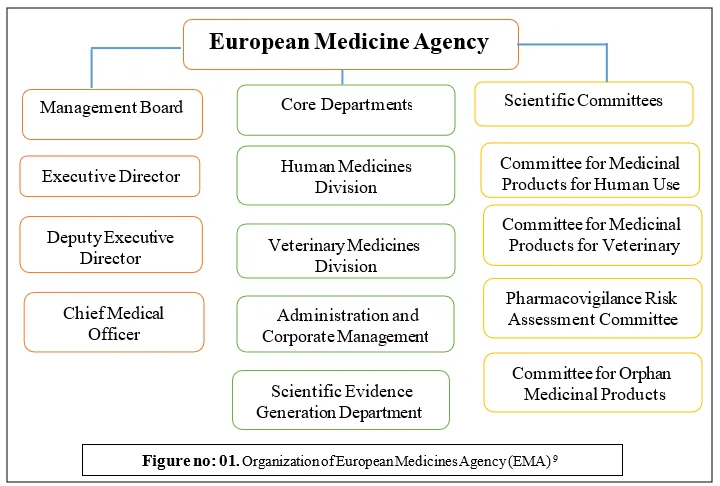
The European Medicines Agency (EMA) plays a crucial role in facilitating the development and access to medicines through evaluating marketing authorization applications, monitoring drug safety throughout their lifecycle, and providing necessary information to healthcare professionals and patients. The EMA employs four primary drug approval processes: National Procedure, Decentralized Procedure, Centralized Procedure, and Mutual Recognition Procedure, each catering to different regulatory needs. A key focus of the EMA is managing post-approval changes to maintain compliance and ensure patient safety and well-being. The study underscores the importance of robust change management within the lifecycle of pharmaceuticals, although it highlights significant compliance challenges driven by unclear frameworks and misunderstandings in the industry. The EMA aims to ensure the highest quality, safety, and efficacy of medicines in the EU. As part of a decentralized regulatory framework, which includes National Competent Authorities and other European bodies, the EMA oversees a network of committees, each responsible for various aspects of medication evaluation and safety, such as the Committee for Medicinal Products for Human Use (CHMP) and the Pharmacovigilance Risk Assessment Committee (PRAC). The drug approval process requires that any pharmaceutical product be authorized before market entry, safeguarding public health. The marketing authorization (MA) must be renewed every five years, considering any new safety and efficacy data. The EMA thus ensures that all medications are not only available to the public but also meet stringent health standards for human and animal.
CDSCO (Central Drug Standard Control Organization) 6
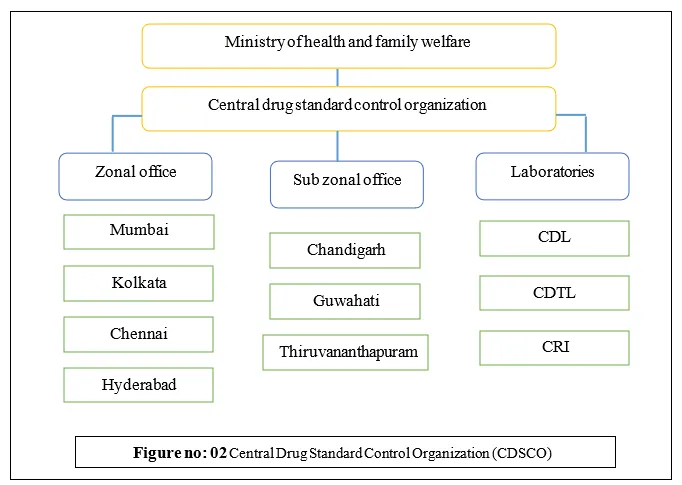
India's national regulating body for pharmaceuticals, cosmetics, medical devices, and clinical trials is the Central Drugs Standard Control Organization (CDSCO). CDSCO, which operates under the Ministry of Health and Family Welfare (MoHFW) via the Directorate General of Health Services, guarantees the quality, safety, and effectiveness of medical goods produced, imported, and supplied within the nation. In its capacity as the Central Drug Authority, it works with state-level regulators to implement consistent regulations, protecting public health in the face of India's $50 billion pharmaceutical sector, which bills itself as the "pharmacy of the world."
Organizational Structure 7
CDSCO operates a decentralized yet hierarchical structure to ensure nationwide coverage. At the apex is the Drugs Controller General of India (DCGI), a senior IAS officer reporting to the (MoHFW) Ministry of Health and Family welfare Secretary, overseeing policy, approvals, and enforcement. Below the DCGI are specialized divisions for drugs, cosmetics, medical devices, and clinical trials, supported by technical committees like the Drug Technical Advisory Board (DTAB) and Drugs Consultative Committee (DCC).
Zonal Offices (9): Mumbai, Kolkata, Chennai, Hyderabad, Ahmedabad, Baddi, Bangalore and Ghaziabad handling approvals, inspections, and coordination.
Sub-Zonal Offices (4): Siliguri, Chandigarh, Guwahati, and Thiruvananthapuram.
Port Offices (13): Mumbai, Chennai, and Delhi airports, for import quality checks.
Laboratories (7): Central Drug Laboratories in Kolkata (testing), Mumbai (vaccines), others.
Policies for control of NDPS 8
The European Medicines Agency (EMA) follows the conventions established by the United Nations (1961 Single Convention on Narcotic Drugs and 1971 Convention on Psychotropic Substances), which classify substances into schedules according to their potential for abuse and their usefulness in medical treatment. Through Council Regulation (EC) No 273/2004 on drug precursors and national implementations, narcotics (such as opioids like morphine) and psychotropic (such as benzodiazepines like diazepam) have been incorporated into the legal framework of the European Union (EU). With Schedule I substances (high misuse, low utility) being subjected to the most stringent scrutiny, the European Medicines Agency (EMA) requires applicants to demonstrate their scheduling status during the authorization process.
Throughout the European Union (EU) and European Economic Area (EEA), the European Medicines Agency (EMA) is in charge of the approval, monitoring, and pharmacovigilance of pharmaceutical products that contain narcotic drugs and psychotropic substances. The EU's pharmaceutical laws, particularly Directive
2001/83/EC (as amended), which harmonizes standards to balance therapeutic access with abuse prevention, incorporate these controls. While national competent authorities handle decentralized aspects, EMA's role focuses on centralized marketing authorizations for high-risk products, ensuring compliance with Good Manufacturing Practice (GMP), Good Distribution Practice (GDP), and risk minimization strategies.
1.2 EU Laws and Regulations Related to NDPS Control
Council Directive 92/109/EEC (1992): Establishes to prevent illicit NDPS manufacture, requiring documentation, record-keeping, and reporting of suspicious transactions by operators.
Council Regulation (EEC) No 3677/90 (1990): To prevent illicit NDPS production, focusing on export controls and international cooperation.
Regulation (EC) No 273/2004 (2004): Harmonizes internal EU controls for drug precursors used in NDPS illicit manufacture, mandating licensing for operators, customer declarations, and monitoring to prevent diversion within the single market.
Regulation (EC) No 111/2005 (2005): Governs export/import and information exchange to curb external diversion for NDPS production.
Regulation (EC) No 726/2004 (2004): Regulates centralized marketing authorizations for medicinal products containing NDPS, ensuring safety assessments and pharmacovigilance for controlled substances.
Directive 2001/83/EC (2001, as amended): The EU code for human use products, including specific controls for NDPS such as special prescriptions (Article 71), wholesale restrictions (Article 83), and bans on advertising/samples (Articles 88 and 96).
Council Framework Decision 2004/757/JHA (2004):Which sets minimum penalties for illicit manufacture, production, and trafficking of NDPS, harmonizing criminal sanctions across Member States.
Directive 2011/62/EU (2011): Amends medicinal product directives to prevent falsified NDPS, introducing safety features like serialization for traceability in supply chains.
2. Aim and objectives
2.1 AIM
The Approval Process of Narcotics and Psychotropic Medicinal Products in Europe and A Case Study of Opioid Overdose Treatment in The European Union and India
2.2 Objectives
To outline the EU's regulatory approval processes for drugs and psychotropic products:
In accordance with Directive 2001/83/EC and Regulation (EC) No 726/2004, this entails mapping the functions of important organizations like the European Medicines Agency (EMA) and national competent authorities. Pre-clinical testing, clinical trials, risk-benefit analyses for abuse liability, and post-marketing surveillance are among the procedural stages that are to be evaluated. The goal is to highlight issues such as scheduling under UN frameworks and the integration of pharmacovigilance for controlled substances.
To perform a case study that compares the treatment of opioid overdoses in the EU and India:
This goal will compare harm reduction strategies, such as naloxone distribution, opioid substitution therapy (such as methadone/buprenorphine programs), and supervised consumption facilities in the EU with India's resource-constrained strategies, such as community-based naloxone initiatives and the treatment access implications of the Narcotic Drugs and Psychotropic Substances (NDPS) Act, using epidemiological data from sources like the European Monitoring Centre for Drugs and Drug Addiction (EMCDDA) and India's National Crime Records Bureau. In order to identify disparities impacted by stigma, legal obstacles, and healthcare infrastructure, the analysis will quantify outcomes like treatment retention rates and mortality reductions.
To develop policy suggestions for bilateral cooperation between the EU and India:
Building on the case study, this goal seeks to synthesize findings into practical insights, like advocacy for de-stigmatizing reforms under the NDPS Act, capacity-building for India's overdose surveillance systems, and knowledge-sharing platforms for regulatory harmonization. In order to lower overdose deaths by at least 20–30% through focused improvements, recommendations will give priority to long-term, culturally appropriate interventions.
This research work’s main objective is to analyses the approval process for Narcotics and psychotropic substances in Europe and conduct a comparative case study on opioid overdose treatment approaches in the European Union (EU) and India while critically analyzing the regulatory approval procedures for narcotics and psychotropic medicinal products in Europe. The study aims highlight balance between therapeutic access, reducing the risk of abuse, and addressing public
health emergencies by examining the strict frameworks governing these Narcotics and psychotropic controlled substances, which are based on international agreements like the 1961 Single Convention on Narcotic Drugs and the 1971 Convention on Psychotropic Substances. At the end, it contributes to evidence-based recommendations for improving opioid overdose prevention and response in various socioeconomic contexts by using a comparative lens to identify best practices, regulatory gaps, and opportunities for cross-continental policy harmonization.
3. Plan of work
In this research work I am going to describe the approval process of narcotics and psychotropic pharmaceutical substances in European countries with analyzing the treatment of opioids abuse patients comparatively in Europe (EMA) and India (CDSCO). Below I have arranged the steps to work on this topic.
Literature Survey
Referring review paper and research paper online articles etc.
Regulatory Approval Process
EMA (European Medical Agency) approval process of drug especially by Centralized procedure.
Case Study
Comparing the treatment plan of opioid overdose patients in Europe and India, by referring the patient report in hospital in India and online data specially for Europe
4. MATERIAL AND METHOD
Approval process in EMA
EMA European medical agency is the regulatory authority in Europe responsible for approval of new pharmaceutical product in Europe, which ensure the safety, Quality and efficacy of pharmaceutical product across the Europe.
Let’s understand the various phases in approval of the pharmaceuticals focusing on narcotics and psychotropic substances. If any pharmaceutical industry have developed the active pharmaceutical ingredient (API) of narcotic (e.g., an opioid like fentanyl) or psychotropic (e.g., a benzodiazepine like alprazolam) substance and converted it into a finished dosage form (e.g., tablets, injectable, or patches), and carried out the preclinical and clinical trials (phase 1. 3).
Then the next phase focuses on preparing and submitting a marketing authorization application (MAA) through the European Medicines Agency (EMA)'s centralized procedure. This procedure is mandatory for most innovative medicines, including new narcotic or psychotropic APIs, as they typically qualify as new active substances under Regulation (EC) No 726/2004.
The process ensures a single authorization valid across the 27 EU Member States plus Iceland, Liechtenstein, and Norway (EEA). For controlled substances, the core procedure is identical to non-controlled medicines, but with enhanced scrutiny on abuse liability, dependence potential, and diversion risks. This requires additional data in the dossier (e.g., non-clinical abuse potential studies per ICH S9/S10 and clinical human abuse liability trials). Post-approval, if the substance is novel, it may trigger EU scheduling under Council Decision 2004/757/JHA, aligned with UN conventions, involving quotas for manufacture/import (Regulation (EEC) No 3677/90) and special handling rules (e.g., secure packaging, prescription controls per Directive 2001/83/EC).
EU establishes four different drug approval procedures which are like national, centralized, decentralized and mutual recognition procedure. These full process from submission to decision takes about 12–18 months (210 active evaluation days plus clock stops), but preparation (including clinical trials) can add 5–10+ years9.
Different drug approval procedure:
1. National Procedure
2. Decentralized Procedure
3. Mutual Recognition Procedure
4. Centralized Procedure

National Procedure11
In Europe each country has its own procedure for marketing application for new drug a sponsor can reach out each country where he wants to obtain marketing approval.
1. Decentralized procedure12
Decentralized procedure of approval made for the products which are outside the scope of European medical agency. Using this approval process sponsor can obtain the approval in more than one country for a drug which not approved in Europe before it.
2. Mutual Recognition Procedure13
Accordance to National procedure, by using MRP approval process product can authorized in one country in Europe, Later it can get approval in rest of countries in Europe which rather than conducting its own approval procedure.
3. Centralized Procedure14,15
Centralized procedure is the procedure which allows pharmaceutical companies to obtained single marketing approval valid across all European counties. In this procedure involves submitting one application to the EMA, followed by a scientific evaluation by the EMA's Committee for Medicinal Products for Human Use (CHMP) for human medicines (or the Committee for Medicinal Products for Veterinary Use, or CVMP, for veterinary medicines). The CHMP or CVMP provides a recommendation, which is then reviewed by the European Commission, the ultimate authorizing body. Upon approval, the authorization is legally binding EU-wide, simplifying market access and ensuring consistent standards for quality, safety, and efficacy.
Centralized procedure is mandatory for:
Human medicines with new active substances indicated for gene therapy, somatic cell therapy,tissue-engineered products,or advanced therapy medicinal products .Products for HIV/AIDS, Cancer, Diabetes, Neurodegenerative diseases, Auto- Immune and Other Immune Dysfunctions and Viral diseases Orphan medicinal products (for rare diseases). Medicines derived from human blood or plasma. Veterinary medicines with new active substances for food, animals.
Benefits of centralized market approval:
⮚ Efficiency and Market Access:
o A single application and authorization enable immediate marketing across the EEA, avoiding fragmented national procedures.
⮚ Consistency and Expertise:
o Leverages centralized scientific assessment by EMA committees, incorporating input from Member States, experts, and specialized bodies like PRAC (for risk management) and the Committee for Advanced Therapies (CAT).
⮚ Innovation Support:
o Accelerates access to breakthrough treatments, especially for rare diseases or unmet needs, while facilitating parallel applications for non-EU use.
⮚ Transparency and Monitoring:
Includes public assessment reports (EPARs) upon approval or refusal, and robust post-authorization pharmacovigilance to monitor safety and benefits.
⮚ Patient and Stakeholder Involvement:
Encourages early HTA collaboration and patient input in assessments.
5.1 Centralized Approval Process14, 15
Pre-Submission Phase
1. Eligibility request (7-8 Months)
Sponsor/company verifies the eligibility of their medicinal product for EMA, whether it is new or for rare diseases. This phase ensures eligibility, appoints expertise and align all requirements to avoid delays. This phase takes 7-18 months before planned submission.
Key requirements: Sponsor submits a dedicated eligibility request with scientific and regulatory justification.
Outcome: Eligibility letter by EMA.
2. Appointment of Rapporteurs. Company appoint a lead assessors for the scientific review after pre-submission.
3. Pre-submission scientific advise/Meeting (6-7 months before)

Seek EMA guidance on requirement data, study design and regulatory strategy.
4. Re-confirmation of submission date. (2-3 months before) Update EMA on any changes or notification of change request.
Submission and Validation Phase. In this phase sponsor/company provides all necessary requirements such as test results, safety data, manufacturing details in electronic formats using eCTD format. EMA verifies the all data.
5. Submission of Marketing Authorization Application (MAA) (0 Days) Sponsor/company shares eCTD document via EMA’s electronic submission gateway. Key requirement: eCTD, Fees: ~$300,000 (varies on type)
6. Validation of the Application (1-2 weeks)
EMA verify the all data for completeness and regulatory compliance. If any incompliances EMA respond quickly to any information that is missing (clock Stop during such incidence). If invalid application rejected, requiring resubmission.
Duration: 1-2wk. Assessment phase:
In this phase, EMA’s experts review the drug’s safety, Quality, and Efficacy. It involves Committee for Medicinal Products for Human Use (CHMP main committee of experts), Pharmacovigilance Risk Assessment Committee (PRAC safety group), and Committee for Advanced Therapies (CAT) which verifies clinical trials, conducts inspections of companies, RMP, etc. This Assessment phase are conducted as the first assessment phase, second assessment phase, and final assessment phase, and CHMP opinion.
7. Scientific evaluation
In-depth review of Quality, Safety, Efficacy and Benefit-Risk management. Includes peer reviews and oral explanation if needed.
8. CHMP opinion adoption
CHMP votes on recommendations as a Positive, Negative, and Conditional. Duration: 210 Days
9. Translation and Preparation
The company/sponsor prepares and translates labels into all EU languages for 27+ member states for accuracy and review.
Decision-Making Phase:
10. European Commission review and Decision
European Commission reviews the CHMP opinion and decides to grant or refuse authorization. If EC grants the authorization, it published in the EU community register and EMA issues a public report (EPAR) explaining why.
Duration: 60-70 Days from CHMP opinion, approx. 277 days.
The whole process takes about 12-18 months but the “Official clock” runs for around 210 active days (7 months), excluding clock stop days for centralized procedure approval process. The clock stop days when company needs time to answer the questions which takes 3-6 months. After that European commission takes 2-3 months for Yes/No. This is the official regulatory work flow for centralized procedure. This marketing authorization is valid for initially 5 year then its renewal done before 6 months of expire.
CONCLUSION
The regulation of Narcotics and Psychotropic Substances (NDPS) represents a critical intersection between medical necessity and global security. This study highlights that while these substances are vital for therapeutic use such as pain management their high potential for addiction and abuse necessitates the stringent oversight provided by bodies like the European Medicines Agency (EMA) and India's Central Drugs Standard Control Organization (CDSCO).
1. Regulatory Harmonization and Efficiency
The EMA’s Centralized Procedure serves as a robust model for harmonizing drug standards across 27 EU member states, ensuring that innovative controlled substances meet high benchmarks for safety, quality, and efficacy through a single application. This process is particularly vital for NDPS, as it incorporates enhanced scrutiny regarding abuse liability and diversion risks during the scientific evaluation phase.
2. Comparative Approaches to Public Health
The comparative analysis of the EU and India reveals significant differences in managing opioid overdoses:
European Union: Employs comprehensive harm reduction strategies, including naloxone distribution, supervised consumption facilities, and opioid substitution therapy.
India: Operates within a more resource-constrained environment, where community-based initiatives face legal and social obstacles under the NDPS Act.
3. Strategic Recommendations
The research concludes that bridging the gap between therapeutic access and abuse prevention requires:
Bilateral Cooperation: Knowledge-sharing platforms between the EU and India to harmonize regulatory standards.
Conflicts of Interest:
The authors declare no conflict of interest. This review is based on publicly available regulatory and scientific literature, and no financial or personal relationships have influenced its preparation or conclusions.
REFERENCES



Dr. Vijay Navghare, Dr. Suryakant Jadhav, Sandesh Maske, Somesh Kale, The Approval Process of Narcotics and Psychotropic Medicinal Products in Europe and A Case Study of Opioid Overdose Treatment in The European Union and India, Int. J. of Pharm. Sci., 2026, Vol 4, Issue 8, 253-263, https://doi.org/10.5281/zenodo.21772303
 10.5281/zenodo.21772303