

We use cookies to ensure our website works properly and to personalise your experience. Cookies policy
1.Dr. Manchineni Prasad Rao, Professor & Principal.
2.Dr. Y. Narasimha Rao, Professor, Department of Pharmacology.
3.Dr. S. Rajini, Professor, Department of Pharmacy Practice.
4.Ch. Nikhila, Pharm D Student
Heart failure (HF) remains a prevalent and serious health issue, with an estimated incidence of 1-2% in the general population. Among these cases, heart failure with reduced ejection fraction (HFrEF) accounts for approximately 50%. Despite advances in treatment, HF is a progressive condition with significant morbidity and mortality. Traditional therapies for HFrEF have focused on modulating the renin-angiotensin-aldosterone system (RAAS) and sympathetic nervous system using medications such as ACE inhibitors, ARBs, beta-blockers, and mineralocorticoids. Recently, sodium-glucose cotransporter 2 (SGLT2) inhibitors, originally developed for managing type 2 diabetes, have demonstrated substantial benefits for HF patients, particularly in reducing hospitalization, cardiovascular events, and mortality. Dapagliflozin, an SGLT2 inhibitor, has shown promise in improving outcomes in heart failure with both reduced and mildly reduced ejection fractions. By inhibiting SGLT2 in the renal proximal tubules, dapagliflozin increases urinary glucose and sodium excretion, which promotes osmotic diuresis, reduces preload, and improves hemodynamics. Additionally, dapagliflozin has nephroprotective effects and can reduce the progression of kidney disease. The DELIVER trial highlighted its efficacy in patients with mildly reduced or preserved left ventricular ejection fraction (LVEF), indicating that SGLT2 inhibitors may benefit a broader population of heart failure patients. Pharmacokinetically, dapagliflozin is rapidly absorbed and has a half-life that supports once-daily dosing.Its use in heart failure patients is generally well-tolerated, with common side effects including urinary tract and genital infections, which are typically mild. Importantly, serious adverse events are rare, and dapagliflozin has been associated with a reduction in HF-related hospitalizations and an improvement in quality of life for patients. Overall, dapagliflozin represents a promising therapeutic option in the management of heart failure, showing significant benefits not only for glycemic control in diabetic patients but also for cardiovascular and renal health. These findings support its integration into clinical practice guidelines for heart failure management. Further research is needed to explore its full potential, especially in patients with higher LVEF or those transitioning from acute to chronic heart failure stages
Heart failure is still a widely wide-spread and applicable medical problem. The present day incidence of coronary heart failure withinside the person populace is predicted to be 1-2%[1]. Approximately 50% of those instances may be attributed to coronary heart failure with decreased ejection fraction, regarding a left ventricular ejection fraction of 40% or less[2]. Heart failure is a long-time period situation that receives worse over time[3].
Traditionally, recommendations direct scientific therapy (GDMT) for HFrEF has been targeted on renin angiotensin aldosterone system and sympathetic pathways thru retailers including: ACE inhibitors, ARBs, ARNI, beta blockers and mineralocorticoids[4]. More recently, sodium glucose cotransporter 2 (SGLT2) inhibitors have proven similarly discount in hospitalization of coronary heart failure, cardiovascular activities and mortality, in particular for HFrEF patients[5].
Sodium–glucose cotransporter 2 (SGLT2) inhibitors, which had been firstly advanced as glucose-decreasing retailers for the remedy of kind 2 diabetes mellitus, lessen the danger of demise and different damaging effects amongst sufferers with continual coronary heart failure and a discounted ejection fraction (i.e., a left ventricular ejection fraction of ≤40%) and in people with continual kidney disease, irrespective of the presence or absence of kind 2 diabetes mellitus[6]. Current scientific suggestions strongly suggest using SGLT2 inhibitors in sufferers with continual coronary heart failure and a discounted ejection fraction[7].
Recent research have indicated that the SGLT2 inhibitor empagliflozin can drastically lessen the danger of hospitalization for coronary heart failure and cardiovascular demise in sufferers with coronary heart failure and a left ventricular ejection fraction (LVEF) above 40%. This indicates capability advantages for all coronary heart failure sufferers, despite the fact that the impact can be much less reported in people with LVEF ≥65%. However, crucial proof gaps remain, mainly concerning the efficacy of SGLT2 inhibitors in sufferers with better LVEF, the ones beginning remedy for the duration of or quickly after hospitalization, and people whose LVEF has advanced from formerly decreased levels. To deal with those gaps, the DELIVER trial turned into designed to assess whether or not dapagliflozin can lower the danger of worsening coronary heart failure or cardiovascular demise in sufferers with mildly decreased or preserved LVEF[8].
Overview of dapagliflozin and its mechanism of action
Dapagliflozin is a selective inhibitor of the sodium-glucose co-transporter 2 (SGLT2), more often than not expressed withinside the proximal renal tubules[9]. By inhibiting SGLT2, dapagliflozin reduces the reabsorption of glucose and sodium withinside the kidneys, main to elevated urinary glucose excretion and a lower in blood glucose levels[10]. This mechanism now no longer handiest aids in glycemic manipulate for sufferers with kind 2 diabetes mellitus however additionally gives extra cardiovascular and renal benefits[11]. Dapagliflozin has been proven to lessen the chance of hospitalization for coronary heart failure and to gradual the development of kidney disease, highlighting its multifaceted position in handling diabetes and related comorbidities. Through its precise action, dapagliflozin represents a sizable development withinside the healing panorama for diabetes, with implications for enhancing affected person effects past glycemic manipulate alone[12].
Prevalence and impact of heart failure
Heart failure (HF) is a widespread cardiovascular circumstance that impacts tens of thousands and thousands of people worldwide, with estimates suggesting that about 26 million humans are recognized globally. Its occurrence is especially excessive amongst older adults, with considerable will increase discovered in populations elderly sixty five and older. The effect of coronary heart failure extends past the individual, because it poses sizeable burdens on healthcare structures because of common hospitalizations, excessive scientific costs, and a considerable discount in best of life. Patients with coronary heart failure frequently revel in debilitating symptoms, which include fatigue, shortness of breath, and fluid retention, that could cause barriers in every day sports and expanded morbidity. Furthermore, coronary heart failure is related to a excessive mortality rate, making it a vital public fitness concern. As the populace a long time and threat elements inclusive of weight problems and diabetes end up extra widespread, the occurrence and results of coronary heart failure are anticipated to rise, necessitating more advantageous techniques for prevention, management, and research[13].
Mechanism of action in heart failure
The mechanism of movement in coronary heart failure (HF) includes complicated pathophysiological approaches that cause the coronary heart`s incapacity to pump blood effectively, ensuing in inadequate perfusion of tissues and fluid congestion. This disorder is frequently characterised via way of means of a lower in cardiac output and an growth in neurohormonal activation, often concerning the renin-angiotensin-aldosterone system (RAAS) and sympathetic frightened system. In reaction to decreased cardiac output, RAAS activation promotes vasoconstriction and sodium retention, exacerbating fluid overload and growing cardiac workload. Additionally, extended ranges of norepinephrine make a contribution to improved coronary heart fee and contractility, first of all compensating for reduced perfusion however in the end main to in addition myocardial strain and deterioration. Over time, maladaptive reworking occurs, characterised via way of means of hypertrophy, fibrosis, and apoptosis of cardiomyocytes, which in addition impair cardiac function. Therapeutic tactics in coronary heart failure goal those mechanisms, aiming to relieve signs and enhance consequences via way of means of decreasing fluid overload (e.g., diuretics), modulating neurohormonal activation (e.g., ACE inhibitors, beta-blockers), and improving myocardial contractility (e.g., inotropic agents). Understanding those problematic mechanisms is essential for growing powerful remedy techniques and enhancing affected person care in coronary heart failure management[14].
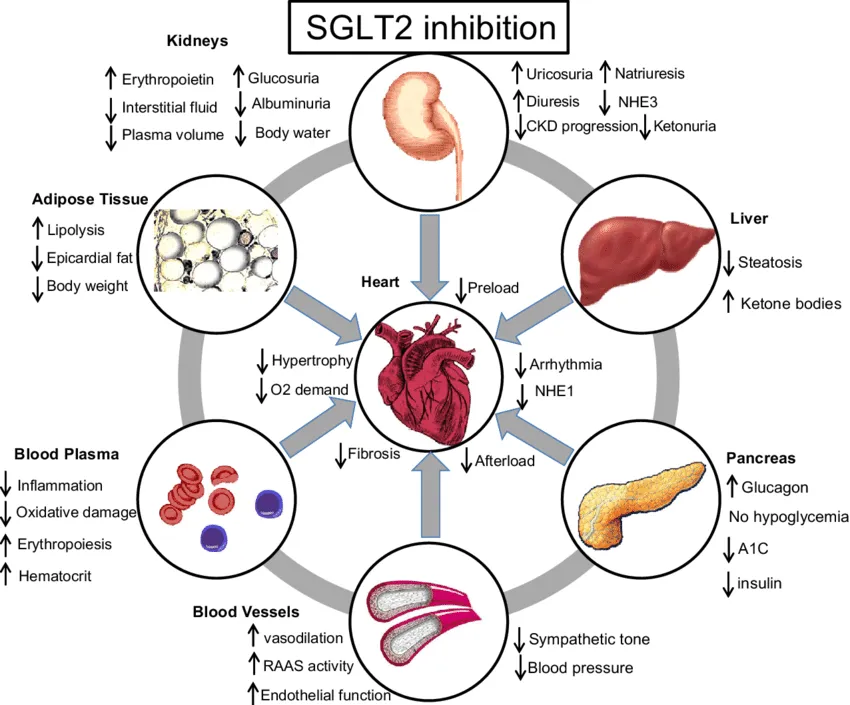
Pharmacokinetics &Pharmacodynamics:
Dapagliflozin, a sodium-glucose co-transporter 2 (SGLT2) inhibitor, has garnered interest for its pharmacokinetic and pharmacodynamic profiles, specifically withinside the context of coronary heart failure. Pharmacokinetically, dapagliflozin is swiftly absorbed after oral administration, with height plasma concentrations reached inside 1 to two hours. It has a bioavailability of about 78%, with a quantity of distribution suggesting big tissue uptake. The drug is more often than not metabolized with the aid of using UDP-glucuronosyltransferase enzymes, and its removal half-existence is ready 12.nine hours, making an allowance for once-each day dosing[15].
In phrases of pharmacodynamics, dapagliflozin exerts its outcomes thru the inhibition of glucose reabsorption withinside the proximal renal tubules, main to extended glucose and sodium excretion. This movement outcomes in osmotic diuresis, that could lessen preload and enhance hemodynamics in coronary heart failure sufferers. Moreover, dapagliflozin has been proven to have useful outcomes on cardiovascular outcomes, possibly thru mechanisms that consist of discounts in myocardial workload and inflammation, along ability upgrades in cardiac metabolism. Clinical trials have validated its efficacy in lowering hospitalization quotes for coronary heart failure and enhancing general cardiovascular health, making it a precious healing choice in dealing with coronary heart failure sufferers without or with diabetes. Dapagliflozin, a sodium-glucose co-transporter 2 (SGLT2) inhibitor, has garnered interest for its pharmacokinetic and pharmacodynamic profiles, mainly withinside the context of coronary heart failure. Pharmacokinetically, dapagliflozin is hastily absorbed after oral administration, with height plasma concentrations reached inside 1 to two hours. It has a bioavailability of about 78%, with a quantity of distribution suggesting good sized tissue uptake. The drug is mostly metabolized with the aid of using UDP-glucuronosyltransferase enzymes, and its removal half-lifestyles is set 12.nine hours, making an allowance for once-each day dosing[16].
Impact on ejection fraction
Dapagliflozin has useful metabolic, nephroprotective and cardiovascular activity. These outcomes are because of the inhibitory movement produced with the aid of using dapagliflozin on SGLT2 receptors ensuing in decreased reabsorption of glucose and sodium, which results in their extended excretion with urine[17]. It additionally wishes to be referred to that decreased glucose reabsorption promotes a bad power balance, inflicting weight reduction and enhancing insulin sensitivity, and therefore generating a beneficial metabolic impact[18]. The nephroprotective movement of dapagliflozin is attributed to the contraction of the renal afferent arteriole, which reduces intraglomerular strain and accordingly will increase albumin excretion in urine. The cardiovascular impact accommodates an development in haemodynamics and effects from extended osmotic diuresis, decreased plasma volume, and reduced blood strain, main to decrease left ventricular preload and afterload. Dapagliflozin produces a diuretic movement with the aid of using inducing fluid loss from the intravascular compartment, that's fantastically useful in sufferers with HF, because it has no impact on lowering intravascular strain, i.e. systolic ABP. Another key factor is associated with the nice effect of SGLT-2 inhibitors on myocardial energetics. SGLT2 inhibitors boom the manufacturing of ketone our bodies and beautify their utilisation withinside the heart, which improves the power metabolism of cardiomyocytes, and accordingly reduces the chance of HF improvement and recurrence[19].
Safety and tolerability
The protection and tolerability of dapagliflozin in sufferers with coronary heart failure were significantly evaluated in scientific trials. Overall, dapagliflozin is typically well-tolerated, with a protection profile constant with that located in sufferers with diabetes[20]. Common unfavourable outcomes encompass urinary tract infections and genital mycotic infections, which stand up because of elevated glycosuria. However, those activities are normally moderate and practicable. Serious unfavourable activities are rare, and dapagliflozin has now no longer been related to enormous will increase with inside the threat of main unfavourable cardiovascular activities[21]. Notably, its use in coronary heart failure sufferers has been connected to a discount in hospitalizations associated with coronary heart failure, indicating a good benefit-threat profile[22]. Renal characteristic have to be monitored, mainly in sufferers with pre-present kidney impairment, however dapagliflozin is frequently secure to apply on this population. Overall, the proof helps dapagliflozin as a secure and powerful remedy choice for coronary heart failure sufferers, contributing to progressed scientific effects with a practicable facet impact profile[23].
Outcomes of dapagliflozin in heart failure patients
|
Outcome |
Description |
Potential Impact |
|
Heart Failure Hospitalizations |
Reduction in frequency of hospital admissions for heart failure. |
Improved patient quality of life and reduced healthcare costs. |
|
Cardiovascular Mortality |
Potential decrease in risk of death from cardiovascular causes. |
Enhanced long-term survival rates. |
|
Symptoms Relief |
Alleviation of symptoms such as dyspnea and fatigue |
Increased functional capacity and exercise tolerance. |
|
Renal Function |
Presentation of renal function or slower decline in kidney health. |
Enhanced overall health and reduced comorbidities. |
|
Quality of life |
Improvement in patient-reported quality of life measures. |
Greater patient satisfaction and adherence to treatment. |
|
Biomarkers Changes |
Positive changes in biomarkers like NT-proBNP and weight. |
Objective measures of heart failure improvement. |
|
Safety Profile |
Assessment of adverse events and tolerability in patients. |
Better understanding of risk versus benefit. |
CONCLUSION
Heart failure (HF) continues to be a significant global health challenge, with a growing burden on individuals and healthcare systems. While traditional treatments for heart failure with reduced ejection fraction (HFrEF) have focused on neurohormonal modulation, recent advancements, particularly the use of sodium-glucose cotransporter 2 (SGLT2) inhibitors like dapagliflozin, have shown substantial improvements in clinical outcomes. Dapagliflozin has demonstrated remarkable efficacy in reducing hospitalizations, improving cardiovascular health, and slowing the progression of kidney disease in patients with both reduced and mildly reduced ejection fractions.
The mechanism of action of dapagliflozin—its ability to promote osmotic diuresis, enhance myocardial energetics, and exert nephroprotective effects—offers multiple benefits beyond its role in glycemic control, making it a valuable therapeutic option in the management of heart failure. Additionally, its pharmacokinetic properties allow for once-daily dosing, contributing to its convenience and patient adherence.
Clinical trials, including the DELIVER trial, have further highlighted the benefits of dapagliflozin in patients with heart failure, particularly those with mildly reduced or preserved left ventricular ejection fraction (LVEF). These findings broaden the scope of SGLT2 inhibitor therapy, suggesting that its use may extend to a larger population of heart failure patients, regardless of diabetes status.
While dapagliflozin is generally well-tolerated, common side effects, such as urinary tract infections and genital mycotic infections, are manageable. Serious adverse events are rare, and its safety profile makes it a promising option for long-term management of heart failure. Moreover, the potential for improved quality of life, symptom relief, and reduced healthcare utilization makes dapagliflozin a compelling choice in contemporary heart failure therapy.
In conclusion, dapagliflozin represents a significant advancement in the management of heart failure, with proven benefits for both cardiovascular and renal health. As evidence continues to accumulate, its integration into clinical practice guidelines is expected to have a transformative impact on the treatment and outcomes of heart failure patients. Further research is essential to fully understand the drug's potential in different patient populations, including those with higher LVEF or those transitioning from acute to chronic heart failure stages.
REFERENCES

Manchineni Prasadarao*, Y. Narasimharao, S. Rajaini, Ch. Nikhila., The Effect of Dapagliflozin on Glycemic Control and Other Cardiovascular Disease Risk Factors in Type 2 Diabetes Millitus: A Real-World Observational Study, Int. J. of Pharm. Sci., 2026, Vol 4, Issue 6, 2431-2439. https://doi.org/ 10.5281/zenodo.20611274
 10.5281/zenodo.20611274