

We use cookies to ensure our website works properly and to personalise your experience. Cookies policy
1Government Women’s College, Sambalpur, 768001, Odisha, India.
2School of Life Sciences, Sambalpur University, Sambalpur, 768109, Odisha, India.
Plants are continuously exposed to an increasingly complex combination of environmental constraints rather than to individual stresses occurring in isolation. Drought, heat, salinity, flooding, chilling, high light, ultraviolet-B (UV-B) radiation, nutrient imbalance, heavy metals and atmospheric pollutants can occur simultaneously or sequentially, creating stress combinations that profoundly alter plant growth, metabolism and productivity. Conventional stress biology has predominantly examined individual stresses, but increasing evidence demonstrates that the response to combined stress cannot simply be predicted by adding the responses to individual stressors. Instead, plants employ an integrated defense network in which stress perception, calcium signalling, reactive oxygen species (ROS), reactive nitrogen species, phytohormones, protein phosphorylation, transcriptional regulation, metabolic reprogramming, antioxidant defense and epigenetic memory interact dynamically. This review proposes a conceptual framework termed the Plant Defense Web (PDW), in which multiple abiotic stresses converge on a limited number of regulatory hubs. Stress-induced perturbations in membrane integrity, cellular hydration, redox balance, temperature, photosynthetic electron transport and ion homeostasis generate early calcium and ROS signatures. These signals activate protein kinases, transcription factors and hormonal networks, which subsequently regulate stomatal behavior, osmotic adjustment, antioxidant metabolism, repair of damaged macromolecules, secondary metabolite biosynthesis and growth-defense trade-offs. Particular attention is given to the integration of abscisic acid, jasmonates, salicylic acid, ethylene, brassinosteroid, auxin, cytokinins, melatonin and Strigolactones. The review further examines flavonoids, phenolics, proline, soluble sugars, polyamines and antioxidant enzymes as components of the biochemical defense shield.
Plants are sessile organisms and cannot escape unfavourable environmental conditions by changing their location. Consequently, survival depends on the ability to perceive environmental fluctuations rapidly and reorganize physiological, biochemical and molecular processes before cellular damage becomes irreversible. Drought, salinity, extreme temperature, flooding, ultraviolet radiation, high light, nutrient limitation and toxic metals are among the major abiotic constraints affecting plant growth and agricultural productivity. Historically, plant stress research has frequently treated these factors independently. Such an approach has generated substantial knowledge about drought-induced ABA signalling, salt-induced ion homeostasis, heat-shock responses, cold acclimation and UV-B signalling. However, natural and agricultural environments rarely reproduce these simplified experimental conditions. A crop experiencing summer drought may simultaneously experience high temperature and intense radiation, while coastal crops may encounter salinity together with heat and water deficit. Similarly, waterlogging can be accompanied by salinity, hypoxia and nutrient imbalance. This distinction is biologically important because combined stresses can produce molecular responses that are different from those generated by either stress alone. Studies of stress combinations have demonstrated that transcriptional, physiological and metabolic responses may be synergistic, antagonistic or additive depending on stress intensity, duration, order and developmental stage (Prasch and Sonnewald, 2015; Nadeem et al., 2023). Recent studies further emphasize that heat may act as a dominant component of several stress combinations and reshape transcriptional and metabolic responses to drought, salinity and high light. The emerging view is that diverse stresses converge on common signalling components, including calcium ions (Ca²⁺), reactive oxygen species (ROS), reactive nitrogen species, mitogen-activated protein kinases (MAPKs), calcium-dependent protein kinases (CDPKs), phytohormones and stress-responsive transcription factors. These signalling components form a highly interconnected network rather than independent linear pathways. (Mittler, 2006; Prasch & Sonnewald, 2015; Nadeem et al., 2023).
The present review develops an integrated framework called the Plant Defense Web (PDW). The model proposes that plant resilience is generated through coordinated interactions between five major layers:
1. Stress perception
2. Signal integration
3. Molecular decision-making
4. Cellular protection
5. Acclimation, memory and recovery
This framework provides a mechanistic basis for developing climate-resilient crops capable of responding to multiple stress combinations. The major stress types and their characteristic defense responses are summarized in Table 1, while the integrated signaling and protection layers are brought together in the Plant Defense Web model (Figure 1; Table 2).
From Single-Stress Responses to Multiple-Stress Biology
Individual stresses impose characteristic primary disturbances. Drought primarily reduces cellular water availability and hydraulic conductivity. Salinity generates both osmotic stress and ion toxicity. Heat disrupts protein folding, membrane stability and photosynthetic machinery. Cold restricts membrane fluidity and enzymatic activity. Flooding produces oxygen deficiency and metabolic reprogramming. UV-B can induce DNA damage, oxidative stress and photosynthetic impairment. (Mittler, 2006; Choudhury et al., 2017; Nadeem et al., 2023).
Although these primary effects differ, they eventually converge on several common cellular consequences:
Water imbalance → ionic imbalance → redox imbalance → metabolic disturbance → growth inhibition
This convergence explains why some defense mechanisms provide cross-protection. For example, accumulation of proline can contribute to osmotic adjustment, ROS regulation, protein stabilization and membrane protection. Similarly, antioxidant enzymes can protect cells against oxidative stress generated by drought, salinity, heat, heavy metals and excessive radiation. (Baxter et al., 2014; Mittler, 2017; Kaur & Garg, 2022).
However, cross-tolerance should not be interpreted as universal. A defense response beneficial under one stress can become detrimental under another. For example, excessive stomatal closure conserves water during drought but can reduce CO₂ assimilation and increase excitation pressure when temperature and radiation are high. (Prasch & Sonnewald, 2015; Nadeem et al., 2023).
Thus, the plant must continuously solve a physiological optimization problem:
survival protection ↔ carbon gain ↔ growth ↔ reproduction
This explains why multiple-stress responses are highly dependent on stress intensity, duration, sequence, tissue and developmental stage.
The First Layer of Defense: Stress Perception
Membrane and cellular sensing
The plasma membrane represents one of the earliest sites affected by environmental disturbance. Changes in membrane fluidity, osmotic pressure, mechanical properties, ion concentration and lipid composition can activate stress signalling. Temperature fluctuations alter membrane physical properties, whereas salinity modifies ionic gradients and water potential. Drought affects membrane tension and cellular hydration. Mechanical and osmotic changes can activate mechanosensitive channels and Ca²⁺ influx. Thus, the membrane can be viewed not merely as a barrier but as an environmental sensor.
Calcium as an information carrier
Ca²⁺ is one of the most conserved secondary messengers in plant stress signalling.
Different stress conditions generate characteristic calcium signatures that vary in:
These calcium signatures are decoded by proteins such as:
Consequently, Ca²⁺ signalling provides an important communication bridge between environmental perception and gene regulation.
ROS as both signal and damage molecule
Reactive oxygen species include: (Baxter et al., 2014; Mittler, 2017; Choudhury et al., 2017).
ROS are traditionally associated with oxidative damage. However, moderate and spatially controlled ROS production also functions as an essential signalling mechanism.
Stress-induced ROS can activate:
The biological challenge is therefore not simply to eliminate ROS but to maintain ROS homeostasis. A resilient plant does not have the lowest ROS level; it has the greatest capacity to control ROS production, signalling and detoxification.
The ROS–Ca²⁺–MAPK Signalling Hub
One of the central features of the Plant Defense Web is the interaction among Ca²⁺, ROS and protein kinase signalling. Environmental stress can activate ROS-producing enzymes, particularly respiratory burst oxidase homologues (RBOHs). ROS can influence calcium channels, while Ca²⁺ can regulate ROS production through calcium-dependent protein kinases. (Baxter et al., 2014; Choudhury et al., 2017).
This creates a positive feedback system:
Stress → Ca²⁺ influx → kinase activation → RBOH activation → ROS production → further Ca²⁺ signalling
If uncontrolled, this feedback may cause oxidative damage. If properly regulated, it becomes an information-processing system. MAPK cascades provide another major signalling layer. Stress-responsive MAPKs can phosphorylate transcription factors and other proteins involved in metabolism, defense and growth.
Therefore:
Ca²⁺ + ROS + MAPK = central signalling intersection
This intersection represents a promising target for engineering multiple-stress tolerance.
Phytohormonal Crosstalk: The Decision-Making Network
Plant hormones do not operate as isolated pathways. Instead, they form a dynamic regulatory network that determines whether the plant should prioritize growth, defense, reproduction or survival. (Zhu, 2016; Li et al., 2019; Müller, 2021; Gan et al., 2025; Mehrabi et al., 2026).
Abscisic acid
ABA is a major regulator of drought and osmotic stress responses.
The canonical ABA signalling pathway involves:
ABA → PYR/PYL/RCAR → PP2C inhibition → SnRK2 activation → ABF/AREB transcription factors → stress-responsive genes
This pathway regulates:
ABA therefore represents one of the major hubs connecting water availability with whole-plant stress adaptation.
Jasmonates
Jasmonates contribute to both biotic and abiotic stress responses. They participate in ROS detoxification, antioxidant activation, Osmo protectant accumulation and regulation of growth. (Li et al., 2019; Müller & Munné-Bosch, 2021).
JA can interact with ABA, ethylene, salicylic acid and other hormonal pathways, creating context-dependent responses.
Salicylic acid
Although traditionally associated with pathogen defense, SA also participates in oxidative signalling, photosynthetic regulation and abiotic stress acclimation.
SA-mediated regulation of antioxidant systems can contribute to redox homeostasis under environmental stress.
Ethylene
Ethylene becomes particularly important under flooding, mechanical stress, heat and combined environmental stress.
Ethylene interacts with ABA and other hormones to regulate the balance between stress survival and continued growth.
Brassinosteroid
Brassinosteroid influence:
They therefore provide an important connection between growth regulation and stress protection.
Melatonin
Melatonin has emerged as an important plant signalling molecule associated with:
Its ability to influence several stress pathways makes melatonin particularly interesting for multiple-stress tolerance.
Hormonal balance rather than hormonal dominance
The most important principle is that plant stress adaptation is not controlled by one “master hormone.”
Instead:
ABA + JA + SA + ET + BR + auxin + CK + melatonin + SLs
form a regulatory network whose output depends on stress combination and developmental context.
Antioxidant Defense: The Biochemical Shield
Multiple abiotic stresses commonly increase oxidative pressure. Plants therefore possess enzymatic and non-enzymatic antioxidant systems. (Baxter et al., 2014; Mittler, 2017; Nawaz et al., 2024).
Enzymatic antioxidants
Major enzymes include:
SOD converts superoxide into hydrogen peroxide, while CAT and APX contribute to hydrogen peroxide detoxification.
The ascorbate–glutathione cycle is particularly important for maintaining chloroplast and cellular redox balance.
Non-enzymatic antioxidants
Important metabolites include:
These molecules also have signalling functions.
Thus, antioxidant metabolism should not be viewed simply as a “clean-up system.” It is part of the information-processing machinery of the stressed cell.
Osmotic Adjustment and Compatible Solutes
Water deficit, salinity and temperature stress disturb cellular water relations. Plants compensate by accumulating compatible solutes.
Important Osmo protectants include:
These compounds contribute to:
1. osmotic adjustment,
2. protein stabilization,
3. membrane protection,
4. ROS regulation,
5. enzyme stabilization,
6. cellular hydration, and
7. signalling.
Proline is particularly interesting because its role extends beyond osmotic adjustment to antioxidant defense, redox regulation and cellular signalling. (Kaur & Garg, 2022).
The accumulation of osmolytes therefore represents a multifunctional biochemical adaptation.
Photosynthesis as a Major Stress Target
Photosynthesis is one of the earliest physiological processes affected by combined abiotic stress. (Choudhury et al., 2017; Mittler, 2006).
Drought can reduce stomatal conductance and CO₂ availability. Heat can destabilize photosystem II and Rubisco activase. Salinity can induce ionic and oxidative stress. UV-B can damage photosynthetic components and increase ROS production.
Consequently, multiple stress conditions may produce:
stomatal limitation → electron transport imbalance → ROS accumulation → PSII damage → reduced carbon assimilation
However, tolerant genotypes frequently maintain:
Parameters such as:
can therefore provide valuable indicators of stress tolerance.
UV-B as a Special Case of Stress Perception
UV-B represents an interesting example because it can act as both an environmental signal and a damaging stress. (Rizzini et al., 2011; Shi & Liu, 2021).
Plants perceive UV-B primarily through the UVR8 photoreceptor.
The simplified pathway is:
UV-B → UVR8 activation → COP1 interaction → HY5 activation → protective gene expression
UVR8 signalling promotes flavonoid and phenylpropanoid biosynthesis, which can provide UV-screening protection. (Rizzini et al., 2011; Shi & Liu, 2021).
At excessive intensity, however, UV-B can promote DNA damage, ROS accumulation and photosynthetic impairment.
This demonstrates an important concept:
The same environmental factor can function as information at one intensity and stress at another intensity.
This principle is highly relevant to multiple-stress biology because high temperature, light intensity, drought and UV-B frequently interact in field environments.
Phenylpropanoid Metabolism: The Chemical Armor
Phenylpropanoid metabolism represents a major biochemical defense pathway. (Nawaz et al., 2024; Shi & Liu, 2021).
Stress can activate:
Phenylalanine → PAL → cinnamic acid → phenylpropanoid intermediates → flavonoids/phenolics/lignin
Flavonoids and related compounds can:
This pathway is therefore particularly important when drought, heat and high radiation occur simultaneously.
Pigmented traditional crop varieties may provide valuable genetic resources because naturally elevated phenolic, flavonoid or anthocyanin levels can contribute to environmental resilience.
Transcription Factors: Converting Signals into Defense
Stress signals ultimately need to alter gene expression.
Major transcription factor families include:
Different transcription factors can integrate signals from multiple pathways. (Zhu, 2016; Li et al., 2019; Gan et al., 2025).
For example, DREB proteins are strongly associated with dehydration and temperature responses, whereas HSFs regulate heat-shock responses. WRKY and MYB proteins frequently connect hormonal, redox and secondary-metabolite pathways.
The regulatory network can therefore be represented as:
Environmental stress → Ca²⁺/ROS → kinase cascades → hormones → transcription factors → defense genes
This hierarchical organization allows plants to convert multiple environmental signals into coordinated gene-expression programs.
Epigenetic Regulation and Stress Memory
Plants are capable of retaining information about previous stress exposure.
This phenomenon is generally described as stress priming or stress memory. (Jisha et al., 2013; Hemenway & Gehring, 2023; Kovalchuk, 2023; Sharma et al., 2022).
Priming may involve:
A previously stressed plant may respond more rapidly or strongly when exposed to a subsequent stress.
For example:
mild drought → priming → improved response to subsequent drought/heat
This phenomenon can sometimes extend into cross-stress tolerance, although the strength and stability of such effects depend on genotype, stress intensity, developmental stage and environmental conditions.
Stress memory is therefore an attractive concept for crop management and breeding. (Jisha et al., 2013; Kovalchuk, 2023; Sharma et al., 2022).
Cross-Tolerance: The Hidden Advantage of the Defense Web
Cross-tolerance occurs when exposure to one stress improves tolerance to another stress. (Mittler, 2006; Prasch & Sonnewald, 2015; Nadeem et al., 2023).
Examples include:
The underlying explanation is that different stresses may activate overlapping protective mechanisms.
A simplified cross-tolerance pathway is:
Primary stress
↓
ROS + Ca²⁺ + hormonal signaling
↓
Antioxidants + osmolytes + transcription factors
↓
Primed physiological state
↓
Enhanced tolerance to secondary stress
This mechanism may become increasingly important as climate change produces recurrent and overlapping environmental stress.
Growth–Defense Trade-Off
Plant survival comes at a cost.
Stress defense requires:
Therefore, activation of strong defense responses may reduce growth.
A successful stress-resilient genotype should not simply activate maximum defense. Instead, it should achieve:
efficient defense with minimum growth penalty.
This distinction is particularly important for crop improvement.
The ideal crop should be able to:
1. detect stress early,
2. activate protection rapidly,
3. maintain photosynthesis,
4. preserve reproductive development,
5. minimize unnecessary defense,
6. recover quickly after stress removal.
This represents productive resilience, rather than merely survival.
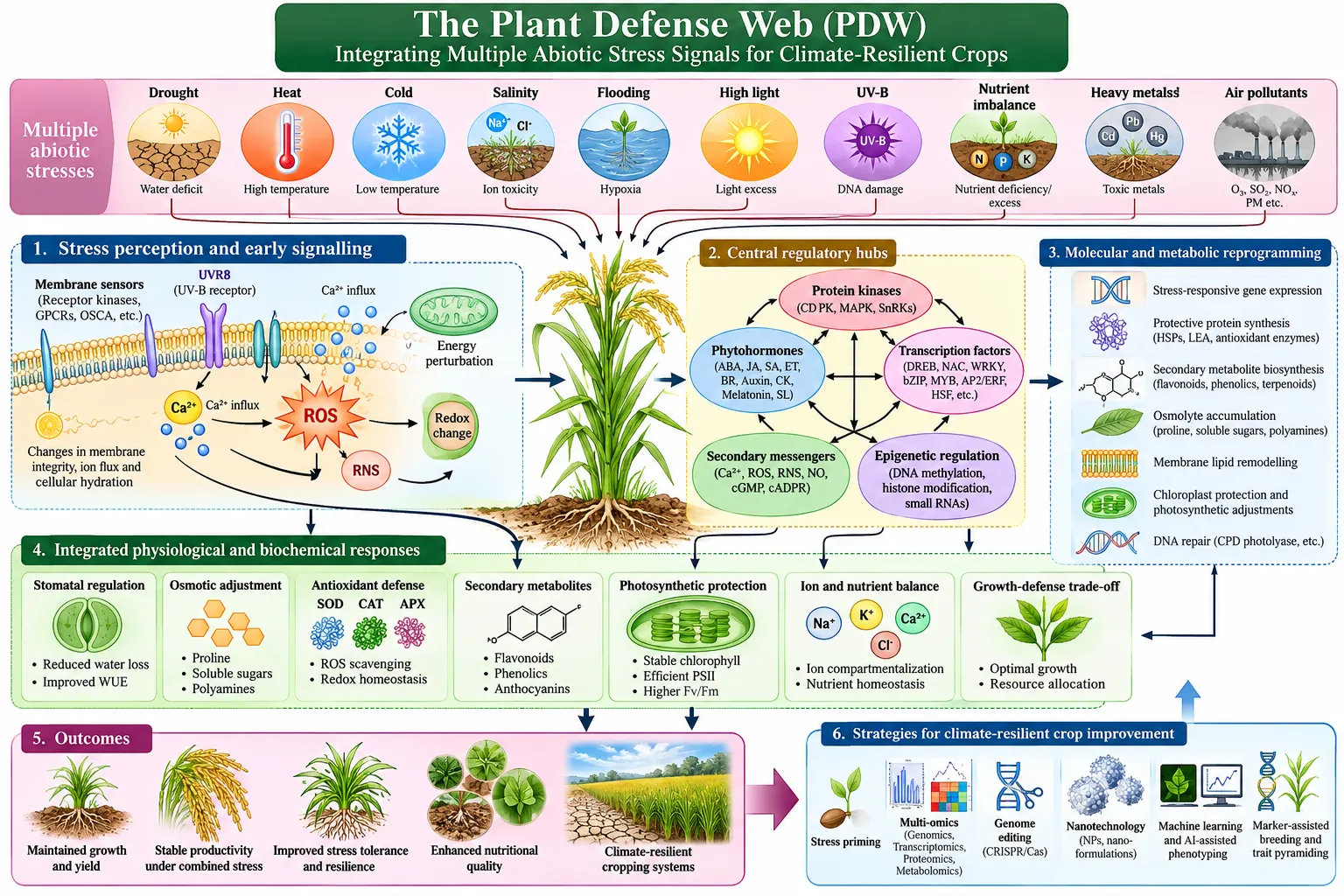
Figure 1: Integrated Plant Defense Web (PDW) Model for Multiple Abiotic Stress Tolerance
Central hypothesis of the model
The model proposes that multiple abiotic stresses do not activate completely independent defense pathways. Instead, they converge on a limited number of signalling and metabolic hubs.
The most important hubs are:
Ca²⁺ → ROS → MAPKs/CDPKs → phytohormones → transcription factors → antioxidants/osmolytes/secondary metabolites → physiological protection (Zhu, 2016; Baxter et al., 2014; Kovalchuk, 2023). These connected layers are represented in Figure 1.
Stress memory subsequently modifies the sensitivity of this network during future stress episodes.
A New Concept: The Stress Defense Threshold
An important extension of the Plant Defense Web is the concept of a stress defense threshold.
At low stress intensity:
Stress → acclimation
At moderate stress intensity:
Stress → defense activation → metabolic adjustment
At high stress intensity:
Stress → excessive ROS → cellular injury → growth inhibition
Therefore, plant resilience depends not only on the strength of defense mechanisms but also on how efficiently a plant detects when to switch between acclimation, protection, recovery and programmed cell death.
The proposed relationship can be summarized as:
Environmental pressure
→ signal perception
→ defense threshold
→ acclimation OR injury
This threshold is likely controlled by genotype, developmental stage, previous stress history and environmental context.
Multi-Omics Approaches for Decoding Multiple-Stress Tolerance
Understanding combined stress responses requires integration of multiple biological levels.
Genomics
Genomics can identify:
Transcriptomics
RNA sequencing can identify:
Proteomics
Proteomics provides information on the actual proteins accumulating or disappearing during stress.
This is important because transcript abundance does not always predict protein abundance or activity.
Metabolomics
Metabolomics can reveal changes in:
Phenomics
High-throughput phenotyping can quantify:
The future of multiple-stress research will increasingly depend on connecting these datasets.
Machine Learning and Artificial Intelligence in Stress Biology
Multiple-stress responses generate extremely complex datasets.
Machine learning can help identify relationships among: (Nawaz et al., 2024; Choudhury et al., 2017).
genotype × environment × stress × phenotype × metabolite × gene expression
Potential applications include:
A particularly promising approach is to combine hyperspectral or chlorophyll-fluorescence imaging with biochemical and molecular measurements.
For example:
Spectral phenotype → machine learning → biochemical prediction → tolerant genotype identification the translational workflow from traditional germplasm screening through multi-omics, machine-learning integration and field validation is summarized in Figure 2.
This could substantially accelerate screening of traditional crop germplasm.
Traditional Crop Diversity as a Reservoir of Multiple-Stress Tolerance
Modern breeding has frequently prioritized yield under favourable conditions. However, traditional and indigenous crop varieties have evolved under heterogeneous environments and may contain valuable alleles associated with stress adaptation. (Mittler & Blumwald, 2010).
Traditional germplasm may possess combinations of:
Therefore, traditional varieties should not merely be regarded as historical resources. They can function as living reservoirs of stress-adaptive genetic diversity.
A promising breeding strategy is:
traditional germplasm → stress phenotyping → molecular characterization → candidate genes/markers → pre-breeding → elite cultivar development
Nanotechnology and Exogenous Priming (Nawaz et al., 2024; Jisha et al., 2013).
External application of signalling compounds and nanoparticles represents another emerging strategy.
Potential priming agents include:
These treatments can potentially stimulate antioxidant systems, improve nutrient acquisition, stabilize membranes and alter stress-responsive gene expression.
However, application should be carefully optimized because concentration, particle size, formulation, genotype and environmental conditions strongly influence plant responses.
Therefore, future research should move from “more treatment” toward precision priming.
From Defense to Recovery: An Understudied Component
Most stress studies measure plant responses during stress. However, recovery after stress removal may be equally important. Recovery capacity should therefore be evaluated alongside stress injury and tolerance (Mittler, 2006; Prasch & Sonnewald, 2015).
Two genotypes can show similar damage during stress but differ dramatically in their recovery capacity.
A resilient genotype may rapidly:
Therefore, recovery rate should become an important phenotype in stress-resilience screening.
A proposed resilience index could integrate:
Stress tolerance + damage avoidance + recovery capacity + yield stability
rather than relying on a single physiological measurement.
Future Research Priorities
The following research priorities emerge from the Plant Defense Web concept.
Study realistic stress combinations
Experiments should increasingly examine:
Include stress sequence
The order of stress exposure may change plant responses.
For example:
drought → heat
may produce a different response from:
heat → drought
Measure recovery
Recovery should be incorporated into experimental designs.
Integrate multiple biological levels
Future studies should combine:
phenomics + transcriptomics + proteomics + metabolomics + ionomics
Develop stress-resilience biomarkers
Potential biomarkers include:
Explore stress memory
Priming and epigenetic memory may provide a low-input strategy for improving resilience.
Exploit traditional germplasm
Indigenous crop diversity should be systematically evaluated under combined stress environments.
Integrate artificial intelligence
Machine learning should be incorporated into multi-stress phenotyping and genotype selection.
CONCLUSION
Plant tolerance to environmental stress cannot be adequately explained by isolated stress-response pathways. In natural environments, plants encounter fluctuating combinations of drought, heat, salinity, radiation, flooding, nutrient imbalance and other environmental challenges. These stress combinations generate complex and sometimes unpredictable responses.
The evidence reviewed here supports a network-based model in which multiple environmental stresses converge on a limited set of cellular signalling hubs. Calcium, ROS, MAPKs, phytohormones and transcription factors form the central communication architecture, while antioxidants, osmolytes, flavonoids, phenolics, compatible solutes and protective proteins form the biochemical defense layer. Epigenetic regulation and stress memory extend this network across time, allowing plants to respond differently to recurrent environmental challenges. (Mittler, 2006; Choudhury et al., 2017; Nadeem et al., 2023; Zhu, 2016).
The proposed Plant Defense Web provides a conceptual bridge between molecular signalling and whole-plant resilience. Importantly, the objective of crop improvement should not be to maximize the activation of every defense pathway. Excessive defense can suppress growth and yield. Instead, the objective should be to develop plants capable of rapid perception, precise signalling, efficient protection and rapid recovery with minimal growth penalty.
Future climate-resilient agriculture will therefore require a shift from single-gene and single-stress thinking toward network-based, multi-stress and phenotype-driven crop improvement.
The most promising strategy can be summarized as:
Diverse germplasm → realistic multiple-stress phenotyping → multi-omics → defense-network biomarkers → precision breeding/editing → priming → resilient cultivar
Ultimately, plant resilience should be defined not simply as the ability to survive stress, but as the ability to maintain photosynthesis, growth, reproduction and yield while continuously adapting to an unpredictable environment.
Figure 2: Translational Pipeline for Developing Climate-Resilient Crops
Natural diversity
↓
Traditional + wild germplasm
↓
Multiple-stress screening
↓
Physiological phenotyping
↓
Biochemical profiling
↓
Transcriptomics + proteomics + metabolomics
↓
AI / machine-learning integration
↓
Candidate genes + biomarkers
↓
Marker-assisted selection / genomic selection / gene editing
↓
Field validation under combined stresses
↓
Climate-resilient high-yielding cultivar
Table 1: Major Abiotic Stresses and Their Principal Defense Responses
| Stress | Primary disturbance | Major signalling components | Important defense mechanisms |
|---|---|---|---|
| Drought | Water deficit | ABA, Ca²⁺, ROS, MAPKs | Stomatal closure, osmolytes, antioxidants |
| Salinity | Osmotic + ionic stress | ABA, Ca²⁺, ROS, SOS pathway | Na⁺ exclusion, K⁺ retention, osmotic adjustment |
| Heat | Protein/membrane instability | Ca²⁺, ROS, HSFs, ABA | HSPs, antioxidants, membrane stabilization |
| Cold | Reduced membrane fluidity | Ca²⁺, ROS, CBF/DREB | Cryoprotection, unsaturated lipids, osmolytes |
| Flooding | Hypoxia/anoxia | Ethylene, ROS, Ca²⁺ | Fermentation, aerenchyma, carbohydrate management |
| UV-B | DNA/photosynthetic damage | UVR8, ROS, Ca²⁺ | Flavonoids, DNA repair, antioxidants |
| High light | Photoinhibition | ROS, Ca²⁺ | NPQ, carotenoids, antioxidant defense |
| Heavy metals | Oxidative + ionic toxicity | ROS, Ca²⁺, hormones | Chelation, sequestration, antioxidant defense |
| Nutrient deficiency | Metabolic limitation | Hormones, ROS, nutrient sensors | Root remodeling, transporter activation |
| Combined stress | Multiple disturbances | Integrated signaling network | Cross-tolerance, metabolic plasticity, priming |
Table 2: Major Components of the Plant Defense Web
| Layer | Components | Principal function |
|---|---|---|
| Perception | UVR8, membrane sensors, ion channels | Detect environmental changes |
| Early signaling | Ca²⁺, ROS, NO | Rapid information transfer |
| Kinases | MAPKs, CDPKs, SnRKs, CIPKs | Signal amplification |
| Hormones | ABA, JA, SA, ET, BR, auxin, melatonin | Signal integration |
| Transcription factors | WRKY, NAC, MYB, DREB, HSF, bZIP | Gene regulation |
| Antioxidants | SOD, CAT, APX, GR, GPX | Redox protection |
| Osmolytes | Proline, sugars, glycine betaine | Osmotic protection |
| Secondary metabolites | Flavonoids, phenolics, anthocyanins | ROS/UV protection |
| Molecular repair | DNA repair, HSPs, proteostasis | Damage recovery |
| Memory | DNA methylation, histone modification, ncRNA | Stress priming |
| Phenotype | Photosynthesis, water-use efficiency, growth | Whole-plant adaptation |
| Outcome | Survival + recovery + yield | Agricultural resilience |
REFERENCES

Isharani Acharya, Preetam Kumar Senapati, The Plant Defense Web: Decoding Convergent Mechanisms of Tolerance to Multiple Abiotic Stresses and Building Climate-Resilient Crops, Int. J. of Pharm. Sci., 2026, Vol 4, Issue 10, 2474-2488. https://doi.org/10.5281/zenodo.23414098
 10.5281/zenodo.23414098