

We use cookies to ensure our website works properly and to personalise your experience. Cookies policy
Department of Pharmacy Faculty of Medical Paramedical and Allied Health Science, Jagannath University, Jaipur, Rajasthan, 303901, India
The goal of the intricate and dynamic biological process of wound healing is to restore the integrity of damaged tissue through a series of processes like hemostasis, inflammation, proliferation, and remodeling. Because of things like infection, delayed healing, and underlying systemic diseases, acute and chronic wounds continue to be a major clinical concern. Antibiotics and synthetic medications are examples of conventional wound care treatments that frequently have drawbacks such side effects, high costs, and the development of germ resistance. Herbal therapy has drawn a lot of interest lately as a more economical and safe option for managing wounds. Medicinal herbs can effectively promote wound healing because they are rich in bioactive chemicals with antibacterial, anti-inflammatory, antioxidant, and tissue-regenerating qualities.One of the most extensively researched and used herbal therapies for wound care is aloe vera. Its medicinal properties are attributed to a number of active phytoconstituents, including vitamins, enzymes, anthraquinones, and polysaccharides like acemannan. Aloe vera shows great promise as a natural therapeutic agent in wound management by promoting collagen production, lowering inflammation, speeding epithelialization, and preventing microbial infection. With few adverse effects, its multipurpose qualities promote quicker healing. To confirm its effectiveness and guarantee its best application in contemporary wound care procedures, more systematic clinical research is necessary.
The body uses wound healing, a basic physiological process, to repair injured tissues and restore their functionality. It is a highly controlled series of intricate and dynamic cellular and molecular processes. In order to ensure appropriate repair and regeneration, the process starts as soon as an injury occurs and moves through overlapping stages. Preventing infection, minimizing tissue damage, and restoring normal skin architecture all depend on effective wound healing.
Hemostasis, inflammation, proliferation, and remodeling are the four primary stages of the wound healing process. The first reaction is hemostasis, in which blood clots to halt bleeding and create a barrier of defense. The inflammatory phase comes next, when immune cells move to the site of the wound to clear debris and stop infection. Collagen deposition, angiogenesis, and re-epithelialization all contribute to the development of new tissue during the proliferative phase. Ultimately, the remodeling stage fortifies the newly created tissue and reinstates its functional characteristics. Healing may be hampered or delayed if these phases are disturbed.Diabetic ulcers, pressure ulcers, and venous leg ulcers are examples of chronic wounds that present a major global healthcare concern.
These wounds frequently stay in a protracted inflammatory state and do not go through the typical healing stages. They thus have a higher risk of infection and sequelae, which raises morbidity and lowers quality of life. The difficulty of managing chronic wounds is further highlighted by the cost of long-term care and therapy.
In clinical practice, conventional treatments including antibiotics, antiseptics, and synthetic wound dressings are frequently utilized. However, things like the emergence of antibiotic resistance, possible adverse effects, and expensive treatment costs frequently restrict their efficacy. Furthermore, particularly in chronic illnesses, these treatments might not always encourage full tissue regeneration.
Herbal remedies for wound treatment are becoming more popular as a result of these restrictions. Bioactive substances with antibacterial, anti-inflammatory, antioxidant, and restorative qualities are abundant in medicinal plants. Among these, Aloe vera has drawn a lot of interest due to its inherent capacity to promote wound healing. It is a promising therapeutic agent in contemporary wound care because of its phytoconstituents, which promote tissue regeneration, lower inflammation, and guard against microbial infection.
2. Overview of Wound Healing
The biological process of wound healing is intricate and well-coordinated, restoring damaged tissues' structural and functional integrity. It entails a series of controlled cellular, molecular, and biochemical processes. A number of intrinsic and extrinsic factors influence the effectiveness of healing, and any imbalance in these processes can lead to chronic wound development or delayed recovery.
2.1 Types of Wounds (Acute and Chronic)
Based on how long they take to heal and how they progress, wounds are often divided into acute and chronic categories. Acute wounds heal normally and systematically, usually in a known amount of time. Burns, minor cuts, and surgical incisions are a few examples. These wounds typically result in full tissue regeneration and heal smoothly.
On the other hand, chronic wounds frequently stay in a protracted inflammatory phase and do not heal within the anticipated time frame. Venous leg ulcers, pressure ulcers, and diabetic
ulcers are common examples. Chronic wounds are often linked to underlying diseases that impede normal healing processes, such as diabetes, poor circulation, or infection.
2.2 Factors Affecting Healing
Numerous local and systemic factors affect wound healing. The presence of foreign bodies at the wound site, oxygen availability, moisture balance, and infection are examples of local variables. Effective healing requires a sufficient blood flow and appropriate wound management.
Age, dietary condition, underlying illnesses (including diabetes), and immunological function are all significant systemic contributors. Stress and smoking are two lifestyle choices that might hinder the healing process. Collagen synthesis and tissue regeneration can be delayed by deficiencies in vital nutrients such as proteins, vitamins (particularly vitamin C), and minerals.
2.3 Cellular and Biochemical Processes
Numerous cellular processes and metabolic reactions are involved in the wound healing process. Numerous cell types, such as neutrophils, macrophages, platelets, and fibrobl.
3. Introduction to Aloe vera
Due to its therapeutic qualities, aloe vera is a well-known medicinal plant that has been utilized extensively in both traditional and contemporary medicine. It is especially prized for its thick, meaty leaves that contain a transparent mucilaginous gel. It is a member of the succulent plant family. The healing, anti-inflammatory, antibacterial, and moisturizing properties of this gel are attributed to its abundance of bioactive ingredients. Aloe vera has become more important in wound care, dermatological, and cosmetic applications because of these qualities.
3.1 Botanical Description
The thick, meaty, lance-shaped leaves of the perennial, drought-resistant succulent aloe vera plant are grouped in a rosette arrangement. Green to grey-green in hue, the leaves frequently have tiny white teeth and serrated borders. The leaf has a translucent gel inside and a bitter yellow latex on the outside. The plant usually reaches a height of 60 to 100 cm. During the flowering season, it produces yellow tubular flowers that are placed on a spike.
3.2 Taxonomy
The taxonomical classification of Aloe vera is as follows:
• Kingdom: Plantae
• Division: Angiosperms
• Class: Monocotyledonae
• Order: Asparagales
• Family: Asphodelaceae
• Genus: Aloe
• Species: Aloe barbadensis Miller
3.4 Geographical Distribution
Although aloe vera is now extensively dispersed throughout tropical and subtropical regions of the world, it is said to have originated in the Arabian Peninsula. It is widely grown in nations including Africa, the United States, India, and some regions of Europe. Because it can flourish in dry and arid regions, it is frequently planted in Indian states including Rajasthan, Gujarat,
Maharashtra, and Tamil Nadu. The plant is very versatile and simple to grow because it needs little water and may flourish in poor soil.
4. Phytochemical Composition of Aloe vera
Aloe vera's therapeutic efficacy in wound healing and skin repair is attributed to a variety of physiologically active chemicals. The plant is extremely important in medical applications because of these phytoconstituents' antibacterial, anti-inflammatory, antioxidant, and tissue- regenerating qualities.
4.1 Vitamins (A, C, E)
Rich in vital vitamins, aloe vera is useful for both protecting and healing injured tissues. Strong antioxidants including vitamins A (beta-carotene), C, and E aid in scavenging free radicals produced at the wound site. These vitamins aid in the production of collagen, promote the proliferation of epithelial cells, and shield the skin from oxidative damage, all of which hasten the healing process.
4.2 Enzymes
Numerous enzymes, including amylase, lipase, catalase, and peroxidase, are present in the plant. These enzymes aid in the breakdown of fats and carbohydrates, the reduction of inflammation, and the removal of dead tissues from the wound site. Additionally, enzymatic activity aids in wound cleaning and accelerates healing.
4.3 Minerals
Important minerals like calcium, magnesium, zinc, potassium, sodium, and iron are found in aloe vera. These minerals are necessary for tissue repair, enzyme activity, and a number of biological processes. For instance, zinc is essential for the production of collagen and the immune system, both of which are necessary for efficient wound healing.
4.4 Polysaccharides (Acemannan)
One of Aloe vera's most significant constituents is polysaccharides, of which acemannan is the most bioactive. Acemannan activates the immune system, increases fibroblast proliferation, and increases macrophage activity. It is essential for wound healing because it speeds up tissue regeneration and aids in the manufacture of collagen.
4.5 Anthraquinones
The latex section of the plant contains the majority of anthraquinones, including emodin and aloin. These substances have analgesic, antiviral, and antibacterial properties. They aid in reducing pain and preventing infection at the location of the incision. They must be used sparingly, though, as too much of them might irritate people.
Table 1 : Phytoconstituents of Aloe vera and Functions
|
Component |
Function |
|
Acemannan |
Immunomodulatory |
|
Aloin |
Antimicrobial |
|
Saponins |
Cleansing |
|
Lignin |
Penetration enhancer |
5. Mechanism of Action of Aloe vera
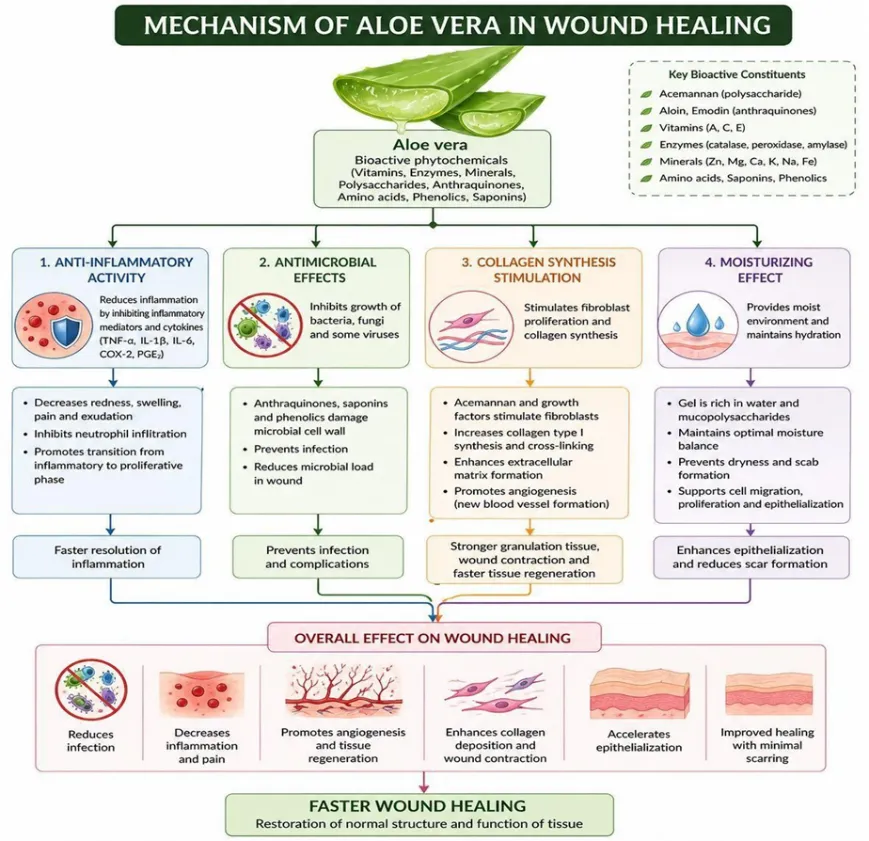
Aloe vera acts at the cellular and molecular levels to improve wound healing through a variety of complimentary processes. Together, its various phytoconstituents minimize inflammation, regulate microbial development, promote tissue regeneration, and preserve the ideal moist environment for healing. Together, these processes quicken the healing process and enhance the quality of newly formed tissue.
5.1 Anti-inflammatory Activity
Aloe vera exhibits strong anti-inflammatory properties by modulating key inflammatory pathways. It reduces the production of pro-inflammatory mediators such as prostaglandins and cytokines, thereby decreasing redness, swelling, and pain at the wound site. Compounds like acemannan and certain sterols help regulate immune cell activity, leading to faster resolution of the inflammatory phase and progression toward tissue repair.
5.2 Antimicrobial Effects
Aloe vera's antibacterial properties aid in preventing infection of wounds. It includes bioactive molecules that prevent the growth of bacteria, fungus, and certain viruses, including anthraquinones, saponins, and phenolic compounds. It avoids problems and fosters a healing environment by lowering the microbial burden at the wound site.
5.3 Collagen Synthesis Stimulation
Aloe vera increases the activity of fibroblasts, which are essential for the synthesis of collagen. It increases the repaired tissue's tensile strength by promoting the production and cross-linking of collagen fibers. Additionally, this activity facilitates the production of new extracellular matrix and accelerates wound contraction, both of which contribute to successful tissue regeneration.
5.4 Moisturizing Effect
Aloe vera gel contains a lot of water and mucopolysaccharides that keep wounds moist. Proper cell migration, proliferation, and epithelialization depend on moisture. Aloe vera's moisturizing properties speed up healing and lessen the creation of scabs by preventing dryness and scab formation.
6. Pharmacological Activities of Aloe vera
Aloe vera has a variety of pharmacological properties that greatly enhance its efficacy in treating wounds. Its bioactive components support tissue regeneration, guard against oxidative damage, manage infection, and reduce pain through a variety of mechanisms. It is a useful natural medicinal agent in both conventional and contemporary medicine because of these qualities.
6.1 Wound Healing Activity
By promoting fibroblast proliferation and boosting collagen production, aloe vera improves wound healing. It encourages the development of granulation tissue and speeds up re-
epithelialization. Polysaccharides like acemannan are crucial for the activation of growth factors and macrophages, both of which are necessary for tissue regeneration. As a result, the recovered tissue's tensile strength increases and the wound contracts more quickly.
6.2 Antioxidant Properties
Strong antioxidants found in the plant include flavonoids, polyphenols, and vitamins A, C, and
E. By counteracting free radicals produced at the wound site, these substances lessen oxidative stress. Aloe vera promotes quicker healing and shields newly produced tissues from additional harm by reducing cellular damage.
6.3. Antibacterial Activity
Aloe vera has broad-spectrum antibacterial activity against a variety of harmful microbes. Microbial cell membranes are disrupted and bacterial growth is inhibited by compounds such anthraquinones, saponins, and phenolic chemicals. This action encourages a clean healing environment, which is essential for successful tissue repair, and helps avoid infection in wounds.
6.4 Analgesic Effect
Aloe vera's analgesic (pain-relieving) properties are ascribed to its anti-inflammatory chemicals and bioactive components, including magnesium lactate and salicylic acid. These elements lessen nerve stimulation at the wound site and prevent the synthesis of pain mediators like prostaglandins. Aloe vera gel's calming and cooling properties can offer instant relief from burning, itching, and pain. It improves patient comfort and aids in the general wound healing process by reducing inflammation and soothing the afflicted area.
Table 2 : Pharmacological Activities and Evidence of Aloe vera
|
Pharmacological Activity |
Active Constituents |
Mechanism of Action |
Evidence Outcome |
|
Wound Healing Activity |
Acemannan, Gibberellins, Polysaccharides |
Stimulates fibroblast proliferation, collagen synthesis, and angiogenesis |
Accelerated wound contraction, faster epithelialization, improved tensile strength |
|
Antioxidant Properties |
Vitamins A, C, E, Flavonoids, Polyphenols |
Scavenges free radicals and reduces oxidative stress |
Protects cells from damage and enhances tissue repair |
|
Antibacterial Activity |
Anthraquinones (Aloin, Emodin), Saponins, Phenolics |
Disrupts bacterial cell wall and inhibits microbial growth |
Reduces infection and microbial load in wounds |
|
Analgesic Effect |
Salicylic acid, Magnesium lactate |
Inhibits pain mediators and reduces inflammation |
Provides pain relief and improves patient comfort |
7. Forms and Applications of Aloe vera
Aloe vera finds extensive application in many medicinal and cosmetic formulations for the treatment of wounds. Because of its adaptability, it can be used in a variety of dose forms, each of which has unique benefits based on the kind and extent of the wound. By efficiently delivering the active phytoconstituents to the damage site, these formulations aid in quicker healing and protection.
7.1 Gel
The most popular type of Aloe vera preparation is a gel. It comes straight from the leaf's inner mucilaginous section. Aloe gel's cooling, calming, and moisturizing qualities make it a popular treatment for burns, cuts, and minor wounds. It lessens irritation and inflammation, speeds up epithelialization, and keeps the wound moist. Because of its inherent consistency, the skin may easily absorb it.
7.2 Cream
Aloe extract, emulsifying agents, and other excipients are combined to create the semi-solid product known as aloe vera cream. It works well for inflammatory diseases, dry wounds, and skin irritations. Creams improve hydration and protection by improving spreadability and
prolonging skin contact. For better skin nourishment and mending, they are frequently utilized in medical and cosmetic applications.
7.3 Ointment
Aloe vera ointments are oil-based preparations that cover the surface of the wound to provide protection. When longer moisture retention is necessary, they are especially helpful for deeper or chronic wounds. By preserving a healing environment, ointments aid in tissue regeneration, infection prevention, and water loss reduction.
7.4 Extract
Aloe vera extract is a concentrated version made using a variety of extraction techniques. It can be added to dressings, gels, lotions, and sprays. Extracts are utilized in sophisticated wound care formulations because they have a high concentration of active phytoconstituents. Because of their potency and focused effect, they provide improved therapeutic efficacy.
8. Clinical Applications of Aloe vera
Aloe vera has been used extensively in therapeutic settings to treat a variety of wounds. It works well to promote quicker healing and lessen problems because of its anti-inflammatory,
antibacterial, antioxidant, and tissue-regenerating qualities. Key clinical applications include the following:
8.1 Burns
First- and second-degree burns are frequently treated with aloe vera. Pain and discomfort are instantly relieved by its calming and cooling qualities. It speeds up epithelialization, lowers inflammation, and guards against infection. Additionally, the gel helps burned skin heal more quickly and reduces the creation of scars.
8.2 Diabetic Wounds
Poor circulation and a weakened immune system make diabetes wounds—especially diabetic foot ulcers—difficult to cure. By promoting fibroblast activity, enhancing collagen synthesis, and boosting blood flow to the injured area, aloe vera improves wound healing. Because of its antibacterial qualities, it can assist manage chronic diabetic wounds by preventing infection.
8.3 Surgical Wounds
Aloe vera is used in surgical wounds to speed up healing and lessen problems after surgery. It promotes tissue regeneration, lowers inflammation, and guards against microbial infection. Aloe-based compositions can shorten healing times and promote wound closure.
8.4 Ulcers
Aloe vera works well for treating a variety of ulcers, such as venous and pressure ulcers. It lessens inflammation, encourages the production of granulation tissue, and helps keep the surroundings moist. Its bioactive ingredients promote tissue regeneration and guard against infection, improving the results of recovery.
Table 3 : Clinical Studies on Aloe vera in Wound Healing
|
Study / Year |
Type of Wound |
Study Design |
Intervention |
Key Findings / Outcome |
|
Davis et al., 1989 |
Burns |
Experimental (animal study) |
Topical Aloe vera gel |
Faster epithelialization and reduced healing time compared to control |
|
Visuthikosol et al., 1995 |
Burn wounds |
Clinical study |
Aloe vera gel vs silver sulfadiazine |
Aloe vera showed quicker healing and less pain |
|
Chithra et al., 1998 |
Excision wounds |
Experimental study |
Aloevera extract application |
Increased collagen synthesis and improved tensile strength |
|
Heggers et al., 1996 |
Thermal burns |
Comparative study |
Aloe vera vs standard treatment |
Reduced infection and inflammation in Aloe-treated group |
|
Maenthaisong et al., 2007 |
Burns |
Systematic review |
Various Aloe vera formulations |
Significant reduction in healing time for first- and second- degree burns |
|
Shahzad & Ahmed, 2013 |
Diabetic wounds |
Clinical study |
Aloe vera dressing |
Enhanced wound contraction and reduced healing duration |
|
Akhoondinasab et al., 2014 |
Burn patients |
Randomized clinical trial |
Aloe vera gel vs conventional therapy |
Improved healing rate and reduced hospital stay |
Aloe vera is a popular natural remedy for wound treatment and skin therapy because of its many benefits. It is widely used in both traditional and modern medicine because of its medicinal efficacy, safety, and accessibility.
9.1 Natural and Safe
Aloe vera is a plant-based treatment that is usually regarded as safe to apply topically. Because of its natural nature, there is less chance of exposure to hazardous chemicals, which makes it appropriate for long-term usage in wound care. When used properly, most people tolerate it well.
9.2 Cost-effective
Aloe vera is more affordable than many synthetic medications and sophisticated wound care solutions. It is inexpensive and simple to grow, making it a cost-effective choice for patients, particularly in environments with limited resources.
9.3 Easily Available
Aloe vera can be cultivated in home gardens and is readily available in tropical and subtropical areas. Because of its accessibility, small wounds and skin diseases can be easily treated without the need for sophisticated medical resources.
9.4 Minimal Side Effects
Aloe vera usually has little adverse effects when applied topically. Its calming qualities frequently aid in easing discomfort, and it rarely results in irritation or allergic responses. However, patch testing is advised prior to usage because some people may experience sensitivity.
10. Limitations of Aloe vera
Aloe vera has a lot of therapeutic potential, but there are several restrictions that need to be taken into account for its safe and efficient application in wound care. These difficulties demonstrate the necessity of additional study, clinical validation, and quality assurance.
10.1 Lack of Standardization
The absence of standardized formulations is one of Aloe vera's main drawbacks. Various factors, including plant species, growth circumstances, harvesting practices, and processing processes, might affect the makeup of its bioactive elements. This variety makes it challenging to guarantee consistent quality across various goods and may result in variable therapeutic outcomes.
10.2 Possible Allergic Reactions
Aloe vera is typically safe, but some people—especially those with sensitive skin—may experience allergic reactions or skin irritation. Redness, irritation, or a burning feeling at the application site are possible symptoms. To reduce the possibility of negative reactions, a patch test is advised prior to routine use.
10.3 Limited Large-Scale Clinical Trials
Aloe vera's ability to cure wounds has been supported by a number of research, although large- scale, carefully monitored clinical trials are still lacking. The majority of the information that is currently available is either from experimental studies or small sample sizes. This makes it more difficult to develop clear clinical standards and gain broad adoption in evidence-based medicine.
11. Future Prospects of Aloe vera in Wound Care
Aloe vera's medicinal potential can now be further enhanced thanks to developments in pharmaceutical technology and the growing interest in herbal medicine. Through creative methods and scientific validation, future study will concentrate on enhancing its efficacy, stability, and clinical usefulness.
11.1 Nanotechnology-Based Delivery
Promising methods for enhancing the distribution of Aloe vera bioactive chemicals are provided by nanotechnology. Aloe extracts can improve the stability, bioavailability, and targeted transport of nanoparticles, nanogels, or nanoemulsions to the wound site. Improved therapeutic results and quicker healing can result from these systems' controlled and prolonged release of medicinal ingredients.
11.2 Advanced Formulations
An growing field of study is the creation of sophisticated formulations that include Aloe vera, such as hydrogel dressings, biofilms, transdermal patches, and composite wound dressings. In order to increase the overall efficacy of treatment, these formulations seek to optimize moisture balance, improve adhesion to the wound surface, and boost the penetration of active substances.
11.3 More Clinical Validation
More extensive, randomized, and controlled clinical trials are required to definitively prove Aloe vera's safety and effectiveness, even though current research shows the plant's potential advantages. Gaining broader acceptance in contemporary clinical practice and evidence-based medicine requires standardized protocols, dose forms, and evaluation criteria.
CONCLUSION
Aloe vera's complex phytochemical composition and varied pharmacological activities have made it a successful natural medicinal treatment for wound healing. It is very helpful in the treatment of many kinds of wounds because of its capacity to promote healing through a variety of mechanisms, including anti-inflammatory, antibacterial, antioxidant, and moisturizing actions. By boosting collagen synthesis, promoting quicker epithelialization, and encouraging fibroblast activity, the plant significantly contributes to tissue restoration. Improved wound contraction, shorter healing times, and higher-quality regenerated tissue are all benefits of these actions. Its calming and moisturizing qualities also aid in preserving the ideal wound environment, which speeds up the healing process. Aloe vera is a promising substitute for traditional synthetic medications in the treatment of wounds because of its natural origin, safety profile, affordability, and accessibility. To completely demonstrate its effectiveness and incorporate it into conventional medical practice, however, more systematic research and extensive clinical investigations are required.
REFERENCES
Journal of Pakistan Medical Association. 2013.
Journal of Medicinal Plants Research. 2014.
Pharmacologyonline. 2010.
Journal of Pakistan Medical Association. 2013.
Journal of Medicinal Plants Research. 2014.
Pharmacologyonline. 2010.


Jatin Kumar, Dr. Amit Sharma, Therapeutic Role of Aloe Vera in Wound Management, Int. J. of Pharm. Sci., 2026, Vol 4, Issue 6, 159-169, https://doi.org/10.5281/zenodo.20485808
 10.5281/zenodo.20485808