

We use cookies to ensure our website works properly and to personalise your experience. Cookies policy
1Author, Samarth institute of pharmacy, Belhe, Maharashtra, India.
2Co-Author, Samarth institute of pharmacy, Belhe, Maharashtra, India.
3Samarth institute of pharmacy, Belhe, Maharashtra, India.
This review focuses on the nutritional composition and health benefits of dragon fruit (Hylocereus species), commonly known as pitaya. Dragon fruit is a tropical fruit recognized for its unique appearance and growing popularity due to its potential health benefits. It is rich in essential nutrients such as vitamins, minerals, dietary fiber, and powerful antioxidants, especially betalains and polyphenols, which play an important role in promoting health and reducing inflammation.The review highlights that dragon fruit contains a variety of beneficial compounds that support overall well-being. Among its different types, red dragon fruit (Hylocereus polyrhizus) is widely cultivated and consumed, particularly in Indonesia. Studies have shown that it possesses several biological activities, including antibacterial, antifungal, neuroprotective, cardioprotective, and antiplatelet effects.Overall, this review provides a detailed overview of dragon fruit, covering its origin, history, geographical distribution, cultivation, and the bioactive compounds found in different parts of the plant. Due to its rich nutritional value and increasing commercial importance, dragon fruit is now being recognized for its medicinal and nutraceutical potential, largely attributed to compounds like flavonoids, phenolics, and betalains..
Dragon fruit, scientifically known as Hylocereus polyrhizus, belongs to the family Cactaceae. It originated in the tropical and subtropical forest regions of Mexico and South America. In India, its cultivation began in states such as Karnataka, Tamil Nadu, Kerala, Maharashtra, Gujarat, Odisha, Andhra Pradesh, West Bengal, and the Andaman & Nicobar Islands. However, a large portion of dragon fruit available in Indian markets is still imported from countries like Vietnam, Thailand, Malaysia, and Sri Lanka. Dragon fruit, also called pitaya, is valued for its health benefits due to the presence of bioactive compounds. These compounds exhibit several therapeutic properties, including anti-inflammatory, anti-diabetic, anti-cancer, and antibacterial effects. Because of these benefits, its consumption has been increasing worldwide. The fruit can be eaten fresh or used in beverages, desserts, and jellies. Additionally, its natural pigments are used as coloring agents in the food and pharmaceutical industries.The health-promoting effects of dragon fruit are mainly attributed to its rich content of antioxidants and other bioactive substances, which help reduce the risk of chronic diseases. In general, regular consumption of fruits and vegetables is known to lower the global burden of diseases. Dragon fruit, like many other fruits, has been associated with the prevention of non-communicable diseases due to its antioxidant, antimicrobial, and anti-inflammatory properties. In India, most cultivated dragon fruit varieties are red-skinned with white pulp (Hylocereus undatus), accounting for about 93% of production. A smaller proportion includes red peel with red flesh (Hylocereus monacanthus, about 6.5%) and yellow peel with white flesh (Hylocereus megalanthus, less than 0.5%). Overall, dragon fruit is gaining importance in India due to its nutritional value, health benefits, and increasing demand.
Plant Profile

Fig no. 1 Dragon fruit
Synonyms : Night-blooming cactus, Pitaya
Biological Source : Hylocereus
Geographical Source : South America, India Thailand, and Mexico
Botonical name : Hylocereus undatus
Family : Cactaceae
Kingdom : Plantae
Subkingdom: Tracheobionta (vascular plants)
Division : Magnoliophyta
Subdivision : Angiosperms
Subclass : Caryophyllidae
Order : Caryophyllales
Genus : Hylocereus
Species : Undatus
Chemical Constituents:
Dragon fruit (pitaya) contains about 80–85% water and provides carbohydrates such as glucose and fructose along with dietary fiber. It is a good source of vitamin C, B-complex vitamins, and minerals like iron and magnesium. The fruit is also rich in bioactive compounds, including betalains (especially betacyanins), flavonoids, and phenolic compounds, which act as powerful antioxidants.
Pharmaco-Therapeutic Benefits Of Dragon Fruit
Oil obtained from Hylocereus undatus seeds and peels is an important source of antioxidant compounds, with the peel containing higher levels of flavonoids than the pulp. The species Hylocereus polyrhizus is particularly rich in phenolic compounds, with a reported content of about 15.92 mg gallic acid per gram, contributing to its strong antioxidant activity. Studies on dragon fruit have shown that consumption of red pitaya can influence antioxidant status, especially in individuals with pre-diabetes and normal cholesterol levels.
Dragon fruit leaf extract shows antibacterial activity against several pathogenic bacteria, including Streptococcus pneumoniae, Neisseria meningitidis, and Listeria monocytogenes, which are associated with meningitis infections. Studies indicate that the leaf extract of red dragon fruit exhibits stronger antibacterial effects compared to the white dragon fruit variety against these bacteria, suggesting higher therapeutic potential in the red species.
The strong anti-inflammatory properties of red dragon fruit peel are mainly attributed to the presence of betalains, which are powerful antioxidants. These compounds help neutralize free radicals and reactive oxygen species, which are key factors in triggering and sustaining inflammatory processes in the body. By scavenging these harmful molecules, betalains help reduce oxidative stress and thereby suppress the inflammatory response.
A cause–effect study investigated the anti–insulin resistance effect of red pitaya in insulin-resistant rats using fresh fruit and two heat-processed samples with different levels of phenolic compounds, antioxidant activity, and soluble dietary fiber over a 6-week period. The results showed that fresh pitaya significantly reduced (p < 0.05) fructose-induced insulin resistance, high triglyceride levels, and early atherosclerotic changes in rats. In contrast, pitaya that was heat-treated at 95°C for 30 minutes, which had lower antioxidant content, still significantly reduced (p < 0.05) hyperinsulinemia.
Antioxidant activity and the levels of different bioactive compounds were analyzed in both methanol and water extracts of the sample. In addition, an anti-inflammatory assay was carried out by measuring nitric oxide (NO) production using the RAW 264.7 macrophage cell model. The study also evaluated cytotoxic effects of the extracts on cancer and normal cell lines derived from skin, prostate, and gastrointestinal tissues. Furthermore, the interaction of fruit polyphenols with human serum albumin (HSA), the main drug carrier protein in blood, was studied to assess their quenching ability and binding potential.
The results of this study indicate that 30 days of supplementation with red dragon fruit peel powder significantly reduced triglycerides, low-density lipoprotein cholesterol (LDL-c), and total cholesterol levels. At the same time, it was observed that high-density lipoprotein cholesterol (HDL-c) levels increased. Overall, the findings suggest that powdered red dragon fruit peel can help improve blood lipid profiles in hyperlipidemic male Balb/c mice.
There is currently no specific effective drug available for the global COVID-19 pandemic, which is caused by the novel coronavirus SARS-CoV-2. As a result, several studies have focused on identifying potential antiviral compounds from medicinal plants. One such plant is Hylocereus costaricensis, which produces the super red dragon fruit and is known for its high betacyanin content. Betacyanins present in this fruit are reported to possess multiple biological activities, including antiviral, immunomodulatory, and anti-inflammatory effects. Because of these properties, they are being explored as potential natural compounds that may help in the development of therapeutic agents against viral infections.
Healthy eating has gained significant popularity due to its strong impact on overall health. Previous studies have shown that dragon fruit oligosaccharides (DFOs) are safe for consumption and possess immunomodulatory properties in rats. They also act as prebiotics by helping to balance gut microbiota in systems that simulate the human colon. In a human study, the effects of DFO were further evaluated with respect to immune system activation, regulation of gut microorganisms, and the relationship between gut microbiota and nutrition.
The effects of dragon fruit extract (DFE) were evaluated in Sprague–Dawley rats using an indomethacin-induced gastric ulcer model. All rats were fasted for 24 hours prior to the experiment. After fasting, DFE was administered to the ulcer-induced groups. One hour later, all groups except the healthy control group and the DFE1000 group were given indomethacin orally at a dose of 25 mg/kg to induce gastric injury. The experiment was concluded six hours after indomethacin administration, and the rats were euthanized using a high-dose anesthetic for further analysis.
Health Benefits Of Dragon Fruit
The genus Hylocereus includes several species, but only a few are widely cultivated for their commercial and nutritional value, such as Hylocereus undatus, Hylocereus polyrhizus, and Hylocereus costaricensis. Red dragon fruit is a rich source of important nutrients and minerals. It contains vitamins B1, B2, B3, and C, along with carbohydrates, proteins, fats, and crude fiber. It is also rich in bioactive compounds such as flavonoids, thiamin, niacin, pyridoxine, cobalamin, phenolic compounds, betacyanins, polyphenols, and carotenoids, which contribute to its nutritional and health-promoting properties.
Dragon fruit has gained considerable attention not only because of its unique appearance and taste but also due to its potential health benefits. It possesses a rich nutritional profile that includes various vitamins, minerals, and bioactive compounds. These components are believed to contribute to its positive effects on human health, making it a valuable functional food.
Dragon fruit is highly valued for its nutritional and health-promoting properties due to the presence of bioactive compounds such as vitamins, minerals, carbohydrates, dietary fiber, and various antioxidants. A part from the fruit, other parts of the plant also have useful benefits. The leaves of the pitaya plant are reported to possess diuretic and wound-healing properties and are sometimes grown for ornamental purposes because of their attractive appearance. The flowers are also nutritionally beneficial and are commonly used in preparing salads, soups, and herbal teas.
Dragon fruit is well known for its unique appearance and potential health benefits. Because of its good nutritional profile and lack of harmful effects, consuming it in moderate amounts is generally considered safe for most people.
Nutrient value of dragon fruit
Table no. 1 Nutrient value of dragon fruit
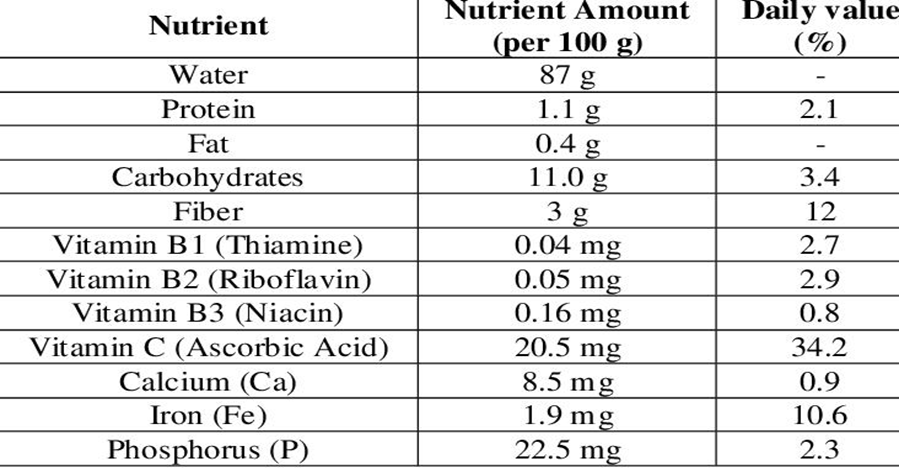
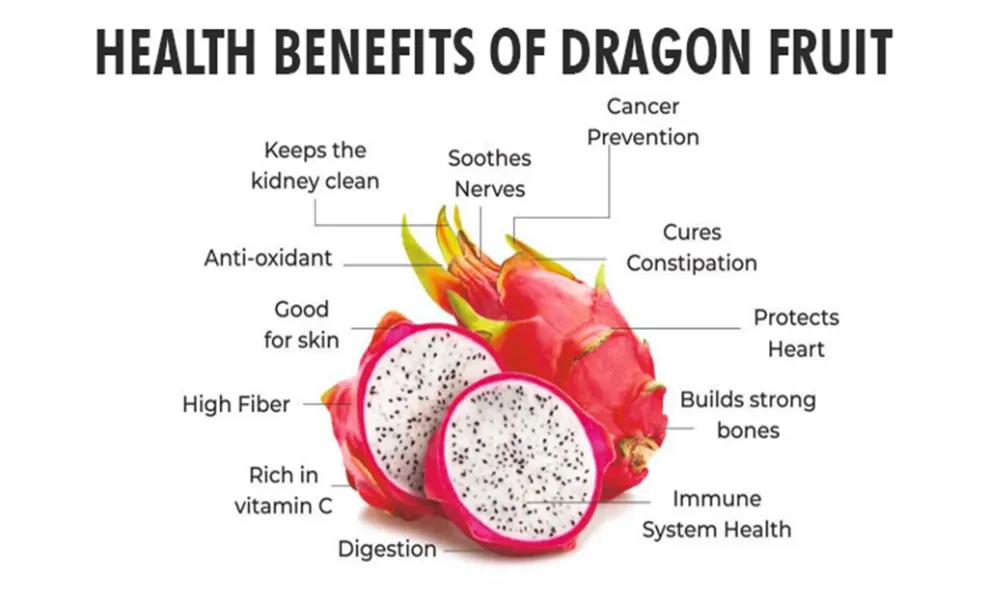
Fig No. 2 Health Benefit of dragon fruit
CONCLUSION :
Studies indicate that pitaya (dragon fruit) has several health-promoting properties, including antioxidant, anti-inflammatory, anti-lipid, anti-diabetic, antibacterial, antifungal, and anti-cancer activities. Regular consumption of this fruit may help reduce oxidative stress and inflammation, thereby lowering the risk of chronic conditions such as diabetes, dyslipidemia, metabolic syndrome, cardiovascular diseases, and certain cancers. In addition to its health benefits, pitaya also holds strong economic value due to its high nutritional content. Its peels, which are rich in betacyanins, can be used as natural colorants, while dietary fiber extracted from the peel can partially replace fat in food products like ice cream. The fruit also has wide applications in the food, cosmetic, and pharmaceutical industries, including the development of eco-friendly packaging, edible films, photoprotective products, natural food additives (such as in meat and beer production), and potential natural compounds for cancer treatment. Furthermore, pitaya cultivation can help improve income for small and marginal farmers in dryland regions. However, post-harvest management is important to reduce losses. There is also a need for better documentation and development of improved varieties in India using conventional breeding and biotechnological approaches.
RESULT :
Review studies indicate that dragon fruit (from the Hylocereus genus cactus) shows strong antioxidant activity due to the presence of bioactive compounds such as betalains, flavonoids, and phenolic substances. It has been reported to possess anti-inflammatory, antimicrobial, and anticancer properties, which may help in preventing various chronic diseases. Research also suggests that dragon fruit has antidiabetic effects by helping to reduce blood glucose levels and improve glycemic control. In addition, it supports cardiovascular health by lowering cholesterol levels and improving lipid profiles. The fruit further promotes gut health because of its dietary fiber and prebiotic properties, which enhance the growth of beneficial intestinal bacteria.
Acknowledgement :
I would like to express my sincere gratitude to all researchers and scholars whose valuable work has contributed to the understanding of Dragon fruit (Hylocereus spp.) Their rigorous scientific efforts laid the foundation for this review. I also acknowledge the support of my institute Samarth institute of pharmacy and faculty mentor Mrs. Megha Wakle mam for their guidance and encouragement throughout the preparation of this manuscript.
REFERENCES


Barhate Chaitali*, Wakale Megha, Bhor Neha, Chavan Harsh, Datkhile Sachin, Title: Review On Pharmaco-Therapeutic Potential and Health Benefits of Dragon Fruit (Hylocereus Spp.), Int. J. of Pharm. Sci., 2026, Vol 4, Issue 6, 239-245. https://doi.org/10.5281/zenodo.20487670
 10.5281/zenodo.20487670