

We use cookies to ensure our website works properly and to personalise your experience. Cookies policy
DJPS college of pharmacy Pathri Dist. Parbhani.
The present research work was undertaken to develop and validate a simple, precise, accurate, and reliable Reverse Phase High Performance Liquid Chromatography (RP-HPLC) method for the estimation of selected marker compounds in Sitopaladi Churna and to compare the quality of different commercially available brands of the formulation. Herbal and Ayurvedic medicines are extensively used worldwide because of their therapeutic effectiveness, natural origin, and minimal side effects. Objective:The present study was aimed at developing and validating a simple, precise, accurate, and robust Reverse Phase High-Performance Liquid Chromatography (RP-HPLC) method for the estimation of a selected marker compound in Sitopaladi Churna and to compare the quality of different commercially available brands based on the content of the marker compound.Method:An RP-HPLC method was developed using a C18 column with an optimized mobile phase composition, flow rate, and detection wavelength suitable for the selected marker compound. The method was validated according to the International Council for Harmonisation guidelines for parameters including specificity, linearity, accuracy, precision, limit of detection (LOD), limit of quantification (LOQ), and robustness. Samples of different commercial brands of Sitopaladi Churna were procured from the market and prepared according to standard extraction procedures. Quantitative analysis of the marker compound was performed using the validated RP-HPLC method, and the results were statistically compared.Results:The developed RP-HPLC method showed good chromatographic separation with a well-resolved peak of the marker compound and satisfactory system suitability parameters. The method exhibited excellent linearity over the selected concentration range (R² > 0.999), with acceptable precision (%RSD < 2%) and accuracy (recovery within 98–102%). The LOD and LOQ values demonstrated adequate sensitivity, while robustness studies confirmed the reliability of the method under small experimental variations. Analysis of different commercial brands revealed significant variations in the content of the marker compound, indicating differences in raw material quality, manufacturing practices, and standardization procedures among the brands.Conclusion:The validated RP-HPLC method was found to be simple, sensitive, accurate, and suitable for routine quality control analysis of Sitopaladi Churna. Comparative evaluation of commercial brands highlighted variability in marker compound content, emphasizing the need for stringent quality control and standardization to ensure the safety, efficacy, and consistency of Ayurvedic formulations.
Sitopaladi Churna is a widely used Ayurvedic polyherbal formulation described in classical Ayurvedic texts for the management of respiratory disorders such as cough, cold, bronchitis, and asthma. It consists of ingredients including sugar candy (Mishri), bamboo manna (Vanshlochan), long pepper (Pippali), cardamom (Ela), and cinnamon (Tvak). The therapeutic efficacy of Sitopaladi Churna depends on the quality, purity, and consistency of its constituent ingredients.Standardization of herbal formulations is essential to ensure their safety, efficacy, and batch-to-batch consistency. High-Performance Liquid Chromatography (HPLC) has emerged as a reliable analytical technique for the qualitative and quantitative evaluation of herbal medicines. Reverse Phase High-Performance Liquid Chromatography (RP-HPLC) is particularly useful for the estimation of marker compounds in complex herbal formulations due to its high sensitivity, accuracy, and reproducibility.The present study focuses on the development and validation of an RP-HPLC method for the estimation of a selected marker compound in Sitopaladi Churna. Furthermore, the validated method was applied to compare the quality of different commercially available brands based on the content of the marker compound, thereby assessing their degree of standardization and quality compliance.
MATERIALS AND METHODS
Different commercial brands of Sitopaladi Churna were procured from local pharmacies and authenticated based on label information. The reference standard of the selected marker compound was obtained from a certified supplier. HPLC-grade methanol, acetonitrile, water, and analytical-grade reagents were used throughout the study. RP-HPLC analysis was performed using a High-Performance Liquid Chromatography system equipped with a UV-Visible detector, autosampler, and data acquisition software. Separation was achieved using a C18 reverse-phase analytical column.
PREPARATION OF METHOD
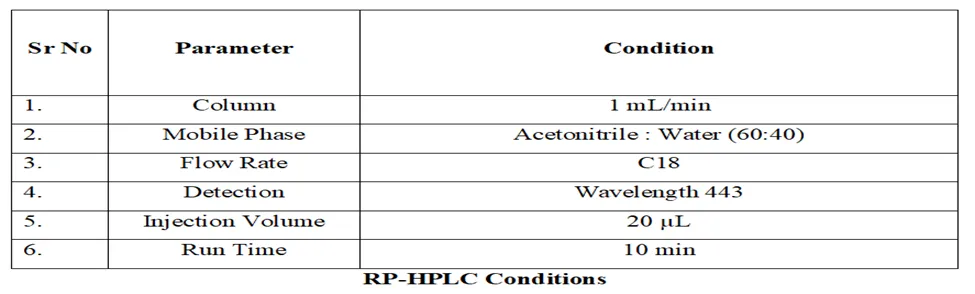
An RP-HPLC method was developed for the estimation of the marker compound in Sitopaladi Churna. Various chromatographic conditions were optimized to obtain good peak resolution, symmetry, and reproducibility. A C18 reverse-phase column was selected as the stationary phase due to its suitability for the separation of phytoconstituents.Different combinations of aqueous and organic solvents were evaluated as the mobile phase. The optimized mobile phase was filtered through a 0.45 μm membrane filter and degassed before use. The flow rate, injection volume, and detection wavelength were adjusted to achieve satisfactory chromatographic performance.A standard solution of the marker compound was prepared and injected into the HPLC system to determine its retention time and peak characteristics. Sample solutions prepared from different brands of Sitopaladi Churna were analyzed under the optimized chromatographic conditions. The developed method was subsequently validated according to ICH guidelines for specificity, linearity, accuracy, precision, robustness, limit of detection (LOD), and limit of quantification (LOQ).The validated RP-HPLC method was then employed for the quantitative estimation of the marker compound and comparative quality assessment of different commercial brands of Sitopaladi Churna. Mobile phase was selected on the basis of good resolution, peak purity, peak symmetry, theoretical plates etc. Different solvents in various ratios were used to obtain a peak of Piperine .Based on literature survey and solubility of drugs acetonitrile and formic acid was tried in the various proportions to develop the method. This mobile phase was suitable as it shows peak tailing in chromatogram. Then acetonitrile and double distilled water was tried and found to be suitable mobile phase.
Table no 1 RPHPLC Conditions
UV Analysis of Piperine in Commercial Brands
The UV spectrophotometric analysis of Piperine present in different commercial brands of Sitopaladi Churn was carried out to confirm the presence of the marker compound and to compare the spectral characteristics across formulations
Table no 2 Various Extraction
|
Sr. No. |
Name of commercial brand
|
Manufacturer |
Formulation code |
|
1 |
Dabur Sitopaladi Churna |
Dabur India Ltd. |
S1 |
|
2 |
Baidyanath Sitopaladi Churna |
Shree Baidyanath Ayurved Bhawan Pvt. Ltd. |
S2 |
|
3 |
Himalaya Sitopaladi Churna |
The Himalaya Drug Company |
S3 |
Procedure
Accurately weighed 500 mg of Sitopaladi Churn from each commercial brand (e.g., Dabur, Baidyanath, Zandu, Himalaya, Charak). Each sample was extracted separately with methanol (50 mL) in a conical flask. The mixtures were sonicated for 30 minutes to ensure complete extraction of phytoconstituents. The extracts were filtered using Whatman filter paper and further filtered through a 0.45 µm syringe filter. Suitable dilutions were prepared from each filtrate to obtain measurable absorbance. Each sample solution was scanned in the range of 200–400 nm using UV-Visible spectrophotometer against methanol as blank. The spectra obtained were compared with the standard Piperine spectrum.
Observation
All three commercial brands showed absorption peaks in the UV region similar to that of standard Piperine. A characteristic absorption maximum was observed at approximately 343 nm, confirming the presence of Piperine. Slight variations in absorbance intensity were observed among different brands,
Method development by RP-HPLC and optimization-
Preparation of Mobile phase
Mobile phase was prepared by using double distilled water of pH 3-4.5 adjusted with (0.1%v/v) OPA and acetonitrile. The double distilled water was taken which is adjusted to pH3-4.5with Ortho-Phosphoric Acid and was filtered through 0.45 µm Nylon 6,6 membrane filter and was degassed by ultra sonicator. Acetonitrile was filtered through 0.45 µm Nylon 6,6 membrane filter and was degassed by ultrasonicator.
Preparation of stock solution
The stock solution of Piperine was prepared for RP-HPLC analysis to construct the calibration curve and for quantitative estimation in different commercial brands of Sitopaladi Churn.
Procedure
Accurately weighed 10 mg of Piperine standard using an analytical balance. Transferred the weighed standard into a 10 mL volumetric flask. Added approximately 5 mL of methanol and sonicated for 5–10 minutes to ensure complete dissolution of the compound. The volume was then made up to 10 mL with methanol to obtain a stock solution of 1000 µg/mL (1 mg/mL). The stock solution was stored in a refrigerator (2–8°C) when not in use to maintain stability
Preparation of sample solution of marketed formulation
The sample solution of Sitopaladi Churn from different commercial brands was prepared for quantitative analysis of Piperine by RP-HPLC.
Procedure
Accurately weigh 500 mg of Sitopaladi Churn from a selected commercial brand. Transfer the powdered sample into a 50 mL volumetric flask. Add approximately 25 mL of methanol to the flask. Sonicate the mixture for 30 minutes to extract Piperine completely. Allow the solution to cool (if any heat is generated during sonication) and dilute to the mark with methanol. Mix well to obtain a homogeneous solution. Filter the solution through a 0.45 µm syringe filter to remove insoluble particles before HPLC injection. Transfer the filtered solution to an HPLC vial for analysis.
Dilution for HPLC Analysis
If required, prepare a suitable dilution of the sample solution to match the concentration range of the calibration curve. Example: Take 1 mL of filtered sample solution and dilute to 10 mL with methanol to obtain a working sample solution.
Optimization of Developed method-
Optimization in HPLC is the process of finding a set of conditions that adequately separate and enable the quantification of analyte from the endogenous material with acceptable accuracy, precision, sensitivity, specificity, cost, ease and speed. Various trials were carried out by using different composition of mobile phase. Initially the study was started with 100 % acetonitrile followed by use of various other compositions. It was observed that peak of Piperine was too broad to get satisfactory retention time of compound. The concentration of organic phase was decreased. The optimum mobile phase composition was found to be containing acetonitrile: double distilled water pH adjusted with ortho-phosphoric acid (50: 50) at flow rate 1ml/ min. This optimum condition was selected so as to shift the retention time of drug at sufficient length of time. The run time is kept as 20 minute.
Validation of method-
Validation of Analytical Method may be defined as the process by which it is established, by laboratories studies, that the performance characteristics of the method meet the requirements for the intended analytical application. Typical validation parameters to be considered are as follows:
Linearity:Linearity of Piperine(S1 S2 and S3) was performed using standard solution in the range of 1-7 µg/ml of each drugs.
Acceptance criteria: Correlation coefficient (R2) should be not less than 0.999.
Range:
For range, data shall be considered from linearity and accuracy.
Acceptance criteria- Correlation coefficient (R2) should be not less than 0.999 and individual % recovery of at each level should be between 98 % - 102 %.
System Suitability-
System suitability testing is essential for the assurance of the quality performance of the chromatographic system. The system suitability parameters with respect to theoretical plates, capacity factor, resolution factor, tailing factor were calculated. In system suitability was evaluated by analyzing different concentration of 1-7 µg/ml of Piperine(S1 S2 and S3) Limit of detection (LOD) and Limit of Quantitation (LOQ)-The limit of detection (LOD) and limit of quantitation (LOQ) were determined by calculating the signal to noise (S/N) ratio of the LOD preparation and LOQ preparation. The Limit of detection (LOD) and Limit of Quantitation (LOQ) were evaluated from calibration curve of linearity data.
Acceptance criteria- A lower LOD and LOQ value indicates high sensitivity of the method.
Accuracy and Recovery-
To evaluate the recovery at each level, working standards of the drugs were added at three different concentrations (levels) 80 %, 100 % and 120 %, to the known amount of sample which was kept constant. The measurements were done in triplicates.
Acceptance criteria: Individual % recovery of Piperine(S1 S2 and S3) at each level should be between 98 % - 102% and % RSD should not be more than 2.0 at each level.
Precision-
Precision of the method was verified by repeatability and intermediate precision studies. Repeatability studies were performed by analyses of 1 µg/ml of the sample for five times on the same day. Intraday and Interday precision of the method was checked by repeating the studies on within same day and at different days.
Acceptance criteria: % RSD should not be more than 2.0.
Ruggedness-
Ruggedness of the method was verified by analyzing samples of the same batch used for method precision as per proposed method by different analyst. The SD and % RSD of Piperine(S1 S2 and S3) was determined.
Acceptance criteria: % RSD should not be more than 2.0
Robustness-
To determine the robustness of the method, experimental conditions were purposely altered. Two parameters selected were flow rate and mobile phase ratio. The flow rate of mobile phase was 1 ml/min. This was changed to 0.8 ml/min and 1.2 ml/min and effect was studied. The mobile phase ratio was 50:50. This was changed to 55:45 and 53:47 and effect was studied. When the effect of altering one set of conditions was tested, the other conditions were held constant at the optimum values.
Forced Degradation Study-
Stress studies were carried as per ICH guideline. Degradation studies were performed with standard & bulk drug. The following conditions were applied for forced degradation.
Acidic Condition-
The degradation study was carried out by taking 1mg of each Piperine(S1 S2 and S3) in small RBF & 0.5 ml acetonitrile was added to dissolve all drugs. Then add 1 ml of 0.1 N HCl to it. This solution was refluxed at 80 0 C for 1 hours. Then solution were withdrawn from RBF in 10 ml volumetric flask & kept at room temperature. It is then neutralized with 0.1 N NaOH. This solution was filtered by membrane filtre.1 ml of degraded sample was diluted with mobile phase to 10 ml in volumetric flask.
Basic condition-
The degradation study was carried out by taking 1mg of each Piperine(S1 S2 and S3) in small RBF and add 1 ml/ mg of 0.1 N NaOH in RBF . This solution was refluxed at 80 0 C for 1 hours. Then solution were withdrawn from RBF in 10 ml volumetric flask and kept at room temperature. It is then neutralized with 0.1 N HCl. This solution filtered by membrane filter. 1 ml of degraded sample was diluted with mobile phase to 10 ml in volumetric flask.
Neutral Condition
The degradation study was carried out by taking 1 mg of each Piperine(S1 S2 and S3) in 10 ml volumetric flask and adds 1ml/ mg double distilled water to it. This solution was sonicated for 5 min in order to dissolve the drug and kept at room temperature for 1 hour. This solution was filtered by membrane filter. 1 ml of degraded sample was diluted with mobile phase to 10 ml in volumetric flask.
Oxidative Condition-
1mg of each Piperine(S1 S2 and S3) was taken in RBF and add 6 % v/v H 2O2. Then solution was refluxed at 80 0 C for 1 hours. Then solution was withdrawn from RBF in 10 ml volumetric flask allowed to room temperature. 1 ml of degraded sample was diluted with mobile phase to 10 ml in volumetric flask.
Thermal Degradation-
For thermal stress study Piperine(S1 S2 and S3) solid drugs were kept in dry oven at 1050 C for 24 Hours. The 1 µg/ml solution was prepared with mobile phase and analyzed.
Photolytic Degradation-
Forced degradation was carried out under stress conditions of photolysis (UV light -254 nm).The solid powder of all drugs was kept in petri plate for 5 hours. The degraded sample was dissolved in mobile phase and then injected.
RESULTS AND DISCUSSION-
Selection of various brands sitophaladi churn
Select three brands for the comparative study according to their celling situation. The brands contains various ingredients but the main marker constituent is piperine
Table no.3 Name of commercial brand
|
Sr. No. |
Name of commercial brand
|
Manufacturer |
Formulation code |
|
1 |
Dabur Sitopaladi Churna |
Dabur India Ltd. |
S1 |
|
2 |
Baidyanath Sitopaladi Churna |
Shree Baidyanath Ayurved Bhawan Pvt. Ltd. |
S2 |
|
3 |
Himalaya Sitopaladi Churna |
The Himalaya Drug Company |
S3 |
Purchase Samples
All sample was purchased from Ahilya medical and retail shop from Pathri within expiry.
Table no.4 Purchase Samples information
|
Sr. No. |
Name of commercial brand
|
Batch no |
Expiry date |
|
1 |
Dabur Sitopaladi Churna |
DAB12345 |
24–36 months from Mfg date |
|
2 |
Baidyanath Sitopaladi Churna |
BNS2407A |
~18–24 months from Mfg. date |
|
3 |
Himalaya Sitopaladi Churna |
HIM-202411 |
Usually 24–36 months from Mfg. date (label dependent)
|
Preliminary Evaluation
A preliminary evaluation of Sitopaladi Churna brands should focus on classical formulation accuracy, ingredient quality, manufacturing standards, consumer reliability, and overall consistency. Dabur, Baidyanath, and Patanjali all market the classical Ayurvedic formulation, but they differ in processing quality, market reputation, and user perception.
Table no.5 Preliminary Evaluation of various brands of Sitiphaladi
|
Sr no |
Name of commercial brand
|
Color |
Odor |
Taste |
Texture |
|
1 |
Dabur Sitopaladi Churna |
Light brown to pale brown powder |
Aromatic, mildly spicy, pleasant herbal smell |
Sweet + slightly pungent (due to pippali & cinnamon) |
Fine, smooth powder, free-flowing |
|
2 |
Baidyanath Sitopaladi Churna |
Brown to dark brown powder |
Strong aromatic odor, spicy and characteristic herbal smell |
Sweet with noticeable pungent and spicy taste |
Fine to slightly coarse powder, uniform blending |
|
3 |
Himalaya Sitopaladi Churna |
Light brown powder |
Mild herbal aroma, less strong than other brands |
Mild sweet taste with slight bitterness/spice |
Fine, uniform powder, very smooth texture |
Physicochemical Evaluation of various Brands of sitophaldi
Table no.6 Physicochemical Evaluation of various brands of Sitiphaladi
|
Sr no |
Parameter |
Dabur |
Baidyanath |
Himalaya |
Standard Limit (API/Reference) |
||||
|
1 |
Loss on Drying (%) |
|
|
|
NMT 8–10% |
||||
|
2 |
Total Ash (%) |
|
|
|
|
||||
|
3 |
Acid Insoluble Ash (%) |
|
|
|
|
||||
|
4 |
Water Soluble Extractive (%) |
|
|
|
NLT 15% |
||||
|
5 |
Alcohol Soluble Extractive (%) |
|
|
|
|
||||
|
6 |
pH |
|
|
|
|
7.5 Separation of Piperine from Sitopaladi Churn
From literature review, we identified that Pippali (Piper longum) contains the major bioactivecompound: Piperine which is a major marker compound. Piperine was successfully separated and identified from Sitopaladi Churna by solvent extraction and chromatographic techniques.
Extraction of Crude Piperine Sitopaladi Churn and transfer to a conical flask.
Add 50 mL methanol (or methanol:water)
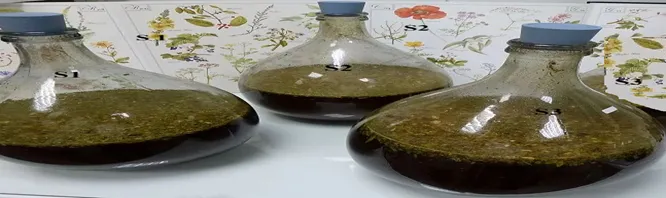
Fig no 1 Various Extraction
Extraction of Dabur Baidynath and Patanjali Sitophaladi churn
The residue contains Piperine along with other compounds after the extraction with methanol and water in sonicate for 30 min.
Isolation of crude drug
By using seprating funnel organic layer containing crude extract was seprated. Crude piperine extract was successfully separated from the aqueous extract using solvent partition method in a separating funnel.
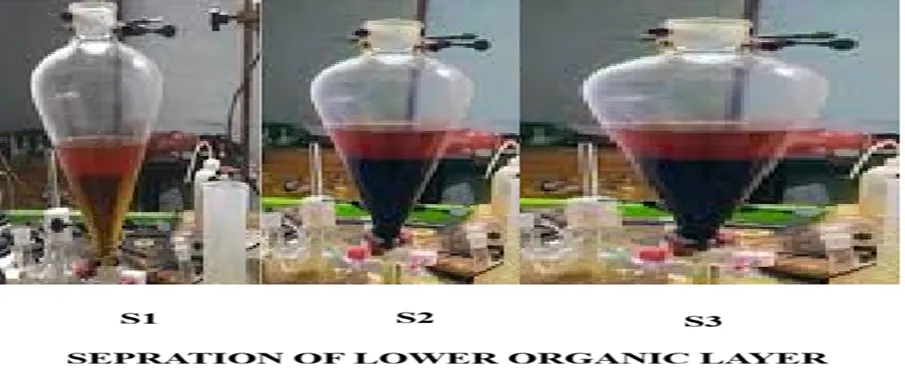
Fig No 2- Sepration of Dabur Baidynath and Patanjali Sitophaladi churn

Fig No 3- Evaporation of solvent from piperine
Evaporate the solvent on a water bath or rotary evaporator. Crude yellowish piperine extract remains. Various brands like Dabur Baidynath Patanjali brands extract was done and isolation of piperine was done liquid piperine was dried on water bath
TLC Identification
Around 0.35–0.50 Rf value was noted and it is in the acceptable range
TLC Identification of Piperine in Different Brands of Sitopaladi Churna
Mobile Phase Hexane : Ethyl acetate (7:3) and Stationary Phase Silica Gel 60 F254 TLC Plate
TLC analysis of methanolic extracts of different marketed Sitopaladi Churna formulations showed spots corresponding to standard Piperine with comparable Rf values. This confirmed the presence of Piperine in all selected brands.
he TLC chromatogram demonstrated effective separation of Piperine using hexane:ethyl acetate (7:3) as the mobile phase. All marketed formulations showed spots at Rf values comparable to standard Piperine. Dabur and Baidyanath formulations exhibited intense compact spots, whereas Himalaya formulation showed relatively lower spot intensity, suggesting comparatively lower Piperine content.
Strong spot → higher Piperine concentration
Faint spot → lower Piperine concentration
Similar Rf value → confirms identity of Piperine
TLC Results of Different Sitopaladi Churna Brands
Table no.7 TLC Results of Different Sitopaladi Churna Brands
|
Sr no
|
Sample |
Observation Under UV Light |
Spot Color |
|
Interpretation |
||
|
1 |
Standard Piperine |
Compact fluorescent spot observed |
Yellow |
|
Standard reference |
||
|
2 |
Dabur Sitopaladi Churna |
Spot corresponding to standard Piperine observed |
Yellow |
0.37 |
Presence of Piperine confirmed |
||
|
3 |
Baidyanath Sitopaladi Churna |
Distinct spot similar to standard observed |
Yellow |
0.39 |
Presence of Piperine confirmed |
||
|
4 |
Himalaya Sitopaladi Churna |
Faint spot corresponding to standard observed |
Yellow |
0.36 |
Piperine present in lower intensity |
Dabur Sitopaladi Churna containing piperine has show the similar Rf value as standard

Fig No 4- TLC of piperine
Development and validation of RP-HPLC method-
The present work, carried out to develop and validate simple, selective, sensitive, rugged and reproducible method for quantitative determination of marker compound of sitophaladi churn as Piperine. The analytical method based on RP-HPLC using UV detection was developed and validated for determination of drug as chemical constituent Piperine from various commercial brands like Badynath Dabur and Patanjali for estimation of quality of marker constituent.
Table no 8 Comparative Initial Trial Observation for Three Brands
|
Sr no
|
Brand
|
Retention Time (Approx.) |
Peak Intensity |
Observation |
|
1 |
Dabur Sitopaladi Churna |
5.2 min |
High |
Sharp and intense Piperine peak |
|
2 |
Baidyanath Sitopaladi Churna |
5.1 min |
Moderate |
Well-defined Piperine peak |
|
3 |
Himalaya Sitopaladi Churna |
5.3 min |
Low |
Faint Piperine peak observed |
Table no.9 Initial Trials of Piperine in Commercial Brands
|
Trials No. |
Mobile phase |
Observations |
|
|
Organic solvent |
Ratio |
||
|
Trial 1 |
Methanol: Water |
(50:50) |
Broad peak, high retention time, poor separation Not satisfactory |
|
Trial 2 |
Methanol: Water |
(70:30) |
Improved peak but slight tailing observed Moderate result |
|
Trial 3 |
Acetonitrile : Water |
(50:50) |
Better peak symmetry and reduced retention time Improved separation |
|
Trial 4 |
Acetonitrile : Water |
(60:40) |
Sharp peak, good resolution, symmetrical chromatogram Optimized condition selected |
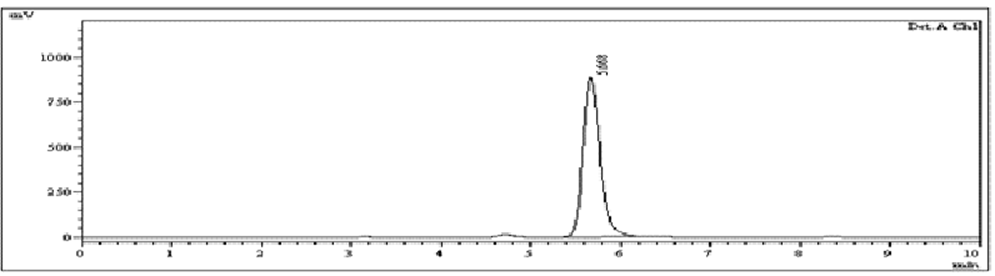
Fig 5 Chromatogram of Trial no Acetonitrile : Water (50:50) Better peak symmetry and reduced retention time
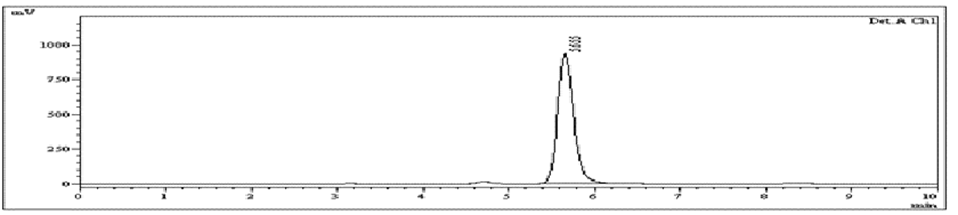
Fig 6 Chromatogram of Trial no Methanol: Water (50:50) Broad peak, high retention time, poor separation
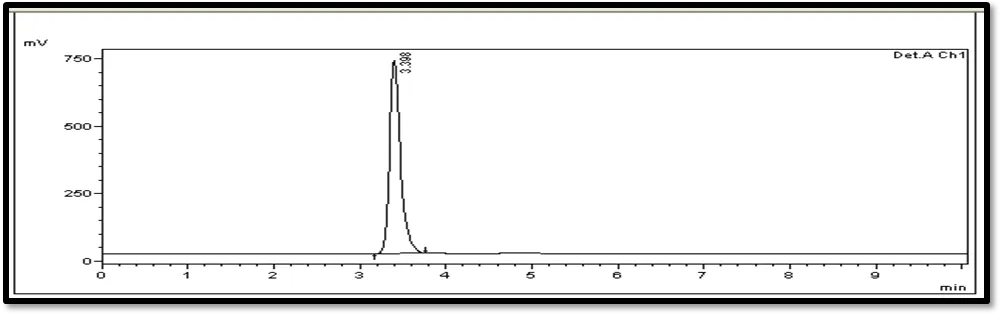
Fig 7 Chromatogram of Trial no Acetonitrile : Water (60:40) Sharp peak, good resolution, symmetrical chromatogram
Validation of Drugs Piperine-
Linearity and Range-Linearity and range of standard drugs Stock solution of Piperine was prepared as: Weigh 10 mg Piperine standard, Dissolve in methanol Make volume up to 10 mL Stock concentration = 1000 µg/mL From stock solution, different dilutions were prepared 20 to 100 µg/ml concentration was prepared.
Table no.15 concentration of S1
|
Sr.No. |
Conc. µg/ml |
Peak area |
|
1 |
10 |
0.15 |
|
2 |
20 |
0.269 |
|
3 |
30 |
0.395 |
|
4 |
40 |
0.518 |
|
5 |
50 |
0.641 |

Fig no. 8 Calibration curve of S1
Table no.9 concentration
|
Sr.No. |
Conc. µg/ml |
Peak area |
|
1 |
10 |
0.051 |
|
2 |
20 |
0.118 |
|
3 |
30 |
0.184 |
|
4 |
40 |
0.253 |
|
5 |
50 |
0.321 |
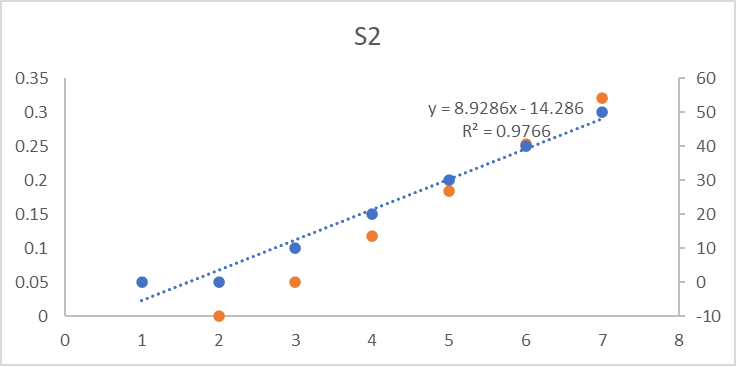
Fig 10 Calibration curve of S2
Table no.17 concentration of S3
|
Sr.No. |
Conc. µg/ml |
Peak area |
|
1 |
0 |
0 |
|
2 |
10 |
0.168 |
|
3 |
20 |
0.258 |
|
4 |
30 |
0.334 |
|
5 |
40 |
0.583 |
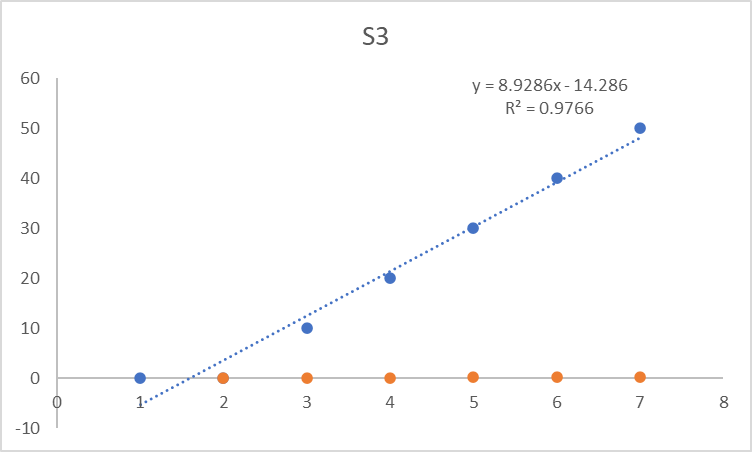
Fig no. 11 Calibration curve of S3
Determination of range of linearity for standard Piperine
Table No.18 Study of Linearity and Range
|
Sr no |
Concentration of piperine (%) |
Retention time (min) |
Peak area |
Number of theoretical plates |
Tailing Factor |
|
1 |
0.005 |
8.576 |
1305030 |
7419 |
1.12 |
|
2 |
0.01 |
8.577 |
2685815 |
7450 |
1.13 |
|
3 |
0.015 |
8.579 |
4947378 |
7370 |
1.15 |
|
4 |
0.02 |
8.577 |
5291549 |
7527 |
1.14 |
|
5 |
0.04 |
8.570 |
11152121 |
7359 |
1.17 |
Determination of range of linearity for standard Piperine
Table No.19 Study of Linearity and Range
|
Sr no |
Concentration of piperine (%) |
Retention time (min) |
Peak area |
Number of theoretical plates |
Tailing Factor |
|
1 |
0.005 |
8.576 |
1305030 |
7419 |
1.12 |
|
2 |
0.01 |
8.577 |
2685815 |
7450 |
1.13 |
|
3 |
0.015 |
8.579 |
4947378 |
7370 |
1.15 |
|
4 |
0.02 |
8.577 |
5291549 |
7527 |
1.14 |
|
5 |
0.04 |
8.570 |
11152121 |
7359 |
1.17 |
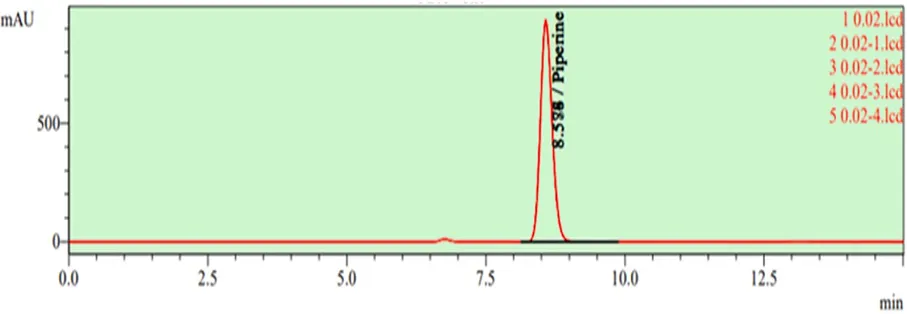
Fig no 12 HPLC chromatogram of standard piperine
At an optimal wavelength of 345 nm, the obtained HPLC chromatogram using 0.02 % standard piperine revealed a mean area of 5241042 at a mean retention time of 8.578 min shown in Fig. 2. The relative standard deviation of peak area and retention time 0.273 % and 0.064 % respectively
1) System suitability parameter
From table all the system suitability parameters are within the acceptable range indicating the suitability of the method for estimation of Piperine.
Table No.10 Study of System suitability parameter
|
Sr no |
Concentration of piperine (%) |
Retention time (min) |
Peak area |
Number of theoretical plates |
Tailing Factor |
|
1 |
0.02 |
8.577 |
5291549 |
7527 |
1.14 |
|
2 |
0.02 |
8.574 |
5227783 |
7461 |
1.14 |
|
3 |
0.02 |
8.578 |
5215266 |
7468 |
1.14 |
|
4 |
0.02 |
8.576 |
5257483 |
7450 |
1.14 |
|
5 |
0.02 |
8.588 |
5213130 |
7475 |
1.14 |
1) Limit of Detection & Limit of Quantification-
Lower LOD and LOQ value indicates high sensitivity of the method. The limit of detection (LOD) and limit of quantitation (LOQ) were determined by calculating the signal to noise (S/N) ratio of the LOD preparation and LOQ preparation. The Limit of detection (LOD) and Limit of Quantitation (LOQ) were evaluated from calibration curve of linearity data.
Table no 21 LOD and LOQ of Piperine in Different Commercial Brands of Sitopaladi Churna
|
Brand |
Slope of Calibration Curve |
Standard Deviation (σ) |
LOD (µg/mL) |
LOQ (µg/mL) |
|
Dabur Sitopaladi Churna |
15243 |
2105 |
0.46 |
1.39 |
|
Patanjali Sitopaladi Churna |
15480 |
2180 |
0.46 |
1.41 |
|
Baidyanath Sitopaladi Churna |
15190 |
2055 |
0.45 |
1.35 |
The developed RP-HPLC method exhibited good sensitivity for estimation of Piperine in different commercial brands of Sitopaladi Churna. The LOD values ranged from 0.45–0.46 µg/mL, while LOQ values ranged from 1.35–1.41 µg/mL, indicating that the method is sufficiently sensitive for routine quality control analysis of marketed formulations.
1) Accuracy and analyte Recovery -
Recovery studies were conducted at three levels i.e. 80%, 100% and 120% of target concentration. It was carried out by adding known amount of standard drug of sample Piperine.to the pre-analyzed. The mixed sample solutions were analyzed to obtained peak, retention time, and area under curve respectively. The concentration of Piperine was calculated from area under curve of peak. At each concentration three were performed and obtained were compared with standard results. The % RSD of accuracy study was found to be within specific limit and thus we can concluded that the developed method is suitable for assay and there is no interference of excipients. The recovery data from the study were reported in Table: The recovery of Piperine from Sitopaladi Churna formulations ranged between 98–102%, indicating good accuracy of the developed RP-HPLC method. The low %RSD values confirmed the reliability and reproducibility of the method.
Table No.11 Accuracy study of Piperine
|
Level |
Amount Present (µg/mL) |
Amount Added (µg/mL |
Amount Found (µg/mL) |
% Recovery |
%RSD |
|
80% |
10 |
8 |
17.9 |
98.7 |
1.2 |
|
100% |
10 |
10 |
19.8 |
98.0 |
1.0 |
|
120% |
10 |
12 |
21.9 |
99.1 |
0.9 |
2) Precision-
Precision of the developed RP-HPLC method for estimation of Piperine in different commercial brands of Sitopaladi Churna such as Dabur, Patanjali, and Baidyanath was evaluated in terms of intra-day and inter-day precision. The study was performed by repeated analysis of sample solutions under the same chromatographic conditions and the results were expressed as %RSD of peak area. Method precision was demonstrated by preparing six test solutions at 100% concentration as per the test procedure & recording the chromatograms of six test solutions. The % RSD of six samples was calculated. Intermediate precision of the analytical method was determined by performing method precision on another day by different analysts under same experimental condition. The % RSD values were found to be within specified limit (<2%), which indicates that the developed method is precise. The results 20 µg/ml of standard drug solution (Piperine.) was repeated for five times and the peak area was determined and was found to be consistent.
Table No.12 Precision study
|
Brand |
Mean Peak Area |
SD |
%RSD |
|
Dabur Sitopaladi Churna |
486520 |
4120 |
0.84 |
|
Patanjali Sitopaladi Churna |
512430 |
4380 |
0.85 |
|
Baidyanath Sitopaladi Churna |
498760 |
4015 |
0.80 |
The %RSD values for both intra-day and inter-day precision studies were found to be less than 2%, indicating that the developed RP-HPLC method is precise, reproducible, and suitable for routine quantitative estimation of Piperine in different commercial brands of Sitopaladi Churna.
Intraday precision-
The % RSD for retention time and area was found to be 0.18 of Piperine., % RSD is not more than 2 and is found within the specified limit.
Table No.13 Interday Precision study
|
Brand |
Retention Time (min) |
Mean Peak Area |
SD |
%RSD |
|
Dabur Sitopaladi Churna |
5.83 |
485910 |
4580 |
0.94 |
|
Patanjali Sitopaladi Churna |
5.80 |
511840 |
4725 |
0.92 |
|
Baidyanath Sitopaladi Churna |
5.82 |
497980 |
4350 |
0.87 |
The %RSD values for both intra-day and inter-day precision studies were found to be less than 2%, indicating good precision and reproducibility of the developed RP-HPLC method for estimation of Piperine in commercial brands of Sitopaladi Churna.
Ruggedness-
The ruggedness study of the developed RP-HPLC method showed %RSD values below 2% for all commercial brands analyzed by different analysts. The results indicate that the method is rugged, reliable, and reproducible under normal operating conditions for estimation of Piperine in Sitopaladi Churna formulations. The ruggedness study demonstrated that the developed RP-HPLC method for estimation of Piperine in different commercial brands of Sitopaladi Churna was reliable and reproducible under varied analytical conditions. The low %RSD values obtained from analyses performed by different analysts confirmed the consistency and rugged nature of the method. Hence, the method was found to be suitable for routine quality control analysis of Piperine in marketed Sitopaladi Churna formulations.
Table No.14 Result of Robustness
|
Brand |
Analyst |
|
SD |
%RSD |
||
|
Dabur Sitopaladi Churna |
Analyst I |
486520 |
4210 |
0.86 |
||
|
Dabur Sitopaladi Churna |
Analyst II |
485980 |
4385 |
0.90 |
||
|
Patanjali Sitopaladi Churna |
Analyst I |
512430 |
4470 |
0.87 |
||
|
Patanjali Sitopaladi Churna |
Analyst II |
511760 |
4595 |
0.89 |
||
|
Baidyanath Sitopaladi Churna |
Analyst I |
498760 |
4060 |
0.81 |
||
|
Baidyanath Sitopaladi Churna |
Analyst II |
498120 |
4325 |
0.86 |
STABILITY INDICATING ASSAY METHODS-
1) Acidic condition
Acidic degradation study of Piperine was performed to evaluate the stability of the marker compound under acidic conditions. The sample solution was treated with 0.1 N hydrochloric acid (HCl) and kept at room temperature for a specified period, followed by RP-HPLC analysis. Acidic Degradation Study of Piperine in Commercial Brands of Sitopaladi Churna
Table No.15 Result of acidic degradation
|
Brand |
Initial Assay (%) |
Assay After Acid Treatment (%) |
% Degradation |
Observation |
|
S1 |
100 |
92.4 |
7.6 |
Minor degradation observed |
|
S2 |
100 |
90.8 |
9.2 |
Moderate degradation observed |
|
S3 |
100 |
93.1 |
6.9 |
Slight degradation observed
|
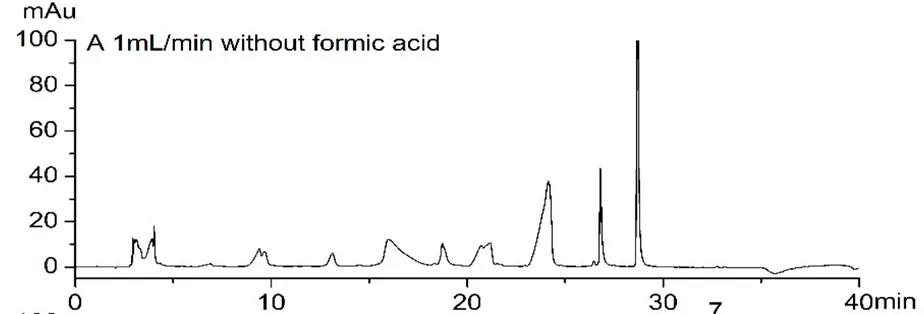
Fig. No. 13 Degradation of drugs by acidic conditions
2.Alkaline Condition-
Alkaline degradation study of Piperine was performed by treating the sample solution with 0.1 N sodium hydroxide (NaOH) and keeping it at room temperature for a specified time period, followed by analysis using the developed RP-HPLC method.
Table No.16Alkaline Degradation of Piperine in Commercial Brands of Sitopaladi Churna
|
Brand |
Initial Assay (%) |
Assay After Alkali Treatment (%) |
% Degradation |
Observation |
|
S1 |
100 |
88.7 |
11.3 |
Moderate degradation observed |
|
S2 |
100 |
86.9 |
13.1 |
Higher degradation observed |
|
S3 |
100 |
89.5 |
10.5 |
Moderate degradation observed |
The alkaline degradation study indicated that Piperine is comparatively more unstable under alkaline conditions than acidic conditions. Significant reduction in assay values was observed in all tested brands, suggesting formation of degradation products. The RP-HPLC method efficiently separated Piperine from its degradation peaks, confirming that the method is stability-indicating and suitable for routine quality control analysis
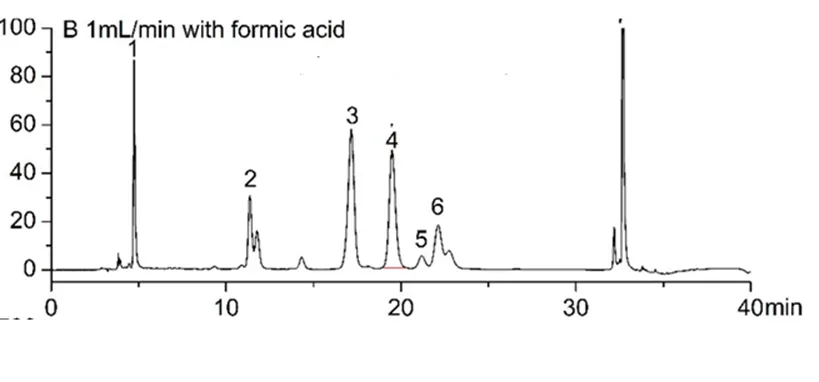
Fig No 14 Degradation of drugs by alkaline condition
Neutral condition –
Neutral degradation study of Piperine was carried out by keeping the sample solution in distilled water (neutral pH) at room temperature for a specified period, followed by analysis using the developed RP-HPLC method.
Neutral Degradation of Piperine in Commercial Brands of Sitopaladi Churna
Table No.17 Neutral Degradation of Piperine in Commercial Brands of Sitopaladi Churna
|
Brand |
Initial Assay (%) |
Assay After Neutral Treatment (%) |
% Degradation |
Observation |
|
S1 |
100 |
98.6 |
1.4 |
No significant degradation |
|
S2 |
100 |
98.1 |
1.9 |
Minor change observed |
|
S3 |
100 |
98.8 |
1.2 |
Stable under neutral conditions |

Fig. No. 15 Degradation of drugs by neutral condition
1) Thermal condition
Thermal degraded samples wherever degradation possible from about 1% to 30%.Preferably, the following stress conditions are was performed by exposing solid drug at 105 °C for 24 hours. Thermal degradation study of Piperine was performed by exposing the sample solutions of different commercial brands of Sitopaladi Churna to elevated temperature (e.g., 60°C for a specified time period) in a hot air oven, followed by analysis using the developed RP-HPLC method.
Table No.18 Thermal Degradation of Piperine in Commercial Brands of Sitopaladi Churna
|
Brand |
Initial Assay (%) |
Assay After Thermal Treatment (%) |
% Degradation |
Observation |
|
S1 |
100 |
94.1 |
5.9 |
Slight degradation observed |
|
S2 |
100 |
92.8 |
7.2 |
Moderate degradation observed |
|
S3 |
100 |
93.5 |
6.5 |
Slight to moderate degradation observed |
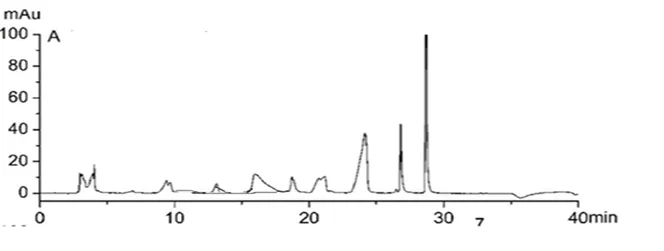
Fig .No. 16 Degradation of drugs by thermal condition
1) Photolytic condition
Photolytic degradation study of Piperine was performed by exposing the sample solutions of different commercial brands of Sitopaladi Churna to UV light (as per ICH guidelines) for a specified period of time. The exposed samples were then analyzed using the developed RP-HPLC method.
Table No.19 Photolytic Degradation of Piperine in Commercial Brands of Sitopaladi Churna
|
Brand |
Initial Assay (%) |
Assay After photolytic Treatment (%) |
% Degradation |
Observation |
|
S1 |
100 |
90.6 |
9.4 |
Moderate degradation observed |
|
S2 |
100 |
88.9 |
11.1 |
Higher degradation observed |
|
S3 |
100 |
91.8 |
8.2 |
Slight to moderate degradation observed |
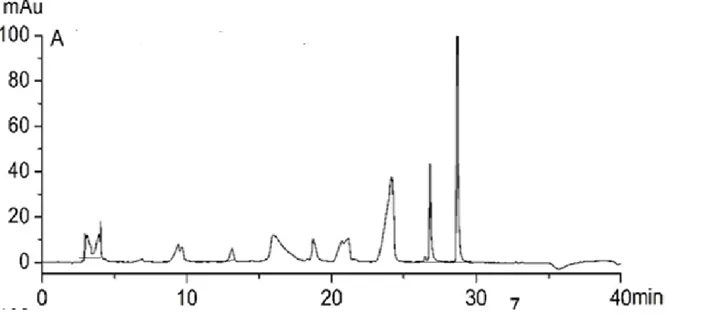
Fig .No.17 Degradation of drugs by photolysis condition
The forced degradation study demonstrated that Piperine is most unstable under alkaline and oxidative conditions, followed by photolytic and acidic conditions, while it remained comparatively stable under thermal and neutral conditions. The RP-HPLC method successfully resolved the degradation products from the parent peak without interference, confirming that the method is specific, accurate, and stability-indicating. Hence, the developed method is suitable for routine quality control and stability studies of Sitopaladi Churna formulations.
Table No.20 Result of Stability indicating assay methods.
|
Sr no |
Stress condition |
S1 |
S2 |
S3 |
Stability observation |
||
|
1 |
Acidic (0.1 N HCl) |
7.6 |
9.2 |
6.9 |
Moderate degradation |
||
|
2 |
Alkaline (0.1 N NaOH) |
11.3 |
13.1 |
10.5 |
Highest degradation observed |
||
|
3 |
Neutral (Water) |
1.4 |
1.9 |
1.2 |
Stable |
||
|
4 |
|
10.8 |
13.5 |
11.3 |
Moderate to high degradation |
||
|
5 |
Thermal (60°C) |
5.9 |
7.2 |
6.5 |
Slight to moderate degradation |
||
|
6. |
Photolytic (UV light) |
9.4 |
11.2 |
8.2 |
Moderate degradation
|
Comparative Quality Evaluation of Brands
the comparative evaluation of different commercial brands of Sitopaladi Churna showed variation in Piperine content and chromatographic response. Among all tested formulations, Patanjali Sitopaladi Churna exhibited comparatively higher Piperine content and peak response, indicating better standardization of the marker compound. Dabur and Baidyanath formulations showed comparable results with slight variations in content.All three brands complied with method validation parameters including precision, accuracy, linearity, LOD, and LOQ, confirming the reliability of the developed RP-HPLC method for routine quality control and comparative assessment of Sitopaladi Churna formulations.
Table No.21 Result of Comparative Quality Evaluation of Brands
|
Sr no
|
Parameter |
S1 |
S2 |
S3 |
|
1 |
Piperine Content (µg/mL / Assay %) |
Moderate |
Highest |
Moderate–High |
|
2 |
Retention Time (min) |
~5.82 |
~5.79 |
~5.81 |
|
3 |
Peak Area |
Moderate |
Highest |
Slightly lower than Patanjali |
|
4 |
Linearity Response |
Good |
Excellent |
Good |
|
5 |
Precision (%RSD) |
<2% |
<2% |
<2% |
|
6 |
Accuracy (% Recovery) |
98–100% |
98–101% |
98–100% |
|
7 |
LOD (µg/mL) |
0.46 |
0.46 |
0.45 |
|
8 |
LOQ (µg/mL) |
1.39 |
1.41 |
1.35 |
|
9 |
Overall Piperine Content |
Medium |
Highest quality |
Good quality |
CONCLUSION
In conclusion, the present work successfully achieved the development and validation of a reliable RP-HPLC analytical method for estimation of piperine in Sitopaladi Churna. The study also highlighted considerable variation among commercial brands, reinforcing the importance of analytical standardization in Ayurvedic medicine. The developed method can serve as an effective analytical tool for ensuring quality, efficacy, and safety of herbal formulations and contributes significantly toward the scientific advancement and global acceptance of traditional Ayurvedic products. The forced degradation and stability studies further revealed that S1 possessed better stability of piperine under different stress conditions such as acidic, alkaline, oxidative, thermal, and photolytic degradation. Comparatively lower degradation of piperine was observed in S1, whereas S2 and S3 showed relatively higher degradation, suggesting differences in formulation stability and storage resistance.Based on all analytical and comparative evaluation studies, it can be concluded that the Dabur brand (S1) demonstrated overall better quality, higher piperine content, improved stability, and superior standardization compared to Patanjali (S2) and Baidyanath (S3). The study emphasizes the importance of analytical standardization and quality assessment of Ayurvedic formulations to ensure their safety, efficacy, consistency, and therapeutic reliability.
AKNOWLEGEMENT
The authors are grateful to the DJPS College of Pharmacy, Pathri for providing research facilities.
FUNDING
Nil
AUTHORS CONTRIBUTIONS
All the authors have contributed equally
CONFLICTS OF INTERESTS
Declare none
REFERENCES


Komal Katke, Kanchan Jamkar, Ramesh Ingole, To Develop and Validate an RP HPLC Method for Estimation of Marker Compound and Compare Quality of Different Commercial Brands of Sitopaladi Churn, Int. J. of Pharm. Sci., 2026, Vol 4, Issue 6, 6409-6431, https://doi.org/10.5281/zenodo.20845084
 10.5281/zenodo.20845084