

We use cookies to ensure our website works properly and to personalise your experience. Cookies policy
PG and Research Department of Biotechnology, DKM College for Women (Autonomous), Vellore - 632001, Tamil Nadu, India
Bryophyllum pinnatum is a medicinal plant known for its historical use in traditional medicine. It contains a variety of secondary metabolites such as alkaloids, flavonoids, proteins, saponins, terpenoids, fatty acids, bufadienolides, vitamins, and polysaccharides. B. Pinnatum plant has exhibits several biological activities, including anti-cancer, antioxidant, anti-diabetic, anti-inflammatory, wound healing activity, anti-allergic, and antimicrobial effects. Numerous bioactive substances found in the plant, such as flavonoids, bufadienolides, phenolic acids, triterpenoids, steroids, alkaloids, glycosides, saponins, tannins, and organic acids, contribute to its potential for medicinal use. Through a variety of molecular mechanisms involving the control of oxidative stress, inflammatory mediators, apoptosis, and cellular signaling pathways, experimental studies have shown that these phytoconstituents exhibit antioxidant, anti-inflammatory, antimicrobial, antidiabetic, anticancer, hepatoprotective, nephroprotective, cardioprotective, immunomodulatory, wound-healing, and analgesic properties. The pharmacological significance of this medicinal species has been further demonstrated by recent developments in phytochemical characterization, molecular docking, network pharmacology, nanotechnology-based drug delivery, and preclinical studies. However, poor clinical studies, a lack of standardized extracts, diversity in phytochemical composition, and insufficient toxicological evaluations hinder the translation of these discoveries into clinical practice despite encouraging experimental evidence. In recent studies have focused on the green synthesis of nanoparticles for enhanced biomedical research. This review provides an overview of its pharmacological activities and traditional applications.
Bryophyllum pinnatum, also known as Kalanchoe pinnata, is a perennial herb of the Crassulaceae family, commonly found in tropical and subtropical regions globally, including Brazil, China, India, and Africa. [1,2]. The name Bryophyllum derives from 'Bryo' meaning 'I sprout' and 'phylum' meaning 'leaf', indicating its ability to produce small plantlets from leaf margins. This plant is also known by various names, including air plant, life plant, good luck, love plant, and resurrection plant [3]. This family displays xeromorphic traits, enabling survival in high sunlight and low water conditions.[4] B. pinnatum is a succulent perennial shrub, about 1.5 meters tall, reproducing both sexually via seeds and asexually through leaf bubals. Its features include a tall, hollow stem, dark green leaves with crimson edges, scalloped edges, and black, bell-shaped, pendulous flowers.[5]. New plants are created when adventitious buds that emerge from the cracks along the leaf edges take root [6]. The stem of the plant is faintly quadrangular; the younger stems are reddish with a scattered white sprinkling, while the elder stems are lighter in colour. The plant has erratic, decussate leaves; the top leaves are 3–7 foliate with a long petiole, while the lower leaves are often simple or complex. Flower: The plant has large, ostentatious yellowish green to pastel green sepals, as well as pendulous blooms that are around 7 cm long and have a stem that is between 10 and 25 mm long. [7]. In contrast to other strains, the secondary metabolites that plants produce to protect themselves have been shown to shield humans against a variety of illnesses [8]. Many secondary metabolites found in medicinal plants are important in the prevention of disease. A variety of microbial antibiotics and other chemotherapeutic medications are frequently used to treat bacterial infections [9] as natural sources of lead compounds; medicinal plants have been essential in the drug development process. [10]. Numerous active phytochemicals such as alkaloids, triterpenes, glycosides, flavonoids, steroids, bufadienolides, lipids, and organic acids have been extensively studied. [11,12,13] Despite not being necessary for the plants that produce them, these classes of phytochemicals play a crucial role in the survival of plants by shielding them in a number of ways.[14] Because they lower the risk of degenerative illnesses by reducing oxidative stress and inhibiting macromolecular oxidation, natural antioxidants such phenolic compounds are becoming increasingly important.[15,16] B. pinnatum is recognized for its medicinal uses, including wound healing, anti-inflammatory, antimicrobial, and analgesic properties, as well as effects against hypertension and diabetes. These benefits are largely due to secondary metabolites like saponins, tannins, and phenolics. [17,18] Numerous studies show that medicinal plants, which are rich sources of bioactive chemicals, include substances that are important for therapeutic usage against pathogens that affect humans and animals, such as bacteria, fungus, and viruses. [19,20] Bryophyllum pinnatum is a medicinal plant recognized for its rich phytochemical content, utilized as a reducing and stabilizing agent in the synthesis of nanoparticles [21,22] The phytochemical profile of Bryophyllum pinnatum includes a diverse range of bioactive compounds, contributing to its pharmacological effects and traditional medicinal applications, which have been scientifically validated.[23]
USESS:
Bryophyllum pinnatum, known as "life plant," is a Crassulaceae species indigenous to Madagascar. Its leaf juice and properties are utilized medicinally for treating insect bites, lithiasis, and burns.[24] In Nigeria, various treatments are employed for conditions such as ulcers, headaches, skin wounds, hypertension, asthma, colds, bleeding disorders, and convulsions.[25] West Africa utilizes fresh leaves to treat various conditions, including diabetes, rheumatoid arthritis, high blood pressure, joint pain, muscle aches, lymphadenitis, [26] and ear infections. Additionally, medicinal plants are employed for migraines, diarrhoea, [27] fever, smallpox, and otitis.[28] Because of their anti-inflammatory and antioxidant qualities, phytochemicals like kaempferol and quercetin may help control type II diabetes. [29]. B. pinnatum has immunomodulatory benefits for type II diabetes when taken with metformin. By lowering essential viral replication proteins, flavonoids—most notably rutin—show promise against the gamma strain of the Corona virus disease-2019 (COVID-19). Although substances like luteolin, taxifolin, and astragalin have encouraging activity against SARS-CoV-2, further in vitro, in vivo, and human research is required to validate their usefulness. [30] It has a long history of treating various conditions, including diabetes, liver issues, kidney diseases, obesity, dyslipidaemia, ulcer infections, anaemia, and menstrual disorders.[31] The leaves have long been used to treat skin conditions, respiratory conditions, and renal calculi. Bufadienolides are cardiac glycosides that operate on the Na/K+ ATPase enzyme in heart tissue to produce cardiotoxic effects. They are structurally and pharmacologically similar to digoxin. [32] Nearly every portion of the Kalanchoe pinnata plant has been used in folkloric traditions to cure a variety of illnesses in traditional medical systems. But a lot of study has mostly concentrated on the plant's leaves.[33] These days, B. pinnatum leaves are recommended for the same purpose [34,35]. Numerous clinical investigations have demonstrated the excellent tolerance of B. pinnatum indications [36]. According to in vitro research [37,38]. B. pinnatum weakens human myometrium contractions [39,40]. The leaf press juice of B. pinnatum (BPJ) reduced the OT-induced rise in intracellular calcium concentrations [(Ca2+)] in human myometrial cells (hTERT-C3 cell line) [41]. B. pinnatum contains Bryophyllin A, noted for its antioxidant, antimicrobial, and antitumor properties. It may lower blood sugar and blood pressure [42]. The leaves are also used in traditional medicine to treat jaundice and possess hepatoprotective qualities. Additionally, they are associated with kidney stone treatment and have shown nephrotoxic effects in animal studies [43]. This review explores the plant's various medicinal properties, pharmacological studies, and biological activities.
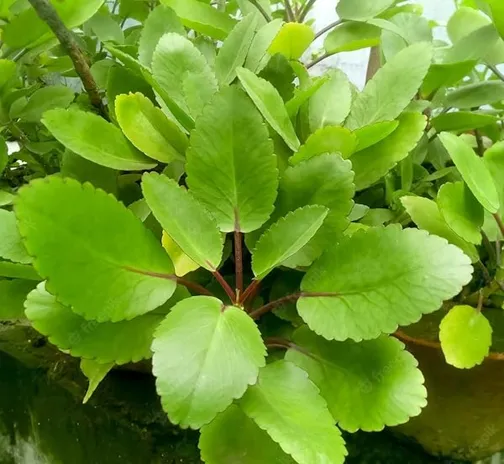
Fig no 1: Bryophyllum pinnatum plant
TAXONOMICAL CLASSIFICATION:
CHEMICAL CONSTITUENT:
Numerous nutrients and bioactive components can be found in B. pinnatum. [45]. Compounds that are used in phytochemical analysis to damage cell membranes, interfere with metabolism, and reduce enzyme function include [46] Bufadienolides A, B, and C are distinct components that include flavonoids, alkaloids, tannins, saponins, glycerides, steroids, and phenolic compounds. Organic acid, citric, gallic, coumaric, ferulic, carboxylic, succinic, caffeic, and oxaloacetic acids are all present in the plant. Potassium, calcium, sodium, phosphorous, copper, ions, zinc, mergence, and other important minerals can be found in B. pinnatum. Pinnatum riboflavin, amines, pyridoxine, ascorbic acid (vitamin C), niacin, tyrosine, methionine, glutamic acid, glycine, and phenylalanine are among the vitamins. Palmitic acid and stearate are examples of fatty acids found in plant components; glucose, fructose, galactose, raffinose, sucrose, proteins, carbohydrates and quercitrin are examples of sugars [47,48]. These substances have therapeutic qualities and are used to treat a variety of illnesses found in Bryophyllum pinnatum. Alkaloids have the capacity to remove kidney stones and act as diuretics [49]. Flavonoids reduce oxidative stress, scavenge free radicals, and lower the risk of cancer and chronic illnesses.[50] Saponins are antimicrobial and antifungal [51]. Tannins play a major role in food application, phrenological activities, and biological activity [52]. The carboxylic acids included in B. pinnatum include citric, isocitric, oxaloacetic, gallic, caffeic, coumaric, oxalic, and succinic acids. On the other hand, the B. pinnatum contains phenolic acid compounds such as 4-hydroxybenzoic acids, 4-O-β-D-glucopyranosyl-cis-p-coumaric acid, 4-hydroxy 3-methoxy-cinnamic acid, para-coumaric acid, phosphoenolpyruvate, protocatechuic acid, and syringic acid β-D glucopyranosyl ester. It is known that phenols and phenylpropanoids are what give the plant its antibacterial and anti-leishmanial properties [53]. A family of phytochemicals known as terpenoids has outstanding medicinal qualities [54]. Isoprene units (C5H8) make up the class [55]. The phenolic compounds are protecting cell from oxidative stress; steroids help to reducing swelling and tissue damage and Organic acid supports metabolism and medicinal function. Thus, Bryophyllum pinnatum is a valuable medicinal plant with drive a phytochemical compound, essential minerals and nutrients, it contributes to its nutritional important and vide range of therapeutic applications.
BIOLOGICAL ACTIVITY:
Anticancer activity: Anticancer action Human testicular cancer cells were inhibited in their proliferation by leaf chloroform extract and its constituents. Human cervical cancer cells were examined in vitro using the apoptosis-associated protein electrolyte mobility shift test. When it came to preventing cervical cancer, contaminants fared better than extracts.[56]. Bryophyllin (C26H32O8), a compound found in Bryophyllum pinnatum, was found to have anticancer properties against cancer cells. The plant's chloroform extract has been shown to inhibit the growth and division of human cervical cancer cells in a concentration-dependent manner. The portion was more effective than the extract at combating the human papilloma virus, which is important for the development of cervical malignant growth.[57].
Anti-diabetic activity: Diabetes mellitus is a chronic metabolic disease that raises blood glucose levels due to insulin resistance (type II) or insulin shortage (type I). This leads to a number of consequences, including inflammation, neuropathy, nephropathy, pancreatic beta-cell failure, and cardiovascular problems [58,59]. Alpha glucosidase inhibitors and sulfonylureas, two common diabetes medications, can have negative side effects. Therefore, it becomes essential to investigate natural substances from medicinal plants like B. pinnatum. Its potential for treating diabetes is yet unknown, despite its historical use in folk medicine. Prior research highlights the presence of important phytochemicals in B. pinnatum extract, including apigenin, quercetin, kaempferol, avicularia, and ECGC [60]. People with type II diabetes who are less insulin resistant may benefit from ECGC's demon-started blood sugar-lowering properties. By affecting certain cellular signalling pathways including PI3K, Akt/PKB, and MAPK, avicularia, another phytochemical, lowers oxidative stress indicators. Apart from reducing triglycerides, low-density lipoprotein cholesterol, and fasting blood glucose, avicularia can also enhance β-cell function, lessen hepatic steatosis, and decrease the progression of type II diabetes [61] demonstrates the antihyperglycemic efficacy of Bryophyllum pinnatum leaf extracts in vitro, confirming its use in the treatment of diabetes in traditional medicine. [62].
Antioxidant activity: The presence of many flavonoids and phenols in the extract is responsible for Kalanchoe piñata’s high antioxidant activity. The extract's phenolic components can interact with transition metals by occupying their aqua coordination sites [63]. Flavonoids are among the phenolic chemicals that effectively scavenge free radicals, prevent oxidative stress, and provide protection against a number of diseases [64]. Studies have shown that Bryophyllum pinnatum has extremely potent antioxidant properties. [65,66] It has phenolic acids and flavonoids, which have the ability to scavenge free radicals and reduce oxidative stress linked to diabetes, cancer, and neurological conditions [67]. The significant antioxidative activity of the extracts may be due to the high concentration of phenols and flavonoids in them; the ability of phenolics to produce stabilized phenoxy radicals by directly scavenging peroxyl radicals may be the reason for the inhibition of lipid auto-oxidation. The ethanolic extract showed a larger total phenolic and flavonoid content than other extracts, and it was reported that the leaves exhibit the greatest scavenging properties compared to stems [68].
Antibacterial activity and antimicrobial analysis: Using the disc diffusion method, the antibacterial activity of synthesized Ag and ZnO nanoparticles was evaluated against six distinct bacterial strains: Gram-positive Staphylococcus aureus (ATCC 6538), Bacillus subtitles (ATCC 6633), and Micrococcus luteus (ATCC 10240), and Gram-negative bacterial strains Agrobacterium tumefaciens (ATCC 4720T), Salmonella Setubal (ATCC 19196), and Enterobacter aerogenes (ATCC 13048) [69] .The tube dilution technique was used to determine the antifungal activity against five distinct strains of Fusarium solan, Aspergillus flavus, Aspergillus fumigatus, Aspergillus niger, and Mucor [70]. Escherichia coli, Pseudomonas aeruginosa, Staphylococcus aureus, Bacillus subtilis, Klebsiella aerogenes, and Salmonella typhi are among the clinically significant pathogens that the antibacterial leaf extract of Bryophyllum pinnatum (Lam.) effectively inhibits. This herb has long been used to prevent newborn infections, especially those that damage the placenta and navel, in addition to its direct antibacterial properties. Its medicinal promise is further supported by studies using its leaf juice, which show significant anti-inflammatory and antispasmodic qualities in addition to its well-established antibacterial effect [71]. Because they contain more phenolic and flavonoids than aqueous extracts, ethanolic extracts of B. pinnatum are known to have better antibacterial action [72,73]
Antiallergy activity: It has been discovered that Bryophyllum pinnatum (Lam.) leaf extract possesses anti-allergic qualities. The herb may reduce allergic reactions by preventing mast cell degranulation and histamine release, according to in vitro research.[74] In additional studies, rats were used to test the analgesic efficacy of fresh egg albumin by inducing pain in them chemically and thermally. When Bry. pin (Lam.) Oken aqueous extract was administered to induced rats at doses ranging from 25 to 800 mg/kg, protective effects were seen [75].
Anti-inflammatory: Actions that reduce inflammation Bryophyllum pinnatum extracts have demonstrated significant effectiveness in reducing inflammation in experimental rat and mouse models, suggesting possible use in the treatment of inflammatory-related disorders. [76] Flavonoids like kaempferol and quercetin, along with its derivatives like quercetin 3-O-l-arabinopyranosyl-(1→2)-O-l-rhamnopyranoside (Bp1), which have been shown to have strong anti-inflammatory and antioxidant properties, are responsible for this activity.[77]
Neuropharmacological activities: Aqueous leaf extract's neuropharmacological effects included central nervous system (CNS) depression. Despite a significant decrease in locomotor activity, the mice administered 50–200 mg/kg did not exhibit any symptoms of ptosis. Mice administered aqueous extract showed reduced muscular tone and balance in the chimney, ascending, and inclined tests. Pentobarbitone reduced the risk of unexpected death and increased sleep. CNS depression may be brought on by bufadienolides and other water-soluble extract components. In animals, kalanchoe has been demonstrated to have sedative and neurodepressant effects. An increase in GABA levels in the brain was linked to some of these effects.[78]
Urolithic activity: Urinary oxalate levels are considerably reduced by this extract, indicating that it may be useful in the treatment of urolithiasis. Kidney stones have historically been treated with this herb. By converting calcium oxalate dehydrate crystals into monohydrates, B. pinnatum dissolves kidney stones. Kidney stone formation and oxidative stress were reduced by leaf extracts [79,80,81] The anti-urolithiatic and diuretic effects of Kalanchoe pinnata were studied [82]. In these studies, a hydroalcoholic leaf extract was administered orally and intraperitoneally to male Wistar rats. To evaluate the diuretic and anti-urolithiatic effects [83], the amount of urine collected from each rat kept in metabolic cages was compared to determine pee production. In The results of the investigation demonstrated the extract's significant diuretic and anti-urolithiatic qualities [84]. Interestingly, the extract's diuretic impact was higher when administered intraperitoneally than when administered orally. This suggests that the route of delivery affects the strength of the diuretic response [85]. These findings advance knowledge of Kalanchoe pinnata's medicinal potential for the treatment of urolithiasis and diuresis-related disorders [86].
Nanoparticle: The aqueous extract is obtained by washing, drying, and boiling Bryophyllum pinnatum leaves. [87,88] Zinc acetate or zinc nitrate solution is mixed with the extract, initiating reduction and nanoparticle formation. Plant phytochemicals provide consistent particle size by preventing agglomeration.[89] They are potential options for anticancer treatments because of their specific toxicity against cancer cells. Because of their high surface reactivity, ZnO NPs are used in photocatalysis, wastewater treatment, and the destruction of organic contaminants [90,91]
Wound healing activity: Alcoholic and petroleum ether extracts were among the four extracts that were assessed in the study. When compared to the control group, all extracts significantly improved wound healing. [92,93] Since ancient times, people have relied on locally produced mixtures and plants to treat wounds. Studies have demonstrated that B. pinnatum extracts containing flavonoids and organic acids can speed up the healing process by promoting tissue regeneration [94,95]. This explains why the herb is used for medicinal purposes and traditional folk medicine, especially in South America and Africa. The plant's extracts are being used to create gel and ointment formulations that have the ability to cure burns and skin conditions [96]. These extracts are known to speed up tissue healing by promoting angiogenesis and collagen formation [97].
TOXICITY:
However, because bioactive substances including flavonoids, tannins, and bufadienolides cardiac glycosides are present, consumption may have negative consequences. [98,99] These drugs may have metabolic, gastrointestinal, and cardiotoxic effects. About three to four Bryophyllum leaves (i.e., Bryophyllum pinnata) were ingested by a 63-year-old male patient with the intention of using them medicinally. After consuming it, he suddenly began to have diffuse abdomen discomfort, which progressively worsened and reached severe abdominal pain within two hours. The correlation between the patient's use of Bryophyllum and the development of symptoms points to a likely hazardous response. Systemic poisoning caused hypotension, tachycardia, metabolic acidosis, and anuria, whereas gastrointestinal irritation may have caused the initial symptoms of diarrhea and stomach discomfort. According to this study, subsequent cardio-renal syndrome may have contributed to the patient's death. There aren't many previously published studies on Bryophyllum toxicity; most of them concentrate on the cardiotoxicity caused by bufadienolides, particularly in animal poisoning.[100] This is significant because there aren't many publications on human case reports. This patient may have been more vulnerable to more severe hemodynamic instability after toxin exposure due to his history of cardiovascular illness and mild left ventricular dysfunction. This study describes the cardiotoxic effects of bufadienolides in our patient. B. pinnatum has been known to be toxic due to the presence of bufadienolides in its metabolic profile.[101]
CONCLUSION
Bryophyllum pinnatum is a valuable medicinal plant with diverse phytochemical constituents such as flavonoids, alkaloids, glycosides, phenolic components, tennis, steroids, and triterpenoids along with essential minerals and nutrients. These bioactive components are responsible for its wide range of biological activities, including antioxidant, antimicrobial, anti-inflammatory, antidiabetic, wound healing, and anticancer properties. Due to its therapeutic potential and traditional medicinal importance, Bryophyllum pinnatum can be considered a promising natural source for future drug development and pharmaceutical application. Further research focusing on isolation of active compounds, molecular mechanism, toxicity evaluation, and clinical studies is necessary to validate its medicinal efficacy and support its use in targeted therapeutic approaches.
REFERENCES


M. Vanishree, K. Shoba, Traditional Knowledge, Phytochemical Components, and Contemporary Medical Uses of Bryophyllum pinnatum, Int. J. of Pharm. Sci., 2026, Vol 4, Issue 7, 3109-3122. https://doi.org/10.5281/zenodo.21380589
 10.5281/zenodo.21380589