

We use cookies to ensure our website works properly and to personalise your experience. Cookies policy
Maharashtra Institute Of Pharmacy, Betala
Transdermal drug delivery systems (TDDS) provide controlled drug release and bypass first-pass metabolism. Hesperidin, a flavonoid with antioxidant and anti-inflammatory activity, shows poor solubility and bioavailability. This study focuses on enhancing its permeability using nanotechnology approaches—nanocrystals (NCs) and solid lipid nanoparticles (SLNs)— followed by incorporation into transdermal patches. The prepared formulations are evaluated for physicochemical properties, drug release, and permeation characteristics. Keywords- Nano-partical, hesperidin, transdermal drug delivery system.
Transdermal drug delivery systems (TDDS) have emerged as an innovative and patient-friendly approach for the controlled administration of therapeutic agents through the skin into systemic circulation. Unlike conventional oral and parenteral routes, TDDS offer several advantages such as avoidance of first-pass metabolism, sustained drug release, improved patient compliance, and reduced dosing frequency. However, the effectiveness of transdermal delivery is largely limited by the barrier properties of the stratum corneum, which restricts the permeation of many drugs, especially those with poor solubility and high molecular weight.
Hesperidin, a naturally occurring bioflavonoid predominantly found in citrus fruits, has gained significant attention due to its wide range of pharmacological activities, including antioxidant, anti-inflammatory, antihypertensive, antimicrobial, and vasoprotective effects. Despite its therapeutic potential, the clinical application of hesperidin is limited by its poor aqueous solubility, low bioavailability, and inadequate permeability across biological membranes. These limitations make it an ideal candidate for formulation strategies aimed at enhancing solubility and permeation. Nanotechnology-based drug delivery systems have shown great promise in overcoming such limitations. Among these, nanocrystals and solid lipid nanoparticles (SLNs) are particularly effective in enhancing the solubility, dissolution rate, and bioavailability of poorly water-soluble drugs. Nanocrystals are pure drug particles reduced to the nanometer range, which increases surface area and saturation solubility, thereby improving dissolution velocity. On the other hand, SLNs are submicron-sized lipid-based carriers that provide controlled drug release, improved stability, and enhanced skin penetration due to their lipidic nature and occlusive properties.(1)
Transdermal Drug Delivery System
A Transdermal Drug Delivery System (TDDS) is a self-contained dosage form designed to deliver a therapeutic amount of drug through the intact skin into the systemic circulation at a controlled rate for a prolonged period. It provides an alternative route to oral and injectable drug administration by allowing the drug to penetrate the skin barrier and reach the bloodstream.
The concept of transdermal drug delivery is based on the ability of certain drugs to diffuse through the skin layers, particularly the stratum corneum, which is the principal barrier to drug permeation. TDDS enhances patient compliance, maintains consistent plasma drug concentrations, and minimizes adverse effects associated with conventional dosage forms.(2)
Transdermal drug delivery systems (TDDS), also known as “patches,” are dosage forms designed to deliver a therapeutically effective amount of drug across a patient’s skin. In order to deliver therapeutic agents through the human skin for systemic effects, the comprehensive morphological, biophysical and physicochemical properties of the skin are to be considered. Transdermal delivery provides a leading edge over injectables and oral routes by increasing patient compliance and avoiding first pass metabolism respectively. Transdermal delivery not only provides controlled, constant administration of the drug, but also allows continuous input of drugs with short biological half-lives and eliminates pulsed entry into systemic circulation, which often causes undesirable side effects.
The advantages of delivering drugs through the skin include
The following are some of the disadvantages of the transdermal delivery system;
The common ingredients which are used for the preparation of TDDS are as follows.
TYPES OF TRANSDERMAL PATCHES:
a) Single layer drug in adhesive: In this type the adhesive layer contains the drug. The adhesive layer not only serves to adhere the various layers together and also responsible for the releasing the drug to the skin. The adhesive layer is surrounded by a temporary liner and a backing.
b) Multi -layer drug in adhesive: This type is also similar to the single layer but it contains a immediate drug release layer and other layer will be a controlled release along with the adhesive layer. The adhesive layer is responsible for the releasing of the drug. This patch also has a temporary liner-layer and a permanent backing.
c) Vapour patch: In this type of patch the role of adhesive layer not only serves to adhere the various layers together but also serves as release vapour. The vapour patches are new to the market, commonly used for releasing of essential oils in decongestion. Various other types of vapor patches are also available in the market which are used to improve the quality of sleep and reduces the cigarette smoking conditions.
d) Reservoir system: In this system the drug reservoir is embedded between an impervious backing layer and a rate controlling membrane. The drug releases only through the rate controlling membrane, which can be micro porous or non porous. In the drug reservoir compartment, the drug can be in the form(6)
2. SKIN
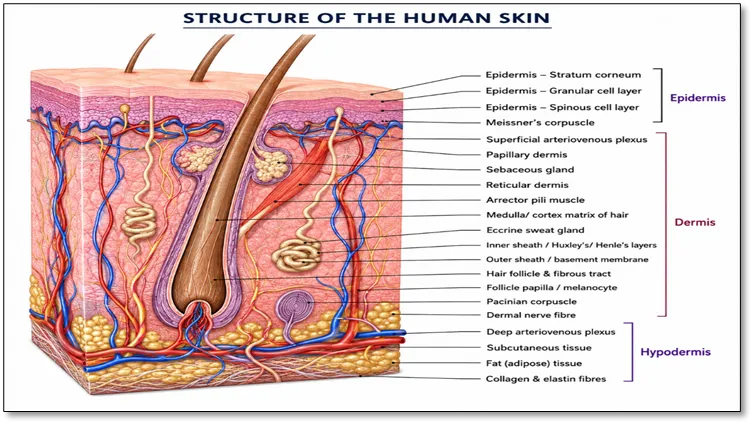
Fig 1: Structure of Skin
1. Stratum Corneum (Main Barrier Layer)
The stratum corneum is the outermost layer of the skin and forms the primary barrier between the body and the external environment. It is the final stage of keratinocyte differentiation and consists of dead, flattened, keratinized cells known as corneocytes. These cells are embedded in a lipid-rich matrix composed mainly of ceramides, cholesterol, and free fatty acids.
The stratum corneum follows the "brick and mortar" model, where corneocytes represent the bricks and the intercellular lipids act as the mortar. This highly organized structure prevents excessive transepidermal water loss (TEWL) and protects the body from harmful chemicals, microorganisms, allergens, and environmental pollutants.(7)
From a pharmaceutical perspective, the stratum corneum is the major rate-limiting barrier for topical and transdermal drug delivery. Most drugs penetrate through the intercellular lipid pathway, while only a limited amount passes through the transcellular or appendageal pathways. The barrier properties of the stratum corneum are influenced by factors such as hydration, temperature, age, disease state, and chemical composition of the applied formulation.
Functions
2. Epidermis
The epidermis is the outer living layer of the skin situated directly beneath the stratum corneum. It is a stratified squamous keratinized epithelium that lacks blood vessels and derives nutrients from the underlying dermis through diffusion. The epidermis serves as a dynamic protective barrier and continuously renews itself through cellular proliferation and differentiation.
The epidermis is organized into five distinct layers:
A. Stratum Basale (Basal Layer)
The deepest layer of the epidermis consists of a single row of cuboidal or columnar cells attached to the basement membrane. These cells continuously divide through mitosis to replace shed skin cells. Melanocytes and Merkel cells are also present in this layer.
B. Stratum Spinosum (Prickle Cell Layer)
This layer contains several rows of polygonal keratinocytes interconnected by desmosomes, giving the cells a spiny appearance under microscopy. It provides mechanical strength and flexibility to the skin.
C. Stratum Granulosum (Granular Layer)
Keratinocytes in this layer contain keratohyalin granules and begin the process of keratinization. Lipid-containing granules are released into intercellular spaces, contributing to barrier formation.
D. Stratum Lucidum
A thin, translucent layer found only in thick skin such as the palms and soles. It consists of flattened, dead keratinocytes and provides additional protection.
E. Stratum Corneum
The outermost layer composed of dead keratinized cells that forms the major permeability barrier of the skin.
Functions of the Epidermis
3. Dermis
The dermis is the connective tissue layer located beneath the epidermis and forms the structural framework of the skin. It is considerably thicker than the epidermis and contains blood vessels, lymphatics, nerves, hair follicles, sweat glands, and sebaceous glands.
The dermis consists primarily of collagen fibers, elastin fibers, and ground substance. Collagen provides tensile strength and resistance to mechanical stress, while elastin imparts elasticity and flexibility. The ground substance, composed of glycosaminoglycans and proteoglycans, maintains tissue hydration and supports cellular activities.(9)
The dermis is divided into two regions:
A. Papillary Dermis
B. Reticular Dermis
Cellular Components
Functions of the Dermis
Hesperidin
Theoretical Background
Hesperidin is a naturally occurring flavonoid glycoside abundantly present in citrus fruits such as oranges, lemons, sweet oranges, and tangerines. It belongs to the class of polyphenolic compounds known as bioflavonoids, which are secondary plant metabolites responsible for various biological and protective functions in plants.
Chemically, hesperidin consists of the aglycone hesperetin linked to a sugar moiety called rutinose. The presence of multiple hydroxyl groups contributes to its antioxidant properties, while the sugar component influences its solubility and absorption characteristics. In recent years, hesperidin has gained considerable attention in pharmaceutical research due to its broad spectrum of pharmacological activities, including antioxidant, anti-inflammatory, vasoprotective, antimicrobial, anticancer, and cardioprotective effects. However, despite its therapeutic potential, its clinical utility remains limited because of poor water solubility and low bioavailability.
Pharmacological Actions of Hesperidin
1. Antioxidant Activity
Oxidative stress occurs when there is an imbalance between the production of reactive oxygen species (ROS) and the body's antioxidant defense mechanisms. Excessive ROS generation can damage lipids, proteins, nucleic acids, and cellular membranes, leading to various pathological conditions such as aging, cardiovascular diseases, cancer, diabetes, and neurodegenerative disorders.
Hesperidin exhibits strong antioxidant activity due to its polyphenolic structure, which enables it to donate hydrogen atoms or electrons to free radicals. By neutralizing these reactive species, hesperidin interrupts oxidative chain reactions and protects biological molecules from damage. Additionally, hesperidin enhances the activity of endogenous antioxidant enzymes such as superoxide dismutase, catalase, and glutathione peroxidase. These enzymes play a critical role in detoxifying reactive oxygen species and maintaining cellular redox balance. Thus, hesperidin acts both as a direct free radical scavenger and as an indirect antioxidant by strengthening the body's natural defense systems.(11)
2. Anti-inflammatory Activity
Inflammation is a protective biological response triggered by tissue injury, infection, or exposure to harmful stimuli. Although acute inflammation is beneficial for healing, prolonged or excessive inflammation can contribute to chronic diseases such as arthritis, cardiovascular disorders, inflammatory bowel disease, and skin disorders. Hesperidin exerts anti-inflammatory effects by modulating multiple inflammatory pathways.
3. Vasoprotective Activity
The term vasoprotective refers to the ability of a substance to maintain the structural and functional integrity of blood vessels. Hesperidin is widely recognized for its beneficial effects on the vascular system.
Capillaries and veins often become weakened due to aging, oxidative stress, inflammation, or chronic disease. Increased capillary permeability can result in fluid leakage, swelling, and impaired circulation Hesperidin improves vascular health by strengthening capillary walls, reducing vascular permeability, and enhancing venous tone. It stabilizes endothelial cells that line blood vessels and improves microcirculation by promoting healthy blood flow.(12)
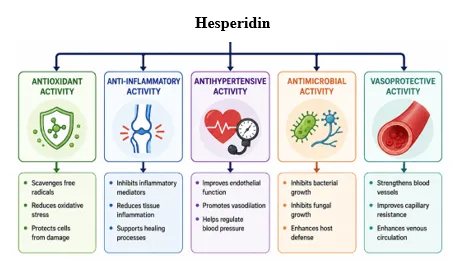
Fig 2 :Hesperidin: Pharmacological activities
HESPERIDIN
Hesperidin is a naturally occurring flavanone glycoside widely present in citrus fruits such as oranges and lemons. It possesses various pharmacological activities including antioxidant, anti-inflammatory, cardioprotective, neuroprotective, antidiabetic, and anticancer effects. Despite its wide therapeutic potential, the clinical use of hesperidin is limited due to its poor aqueous solubility, low dissolution rate, and low oral bioavailability.
Solid nanoparticles have emerged as an effective drug delivery system to overcome such formulation challenges. Solid nanoparticles are submicron-sized carriers composed of biocompatible and biodegradable materials, capable of enhancing drug solubility, stability, dissolution rate, and bioavailability. They also provide controlled drug release and improved therapeutic efficacy.
The formulation of hesperidin into solid nanoparticles can significantly enhance its physicochemical and biopharmaceutical properties. Nanoparticle-based delivery systems increase the surface area of the drug, improve dissolution behavior, and promote better absorption through biological membranes. [33]
2. Chemical Nature and Structure
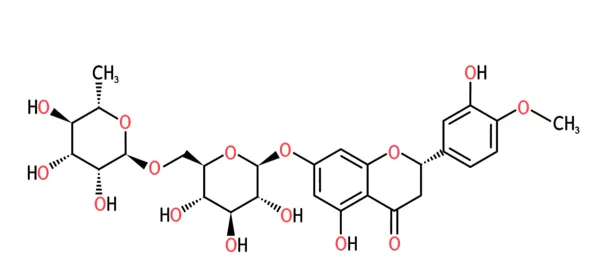
HESPERIDIN
3. Sources of Hesperidin
Hesperidin is widely distributed in citrus plants, particularly:
Industrial extraction of hesperidin is commonly carried out from dried citrus peels, whic
Need for Nanocarriers
Theoretical Explanation
Nanocarriers are nanosized drug delivery systems designed to improve the physicochemical and biopharmaceutical properties of drugs. These carriers typically possess particle sizes ranging from 1 to 1000 nanometers.The application of nanotechnology in drug delivery is based on the principle that reducing particle size significantly alters the behavior of the drug. As particle size decreases to the nanometer range, surface area increases dramatically, resulting in enhanced interaction with biological environments.
Nanocarrier systems offer several advantages:
Enhances Solubility
Solubility is directly influenced by particle size. When particle size decreases, the surface area-to-volume ratio increases substantially. According to pharmaceutical principles, smaller particles possess greater surface energy and greater contact area with the surrounding medium. This facilitates interaction with water molecules and promotes faster dissolution. Nanoparticles therefore exhibit enhanced apparent solubility compared to h are often by-products of the juice industry.
conventional coarse particles.
For hesperidin, increased solubility means:
Enhances Dissolution Rate Drug dissolution is the process by which drug molecules leave the solid surface and enter solution.
According to the Noyes–Whitney theory, dissolution rate is directly proportional to the surface area of the drug particle. As particle size decreases to the nanometer range, surface area increases enormously.
Enhances Skin Penetration
The skin, particularly the stratum corneum, acts as a highly efficient barrier against foreign substances. This barrier significantly restricts penetration of many drugs.
Nanocarriers improve skin delivery through several mechanisms:
Because of their extremely small size, nanoparticles can closely interact with the skin surface and create a higher concentration gradient, thereby promoting drug diffusion into deeper skin layers.
This property is especially valuable for topical and transdermal delivery of hesperidin.
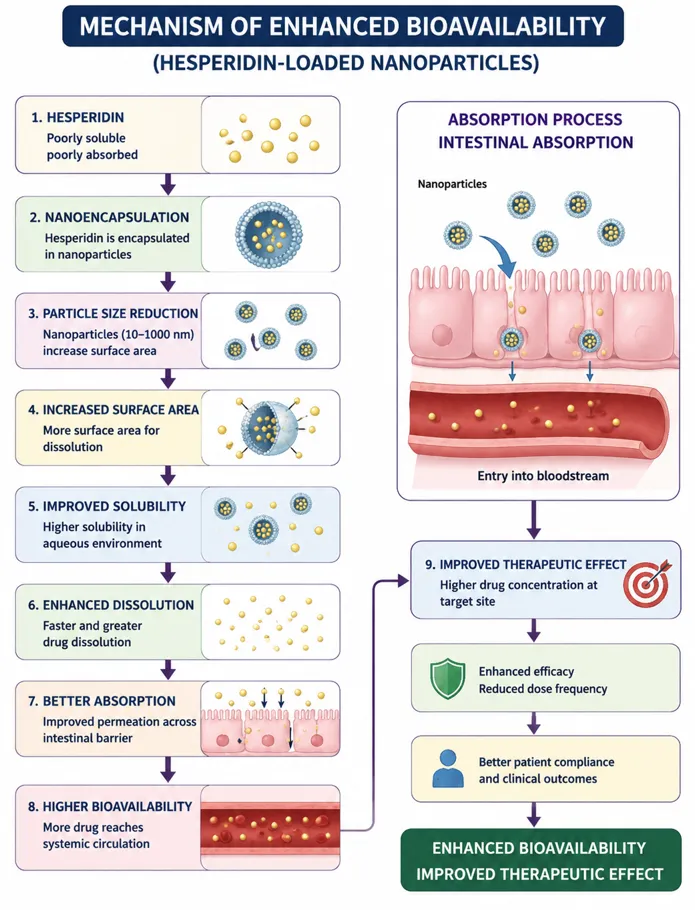
Fig No.03: Mechanism of enhanced Bioavailability
Two Major Nanocarrier Approaches
1. Nanocrystals
Nanocrystals are pure drug particles reduced to nanometer dimensions and stabilized by surfactants or polymers. Unlike other nanoparticulate systems, nanocrystals contain little or no carrier material. The fundamental principle behind nanocrystals is particle size reduction. As particle size decreases, surface area increases, leading to enhanced dissolution velocity and apparent solubility.
Nanocrystals improve:
For hesperidin, nanocrystal technology significantly enhances aqueous solubility and systemic absorption without altering the chemical structure of the drug.
2. Solid Lipid Nanoparticles (SLNs)
Solid Lipid Nanoparticles are colloidal carrier systems composed of physiological lipids that remain solid at room and body temperature. The drug is incorporated into a solid lipid matrix and stabilized using surfactants. Because the lipid core remains solid, the drug is protected from chemical degradation and can be released in a controlled manner.
SLNs offer several theoretical advantages:
For topical delivery, SLNs form an occlusive film on the skin surface. This film reduces water loss, increases skin hydration, and loosens the tightly packed structure of the stratum corneum. Consequently, drug penetration into deeper skin layers is significantly improved.
For hesperidin, SLNs provide both enhanced penetration and prolonged retention within the skin, thereby improving therapeutic efficacy.
Hesperidin is a naturally occurring citrus bioflavonoid possessing significant antioxidant, anti-inflammatory, and vasoprotective properties. However, its therapeutic application is restricted by poor aqueous solubility and low bioavailability. Nanotechnology-based drug delivery systems have emerged as an effective solution to these limitations. By reducing particle size and improving interaction with biological membranes, nanocarriers enhance solubility, dissolution rate, absorption, and skin penetration. Among the available nanocarrier systems, solid lipid nanoparticles (SLNs) are particularly promising approaches for improving the pharmaceutical performance and therapeutic effectiveness of hesperidin.
REFERENCES


Neha Nagpure*, Shrikant Mahajan, Sachin Dudhe, Transdermal Patches Of Hesperidin Nanocrystals, Int. J. of Pharm. Sci., 2026, Vol 4, Issue 7, 3192-3202. https://doi.org/ 10.5281/zenodo.21383679
 10.5281/zenodo.21383679