

We use cookies to ensure our website works properly and to personalise your experience. Cookies policy
Shri Ram groups of institutions faculty of pharmacy jabalpur.
Analytical method development is an essential component of pharmaceutical quality control. Poor aqueous solubility of pharmaceutical substances can present a challenge during development of simple spectrophotometric analytical methods. Hydrotropic solubilization offers a convenient approach for increasing the aqueous solubility of poorly water-soluble compounds without chemical modification of the drug or extensive use of organic solvents. The present investigation was undertaken to develop and validate a simple, rapid, economical and reproducible UV-visible spectrophotometric method for quantitative estimation of levofloxacin using hydrotropic solubilization and to apply the developed method for assay of a marketed tablet formulation. Based on the solubility study, 2 M sodium citrate was selected as the optimized hydrotropic agent. The developed method employed UV detection at 286 nm. Method performance was investigated with respect to linearity, range, accuracy, repeatability, intra-day precision, inter-day precision, analyst-to-analyst precision, limit of detection (LOD) and limit of quantification (LOQ). The greatest solubility enhancement was obtained with 2 M sodium citrate, producing a reported 31-fold enhancement. Application to Levoflox-500 tablets gave an assay of 99.20% of the labeled claim. The developed hydrotropic UV-spectrophotometric method demonstrated satisfactory linearity, accuracy and precision and was successfully applied to estimation of levofloxacin in a marketed tablet formulation. The use of 2 M sodium citrate substantially enhanced the aqueous solubility of levofloxacin and provided a simple analytical medium for spectrophotometric estimation
Analytical chemistry involves the separation, identification and quantitative determination of chemical components present in natural and artificial materials. Quantitative analysis is particularly important in pharmaceutical science because the identity, purity and quantity of active pharmaceutical ingredients must be established to ensure consistent quality of pharmaceutical products. Instrumental analytical methods, including spectrophotometric techniques, have become important tools in pharmaceutical analysis because of their convenience and applicability to routine quality-control testing.
Solubility is an important physicochemical property influencing the development and analysis of pharmaceutical substances. The aqueous solubility of poorly soluble drugs may be enhanced by several approaches, including pH modification, cosolvency, alteration of dielectric constant, surfactant-assisted solubilization, complexation, hydrotropic solubilization and chemical modification.
Hydrotropy is a solubilization phenomenon in which the aqueous solubility of a poorly soluble substance is increased by addition of a relatively large amount of a second solute known as a hydrotropic agent. Hydrotropic agents reported in pharmaceutical applications include sodium salicylate, sodium benzoate, urea, nicotinamide, sodium citrate and sodium acetate.
Hydrotropic solubilization is attractive for analytical applications because it can increase the aqueous solubility of poorly soluble substances without requiring chemical modification of the drug. The thesis describes hydrotropy as requiring simple mixing of the drug with the hydrotrope in water and identifies avoidance of organic solvents and emulsification as important advantages.
The hydrotropic approach has been investigated for several poorly water-soluble pharmaceutical substances, including cefixime, hydrochlorothiazide, ketoprofen, tinidazole, ofloxacin, norfloxacin, cephalexin, amoxicillin, paracetamol, piroxicam, frusemide and diclofenac sodium.
UV-visible spectrophotometry is one of the commonly employed instrumental techniques in pharmaceutical analysis. It is based on absorption of ultraviolet or visible radiation by molecules, resulting from electronic transitions between molecular energy levels. Quantitative determination can be performed using Beer-Lambert's law, represented in the thesis as:
A = abc
where A is absorbance, a is absorptivity, b is path length and c is concentration.
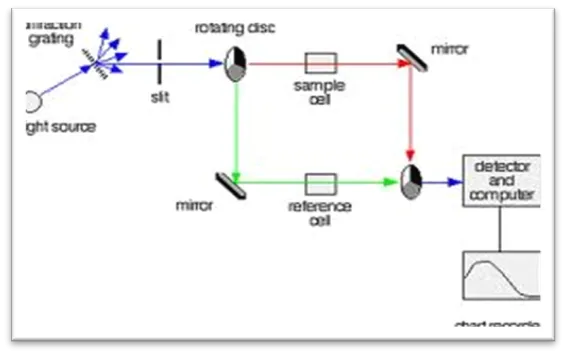
Figure 1: Ray Diagram of UV-visible spectroscopy
Levofloxacin is a third-generation fluoroquinolone antibacterial drug used for treatment of infections caused by susceptible bacteria. The drug is described in the thesis as a light-yellow crystalline/amorphous solid with limited water solubility. Its molecular formula is C₁₈H₂₀FN₃O₄ and molecular weight is 361.4 g/mol.
Previous analytical studies have reported UV-spectrophotometric determination of levofloxacin using different aqueous and organic solvent systems. Bushra et al. reported a UV method using 0.1 N NaOH with λmax at 288 nm and linearity over 2–12 µg/mL. Jain et al. investigated a mixed-hydrotropy approach using sodium acetate and urea for simultaneous determination of levofloxacin and ornidazole. Merukar et al. used 4 M urea as a hydrotropic solubilizing agent for spectrophotometric estimation of levofloxacin in tablets.
The present study therefore focused on development of a UV-spectrophotometric procedure utilizing hydrotropic solubilization of levofloxacin, selection of an optimized hydrotropic agent and validation of the developed procedure for analysis of a marketed tablet formulation.
MATERIALS AND METHOD
2.1 Materials
2.1.1 Chemicals and Solvents Used
Table no. 2: List of Chemicals and solvents used
|
S. No. |
Chemicals |
Manufacturer |
|
1 |
Levofloxacin |
Zee lab Pvt. Ltd. India |
|
2 |
Sodium acetate |
Himedia Laboratories |
|
3 |
Urea |
Himedia Laboratories |
|
4 |
Sodium Citrate |
Rankem Laboratories |
|
5 |
Sodium Benzoate |
Himedia Laboratories |
|
6 |
Ammonium Acetate |
Rankem Laboratories |
|
7 |
Sodium Citrate |
Himedia Laboratories |
|
8 |
De-ionized water |
Prepared in lab |
|
9 |
Acetonitrile (HPLC) |
Merck Ltd., India |
|
10 |
Methanol (HPLC) |
Rankem Laboratories |
|
11 |
Sodium hydroxide |
Himedia Laboratories |
|
12 |
Chloroform |
Merck Ltd., India |
|
13 |
Glacial acetic acid |
Merck Ltd., India |
2.1.2 Instruments Used
Table no. 3: List of Instruments used
|
S. No. |
Instrument |
Manufacturer |
|
1 |
Melting point apparatus |
Borosil, India |
|
2 |
UV- Spectrophotometer |
Systronics 2203 double beam |
|
3 |
Volumetric flask 10ml, 100ml |
Borosil, India |
|
4 |
Fourier-Transform Infra Red spectrometer |
Brucker’s , Japan |
|
5 |
Magnetic stirrer |
Remi, India |
2.1.3 Marketed Formulation
Levoflox- 500: Cipla Ltd, India
Label claim: Levofloxacin hemihydrates IP quivalent to Levofloxacin: 500 mg
2.2 Methods
2.2.1 Characterization of drug
2.2.1.1 Physical characterization of drug: The drug was physically characterized on the beginning of appearance, color and odor. All these parameter were recorded and compared with the literature.
2.2.1.2 Determination of Melting point: The Melting point was determined by the capillary method using Digital Melting point apparatus. The capillary tube was fused and filled by pressing the open end gently into pure drug sample and packed by tapping the bottom of the capillary on a hard surface so that the drug packed down into the bottom of the tube. When the drug was packed into the bottom of the tube, the tube was placed into the slot of the apparatus, the apparatus was started and the temperature was noted at which the drug melt.
2.2.1.3 Solubility study: The sample was qualitatively tested for its solubility in various solvents. It was determined by taking 10 mg of drug sample in 10 ml of solvent as water, methanol, ethanol, acetonitrile, pH buffer 6.8 in small test tubes and well solubilized by shaking.
|
Descriptive term |
Approximate volume of solvent in milliliters per gram of solute |
|
Very soluble |
less than 1 |
|
Freely soluble |
from 1 to 10 |
|
Soluble |
from 10 to 30 |
|
Sparingly soluble |
from 30 to 100 |
|
Slightly soluble |
from 100 to 1000 |
|
Very slightly soluble |
from 1000 to 10,000 |
|
Insoluble or practically insoluble |
More than 10,000 |
2.2.1.4 Method for Determination of max of Drugs
Standard drug solution of pure Levofloxacin was prepared. The pure drug solutions were scanned on UV-spectrophotometer from 200- 400 nm.
2.2.1.4.1 Method for Preparation of Standard Stock Solutions
10 mg of Levofloxacin was weighed accurately and transferred to a 10ml volumetric flask and the volume was adjusted to the mark with the mobile phase, to give a stock solution of 1000 ppm and 10 mg of Levofloxacin was weighed accurately and transferred to a 10ml volumetric flask, and the volume was adjusted to the mark with the mobile phase methanol to give a stock solution of 1000 ppm.
2.2.1.4.2 Method for Preparation of Working Standard Solutions
From stock solutions of Levofloxacin 1 ml was taken and diluted up to 10 ml in the separate volumetric flask gives 100 ppm solution, from this 100 ppm solution, 1, 2, 3, 4 and 8 ml was taken and diluted up to 10 ml in the separate volumetric flask gives standard Levofloxacin solutions of 10, 20, 30, 40 and 80 ppm concentration.
2.2.1.5 Fourier-Transform Infra Red spectroscopy (FT-IR)
The IR spectrum of drug substance was authenticated using IR spectroscopy. The presence of characteristic peaks associated with specific structural characteristics of the drug molecule was noted.
2.2.2 Analytical method development by U.V spectrophotometer
2.2.2.1 Selection of hydrotropes to enhancement of solubility of drug
Solubility of Levofloxacin was determined at 25±1°C. Accurately weighed 10 mg Levofloxacin was added in different 10 ml volumetric flask containing different solvent and placed at mechanical shaker for 8 hrs. After 8 hrs filter solution was filtered through whatman filter paper. The filtrates were diluted suitably and analyzed visually.
2.2.2.2 Determination of solubility enhancement with different hydrotropes by UV Visible Spectroscopy
Solubility studies were performed in distilled water 2M Sodium acetate, 8M Urea, 2M Sodium Citrate, 2M Sodium Benzoate, 2M Ammonium Acetate, 2M Sodium Citrate at room temperature (25 ± 20C). An excess amount of drug was added to 100ml of solvent in screw-capped glass vials; these were mechanically shaken for 48 hours at 25°C until equilibrium was achieved. Aliquots were withdrawn, filtered through a membrane filter (0.45µ) and spectrophotometrically analyzed for solubility.
2.2.2.3 Stability of solution with optimized hydrotropes
Stability of drug was observed by dissolving Levofloxacin in 2M Sodium Citrate solution used as solvent. Solution of Levofloxacin was prepared a conc. of 10µg/ml and scanned under time scan for 30 min and 1 hour. Spectra of the drug under time scan showed that drug was stable in hydrotropic solution.
2.2.2.4 Preparation of calibration curve
Five different concentrations were prepared in optimized hydrotropic agent and scanned at 286nm. A curve was plotted between concentration of solution and absorbance. Regression coefficient (R2) and linearity equation was obtained.
2.2.3 Validation of developed methods
2.2.3.1 Linearity
Linearity of analytical procedure is its ability (within a given range) to obtain test, which are directly proportional to absorbance of analyte in the sample. The calibration plot was contracted after analysis of five different concentrations and absorbances for each concentration was recorded three times, and mean absorbance was calculated. The regression equation and correlation coefficient of curve and the standard curve of the drug is calculated.
Linearity of the drugs was established by response ratios of drugs. Response ratio of drug was calculated by dividing the absorbance with respective concentration. Then a graph was plotted between concentration and response ratio.
2.2.3.2 Accuracy
The accuracy of the proposed methods was assessed by recovery studies at three different levels i.e. 80%, 100%, 120%. The recovery studies were carried out by adding known amount of standard solution of drug to pre-analyzed tablet solutions. The resulting solutions were then re-analyzed by proposed methods. Whole analysis procedure was repeated to find out the recovery of the added drug sample. This recovery analysis was repeated at 3 replicate of 5 concentrations levels.
2.2.3.3 Precision
Precision of the methods was studied at three level as at repeatability, intermediate precision (Day to Day and analyst to analyst) and reproducibility. Repeatability was performed by analyzing same concentration of drugs for five times. Day to Day was performed by analyzing 5 different concentration of the drug for three days in a week
2.2.3.3.1 Repeatability
Standard dilutions were prepared and three replicates of each dilution were analyzed in same day for repeatability and results were subjected to statistical analysis. Standard dilutions were prepared and three replicates of each dilution were analyzed in different days and by different analysts. Statistical analysis was carried out.
(A) Intermediate Precision
(a) Day to Day
(b) Analyst to Analyst
The intermediate precision expresses with in laboratories variation: different days, different analysts, different equipment etc. The standard dilution was prepared and three replicate of each dilution were analyzed by different analysts for all the developed methods. The statistical analysis method was carried out and the data is presented in the table.
2.2.3.4 Range
The range of method can be defined as the lower and upper concentrations for which the analytical method has adequate accuracy, precision, and linearity. The range of concentrations examined will depend on the type of method and its use. For a major component assay, concentrations of standards should be measured at or near the expected target measurement level.
2.2.3.4.1 Limit of detection (LOD)
The lowest concentration of an analyte that the analytical procedure can reliably differentiate from background noise called limit of detection.
LOD = 3.3 S.D /
2.2.3.4.2 Limit of quantification (LOQ)
The amount of an analyte in a sample that can be quantitatively determined with suitable precision and accuracy called limit of quantification. The standard deviation multiplied by a factor (usually 10) provides an estimate of the limit of quantitation. In many cases, the limit of quantitation is approximately twice the limit of detection.
2.2.3.5 Ruggedness
Method ruggedness is defined as the reproducibility of results when the method is performed under actual use conditions. This includes different analysts, laboratories, columns, instruments, source of reagents, chemicals, solvent and so on.
2.2.3.6 Robustness
As per ICH norms, small, but deliberate variations, by altering the pH and / or concentration of the mobile phase were made to check the method capacity to remain unaffected. The change was made in the ratio of mobile phase, pH of mobile phase.
2.2.4 Estimation of drug in marketed formulation
Equivalent to 100 mg of Levofloxacin of marketed formulation (Levoflox- 500) was weighed accurately and transferred to a 100 ml volumetric flask and the volume was adjusted to the mark with the mobile phase, to give a stock solution of 1000ppm. From stock solutions of Levofloxacin (Levoflox- 500) 1 ml was taken and diluted up to 10 ml in the separate volumetric flask gives 100 ppm solution, from this 100 ppm solution, 1 ml was taken and diluted up to 10 ml in the separate volumetric flask gives Levofloxacin solutions of 10 ppm concentration.
Absorbance obtained was put in the linearity equation and calculated the amount of drug present in formulation.
2.3 DRUG PROFILE
Levofloxacin: Levofloxacin is a third generation fluoroquinolone that is widely used in the treatment of mild-to-moderate respiratory and urinary tract infections due to sensitive organisms. Levofloxacin has been linked to rare instances of clinically apparent hepatic injury marked by a short latency period and a hepatocellular pattern of enzyme elevations.
Structure:
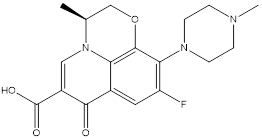
Figure 3: Structure of Levofloxacin
IUPAC name: (S)-9-fluoro-3-methyl-10-(4-methylpiperazin-1-yl)-7-oxo-3,7-dihydro-2H-[1,4]oxazino[2,3,4-ij]quinoline-6-carboxylic acid
Molecular Formula: C18H20FN3O4
Molecular Weight: 361.4
Color: Light yellowish
Stat: crystalline solid
Melting point: 225-227 OC
Solubility: sparingly soluble in water, freely soluble in glacial acetic acid and chloroform
Drug category: fluoroquinolone derivative, antibiotics
Indication: Levofloxacin is indicated in adults for the treatment of various infections caused by susceptible bacteria, including infections of the upper respiratory tract, lower respiratory tract, skin, skin structures, urinary tract, and prostate.
Pharmacology
Mechanism of action
Levofloxacin is bactericidal and exerts its antimicrobial effects via inhibition of bacterial DNA replication. It has a relatively long duration of action in comparison with other antibiotics that allows for once or twice daily dosing. Levofloxacin is associated with QTc-interval prolongation and should be used with caution in patients with other risk factors for prolongation (e.g. hypokalemia, concomitant medications). Levofloxacin has demonstrated _in vitro_ activity against a number of aerobic gram-positive and gram-negative bacteria and may carry some activity against certain species of anaerobic bacteria and other pathogens such as _Chlamydia_ and _Legionella_. Resistance to levofloxacin may develop, and is generally due to mutations in DNA gyrase or topoisomerase IV, or via alterations to drug efflux.
Absorption: 99% oral
Distribution: volume of distribution on oral administration between 1.09-1.26 L/kg.
Metabolism: 5% of the administered dose was recovered in the urine as these metabolites.
Elimination: 87% unchanged through urine, 4% through feces
Clearance: 8.64-13.56 L/h
Half life: 6-8 hours
Protein binding: 24-38% protein-bound in plasma
Liver toxicity: Levofloxacin has been linked to rare instances of clinically apparent hepatic injury marked by a short latency period and a hepatocellular pattern of enzyme elevations.
Therapeutic Use
• Anti-Bacterial Agents; Anti-Infective Agents, Urinary; Nucleic Acid Synthesis Inhibitors
• Levofloxacin is used for the treatment of acute bacterial sinusitis caused by susceptible Streptococcus pneumoniae, Haemophilus influenzae, or Moraxella catarrhalis.
3.1 RESULT AND DISCUSSION
3.1 Drug identification
3.1.1 Characterization of drug
3.1.1.1 Physical characterization of drug
Table no. 4: Physical observation of Levofloxacin
|
S. No. |
Particulars |
Reported |
Observed |
|
1. |
Appearance |
Light Yellow |
Light Yellow |
|
2. |
Physical State |
Amorphous |
Amorphous |
|
3. |
Odor |
Odorless |
odorless |
3.1.1.2 Melting point
Table no. 5: Melting point of Levofloxacin
|
S. No. |
Particulars |
Reported |
Observed |
|
1. |
Melting point |
225-227 oC |
224-225 oC |
3.1.1.3 Solubility study
Table no. 6: Solubility study of Levofloxacin in different solvents
|
S. No. |
Solvents |
Solubility |
|
1. |
Water |
Slightly Soluble |
|
2. |
0.1 N HCl |
Soluble |
|
3. |
0.2 N NaOH |
Slightly Soluble |
|
4. |
Ethanol |
Soluble |
|
5. |
Methanol |
Soluble |
|
6. |
Chloroform |
Freely soluble |
|
7. |
Glacial acetic acid |
Freely soluble |
3.1.1.4 Method for Determination of max of Drugs
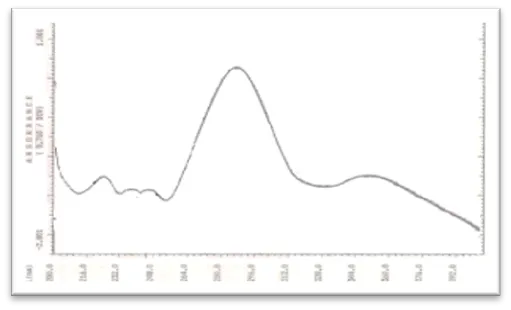
Figure 4: UV spectrogram of Levofloxacin
3.1.1.5 Fourier-Transform Infra Red spectroscopy (FT-IR)
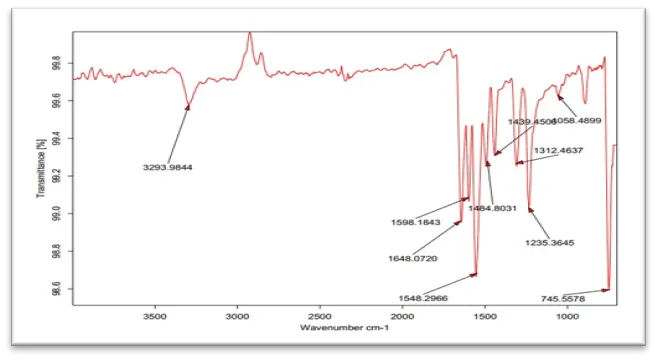
Figure : FT – IR spectrogram of Levofloxacin
3.2 Analytical method development by U.V spectrophotometer
3.2.1 Selection of hydrotropes to enhancement of solubility of drug
Table no. 7: Solubility of drug in different hydrotropes
|
S. No. |
Solvents |
Solubility |
|
1 |
Water |
- + |
|
2 |
Hot water |
- + |
|
3 |
2M Sodium acetate |
+ |
|
4 |
8M Urea |
+ |
|
5 |
8M Urea: 2M Sodium acetate |
+ |
|
6 |
2M Sodium Benzoate |
+ |
|
7 |
2M Ammonium Acetate |
++ |
|
8 |
2M Sod. Citrate |
+++ |
(-) Insoluble, (-+) Slightly soluble, (+), Sparingly soluble (++) Soluble, (+++) Freely soluble
3.2.2 Determination of solubility enhancement with different hydrotropes by UV Visible Spectroscopy
Table no. 8: Results of solubility enhancement by UV-Visible Spectroscopy
|
S. No. |
Solvents |
Solubility Enhancement (folds) |
|
1 |
2M Sodium acetate |
4 |
|
2 |
8M Urea |
5 |
|
3 |
8M Urea: 2M Sodium acetate |
3 |
|
4 |
2M Sodium Benzoate |
5 |
|
5 |
2M Ammonium Acetate |
8 |
|
6 |
2M Sod. Citrate |
31 |
Enhancement of solubility was more than 70% for levofloxacin in 2M Sodium Citrate. The enhancement of solubility of levofloxacin was due to the hydrotropic solubilization phenomenon. Results of solubility in different solvent for both the drug were shown in table.
3.2.3 Stability of solution with optimized hydrotropes
Table no. 9: Solution stability with optimized hydrotropes
|
S. No. |
Time (min.) |
Absorbance |
|
1 |
0 |
0.574 |
|
2 |
30 |
0.581 |
|
3 |
60 |
0.570 |
3.3 Validation of developed methods
3.3.1 Linearity
Table no. 10: Linearity of Levofloxacin in hydrotrop
|
Standard Conc. (µg/ml) |
Absorbance |
Mean |
S. D. |
LOD |
LOQ |
Response Ratio |
||
|
Rep-1 |
Rep-2 |
Rep-3 |
||||||
|
0 |
0 |
0 |
0 |
0 |
0 |
0 |
0 |
0 |
|
5 |
0.270 |
0.275 |
0.273 |
0.273 |
0.00252 |
0.166 |
0.504 |
0.0546 |
|
10 |
0.564 |
0.562 |
0.563 |
0.563 |
0.001 |
0.066 |
0.200 |
0.0563 |
|
15 |
0.767 |
0.761 |
0.761 |
0.763 |
0.00347 |
0.229 |
0.694 |
0.0509 |
|
20 |
1.027 |
1.029 |
1.035 |
1.030 |
0.00416 |
0.275 |
0.832 |
0.0515 |
|
25 |
1.289 |
1.288 |
1.278 |
1.285 |
0.00608 |
0.401 |
1.216 |
0.0514 |
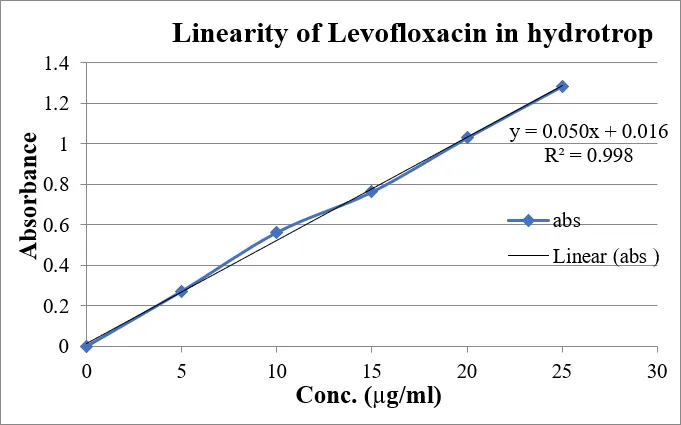
Figure 6: Calibration Curve of Levofloxacin
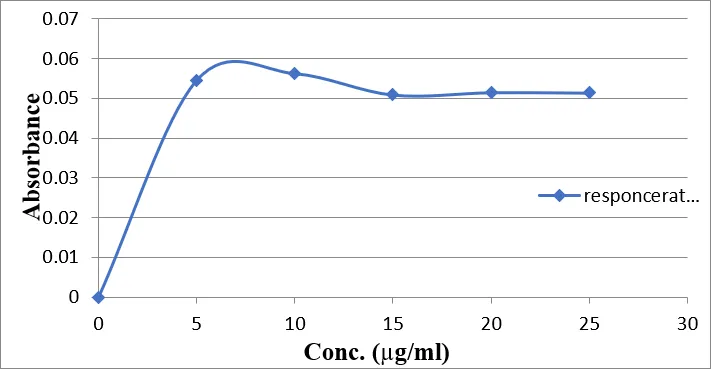
Figure 7: Graph of Response ratio graph for linearity for Levofloxacin
3.3.2 Range
Table no. 11: Average value of LOD and LOQ
|
S. No. |
Drug name |
LOD |
LOQ |
|
1 |
Levofloxacin |
0.3462 |
0.6892 |
3.3.3 Accuracy
Table no. 12: Recovery Studies for Accuracy of Formulation
|
Recovery (%) |
80% |
100% |
120% |
|
Amount Present (mg) |
500 |
500 |
500 |
|
500 |
500 |
500 |
|
|
500 |
500 |
500 |
|
|
Amount of Std. Added (mg) |
400 |
500 |
600 |
|
400 |
500 |
600 |
|
|
400 |
500 |
600 |
|
|
Amount Recovered (mg) |
499.55 |
497.45 |
499.40 |
|
496.85 |
499.90 |
497.25 |
|
|
498.70 |
497.40 |
498.7 |
|
|
% Recovery |
99.91 |
99.49 |
99.88 |
|
99.37 |
99.98 |
99.45 |
|
|
99.74 |
99.48 |
99.74 |
|
|
Mean Recovery |
99.675 |
99.65333 |
99.686667 |
|
SD |
0.276722 |
0.287329 |
0.228163 |
|
%RSD |
0.277624 |
0.2883292 |
0.228880 |
3.3.4 Precision
3.3.4.1 Repeatability
Table no. 13: Repeatability of levofloxacin
|
Conc. |
Rep-1 |
Rep-2 |
Rep-3 |
Rep-4 |
Rep-5 |
Mean |
(%) Amount |
S.D. |
% R.S.D |
|
5 |
4.95 |
4.98 |
4.85 |
4.88 |
4.96 |
4.924 |
98.48 |
0.056 |
0.057 |
|
10 |
9.98 |
9.89 |
9.78 |
9.96 |
9.97 |
9.916 |
99.16 |
0.084 |
0.085 |
|
15 |
14.85 |
14.78 |
14.65 |
14.96 |
14.78 |
14.804 |
98.69 |
0.113 |
0.115 |
|
20 |
19.96 |
19.98 |
19.96 |
19.78 |
19.68 |
19.872 |
99.36 |
0.135 |
0.135 |
|
25 |
24.78 |
24.65 |
24.77 |
24.85 |
24.96 |
24.802 |
99.208 |
0.114 |
0.115 |
|
Mean |
98.980 |
0.100 |
0.101 |
||||||
3.3.4.2 Intra-day and Inter-day precision
Table no. 14: Intra-day and Inter-day precision data
|
Intra-day Precision |
Inter-day Precision |
|||
|
Period of Time |
% Label Claim |
Period of Time |
% Label Claim |
|
|
After 1hr |
99.6 |
First day |
99.8 |
|
|
After2hr |
99.8 |
Second day |
98.9 |
|
|
After3hr |
98.7 |
Third day |
98.6 |
|
|
After4hr |
98.9 |
|||
|
After5hr |
99.7 |
|||
|
After6hr |
99.8 |
|||
|
Mean |
99.41666667 |
Mean |
99.1 |
|
|
SD |
0.487510684 |
SD |
0.6244998 |
|
|
% RSD |
0.490371182 |
% RSD |
0.630171342 |
|
3.3.4.3 Analyst to Analyst precision
Table no. 15: Analyst to Analyst precision
|
Analysts |
Label claim Analyst (mg) |
Amount found (mg) |
Label claim (%) |
|
1 |
500 |
497.40 |
99.48 |
|
2 |
500 |
499.95 |
99.99 |
|
3 |
500 |
499.75 |
99.95 |
|
Mean |
500 |
499.03 |
99.81 |
|
SD |
- |
1.418039 |
0.282001773 |
|
% RSD |
- |
0.284159 |
0.282538596 |
3.4 Estimation of drug in marketed formulation
Table no. 16: Analysis of Tablet Formulation of Levofloxacin
|
Drug |
Label claim (mg) |
Amount found (mg) |
Drug estimated (%) |
S.D. |
% RSD |
|
Levofloxacin |
500 |
496 |
99.20 |
0.125 |
0.132 |
DISCUSSION
Levofloxacin was a light yellow odorless amorphous powder melts on 224-225oC. Levofloxacin was slightly soluble in water and 0.2 N NaOH, soluble in ethanol and methanol and freely soluble in chloroform and Glacial acetic acid. UV scanning between 200-400 nm λ max of Glacial acetic acid was found at 286 nm. FT-IR spectrogram of Levofloxacin also confirm the structure by showing characteristic peaks at 3203 (COO-Hstr) and 1640 (C=O).
Analytical method development by U.V spectrophotometer was started with selection of hydrotropes to enhancement of solubility of drug by solubiliztion. Increased solubility with different hydrotropes was found as 2M Sodium acetate 4 folds, 8M Urea 5 folds, 8M Urea 3 folds, 2M Sodium acetate 5 folds, 2M Sodium Benzoate 8 folds, 2M Ammonium Acetate and 2M Sodium Citrate 31 folds. Enhancement of solubility was more than 70% for levofloxacin in 2M Sodium Citrate. The enhancement of solubility of levofloxacin was due to the hydrotropic solubilization phenomenon. So 2M Sodium Citrate was used as hydrotrop for further method development and validation.
Method was validated on different parameters like Linearity and Calibration curve was found y = 0.050x + 0.016 (R2= 0.998) for Levofloxacin. Response ratio was found about 0.0509 and response ratio curve was also prepared. LOD (0.3462) and LOQ (0.6892) were found. Accuracy in terms of % Recovery was found 99.6 for Levofloxacin. Precision in terms of mean % repeatability was 98.98 %, Intra-day precision was 99.417 and Inter-day precision was 99.1% and Analyst to Analyst precision was found 99.81%. All validation parameter are under limits that suggested by ICH guideline.
Marketed formulation Levoflox- 500 (tablet) was used to estimate Levofloxacin by UV- spectrophotometer. Assay result data was excellent 99.2% drug was estimated with 0.125 standard deviation and 0.132 % RSD.
CONCLUSION
We concluded that the UV spectrophotometer methods for quantitative estimation of Levofloxacin was fast, less time consuming, reproducible and highly sensitive even microgram of compound can be measured. This is the first reported method for quantitative analysis of Levofloxacin and is a significant advance in spectroscopic analysis of such pharmaceutical mixtures. The method is suitable for qualitative and quantitative analysis of these pharmaceutical products. The results obtained are in a good concurrence with the declared contents. Statistical analysis showed the method is accurate and precise.
Performing a through method validation can be a tedious process, but the quality of data generated with the method is directly linked to the quality of this process. Time constraints often do not allow for sufficient method validations. Many researchers have experienced the consequences of invalid methods and realized that the amount of time and resources required to solve problems discovered later exceeds what would have been expended initially if the validation studies had been performed properly.
REFERENCES

Aparna Shrivastav, Dr. Arun Kumar Patel, Dr. Aditya Sahu, Dr. Naveen Shivavedi, Supriya Ojha UV Spectrophotometric Method Development for Validation of Levofloxacin Marketed Formulation Using Hydrotropy, Int. J. of Pharm. Sci., 2026, Vol 4, Issue 9, 148-163, https://doi.org/10.5281/zenodo.22231497
 10.5281/zenodo.22231497