
1Faculty of Pharmacy, Swami Vivekanand Subharti University, Merrut 250002.
2Depatment of Pharmacy, Teerthanker Mahaver College of Pharmacy, Teerthankar Mahaveer University, NH 9, Delhi Road, Moradabad, Uttar Pradesh PIN CODE 244001.
3Department of Pharmacy, Teerthanker Mahaveer College of Pharmacy, Moradabad, 244102.
Outcome-Based Education (OBE) is transforming the landscape of pharmaceutical education in India, shifting from content-centric teaching to a results-oriented approach. OBE emphasizes clear and measurable learning outcomes that align with the dynamic demands of the healthcare sector. This framework prioritizes skill development, critical thinking, and practical application, producing industry-ready pharmacy graduates. OBE's learner-centric approach fosters engagement and personalized learning experiences, enhancing academic performance and holistic development. By aligning with industry needs, OBE equips graduates with the necessary competencies for success in the pharmaceutical industry. However, implementing OBE requires overcoming challenges such as faculty training, curriculum alignment, and resource allocation. With effective communication and continuous evaluation, OBE has the potential to shape a generation of adaptable and impactful pharmacy professionals, contributing to advancements in healthcare and society's well-being.
India's pharmaceutical education landscape is witnessing a transformative shift with the introduction of Outcome-Based Education (OBE) as a progressive and innovative framework. Traditionally, educational institutions in India have followed a content-centric approach, where the focus was primarily on delivering subject matter without a clear emphasis on the desired learning outcomes. However, with the realization that traditional methods might not be sufficient to meet the demands of the rapidly evolving pharmaceutical industry, OBE has gained traction as a solution-oriented approach that prioritizes skill development and practical application of knowledge.
The integration of OBE in pharmaceutical education marks a pivotal moment, as it aligns educational objectives with the dynamic and ever-changing demands of the healthcare sector. This approach is driven by the recognition that the industry requires graduates who possess not only a strong theoretical foundation but also the ability to apply their knowledge in real-world scenarios. OBE strives to bridge the gap between academia and industry, ensuring that pharmacy graduates are well-prepared to contribute meaningfully and effectively to the healthcare ecosystem.
At the core of Outcome-Based Education is the articulation of clear and measurable learning outcomes. These outcomes are carefully defined, taking into account the specific knowledge, skills, and competencies that students should possess upon completion of their pharmacy programs. By setting specific targets, OBE provides a roadmap for both educators and learners, guiding them throughout the learning process and allowing for continuous assessment and improvement.
The implementation of OBE in pharmaceutical education emphasizes the development of critical thinking and problem-solving abilities. Unlike traditional teaching methods that often rely on rote memorization, OBE encourages students to analyze information critically, evaluate evidence, and propose evidence-based solutions to complex pharmaceutical challenges. This emphasis on higher-order thinking skills not only enriches the learning experience but also nurtures a generation of pharmacy professionals capable of addressing emerging healthcare issues with creativity and ingenuity.
Furthermore, Outcome-Based Education places considerable importance on experiential learning and practical exposure. Pharmacy students are encouraged to engage in hands-on experiences, such as internships, research projects, and clinical rotations, to apply their knowledge in real-life scenarios. This experiential learning approach not only enhances students' understanding of theoretical concepts but also fosters a deeper connection between academia and the pharmaceutical industry.
By incorporating OBE in pharmaceutical education, India aims to produce industry-ready graduates who possess a well-rounded skill set. Apart from technical knowledge, OBE also emphasizes the development of communication skills, teamwork, adaptability, and ethical decision-making. These transferable skills are highly sought after in the pharmaceutical job market, making OBE graduates more competitive and desirable to employers.
However, the introduction of Outcome-Based Education in pharmaceutical education also comes with its share of challenges. One of the key challenges is the need for faculty development and training. Educators must adapt their instructional strategies to align with the principles of OBE, which may require a shift in their traditional teaching methodologies. Additionally, the assessment methods need to be revamped to ensure that they align with the specific learning outcomes and competencies identified under OBE.
Moreover, OBE implementation requires a significant investment in terms of time, resources, and infrastructure. Educational institutions may need to revise and redesign their curricula, develop appropriate learning materials, and invest in technology and facilities to support experiential learning opportunities effectively.
Literature Review:
2.1.1 Understanding Outcome-Based Education:
In recent years, Outcome-Based Education (OBE) has gained considerable attention as a progressive and effective educational approach across various academic disciplines. OBE fundamentally challenges traditional teaching methodologies by placing the primary focus on defining and achieving specific learning outcomes rather than merely disseminating content to students. This paradigm shift in educational philosophy has led to the reevaluation and redesign of curricula in different fields to ensure that learners are equipped with the necessary skills and competencies to thrive in their respective industries.
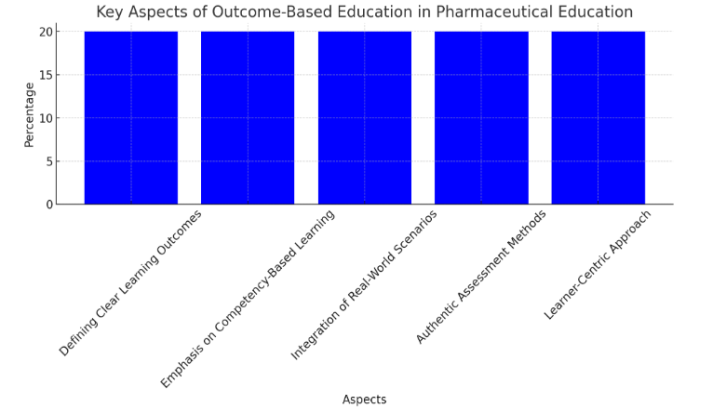
In the context of pharmaceutical education, Outcome-Based Education has emerged as a transformative force, revolutionizing the way pharmacy programs are structured and delivered. The core objective of OBE in pharmaceutical education is to clearly articulate the learning outcomes and competencies that students are expected to master by the time they complete their educational journey. Rather than relying solely on standardized tests or memorization of facts, OBE emphasizes the importance of practical application, critical thinking, problem-solving, and hands-on experiences.
One of the key aspects that sets OBE apart from conventional teaching methods is its alignment with real-world challenges and industry demands. By actively involving industry professionals and stakeholders in the curriculum development process, pharmaceutical educators can identify the skills and knowledge essential for students to excel in their future careers. This collaborative approach ensures that the education provided is relevant, up-to-date, and aligned with the rapidly evolving landscape of the pharmaceutical industry.
A hallmark feature of Outcome-Based Education in pharmacy is the clear articulation of program-level learning outcomes and the corresponding learning experiences that students will engage in to achieve those outcomes. This transparent and structured approach creates a clear pathway for students, guiding them through their academic journey and fostering a deeper sense of purpose in their studies.
OBE also emphasizes continuous assessment and feedback throughout the learning process. Instead of relying solely on final examinations, students are evaluated based on their demonstrated competencies and abilities in various authentic tasks and simulations. This continuous assessment model not only provides a more accurate measure of students' progress but also allows for personalized learning experiences tailored to individual needs and strengths.
Moreover, Outcome-Based Education encourages the development of transferable skills, such as communication, teamwork, leadership, and adaptability. These skills go beyond subject-specific knowledge and are highly valued by employers in the pharmaceutical industry. Graduates who have undergone OBE are better equipped to tackle complex challenges, work collaboratively in interdisciplinary teams, and adapt to the dynamic nature of the pharmaceutical sector.
Critics of Outcome-Based Education have raised concerns about potential challenges in implementing this approach effectively. Some argue that the focus on predefined outcomes might lead to a narrowing of the curriculum, neglecting important areas that are difficult to measure but crucial for a well-rounded education. Additionally, aligning with industry demands could inadvertently limit the exploration of innovative ideas and research that might shape the future of pharmaceutical science.
However, proponents of Outcome-Based Education counter these concerns by emphasizing the flexibility and adaptability of OBE. They argue that while predefined outcomes provide a guiding framework, educators still have the freedom to design diverse and engaging learning experiences that encourage curiosity and creativity. Furthermore, OBE can be iteratively improved based on feedback and evaluation, allowing for continuous refinement and enhancement of the educational process.
2.1.2 Key Aspects of Outcome-Based Education in Pharmaceutical Education:
3.1 Significance in Pharmaceutical Education:
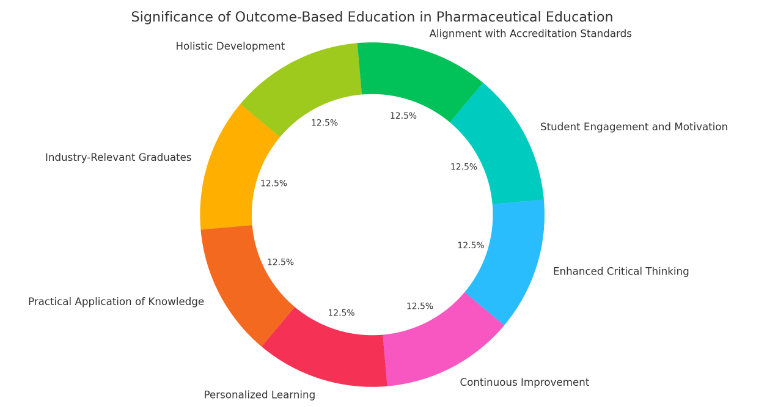
The integration of Outcome-Based Education (OBE) in pharmaceutical education offers several significant advantages. Firstly, it ensures that graduates possess the essential knowledge, skills, and competencies demanded by the industry, empowering them to make valuable contributions to healthcare. OBE actively fosters critical thinking, problem-solving, and practical skills, making graduates highly adaptable to the ever-changing landscape of the pharmaceutical sector.
Overall, the significance of Outcome-Based Education in pharmaceutical education cannot be overstated. It brings numerous benefits to students, educators, and the pharmaceutical industry. By emphasizing specific learning outcomes and competencies, OBE transforms the conventional teaching approach, resulting in a more effective and relevant pharmaceutical education experience.
4.1 Benefits of Outcome-Based Education:
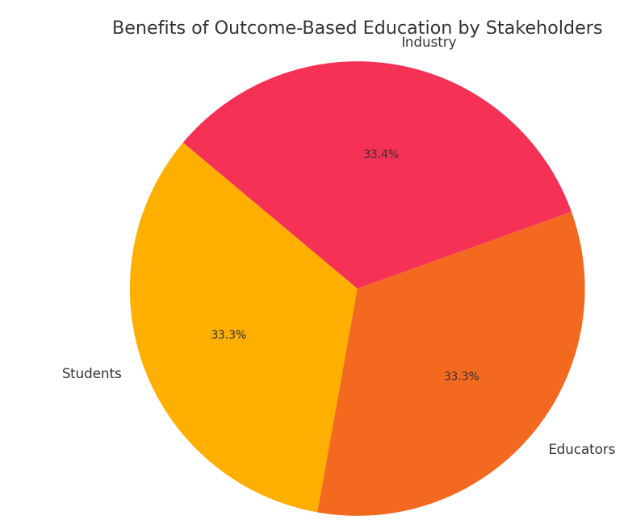
Outcome-Based Education (OBE) in pharmaceutical education offers a wide range of significant benefits that have a positive impact on various stakeholders, including students, educators, and the pharmaceutical industry as a whole. By adopting an outcome-based approach, the focus shifts from simply delivering content to concentrating on specific learning outcomes and essential competencies that are crucial for a successful and fulfilling career in pharmacy.
One of the primary advantages of OBE is its emphasis on defining clear and measurable learning outcomes. This clarity in educational objectives ensures that pharmacy students understand what is expected of them and what they need to achieve throughout their educational journey. By aligning the curriculum with specific outcomes, educators can design learning experiences that are tailored to help students develop the necessary knowledge, skills, and abilities required in the pharmaceutical industry.
Furthermore, OBE plays a pivotal role in enhancing the quality of education in pharmaceutical institutions. By aligning the educational process with industry demands and expectations, OBE ensures that graduates are well-prepared and equipped to tackle the challenges of the ever-evolving pharmaceutical landscape. As a result, the industry receives highly competent and industry-ready professionals who can contribute effectively to advancements in healthcare and pharmaceutical research.
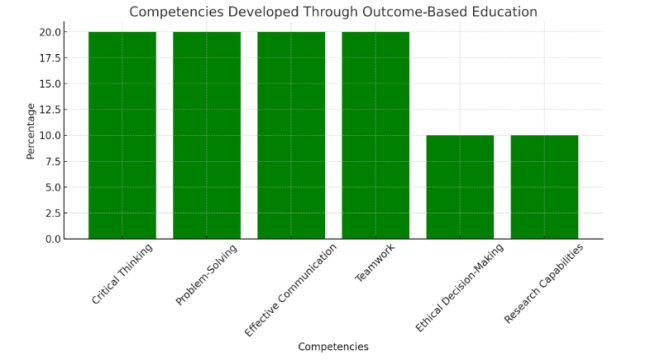
In addition to academic excellence, OBE fosters the development of critical skills and competencies that are essential for success in the pharmaceutical sector. These competencies include critical thinking, problem-solving abilities, effective communication, teamwork, ethical decision-making, and research capabilities. By nurturing these skills, OBE cultivates well-rounded pharmacy professionals who can address complex issues, devise innovative solutions, and effectively collaborate with multidisciplinary healthcare teams.
Another significant advantage of OBE is its focus on practical application and experiential learning. Pharmacy students are exposed to real-world scenarios, case studies, and hands-on experiences, enabling them to apply theoretical knowledge to practical situations. This practical exposure enhances their problem-solving skills, decision-making abilities, and adaptability, making them better prepared to handle the challenges they may encounter in their professional careers.
Moreover, Outcome-Based Education fosters a learner-centric environment. Students become active participants in their education, taking ownership of their learning process, setting personal goals, and monitoring their progress towards achieving the desired outcomes. This personalized learning approach promotes engagement, motivation, and a deeper understanding of the subject matter, ultimately leading to enhanced academic performance and professional growth.
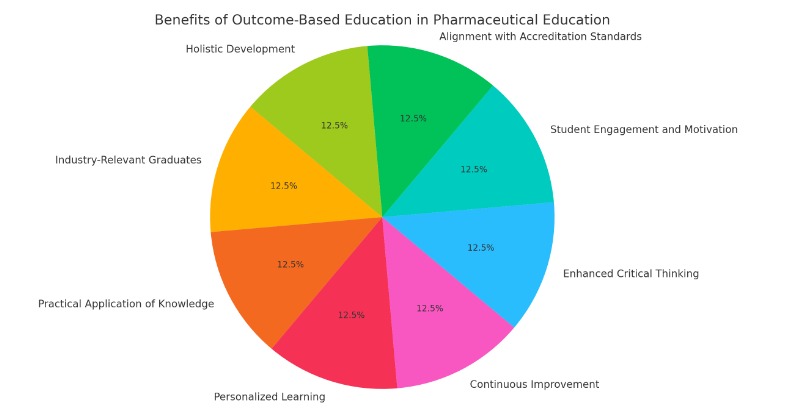
Here are some key benefits of Outcome-Based Education in pharmaceutical education:
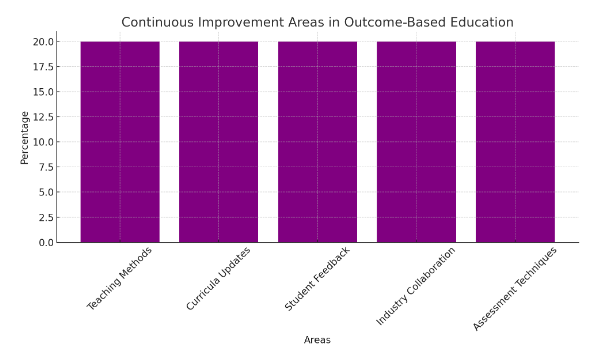
Adapting to Evolving Healthcare Landscape: OBE equips pharmacy students with adaptable skills, making them well-prepared to thrive in the rapidly changing healthcare landscape. Graduates are better positioned to embrace new technologies, research advancements, and healthcare policies.
5.1 Implementation Challenges:
The introduction of Outcome-Based Education (OBE) in pharmaceutical education comes with its share of challenges. It involves a significant shift in how curricula are designed and teaching methods are employed. One of the primary challenges is providing proper training to faculty members so they can effectively implement OBE principles. Additionally, there might be resistance to change as educators adapt to this new approach.
Developing outcome-based curricula requires a careful alignment with the needs and demands of the pharmaceutical industry. This often calls for collaboration between educational institutions and industry experts to ensure that the curriculum remains relevant and up-to-date.
Another obstacle lies in creating authentic and competency-based assessments that accurately measure the achievement of desired learning outcomes. Designing such assessments can be complex and time-consuming.
To successfully implement OBE, adequate resource allocation is crucial. This includes providing the necessary technology and faculty support to facilitate the transition and sustain the new educational approach effectively.
Effective communication with all stakeholders, such as students, faculty, administrators, and industry partners, is essential. Clear and open communication is vital to gain support and understanding for the benefits and objectives of Outcome-Based Education in pharmaceutical education. It helps build a collective effort towards successful implementation and ensures that everyone is on the same page regarding the advantages of this innovative educational approach.
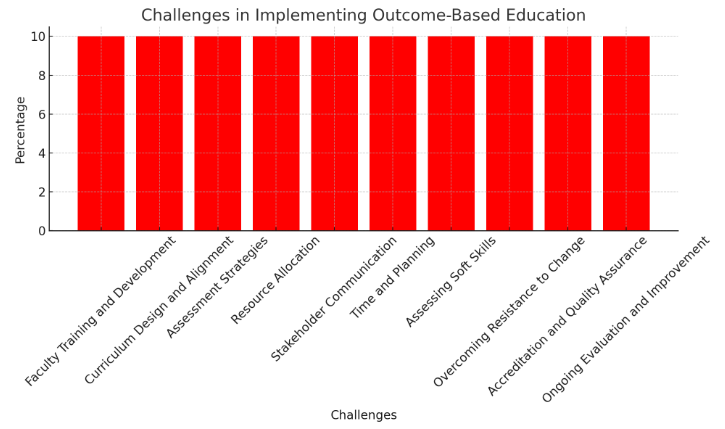
Here are some of the key challenges faced in implementing Outcome-Based Education in pharmaceutical education:
6.1 CONCLUSION:
In conclusion, the integration of Outcome-Based Education (OBE) in pharmaceutical education marks a transformative shift towards a more progressive and effective learning framework. OBE addresses the shortcomings of traditional content-centric approaches by prioritizing specific and measurable learning outcomes that align with the dynamic demands of the healthcare sector. By focusing on skill development, critical thinking, and practical application of knowledge, OBE prepares pharmacy graduates to be industry-ready professionals capable of tackling real-world challenges.
One of the key strengths of OBE lies in its emphasis on competency-based learning, experiential education, and continuous assessment. Pharmacy students benefit from hands-on experiences, authentic assessments, and personalized learning approaches that foster engagement, motivation, and deeper understanding. The learner-centric environment encourages students to take ownership of their education, leading to better academic performance and holistic development.
OBE's alignment with industry needs ensures that pharmacy graduates possess the necessary knowledge and skills required by the pharmaceutical industry, enhancing their employability and value to employers. Furthermore, the emphasis on transferable skills, such as communication, teamwork, and ethical decision-making, prepares graduates to adapt to the evolving healthcare landscape and contribute meaningfully to interdisciplinary healthcare teams.
However, the implementation of OBE in pharmaceutical education comes with its challenges, including faculty training, curriculum alignment, and resource allocation. Effective communication and collaboration among stakeholders are crucial to overcoming resistance to change and gaining support for this innovative educational approach.
Overall, Outcome-Based Education in pharmaceutical education offers significant benefits to students, educators, and the pharmaceutical industry. By producing industry-relevant graduates who are critical thinkers, problem solvers, and ethical professionals, OBE ensures that the future of pharmaceutical education is adaptive, impactful, and aligned with the needs of the healthcare ecosystem. With ongoing evaluation and continuous improvement, OBE has the potential to shape a generation of pharmacy professionals who will lead advancements in healthcare and contribute to the well-being of society as a whole.
7.1 Summary:
Outcome-Based Education (OBE) is transforming pharmaceutical education in India by shifting from content-centric teaching to a results-oriented approach. OBE focuses on defining clear and measurable learning outcomes aligned with industry needs. It emphasizes skill development, critical thinking, and practical application to produce industry-ready pharmacy graduates. The learner-centric approach fosters engagement and personalized learning experiences, enhancing academic performance and holistic development. However, implementing OBE requires overcoming challenges such as faculty training, curriculum alignment, and resource allocation. With effective communication and continuous evaluation, OBE has the potential to shape adaptable and impactful pharmacy professionals, contributing to advancements in healthcare and societal well-being.
REFERENCES



Chauhan Panshul*, Kumar Sokindra, Mittal Ashu, Introduction of Outcome Based Education in Pharmaceutical Education in India, Int. J. of Pharm. Sci., 2025, Vol 3, Issue 12, 1602-1616 https://doi.org/10.5281/zenodo.17865942
 10.5281/zenodo.17865942
