View Article

Abstract

Objective:The present study aimed to develop and evaluate patient-centric mouth dissolving films (MDFs) of Diflunisal using the solvent casting technique to overcome its poor aqueous solubility (BCS Class II), achieve rapid drug release and onset of action, and bypass hepatic first-pass metabolism, thereby improving therapeutic efficacy and patient compliance.Methods:Five formulations (F1–F5) of Diflunisal MDFs were prepared by varying the ratio of hydroxypropyl methylcellulose (HPMC E5) as the film-forming polymer and polyethylene glycol 400 (PEG 400) as the plasticizer. Pre-formulation studies included melting point determination and Fourier Transform Infrared (FTIR) spectroscopy to assess drug purity and drug–excipient compatibility. The prepared films were evaluated for physicochemical and mechanical properties, including film thickness, folding endurance, surface pH, moisture uptake, in vitro disintegration time, and in vitro drug release. The optimized formulation was further subjected to accelerated stability testing according to ICH guidelines (40 ± 2°C/75 ± 5% RH) for three months.Results:Pre-formulation studies confirmed the purity of Diflunisal, with a melting point of 211°C, while FTIR analysis indicated no significant drug–excipient interactions. Among all formulations, F5 exhibited the best overall performance, with a film thickness of 0.210 mm, folding endurance exceeding 200 folds, a neutral surface pH of 7.0, and low moisture uptake (5.9%). The optimized formulation showed rapid in vitro disintegration within 18 seconds and achieved more than 99.5% cumulative drug release within 10 minutes. Stability studies demonstrated that F5 maintained its physicochemical characteristics and drug release profile throughout the three-month testing period, indicating excellent formulation stability.Conclusion:The optimized Diflunisal mouth dissolving film developed by the solvent casting method demonstrated excellent physicochemical properties, rapid disintegration, fast drug release, and good stability. These findings suggest that Diflunisal MDFs represent a promising alternative to conventional oral tablets, offering improved patient compliance and faster therapeutic action, particularly for pediatric, geriatric, and dysphagic patients

Keywords

Mouth dissolving films, Diflunisal, HPMC E5, Solvent casting, BCS Class II drug, Orodispersible drug delivery

Introduction

× Popup Image

The continuous evolution of novel drug delivery systems is driven by the primary clinical objectives of optimizing therapeutic efficacy, reducing systemic adverse effects, and maximizing patient compliance(1-6). Among modern solid oral delivery technologies, mouth dissolving films (MDFs)—also designated as orodispersible or oral thin films—represent a highly innovative and patient-friendly dosage platform. These systems are uniquely suited for pediatric, geriatric, and dysphagic populations who experience significant psychological or physiological difficulty swallowing conventional tablets and capsules(7-12). MDFs consist of ultra-thin, flexible polymeric matrices that disintegrate rapidly upon contact with the mucosal fluid in the oral cavity. This rapid breakdown releases the active pharmaceutical ingredient (API) into saliva without requiring water intake or mechanical chewing.

Inflammation is a fundamental innate immune defense mechanism triggered by harmful stimuli, tissue injury, or cellular irritants(13-16). However, uncontrolled or chronic inflammatory cascades can result in significant tissue degradation and drive pathologies such as osteoarthritis, rheumatoid arthritis, and acute musculoskeletal trauma. Non-steroidal anti-inflammatory drugs (NSAIDs) remain the gold standard for managing these conditions. Mechanistically, NSAIDs inhibit cyclooxygenase (COX-1 and COX-2) enzymatic isoforms, which downstream reduces the production of pro-inflammatory prostaglandins responsible for pain, hyperalgesia, and pyrexia(17-19).
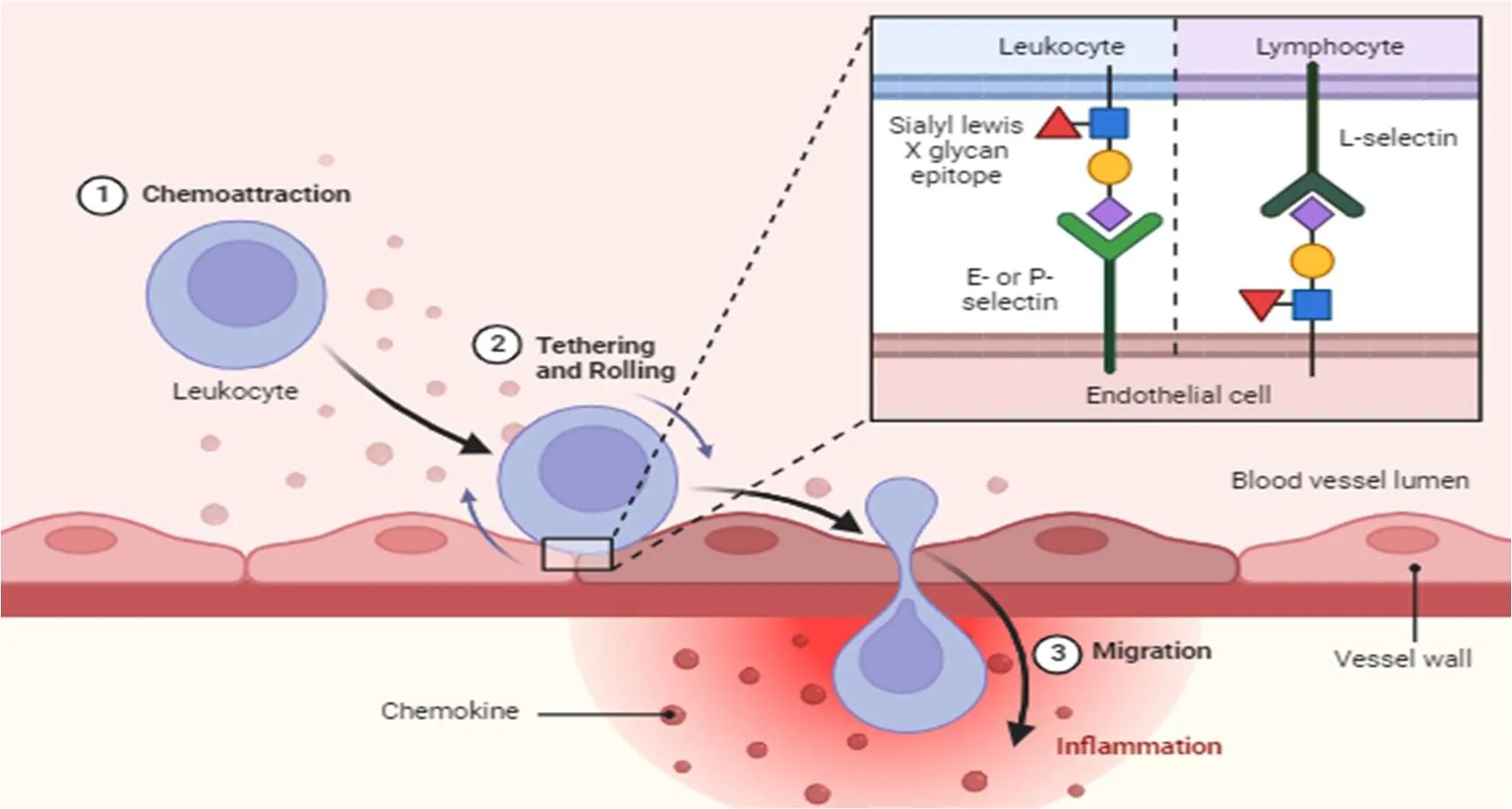


Figure 1: Cellular mechanism of the acute inflammatory response and leukocyte migration across the vascular lumen.


Diflunisal—5-(2,4-difluorophenyl)salicylic acid—is a potent salicylate-derived NSAID with strong analgesic, antipyretic, and anti-inflammatory properties, making it highly effective for chronic joint disorders. However, under the Biopharmaceutics Classification System (BCS), Diflunisal is categorized as a Class II drug, possessing high membrane permeability but low aqueous solubility. When administered in standard commercial oral tablets, its poor dissolution kinetics result in a delayed onset of therapeutic action (T max= 2-4 hours)(21,22,37-39). Furthermore, standard gastric absorption exposes the mucosal lining to local irritation, increasing the risk of gastrointestinal ulceration.

To address these pharmacokinetic limitations and improve patient compliance, this investigation focuses on formulating Diflunisal into mouth-dissolving oral thin films(23). By engineering a rapidly dissolving hydrophilic matrix, the structural wetting time can be reduced(24-25). This approach creates a high local concentration gradient that supports direct absorption across the highly vascularized buccal and sublingual mucosal linings(26). This pathway allows the active drug to enter the systemic circulation directly, bypassing hepatic first-pass metabolism, potentially increasing absolute bioavailability, and providing fast-acting relief from acute inflammatory flare-ups(27-29,46).

2. MATERIALS AND METHODS

2.1 Materials

Diflunisal (API) was generously provided as a gift sample by Lupin Research Labs (Bhopal, India). Hydroxypropyl methylcellulose (HPMC E5) and Polyvinyl alcohol (PVA) were procured from Loba Chemie Pvt. Ltd. (Mumbai, India) and SD Fine Chemicals (Mumbai, India), respectively. Polyethylene glycol 400 (PEG 400) was sourced from Central Drug House (CDH, Delhi, India). Glycerin and Sodium starch glycolate (SSG) were supplied by Qualigens Fine Chemicals and Loba Chemie, respectively. Aspartame (sweetening agent) and menthol (flavoring agent) were of pharmaceutical and food grade. All auxiliary reagents and chemical solvents used throughout the study were of analytical grade and utilized without additional purification steps.

2.2 Pre-formulation Studies

  • Organoleptic Characterization: The baseline sensory properties of the raw API powder—including appearance, color, odor, and texture—were systematically cataloged through visual and physical inspection.
  • Capillary Melting Point Determination: To assess the purity and polymorphic identity of the compound, a small mass of finely ground Diflunisal was sealed inside a dry glass capillary tube and analyzed using a digital melting point apparatus. The scanning temperature was raised at a controlled rate of 1-2 minute  to isolate the exact melting range.
  • Equilibrium Solubility Profiling: Excess amounts of Diflunisal were added to 10 mL volumes of diverse media, including distilled water, phosphate buffer (pH 6.8), methanol, ethanol, and 0.1 N HCl. The separate stoppered flasks were agitated on a mechanical shaker for 24 hours at room temperature, followed by a 12-hour equilibration period. Suspensions were filtered through Whatman No. 1 filter paper, appropriately diluted, and analyzed spectrophotometrically to calculate saturation concentrations.
  • UV Spectrophotometric Analysis: The wavelength of maximum absorbance (lambda max) was verified by scanning a standard solution of Diflunisal dissolved in phosphate buffer (pH 6.8) across the ultraviolet spectrum (200-400 nm). A multi-point standard calibration curve was constructed within a working concentration range of 2-20µm{g/mL}.

2.3 Drug-Excipient Compatibility Assessments

  • Fourier-Transform Infrared (FTIR) Spectroscopy: Molecular compatibility between the drug and excipients was evaluated using an FTIR spectrophotometer(47-48). Spectra were recorded for pure Diflunisal, isolated polymers, and physical binary mixtures (1:1 w/w) using the potassium bromide (KBr) pellet method. Samples were scanned over the wavenumber range of 4000-400 cm-1 to identify shifts or deletions in characteristic functional group bands.
  • Differential Scanning Calorimetry (DSC): Thermal profiles were evaluated by sealing 3–5 mg samples in standard aluminum pans(49-52). The samples were heated from 30-300ºC at a constant rate of 10ºC/minute under a continuous nitrogen purge(45).

2.4 Fabrication of Mouth Dissolving Films

Diflunisal oral thin strips were manufactured via the solvent casting technique using a series of five distinct formulation profiles (F1 to F5), detailed in Table 1(53-54).


Table 1: Compositional Metrics of Diflunisal MDF Batches (F1-F5)

Ingredients (mg)

F1​

F2​

F3​

F4​

F5​

Diflunisal

50

50

50

50

50

HPMC E5

36

33.5

31

29.5

27.5

PEG 400

6.5

5.5

5

4.5

4.5

Aspartame

2.5

2.2

2.2

2.2

2.2

Citric Acid

2

1.8

1.8

1.8

1.8

Menthol

1

1

1

1

1


The designated mass of film-forming HPMC E5 polymer was fully dissolved in distilled water under steady mechanical stirring. The plasticizer (PEG 400), sweetening agents, and salivary stimulants were sequentially added to form a clear, single-phase solution. Concurrently, 50 mg of Diflunisal was uniformly dispersed throughout the polymeric blend. The final formulation casting solution was sonicated to remove entrapped air bubbles, cast into flat-bottomed glass molds, and dried at room temperature for 24 hours. The resulting dry films were removed and precision-cut into 2 cm times 2cm functional dosage segments.

3. RESULTS AND DISCUSSION

3.1 Pre-formulation and Purity Characterization

Organoleptic evaluations confirmed that the procured Diflunisal was a highly pure, white crystalline, odorless, non-sticky fine powder. Capillary analysis revealed a precise melting point of 211°C, matching the pharmacopoeial reference range of 210-213ºC and confirming the absence of polymorphic contamination. Solubility studies confirmed that the drug is practically insoluble in water and only sparingly soluble in simulated saliva (phosphate buffer pH 6.8), but highly soluble in organic alcohols. This baseline hydrophobicity emphasizes the medical need for a fast-dissolving delivery approach(39-41). UV spectrophotometric scans identified a sharp, quantifiable lambda max at 296 nm. The resulting multi-point standard curve showed excellent linearity, described by the regression equation across the 2-20µm {g/mL} working range (R2 = 0.998).

3.2 Molecular Drug-Excipient Compatibility

FTIR spectral mapping confirmed the chemical stability and integrity of the drug within the polymeric film formulation. The critical diagnostic absorption bands of pure Diflunisal remained structurally unchanged in the processed binary mixtures, as summarized in Table 2.


Table 2: FTIR Functional Group Vibrational Frequencies

Functional Group Assignment

Pure Drug Spectrum (cm−1)

Processed Formulation Matrix (cm−1)

{O--H} Stretching Vibration

3400

3395

{C=O} Carboxylic Acid Stretching

1715

1712

Aromatic {C=C} Ring Stretching

1600

1598

Halogenated {C--F} Bond Stretching

1245

1246


The preservation of these characteristic peaks shows that no covalent modification, chemical incompatibility, or degradation occurred between the active drug, the film-forming polymer (HPMC E5), and the plasticizer (PEG 400)(55-56). This compatibility was further supported by auxiliary DSC and TLC testing, which confirmed a stable physical mixture suitable for solvent casting.

3.3 Physicochemical and Mechanical Evaluation

The cast oral thin films were evaluated across key quality control parameters, with data compiled in Table 3.


Table 3: Physicochemical Parameters of Formulations F1-F5

Batch

Thickness (mm)

Total Weight (mg)

Folding Endurance (Folds)

Surface pH

Moisture Uptake (%)

F 1

0.224 ± 0.01

98  ±  2.1

130  ±  5

6.6

7.1

F 2

0.218  ±  0.01

94  ±  2.3

145  ±  4

6.7

6.8

F 3

0.216  ±  0.01

91  ±  1.9

160  ±  5

6.8

6.5

F 4

0.212  ±  0.01

89  ±  2.0

180  ±  3

6.9

6.2

F 5

0.210  ±  0.01

87  ±  1.7

205  ±  6

7.0

5.9


Film thickness remained uniform, ranging from  0.224 mm  down to  0.210 mm , while total film weights decreased from 98 mg to 87 mg as the concentration of HPMC E5 was reduced across batches  F1  to  F5 . The small standard deviations indicate excellent casting precision and uniform drug distribution across the mold surfaces. The surface pH across all formulations fell within a biocompatible, neutral range ( 6.6-7.0 ), closely matching the natural pH of human saliva and minimizing the risk of mucosal irritation. Moisture uptake behavior decreased from 7.1% ( F1 ) to 5.9% ( F5 ). This lower moisture absorption for F5 is advantageous, as it reduces the risk of ambient moisture absorption during storage, preventing premature film stickiness or gelation.
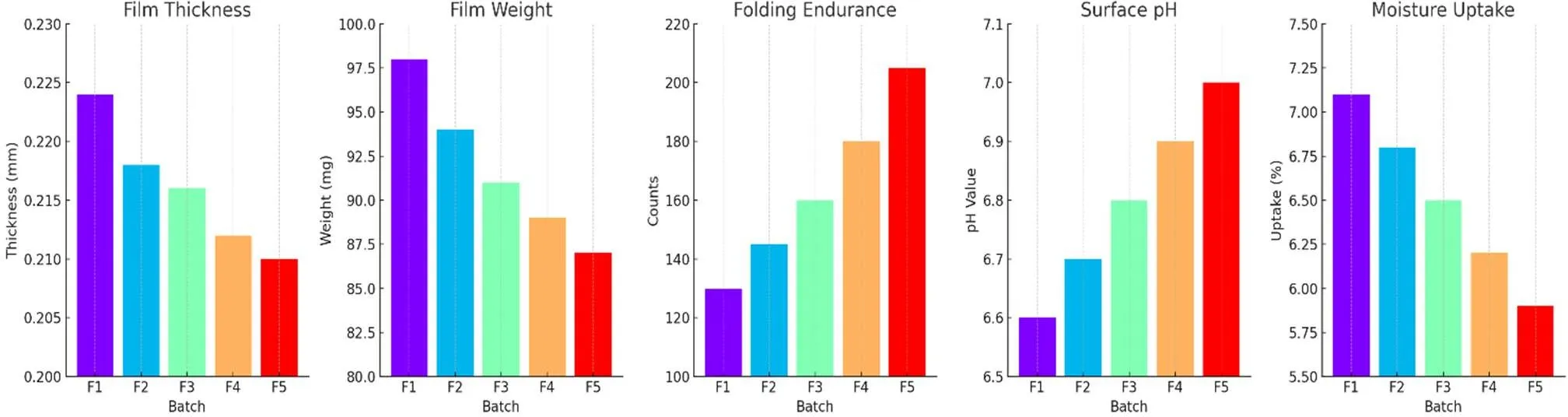


Figure 2. Physicochemical Evaluation Data Charts


Mechanical testing revealed a significant trend as the composition transitioned from  F1  to  F5 . Table 4 shows that reducing the total mass of HPMC E5 while optimizing the relative proportion of PEG 400 significantly enhanced the mechanical properties of the film.


Table 4: Mechanical Profiles of Formulations F 1 – F 5

Batch

Tensile Strength (N/mm2)

Percent Elongation (%)

Tear Resistance (N)

F 1

2.1  ±  0.05

8.5  ±  0.7

3.2  ±  0.3

F 2

2.4  ±  0.06

9.2  ±  0.6

3.5  ±  0.2

F 3

2.8  ±  0.08

10.1  ±  0.5

3.8  ±  0.4

F 4

3.2  ±  0.07

11.4  ±  0.6

4.2  ±  0.3

F 5

3.6  ±  0.09

12.8  ±  0.5

4.8  ±  0.2


Tensile strength improved from  2.1  N/mm2  up to  3.6 N/mm2 , percent elongation increased to 12.8%, and folding endurance peaked in  F5 , which withstood over 200 consecutive folds without cracking or tearing. This simultaneous improvement in toughness and elasticity indicates that an optimal polymer-to-plasticizer ratio was achieved in  F5(61) . Mechanistically, the low-molecular-weight PEG 400 inserts itself between the dense crystalline chains of HPMC E5, interrupting intermolecular hydrogen bonds and increasing internal free volume. This ensures the strips remain durable enough to withstand industrial cutting, packaging, and handling without fracturing, while remaining flexible enough for intraoral use.
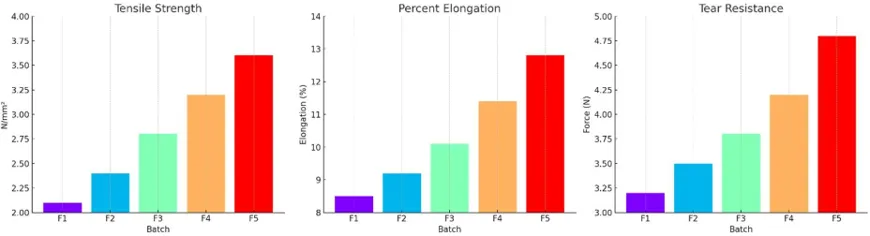


Figure 3. Mechanical Evaluation Data Charts


3.4 In Vitro Disintegration and Biopharmaceutics Performance

Quantitative evaluation confirmed high drug content uniformity, ranging from  95.2%  to  99.5%  across all batches, with  F5  showing the highest dosing precision ( 99.5%  ±  0.5% ). This uniform distribution indicates that the sonication and mixing stages prevented local drug aggregation or spotting within the polymer matrix before drying.

The functional performance of the formulations was evaluated through in vitro disintegration and dissolution assays, as summarized in Table 5.


Table 5: Disintegration Kinetics and Cumulative Dissolution Profiles

Batch

Disintegration Time (sec)

Release at 1 min (%)

Release at 3 min (%)

Release at 5 min (%)

Release at 10 min (%)

F 1

68  ±  3

12.5

28.4

44.8

62.1

F 2

54  ±  2

18.2

35.9

56.7

72.4

F 3

42  ±  2

25.4

49.3

71.5

85.1

F 4

30  ±  1

38.1

67.2

85.3

97.6

F 5

18  ±  1

51.7

80.5

95.8

>99.5


The disintegration time dropped markedly from 68 seconds ( F 1 ) to 18 seconds ( F 5 ). This rapid wetting response can be attributed to two complementary mechanisms: the lower total polymer weight in  F 5  creates a less dense barrier to water penetration, and the combination of hydrophilic HPMC E5 with the superdisintegrant action of citric acid allows the film to hydrate almost instantly when in contact with moisture(66).

The in vitro drug release profiles mirror the disintegration data. Formulation  F5  achieved a rapid drug release rate, unlocking 51.7% of the total active dose within the first 60 seconds and reaching complete, near-exhaustive dissolution ( >99.5% ) within 10 minutes. This rapid dissolution represents a major pharmaceutical improvement compared to traditional solid oral formulations. Standard commercial tablets require a lengthy disintegration step in gastric fluids, which is further slowed by Diflunisal's low water solubility, delaying the onset of therapeutic action. By rapidly converting the solid drug into a highly dispersed solution directly within the oral cavity, the optimized  F5  matrix significantly reduces wetting times. This approach creates a high local concentration gradient that supports fast absorption across the highly vascularized oral and buccal mucosal linings, bypassing hepatic first-pass metabolism and offering the potential for faster, more effective relief from acute pain and inflammatory flare-ups.

3.5 Stability Evaluation

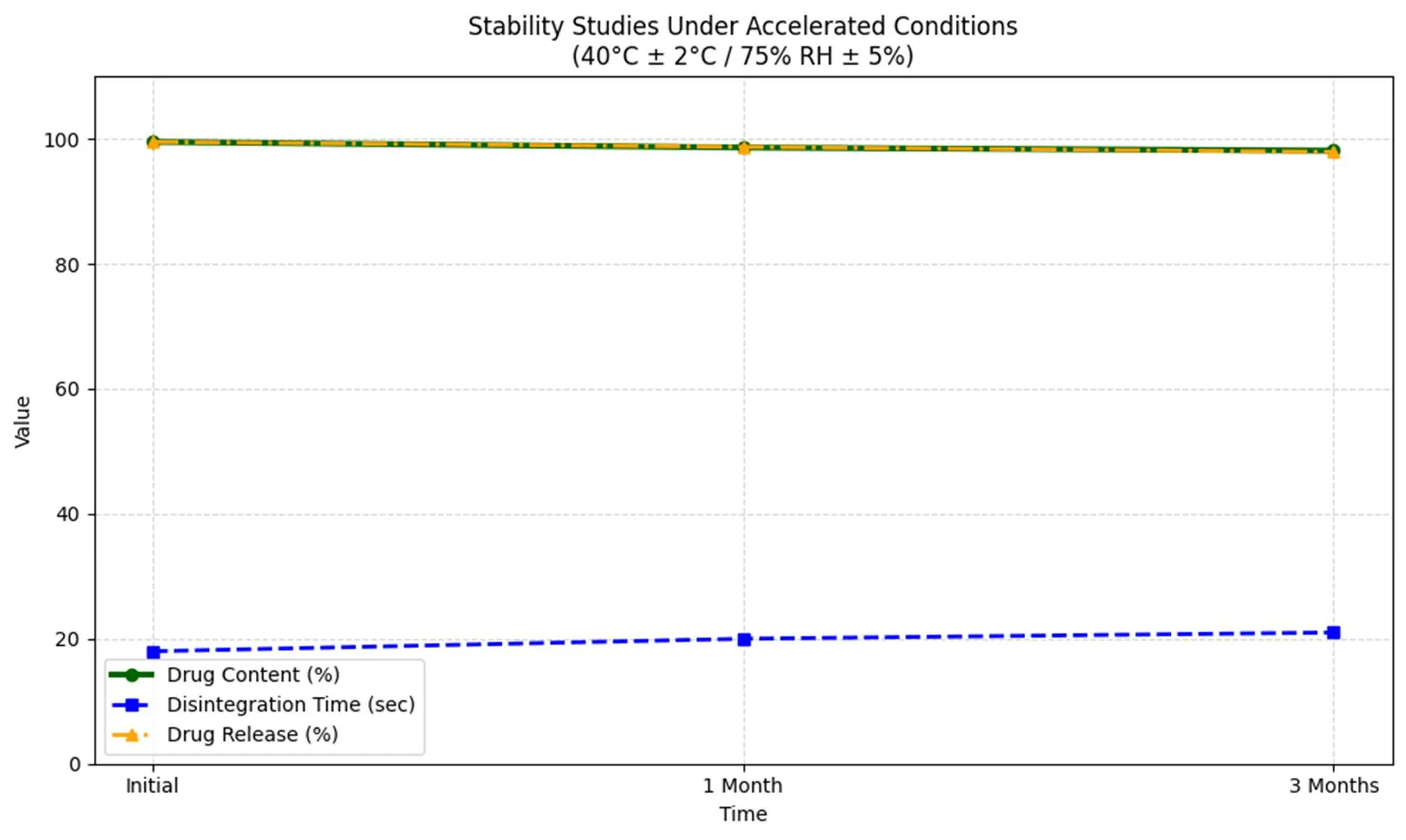
The optimized formulation ( F5 ) was subjected to accelerated stability testing under controlled climatic conditions ( 40ºC}  ±  2ºC  75%  ±  5%  RH) over a 3-month period. The analytical results are detailed in Table 6.


Table 6: Stability Profiles for Optimized Batch  F5

Evaluation Interval

Residual Drug Content (%)

Disintegration Time (sec)

Cumulative Dissolution (%)

Day 0 (Initial)

99.50%

18

>99.5\%

Month 1

98.60%

20

98.70%

Month 2

98.10%

21

97.90%

Month 3

97.80%

21

97.15%


Figure 4. Stability Studies Chart


The oral thin strips maintained high physical stability and chemical uniformity under accelerated conditions. Total drug content remained high, dropping only slightly to 97.80% by the end of Month 3, well within acceptable pharmaceutical margins. The disintegration threshold remained fast, increasing only slightly from 18 to 21 seconds, while final drug release values stayed above 97%. Visual inspection showed no signs of brittleness, severe wrinkling, or drug crystallization during the study. This robust performance indicates that the balanced combination of HPMC E5 and PEG 400 forms a physically stable matrix that resists humidity-induced aging, confirming its suitability for standard commercial packaging.

CONCLUSION

In this investigation, mouth dissolving oral thin films of Diflunisal were successfully developed using a water-soluble polymer matrix and a solvent casting approach. Pre-formulation testing confirmed the purity of the drug and its compatibility with the chosen excipients. Among the tested compositions, formulation F 5 —which utilized an optimized polymer-to-plasticizer ratio—emerged as the ideal configuration. It achieved rapid disintegration within 18 seconds and near-exhaustive drug release within 10 minutes, while maintaining excellent mechanical strength, high folding endurance, and a neutral surface pH. Accelerated stability testing confirmed that the film formulation remains robust against temperature and humidity over time. These findings indicate that the developed Diflunisal mouth dissolving films offer a viable, fast-acting alternative to traditional solid oral dosage forms, providing an efficient approach to enhance drug dissolution and improve patient compliance.

REFERENCES

  1. Ezike, T. C., Okpala, U. S., Onoja, U. L., Nwike, C. P., Ezeako, E. C., Okpara, O. J., Okoroafor, C. C., Eze, S. C., Kalu, O. L., Odoh, E. C., Nwadike, U. G., Ogbodo, J. O., Umeh, B. U., Ossai, E. C., & Nwanguma, B. C. (2023). Advances in drug delivery systems, challenges and future directions. Heliyon, 9(6), e17488.
  2. Azme, E., Hasan, M. M., Ali, M. L., Alam, R., Hoque, N., Noushin, F., Kabir, M. F., Islam, A., Nipun, T. S., Hossen, S. M. M., & Chung, H.-J. (2025). Computational identification of potential natural terpenoid inhibitors of MDM2 for breast cancer therapy: molecular docking, molecular dynamics simulation, and ADMET analysis. Frontiers in Chemistry, 13, 2500157.
  3. Sharma, D., Kaur, D., Verma, S., Singh, D., Singh, M., Singh, G., & Garg, R. (2015). Fast Dissolving Oral Films Technology: A Recent Trend For An Innovative Oral Drug Delivery System. International Journal of Drug Delivery, 7, 60–75.
  4. Haddadzadegan, S., Summonte, S., Ricci, F., Sandmeier, M., & Bernkop-Schnürch, A. (2025). Intraoral Drug Delivery: Bridging the Gap Between Academic Research and Industrial Innovations. Advanced Functional Materials, 2500157.
  5. Wen, H., Jung, H., & Li, X. (2015). Drug Delivery Approaches in Addressing Clinical Pharmacology-Related Issues: Opportunities and Challenges. The AAPS Journal, 17(6), 1327–1340.
  6. Atre, P., & Rizvi, S. A. A. (2025). Advances in Oral Solid Drug Delivery Systems: Quality by Design Approach in Development of Controlled Release Tablets. Journal of Pharmaceutical Sciences, 5(2), 9.
  7. Bhattarai, M., & Gupta, A. (2016). Fast Dissolving Oral Films: A Novel Trend to Oral Drug Delivery System. Sunsari Technical College Journal, 2, 58.
  8. Raju, C. N., Rajani, V., Anuradha, C. M., Kumar, C. S., Ramana, P. V., Sanjeeva, P., Subbarao, B., Mallaiah, P., Reddy, P. R., & Rao, K. Y. (2024). Experimental and computational studies of novel amide analogues of ferulic acid as potential MDM2 inhibitors to retrieve p53 function. Journal of Molecular Structure, 1313, 138635.
  9. Ghodake, P., Karande, K., Osmani, R., Bhosale, R., Harkare, B., & Kale, B. (2013). Mouth Dissolving Films: Innovative Vehicle for Oral Drug Delivery. International Journal of Pharma and Bio Sciences, 2, 41–47.
  10. Jacob, S., Boddu, S. H. S., Bhandare, R., Ahmad, S. S., & Nair, A. B. (2023). Orodispersible Films: Current Innovations and Emerging Trends. Pharmaceutics, 15(12), 3120.
  11. Bala, R., Pawar, P., Khanna, S., & Arora, S. (2013). Orally dissolving strips: A new approach to oral drug delivery system. International Journal of Pharmaceutical Investigation, 3(2), 67–76.
  12. Karki, S., Kim, H., Na, S.-J., Shin, D., Jo, K., & Lee, J. (2016). Thin films as an emerging platform for drug delivery. Asian Journal of Pharmaceutical Sciences, 11(5), 559–574.
  13. Chen, L., Deng, H., Cui, H., Fang, J., Zuo, Z., Deng, J., Li, Y., Wang, X., & Zhao, L. (2018). Inflammatory responses and inflammation-associated diseases in organs. Oncotarget, 9(6), 7204–7218.
  14. Das, U. N. (2011). Inflammation. In Molecular Basis of Health and Disease (pp. 15–100). Springer Netherlands.
  15. Zhao, H., Wu, L., Yan, G., Chen, Y., Zhou, M., Wu, Y., & Li, Y. (2021). Inflammation and tumor progression: signaling pathways and targeted intervention. Signal Transduction and Targeted Therapy, 6(1), 263.
  16. Aghasafari, P., George, U., & Pidaparti, R. (2019). A review of inflammatory mechanism in airway diseases. Inflammation Research, 68(1), 59–74.
  17. Ju, Z., Li, M., Xu, J., Howell, D. C., Li, Z., & Chen, F.-E. (2022). Recent development on COX-2 inhibitors as promising anti-inflammatory agents: The past 10 years. Acta Pharmaceutica Sinica B, 12(6), 2790–2807.
  18. Bindu, S., Mazumder, S., & Bandyopadhyay, U. (2020). Non-steroidal anti-inflammatory drugs (NSAIDs) and organ damage: A current perspective. Biochemical Pharmacology, 180, 114147.
  19. Ahmadi, M., Bekeschus, S., Weltmann, K. D., von Woedtke, T., & Wende, K. (2022). Non-steroidal anti-inflammatory drugs: recent advances in the use of synthetic COX-2 inhibitors. RSC Medicinal Chemistry, 13(5), 471–496.
  20. Bindu, S., Mazumder, S., & Bandyopadhyay, U. (2020). Non-steroidal anti-inflammatory drugs (NSAIDs) and organ damage: A current perspective. Biochemical Pharmacology, 180, 114147.
  21. Crofford, L. J. (2013). Use of NSAIDs in treating patients with arthritis. Arthritis Research & Therapy, 15(3), S2.
  22. Tomić, M., Micov, A., Pecikoza, U., & Stepanović-Petrović, R. (2017). Clinical Uses of Nonsteroidal Anti-Inflammatory Drugs (NSAIDs) and Potential Benefits of NSAIDs Modified-Release Preparations. IntechOpen, 1–29.
  23. Kawale, K., Autade, N., Narhare, H., & Mhetre, R. (2023). A Review on Fast-Dissolving Oral Film. Asian Journal of Pharmaceutical and Clinical Research, 7–17.
  24. Panraksa, P., Tipduangta, P., Jantanasakulwong, K., & Jantrawut, P. (2020). Formulation of Orally Disintegrating Films as an Amorphous Solid Solution of a Poorly Water-Soluble Drug. Membranes, 10, 376.
  25. Liew, K. B., Tan, Y., & Kok-Khiang, P. (2013). Effect of polymer, plasticizer and filler on orally disintegrating film. Drug Development and Industrial Pharmacy, 40.
  26. Kurul, F., Turkmen, H., Cetin, A. E., & Topkaya, S. N. (2025). Nanomedicine: How nanomaterials are transforming drug delivery, bio-imaging, and diagnosis. Next Nanotechnology, 7, 100129.
  27. Laffleur, F., & Keckeis, V. (2020). Advances in drug delivery systems: Work in progress still needed? International Journal of Pharmaceutics: X, 2, 100050.
  28. Rajagopalan, S., Rajendhiran, D., Mohamed, I., & Sherbudeen, S. (2024). Fast dissolving oral thin films: an innovative herbal drug delivery system. International Journal of Research in Medical Sciences, 12, 3085–3090.
  29. R, K., Keerthy, H. S., & Yadav, R. (2021). A Review on Fast Dissolving Oral Films. Asian Journal of Pharmaceutical Research and Development, 9, 122–128.
  30. Machado, G., Abdel-Shaheed, C., Underwood, M., & Day, R. (2021). Non-steroidal anti-inflammatory drugs (NSAIDs) for musculoskeletal pain. BMJ, 372, n104.
  31. Tomar, A., Sharma, K., Chauhan, N., Mittal, A., & Bajaj, U. (2012). Formulation and Evaluation of Fast Dissolving Oral Film of Dicyclomine as potential route of Buccal Delivery. International Journal of Drug Development & Research, 4, 408.
  32. Adepu, S., & Ramakrishna, S. (2021). Controlled Drug Delivery Systems: Current Status and Future Directions. Molecules, 26(19), 5922.
  33. Raina, N., Rani, R., Thakur, V. K., & Gupta, M. (2023). New Insights in Topical Drug Delivery for Skin Disorders: From a Nanotechnological Perspective. ACS Omega, 8(22), 19145–19167.
  34. Sevinç Özakar, R., & Özakar, E. (2021). Current Overview of Oral Thin Films. Turkish Journal of Pharmaceutical Sciences, 18(1), 111–121.
  35. Patel, A., Prajapati, D., & Raval, J. (2010). Fast dissolving films (FDFs) as a newer venture in fast dissolving dosage forms. International Journal of Drug Development and Research, 2, 232–246.
  36. Pallavi, C. P., Shrivastava, S. K., Vaidehi, S., & Ashwini, P. (2018). Oral Fast Dissolving Drug Delivery System: A Modern Approach for Patient Compliance. International Journal of Drug Regulatory Affairs, 2(2), 34–42.
  37. Brogden, R. N., Heel, R. C., Pakes, G. E., Speight, T. M., & Avery, G. S. (1980). Diflunisal: a review of its pharmacological properties and therapeutic use in pain and musculoskeletal strains and sprains and pain in osteoarthritis. Drugs, 19(2), 84–106.
  38. Tiwari, R., Singh, S. P., Kushwaha, P., & Usmani, S. (2015). Development and Characterization of Fast Dissolving Tablet of Diflunisal by Solid Dispersion Method. Pharmaceutical Methods, 6, 1–6.
  39. Snetkov, P., Morozkina, S., Olekhnovich, R., & Uspenskaya, M. (2021). Diflunisal Targeted Delivery Systems: A Review. Materials, 14(21), 6432.
  40. Shirsat, M. (2023). Formulation optimization and evaluation of fast mouth dissolving film of diclofenac sodium by solvent casting method. Journal of Drug Delivery, 1616–1637.
  41. Wasey, J. O., Derry, S., Moore, R. A., & McQuay, H. J. (2010). Single dose oral diflunisal for acute postoperative pain in adults. The Cochrane Database of Systematic Reviews, (4), Cd007440.
  42. Hirpara, F., Debnath, S., & Srinivasan, S. (2014). Optimization & screening of different film forming polymers and plasticizers in fast dissolving sublingual film. International Journal of Pharmacy and Pharmaceutical Sciences, 6, 41–42.
  43. Kathpalia, H., & Gupte, A. (2013). An Introduction to Fast Dissolving Oral Thin Film Drug Delivery Systems: A Review. Current Drug Delivery, 10, 667–684.
  44. González-González, O., Ramirez, I. O., Ramirez, B. I., O'Connell, P., Ballesteros, M. P., Torrado, J. J., & Serrano, D. R. (2022). Drug Stability: ICH versus Accelerated Predictive Stability Studies. Pharmaceutics, 14(11), 2412.
  45. Saberi, A., Kouhjani, M., Yari, D., Jahani, A., Asare-Addo, K., Kamali, H., & Nokhodchi, A. (2023). Development, recent advances, and updates in binary, ternary co-amorphous systems, and ternary solid dispersions. Journal of Drug Delivery Science and Technology, 86, 104746.
  46. Six, K., Verreck, G., Peeters, J., Brewster, M., & Van den Mooter, G. (2004). Increased Physical Stability and Improved Dissolution Properties of Itraconazole, a Class II Drug, by Solid Dispersions that Combine Fast- and Slow-Dissolving Polymers. Journal of Pharmaceutical Sciences, 93, 124–131.
  47. Lawton, G. M., & Chapman, P. J. (1993). Diflunisal--a long-acting non-steroidal anti-inflammatory drug: A review of its pharmacology and effectiveness in management of postoperative dental pain. Australian Dental Journal, 38(4), 265–271.
  48. Senturk, M., & Kufrevioglu, O. (2011). Salicylic acid derivatives: synthesis, features and usage as therapeutic tools. Expert Opinion on Therapeutic Patents, 21, 1831–1841.
  49. Golatkar, V., & Bhatt, L. K. (2023). Emerging therapeutic avenues in cardiac amyloidosis. European Journal of Pharmacology, 960, 176142.
  50. Peesa, J. P., Yalavarthi, P. R., Rasheed, A., & Mandava, V. B. R. (2016). A perspective review on role of novel NSAID prodrugs in the management of acute inflammation. Journal of Acute Disease, 5(5), 364–381.
  51. Kaur, B., & Singh, P. (2022). Inflammation: Biochemistry, cellular targets, anti-inflammatory agents and challenges with special emphasis on cyclooxygenase-2. Bioorganic Chemistry, 121, 105663.
  52. Suthar, S. K., & Sharma, M. (2015). Recent Developments in Chimeric NSAIDs as Safer Anti-Inflammatory Agents. Medicinal Research Reviews, 35(2), 341–407.
  53. Yang, F., Ma, Z., Zhang, Y., Lin, G., Li, M., Qin, J., Lockridge, O., & Liang, H. (2013). Human serum albumin-based design of a diflunisal prodrug. European Journal of Pharmaceutics and Biopharmaceutics, 84, 410–418.
  54. Hannah, J., Ruyle, W. V., Jones, H., Matzuk, A. R., Kelly, K. W., Witzel, B. E., Holtz, W. J., Houser, R. W., Shen, T. Y., & Sarett, L. H. (1977). Discovery of diflunisal. British Journal of Clinical Pharmacology, 4(Suppl 1), 7s–13s.
  55. Joshi, P., Patel, H., Patel, V., & Panchal, R. (2012). Formulation development and evaluation of mouth dissolving film of domperidone. Journal of Pharmacy & Bioallied Sciences, 4(Suppl 1), S108-9.
  56. Chavan, G., Kshirsagar, T., & Jaiswal, N. (2021). Formulation & evaluation of fast dissolving oral film. International Journal of Pharmacy, 12(3), 45–53.
  57. Saleh-Bey-Kinj, Z., Heller, Y., Socratous, G., & Christodoulou, P. (2025). 3D Printing in Oral Drug Delivery: Technologies, Clinical Applications and Future Perspectives in Precision Medicine. Pharmaceuticals, 18(7), 973.
  58. Tanaka, M., Sato, Y., & Takahashi, K. (2025). Taste masking of highly bitter Sildenafil Citrate mouth dissolving films utilizing ion-exchange resin complexation. Chemical and Pharmaceutical Bulletin, 73(4), 289–297.
  59. Patel, K. R., & Narayan, S. (2024). Formulation of carvedilol nanoemulsion-loaded oral fast-dissolving films to enhance mucosal bioavailability. AAPS PharmSciTech, 25(2), 41.
  60. Rana, H., Panchal, M., Thakkar, V., Gandhi, T., & Dholakia, M. (2024). Investigating in-vitro functionality and in-vivo taste assessment of eco-friendly Tadalafil Pastilles. Heliyon, 10(8), e29543.
  61. Zhou, H., & Wang, L. (2023). Development and sublingual pharmacokinetics of Alprazolam thin films for urgent management of acute panic disorders. Biomedicine & Pharmacotherapy, 161, 114512.
  62. Sharma, R. N., Mishra, K., & Tiwari, A. (2023). Use of novel electrospinning technology for the fabrication of fast-dissolving nanofibrous oral mats of Ondansetron. Journal of Nanomaterials and Drug Delivery, 34(1), 56–65.
  63. Gallagher, E., O'Connor, R., & Smith, D. (2022). Pediatric compliance and stability assessment of Melatonin fast-dissolving strips using HPMC matrices. European Journal of Pharmaceutics and Biopharmaceutics, 174, 88–95.
  64. Lopez, F., Garcia, M., & Martinez, J. (2020). Mucoadhesive buccal films of Propranolol Hydrochloride using natural biocompatible matrices for pediatric hypertension. International Journal of Pharmaceutics, 582, 119315.
  65. Sultana, Y., Ali, M., & Ahmad, S. (2018). Formulation and evaluation of fast-dissolving oral strips of Montelukast Sodium using hydroxypropyl cellulose matrices. Drug Delivery Letters, 8(2), 143–151.
  66. Mwangi, D., Maina, J., & Gitau, P. (2017). Development of anti-retroviral (Nevirapine) orodispersible films tailored for neonatal care in low-resource environments. Global Health Innovation and Technology, 5(1), 14–22.

Reference

  1. Ezike, T. C., Okpala, U. S., Onoja, U. L., Nwike, C. P., Ezeako, E. C., Okpara, O. J., Okoroafor, C. C., Eze, S. C., Kalu, O. L., Odoh, E. C., Nwadike, U. G., Ogbodo, J. O., Umeh, B. U., Ossai, E. C., & Nwanguma, B. C. (2023). Advances in drug delivery systems, challenges and future directions. Heliyon, 9(6), e17488.
  2. Azme, E., Hasan, M. M., Ali, M. L., Alam, R., Hoque, N., Noushin, F., Kabir, M. F., Islam, A., Nipun, T. S., Hossen, S. M. M., & Chung, H.-J. (2025). Computational identification of potential natural terpenoid inhibitors of MDM2 for breast cancer therapy: molecular docking, molecular dynamics simulation, and ADMET analysis. Frontiers in Chemistry, 13, 2500157.
  3. Sharma, D., Kaur, D., Verma, S., Singh, D., Singh, M., Singh, G., & Garg, R. (2015). Fast Dissolving Oral Films Technology: A Recent Trend For An Innovative Oral Drug Delivery System. International Journal of Drug Delivery, 7, 60–75.
  4. Haddadzadegan, S., Summonte, S., Ricci, F., Sandmeier, M., & Bernkop-Schnürch, A. (2025). Intraoral Drug Delivery: Bridging the Gap Between Academic Research and Industrial Innovations. Advanced Functional Materials, 2500157.
  5. Wen, H., Jung, H., & Li, X. (2015). Drug Delivery Approaches in Addressing Clinical Pharmacology-Related Issues: Opportunities and Challenges. The AAPS Journal, 17(6), 1327–1340.
  6. Atre, P., & Rizvi, S. A. A. (2025). Advances in Oral Solid Drug Delivery Systems: Quality by Design Approach in Development of Controlled Release Tablets. Journal of Pharmaceutical Sciences, 5(2), 9.
  7. Bhattarai, M., & Gupta, A. (2016). Fast Dissolving Oral Films: A Novel Trend to Oral Drug Delivery System. Sunsari Technical College Journal, 2, 58.
  8. Raju, C. N., Rajani, V., Anuradha, C. M., Kumar, C. S., Ramana, P. V., Sanjeeva, P., Subbarao, B., Mallaiah, P., Reddy, P. R., & Rao, K. Y. (2024). Experimental and computational studies of novel amide analogues of ferulic acid as potential MDM2 inhibitors to retrieve p53 function. Journal of Molecular Structure, 1313, 138635.
  9. Ghodake, P., Karande, K., Osmani, R., Bhosale, R., Harkare, B., & Kale, B. (2013). Mouth Dissolving Films: Innovative Vehicle for Oral Drug Delivery. International Journal of Pharma and Bio Sciences, 2, 41–47.
  10. Jacob, S., Boddu, S. H. S., Bhandare, R., Ahmad, S. S., & Nair, A. B. (2023). Orodispersible Films: Current Innovations and Emerging Trends. Pharmaceutics, 15(12), 3120.
  11. Bala, R., Pawar, P., Khanna, S., & Arora, S. (2013). Orally dissolving strips: A new approach to oral drug delivery system. International Journal of Pharmaceutical Investigation, 3(2), 67–76.
  12. Karki, S., Kim, H., Na, S.-J., Shin, D., Jo, K., & Lee, J. (2016). Thin films as an emerging platform for drug delivery. Asian Journal of Pharmaceutical Sciences, 11(5), 559–574.
  13. Chen, L., Deng, H., Cui, H., Fang, J., Zuo, Z., Deng, J., Li, Y., Wang, X., & Zhao, L. (2018). Inflammatory responses and inflammation-associated diseases in organs. Oncotarget, 9(6), 7204–7218.
  14. Das, U. N. (2011). Inflammation. In Molecular Basis of Health and Disease (pp. 15–100). Springer Netherlands.
  15. Zhao, H., Wu, L., Yan, G., Chen, Y., Zhou, M., Wu, Y., & Li, Y. (2021). Inflammation and tumor progression: signaling pathways and targeted intervention. Signal Transduction and Targeted Therapy, 6(1), 263.
  16. Aghasafari, P., George, U., & Pidaparti, R. (2019). A review of inflammatory mechanism in airway diseases. Inflammation Research, 68(1), 59–74.
  17. Ju, Z., Li, M., Xu, J., Howell, D. C., Li, Z., & Chen, F.-E. (2022). Recent development on COX-2 inhibitors as promising anti-inflammatory agents: The past 10 years. Acta Pharmaceutica Sinica B, 12(6), 2790–2807.
  18. Bindu, S., Mazumder, S., & Bandyopadhyay, U. (2020). Non-steroidal anti-inflammatory drugs (NSAIDs) and organ damage: A current perspective. Biochemical Pharmacology, 180, 114147.
  19. Ahmadi, M., Bekeschus, S., Weltmann, K. D., von Woedtke, T., & Wende, K. (2022). Non-steroidal anti-inflammatory drugs: recent advances in the use of synthetic COX-2 inhibitors. RSC Medicinal Chemistry, 13(5), 471–496.
  20. Bindu, S., Mazumder, S., & Bandyopadhyay, U. (2020). Non-steroidal anti-inflammatory drugs (NSAIDs) and organ damage: A current perspective. Biochemical Pharmacology, 180, 114147.
  21. Crofford, L. J. (2013). Use of NSAIDs in treating patients with arthritis. Arthritis Research & Therapy, 15(3), S2.
  22. Tomi?, M., Micov, A., Pecikoza, U., & Stepanovi?-Petrovi?, R. (2017). Clinical Uses of Nonsteroidal Anti-Inflammatory Drugs (NSAIDs) and Potential Benefits of NSAIDs Modified-Release Preparations. IntechOpen, 1–29.
  23. Kawale, K., Autade, N., Narhare, H., & Mhetre, R. (2023). A Review on Fast-Dissolving Oral Film. Asian Journal of Pharmaceutical and Clinical Research, 7–17.
  24. Panraksa, P., Tipduangta, P., Jantanasakulwong, K., & Jantrawut, P. (2020). Formulation of Orally Disintegrating Films as an Amorphous Solid Solution of a Poorly Water-Soluble Drug. Membranes, 10, 376.
  25. Liew, K. B., Tan, Y., & Kok-Khiang, P. (2013). Effect of polymer, plasticizer and filler on orally disintegrating film. Drug Development and Industrial Pharmacy, 40.
  26. Kurul, F., Turkmen, H., Cetin, A. E., & Topkaya, S. N. (2025). Nanomedicine: How nanomaterials are transforming drug delivery, bio-imaging, and diagnosis. Next Nanotechnology, 7, 100129.
  27. Laffleur, F., & Keckeis, V. (2020). Advances in drug delivery systems: Work in progress still needed? International Journal of Pharmaceutics: X, 2, 100050.
  28. Rajagopalan, S., Rajendhiran, D., Mohamed, I., & Sherbudeen, S. (2024). Fast dissolving oral thin films: an innovative herbal drug delivery system. International Journal of Research in Medical Sciences, 12, 3085–3090.
  29. R, K., Keerthy, H. S., & Yadav, R. (2021). A Review on Fast Dissolving Oral Films. Asian Journal of Pharmaceutical Research and Development, 9, 122–128.
  30. Machado, G., Abdel-Shaheed, C., Underwood, M., & Day, R. (2021). Non-steroidal anti-inflammatory drugs (NSAIDs) for musculoskeletal pain. BMJ, 372, n104.
  31. Tomar, A., Sharma, K., Chauhan, N., Mittal, A., & Bajaj, U. (2012). Formulation and Evaluation of Fast Dissolving Oral Film of Dicyclomine as potential route of Buccal Delivery. International Journal of Drug Development & Research, 4, 408.
  32. Adepu, S., & Ramakrishna, S. (2021). Controlled Drug Delivery Systems: Current Status and Future Directions. Molecules, 26(19), 5922.
  33. Raina, N., Rani, R., Thakur, V. K., & Gupta, M. (2023). New Insights in Topical Drug Delivery for Skin Disorders: From a Nanotechnological Perspective. ACS Omega, 8(22), 19145–19167.
  34. Sevinç Özakar, R., & Özakar, E. (2021). Current Overview of Oral Thin Films. Turkish Journal of Pharmaceutical Sciences, 18(1), 111–121.
  35. Patel, A., Prajapati, D., & Raval, J. (2010). Fast dissolving films (FDFs) as a newer venture in fast dissolving dosage forms. International Journal of Drug Development and Research, 2, 232–246.
  36. Pallavi, C. P., Shrivastava, S. K., Vaidehi, S., & Ashwini, P. (2018). Oral Fast Dissolving Drug Delivery System: A Modern Approach for Patient Compliance. International Journal of Drug Regulatory Affairs, 2(2), 34–42.
  37. Brogden, R. N., Heel, R. C., Pakes, G. E., Speight, T. M., & Avery, G. S. (1980). Diflunisal: a review of its pharmacological properties and therapeutic use in pain and musculoskeletal strains and sprains and pain in osteoarthritis. Drugs, 19(2), 84–106.
  38. Tiwari, R., Singh, S. P., Kushwaha, P., & Usmani, S. (2015). Development and Characterization of Fast Dissolving Tablet of Diflunisal by Solid Dispersion Method. Pharmaceutical Methods, 6, 1–6.
  39. Snetkov, P., Morozkina, S., Olekhnovich, R., & Uspenskaya, M. (2021). Diflunisal Targeted Delivery Systems: A Review. Materials, 14(21), 6432.
  40. Shirsat, M. (2023). Formulation optimization and evaluation of fast mouth dissolving film of diclofenac sodium by solvent casting method. Journal of Drug Delivery, 1616–1637.
  41. Wasey, J. O., Derry, S., Moore, R. A., & McQuay, H. J. (2010). Single dose oral diflunisal for acute postoperative pain in adults. The Cochrane Database of Systematic Reviews, (4), Cd007440.
  42. Hirpara, F., Debnath, S., & Srinivasan, S. (2014). Optimization & screening of different film forming polymers and plasticizers in fast dissolving sublingual film. International Journal of Pharmacy and Pharmaceutical Sciences, 6, 41–42.
  43. Kathpalia, H., & Gupte, A. (2013). An Introduction to Fast Dissolving Oral Thin Film Drug Delivery Systems: A Review. Current Drug Delivery, 10, 667–684.
  44. González-González, O., Ramirez, I. O., Ramirez, B. I., O'Connell, P., Ballesteros, M. P., Torrado, J. J., & Serrano, D. R. (2022). Drug Stability: ICH versus Accelerated Predictive Stability Studies. Pharmaceutics, 14(11), 2412.
  45. Saberi, A., Kouhjani, M., Yari, D., Jahani, A., Asare-Addo, K., Kamali, H., & Nokhodchi, A. (2023). Development, recent advances, and updates in binary, ternary co-amorphous systems, and ternary solid dispersions. Journal of Drug Delivery Science and Technology, 86, 104746.
  46. Six, K., Verreck, G., Peeters, J., Brewster, M., & Van den Mooter, G. (2004). Increased Physical Stability and Improved Dissolution Properties of Itraconazole, a Class II Drug, by Solid Dispersions that Combine Fast- and Slow-Dissolving Polymers. Journal of Pharmaceutical Sciences, 93, 124–131.
  47. Lawton, G. M., & Chapman, P. J. (1993). Diflunisal--a long-acting non-steroidal anti-inflammatory drug: A review of its pharmacology and effectiveness in management of postoperative dental pain. Australian Dental Journal, 38(4), 265–271.
  48. Senturk, M., & Kufrevioglu, O. (2011). Salicylic acid derivatives: synthesis, features and usage as therapeutic tools. Expert Opinion on Therapeutic Patents, 21, 1831–1841.
  49. Golatkar, V., & Bhatt, L. K. (2023). Emerging therapeutic avenues in cardiac amyloidosis. European Journal of Pharmacology, 960, 176142.
  50. Peesa, J. P., Yalavarthi, P. R., Rasheed, A., & Mandava, V. B. R. (2016). A perspective review on role of novel NSAID prodrugs in the management of acute inflammation. Journal of Acute Disease, 5(5), 364–381.
  51. Kaur, B., & Singh, P. (2022). Inflammation: Biochemistry, cellular targets, anti-inflammatory agents and challenges with special emphasis on cyclooxygenase-2. Bioorganic Chemistry, 121, 105663.
  52. Suthar, S. K., & Sharma, M. (2015). Recent Developments in Chimeric NSAIDs as Safer Anti-Inflammatory Agents. Medicinal Research Reviews, 35(2), 341–407.
  53. Yang, F., Ma, Z., Zhang, Y., Lin, G., Li, M., Qin, J., Lockridge, O., & Liang, H. (2013). Human serum albumin-based design of a diflunisal prodrug. European Journal of Pharmaceutics and Biopharmaceutics, 84, 410–418.
  54. Hannah, J., Ruyle, W. V., Jones, H., Matzuk, A. R., Kelly, K. W., Witzel, B. E., Holtz, W. J., Houser, R. W., Shen, T. Y., & Sarett, L. H. (1977). Discovery of diflunisal. British Journal of Clinical Pharmacology, 4(Suppl 1), 7s–13s.
  55. Joshi, P., Patel, H., Patel, V., & Panchal, R. (2012). Formulation development and evaluation of mouth dissolving film of domperidone. Journal of Pharmacy & Bioallied Sciences, 4(Suppl 1), S108-9.
  56. Chavan, G., Kshirsagar, T., & Jaiswal, N. (2021). Formulation & evaluation of fast dissolving oral film. International Journal of Pharmacy, 12(3), 45–53.
  57. Saleh-Bey-Kinj, Z., Heller, Y., Socratous, G., & Christodoulou, P. (2025). 3D Printing in Oral Drug Delivery: Technologies, Clinical Applications and Future Perspectives in Precision Medicine. Pharmaceuticals, 18(7), 973.
  58. Tanaka, M., Sato, Y., & Takahashi, K. (2025). Taste masking of highly bitter Sildenafil Citrate mouth dissolving films utilizing ion-exchange resin complexation. Chemical and Pharmaceutical Bulletin, 73(4), 289–297.
  59. Patel, K. R., & Narayan, S. (2024). Formulation of carvedilol nanoemulsion-loaded oral fast-dissolving films to enhance mucosal bioavailability. AAPS PharmSciTech, 25(2), 41.
  60. Rana, H., Panchal, M., Thakkar, V., Gandhi, T., & Dholakia, M. (2024). Investigating in-vitro functionality and in-vivo taste assessment of eco-friendly Tadalafil Pastilles. Heliyon, 10(8), e29543.
  61. Zhou, H., & Wang, L. (2023). Development and sublingual pharmacokinetics of Alprazolam thin films for urgent management of acute panic disorders. Biomedicine & Pharmacotherapy, 161, 114512.
  62. Sharma, R. N., Mishra, K., & Tiwari, A. (2023). Use of novel electrospinning technology for the fabrication of fast-dissolving nanofibrous oral mats of Ondansetron. Journal of Nanomaterials and Drug Delivery, 34(1), 56–65.
  63. Gallagher, E., O'Connor, R., & Smith, D. (2022). Pediatric compliance and stability assessment of Melatonin fast-dissolving strips using HPMC matrices. European Journal of Pharmaceutics and Biopharmaceutics, 174, 88–95.
  64. Lopez, F., Garcia, M., & Martinez, J. (2020). Mucoadhesive buccal films of Propranolol Hydrochloride using natural biocompatible matrices for pediatric hypertension. International Journal of Pharmaceutics, 582, 119315.
  65. Sultana, Y., Ali, M., & Ahmad, S. (2018). Formulation and evaluation of fast-dissolving oral strips of Montelukast Sodium using hydroxypropyl cellulose matrices. Drug Delivery Letters, 8(2), 143–151.
  66. Mwangi, D., Maina, J., & Gitau, P. (2017). Development of anti-retroviral (Nevirapine) orodispersible films tailored for neonatal care in low-resource environments. Global Health Innovation and Technology, 5(1), 14–22.

Photo
Komal Tikariya
Corresponding author

BM College of Pharmaceutical Education and Research Indore, M. P.

Photo
Dr. Dharmendra Solanki
Co-author

BM College of Pharmaceutical Education and Research Indore, M. P.

Photo
Ashwini Rathod
Co-author

BM College of Pharmaceutical Education and Research Indore

Photo
Dr. Umesh Atneriya
Co-author

Shri Bherulal Pharmacy Institute Indore

Ashwini Rathod, Komal Tikariya, Dr. Umesh Atneriya, Dr. Dharmendra Solanki, Formulation and Evaluation of Mouth Dissolving Film of Diflunisal, Int. J. of Pharm. Sci., 2026, Vol 4, Issue 8, 3203-3214, https://doi.org/10.5281/zenodo.22040197

Related Articles
A Prospective Observational Study on Assessment of Awareness in ADRs of Antibiot...
Anjali CS, Dr. Sirajudheen MK, Dr. Kameswaran R, Safna Sherin E K, Wafa Moyin Alungal, Niranjana N M...
Next-Generation Hydrogels: Crosslinking Mechanisms and Applications...
Dhiraj sharma, Dr. Amar Pal Singh, Dr. Ajeet Pal Singh, Pardeep Kaur...
Healthcare Workers’ Perceptions of The Potential Role of Artificial Intelligen...
Larry Ebikekeme Wada, Joyce Chigeiro Wokem, Biobelemoye Gbarabe-Jack...
More related articles
Healthcare Workers’ Perceptions of The Potential Role of Artificial Intelligen...
Larry Ebikekeme Wada, Joyce Chigeiro Wokem, Biobelemoye Gbarabe-Jack...
Marine And Algal Drug Technology: An Overview Of Bioactive Compounds And Pharmac...
P.Vinaya Keerthi , B.Thangabalan, Y.Yeswanthi , S.K.Naziya , T.Srinivas Thota ...
Healthcare Workers’ Perceptions of The Potential Role of Artificial Intelligen...
Larry Ebikekeme Wada, Joyce Chigeiro Wokem, Biobelemoye Gbarabe-Jack...
Marine And Algal Drug Technology: An Overview Of Bioactive Compounds And Pharmac...
P.Vinaya Keerthi , B.Thangabalan, Y.Yeswanthi , S.K.Naziya , T.Srinivas Thota ...