View Article

Abstract

Introduction: Osteoarthritis (OA) is a chronic degenerative joint disorder characterized by progressive cartilage destruction, pain, stiffness, and reduced physical function. Nonsteroidal anti-inflammatory drugs (NSAIDs) are widely used for symptom management. Polmacoxib, a novel dual-action NSAID, and Aceclofenac, a commonly prescribed NSAID, are frequently used in OA treatment. This study aimed to compare he safety and efficacy of Polmacoxib and Aceclofenac in patients with osteoarthritis.Materials and Methods: A comparative prospective study was conducted over a period of six months in the Department of Orthopedics at Durgabhai Deshmukh Hospital and Research Centre. A total of 100 osteoarthritis patients were enrolled and divided equally into Aceclofenac (n=50) and Polmacoxib (n=50) treatment groups. Efficacy was assessed using the Western Ontario and McMaster Universities Osteoarthritis Index (WOMAC) and Visual Analogue Scale (VAS) scores before and after treatment. Safety was evaluated by monitoring adverse drug reactions and treatment discontinuation rates. Statistical analysis was performed using appropriate tests, and a p-value of less than 0.05 was considered statistically significant. esults and Discussion: Both treatment groups demonstrated significant improvement in WOMAC and VAS scores after therapy. However, patients receiving Polmacoxib showed greater reduction in pain and improvement in physical function compared to those receiving Aceclofenac. Adverse effects such as abdominal pain, nausea, gastric irritation, and gastrointestinal complications were more frequently observed in the Aceclofenac group, whereas the Polmacoxib group experienced minimal side effects. Furthermore, treatment continuation was significantly higher among patients receiving Polmacoxib. These findings indicate that Polmacoxib provides superior efficacy and better tolerability than Aceclofenac in the management of osteoarthritis

Keywords

Osteoarthritis, Polmacoxib, Aceclofenac, NSAIDs, WOMAC, Visual Analogue Scale.

Introduction

× Popup Image

Osteoarthritis (OA) is a chronic degenerative joint disorder characterized by progressive cartilage destruction, subchondral bone remodeling, osteophyte formation, pain, stiffness, and reduced joint mobility. It is one of the most common causes of disability worldwide and predominantly affects weight-bearing joints such as the knee and hip. The prevalence of osteoarthritis increases with age and is further associated with factors such as obesity, female gender, joint injury, genetic predisposition, and occupational stress. As life expectancy and obesity rates continue to rise, osteoarthritis has become a major public health concern due to its impact on quality of life and healthcare burden.

Management of osteoarthritis mainly focuses on reducing pain, improving physical function, and slowing disease progression. Non-pharmacological approaches such as exercise, physiotherapy, and weight management are commonly combined with pharmacological therapy. Among pharmacological agents, nonsteroidal anti-inflammatory drugs (NSAIDs) remain the cornerstone for symptomatic relief because of their analgesic and anti-inflammatory properties. However, long-term use of conventional NSAIDs is often associated with gastrointestinal, renal, and cardiovascular adverse effects, limiting their safety and tolerability.

 Aceclofenac is a widely used NSAID with analgesic and anti-inflammatory activity that acts primarily through selective inhibition of cyclooxygenase-2 (COX-2). It is commonly prescribed for osteoarthritis, rheumatoid arthritis, and other painful musculoskeletal conditions. Despite its clinical effectiveness, prolonged therapy with Aceclofenac may produce gastrointestinal adverse effects such as gastric irritation, abdominal pain, and ulceration.

 Polmacoxib is a newer dual-action NSAID that inhibits both carbonic anhydrase and COX-2 enzymes. This dual mechanism is expected to provide effective anti-inflammatory action with improved gastrointestinal and cardiovascular safety. Polmacoxib has shown promising therapeutic efficacy in osteoarthritis of the knee and hip joints with potentially better tolerability compared to conventional NSAIDs.

 Although both Aceclofenac and Polmacoxib are used in the management of osteoarthritis, limited comparative data are available regarding their relative safety and efficacy in routine clinical practice. Therefore, the present study was undertaken to compare the safety and efficacy of Polmacoxib versus Aceclofenac in patients with osteoarthritis using clinical assessment tools such as the Visual Analog Scale (VAS) and the Western Ontario and McMaster Universities Osteoarthritis Index (WOMAC).

MATERIALS AND METHODS

STUDY DESIGN

The present study was designed as a comparative prospective study conducted to evaluate the safety and efficacy of Polmacoxib versus Aceclofenac in patients diagnosed with Osteoarthritis.

STUDY SITE

The study was conducted in the Department of Orthopedics at Durgabhai Deshmukh Hospital and Research Centre, a 300-bedded multispecialty hospital.

STUDY DURATION

The duration of the study was six months.

SAMPLE SIZE

A total of 100 patients diagnosed with Osteoarthritis who fulfilled the inclusion and exclusion criteria were included in the study.

ETHICAL CONSIDERATIONS

The study was conducted only after obtaining approval from the Institutional Ethics Committee. Written informed consent was obtained from all participants before enrollment in the study.

STUDY POPULATION

Inclusion criteria

  • Patients aged between 30–80 years with primary Osteoarthritis diagnosis.
  • Patients with Osteoarthritis affecting knee, hip, or hand joints.
  • Patients experiencing moderate to severe Osteoarthritis pain.
  • Patients who had not received Osteoarthritis treatment during the previous four weeks.

 Exclusion criteria

  • Patients with severe renal or hepatic impairment.
  • Patients with a history of gastrointestinal bleeding or ulcers.
  • Patients with known hypersensitivity to Polmacoxib or Aceclofenac.
  • Patients with inflammatory arthritis or metabolic disorders such as rheumatoid arthritis.            Patients receiving concurrent corticosteroid therapy.
  • Pregnant or breastfeeding women.
  • Patients with significant cardiovascular disease.

MATERIALS USED

The study materials included patient case reports, laboratory investigation reports, radiological reports, and pain assessment scales such as the Visual Analog Scale (VAS) and Western Ontario and McMaster Universities Osteoarthritis Index (WOMAC).

DATA COLLECTION PROCEDURE

Relevant patient data were collected from patient case sheets, laboratory reports, radiological investigations, and prescriptions. Information regarding pain severity and functional assessment was obtained using the Visual Analog Scale (VAS) and WOMAC scale through direct patient interviews and review of medical records.

EFFICACY ASSESSMENT

The efficacy of Polmacoxib and Aceclofenac was assessed based on:

  • Time taken for relief of symptoms.
  • Reduction in pain severity.
  • Improvement in disease condition and joint function.

STATISTICAL ANALYSIS

The collected data were analyzed using Microsoft Excel and appropriate statistical software. Continuous variables were expressed as mean ± standard deviation, while categorical variables were represented as percentages. Comparison between the two treatment groups was performed using the unpaired t-test for normally distributed continuous data and Mann–Whitney U test for non-normal continuous data. Chi-square test or Fisher’s exact test was used for categorical variables. A p-value less than 0.05 was considered statistically significant.

STUDY PROCEDURE

Patients diagnosed with Osteoarthritis and receiving either Polmacoxib or Aceclofenac therapy were enrolled in the study. Demographic details and clinical history were documented from patient records. The safety and efficacy of both drugs were evaluated by assessing adverse drug reactions, reduction in pain scores, and improvement in functional outcomes using WOMAC and VAS scales. The obtained results were statistically analyzed and interpreted.


RESULTS AND DISCUSSION:

Participants were selected from the orthopedic department of Durgabhai Deshmukh Hospital and Research Centre over the course of six months. The research includes 100 patients with Osteoarthritis who met the inclusion and exclusion criterial.


DISCUSSION

The present comparative prospective study included 100 patients diagnosed with Osteoarthritis who satisfied the inclusion and exclusion criteria. The patients were equally divided into two groups, with 50 patients receiving Aceclofenac and 50 patients receiving Polmacoxib. Various parameters including age, gender, past medical history, diagnosis, severity grading of Osteoarthritis, adverse effects, treatment continuation, WOMAC scores, VAS scores, ESR, CRP, and uric acid levels were evaluated to compare the safety and efficacy of both drugs.

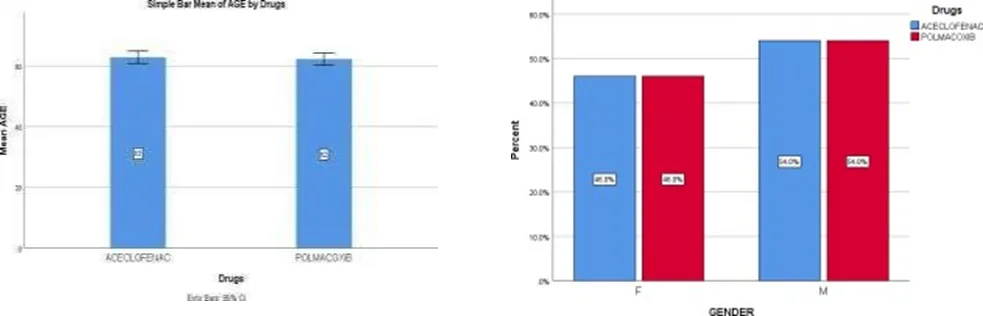
 The demographic profile of both treatment groups was comparable. The mean age distribution showed no statistically significant difference between the Aceclofenac and Polmacoxib groups (P = 0.686). Similarly, gender distribution was equal in both groups with no statistically significant variation (P = 1.000). These findings indicate that demographic characteristics were well matched, thereby minimizing bias in treatment comparison.

Analysis of past medical history demonstrated slightly higher comorbidities such as hypertension and diabetes mellitus in the Aceclofenac group, whereas a larger proportion of patients in the Polmacoxib group had no significant medical history. However, these differences were not sufficient to influence the overall study outcome.

The prevalence and severity of Osteoarthritis were comparable between the two groups. Bilateral knee Osteoarthritis was the most common diagnosis observed in both groups. Statistical analysis revealed no significant difference in diagnosis distribution (P = 0.972) or severity grading of Osteoarthritis (P = 0.977) between the treatment groups. This confirms that baseline disease severity was similar and did not affect therapeutic comparison.

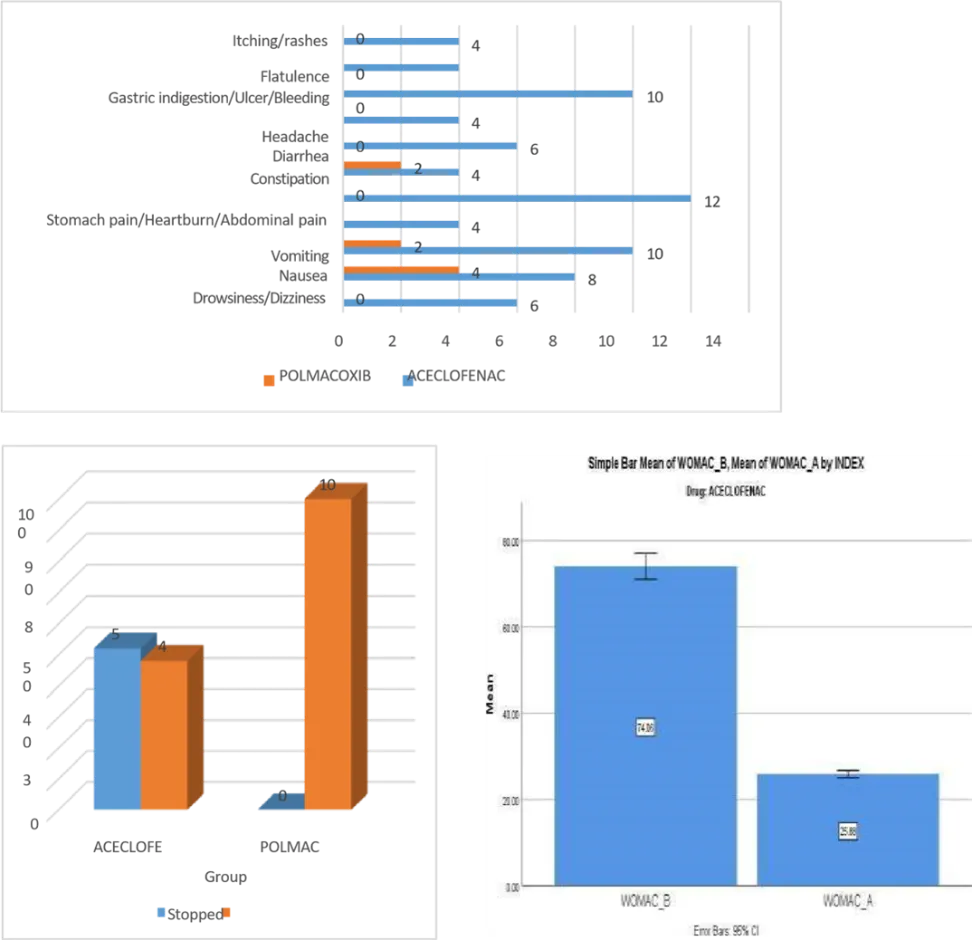
Evaluation of adverse drug reactions demonstrated that the Aceclofenac group experienced a higher frequency of side effects, predominantly gastrointestinal complications such as nausea, abdominal pain, heartburn, indigestion, gastric irritation, and gastric bleeding. In contrast, patients receiving Polmacoxib experienced fewer and milder adverse effects, mainly drowsiness and constipation. Importantly, no severe gastrointestinal adverse effects were reported in the Polmacoxib group, suggesting superior gastrointestinal safety and tolerability.

 Treatment adherence was also significantly better in the Polmacoxib group. More than half of the patients receiving Aceclofenac discontinued treatment (52%), whereas none of the patients receiving Polmacoxib discontinued therapy (0%), with a statistically significant difference (P < 0.001). The higher discontinuation rate associated with Aceclofenac may be attributed to its increased incidence of adverse gastrointestinal effects. These findings indicate that Polmacoxib is better tolerated and may provide improved patient compliance during long-term therapy.

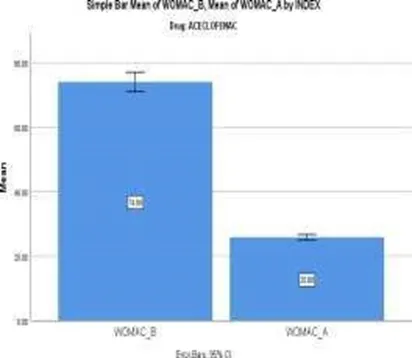
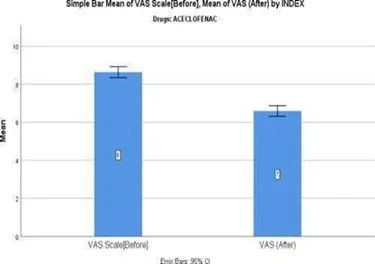
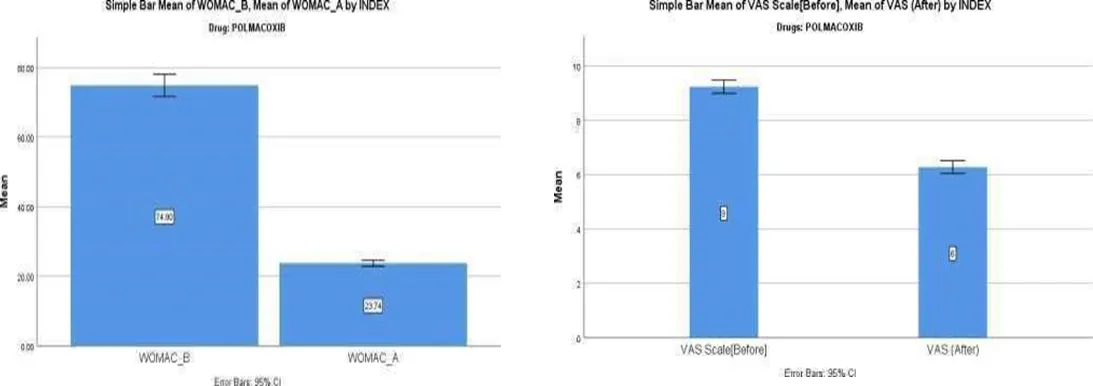
Both Aceclofenac and Polmacoxib demonstrated significant improvement in pain relief and functional status as assessed by VAS and WOMAC scores (P < 0.001). However, Polmacoxib showed greater improvement in both parameters compared to Aceclofenac. Improvement in WOMAC scores was higher with Polmacoxib

(51.16 points) than with Aceclofenac (48.18 points), indicating superior functional recovery. Similarly, Polmacoxib demonstrated greater reduction in VAS scores (2.96 points) compared to Aceclofenac (2.04 points), suggesting enhanced pain relief.

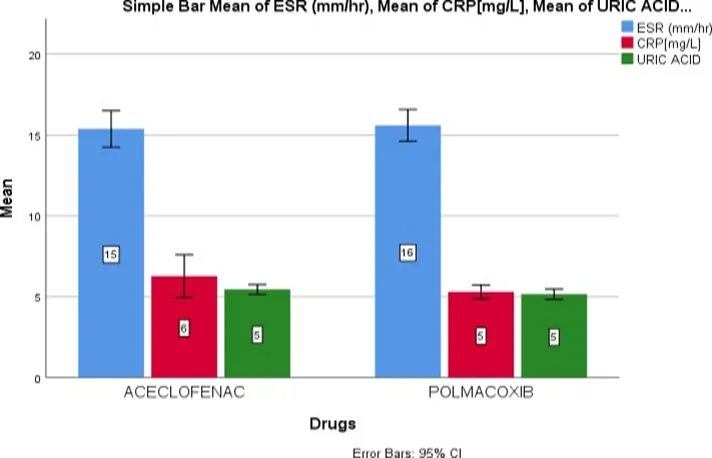
Assessment of laboratory parameters including ESR, CRP, and uric acid levels showed no statistically significant difference between the two groups. Despite similar inflammatory marker levels, Polmacoxib demonstrated superior clinical improvement in pain reduction and joint function.

The findings of the present study correlate with previous literature reporting that NSAIDs are effective in reducing pain and improving functional outcomes in Osteoarthritis patients. Earlier studies have shown that Aceclofenac effectively reduces pain and stiffness but is frequently associated with gastrointestinal adverse effects during prolonged use. Previous reports on Polmacoxib have demonstrated that its dual mechanism involving selective COX-2 inhibition and carbonic anhydrase binding contributes to improved efficacy and safety. The current study supports these observations by demonstrating that Polmacoxib provides better pain relief, greater functional improvement, fewer gastrointestinal side effects, and improved treatment adherence compared to Aceclofenac.

Overall, the results of the present study suggest that although both Aceclofenac and Polmacoxib are effective in the management of Osteoarthritis, Polmacoxib demonstrates a superior safety profile and greater therapeutic efficacy. Therefore, Polmacoxib may be considered a safer and more effective alternative for long-term management of Osteoarthritis.

 ACKNOWLEDGEMENT

The authors express their sincere gratitude to the Department of Orthopedic, Durgabai Deshmukh Hospital and Research Centre, Hyderabad, for providing the necessary facilities and support to conduct this study. The authors are also thankful to the hospital staff, laboratory personnel, and nursing team for their cooperation and assistance during patient recruitment, data collection, and sample analysis. Special appreciation is extended to all the patients who willingly participated in the study and made this research possible.

The authors also acknowledge the guidance and encouragement provided by faculty members and mentors throughout the course of this research work.

REFERENCES

  1. Flores RH, Hochberg MC. In: Brandt KD, Doherty M, Lohmander LS, editors. Osteoarthritis. Oxford: Oxford University Press; 2003. p. 1–8. Available from: https://books.google.com/books/about/Commentaries_on_the_History_and_Cure_of.html

?id=EIQ_AAAAcAAJ

  1. Martel-Pelletier J, Wildi LM, Pelletier JP. Future therapeutics for osteoarthritis. Bone. 2012;51(2):297–311. Available from:

https://books.google.com/books/about/Commentaries_on_the_History_and_Cure_of.html

?id=EIQ_AAAAcAAJ

  1. Pereira D, Ramos E, Branco J. Osteoarthritis. Acta Med Port. 2015 Jan-Feb;28(1):99-106. doi: 10.20344/amp.5477. Available from: https://pubmed.ncbi.nlm.nih.gov/25817486/
  2. Das SK, Farooqi A. Osteoarthritis. Best Pract Res Clin Rheumatol. 2008 Aug;22(4):657- 75. doi: 10.1016/j.berh.2008.07.002. Available from: https://pubmed.ncbi.nlm.nih.gov/18783743/
  3. Glyn-Jones S, Palmer AJ, Agricola R, Price AJ, Vincent TL, Weinans H, Carr AJ. Osteoarthritis. Lancet. 2015 Jul 25;386(9991):376-87. doi: 10.1016/S0140- 6736(14)60802-3. Available from: https://pubmed.ncbi.nlm.nih.gov/25748615/
  4. Schiphof D, Boers M, Bierma-Zeinstra S. Differences in descriptions of Kellgren and Lawrence grades of knee osteoarthritis. Ann Rheum Dis. 2008;67(7):1034-1036.

doi:10.1136/ard.2007.079020. Available from: https://radiopaedia.org/articles/kellgrenand-lawrence-system-for-classification-of-osteoarthritis

  1. Bortoluzzi A, Furini F, Scirè CA. Osteoarthritis and its management: Epidemiology, nutritional aspects, and environmental factors. Autoimmun Rev. 2018 Nov;17(11):10971104. Available from: https://www.ncbi.nlm.nih.gov/books/NBK482326/#article26373.r1
  2. World Health Organization. Osteoarthritis [Internet]. Available from:

https://www.who.int/news-room/fact-sheets/detail/osteoarthritis

  1. Stewart HL, Kawcak CE. The importance of subchondral bone in the pathophysiology of osteoarthritis. Front Vet Sci. 2018;5:178. Available from:

https://www.ncbi.nlm.nih.gov/books/NBK482326/

  1. 10.            TeachMeSurgery. Osteoarthritis [Internet]. Available from:

https://teachmesurgery.com/orthopaedic/principles/osteoarthritis/

  1. Krishnan Y, Grodzinsky AJ. Cartilage diseases. Matrix Biol. 2018 Oct;71-72:51-69. Available from: https://www.ncbi.nlm.nih.gov/books/NBK482326/
  2. Bortoluzzi A, Furini F, Scirè CA. Osteoarthritis and its management: Epidemiology, nutritional aspects, and environmental factors. Autoimmun Rev. 2018 Nov;17(11):10971104. Available from: https://www.ncbi.nlm.nih.gov/books/NBK482326/#article26373.r1
  3. Wiznia D. Primary vs secondary osteoarthritis [Internet]. Medical News Today. Available from: https://www.medicalnewstoday.com/articles/primary-vs-secondary-osteoarthritis
  4. SlideShare. Osteoarthritis [Internet]. Available from:

https://www.slideshare.net/slideshow/osteoarthritis-32363492/32363492

  1. Morrison W. Osteoarthritis risk factors [Internet]. Healthline. Available from:

https://www.healthline.com/health/osteoarthritis-risk-factors

  1. National Institute of Arthritis and Musculoskeletal and Skin Diseases. Osteoarthritis: Diagnosis, treatment, and steps to take [Internet]. Available from:

https://www.niams.nih.gov/health-topics/osteoarthritis/diagnosis-treatment-and-steps-totake

  1. da Costa BR, Saadat P, Basciani R, Agarwal A, Johnston BC, Jüni P. Visual analogue scale has higher assay sensitivity than WOMAC pain in detecting between-group differences in treatment effects: A meta-epidemiological study. Osteoarthritis Cartilage.

2021 Mar;29(3):304-312. doi: 10.1016/j.joca.2020.10.004. Available from: https://pubmed.ncbi.nlm.nih.gov/33271331/

  1. Kriz J, Seegenschmiedt HM, Bartels A, Micke O, Muecke R, Schaefer U, Haverkamp U, Eich HT. Updated strategies in the treatment of benign diseases—a patterns of care study of the German Cooperative Group on Benign Diseases. Adv Radiat Oncol. 2018 JulSep;3(3):240-244. Available from: https://pubmed.ncbi.nlm.nih.gov/30197936/
  2. di Laura Frattura G, Filardo G, Giunchi D, Fusco A, Zaffagnini S, Candrian C. Risk of falls in patients with knee osteoarthritis undergoing total knee arthroplasty: A systematic review and best evidence synthesis. J Orthop. 2018 Sep;15(3):903-908. Available from: https://pubmed.ncbi.nlm.nih.gov/30174378/
  3. Xing D, Wang Q, Yang Z, Hou Y, Zhang W, Chen Y, Lin J. Evidence-based guidelines for intra-articular injection in knee osteoarthritis: Formulating and evaluating research questions. Int J Rheum Dis. 2018 Aug;21(8):1533-1542. Available from: https://pubmed.ncbi.nlm.nih.gov/30146747/
  4. Polmacoxib: A review of the newer non-steroidal anti-inflammatory drug in osteoarthritis [Internet]. ResearchGate. Available from: https://www.researchgate.net/publication/379899661_Polmacoxib_A_Review_of_the_N ewer_Non-steroidal_Anti-inflammatory_Drug_in_Osteoarthritis
  5. Recommendations of the SEC (Analgesic & Rheumatology) Made in Its 93rd Meeting Held on 14.02.2023 at CDSCO (HQ), New Delhi. Available from: https://cdsco.gov.in/opencms/resources/UploadCDSCOWeb/2018/UploadCommitteeFile s/Recommendations%20Analgesic%209
  6. Schmidt W, Lehnhardt K, Hettwer J, et al. CG100649, a tissue-specific dual inhibitor of COX-2 and carbonic anhydrase: Phase 2a clinical trial in hip & knee osteoarthritis.

Osteoarthr Cartil. 2009;17:10.1016/S1063-4584(09)60346-08. Available from:

https://www.researchgate.net/publication/379899661_Polmacoxib_A_Review_of_the_N ewer_Non-steroidal_Anti-inflammatory_Drug_in_Osteoarthritis

  1. National Center for Biotechnology Information. PubChem Substance Record for SID 173334219, Polmacoxib [USAN:INN], Source: ChemIDplus. Available from: https://pubchem.ncbi.nlm.nih.gov/substance/173334219
  2. Polmacoxib: A Review of the Newer Non-Steroidal Anti-inflammatory Drug in Osteoarthritis [Internet]. Larenon. Available from: https://www.larenon.com/wpcontent/uploads/2023/06/POGES-LBL-FINAL.pdf
  3. Recommendations of the SEC (Analgesic & Rheumatology) Made in Its 93rd Meeting Held on 14.02.2023 at CDSCO (HQ), New Delhi. Available from: https://cdsco.gov.in/opencms/resources/UploadCDSCOWeb/2018/UploadCommitteeFile s/Recommendations%20Analgesic%209
  4. Schmidt W, Lehnhardt K, Hettwer J, et al. CG100649, a tissue-specific dual inhibitor of COX-2 and carbonic anhydrase: Phase 2a clinical trial in hip & knee osteoarthritis.

Osteoarthr Cartil. 2009;17:10.1016/S1063-4584(09)60346-08. Available from:

https://www.researchgate.net/publication/379899661_Polmacoxib_A_Review_of_the_N ewer_Non-steroidal_Anti-inflammatory_Drug_in_Osteoarthritis

  1. Lee M, Yoo J, Kim JG, et al. A randomized, multicenter, phase III trial to evaluate the efficacy and safety of polmacoxib compared with celecoxib and placebo for patients with osteoarthritis. Clin Orthop Surg. 2017;9:439-457. doi:10.4055/cios.2017.9.4.439.

Available from: https://www.researchgate.net/publication/379899661_Polmacoxib_A_Review_of_the_N ewer_Non-steroidal_Anti-inflammatory_Drug_in_Osteoarthritis

  1. Skarke C, Alamuddin N, Lawson JA, Cen L, Propert KJ, Fitzgerald GA. Comparative impact on prostanoid biosynthesis of celecoxib and the novel nonsteroidal antiinflammatory drug CG100649. Clin Pharmacol Ther. 2012;91:986-993. doi:10.1038/clpt.2012.3. Available from: https://www.researchgate.net/publication/379899661_Polmacoxib_A_Review_of_the_N
  2. ewer_Non-steroidal_Anti-inflammatory_Drug_in_Osteoarthritis
  3. Hirankarn S, Barrett JS, Alamuddin N, FitzGerald GA, Skarke C. GCG100649, a novel cyclooxygenase-2 inhibitor, exhibits a drug disposition profile in healthy volunteers compatible with high affinity to carbonic anhydrase-I/II: Preliminary dose-exposure relationships to define clinical development strategies. Clin Pharmacol Drug Dev.

2013;2:379-386. Available from: https://www.researchgate.net/publication/379899661_Polmacoxib_A_Review_of_the_N ewer_Non-steroidal_Anti-inflammatory_Drug_in_Osteoarthritis

  1. Polmacoxib: A Review of the Newer Non-Steroidal Anti-inflammatory Drug in Osteoarthritis [Internet]. Larenon. Available from: https://www.larenon.com/wpcontent/uploads/2023/06/POGES-LBL-FINAL.pdf
  2. Dooley M, Spencer CM, Dunn CJ. Aceclofenac: A reappraisal of its use in the management of pain and rheumatic disease. Drugs. 2001;61(9):1351–1378.

doi:10.2165/00003495-200161090-00012. Available from: https://pubmed.ncbi.nlm.nih.gov/11511027/

  1. Brogden RN, Wiseman LR. Aceclofenac: A review of its pharmacodynamic properties and therapeutic potential in the treatment of rheumatic disorders and in pain management. Drug Evaluation. 1996;52(1):113-124.
  2. Aceclofenac in rheumatic diseases [Internet]. National Center for Biotechnology Information. Available from: https://www.ncbi.nlm.nih.gov/pmc/articles/PMC8643213/
  3. Usha AN, Mutalik S, Reddy MS, Ranjith AK, Kushtagi P, Udupa N. Preparation and in vitro preclinical and clinical studies of aceclofenac spherical agglomerates. Eur J Pharm Biopharm. 2008;70:674-683.
  4. Dooley M, Spencer CM, Dunn CJ. Aceclofenac: A reappraisal of its use in the management of pain and rheumatic disease. Drugs. 2001;61(9):1351–1378. doi:

10.2165/00003495-200161090-00012. Available from:

https://pubmed.ncbi.nlm.nih.gov/11511027/

  1. M Yanadhar Reddy, BIOSTATISTICS – A manual of statistical methods for use in health, nutrition and anthropology.
  2. Dr. K. Visweswara Rao, BIOSTATISTICS in brief made easy.

Reference

  1. Flores RH, Hochberg MC. In: Brandt KD, Doherty M, Lohmander LS, editors. Osteoarthritis. Oxford: Oxford University Press; 2003. p. 1–8. Available from: https://books.google.com/books/about/Commentaries_on_the_History_and_Cure_of.html

?id=EIQ_AAAAcAAJ

  1. Martel-Pelletier J, Wildi LM, Pelletier JP. Future therapeutics for osteoarthritis. Bone. 2012;51(2):297–311. Available from:

https://books.google.com/books/about/Commentaries_on_the_History_and_Cure_of.html

?id=EIQ_AAAAcAAJ

  1. Pereira D, Ramos E, Branco J. Osteoarthritis. Acta Med Port. 2015 Jan-Feb;28(1):99-106. doi: 10.20344/amp.5477. Available from: https://pubmed.ncbi.nlm.nih.gov/25817486/
  2. Das SK, Farooqi A. Osteoarthritis. Best Pract Res Clin Rheumatol. 2008 Aug;22(4):657- 75. doi: 10.1016/j.berh.2008.07.002. Available from: https://pubmed.ncbi.nlm.nih.gov/18783743/
  3. Glyn-Jones S, Palmer AJ, Agricola R, Price AJ, Vincent TL, Weinans H, Carr AJ. Osteoarthritis. Lancet. 2015 Jul 25;386(9991):376-87. doi: 10.1016/S0140- 6736(14)60802-3. Available from: https://pubmed.ncbi.nlm.nih.gov/25748615/
  4. Schiphof D, Boers M, Bierma-Zeinstra S. Differences in descriptions of Kellgren and Lawrence grades of knee osteoarthritis. Ann Rheum Dis. 2008;67(7):1034-1036.

doi:10.1136/ard.2007.079020. Available from: https://radiopaedia.org/articles/kellgrenand-lawrence-system-for-classification-of-osteoarthritis

  1. Bortoluzzi A, Furini F, Scirè CA. Osteoarthritis and its management: Epidemiology, nutritional aspects, and environmental factors. Autoimmun Rev. 2018 Nov;17(11):10971104. Available from: https://www.ncbi.nlm.nih.gov/books/NBK482326/#article26373.r1
  2. World Health Organization. Osteoarthritis [Internet]. Available from:

https://www.who.int/news-room/fact-sheets/detail/osteoarthritis

  1. Stewart HL, Kawcak CE. The importance of subchondral bone in the pathophysiology of osteoarthritis. Front Vet Sci. 2018;5:178. Available from:

https://www.ncbi.nlm.nih.gov/books/NBK482326/

  1. 10.            TeachMeSurgery. Osteoarthritis [Internet]. Available from:

https://teachmesurgery.com/orthopaedic/principles/osteoarthritis/

  1. Krishnan Y, Grodzinsky AJ. Cartilage diseases. Matrix Biol. 2018 Oct;71-72:51-69. Available from: https://www.ncbi.nlm.nih.gov/books/NBK482326/
  2. Bortoluzzi A, Furini F, Scirè CA. Osteoarthritis and its management: Epidemiology, nutritional aspects, and environmental factors. Autoimmun Rev. 2018 Nov;17(11):10971104. Available from: https://www.ncbi.nlm.nih.gov/books/NBK482326/#article26373.r1
  3. Wiznia D. Primary vs secondary osteoarthritis [Internet]. Medical News Today. Available from: https://www.medicalnewstoday.com/articles/primary-vs-secondary-osteoarthritis
  4. SlideShare. Osteoarthritis [Internet]. Available from:

https://www.slideshare.net/slideshow/osteoarthritis-32363492/32363492

  1. Morrison W. Osteoarthritis risk factors [Internet]. Healthline. Available from:

https://www.healthline.com/health/osteoarthritis-risk-factors

  1. National Institute of Arthritis and Musculoskeletal and Skin Diseases. Osteoarthritis: Diagnosis, treatment, and steps to take [Internet]. Available from:

https://www.niams.nih.gov/health-topics/osteoarthritis/diagnosis-treatment-and-steps-totake

  1. da Costa BR, Saadat P, Basciani R, Agarwal A, Johnston BC, Jüni P. Visual analogue scale has higher assay sensitivity than WOMAC pain in detecting between-group differences in treatment effects: A meta-epidemiological study. Osteoarthritis Cartilage.

2021 Mar;29(3):304-312. doi: 10.1016/j.joca.2020.10.004. Available from: https://pubmed.ncbi.nlm.nih.gov/33271331/

  1. Kriz J, Seegenschmiedt HM, Bartels A, Micke O, Muecke R, Schaefer U, Haverkamp U, Eich HT. Updated strategies in the treatment of benign diseases—a patterns of care study of the German Cooperative Group on Benign Diseases. Adv Radiat Oncol. 2018 JulSep;3(3):240-244. Available from: https://pubmed.ncbi.nlm.nih.gov/30197936/
  2. di Laura Frattura G, Filardo G, Giunchi D, Fusco A, Zaffagnini S, Candrian C. Risk of falls in patients with knee osteoarthritis undergoing total knee arthroplasty: A systematic review and best evidence synthesis. J Orthop. 2018 Sep;15(3):903-908. Available from: https://pubmed.ncbi.nlm.nih.gov/30174378/
  3. Xing D, Wang Q, Yang Z, Hou Y, Zhang W, Chen Y, Lin J. Evidence-based guidelines for intra-articular injection in knee osteoarthritis: Formulating and evaluating research questions. Int J Rheum Dis. 2018 Aug;21(8):1533-1542. Available from: https://pubmed.ncbi.nlm.nih.gov/30146747/
  4. Polmacoxib: A review of the newer non-steroidal anti-inflammatory drug in osteoarthritis [Internet]. ResearchGate. Available from: https://www.researchgate.net/publication/379899661_Polmacoxib_A_Review_of_the_N ewer_Non-steroidal_Anti-inflammatory_Drug_in_Osteoarthritis
  5. Recommendations of the SEC (Analgesic & Rheumatology) Made in Its 93rd Meeting Held on 14.02.2023 at CDSCO (HQ), New Delhi. Available from: https://cdsco.gov.in/opencms/resources/UploadCDSCOWeb/2018/UploadCommitteeFile s/Recommendations%20Analgesic%209
  6. Schmidt W, Lehnhardt K, Hettwer J, et al. CG100649, a tissue-specific dual inhibitor of COX-2 and carbonic anhydrase: Phase 2a clinical trial in hip & knee osteoarthritis.

Osteoarthr Cartil. 2009;17:10.1016/S1063-4584(09)60346-08. Available from:

https://www.researchgate.net/publication/379899661_Polmacoxib_A_Review_of_the_N ewer_Non-steroidal_Anti-inflammatory_Drug_in_Osteoarthritis

  1. National Center for Biotechnology Information. PubChem Substance Record for SID 173334219, Polmacoxib [USAN:INN], Source: ChemIDplus. Available from: https://pubchem.ncbi.nlm.nih.gov/substance/173334219
  2. Polmacoxib: A Review of the Newer Non-Steroidal Anti-inflammatory Drug in Osteoarthritis [Internet]. Larenon. Available from: https://www.larenon.com/wpcontent/uploads/2023/06/POGES-LBL-FINAL.pdf
  3. Recommendations of the SEC (Analgesic & Rheumatology) Made in Its 93rd Meeting Held on 14.02.2023 at CDSCO (HQ), New Delhi. Available from: https://cdsco.gov.in/opencms/resources/UploadCDSCOWeb/2018/UploadCommitteeFile s/Recommendations%20Analgesic%209
  4. Schmidt W, Lehnhardt K, Hettwer J, et al. CG100649, a tissue-specific dual inhibitor of COX-2 and carbonic anhydrase: Phase 2a clinical trial in hip & knee osteoarthritis.

Osteoarthr Cartil. 2009;17:10.1016/S1063-4584(09)60346-08. Available from:

https://www.researchgate.net/publication/379899661_Polmacoxib_A_Review_of_the_N ewer_Non-steroidal_Anti-inflammatory_Drug_in_Osteoarthritis

  1. Lee M, Yoo J, Kim JG, et al. A randomized, multicenter, phase III trial to evaluate the efficacy and safety of polmacoxib compared with celecoxib and placebo for patients with osteoarthritis. Clin Orthop Surg. 2017;9:439-457. doi:10.4055/cios.2017.9.4.439.

Available from: https://www.researchgate.net/publication/379899661_Polmacoxib_A_Review_of_the_N ewer_Non-steroidal_Anti-inflammatory_Drug_in_Osteoarthritis

  1. Skarke C, Alamuddin N, Lawson JA, Cen L, Propert KJ, Fitzgerald GA. Comparative impact on prostanoid biosynthesis of celecoxib and the novel nonsteroidal antiinflammatory drug CG100649. Clin Pharmacol Ther. 2012;91:986-993. doi:10.1038/clpt.2012.3. Available from: https://www.researchgate.net/publication/379899661_Polmacoxib_A_Review_of_the_N
  2. ewer_Non-steroidal_Anti-inflammatory_Drug_in_Osteoarthritis
  3. Hirankarn S, Barrett JS, Alamuddin N, FitzGerald GA, Skarke C. GCG100649, a novel cyclooxygenase-2 inhibitor, exhibits a drug disposition profile in healthy volunteers compatible with high affinity to carbonic anhydrase-I/II: Preliminary dose-exposure relationships to define clinical development strategies. Clin Pharmacol Drug Dev.

2013;2:379-386. Available from: https://www.researchgate.net/publication/379899661_Polmacoxib_A_Review_of_the_N ewer_Non-steroidal_Anti-inflammatory_Drug_in_Osteoarthritis

  1. Polmacoxib: A Review of the Newer Non-Steroidal Anti-inflammatory Drug in Osteoarthritis [Internet]. Larenon. Available from: https://www.larenon.com/wpcontent/uploads/2023/06/POGES-LBL-FINAL.pdf
  2. Dooley M, Spencer CM, Dunn CJ. Aceclofenac: A reappraisal of its use in the management of pain and rheumatic disease. Drugs. 2001;61(9):1351–1378.

doi:10.2165/00003495-200161090-00012. Available from: https://pubmed.ncbi.nlm.nih.gov/11511027/

  1. Brogden RN, Wiseman LR. Aceclofenac: A review of its pharmacodynamic properties and therapeutic potential in the treatment of rheumatic disorders and in pain management. Drug Evaluation. 1996;52(1):113-124.
  2. Aceclofenac in rheumatic diseases [Internet]. National Center for Biotechnology Information. Available from: https://www.ncbi.nlm.nih.gov/pmc/articles/PMC8643213/
  3. Usha AN, Mutalik S, Reddy MS, Ranjith AK, Kushtagi P, Udupa N. Preparation and in vitro preclinical and clinical studies of aceclofenac spherical agglomerates. Eur J Pharm Biopharm. 2008;70:674-683.
  4. Dooley M, Spencer CM, Dunn CJ. Aceclofenac: A reappraisal of its use in the management of pain and rheumatic disease. Drugs. 2001;61(9):1351–1378. doi:

10.2165/00003495-200161090-00012. Available from:

https://pubmed.ncbi.nlm.nih.gov/11511027/

  1. M Yanadhar Reddy, BIOSTATISTICS – A manual of statistical methods for use in health, nutrition and anthropology.
  2. Dr. K. Visweswara Rao, BIOSTATISTICS in brief made easy.

Photo
Haritha Pasupulati
Corresponding author

Department of Pharmacy practice, Bharat School of Pharmacy, Mangalpally, Ibrahimpatnam, Ranga Reddy District, Telangana, India.

Photo
Manusurabadha Kavyasree
Co-author

Department of Pharmacy practice, Bharat School of Pharmacy, Mangalpally, Ibrahimpatnam, Ranga Reddy District, Telangana, India ; Department of Orthopaedics, Durgabhai Deshmukh Hospital and Research Centre, Vidyanagar, Hyderabad, Telangana, India.

Photo
Guru Prasad S
Co-author

Department of Orthopaedics, Durgabhai Deshmukh Hospital and Research Centre, Mangalpally, Ibrahimpatnam, Ranga Reddy District, Telangana, India

Photo
Kummari Archana
Co-author

Department of Pharmacy practice, Bharat School of Pharmacy, Mangalpally, Ibrahimpatnam, Ranga Reddy District, Telangana, India ; Department of Orthopaedics, Durgabhai Deshmukh Hospital and Research Centre, Vidyanagar, Hyderabad, Telangana, India.

Photo
L Yashashwini
Co-author

Department of Pharmacy practice, Bharat School of Pharmacy, Mangalpally, Ibrahimpatnam, Ranga Reddy District, Telangana, India ; Department of Orthopaedics, Durgabhai Deshmukh Hospital and Research Centre, Vidyanagar, Hyderabad, Telangana, India.

Haritha Pasupulati, Manusurabadha Kavyasree Guru Prasad S, Kummari Archana, L. Yashashwini , A Comparative Study to Assess the Safety and Efficacy of Polmacoxib Versus Aceclofenac in Osteoarthritis, Int. J. of Pharm. Sci., 2026, Vol 4, Issue 7, 1646-1655, https://doi.org/10.5281/zenodo.21264358

More related articles
Qualification And Validation of Spray Dryer (SPD D...
Abinash Sharma, A R Shabarya, Kajishma, Krishnananda Kamath K, Pa...
Kumari Swaras (Aloe vera) Bhavana in Rasaushadhi: ...
Dr. Pathan Saniya Khan, Dr. Shahadat Khan, Dr. Ravi Pratap Singh,...
In Vitro Antimicrobial Activity of Dhamargava1(Luf...
Dr. Manjula Turamari, Pratibha Hunachikatti...
Herbovigilance: Monitoring the Safety of Herbal Medicines...
Poonam, Lalit Kumar, Amar Pal Singh, Ajeet Pal Singh, Rajesh Kumar...
Formulation And Evaluation of Herbal Sunscreen Using Bitter Gourd...
Sukanya Bolkar, Dr. Yuvraj Girbane, Sachin Thaware, Sakshi Gaikwad, Virag Patni...
Comparative Assessment of Antibiotics Use as Well as Resistance in Paediatric an...
Gauri There , Swati Sandhan , Isha Vadnere , Abhishek Jha , Prisha Naidu ...
Related Articles
RP-HPLC Method Development and Validation of Upadacitnib (UDB) and Tofacitinib (...
Gayatri Maneri, Dr. Nagaraju Potnuri, Wagmode B, Supriya Davkare, Kodalkar V...
Formulation And Evaluation of Banana Leaf Extract Cream for Skin Infection Treat...
Omkar Lambhate, Rajendra Patil, Abhijeet shitole , Pratiksha Madane, Sakshi kodalkar, Priya kudale, ...
Qualification And Validation of Spray Dryer (SPD D-111)...
Abinash Sharma, A R Shabarya, Kajishma, Krishnananda Kamath K, Padmavathi Prabhu...
More related articles
Qualification And Validation of Spray Dryer (SPD D-111)...
Abinash Sharma, A R Shabarya, Kajishma, Krishnananda Kamath K, Padmavathi Prabhu...
Kumari Swaras (Aloe vera) Bhavana in Rasaushadhi: A Systematic Review of Pharmac...
Dr. Pathan Saniya Khan, Dr. Shahadat Khan, Dr. Ravi Pratap Singh, Dr. Rajaram Agrawal, Prof. (Dr.) G...
Qualification And Validation of Spray Dryer (SPD D-111)...
Abinash Sharma, A R Shabarya, Kajishma, Krishnananda Kamath K, Padmavathi Prabhu...
Kumari Swaras (Aloe vera) Bhavana in Rasaushadhi: A Systematic Review of Pharmac...
Dr. Pathan Saniya Khan, Dr. Shahadat Khan, Dr. Ravi Pratap Singh, Dr. Rajaram Agrawal, Prof. (Dr.) G...