

We use cookies to ensure our website works properly and to personalise your experience. Cookies policy
Department of pharmaceutical sciences, Abasaheb kakade college of b pharmacy,Bodhegoan.
The present study focuses on the formulation and evaluation of a polyherbal face wash powder using Azadirachta indica as the primary active ingredient. In recent years, herbal cosmetics have gained significant importance due to their safety, biocompatibility, and minimal side effects compared to synthetic formulations. Neem is widely recognized for its antibacterial, antifungal, and anti-inflammatory properties, making it highly effective in managing acne and maintaining healthy skin.The herbal face wash powder was prepared using a blend of natural ingredients such as neem powder, multani mitti, gram flour, aloe vera powder, rose petal powder, sandalwood powder, rice flour, and turmeric. These ingredients were selected based on their cleansing, exfoliating, soothing, and skin-nourishing properties. The formulation was developed in powder form to enhance stability, avoid the use of preservatives, and increase shelf life.The prepared formulation was evaluated for various parameters including organoleptic properties, pH, flow properties, washability, foaming ability, skin irritancy, and stability. The results showed that the powder possessed good physicochemical characteristics, was easy to apply and wash off, and exhibited no signs of skin irritation. The formulation also demonstrated satisfactory stability under normal storage conditions.In conclusion, the developed herbal neem face wash powder is a safe, effective, and economical alternative to conventional face cleansers. Its polyherbal composition provides natural skin care benefits while aligning with the growing demand for eco-friendly and chemical-free cosmetic products.
Nowadays, people are more aware of the harmful effects of synthetic chemicals in cosmetic products. As a result, the demand for herbal and natural cosmetics has rapidly increased. Herbal cosmetics come from plant-based ingredients that are safe, effective, eco-friendly, and work for all skin types. The use of medicinal plants in skincare is important due to their healing and protective properties.
The skin is the outermost and largest organ of the body. It protects internal tissues from environmental pollutants, microorganisms, dust, and harmful substances. Constant exposure to pollution, excess oil, sweat, and dirt can lead to skin issues like acne, irritation, pimples, infections, and dullness. Regular skin cleansing is essential to keep the skin healthy and fresh. Face wash products remove impurities, dead cells, and excess oil from the skin surface In ancient times, herbal cleansing powders, or ubtan were widely used for skincare and beauty. These preparations included natural ingredients such as gram flour, turmeric, sandalwood, and various medicinal herbs. Neem (Azardirachata indica) stands out among these ingredients for its antibacterial, antifungal, anti-inflammatory, and antioxidant properties. Traditionally, Ayurveda has used neem to treat acne, skin infections, and other skin issues.
Herbal face wash powder is a dry cosmetic product made by blending finely powdered natural ingredients. It is typically mixed with water, rose water, or milk before use. Powder formulations come with several benefits compared to liquid face washes. They offer better stability, a longer shelf life, less microbial growth, and do not require chemical preservatives. They are also cost-effective, easy to make, and environmentally friendly.
The current formulation includes neem powder along with other herbal ingredients like Multani mitti, gram flour, aloe vera powder, rose petal powder, sandalwood powder, rice flour, and turmeric. These ingredients work together to cleanse, soothe, cool, exfoliate, absorb oil, and nourish the skin. Combining these natural ingredients boosts the overall effectiveness of the product.
Creating an herbal face wash powder requires careful selection and balancing of ingredients to achieve desirable traits such as good flow, acceptable pH, easy Spreadability, effective cleansing, and a gentle nature. Therefore, evaluating the prepared product is crucial to ensure its quality, safety, and effectiveness.
The goal of this study is to formulate and assess a polyherbal neem face wash powder using natural ingredients. The evaluation process includes checking various factors such as appearance, pH, flow properties, washability, foaming ability, skin irritation tests, and stability studies to confirm its suitability for everyday skincare.
Herbs used in these formulations
Synonyms: Indian lilac, Margosa
Biological Source: Dried leaves of Azadirachta indica
Family: Meliaceae
Chemical Constituents: Azadirachtin, Nimbin, Nimbidin, Nimbolide, Quercetin, Salannin.
Neem is one of the major medicinal herbs in traditional as well as modern herbal skin care products. It is rich in bioactive compounds such as nimbin, nimbidin and azadirachtin which have strong antibacterial, antifungal, anti-inflammatory and antioxidant properties. Neem is very effective in controlling the acne causing bacteria and in preventing various skin infections. It is also helpful in reducing excess oil secretion, redness, itching and skin irritation. Neem has cleansing and purifying properties which help to keep skin healthy and clear. Neem is the main active compound in herbal face wash formulations which cleanse the skin deep down and protect it.
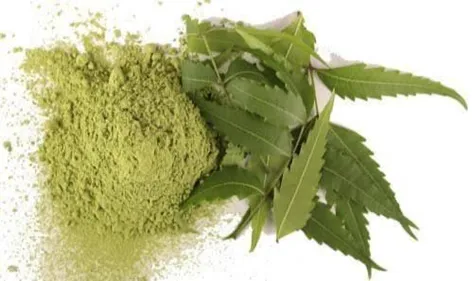
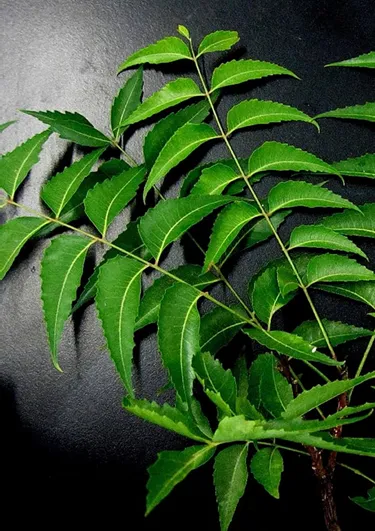
Fig. Neem
Synonyms: Ghritkumari, Barbados aloe
Biological Source: Dried juice and leaves of Aloe barbadensis Miller
Family: Liliaceae
Chemical Constituents: Aloin, Aloe-emodin, Polysaccharides, Vitamins, Enzymes, Amino acids.
Aloe Vera is famous because of its moisturizing, soothing, healing, and anti-inflammatory effects.
This herb consists of several useful elements like vitamins, enzymes, minerals, amino acids, and polysaccharides that provide nutrition to the skin. This herb keeps the skin moisturized and avoids any kind of dryness caused by the cleaning process of the skin. Moreover, aloe vera reduces irritation, redness, and inflammation of the skin while promoting regeneration. The soothing quality of aloe vera makes the skin soft, smooth, and fresh
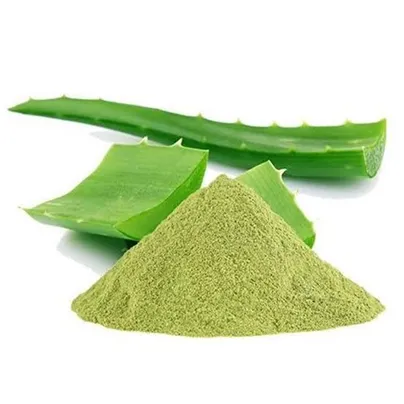
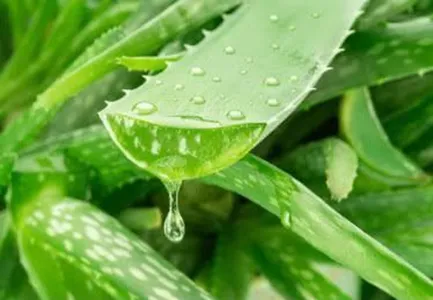
Fig . Aloe Vera
Synonyms: Besan, Chickpea flour
Biological Source: Powder obtained from dried seeds of Cicer arietinum
Family: Fabaceae
Chemical Constituents: Proteins, Carbohydrates, Fiber, Vitamins, Minerals, Starch.
Gram Flour is a natural cleansing agent which is used in making home-made skin care products and ubtan. It is made by grinding chickpeas and is popular due to its cleansing and exfoliating qualities. Gram flour cleanses the skin by removing all kinds of dirt, extra oil, dead cells, and other pollutants from the surface of the skin. The natural hydration level of the skin is not affected. Gram flour makes the skin smooth and soft. It can be used frequently and is non-irritating for the skin
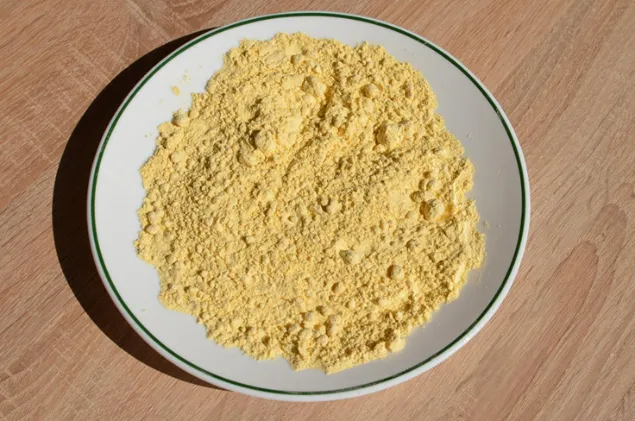
Fig. Gram Flour
Synonyms: Fuller's earth, Bleaching clay
Biological Source: Natural sedimentary clay rich in minerals
Family: Hydrated aluminium silicate (clay mineral group)
Chemical Constituents: Silica, Alumina, Magnesium, Calcium, Iron oxides, Quartz.
Multani Mitti is a naturally occurring mineral rich clay, commonly used in herbal and cosmetic formulations. It is valued for its great oil absorbing, cleansing and cooling properties. Multani mitti helps in removing excess sebum, dirt, sweat and impurities from clogged skin pores. It is particularly useful for oily and acne prone skin. It improves blood circulation, refreshes the skin and improves skin complexion. The cooling effect soothes irritated skin and gives a refreshing feeling after use. These properties make multani mitti an important ingredient in herbal face cleansing products.
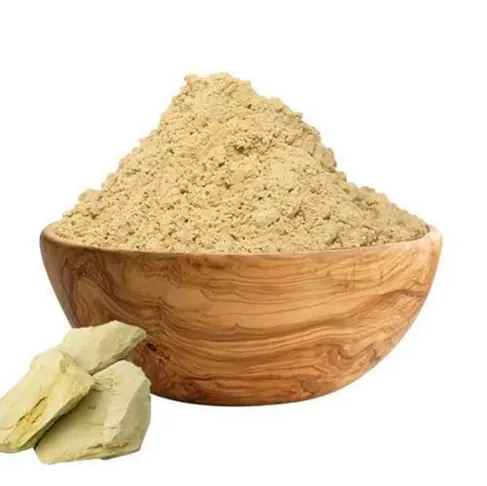
Fig.Multani Mitti
Synonyms: Gulab, Rose flower powder
Biological Source: Dried petals of Rosa species
Family: Rosaceae
Chemical Constituents: Flavonoids, Tannins, Anthocyanins, Essential oils, Phenolic compounds.
Powder of rose petals is an extensively used component in herbal cosmetics due to its relaxing, cooling, and refreshing nature. This compound tones and rejuvenates the skin, while at the same time alleviating any irritation or redness caused by the application. The presence of antioxidants in rose petals assists in protecting the skin from external influences and contributing to its healthy look. Besides its effects on skin health, the powder of rose petals also contributes a fresh fragrance to the preparation, improving its appea
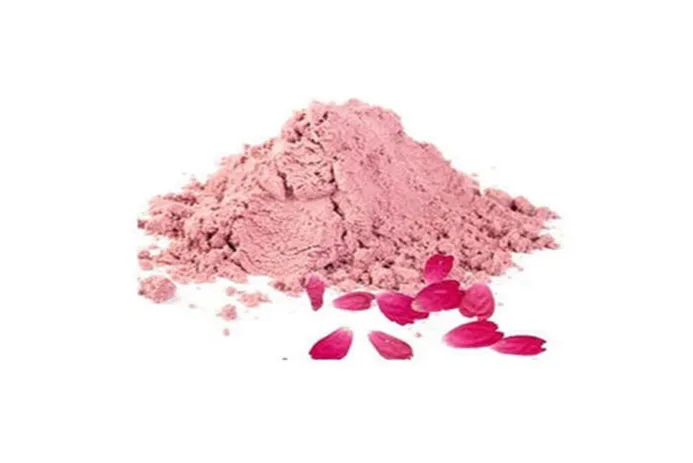
Fig. Rose petals
Synonyms: Chandan, White sandalwood
Biological Source: Heartwood of Santalum album tree
Family: Santalaceae
Chemical Constituents: Santalol (α & β), Santalenes, Santalene alcohols, Resins, Essential oils.
The use of sandalwood in Ayurvedic medicinal and cosmetic formulations has existed for a long time. It contains antibacterial, anti-inflammatory, cooling, and soothing attributes that ensure healthy skin. The sandalwood powder helps in reducing acne, skin inflammation, rashes, and redness and promotes good skin tone and texture. Sandalwood offers a soothing sensation, which alleviates any skin irritation. Besides, it adds the unique natural scent of sandalwood, which gives the herbal face wash powder a pleasant sensory experience.
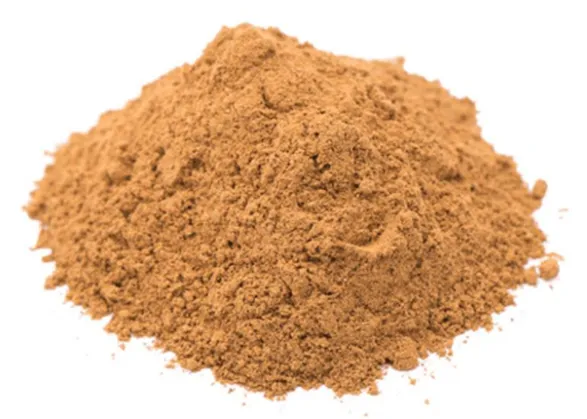
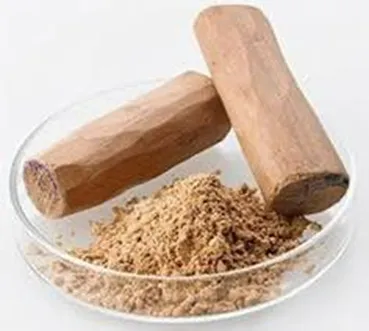
Fig. sandalwood
Synonyms: Chawal ka atta, Rice powder
Biological Source: Finely milled grains of Oryza sativa
Family: poaceae
Chemical Constituents: Starch, Proteins, Lipids, Vitamins (B-complex), Minerals.
Rice Flour functions as a natural skin scrubbing and lightening ingredient in herbal cosmetic formulations. It scrubs dead skin cells and other impurities off the skin, thus making it smoother. The product is useful in eliminating extra oil on the skin, making its cleansing properties deep. The presence of nutrients and antioxidants contributes to healthy skin texture maintenance. Its abrasive nature makes it an excellent natural skin scrubber that does not irritate the skin.
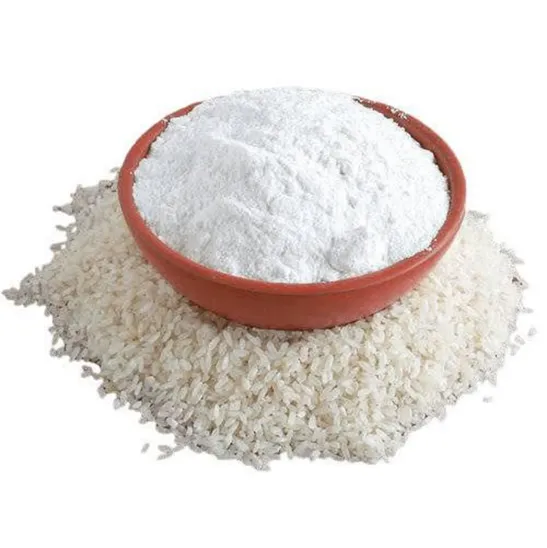
Fig. Rice Flour
Synonyms: Haldi, Indian saffron
Biological Source: Dried rhizomes of Curcuma longa
Family: Zingiberaceae
Chemical Constituents: Curcumin, Curcuminoids, Volatile oils, Tumerone, Atlanone.
Turmeric is an extensively used herb that is renowned for its antiseptic, anti-bacterial, anti-inflammatory, and antioxidant qualities. Curcumin, which is the main compound present in turmeric, is effective in treating acne, dark pigments, inflammation, and infections of the skin. Turmeric also assists in promoting wound healing and enhances the overall quality of the skin. Due to its antioxidant nature, turmeric aids in protecting the skin from oxidative damage caused by free radicals.
Synonyms: Sodium dodecyl sulfate (SDS), SLS
Biological Source: Synthetic surfactant derived from lauryl alcohol (from coconut/palm oil)
Family: Anionic surfactant
Chemical Constituents: Sodium salt of dodecyl sulfate (C₁₂H₂₅SO₄Na)
Sodium Lauryl Sulfate is an ingredient that is widely used as surfactant as well as foaming agent in cleansing products. The mechanism of action of Sodium Lauryl Sulfate is its property to reduce surface tension to clean off dirt, oils, perspiration, and other impurities from the skin’s surface. In case of herbal neem face wash powder, some amount of SLS is added to aid in washing off. Even though the face wash powder consists mainly of herbal ingredients, addition of SLS aids in washing process
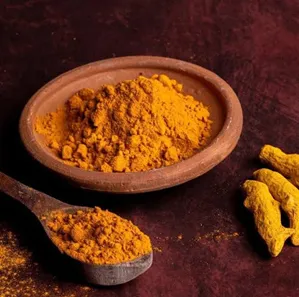
Fig. Turmeric
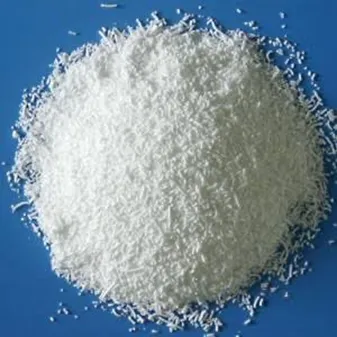
Fig.Sodium Lauryl Sulfate (SLS)
Herbal face wash powder is derived from ancient Ayurvedic skincare traditions in which natural herbal mixtures, commonly known as ubtan were used for cleansing and maintaining healthy skin. These traditional preparations were fully plant-based and were mainly used to purify the skin, improve complexion, and prevent skin-related problems.
In earlier times, people depended entirely on natural remedies instead of synthetic cosmetic products. Various herbal powders such as gram flour, turmeric, sandalwood, and other plant-based ingredients were regularly used in bathing and skincare routines for gentle cleansing and nourishment of the skin.
The present formulation is based on the traditional use of several natural ingredients, each having historical importance in skincare
Neem has been used in Ayurveda for centuries due to its strong antibacterial, antifungal, and skin-purifying properties, making it effective in treating acne and skin infections.
Gram Flour was traditionally used as a natural cleanser and mild exfoliant to remove dirt, oil, and dead skin cells.
Multani Mitti has long been used in herbal skincare for deep cleansing, oil absorption, and improving skin freshness.
Aloe Vera is known for its soothing, moisturizing, and healing properties and has been used in traditional medicine for skin care.
Rose petals have been used for their cooling effect, skin toning ability, and refreshing fragrance.
Sandalwood is traditionally valued for its cooling, anti-inflammatory, and complexion-enhancing effects.
Rice Flour has been used as a gentle exfoliating agent that improves skin smoothness and removes impurities.
Turmeric has a long history in skincare due to its antiseptic, antibacterial, and healing properties.
Sodium Lauryl Sulfate is a modern addition used in minimal quantity to enhance foaming and cleansing efficiency.
Over time, these traditional herbal ingredients have been scientifically adapted into modern cosmetic formulations. Therefore, herbal neem face wash powder represents an improved and convenient version of ancient Ubtan combining traditional herbal knowledge with modern skincare requirements.
1. Yogesh H.R. et al., 2021
The clinical study assessed the effectiveness and safety of a neem-based face wash in reducing acne among healthy individuals. The results showed that Neem possesses strong antibacterial, antifungal, anti-inflammatory, and antioxidant properties due to bioactive compounds like nimbidin and azadirachtin. The formulation significantly reduced acne lesions, excess oil production, redness, and microbial activity. The study concluded that neem face wash is safe for regular use and is particularly beneficial for acne-prone skin as it cleanses without causing dryness or irritation.
2. Surjushe A. et al., 2008
This review highlighted the dermatological and cosmetic importance of Aloe Vera. Aloe vera contains vitamins, enzymes, amino acids, minerals, and polysaccharides that provide moisturizing, soothing, anti-inflammatory, and wound-healing effects. It helps maintain skin hydration, supports tissue repair, and reduces irritation caused by environmental factors. Due to these benefits, aloe vera is widely used in herbal skincare formulations to enhance skin softness and provide a cooling effect.
3. Rasheed A. et al., 2011
This research focused on polyherbal anti-acne face wash formulations prepared using herbal ingredients such as neem, aloe vera, and turmeric. The formulations were evaluated for pH, spreadability, viscosity, washability, irritancy, and antimicrobial activity. The results indicated good cleansing efficiency, stable physical properties, and effective antibacterial action against acne-causing microorganisms. The study concluded that polyherbal formulations offer synergistic benefits with fewer side effects compared to synthetic products.
4. Dhobale S. et al., 2025
The study involved the development of herbal powder face wash using ingredients like neem, turmeric, rice powder, aloe vera, and rose petals. The formulation was evaluated for physical properties, flow characteristics, washability, irritancy, and stability. It was observed that powder formulations have better shelf life, higher stability, and lower microbial contamination than liquid products. The study confirmed that such formulations provide effective cleansing, exfoliation, and oil control.
5. Yadav R. et al., 2023
This study discussed the role of herbal ingredients such as Multani Mitti, Gram Flour, turmeric, sandalwood, and rose in skincare products. Multani mitti showed strong oil-absorbing and cleansing properties, while gram flour acted as a mild cleanser and exfoliant. Turmeric provided antibacterial and antioxidant benefits, and sandalwood and rose offered soothing and cooling effects. The study concluded that herbal formulations improve skin health naturally without harmful effects.
6. Ingle A. & Meshram M.B., 2018
This study described the formulation and evaluation of Ayurvedic face wash products. The herbal formulations were tested for pH, foaming ability, spreadability, washability, consistency, irritancy, and stability. Results showed good cleansing performance and skin compatibility. The study concluded that herbal face washes are safer, cost-effective, and better alternatives to chemical-based products due to minimal synthetic additives and preservatives.
To design and assess a polyherbal formulation of neem face wash powder utilizing natural components to effectively cleanse the skin, regulate acne, and protect the skin overall.
1.To design a face wash powder formulation from natural ingredients like neem, multani mitti, gram flour, aloe vera, turmeric, sandalwood, rice flour, and rose petals.
2.To use herbal ingredients that possess antimicrobial, anti-inflammatory, cleansing, and soothing properties for skincare benefits.
3.To analyze the physical and sensory attributes of the developed formulation including its appearance, color, odor, and texture.
4.To analyze the pH value, flow characteristics, and stability of the herbal face wash powder.
5.To measure the cleaning power, oil absorption, and washability properties of the formulation.
6.To analyze the foam formation and spreading properties of the face wash powder formulation.
7.To conduct skin irritation tests to determine its safety and compatibility with human skin.
8.To produce an eco-friendly, economical, and preservative-free herbal cosmetic formulati
Table No 1: Plan of Work
|
PARAMETER |
METHODS |
|
Review of Literature |
Collection and study of relevant research papers, journals, and previous studies related to herbal face wash formulations and selected herbal ingredients |
|
Selection of Plant |
Identification and selection of suitable herbal components such as neem, Multani mitti, gram flour, aloe vera, turmeric, sandalwood, rice flour, and rose petals based on their skin benefits |
|
Procurement of Raw Materials |
Acquisition of required herbal powders and ensuring their quality, purity, and proper storage conditions before use. |
|
Processing of Ingredients |
Cleaning, drying, and pulverizing of raw materials followed by sieving to obtain uniform particle size for better mixing |
|
Formulation Preparation |
Accurate weighing and blending of all ingredients in appropriate proportions to develop a uniform herbal face wash powder |
|
Mixing and Homogenization |
Thorough mixing of all powdered ingredients to ensure uniform distribution and consistency of the formulation |
|
Evaluation Studies |
Assessment of physical and physicochemical properties such as appearance, pH, flow characteristics, foaming ability, washability, and stability |
|
Safety Evaluation |
Conducting skin irritation tests to confirm the safety and compatibility of the formulation for topical application |
|
Stability Testing |
Observing the formulation under different storage conditions to evaluate its stability and shelf life |
|
Result Interpretation and Conclusion |
Analysis of all evaluation results to determine the effectiveness, quality, and suitability of the prepared herbal face |
The herbal neem face wash powder was formulated using various natural ingredients selected for their beneficial effects on the skin. Neem was included because of its antibacterial and anti-acne activities. Gram Flour served as a natural cleansing agent, whereas Multani Mitti was used for deep cleansing and absorption of excess oil. Aloe Vera helped in moisturizing and soothing the skin. Rose and Sandalwood were added for their cooling and refreshing properties. Rice Flour acted as a gentle exfoliating agent, while Turmeric was incorporated for its antiseptic and skin-protective properties. A small amount of Sodium Lauryl Sulfate was added to improve foaming and cleansing action.
Table No 2: Ingredients and Uses
|
INGREDIANTS |
USE |
|
Neem |
Acts as an antibacterial and anti-acne agent that helps purify the skin |
|
Gram Flour |
Functions as a natural cleanser and gentle exfoliating agent |
|
Multani Mitti |
Helps absorb excess oil and provides deep cleansing action |
|
Aloe Vera |
Provides moisturizing, soothing, and skin calming effects |
|
Rose |
Gives cooling, refreshing, and aromatic properties |
|
Sandalwood |
Possesses cooling and anti-inflammatory properties |
|
Rice Flour |
Works as a mild exfoliating and skin-softening agent |
|
Turmeric |
Acts as an antiseptic and antibacterial ingredient |
|
Sodium Lauryl Sulfate |
Improves foaming and enhances cleansing action |
Weighing → Sieving → Geometric Mixing → Blending → Inspection → Packaging → Storage
Weighing:
All ingredients were accurately weighed using a calibrated digital balance according to the required formulation. Care was taken to avoid weighing errors and cross-contamination during handling.
Sieving:
Each ingredient was passed separately through a 60–80 mesh sieve to obtain uniform particle size. Coarse particles, fibers, and foreign matter were removed to ensure a smooth and fine powder suitable for facial application.
Geometric Mixing:
Mixing was carried out in a stepwise manner to achieve uniform distribution of all ingredients:
Step 1 (Base mixing):
Gram flour, multani mitti, and rice flour were mixed thoroughly to form a uniform base matrix.
Step 2 (Active ingredient incorporation):
Neem powder (Azadirachta indica) and aloe vera powder were gradually added to the base mixture and blended uniformly.
Step 3 (Addition of minor components):
Rose petal powder, sandalwood powder, and turmeric were incorporated slowly with continuous mixing to prevent lump formation and ensure even dispersion.
Step 4 (Surfactant addition):
Sodium Lauryl Sulfate (SLS), if used, was added at the final stage and mixed gently to avoid segregation.
Blending (Homogenization):
The entire mixture was blended thoroughly for 10–15 minutes using a mortar and pestle or mechanical blender until a homogeneous, free-flowing powder with uniform color and texture was obtained. Care was taken to break any agglomerates formed during mixing.
Inspection (In-process Check):
The blended powder was visually inspected for:
Uniform color distribution
Absence of lumps
Smooth texture and free-flowing nature
Packaging:
The prepared formulation was transferred immediately into a clean, dry, airtight container to prevent moisture uptake. The container was properly labeled with formulation details and date of preparation.
Storage:
The final product was stored in a cool and dry place, protected from direct sunlight and humidity to maintain its stability, texture, and effectiveness.
Table No.3 Formulation table.
|
Sr no. |
Ingredients |
F1 (g) |
F2 (g) |
F3 (g) |
USE |
|
1 |
Neem |
8 |
10 |
12 |
Antibacterial agent |
|
2 |
Multani mitti |
8 |
9 |
10 |
Deep cleansing agent |
|
3 |
Gram Flour |
12 |
10 |
8 |
Natural cleansing agent |
|
4 |
Aloe vera |
4 |
5 |
5 |
Moisturizing agent |
|
5 |
Rose pettals |
3 |
4 |
4 |
Cooling agent |
|
6 |
sandalwood |
3 |
4 |
4 |
Anti-inflammatory agent |
|
7 |
Rice flour |
8 |
6 |
5 |
Exfoliating agent |
|
8 |
Turmeric |
2 |
1 |
1 |
Antiseptic agent |
|
9 |
Sodium lauryl sulphate |
2 |
1 |
1 |
Foaming agent |
Among all the prepared formulations, F2 showed the best results during evaluation studies. It exhibited good appearance, smooth texture, pleasant odor, satisfactory foaming ability, good cleansing action, and easy washability
Stability studies also showed no significant changes during storage. Hence, F2 was considered the optimized formulation for herbal neem face wash powder.
1. Organoleptic Evaluation
The prepared herbal face wash powder was assessed for physical characteristics such as color, odor, texture, smoothness, and overall appearance through visual examination.
2. pH Measurement
The pH of the formulation was determined using a digital pH meter to confirm its safety and suitability for skin application.
pH =-log[H+]
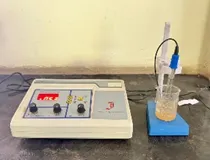
Fig .pH Measurement
3. Bulk Density
Bulk density was measured by introducing a known quantity of powder into a measuring cylinder and recording the initial volume occupied before tapping.
Bulk density =Mass of powder / Bulk volume
4. Tapped Density
Tapped density was determined after continuously tapping the measuring cylinder until a constant volume was obtained.
Tapped density = Mass of powder / Tapped volume
5. Angle of Repose
The angle of repose was evaluated to study the flow behavior and flowability of the powder formulation.
6. Carr’s Compressibility Index
Carr’s index was calculated to determine the compressibility and flow characteristics of the prepared powder.
Carr’s index =Tapped density – Bulk density / Tapped density ×100
7. Hausner Ratio
Hausner ratio was measured to evaluate the flowability and packing properties of the formulation.
Hausner ratio = Tapped density / Bulk density
8. Washability Test
The formulation was examined for its ability to be easily removed from the skin using water after application.
9. Foaming Ability
Foam production and foam stability were observed by shaking the formulation with water.
10. Irritation Study
The formulation was applied on a small area of skin to check for any irritation, redness, itching, or allergic reaction.
11. Stability Evaluation
The prepared formulation was stored under suitable environmental conditions and observed periodically for any changes in color, odor, texture, appearance, and pH during the storage period.
Table No.4. Evaluation parameters
|
Sr.no |
Evaluation Parameters |
Results |
|
1. |
Appearance |
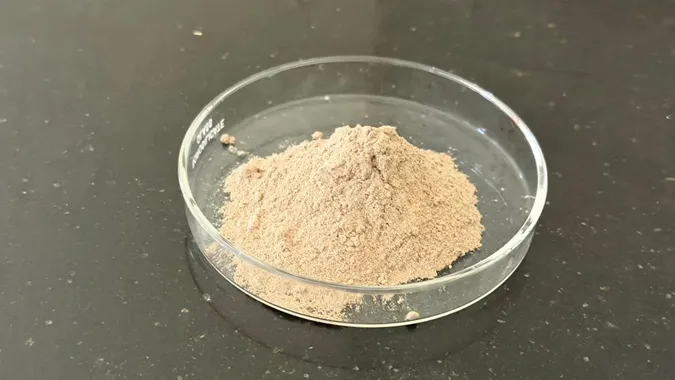
Fine,smooth,free-flowing powder |
|
2. |
Colour |
Light greenish brown |
|
3. |
Odour |
Pleasant herbal odor |
|
4. |
Texture |
Soft and uniform |
|
5. |
pH |
6 -7 |
|
6. |
Bulk Density |
Good |
|
7. |
Tapped Density |
Good |
|
8. |
Washability |
Easily washable with water |
|
9. |
Foaming Ability |
Satisfactory foam formation observed |
|
10. |
Cleansing Ability |
Effective removal of dirt and excess oil |
|
11. |
Irritancy test |
No redness ,itching ,or irritation |
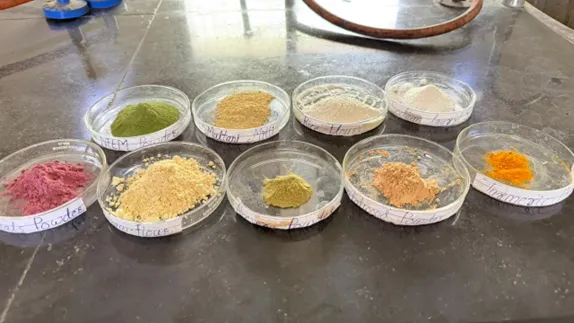
Fig. Preparation of Herbal Neem Face Wash Powder
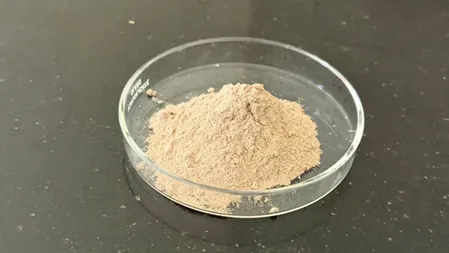
Steps involved:
1. Wet Your Hands & Take the Powder Cleanser: Make your hands wet and then apply approximately one teaspoon of powder cleanser into your hand.
2. Mix with Water: Mix some water with the cleansing powder.
3. Form a Lather: Rub your hands together for a while and let the mixture lather.
4. Apply the Lather to Your Face: Apply the foam cleanser to your wet face using circular movements.
5. Rinse Face: Clean your face well with warm water.
6. Dry Your Face with a Soft Towl : Pat dry your face gently using a soft towel.

Fig . steps involved in using herbal neem face wash powder
1.The formulation is made using natural herbal ingredients, making it mild and safe for the skin.
2.It helps cleanse the skin effectively by removing dust, excess oil, sweat, and impurities.
3.Neem and turmeric present in the formulation provide antibacterial and anti-acne properties.
4.The face wash gives a soothing, cooling, and refreshing sensation to the skin.
5.It helps control excess sebum production and prevents acne and pimples.
6.Herbal ingredients aid in gentle exfoliation and help remove dead skin cells from the skin surface.
7.The formulation contains very few synthetic chemicals and preservatives, reducing the risk of skin irritation and side effects.
8.It is suitable for daily use and can be used on various skin types.
9.Powder-based herbal formulations possess better stability, lower chances of microbial growth, and longer shelf life than liquid preparations.
10.The product is economical, eco-friendly, and convenient to prepare, store, and apply
1.It is used to cleanse skin regularly to remove dirt, sweat, excess oil, and any other skin impurities.
2.It works effectively to reduce the occurrence of acne, pimples, and other minor skin issues due to its antimicrobial property.
3.It aids in controlling the overproduction of oils in the skin.
4.This product will help you have healthy, clean, and radiant skin.
The product facilitates mild exfoliation of skin cells.
5.It maintains good skin hygiene and gives a refreshing sensation throughout the year.
6.The powder calms down the dullness or tiredness of skin.
7.It is used as a natural alternative to chemical face washes.
8.It is suitable for all kinds of skin, especially oily and acne-prone skin
The herbal face wash powder based on natural and herbal ingredients was successfully developed. The face wash powder had good cleaning action and was able to remove dust, dirt, and other impurities from the surface of the skin.
With the inclusion of neem and turmeric, the face wash powder showed anti-bacterial and anti-acne activity, ensuring prevention from pimples and maintaining healthy skin. Moreover, the product showed a soothing effect upon application.
The developed product exhibited good stability and favorable physical properties during evaluation. It had good foaming action when mixed with water and could be easily applied and washed off.
It can be concluded that the herbal face wash powder proved to be an efficient product, and it was safe for use. The study demonstrates that herbal ingredients can be successfully utilized as an alternative to face wash preparations based on synthetic chemicals
CONCLUSION
Herbal neem face wash powder was successfully formulated using all-natural ingredients obtained from plants. The formulation was effective in cleaning the skin as it effectively removed dirt, excess oils, and other impurities without making the skin dry and maintaining its softness and freshness.
Inclusion of neem and turmeric in the formulation helped achieve additional benefits like antibacterial activity against acne. This makes the formulation ideal for avoiding various skin-related problems such as acne.
The results of experimentation with the formulation showed that it was mild, harmless, and suitable for all skin types. Therefore, it can be concluded that herbal face wash powder is more beneficial than the chemical-based formulation as it contains fewer side effects, is economical, and environmentally friendly.
The findings revealed that the formulated product exhibits strong cleansing ability due to the combined effect of its herbal constituents. Neem and turmeric played a major role in providing antibacterial, antifungal, and anti-inflammatory actions, thereby helping in the reduction of acne, pimples, and skin infections. Aloe vera contributed moisturizing and soothing properties, while multani mitti and gram flour aided in absorbing excess oil and gently exfoliating the skin. Additionally, rose petals and sandalwood imparted cooling, refreshing, and calming effects, enhancing overall skin comfort.
The evaluation studies showed that the powder formulation had satisfactory physical properties, good stability, and efficient washability. It was easy to apply and remove, leaving the skin clean without any residue. As a dry formulation, it demonstrated better stability, reduced chances of microbial growth, and an extended shelf life when compared to liquid face wash preparations
REFERENCES

Bansode Disha, Bandgar Sakshi, Somnath Davkhar, Hemant Gangurde Emerging Formulation And Evaluation O Herbal Neem Face Wash Powder, Int. J. of Pharm. Sci., 2026, Vol 4, Issue 7, 5322-5336, https://doi.org/10.5281/zenodo.21643205
 10.5281/zenodo.21643205