

We use cookies to ensure our website works properly and to personalise your experience. Cookies policy
Department of Regulatory Affairs, Dattakala College of Pharmacy, Daund, Pune.
The management of post-approval changes represents one of the most critical and resource-intensive activities in pharmaceutical regulatory affairs. Following marketing authorization, pharmaceutical products undergo continuous modifications driven by manufacturing improvements, quality enhancements, supply chain optimization, and safety updates. This review examines the regulatory frameworks governing post-approval submissions and variations management across major jurisdictions, with particular emphasis on the United States Food and Drug Administration (FDA), the European Medicines Agency (EMA), and the International Council for Harmonisation (ICH) Q12 guideline. The article analyzes the classification systems, submission pathways, timelines, and emerging harmonization efforts that shape modern pharmaceutical lifecycle management.
Pharmaceutical regulatory affairs extend far beyond the initial approval of a new drug application. Once a product receives marketing authorization, the regulatory journey enters a new phase characterized by ongoing compliance, continuous improvement, and proactive change management. The post-approval landscape encompasses chemistry, manufacturing, and controls (CMC) changes, labeling updates, safety reporting, and manufacturing site modifications all of which require structured regulatory submissions to maintain the authorized status of the product [1].
The global pharmaceutical industry manages thousands of post-approval changes annually. A single product may be marketed in over 100 countries, each with distinct regulatory requirements for reporting modifications. Prior to the implementation of harmonized frameworks, implementing an innovative CMC change globally could require over 6,000 individual licenses and take more than 10 years to complete [2]. This regulatory burden has driven the development of modern lifecycle management approaches that balance patient safety with operational efficiency.
The evolution of post-approval regulatory frameworks reflects the industry's transition from a static, compliance-based model to a dynamic, knowledge-based paradigm. Traditional regulatory systems treated approved dossiers as fixed documents, requiring extensive submissions for even minor modifications. Contemporary frameworks, particularly ICH Q12, recognize that pharmaceutical manufacturing is inherently dynamic and that regulatory systems should facilitate rather than impede continual improvement [3].
REGULATORY FRAMEWORKS FOR POST-APPROVAL CHANGES
United States Food and Drug Administration (FDA)
The FDA governs post-approval changes through 21 CFR 314.70 for New Drug Applications (NDAs) and Abbreviated New Drug Applications (ANDAs), and 21 CFR 601.12 for Biologics License Applications (BLAs) [4]. These regulations establish a risk-based framework with three primary reporting categories based on the potential impact of changes on product identity, strength, quality, purity, and potency as they relate to safety and effectiveness.
Prior Approval Supplement (PAS): Required for changes with substantial potential to adversely affect the product. These include new manufacturing facilities without satisfactory current Good Manufacturing Practice (cGMP) status, changes in active ingredient synthesis route, formulation modifications affecting bioavailability, and new indications [5]. PAS submissions require FDA approval before implementation, with review timelines typically ranging from 4 to 10 months under the Prescription Drug User Fee Act (PDUFA).
Changes Being Effected in 30 Days (CBE-30): Applicable to changes with moderate potential impact. The applicant must submit the supplement and wait at least 30 days before distribution unless FDA requests prior approval [6]. Examples include manufacturing site changes to facilities with satisfactory cGMP status for the same dosage form, tightening of specification limits, and minor formulation changes.
Changes Being Effected at Implementation (CBE-0): Permits immediate implementation for changes with minimal potential impact, including certain labeling changes to add safety information and editorial corrections [7].
Annual Report: For changes with minimal potential impact, such as batch size adjustments within approved ranges, alternative analytical methods using the same technology, and editorial changes to batch records [8]. The FDA's Scale-Up and Post-Approval Changes (SUPAC) guidances provide specific recommendations for oral solid and semisolid dosage forms. SUPAC-IR (Immediate Release), SUPAC-MR (Modified Release), and SUPAC-SS (Semisolids) categorize manufacturing changes into three levels based on potential impact, with corresponding reporting categories and data requirements [9]. Level 1 changes (least impact) typically require annual report filing, Level 2 (moderate impact) require CBE-30 supplements, and Level 3 (most impact) require PAS submissions [10].
European Medicines Agency (EMA)
The European Union's variations framework is governed by Commission Regulation (EC) No 1234/2008, as amended by Commission Delegated Regulation (EU) 2024/1701, which entered into force on July 7, 2024, and became applicable on January 1, 2025 [11]. The revised framework, supported by new EC Variations Guidelines effective January 15, 2026, introduces significant modernization of post-approval change management.
The EU classifies variations into three risk-based categories:
Type IA (Minor Variations): Changes with minimal impact that do not require prior approval. Type IA variations can be implemented immediately, with notification submitted within 12 months (Type IAIN requires immediate notification) [12]. The 2025 revisions introduce voluntary annual bundling, allowing MAHs to group multiple Type IA variations implemented in a calendar year into a single notification submitted between 9 and 12 months after the first implementation date [13].
Type IB (Minor Variations Requiring Notification): Changes with moderate impact that require notification but not prior approval. The MAH must wait a 30-day period following notification before implementation [14].
Type II (Major Variations): Changes with significant impact requiring prior approval before implementation. Standard assessment timelines are 60 days, with extension of indication variations assessed in 90 days [15]. The EU framework also introduces Type 0 Variations for immediate, unforeseen safety issues that can be implemented without prior notification but must be reported retrospectively within specified timelines [16]. This category represents a critical advancement for urgent safety-related modifications. The EMA's revised guidance on Post-Approval Change Management Protocols (PACMPs), published December 11, 2025, enables companies to predefine strategies for future quality changes. Changes implemented under an approved PACMP are generally processed using lower-risk variation types (Type IA, IAIN, or IB) rather than more complex procedures [17]. PACMPs may be submitted as part of the initial marketing authorization application, as a line extension, or through a Type II variation [18].
International Council for Harmonisation (ICH) Q12
ICH Q12, titled "Technical and Regulatory Considerations for Pharmaceutical Product Lifecycle Management," was adopted at Step 4 in November 2019 and represents the most significant global harmonization effort in post-approval change management [19]. The guideline provides a framework to facilitate management of post-approval CMC changes in a predictable and efficient manner across ICH regions (US, EU, Japan, Canada, Switzerland, etc.).
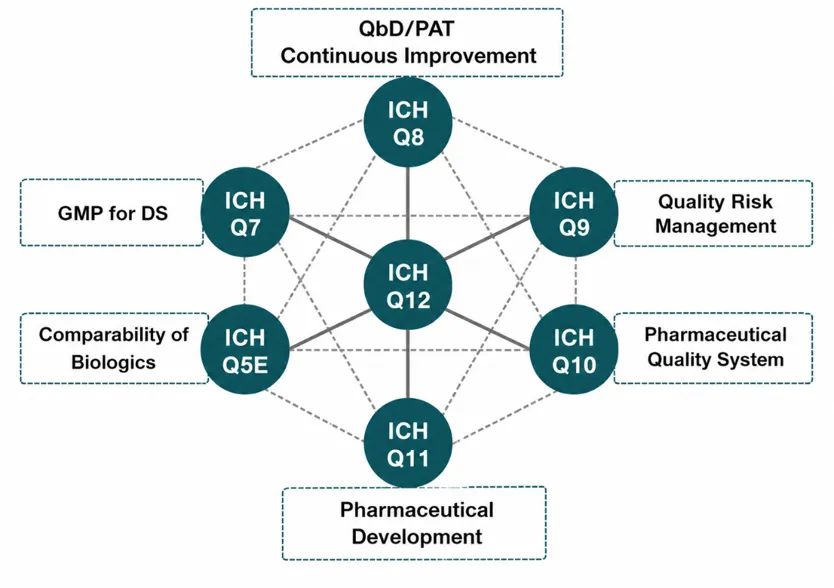
Image 1: ICH Q12 Integration with Other ICH Quality Guidelines
ICH Q12 introduces four key regulatory tools:
Established Conditions (ECs): Legally binding information within an application considered necessary to assure product quality. ECs include API or drug product formulation, processes and controls, specifications, and facilities. Any change to an EC necessitates a regulatory submission [20]. The extent of ECs varies based on product and process understanding, characterization, development approach, and potential risk to product quality.
Post-Approval Change Management Protocols (PACMPs): Prospective protocols that define anticipated changes, required studies, acceptance criteria, and reporting categories. In the FDA system, PACMPs are equivalent to Comparability Protocols (CPs) [21]. PACMPs can address one-time changes or repeated changes over the product lifecycle and can cover multiple products.
Product Lifecycle Management (PLCM) Document: A central repository for ECs, reporting categories, control strategy summaries, PACMPs, and post-approval CMC commitments. The PLCM document should be placed in Module 3.2.R or, for some regions, in Module 1 [22].
Pharmaceutical Quality System (PQS): ICH Q10 describes the quality system necessary to support ICH Q12 implementation. Effective change management across the supply chain and product lifecycle is essential for leveraging Q12 tools [23].
ICH Q12 defines three harmonized reporting categories mapped to regional equivalents:
CLASSIFICATION AND MANAGEMENT OF COMMON POST-APPROVAL CHANGES
Manufacturing Site Changes
Manufacturing site changes represent one of the most frequent post-approval modifications. Under FDA regulations, site changes are categorized based on whether the new facility has satisfactory cGMP status for the specific operation and dosage form. A move to a facility without satisfactory cGMP status for the relevant operation requires a PAS, while moves to facilities with satisfactory status may qualify for CBE-30 or annual report filing [25]. The SUPAC guidances provide detailed level classifications for site changes. Level 1 (same facility, same equipment) requires annual report filing; Level 2 (different facility, same equipment) requires CBE-30; Level 3 (different facility with equipment or process changes) requires PAS [26]. For biologics, manufacturing site changes are generally held to higher scrutiny because "the process defines the product," and comparability studies may require functional assays or bioassays [27]. Under the EU framework, manufacturing site changes for centrally authorized products typically require Type II variations, though the 2025 revisions introduce greater flexibility for certain site changes when supported by PACMPs [28].
Process and Equipment Changes
Process changes range from minor parameter adjustments to fundamental alterations in manufacturing methodology. Under SUPAC-IR, changes in excipient amounts within ±5% of total formulation weight constitute Level 1 (annual report), while changes beyond ±10% require PAS with bioequivalence data [29]. Equipment changes are classified based on design and operating principles. Changes to alternate equipment of the same design and principle (Level 1) require annual report filing, while changes to equipment of different design and operating principle (Level 2) require CBE-30 supplements with dissolution documentation and stability data [30]. The ICH Q12 framework enables manufacturers to define process parameter ranges as ECs, allowing movement within approved ranges without filing. Changes outside ECs require appropriate submissions based on risk assessment [31].
Analytical Method Changes
Analytical method changes are categorized based on technology and purpose. Changes to alternative methods using the same technology (e.g., different HPLC column) typically qualify for annual report filing. Changes to different technology (e.g., HPLC to UPLC) require CBE-30 supplements with method validation and comparative testing [32]. ICH Q12 Annex IC provides illustrative examples for identifying ECs for analytical procedures, including capillary electrophoresis for biological drug substances. The guideline emphasizes that method parameters, acceptance criteria, and performance characteristics may be designated as ECs based on risk assessment [33].
Specification Changes
Specification changes are among the most sensitive post-approval modifications. Tightening of specifications (e.g., narrowing assay range from 95-105% to 97-103%) generally requires CBE-30 or annual report filing, as it improves quality without compromising safety [34]. Relaxation of specifications (widening acceptance criteria) requires PAS because it could allow out-of-specification product to reach patients [35]. The FDA's guidance on CMC post-approval manufacturing changes provides specific thresholds for excipient changes. For immediate-release solid oral dosage forms, changes in non-release controlling excipients within defined ranges (e.g., filler ±5%, disintegrant ±3%, binder ±0.5%) may be documented in annual reports [36].
Labeling Changes
Labeling changes are categorized based on content and urgency. Changes to add or strengthen contraindications, warnings, precautions, or adverse reactions require CBE-30 supplements with 12 copies of final printed labeling [37]. Editorial or typographical changes may be documented in annual reports [38]. The EU framework similarly distinguishes between urgent safety-related labeling changes (Type IB or Type 0) and administrative updates (Type IA) [39].
EMERGING TRENDS AND HARMONIZATION EFFORTS
Digital Transformation and eCTD 4.0
The pharmaceutical industry is experiencing significant digital transformation in regulatory submissions. The adoption of electronic Common Technical Document (eCTD) 4.0, anticipated to accelerate in 2025, enhances interoperability, lifecycle management, and usability [40]. Cloud-based regulatory platforms and AI-powered tools are automating routine submission tasks, reducing human error, and enabling real-time tracking of variation status across multiple jurisdictions [41].
Global Harmonization Initiatives
The International Federation of Pharmaceutical Manufacturers Associations (IFPMA) and Clarivate conducted a comprehensive analysis of global regulatory frameworks for post-approval changes across 22 countries, revealing substantial alignment with WHO guidelines but significant regional differences in implementation timelines and data requirements [42]. The study found that while technical requirements between WHO and EU frameworks exhibit similarities, the EU's Draft Variation Guidelines 2025 are generally more granular in categorization, with several scenarios still classified as Type II for biologicals [43]. The WHO's Guidelines on Procedures and Data Requirements for Changes to Approved Biotherapeutic Products (TRS No. 1011) provides a reference framework for national regulatory authorities, particularly in emerging markets. The guideline encourages the use of comparability protocols (PACMPs) and defines three categories of changes: major, moderate, and minor [44].
Real-World Evidence and Post-Market Surveillance
Regulatory agencies are increasingly incorporating real-world evidence (RWE) into post-approval decision-making. RWE derived from electronic health records, patient registries, and post-market surveillance provides insights into product performance in diverse patient populations [45]. This shift supports more informed regulatory decisions regarding labeling updates, safety communications, and risk mitigation strategies.
Regulatory Sandboxes and Innovation Frameworks
Regulatory sandbox initiatives are emerging as mechanisms to foster innovation while maintaining oversight. These controlled environments allow companies to test new technologies and approaches under regulatory supervision, providing valuable insights into regulatory expectations [46]. The FDA's emerging technology program and EMA's quality innovation initiatives exemplify this trend.
BEST PRACTICES FOR VARIATIONS MANAGEMENT
Integrated Change Control Systems
Effective variations management requires robust internal change control systems linked to regulatory intelligence. Each variation should be connected to internal change control with clear documentation of the risk assessment that led to the classification decision [47]. This systematic approach demonstrates regulatory competence and reduces the likelihood of reclassification objections.
Strategic Use of PACMPs/Comparability Protocols
Comparability protocols are most valuable when companies anticipate making similar changes across multiple products or sites, when the change type would normally require PAS creating timeline pressure, and when clear acceptance criteria can be defined prospectively [48]. The FDA's final guidance on comparability protocols (April 2023) provides detailed recommendations for content, submission, and implementation [49].
Lifecycle Planning and Knowledge Management
ICH Q12 emphasizes that lifecycle management should leverage knowledge accumulated through development and commercial operations. Knowledge gained during the commercial phase should drive periodic reassessment of criticality and risk to ensure approved ECs remain congruent with current understanding [50]. Companies should maintain comprehensive databases of approved changes, including associated metrics and timelines, for future audits and inspections.
Regional Coordination and Worksharing
For companies with global portfolios, coordinating variations across regions is essential. The EU framework permits grouping of related changes for the same product and worksharing for identical changes across multiple products from the same MAH [51]. However, the EU and US frameworks are conceptually similar but not directly interchangeable, requiring separate planning for each region [52].
CHALLENGES AND FUTURE DIRECTION
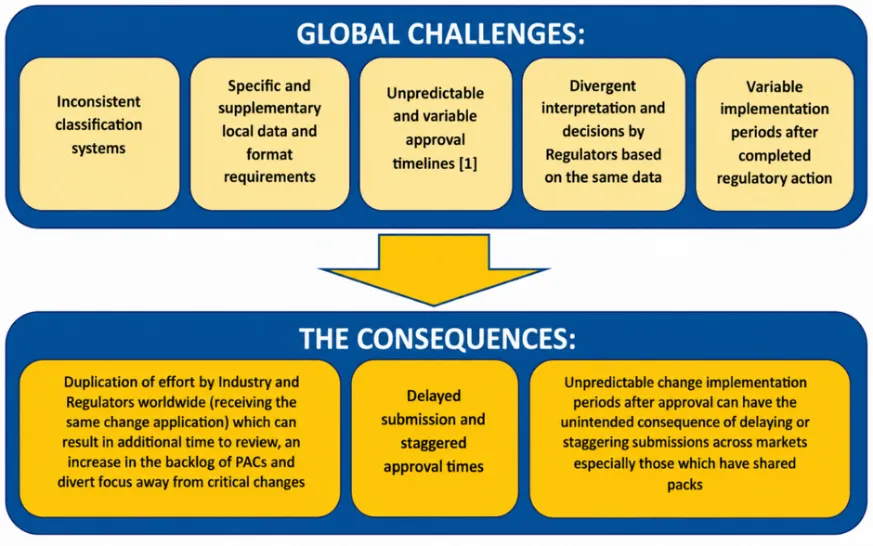
Figure 2. Global challenges and consequences of regulatory divergence in post-approval change management.
Regulatory Divergence
Despite harmonization efforts, significant regional differences persist. The IFPMA-Clarivate analysis revealed that while the EU and WHO frameworks are broadly aligned in evaluation timelines (30-90 working days for major changes), the EU's categorization is more granular for biological products, with several scenarios defaulting to Type II [53]. This divergence creates compliance complexity for global companies.
Biologics and Advanced Therapies
Biologics and advanced therapy medicinal products (ATMPs) present unique challenges because the manufacturing process is inherently linked to product quality. Changes to biologics are generally subject to higher scrutiny, and comparability assessments may require extensive analytical and functional characterization [54]. The EMA maintains stricter categorization for many biologics changes, though some operational modifications may be handled under the company's Quality Management System [55].
Resource and Timeline Pressures
The increasing volume of variation submissions driven by scientific and technological advances creates resource pressures for both industry and regulators. The EMA's 2025 revisions aim to address this by streamlining low-risk changes through annual bundling and PACMPs, potentially reducing processing times by months for routine updates [56].
CONCLUSION
Post-approval regulatory submissions and variations management constitute a dynamic and evolving field at the intersection of science, regulation, and operational excellence. The transition from static compliance frameworks to knowledge-based lifecycle management, exemplified by ICH Q12, represents a paradigm shift that benefits both patients and industry. The harmonization of reporting categories across major jurisdictions, combined with innovative tools such as PACMPs and PLCM documents, enables more efficient management of post-approval changes while maintaining rigorous quality standards. The 2025-2026 regulatory landscape is characterized by significant modernization, including the EU's revised Variations Guidelines, the FDA's ongoing implementation of ICH Q12, and global efforts toward convergence. However, challenges remain in addressing regional divergence, managing biologics complexity, and leveraging digital technologies. Regulatory affairs professionals must maintain continuous vigilance, engage in proactive lifecycle planning, and foster robust quality systems to navigate this complex environment successfully. As the pharmaceutical industry continues to innovate in manufacturing technologies, analytical methods, and therapeutic modalities, the regulatory frameworks governing post-approval changes must evolve in parallel. The ultimate goal remains unchanged: ensuring that every dose of medicine meets the highest standards of quality, safety, and efficacy throughout the product lifecycle.
REFERENCES

Aniket Jadhav, Dr. Sudarshan Nagrale, Amit Pondkule, Dr. Anil Babar, Post-Approval Regulatory Submissions and Variations Management of Pharmaceutical Regulatory Affairs, Int. J. of Pharm. Sci., 2026, Vol 4, Issue 7, 5401-5410. https://doi.org/10.5281/zenodo.21648412
 10.5281/zenodo.21648412