

We use cookies to ensure our website works properly and to personalise your experience. Cookies policy
Department of Pharmaceutics, Priyadarshini JL College of Pharmacy, Nagpur.
Acne vulgaris is a frequent multifactorial skin condition characterized by excessive sebum production, hyperkeratosis of follicles, bacterial colonization, and inflammation. Topical medications may be ineffective, showing various issues, including poor skin penetration, irritating effects, unstable composition of medications, and low adherence to therapy. Topical systems based on hydrogels with a high amount of water, biocompatibility, and a possibility to offer controlled release of drugs demonstrate numerous advantages for the therapy. Hydrogels increase drug retention at the skin and its permeation to target sites. This leads to a higher therapeutic effect and lower toxicity. Salicylic acid and nicotinamide used together may contribute to an effective solution of problems associated with acne. Salicylic acid has keratolytic properties contributing to exfoliation, whereas nicotinamide helps reduce inflammation and regulate sebum secretion. Nanocomposite and stimuli-sensitive hydrogels allow improving stability and performance and increasing acceptability of drug delivery systems. In summary, hydrogel-based systems containing salicylic acid and nicotinamide seem to be a prospective and effective solution to treating acne
Acne vulgaris is one of the most common chronic dermatological conditions affecting almost 80-85% of adolescents and many adults around the world. This disease usually presents in the form of comedones, papules, pustules, nodules, and cysts mostly localized on the face, chest, and back.1 Despite being generally viewed as cosmetically disfiguring, acne can have a great psychological and social effect on patients' lives, including low self-confidence and even depression. Besides, the chronic and recurring nature of this skin disorder emphasizes the need for the introduction of new methods of treatment.2
The etiology and pathology of acne vulgaris are quite complicated and involve several biological processes. The first one refers to increased sebum secretion in the sebaceous glands usually triggered by changes in hormone levels, especially those of androgens. The excess of sebum forms the basis for follicular obstruction and microbial colonization.3 Follicular hyperkeratinization, or the impaired process of keratinocyte exfoliation, is another factor leading to the appearance of comedones due to clogged hair follicles. Also, follicles are usually colonized by anaerobic bacteria called Cutibacterium acnes. Bacteria can metabolize fatty acids contained in sebum, which causes inflammation. Thus, inflammation is a crucial element of pathological processes in acne lesions, leading to redness, swelling, and discomfort.
The currently available approaches to the treatment of acne include topical treatments, such as retinoids, benzoyl peroxide, antibiotics, and keratolytics, as well as systemic treatments in the form of antibiotics, hormones, and isotretinoin for the management of more severe forms of acne.4 Even though such approaches to the therapy of this skin disorder can prove to be effective in some cases, they do have their own weaknesses. Topical treatments are frequently characterized by low patient compliance because of the required frequency of administration and possible skin irritation and dryness; furthermore, active substances tend to be poorly stable and exhibit low skin permeation capacity. As for systemic approaches, the extended use of antibiotics may lead to the emergence of antibiotic resistance issues. Moreover, some of these treatments may produce various side effects that may preclude the use of certain medications.5
In order to overcome the limitations of the conventional treatments and make the process of acne treatment more effective and safer for patients, it is necessary to develop innovative drug delivery systems with desirable characteristics.
Among them, novel hydrogel-based topical delivery systems represent one of the most promising approaches.6 Hydrogels are three-dimensional polymer networks having strong affinity to water that allow absorbing large quantities of the liquid without degradation. The main advantages of hydrogels that contribute to their efficacy as dermatological agents include biocompatibility, non-irritating action, and easy application. Application of hydrogels results in a feeling of cooling and refreshing that is especially useful for treating inflammations associated with acne. In addition, the porous structure of the material allows incorporating different active components in hydrogels and using them as vehicles for the controlled delivery of drugs.7
Hydrogels can be designed to be sensitive to various stimuli like changes in pH, temperature, or presence of enzymes allowing delivering drugs to the target tissues specifically. With regard to acne, the advantages of using hydrogels as vehicles for applying topical medications lie in the ability of these materials to prolong contact of the drug with the skin surface, enhance its penetration into the deeper layers of the skin, and reduce the number of applications.8
Thus, the use of hydrogels in treating acne constitutes a breakthrough in developing new approaches to delivering active compounds.9
2. Acne Pathogenesis And Therapeutic Targets
Acne vulgaris is a polyfactorial dermatological disorder with a range of interactions among sebaceous glands, hair follicle abnormalities, microbial infection, and inflammation. Knowledge of the underlying pathophysiology is necessary in order to establish potential treatment methods.
Excessive sebum secretion from sebaceous glands stimulated by androgens is one of the main reasons for the development of acne. Sebum is a lipid-rich substance responsible for maintaining skin moisture.10 In people with a tendency to develop acne, increased production of sebum leads to excessive oils accumulating in pores, thereby increasing the likelihood of microbial infection and further irritation. The increased secretory activity changes the chemical nature of sebum by making it comedogenic and susceptible to oxidation.
Another important reason is follicular hyperkeratinization when keratinocytes in hair follicles begin to accumulate inside due to impaired controlled shedding. As a result, the microcomedo is formed as the earliest visible lesion of acne. Follicular clogging prevents the regular excretion of sebum and leads to both closed comedones, commonly known as whiteheads, and open comedones, or blackheads.11
The role played by microbes is a critical factor contributing to the development of acne. Cutibacterium acnes, an anaerobic bacterium, inhabits the sebum-filled follicles and reproduces in this environment. These bacteria have lipase enzymes that catalyze the breakdown of the triglycerides present in the sebum, resulting in irritant-free fatty acids. Besides, the microorganisms trigger an immune response through toll-like receptors on keratinocytes.
It is known now that inflammatory pathways are not only late but also one of the earliest events in the pathogenesis of acne. Already at the stage of lesion emergence, inflammatory mediators such as cytokines (interleukins) and chemokines appear, which in turn attract immune cells, causing redness, inflammation, and pus formation. The involvement of oxidative stress mechanisms and activation of NF-κB transcription factors plays a critical role in exacerbating inflammation.12
It becomes evident from the discussion of these pathogenic processes that there are multiple targets in the development of topical treatment of acne vulgaris. Sebum inhibition, normalization of keratinocytes proliferation, antibacterial action, and anti-inflammatory effects can be mentioned among those. For example, retinoids affect follicular hyperkeratosis, antibacterials decrease bacterial population, and anti-inflammatory drugs prevent excessive inflammatory response mediated bcytokines. Combination therapy is a common approach in contemporary treatments of acne vulgaris.13
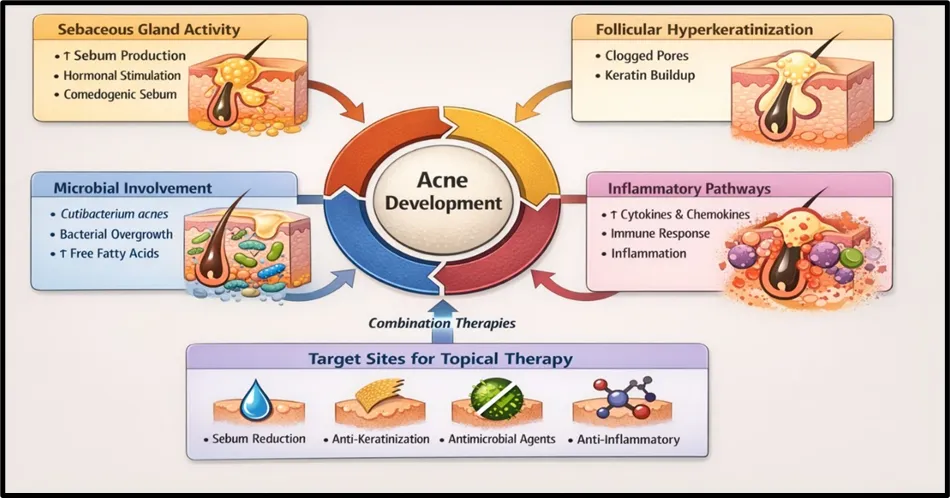
Figure No. 1 Acne Pathogenesis and Therapeutic target.
3. Salicylic Acid In Acne Management
3.1. Chemical Nature and Classification (Beta-Hydroxy Acid)
Salicylic acid belongs to the beta-hydroxy acids (BHAs), which are compounds containing a hydroxyl group at the beta carbon on the aromatic ring of benzene. In contrast to alpha-hydroxy acids, salicylic acid is a lipophilic compound capable of penetrating sebaceous glands and hair follicles with high lipid content. The aforementioned characteristics make it appropriate for treating acne due to its ability to work inside clogged pores.14
3.2. Mode of Action
a. Keratolytic Properties
The use of salicylic acid causes keratin dissolution in the stratum corneum, thus leading to improved desquamation and the shedding of dead cells, thereby avoiding accumulation and blockage of the follicle.
b. Comedolytic Properties
It can penetrate deeply into the follicle to dissolve keratin plugs and sebum buildup. Thus, salicylic acid not only treats existing comedones but also prevents the formation of new lesions.
c. Anti-Inflammatory Action
Salicylic acid shows anti-inflammatory properties as it blocks the formation of inflammatory mediators. Salicylic acid assists in reducing redness, inflammation, and irritation caused due to acne eruptions, thus maintaining good skin health.15
3.3. Strengths:
• Effective absorption into sebum-rich skin due to lipid solubility
• Preventive and curative effect against acne eruption
• Presence in several topical preparations (creams, lotions, gels, cleansers)
• No microbial resistance potential
• Efficient for mild and moderate acne cases
• Easy exfoliating action for smoother skin surface16
3.4. Challenges:
• Results in skin dryness, flaking, and irritation due to concentration levels
• Tends to produce contact dermatitis in sensitive individuals
• Ineffective as a single agent for serious forms of acne
• Needs regular application for noticeable outcomes17
3.5. Barriers to Topical Administration
a. Skin Irritation
The main problem is irritation caused by excessive use of the drug or in sensitive skin types. Application of large quantities may affect the skin barrier and cause redness.
b. Penetration Problems
While being lipophilic, penetrating the skin layer without damaging healthy tissues and providing adequate concentration of the drug is complicated.
In order to deal with all of these issues, more sophisticated delivery systems such as hydrogels and nano-carriers have been investigated in order to ensure drug retention, improved controlled release and reduced irritation.18
4. Nicotinamide (Niacinamide) For Acne Treatment:
4.1. Characteristics of the Drug and Chemical Properties
Nicotinamide or niacinamide is a hydrophilic water soluble amide derivative of Vitamin B3. The substance is highly stable, non-acidic and well tolerated by majority of skin types due to its characteristics. As a result of this property, it can be successfully used within various dermatological products.19
4.2. Mode of Action:
a. Anti-inflammatory properties
The substance shows high levels of anti-inflammatory properties as it is capable of suppressing the activity of pro-inflammatory cytokines. Thus, the drug reduces redness and swelling which characterize inflammatory acne condition.
b. Sebum regulation
The substance contributes to better regulation of sebum secretion and thus, helps reduce oily skin condition contributing to the development of acne.
c. Improvement of skin barrier functions
By increasing ceramide and lipid synthesis, the drug contributes to improved integrity of the skin and decreased trans epidermal water loss.20
4.3. Clinical Advantages
• Efficacious for decreasing inflammatory acne eruptions
• Enhances skin texture and tone
• Minimizes sebum production without causing severe dryness
• Appropriate for individuals with sensitive and acne-vulnerable skin
• Concurrent use is possible with other anti-acne medications
• Aids in minimizing post-acne hyperpigmentation21
4.4. Challenges with Traditional Formulations
• Hindered skin penetration because of its hydrophilic character
• Instability under specific formulation settings
• Might possess delayed therapeutic activity compared to potent active ingredients
• Necessitates efficient delivery systems for maximizing efficacy and cutaneous retention22
5. Synergism Possibilities Between Salicylic Acid And Nicotinamide
5.1. Reasons for Combination Treatment
Acne development results from various interacting mechanisms, such as follicle occlusion, sebum hypersecretion, bacterial proliferation, and inflammation. Single-drug therapy tends to focus on a specific mechanism, which might affect treatment success. The synergy between salicylic acid and nicotinamide offers a comprehensive treatment plan by targeting multiple pathological pathways simultaneously.23
5.2. Complementary Mechanism
a. Combination of Keratolytic and Anti-Inflammatory Properties
While salicylic acid mainly serves as a keratolytic and comedolytic compound, reducing the concentration of dead cells and unblocking clogged pores, nicotinamide primarily acts on the inflammation of the skin, soothing irritated lesions. Thus, both compounds work synergistically, with one cleaning out the follicles and another alleviating inflammation.
5.3. Increased Efficiency
The combination of such compounds results in a higher efficiency of the therapy compared to using only one. Salicylic acid increases the permeability of the skin, which promotes better absorption of nicotinamide. Therefore, the therapy provides more rapid alleviation of both inflammatory and non-inflammatory lesions and is thus appropriate for mild-moderate acne.24
5.4. Prevention of Unwanted Effects
Using salicylic acid may be accompanied by such side effects as irritation. The compound nicotinamide counteracts this effect through the enhancement of skin barrier functions.
5.5. Synergy Supported by Clinical Findings
Based on clinical observation, the combination of formulations containing salicylic acid and nicotinamide tends to achieve better effects compared to single-agent therapies. Many patients have reported fewer lesions, decreased redness, and improved skin texture after using a combination of both drugs.25
6. Hydrogels As Modern Drug Delivery Vehicles For Topical Medications
6.1. Definitions and Classes of Hydrogels
Hydrogels are gel-like materials formed by a polymer network that can hold and retain a large volume of water without dissolving themselves. Because of their softness, hydrogels strongly resemble biological tissue, thus making them very useful as carriers of drugs into the human body. Hydrogels can be categorized according to their origin:
a. Natural Hydrogels
Natural hydrogels are formed using polymers from biological sources. They are easily biodegradable and relatively safe due to their low irritative effect. Chitosan and alginate represent common natural hydrogels.
b. Synthetic Hydrogels
Synthetic hydrogels are made of synthetic polymers, such as carbopol and polyethylene glycol (PEG). Such hydrogels can provide better regulation in terms of their mechanical properties, swellability, and drug delivery mechanisms.26
6.2. Characteristics
a. Large Amount of Retained Water
The ability of hydrogels to retain large amounts of water makes them beneficial for maintaining skin hydration. Besides, applying these substances to irritated and inflamed skin areas produces a cooling and soothing effect.
b. Biocompatibility
The majority of hydrogels demonstrate biocompatibility, meaning that these materials rarely cause any toxic effects or irritations during their usage.27
c. Controlled Delivery
Polymeric networks enable hydrogels to release incorporated medicines gradually. Thus, the therapeutic activity can be sustained for an extended period without multiple applications.28
6.3. Advantages over Traditional Creams/Ointments
Hydrogels have some advantages over conventional creams and ointments, especially in terms of ease of application. These gels contain no greasy substance; hence, they are more pleasant to apply. Moreover, the ability of hydrogels to control the delivery of medicinal substances increases their efficacy and decreases the possibility of unwanted side effects. Hydrogels help in retaining medicines on the application site and promoting their penetration into biological tissues. In contrast to ointments, hydrogels do not clog pores; thus, they are suitable for treating acne-related skin issues.29
7. Formulation Approaches For Hydrogel-Based Formulations
Formulation of hydrogels requires an extensive selection process that involves choosing suitable materials and methods of incorporation. Incorporation of drugs may involve mixing the drugs directly in the polymer solution, but more modern methods include encapsulation and liposome formation. Selection of the appropriate polymer is crucial in ensuring optimal function. It is chosen based on its biological compatibility, ability to swell, elasticity, and degradation rate.30
Formation of the hydrogel structure requires proper crosslinking processes. Physical crosslinking entails non-covalent associations such as hydrogen bonding, ionic binding, and thermal cross-linking. This is less intense, allowing for easy modification. Chemical crosslinking involves covalent bond formations. This produces stronger hydrogels. Formulations should maintain optimal pH levels to retain the drug’s effectiveness. Formulation should have similar pH levels as the skin to avoid irritation.31
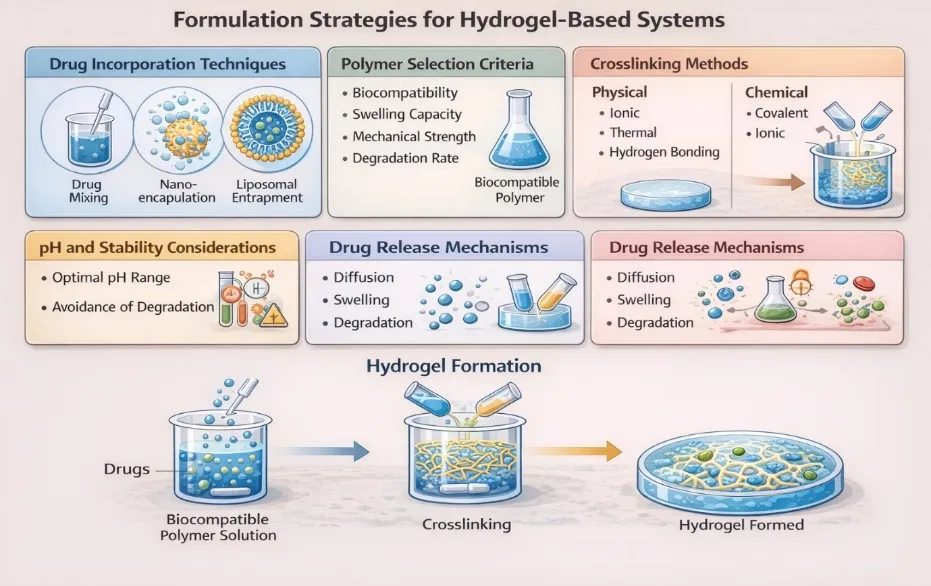
Figure No. 2 Formulation Strategies for Hydrogel-Based Systems
The drug release from hydrogels is accomplished by diffusion, swelling of the polymer network, or breaking of the polymer network. The process of drug release may be manipulated to ensure controlled release of the drug.31
8. Hydrogel-Based Delivery Of Salicylic Acid And Nicotinamide
Table No. 1 Hydrogel-Based Delivery Strategies of Salicylic Acid and Nicotinamide in Acne Management
|
Aspect |
Description |
Reference |
|
Encapsulation Approaches |
The drugs such as salicylic acid and nicotinamide can either be directly loaded or nano encapsulated or even formulated using vesicles inside the hydrogels. |
32 |
|
Controlled and Sustained Release Profiles |
The hydrogels have the ability to deliver the two drugs slowly over a period of time since the cross-linking will result in sustained release over time. |
33 |
|
Enhancement of Skin Penetration |
The effectiveness of hydrogels is that they increase permeation through hydration and increasing the amount of contact with the surface of the skin. |
34 |
|
Reduction of Irritation |
This results in an increased rate of absorption of the drugs into deeper layers. |
35 |
|
Comparative Studies with Conventional Formulations |
Research shows that using hydrogels is more effective than using creams and ointments because of the controlled release properties of hydrogels. |
36 |
Bottom of Form
9. Evaluation Parameters Of Hydrogel Formulations
1. Physical Characterization
It is crucial to establish physical parameters to assess whether hydrogels would be suitable for topical applications. The formulation pH value needs to be close to the skin's pH value in order to prevent any irritation and incompatibility. Viscosity will influence the consistency of the gel and will indicate whether the gel will be too thick or too fluid to apply. Spreadability is another important parameter to be considered since it indicates how easy it would be to apply the product on the skin.37
2. Drug Content and Uniformity
The uniform presence of the active substance within the hydrogel will guarantee its proper performance. To evaluate whether the formulation contains the required active substance amount, one should perform drug content analysis. The uniformity of the product needs to be assessed as well.38
3. In Vitro Release Studies: These studies are done to check the efficiency of the release of the drug from the hydrogel matrix. Usually, Franz diffusion cells are used to perform these tests where there is a membrane and a buffer system to simulate skin conditions. This system involves placing the formulation in the donor compartment, while the drug release is checked from the receiver compartment. The amount of drug released from the hydrogel is then plotted for further analysis. Using mathematical equations such as Higuchi equation or Korsmeyer-Peppas equation, it is determined if the mechanism involved in drug release is through diffusion, swelling, or erosion.39
4. Ex Vivo Skin Permeation Studies: As the name indicates, ex vivo experiments are those that involve using skin obtained from humans or animals. In these studies, the hydrogel is put on the outside of the skin, and the amount of drug penetrated through various layers of skin is recorded along with time. Calculations are done regarding the flux, permeability coefficient, and skin retention of the drug. From such studies, it can be understood whether the formulation provides adequate penetration of the drug in the skin or not.40
5. Stability Studies: Stability tests determine the behaviour of the formulation based on varying conditions of storage over a period of time. Hydrogels are subjected to varied conditions of temperature and humidity, with regular measurements made on parameters like physical appearance, pH, viscosity, and drug content. Variations observed may include phase separation, change in color, and inconsistency. Chemical stability tests are conducted to determine any degradation in the formulation and microbial testing is performed to ensure its safety. Accelerated stability tests predict the shelf life of the formulation and long term stability tests provide confirmation.41
6. pH: pH of hydrogel formulation is one of the essential factors for the proper compatibility of the formulation with the skin. It should preferably be within the range of natural pH of skin i.e., around 5-6 for minimal irritation. It can be determined through use of a calibrated digital pH meter by mixing gel with distilled water.42
7. Viscosity: The viscosity of the hydrogel dictates its consistency and flow characteristics, which influence the manner in which the substance is utilized. Viscosity measurements are made using devices such as the Brookfield viscometer under certain temperatures and shear rates. Viscosity should be such that the gel can be easily applied but still remains thick enough to remain at the point of application. Variation in viscosity over time may be an indicator of changes in the polymer structure.43
8. Spreadability: Spreadability refers to the ease with which the hydrogel is applied on the skin surface. It is important for patient acceptance and consistency of dose administration. This parameter is usually determined by spreading a set quantity of gel between two glass slides. Spreadability ensures uniform distribution across the affected area and consistency of the dose.44Top of Form
Bottom of Form
10. Clinical And Preclinical Studies
1. Evidence for Hydrogels as Effective in Treating Acne
Preclinical and clinical studies prove the effectiveness of utilizing systems with hydrogel bases in increasing efficacy of topical drug delivery in treating acnes. High water content allows the skin to stay moisturized and increases residence time of the active substance. It leads to higher penetration and local effect on lesions. Both inflammatory and non-inflammatory lesions as well as skin texture have been reported to be improved.45
2. Salicylic Acid and Nicotinamide Combined
Several studies show that combined use of salicylic acid and nicotinamide is effective in treatment and is superior to separate application of each. While salicylic acid removes debris from the pores and eliminates comedones, nicotinamide has an anti-inflammatory effect and prevents excessive secretion of sebum. Clinical trials show faster disappearance of lesions, reduced erythema, and improvement in the general appearance of the skin.46
3. Safety and Tolerability
Hydrogel-based preparations are well-tolerated by patients as they are non-oily and have a soothing effect. They alleviate such side effects as skin dryness caused by other types of preparations. Clinical trials prove high safety and skin compatibility. The use of controlled release helps avoid overdosing.47
4. Compliance and Clinical Results
Adherence by patients is enhanced when using hydrogel combinations due to convenience in application, lack of stickiness, and increased cosmesis. The benefits of fewer irritations and convenience in administration help promote compliance. Patient outcomes may be characterized by a decrease in lesion counts, less erythema, and improvement in overall skin health.48
11. Advantages Of Hydrogel-Based Combination Therapy
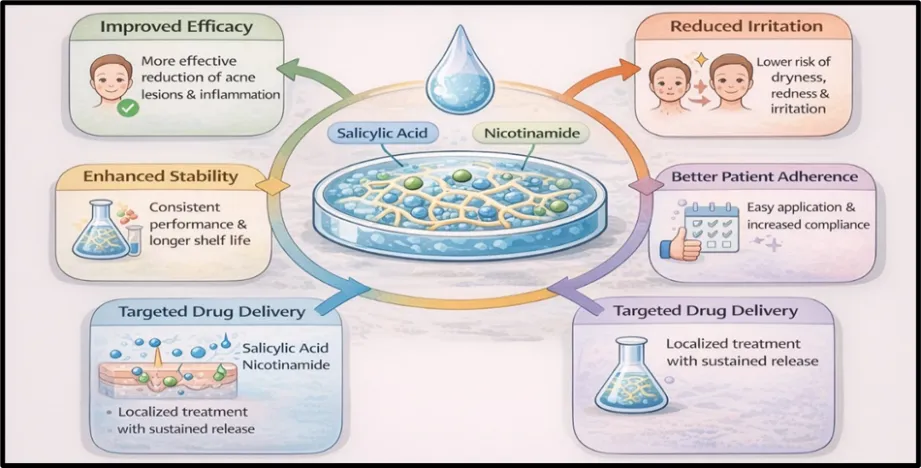
Figure No. 3. Benefits of hydrogel-based combination therapy.
12. Limitations and Challenges:
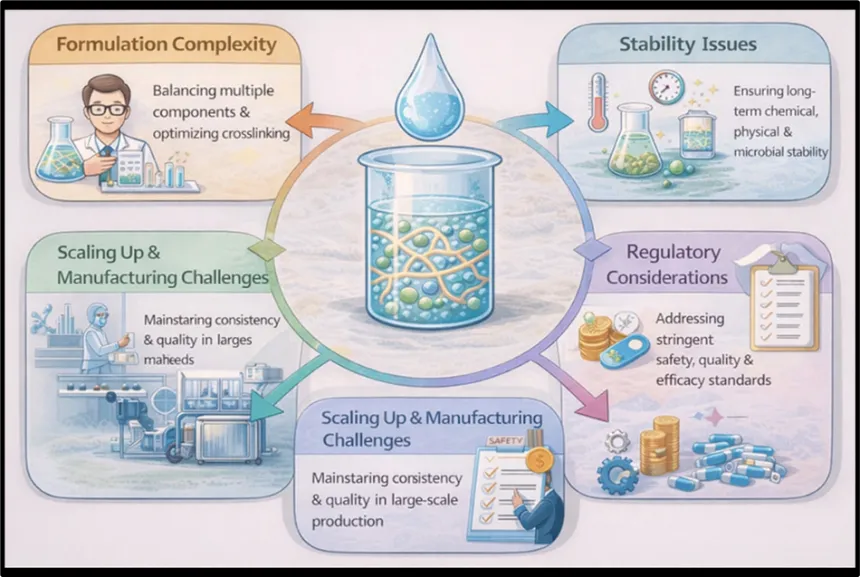
Figure No. 4 Limitations and Challenges of Hydrogel-Based Combination Therapy
13. Recent Advances And Emerging Trends
Table No. 2 Emerging Trends and Future Perspectives in Hydrogel-Based Drug Delivery Systems
|
Emerging Approach |
Description |
Reference |
|
Smart Hydrogels (Stimuli-Responsive Systems) |
These hydrogels respond to external stimuli such as pH, temperature, or enzymes, enabling on-demand drug release and improved targeting at the affected site. |
49 |
|
Nano-Hydrogel Systems |
Integration of nanotechnology with hydrogels enhances drug loading, stability, and deeper skin penetration, leading to improved therapeutic performance. |
50 |
|
AI-Assisted Formulation Design |
Artificial intelligence tools help optimize formulation parameters, predict drug–polymer interactions, and accelerate the development of efficient hydrogel systems. |
51 |
|
Green and Biodegradable Polymers |
Use of eco-friendly and naturally derived polymers reduces environmental impact and improves safety, biocompatibility, and sustainability of formulations. |
52 |
|
Personalized Dermatological Therapy |
Tailored hydrogel formulations based on individual skin type and condition allow more precise and effective acne treatment with improved patient outcomes. |
53 |
14. Regulatory And Quality Considerations For Topical Hydrogel Formulations
1. Guidelines for Topical Formulations
Topical drug products need to be formulated and produced following certain guidelines to ensure safety, effectiveness, and consistent quality. In particular, it should be stressed that proper choice of excipients and compatibility of ingredients should be taken into account when formulating topical drugs. The manufacturer needs to develop its drug following GMP principles. Documentation on production, formulation design, and product testing is necessary for approval.54
2. Safety Evaluation
Safety evaluation is an essential part of the preclinical testing process which precedes product approval. Skin irritation, sensitivity, and toxicity tests are performed to ensure the safety of the drug formulation. Tests are both carried out in vitro and in vivo. Safety assessment is particularly important when it comes to formulations to be used repeatedly for treatment of acne.55
3. GRAS ( generally recognised as safe) Status of Excipients
Excipients used in hydrogels should preferably have GRAS status which implies that they have a history of safe use. If so, then obtaining regulatory approval becomes easier. However, the amount of GRAS-listed substances that can be included in the drug formulation still needs to be studied.56
4. Quality Control Requirements
This involves ensuring that the final product is in accordance with the required specifications. Parameters involved may include physical properties, such as appearance, pH and viscosity, quantity of active ingredient, homogeneity, microbiological limits and stability. It is important to establish consistency from batch to batch in order to maintain reliability in the product. The analytical methods used should also be validated, and there should also be confirmation of stability through time.57
FUTURE PERSPECTIVES
Since these hydrogels are known to offer an effective way of delivering drugs with safety and ease for patients, further research will allow their introduction into the clinic. The application of nanotechnology in this field will result in enhanced benefits like increased stability, deep skin penetration, and targeting that can improve the treatment of acne.
Another emerging trend in contemporary medicine is personalized treatment, during which hydrogel formulas can be customized depending on each individual patient, their skin condition, the type of acne, and other factors. This can lead to more effective treatment and fewer side effects.
Nevertheless, in spite of positive initial results of research, it becomes necessary to perform a number of large clinical trials to confirm the safety, efficiency, and repeatability of these treatments.58
CONCLUSION
From the discussion above, it is evident that there are multiple factors contributing to the development of acne, necessitating the adoption of more sophisticated therapeutic approaches. Hydrogels provide an efficient platform due to their capacity for controlled release, high water content, and biocompatibility. Such characteristics increase drug absorption and retention, as well as reduce discomfort experienced by patients compared to traditional methods of drug administration.
The application of salicylic acid and nicotinamide is beneficial due to their complementary functions. Specifically, the role of salicylic acid is pore unclogging and exfoliation, whereas nicotinamide acts as an anti-inflammatory agent and regulator of sebum secretion. Therefore, their simultaneous use results in higher efficacy, which can be achieved without causing irritative symptoms.
Finally, the incorporation of nanocarriers and other innovations into hydrogels will lead to even better outcomes. With proper clinical justification, such systems have great potential to become mainstream in acne treatments.59
17. Acknowledgement: I would like to express my sincere gratitude to my respected faculty and guide for their valuable guidance, continuous support, and encouragement throughout the completion of this review paper. Their insightful suggestions and constructive feedback greatly contributed to improving the quality of this work. Also thankful to my institution for providing the necessary resources and academic environment that facilitated this study. I extend my appreciation to all the authors and researchers whose published work has been referred to in this review, as their contributions have been invaluable in shaping my understanding of the subject.
REFERENCES


Ganesh Shinde, Prachi Karadbhajane, Anup Thakre, Kanchan Upadhye, Emerging Hydrogel-Based Topical Delivery Systems: A Review of Salicylic Acid and Nicotinamide Synergy in Acne Management, Int. J. of Pharm. Sci., 2026, Vol 4, Issue 7, 5337-5351, https://doi.org/10.5281/zenodo.21643993
 10.5281/zenodo.21643993