

We use cookies to ensure our website works properly and to personalise your experience. Cookies policy
Ahalia School of Pharmacy, Kozhipara, Palakkad, Kerala 678557
A category of health and beauty items known as cosmetics is used to enhance or change a person's appearance, as well as to care for the face and body. Cosmetics are becoming increasingly prevalent in daily life; an increasing number of individuals use them frequently, and enormous amounts are consumed annually. we regularly use cosmetics in daily routine like tooth brush for cleaning purpose of teeth, use shampoo for cleansing purpose of hairs, hair oil or beard oil for proper care of hair, soap/face wash or other product for cleansing & beautifying the skin & many cosmetic products for beautifying, cleansing & care (nail polish, lacquer, eye shadow, eyelashes, lipstick, lip balm, moisturizer, deodorant, hair color, etc.). Cosmetics have a history that dates back at least 7,000 years and are a part of practically every society in the world. In recent years scientists are more frequently looking for ingredients that influence the skin’s condition and slow down the aging process. Peptides are involved in many natural processes with relevance to skincare and therefore have been used in skincare and pharmaceutical industry. In this article we will overview the cosmetics, makeups usefulness, etc. Makeup cosmetics are used to protect the skin and to provide safety and comfort, but their main purpose is as a beauty product to make the face and skin attractive. There are base makeup products and decorative makeup products; the former are used to hide imperfections such as stains and wrinkles, to adjust skin tone, and to add firmness or translucence to make the skin look beautiful.[4]
The word "cosmetic" shares its roots with the word "cosmos," which is derived from the Greek word "kosmos," which means "order" or "ornament." The word "cosmetic," which refers to the outward look, has come to have a second connotation. They concentrate on maintaining the 'appearance' of the external body surfaces, such as the skin, hair, and teeth, as well as deodorizing or perfuming them to eliminate odors. Changing the appearance of these surfaces, safeguarding them, and maintaining their integrity, or, as in the other sense of "kosmos," keeping them in good "order," are also included in definitions1
Cosmetics consist of diverse chemical compounds, derived from both natural sources and artificially synthesized materials. They serve a range of purposes, such as personal hygiene and skincare, including cleaning and safeguarding the body and skin.2
COSMETICS
Section 3 of the drug and cosmetic act 1940 & 1945 provides a definition for this term, which encompasses any product meant to be "sprayed, poured, rubbed, or sprinkled on, introduced into, or applied" to the human body or any of its parts with the purpose of cleansing, enhancing beauty, promoting attractiveness, or changing appearance. Additionally, this definition encompasses items designed for use as components within cosmetics3
CREAMS AND GELS FOR TOPICAL APPLICATION
A topical delivery system defined as the substance that carries a specific drug into contact with and through the skin. The challenge to topical drug delivery is the transport across the skin barrier.Topical delivery includes two basic types of product: External topical that are spread, sprayed, or otherwise dispersed on to cutaneous tissues to cover the affected area.Internal topical that are applied to the mucous membrane orally, vaginally or on anorectal tissues for local activity. For the most part topical preparations are used for the localized effects at the site of their application by virtue of drug penetration into the underlying layers of skin or mucous membranes. Although some unintended drug absorption may occur, it is sub therapeutics quantities and generally of minor concern.[6]
Creams are emulsions of oleaginous substance(s) and water that spread more quickly than ointments over the skin. Water-in-oil (w/o) creams are conveniently water-washable, but oil-in-water (o/w) creams are not. Cold cream and hydrous lanolin are w/o emulsions with small water absorption ability.
Gels:Gels are a more recent class of dosage forms that are made by trapping a large volume of aqueous or hydro alcoholic liquid in a network of colloidal solid particles. In comparison to ointments and creams, gel formulations typically include quicker drug release. These are superior in terms of patient acceptability and ease of use.[5]
ADVANTAGES AND DISADVANTAGES OF COSMETICS
Cosmetics have both advantages and disadvantages, as they enhance beauty and confidence while also posing certain health, financial, and environmental concerns.
Advantages:
Disadvantages:
HISTORY AND DEVELOPMENT
Cosmetics were an inherent part of Egyptian hygiene and health. Oils and creams were used for protection against the hot Egyptian sun and dry winds. Myrrh, thyme, marjoram, chamomile, lavender, lily, peppermint, rosemary, cedar, rose, aloe, olive oil, sesame oil and almond oil provided the basic ingredients of most perfumes that were used in religious ritual and embalming the dead. For the lips, cheeks and nails, a clay called red ochre was ground and mixed with water. Henna was used to dye fingernails yellow or orange. Makeup was stored in special jars that were kept in special makeup boxes. Women would carry their makeup boxes to parties and keep them under their chairs. Although men also wore makeup, they did not carry makeup kits with them.
BRIEF TIMELINE OF COSMETICS[7-11]
Cosmetic deodorant was invented in 1888, by an unknown inventor from Philadelphia, and was trademarked under the name Mumm. During the early years of the 20th century, makeup became fashionable in the United States of America and Europe owing to the influence of ballet and theatre stars. But the most influential new development of all was that of the movie industry in Hollywood. In1900, black entrepreneur Annie Turnbo began selling hair treatments, including nondamaging hair straighteners, hair growers and hair conditioners door-to-door. In Los Angeles, Max Factor started selling makeup to movie stars in 1904 that did not cake or crack. Modern synthetic hair dye was invented in 1907 by Eugene Schueller, founder of L’Oréal. He also invented sunscreen in 1936. In 1914, T J Williams founded Maybelline, the specialized mascara manufacturing company. After the First World War, the flapper look came into fashion for the first time and with it came cosmetics: Dark eyes, red lipstick, red nail polish and the suntan, invented as a fashion statement by Coco Chanel. Previously, suntans had only been sported by agricultural workers while fashionable women kept their skins as pale as possible. In the wake of Chanel’s adoption of the suntan, dozens of new fake tan products were produced to help both men and women achieve the “sun-kissed” look. In Asia, skin whitening continued to represent the ideal of beauty. Lipstick was introduced in 1915 in cylindrical metal tubes. In 1922, the bobby pin was invented to manage short (bobbed) hair. In 1932, Charles and Joseph Revson, nail polish distributors, and Charles Lackman, a nail polish supplier, founded Revlon, which sells nail polish in a wide variety of colors. A new method for permanent waving, using chemicals, which did not require electricity or machines, was introduced in 1933. In 1935, pan-cake makeup, originally developed to look natural on color film, was created by Max Factor. Aerosols were patented in 1941, paving the way for hair spray. In 1944, a Miami Beach pharmacist, Benjamin Green, developed sunscreen to protect soldiers in the South Pacific. Lawrence Gelb, in 1950, introduced Miss Clairol Hair Color Bath, a one-step hair coloring product. Roll-on deodorant was launched in 1952 and mascara wands debuted in 1958, eliminating the need for applying mascara with a brush. In 1963, Revlon offered the first powdered blush-on. Aerosol deodorant was introduced in 1965. RISE OF THE INDIAN COSMETIC MARKET
CLASSIFICATION
Table 1 : Classification of cosmetics
|
Cosmetic Category |
Examples |
Primary Function |
|
Skincare products |
Creams, lotions, serums, masks |
Hydration, protection, anti-aging, skin repair |
|
Haircare products |
Shampoos, conditioners, hair oils |
Cleansing, conditioning, strengthening, scalp health |
|
Decorative cosmetics |
Foundation, lipstick, eye makeup |
Enhancement of appearance, aesthetic appeal |
|
Sun care products |
Sunscreens, after-sun lotions |
Protection against UV radiation, prevention of photoaging |
|
Oral care products |
Toothpaste, mouthwash |
Oral hygiene, prevention of dental issues |
|
Fragrances |
Perfumes, deodorants |
Body odor control, sensory appeal |
SKIN STRUCTURE
The skin is the body’s largest organ, covering an average surface area of 1.5–2 square meters and comprising three primary layers: the outer, non-vascularized epidermis made of stratified epithelium, the middle connective tissue dermis containing collagen and elastic fibers, and the inner hypodermis which stores fat. Structurally, the epidermis consists of five distinct layers—stratum corneum, lucidum, granulosum, spinosum, and germinativum—and houses specialized cells like keratinocytes for protection, melanocytes for pigmentation, Langerhans cells for immunity, and Merkel cells for touch. Beyond providing a protective barrier, the skin performs vital physiological functions including the regulation of body temperature through sweat glands, the synthesis of Vitamin D3 via ultraviolet light, and the maintenance of water and electrolyte balance. It also serves as a sensory and secretory organ, excreting waste materials like urea and salts while secreting sebum to protect the skin’s integrity, making a thorough understanding of its multi-layered structure essential for both pharmacy practice and cosmetic science.
EPIDERMIS
The epidermis is the most superficial layer of the skin and is composed of stratified keratinised squamous epithelium, which varies in thickness in different parts of the body. It is thickest on the palms of the hands and soles of the feet. There are no blood vessels or nerve endings in the epidermis, but its deeper layers are bathed in interstitial fluid from the dermis, which provides oxygen and nutrients, and drains away as lymph.
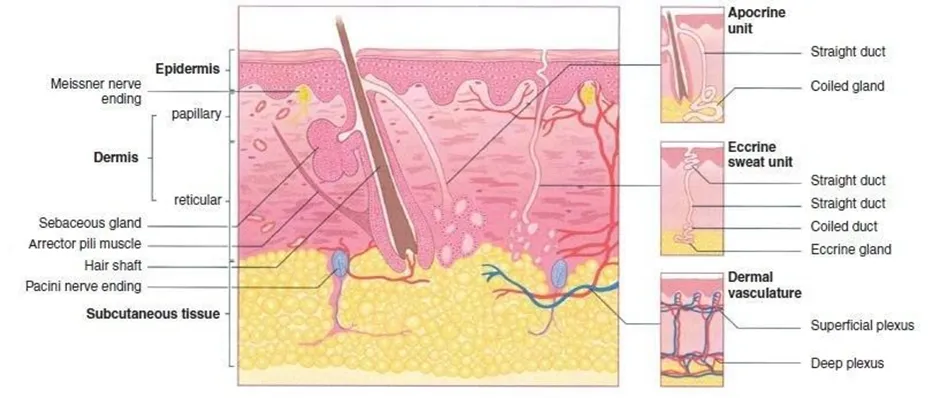
Fig 1. Structure of Skin
Dermis
The dermis is tough and elastic. It is formed from connective tissue and the matrix contains collagen fibres interlaced with elastic fibres. Rupture of elastic fibres occurs when the skin is overstretched, resulting in permanent striae, or stretch marks, that may be found in pregnancy and obesity. Collagen fibres bind water and give the skin its tensile strength, but as this ability declines with age, wrinkles develop. Fibroblasts, macrophages and mast cells are the main cells found in the dermis. Underlying its deepest layer there is areolar tissue and varying amounts of adipose (fat) tissue.
Subcutaneous gland
These consist of secretory epithelial cells derived from the same tissue as the hair follicles. They secrete an oily substance, sebum, into the hair follicles and are present in the skin of all parts of the body except the palms of the hands and the soles of the feet. They are most numerous in the skin of the scalp, face, axillae and groins. In regions of transition from one type of superficial epithelium to another, such as lips, eyelids, nipple, labia minora and glans penis, there are sebaceous glands that are independent of hair follicles, secreting sebum directly onto the surface12
COMMON COSMETIC ADR’s
Cosmetics are substances that are applied to the body with the intention of boosting attractive traits and beautifying, cleaning, or improving appearance.1 Cosmetics include a variety of items like tooth paste, shampoo, conditioners, mascara, after-shave lotion, styling gel, creams, lotions, powders, lipsticks, fingernail and toenail polish, eye and facial makeup, hair wavers, hair dye, hair spray, deodorants, and antiperspirants. According to the definition of "make up," it is a type of cosmetic that generally refers to coloured items used to change a person's appearance.2 Schneider et al defined skincare items or cosmetics as combinations of artificial or natural chemical substances intended to enhance the body's look or odour.
Skin Lightening Agent
One of the most hazardous compounds is determined to be skin-lightening treatments like hydroquinone (HQ). Reports of ochronosis and possible mutagenicity have been discovered. Ochronosis is a rare side effect of HQ that includes characteristics like a gradual darkening of the area where the cream with high concentrations of HQ is administered for many years. A hydroxyphenolic substance called hydroquinone prevents the production of melanin by inhibiting the tyrosinase enzyme. It also prevents the development or breakdown of melanosomes and prevents the creation of DNA and RNA in melanocytes. The most widely used depigmenting agent today is hydroquinone, although it has been discovered to be highly cytotoxic to melanocytes and perhaps mutagenic to mammalian cells5.It induces exogenous ochronosis as well as irritation, redness, and burning. Only minor skin patches and the treatment of conditions like age spots or sun spots were permitted.
Black Henna
For temporary "black henna tattoos," red henna and pphenylenediamine (PPD) are used to create black henna. Due to the inclusion of p-phenylenediamine (PPD), which can be found in the form of synthetic hair dye added into henna paste, black henna tattoos are chemical stains. PPD is added to henna to intensify and darken the colour, speed up the dyeing and drying process (to only 30 minutes), improve the tattoo's design pattern, and lengthen the tattoo's lifespan. Blisters, surface leaking, swelling, and erythromatous rashes on the skin are all side symptoms of PPD. The use of henna dyes might cause acute allergic reactions, according to studies and observations. Numerous instances where there was no skin reaction but instead there was sneezing, runny nose, coughing, and shortness of breath have been discovered.
Sunscreen Product
Today's sunscreen products may trigger allergic, phototoxic, irritating, or photoallergic reactions. A lot of people are sensitive to benzophenones. While cinnamates, paraaminobenzoic acid (PABA), and debenzoyl methanes could result in photoallergic dermatitis.[9] The aroma or other components are the main culprits in allergic responses linked to deodorants, antiperspirants, and fragrances. Fragrances can enter the body through the skin (adsorption), lungs, airways, ingestion, and pathways from the nose straight to the brain, which can result in symptoms such as headaches, weariness, eye, nose, and throat irritation, forgetfulness, and others. Airborne contact dermatitis can be brought on when scents are sprayed into the air or are detected in the air. Phethleugenol and coumarins, which are typically found in scents, are thought to be carcinogens, whereas phthalates are thought to be hormone disruptors.
Shampoos
Shampoos and conditioners have relatively little skin contact time because they are solely administered to the hair, which means they have less negative effects. The issue emerges, though, when they come into touch with the eyes while washing the hair. The scalp hair matting, also known as tangling of hair, is the most frequent side effect of using shampoo.10 The pH of the shampoo should be taken into account. The majority of shampoos have an alkaline pH, which enlarges the hair shaft and makes the hair more susceptible to damage. The ideal shampoo for chemically treated hair—whether from permanent colouring or permanent waving—has a pH that is neutral.11
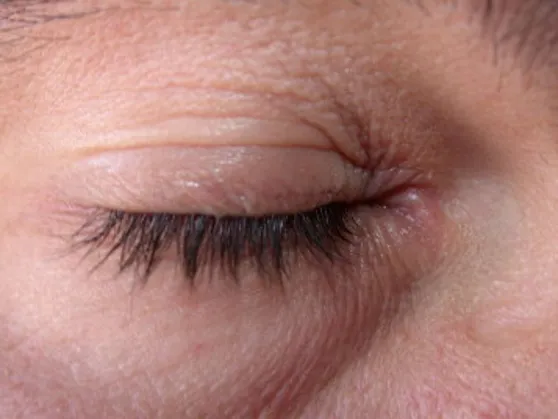
FIG2- Dermatitis alérgica de contacto a cosméticos Act as Dermo-Sifiliográficas, Volume 105, Issue 9, November 2014, Pages 822-832P. González-Muñoz, L. Conde-Salazar, S. Vañó-Galván
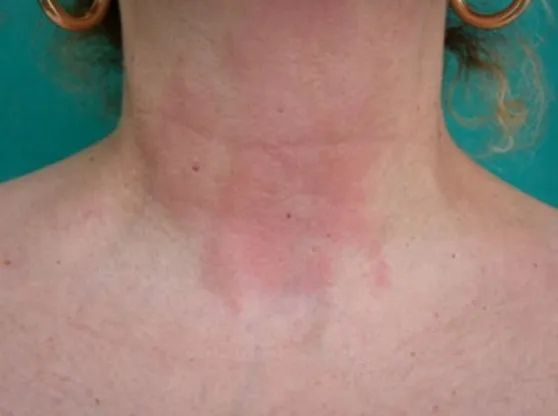
FIG 3- Dermatitis alérgica de contacto a cosméticos Act as Dermo-Sifiliográficas, Volume 105, Issue 9, November 2014, Pages 822-832 aP. González-Muñoz, L. Conde-Salazar, S. Vañó-Galván
DERMATOLOGICAL SAFETY
The term “safe” firstly denotes the thorough examination of components. Each ingredient should go through dermatological and occasionally ophthalmological testing before being included in a cosmetic composition to make sure it will not irritate skin or produce an allergic reaction or other long-term health issues. Many countries have specialized regulatory organizations, such as the Food and Drug Administration (FDA) in the United States, that keep lists of authorized chemicals based on their safety profile
But “safe” encompasses more than just quick responses. Additionally, ingredients must be examined for any potential long-term side effects, including endocrine disruption, reproductive toxicity, and carcinogenicity. A product that has been determined to be safe should not have negative effects after repeated use . Additionally, “safe” in today’s context increasingly refers to morally upright. Sustainable ingredient sourcing and testing have become integral components of safety considerations . In essence, “safe in cosmetic means” emphasizes a comprehensive method of product creation, where user safety right now and longer-term ethical consequences are of utmost importance 13.
The "Sephora Kids" trend, where children, especially tweens and teens, are increasingly using makeup and skincare products marketed by beauty retailers, presents notable dermatological challenges. Although these products can facilitate self-expression and teach self-care, their safety and efficacy for young users are largely unverified. This review examines 4 key ingredients commonly found in these products, retinol, exfoliating acids (AHA and BHA), and vitamin C, to assess their implications for pediatric skincare. Current literature and FDA-approved guidelines indicate that these ingredients have not been thoroughly tested in children. Consequently, using these products without medical supervision can pose risks such as skin redness, irritation, heightened sun sensitivity, dermatitis, and other potential adverse effects. This review underscores the importance of cautious use and highlights the need for further research to ensure the safety of these ingredients in young populations. By informing healthcare providers and consumers of these risks, we aim to promote safer skincare practices among children.14
PREFORMULATION
Sensitivity Test and Irritation
Dermatitis Contact Allergy is a hypersensitivity response that develops after repeated exposure to irritating cosmetic ingredients. Traditionally, the irritation potential of cosmetic substances has been evaluated using animal studies 15. Irritation testing is an important part of cosmetic safety assessment and is conducted before human application to reduce the risk of hypersensitivity reactions. Cosmetic cream bases may produce undesirable skin effects such as primary irritation, sensitization, photo allergy, and phototoxicity. Skin irritation is considered an inflammatory reaction caused mainly by non-immune mechanisms and can be evaluated through both subjective and objective observations. These assessments may be carried out in vivo on living human skin under controlled conditions 16.
The skin irritation potential of cosmetic formulations can be determined through primary irritation studies. Healthy male rabbits aged between 2–4 months without skin injuries are commonly selected for this procedure. The fur on the back is shaved in an area measuring approximately 2.54 × 2.54 cm and left untreated for 24 hours. Before applying the cosmetic sample, the skin is cleaned using distilled water and cotton. About 0.5 g of the cosmetic preparation is then applied to the marked area, covered with sterile gauze, and kept for 24 hours. The skin is subsequently examined for signs of irritation such as erythema and edema at intervals of 24, 48, and 72 hours 17.
Earlier concepts of genotoxicity testing mainly depended on animal-based in vivo experiments. However, modern European regulations, including the 7th Amendment of the Cosmetic Directive, have restricted the use of animal testing for genotoxicity assessment. In addition, European programs such as REACH strongly encourage the use of in vitro methods because they are more economical and less time-consuming compared to animal studies 18. During cosmetic pre-formulation studies, substances capable of causing skin irritation may arise from raw material impurities or byproducts generated during manufacturing. Fragrances and preservatives are among the most frequent causes of allergic reactions in cosmetic products 19
Sensitivity to allergens may increase with repeated exposure. For instance, frequent use of cosmetics containing nickel can elevate the likelihood of developing allergic reactions 20. Dermatitis Contact Allergy is categorized as a delayed hypersensitivity reaction involving an afferent or sensitization phase. During this process, skin dendritic cells mature, migrate to lymph nodes, and activate antigen-specific T-cells Based on this mechanism, researchers have developed in vitro T-cell assays as alternatives to animal testing for evaluating metal-induced sensitivity
Basketter et al classified skin-sensitizing ingredients into six categories based on literature reviews and reported evidence of cosmetic ingredients associated with skin sensitivity. This classification helps establish criteria for selecting ingredients that require sensitivity testing because of their potential to induce DCA.
At present, five approved in vitro assays are available as substitutes for animal testing. The first is the Direct Peptide Reactivity Assay (DPRA), a chemical-based method that evaluates the binding of substances to skin proteins. The second is the KeratinoSens™ assay, which assesses activation of the Keap1-Nrf2-ARE signaling pathway related to keratinocyte response. Additional assays targeting dendritic cell activation include the human Cell Line Activation Test (h-CLAT), the U937 Cell Line Activation Test (U-SENS™), and the IL-8 Luc assay. Despite significant progress in developing non-animal testing approaches, no validated alternative method currently exists for evaluating Key Event 4 (KE4), which involves T-cell proliferation associated with skin sensitization (Hoffmann et al., 2018).
Organoleptic Evaluation
The organoleptic parameter of cosmetic ingredients is evaluated using observation on the aspects of visual, color, odor, and touch sensitivity an organoleptic is a test based on the sensing process. Sensing means reaction or stimulus that provides an impression of an object Several studies indicated that an organoleptic study is conducted on several panelists who understand the characteristics of the preparation to be made. The panelists were given a form containing the characteristics of the preparation and asked to provide an assessment within a certain range(Organoleptic testing is a simple test and describes the daily condition of the user of the preparation. This test does not require extra equipment and oers a low cost. The main disadvantage of this method is low reproductivity because of inter and intra-examiner variability. This can be overcome with training and calibration of the chosen examiners. Cosmetic preparation must have a good organoleptic character because it is highly related to user acceptability
Formula Compatibility
Maintaining compatibility among ingredients is essential in cosmetic formulation to ensure the stability and quality of the final product. Compatibility studies help preserve the aesthetic characteristics, chemical stability, microbiological safety, and physical properties of cosmetic preparations A stable formulation ensures that the product performs effectively without undesirable interactions between its components.
One commonly used method for evaluating compatibility between cosmetic ingredients is Fourier Transform Infrared Spectroscopy. In this technique, the FT-IR spectrum of an individual ingredient is compared with the spectrum obtained after combining it with other formulation components By analyzing these spectra, researchers can determine whether interactions occur between ingredients. If the characteristic peaks of an ingredient remain unchanged after mixing with other substances, the ingredients are considered compatible.
Several factors can influence compatibility within cosmetic formulations, including molecular weight, concentration of the solution, temperature, salinity, and pH conditions Changes in these factors may alter the interaction between components and affect the stability of the preparation.
A study conducted by Pramod et al. (2015) demonstrated ingredient compatibility testing using the FT-IR technique. The study compared the spectral pattern of a pure ingredient with that of the ingredient mixed with other formulation substances. The results showed no significant changes in the spectral peaks, indicating the absence of interactions between components and confirming compatibility. Furthermore, FT-IR analysis provides more comprehensive information when combined with the Differential Scanning Calorimetry technique, which helps evaluate the thermal behavior and stability of cosmetic formulations.
Partition Coefficient
Partition coefficient determination in cosmetic pre-formulation studies was conducted to select ingredients with desired permeability to prepare the topical formulations. The partition coefficient testing can be explained using a shake-ask method Glutathione (GSH) is a broad antioxidant of the thiol-tripeptide group, highly hydrophilic, which has limitations for topical preparations. determine the apparent partition coefficient of glutathione; glutathione with additional surfactant at different t HLB values of HLB 4.3; 5.5; 7; 11 and the result is glutathione with surfactant HLB 7 has the highest log P of 2.23, the penetration test results can decreased MMP-1 expression therefore it is recommended to use efficiently as a topical agent. The partition coefficient pre-formulation was performed on a new molecule with the structure of (3)-2-(4-tert-butylbenzylidene) hydrazine carbothioamide (QNT3-18) and 4-tertbutylphenylthiourea (QNT3-20) that suspected to inhibit melanogenesis through the tyrosinase inhibition. The partition coefficient (log P) value of the quotient between water and octanol concentration from QNT3-18 and QNT3-20 molecules is 3.9 and 2.6, respectively. This showed that QNT3-18 had more hydrophobicity compared to QNT3-20. Therefore, QNT3- 18 diffuse more into the skin than QNT3-20 (Ki et al., 2013). Pre-formulation studies of N-nitrosodiethanolamine (NDELA), an impurity in many cosmetic products has been evaluated. NDELA penetrated slowly through human skin when applied either in water or propylene glycol vehicles because of slow diffusion through the stratum corneum of a molecule that is very polar because of the 2 hydroxy groups. When NDELA was applied in a more lipoidal vehicle, isopropyl myristate, the rate was markedly enhanced due to a more favorable partitioning into the membrane of the stratum corneum. The partition coefficient increases proportionately in isopropyl myristate. Other lipoidal vehicles presumably would also give enhanced percutaneous absorption of NDELA21
SELECTION OF EXCIPIENTS
Excipients in cosmetics are inactive ingredients selected to enhance product stability, texture, sensory feel, and delivery of active components. Proper selection ensures safety, efficacy, and consumer appeal while meeting regulatory standards.
Key Selection Criteria
Excipients must be chosen based on compatibility with active ingredients, skin type, and formulation goals like pH balance or viscosity. Factors include stability under storage conditions, non-irritancy for sensitive skin, and microbial resistance to extend shelf life. Regulatory compliance, such as compliance with FDA or EU cosmetic guidelines, prioritizes hypoallergenic, non-comedogenic options.
Common Excipient Types
Formulation Considerations
Match excipients to product form—surfactants for cleansers, occlusives for ointments. Test for interactions via stability studies to avoid phase separation or degradation. For your cosmetic projects, prioritize natural alternatives like plant-derived gums if focusing on clean beauty trends.[22-26]
IMPORT AND EXPORT OF COSMETICS
Import and export of cosmetics are tightly regulated to ensure safety, quality, and compliance, varying by country but often requiring registration, labeling, and testing. In India, where you're based, CDSCO oversees imports via mandatory online registration under the Drugs and Cosmetics Act 1940 and Cosmetics Rules 2020.
Indian Import Regulations
All cosmetics for sale in India must be registered on the CDSCO SUGAM portal before import, using Form COS-1 for primary or COS-4 for secondary registration. Importers need an Indian agent, manufacturing details, pack sizes, and labels; prohibited items include those with mercury or hexachlorophene. Customs duties apply at 20% under HS Code 3304, plus GST; post-registration, an Import Registration Certificate allows clearance.
Indian Export Regulations
Exports are permitted without domestic registration if not sold locally (100% export), but must comply with destination country rules like EU REACH or US FDA labeling. No CDSCO license needed for pure exports, but FSSAI for some and BIS standards for voluntary quality marking.[27-31]
RESULT AND DISCUSSION
The study on cosmetics emphasized the importance of proper formulation, safety evaluation, and regulatory compliance in the development of cosmetic products. Cosmetics are classified based on their function and site of application, including skin care, hair care, oral care, and decorative products, which helps in maintaining regulatory standards and product quality. The selection of excipients such as emulsifiers, preservatives, humectants, and antioxidants was found to significantly influence the stability, safety, texture, and effectiveness of cosmetic formulations. Preformulation studies, including evaluation of pH, viscosity, compatibility, irritation potential, and stability, played a major role in ensuring product performance and consumer acceptability. Analytical techniques such as Fourier Transform Infrared Spectroscopy and Differential Scanning Calorimetry were useful in compatibility and stability assessment. In addition, import and export regulations highlighted the need for strict quality control, labeling, and safety standards to ensure international market approval of cosmetic products. The study also revealed that cosmetic adverse drug reactions such as irritation, allergic contact dermatitis, redness, itching, and photosensitivity are commonly associated with fragrances, preservatives, and other chemical ingredients, emphasizing the importance of safety testing and cosmetic pharmacovigilance for consumer protection.
CONCLUSION
In conclusion, cosmetics have evolved from traditional practices to scientifically advanced products that play an important role in modern personal care and healthcare. Topical formulations like creams and gels are effective delivery systems, offering both therapeutic and aesthetic benefits.
However, the increasing use of cosmetics also raises concerns regarding safety, adverse reactions, and environmental impact. Therefore, proper formulation strategies, dermatological safety assessments, and strict regulatory compliance are essential in the development of cosmetic products.
The study highlights the importance of preformulation studies and excipient selection in ensuring product stability, efficacy, and user acceptability. Additionally, consumer awareness and responsible usage are crucial to minimize risks associated with cosmetic use.
Overall, cosmetic science is a rapidly growing field that integrates formulation technology, safety evaluation, and regulatory frameworks to meet the demands of the global market while ensuring consumer well-being.
REFERENCES


Dr. Deepu S, Kanaka V S, D Deborah Evangeline, Ranitha R, Neenu Anna Thomas, Srathika K S, Farseena Thazhathethil, Danushma P Menon, Shifana A, Jyothika Shamil T, M Afiya Fathima, A Comprehensive Guide to Topical Cosmetic Science: From Formulation to Global Trade, Int. J. of Pharm. Sci., 2026, Vol 4, Issue 7, 2564-2576. https://doi.org/10.5281/zenodo.21339502
 10.5281/zenodo.21339502