

We use cookies to ensure our website works properly and to personalise your experience. Cookies policy
Department of Pharmacy practice, Annamacharya college of pharmacy.
Hemophilia, which means “love” (philia) of blood (hem), is the most common severe hereditary hemorrhagic disease. Hemophilia A and B are congenital bleeding disorders caused by an absence or complete lack of coagulation factor VIII (FVIII) or factor IX (FIX), respectively.[1] It can be recognized by the prolonged and heavy bleeding that occurs after minor trauma and occasionally on its own. Hemophilia is more common in men than in women (1 in 10,000 for men and 1 in 100,000,000 for women) [3]. Hemophilia was once called as “the royal disease” [4]. Arthropathy is a frequent result of hemophilia, mainly arising from ongoing bleeding in the elbows, knees, and ankles caused by the lack of coagulation factors [6].When a joint experiences repeated episode of bleeding (known as a target joint), it undergoes chronic alterations [7]. The 1964 finding by Judith Pool that the cryoprecipitate obtained from plasma had high concentrations of FVIII marked a significant advancement in the treatment of hemophilia[4]. The most significant and challenging problem with managing hemophilia is the development of inhibitors, which makes it hard to implement safe and efficient standards of care, especially in prophylaxis [2]. innovative methods of action that aimed to imitate coagulation factor VIII or restore thrombin production. New non-replacement therapies are being tested in clinical trials to reduce the treatment burden for patients with hemophilia A or B, regardless of the presence of inhibitors, in addition to the bispecific monoclonal antibody emicizumab, which is already approved for patients with severe hemophilia A both with and without inhibitors. These treatments have the potential to provide effective bleeding prevention, improve patient adherence, and improve the general health-related quality of life for hemophiliacs due to their distinct mechanisms and subcutaneous delivery [46].
Hemophilia, which means “love” (philia) of blood (hem), is the most common severe hereditary hemorrhagic disease .and it can be identified as prolonged and excessive bleeding after minor trauma and few times spontaneously. [ 2] Hemophilia A and B are congenital bleeding disorders caused by an absence or complete lack of coagulation factor VIII (FVIII) or factor IX (FIX), respectively.[1] Hemophilia C occurs due to lack of clotting factor XI. Acquired hemophilia can present due to aging or childbirth and normally resolves with suitable treatment [2].
In the 19th and 20th centuries, Hemophilia made a prominent impact in the history of European royalty [3]. Through two of her five daughters, Princess Alice, Queen Victoria Princess Beatrice and Princess Beatrice), passed the mutation to various royal Houses, including royal families across the continent Of Russia, Germany, and Spain. Since, Leopold, Victoria’s son, suffered from the disease. Hemophilia was once called as “the royal disease” [4].
Hemophilia is more common in men (1 in 10,000) than women (1 in 100,000,000).This happens because the X chromosome functions as a vital gene involved in blood coagulation. Since men only have one X chromosome, active hemophilia will develop right away if that isn't the case. It is likely to cause an early death. On the other hand, females carry two X chromosomes. The other normal X chromosome can compensate if only one is defective. The woman will simply have the recessive defective gene; her blood coagulation will be normal. If it turns out her children acquire hemophilia, this fact will be revealed. Women who have hemophilia are clearly few because the condition takes two defective X chromosomes to manifest [3]. A coagulation factor deficiency, resulting in impaired coagulation and spontaneous bleeding, is known as hemophilia and the factor level in plasma is related with the frequency and severity of bleeding.[4]
Arthropathy is a frequent result of hemophilia, mainly arising from ongoing bleeding in the elbows, knees, and ankles caused by the lack of coagulation factors [6]. When a joint experiences repeated episode of bleeding (known as a target joint), it undergoes chronic alterations [7]. These alterations impact all tissues both inside and around the joint, including the synovium, cartilage, capsule, ligaments, bone, and muscles.[8] The 1964 finding by Judith Pool that the cryoprecipitate obtained from plasma had high concentrations of FVIII marked a significant advancement in the treatment of hemophilia. For the first time, sufficient FVIII could be administered in relatively small volumes to address the needs of patients. The primary complication In treating haemophilia today is the formation of anti-FVIII or -FIX alloantibodies, which affects around one-third of individuals with severe haemophilia A and roughly 3-5% of those with severe haemophilia B [4].
Gene therapy presents a promising opportunity for curing individuals with hemophilia by enabling the sustained internal production of factor VIII or factor IX (FIX) after the introduction of a functional gene to replace the defective gene responsible for hemophilia in the patient. Hemophilias are particularly suitable for gene therapy since even a minor increase in blood factor levels (about 5% of the normal level) can lead to considerable improvement in the bleeding symptoms experienced by severely affected patients [11][51].
CLINICAL FEATURES:
Hemophilia A is defined by a shortage of factors VIII clotting activity, leading to extended bleeding following injuries, tooth removals, or surgical procedures, as well as delayed or recurring bleeding until wounds are fully healed [13]. About half of the individuals’ cases are severe hemophiliacs, classified as individuals with a factor level <1 IU/dL according to residual endogenous FVIII/FIX concentrations. Moderate and mild hemophilia are evident subjects with factor levels that are between 1 to 5 IU/dL and greater than 5 IU/dL, respectively [1].
Hemarthrosis: In younger children, it is more commonly seen in the ankle compared to the knees, whereas in older children, it predominantly occurs in the knees rather than the elbows, as is typical in adults. Symptoms include bruising, mucosal bleeding resembling frenulum-type bleeding, nosebleeds (epistaxis), and extended bleeding resulting from injuries or surgical procedures. Additionally, hematuria, bleeding in the gastrointestinal tract, respiratory bleeding, and central nervous system bleeding occur less frequently [4].
|
Condition |
Incidence (%) |
Details |
|
Hemarthroses |
70–80% |
Most common in knee, ankle, and elbow joints. Less |
|
|
|
frequent in shoulders, wrists, and hips. |
|
Muscles |
70–80% |
Affects muscles with an incidence of 70–80%. |
|
Other Important Hemorrhages |
5–10% |
Includes other haemorrhagic events with this incidence. |
|
Central Nervous System |
<5% |
Main cause of mortality in severe haemophilia patients. Incidence declining due to prophylaxis. |
|
Head Injuries |
- |
Any head injury with headache, drowsiness, or vomiting should be treated immediately for possible intracranial bleeding. |
|
Spinal Cord Bleeding |
- |
Severe back pain may indicate bleeding in the spinal cord. |
COMPLICATIONS OF HEMOPHILIA:
Hemarthrosis, muscle hematomas that can lead to damage to the joints and muscles and bleeds in the upper gastrointestinal tract are some of the various bleeding complications that people with hemophilia experience [14] Hemarthrosis refers to the bleeding in a joint cavity, which can happen following an injury or frequently in those with bleeding disorders like hemophilia [18].Prior to joint bleeding beginning, individuals experiencing hemarthrosis often report a tingling sensation known as the "aura." The affected joint tends to become heated up, swollen, and extremely painful; it is frequently kept in a flexed position to alleviate pain [17]. Effective treatment of hemophillic hemarthrosis focuses on speedy diagnosis, enough hematological therapy, joint aspiration, physical therapy, and prevention of further bleeding [17].
The ankle, knee, and elbow joints account for the majority of bleeding events in hemophiliacs. A damaging cycle of chronic hemophilic synovitis (CHS), which causes joint damage, is started if the bleeding persists because the synovial membrane thickens [19].The first and second decades of life are when chronic synovitis usually appears. When a joint bleeds repeatedly, the synovium becomes chronically inflamed and eventually swells, causing the joint to appear visibly swollen. While the joint usually maintains a reasonably normal range of motion, muscle wasting is commonly seen [16]. Although intracranial haemorrhage (ICH) is rare in comparison to other bleeding sites, it can lead to serious risk and a significant disability to life. ICH may occur spontaneously or due to trauma in people of all ages. In addition, it has been shown that the existence of inhibitors influences the mortality rates related to intracranial haemorrhage and is an additional risk factor for it [20]. Hemophilic arthropathy can ultimately occur as a result of recurrent joint bleeding. It's still unclear if any hemarthroses lead to irreversible damage, and it likely varies from person to person. Alongside the growth of synovial inflammation is the degeneration of cartilage [15]. Repeated bleeding into the joints leads to chronic proliferative synovitis and cartilage destruction, which are the hallmarks of hemophilic arthropathy [5].It is widely recognized that by their second or third decade of life, nearly 90% of individuals with severe hemophilia experience chronic degenerative changes (hemophilic arthropathy) in one to six major joints (such as the ankles, elbows, and knees). The primary root cause of these generative changes is recurrent and spontaneous bleeding in the joints. Hemophilic arthropathy appears to be mostly caused by iron, particularly if it results in triggering synovial alterations (synovial proliferation) [5]. This condition is often accompanied by contractures and muscle weakness if proper physiotherapy is not received. Malalignment, spontaneous arthrodesis, joint deformities, subluxations, and joint laxity can all happen in the worst cases [15].
When young children start to walk, one or more episodes of hemarthrosis develop, which is a precursor to the development of joint issues related to hemophilia. If the blood accumulation in the joint is not removed promptly, it can interfere with the chondrocytes' capability to produce proteoglycans, and this ultimately leads to the cells' death. The synovium becomes hypertrophic and fragile in an effort to clear more blood, making it at risk for rebleeding, which creates the process of hemarthrosis, synovitis, and further hemarthrosis. Thus, the presence of intra-articular blood leads to flexion contractures and severe, acute pain in the afflicted joints. These can result in irreversible contractures if left untreated. Patients will develop persistent pain, chronic synovitis, and ultimately hemophilic arthropathy, or joint damage, if recurrent hemarthroses are not prevented. Usually, this disorder affects several joints, such as the knees, ankles, elbows, hips, and shoulders. After factor treatment, it is crucial to remove acute hemarthroses when bleeding occurs in order to avoid long-term problems from the intra-articular blood [5].
TREATMENT OF HEMOPHILIA:
FACTOR REPLACEMENT THERAPY:
Hemophilia had to be treated by whole blood or fresh plasma in the 1950s and early 1960s. Unfortunately, these blood products did not contain enough FVIII or FIX protein to effectively control severe bleeding. As hemorrhages after surgery, trauma, or in vital organs (especially the brain) were the leading causes of death, many individuals with severe hemophilia did not live beyond childhood or early adulthood [51] When Judith Pool found that the cryoprecipitate fraction obtained from plasma held high levels of FVIII in 1964, it was labeled as a major breakthrough in the treatment of hemophilia [9].Major surgeries and the control of severe bleeding had been made achievable by this discovery, which made the ability to infuse enough FVIII in relatively small volumes [10].
The primary contributors of mortality are critical organs, especially those in the brain. A major breakthrough in the treatment of hemophilia was the discovery in 1964 by Judith Pool that cryoprecipitate made from plasma contains high levels of FVIII. For the first time, the patients' requirements could be satisfied with relatively small amounts of FVIII. Frequent intravenous injections adjusted for body weight are necessary due to the short half-lives of FVIII and FIX. For hemophilia A, a prophylactic dose of 25–40 international units (IU) per kilogram is recommended three times a week; for hemophilia B, two to three doses of 25–40 IU per kilogram are advised every week [10]. Although there were some small variations in clinical outcome measures at this age, fewer joint bleeds were observed in earlier treatment beginnings and higher dosages. Nevertheless, the high-dose regimen comes at double the cost. It's still uncertain what the long-term outcomes will be and whether the greater costs of a "high-dose" strategy are justified. Advancements in factor concentrates' viral safety have significantly contributed to hemophiliacs' quality of life and treatment, and this is contributing to a greater acceptance of home treatment options and routine infusion regimens to prevent bleeding and subsequent joint damage (primary prophylaxis). As a result, concerns about viral safety have significantly decreased, and prophylactic measures to prevent arthropathy—the most severe complication—are now more widely accepted. and complex complication of treatment primarily affecting hemophilia A—are in place, there still exists a risk of developing inhibitory alloantibodies [2]. In order to keep normal musculoskeletal function, prophylactic treatment involves administering factor concentrate to avert bleeding and prevent joint damage. While secondary prophylaxis starts after joint disease expands, primary prophylaxis starts before or soon after the initial joint bleed and typically requires two to three infusions per week, based on the specific factor concentrate.
PRIMARY PROPHYLAXIS-A : Long-term continuous treatment started after the first joint bleed and before the child turned two.
PRIMARY PROPHYLAXIS-B: Before the child turns two, long-term continuous* treatment should start when there are no clinically evident joint bleeds.
SECONDARY PROPHYLAXIS-A: Long-term, continuous treatment that does not meet the criteria for primary prophylaxis, such as starting after two or more joint bleeds or when an individual is greater than two years
SECONDARY PROPHYLAXIS-B: Generally started as a result of frequent bleeds, intermittent regular treatment is short-term.
ON DEMAND OR EPISODIC THERAPY: Treatment is given when bleeding occurs.
Referral to a hemophilia treatment center (HTC) to support treatment (the intravenous infusion of factor VIII concentrate is most effective when given within one hour of the start of bleeding); training to enable parents or affected individuals to administer infusions at home [13].
LIMITATIONS OF FACTOR REPLACEMENT THERAPY:
The most significant and challenging problem with managing hemophilia is the development of inhibitors, which makes it hard to implement safe and efficient standards of care, especially in prophylaxis [53]. Although there are advancements in treatments, patients who develop inhibitors have higher rates of morbidity and mortality and a lower quality of life related to their orthopedic conditions than patients who do not. In addition, this complication is the highest documented financial impact of any chronic illness [2]. These inhibitors, which negate the effective function of administered FVIII and FIX clotting factors during replacement therapy, hinder patients’ access to safe and effective treatment, while also increasing their risk of morbidity and mortality. For patients with inhibitors, two treatment strategies can be pursued: haemostatic management to prevent or manage bleeding events, and approaches aimed at eliminating the inhibitors. Although replacement therapy has been the conventional method to correct the hemostatic deficiency in hemophilia for many years, it presents several limitations and challenges. Non replacement therapies have the potential to address these unmet needs in haemophilia treatment. This category of therapies is designed using innovative approaches that go beyond merely substituting the deficient clotting factor. These new agents are intended to restore hemostasis through mimetic products or to re-establish hemostatic balance by inhibiting anticoagulant pathways [4].Approximately 30% of individuals experience this, and it is especially frequent among young children during the early stage of treatment [27].Patients with hemophilia may experience immune system changes as a result of the factor concentrate itself, possibly due to high levels of foreign proteins [28].Significant illness and death among hemophiliacs have been due to the rise and spread of HIV, hepatitis B, and hepatitis C through clotting factor products.For those with hemophilia who continue to be treated with fresh frozen plasma (FFP) and cryoprecipitate, these infections stay a risk [29].To date, the main agents that have been found through the concentrate infusions are the human immunodeficiency virus (HIV), the hepatitis B virus (HBV), and the non-A, non-B hepatitis virus (NANB) [28].
NON-FACTOR REPLACEMENT THERAPY :
The following are the non-factor replacement therapy are the advancement innovations for the treatment of hemophilia[50].
EMICIZUMAB:
Hemophilia A is treated and managed with the medication emicizumab. It belongs to the class of monoclonal antibodies that are bispecific. Patients with hemophilia A require complex care, including the replacement of FVIII for both acute bleeding incident management and bleeding prevention [30]. Marketed under the brand name Hemlibra (Roche), emicizumab is authorized in more than 50 countries worldwide to treat hemorrhagic episodes in adult and pediatric hemophilia A patients who are taking inhibitors. Furthermore, the US Food and Drug Administration (FDA) recently approved this drug for prophylactic use in hemophilia A patients who do not take FVIII inhibitors [31][32][49].
MECHANISM OF ACTION :
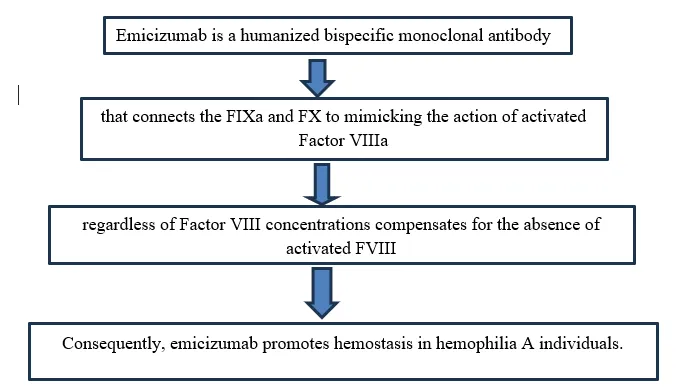
Figure 1: Mechanism of action of emicizumab in hemophilia A with or without inhibitors [33] [34].
INDICATIONS:
FVIII has a short plasma half-life, so patients need to take doses frequently.When receiving FVIII replacement, people with hemophilia A must have FVIII administered intravenously at least three times per week.Handling acquired hemophilia A (AHA), which is brought on by autoantibodies that attack the body's FVIII, can also be challenging.In addition to raising FVIII levels, immunosuppressive therapies that target inhibitors are used to treat acquired hemophilia A [33][34].
ADMINISTRATION:
Subcutaneous emicizumab has been authorized for use in a number of countries to stop bleeding episodes in people with hemophilia A, irrespective of whether or not they are taking an FVIII inhibitor [35]. Prophylactic emicizumab has significantly reduced annualized bleeding rates in adults and adolescents with hemophilia A, including those treated with FVIII inhibitors. In children with comparable medical conditions, it has also assisted in preventing or greatly reducing episodes of bleeding [37].Moreover, emicizumab is a good substitute for conventional FVIII replacement treatments, which typically call for more frequent dosing, because of its simple subcutaneous administration and the option of less frequent dosing (once every 1, 2, or 4 weeks) [38][39][40][52].
FITUSIRAN:
Regardless of the presence of inhibitors, fitusiran improves hemostasis and lowers the annualized bleed rate in patients with hemophilia A and B, making it unique among potential hemostatic treatments for congenital bleeding disorders [42].The US Food and Drug Administration (FDA) approved fitusiran, a small interfering RNA (siRNA) treatment for hemophilia, on March 28, 2025 [41] [48].
MECHANISM OF ACTION:
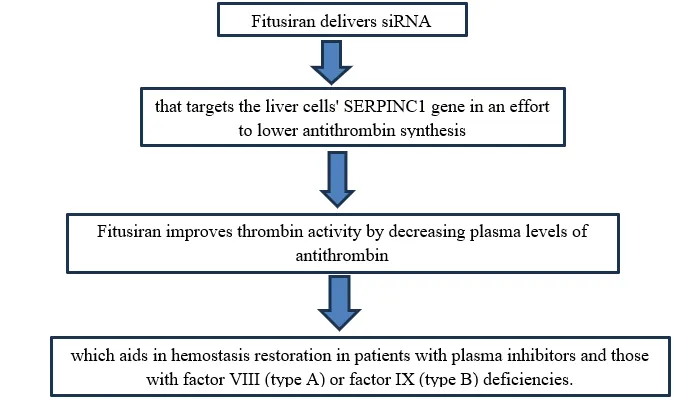
Figure 2: Mechanism of action of fitusiran in hemophilia A and B with or without
inhibitors.
INDICATIONS:
For adults and children aged 12 and up with hemophilia A or B, with or without factor VIII or IX inhibitors, QFITLIA is advised for routine use in order to help prevent or reduce the incidence of bleeding episodes or disorders [43][48].
ADMINISTRATIONS:
Subcutaneous injections of Qfitlia are administered once every two months. Under the supervision of a medical expert who is experienced in treating hemophilia or other bleeding disorders, QFITLIA should be administered. After starting QFITLIA treatment, patients can continue their prior prophylactic use of clotting factor concentrates (CFC) or bypassing agents (BPA) for the first seven days. Prophylactic use of CFC or BPA should be discontinued no later than seven days after the initial QFITLIA dosage. QFITLIA is given subcutaneously every two months at an initial dose of 50 mg. The frequency and/or dosage can be changed if needed to keep AT activity between 15 and 35% [44].
CONSIZUMAB:
The FDA approved Alhemo (concizumab-mtci) on December 20 for use as a routine preventative measure to help minimize or prevent bleeding episodes in adults and children aged 12 and older The prescribing information contains specific dosage recommendations [55]Hives (urticaria) and injection site reactions were the most commonly reported adverse effects (affecting at least 5% of patients) linked to Alhemo. Hypersensitivity reactions, including rash, itching (pruritus), abdominal pain, and skin redness (erythema), have been reported in patients undergoing Alhemo treatment [45] [56].
MECHANISM OF ACTION:
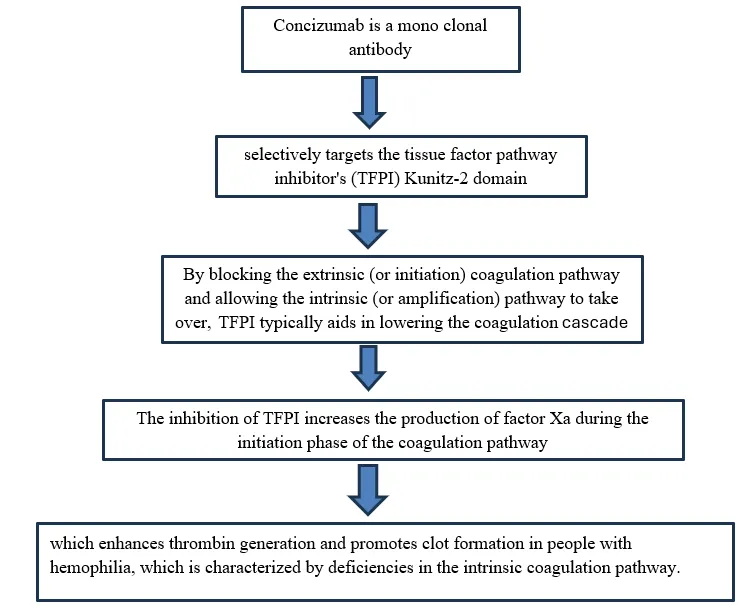
Figure 3: Mechanism of action of concizumab in hemophilia A and B with or without inhibitors [46]
INDICATIONS:
Alhemo is recommended as a routine prophylactic to stop or lessen bleeding episodes in adults and children aged 12 and up who have:
1.Congenital factor VIII deficiency, or hemophilia A, with or without FVIII inhibitors
2.Congenital factor IX deficiency, or hemophilia B, with or without FIX inhibitors [46].
ADMINISTRATION:
Recommended dosage schedule:
• First day: 1 mg/kg loading dose; second day: 0.2 mg/kg once daily until maintenance dose customization (see below) [54].
• 4 weeks following the start of treatment: Use an FDA-approved test to measure the concizumab-mtci plasma concentration using the Concizumab Enzyme-Linked Immunosorbent Assay (ELISA) for dose optimization before administering the next dose [46] [54].
COMPARISION OF ANNUAL BLEEDING RATE :
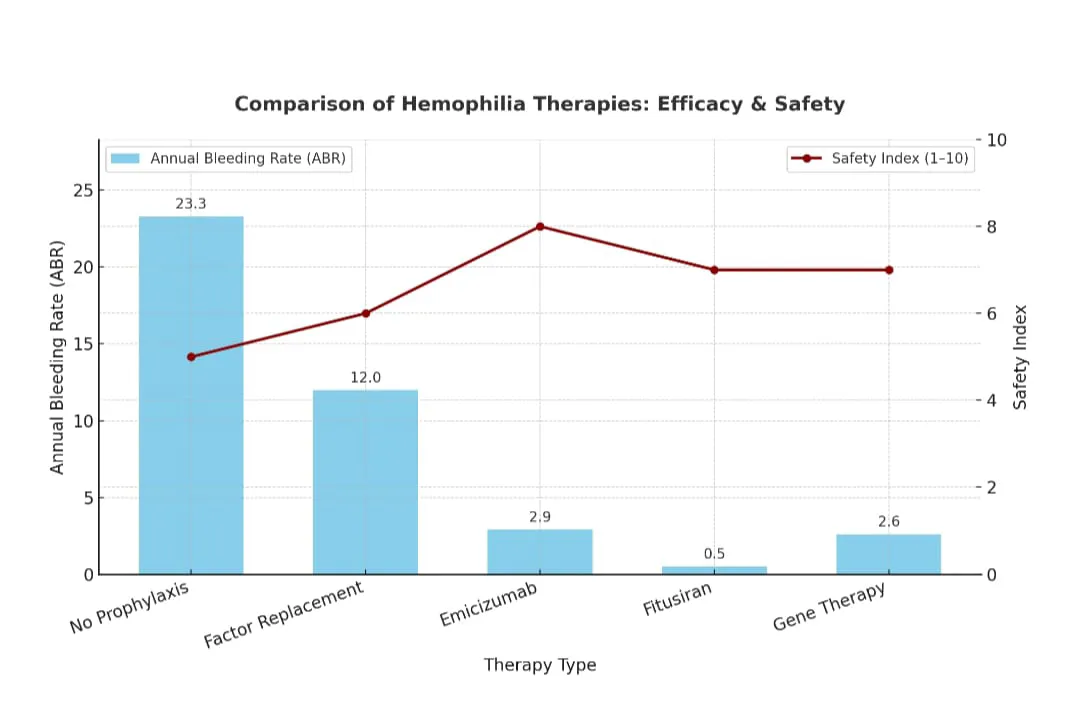
Figure 4. Comparative efficacy and safety of hemophilia therapies
Annual bleeding rate (ABR) and safety index scores (1–10) are shown across different therapeutic approaches for hemophilia, including no prophylaxis, factor replacement, emicizumab, fitusiran, and gene therapy. Lower ABR values indicate higher efficacy in bleed prevention, while higher safety index values reflect a more favorable safety profile based on available clinical data.
CONCLUSION
The treatment of hemophilia is being revolutionized by the development of non-factor replacement therapy, particularly for patients who have inhibitors or who are unable to receive traditional factor replacement therapy. When compared to conventional treatments, these novel therapies—such as emicizumab, fitusiran, and concizumab offer a number of advantages. The main benefit of non-factor replacement therapies is that they allow for subcutaneous administration, which is more convenient and less invasive than the intravenous infusions required for factor concentrates. This greatly enhances patient adherence and quality of life, especially for children. In conclusion, new non-replacement therapies will expand the options for treatment, potentially revolutionizing hemophilia care and inspiring enormous optimism in both medical professionals and hemophiliacs. To determine which drug is the safest and most effective for each patient, however, more information from completed clinical trials and post-marketing research is required. This is in line with the personalized medicine approach, which ought to be the current norm in healthcare [47].
REFERENCES


S. Sowmya, N. Niharika, S. Jahnavi, Bridging The Gap Between Traditional Factor Replacement Therapy and Novel Non-Factor Replacement Therapy in Hemophilia, Int. J. of Pharm. Sci., 2026, Vol 4, Issue 8, 140-153, https://doi.org/10.5281/zenodo.21737721
 10.5281/zenodo.21737721