

We use cookies to ensure our website works properly and to personalise your experience. Cookies policy
Krishna School of Pharmacy & Research, Drs. Kiran & Pallavi Patel Global University (KPGU), Vadodara, Gujarat, India
Caesalpinia bonduc (L.) Roxb. [Syn. Caesalpinia bonducella (L.) Fleming; syn. Guilandina bonduc L.], commonly known as Fevernut or Kakachoo, is a thorny, perennial, climbing shrub of the family Fabaceae (sub-family Caesalpiniaceae). The plant enjoys a pantropical distribution and has been documented in the traditional medicinal systems of India—including Ayurveda, Siddha, Unani, and Homoeopathy—for centuries 1,2. Virtually all parts of the plant (roots, stem bark, leaves, seeds, flowers) are exploited medicinally. More than 97 phytoconstituents have been isolated to date, spanning cassane and norcassane diterpenoids, flavonoids, homoisoflavonoids, phenolic acids, steroids, alkaloids, saponins, fatty acids, and amino acids 3,4,5. Key bioactive compounds include bonducin, bonducellin, caesalpinin, and a suite of furanoditerpenes 1,3. Pre-clinical and in vitro studies have corroborated a broad spectrum of pharmacological activities: antidiabetic, anti-inflammatory, antipyretic, antimicrobial, antifungal, antioxidant, anticancer, hepatoprotective, immunomodulatory, anticonvulsant, analgesic, antifilarial, and antiestrogenic 5,6,7,8,9,10,11,12. The plant is also used in veterinary medicine and shows promising larvicidal properties. Despite this extensive pre-clinical evidence, validated clinical trials and detailed toxicological assessments remain limited, creating a significant gap between traditional use and modern pharmaceutical acceptance 2. This review consolidates existing knowledge on the taxonomy, geographical distribution, vernacular nomenclature, ethnopharmacology, pharmacognosy, phytochemistry, pharmacological activities, structure–activity relationships, toxicological profile, and future research directions of C. bonduc, with the aim of guiding researchers toward drug development from this remarkable medicinal plant.
Medicinal plants occupy a central position in global healthcare, supplying approximately 25% of all currently used pharmaceutical drugs 13. The growing incidence of antimicrobial resistance, adverse effects of synthetic drugs, and escalating costs of modern therapeutics have intensified interest in plant-based medicine 1,2. Among the large pharmacopoeia of traditional medicinal plants, Caesalpinia bonduc (L.) Roxb.—popularly known in English as Fevernut, Nicker bean, or Physic nut, and in Hindi as Katkaranj or Kakachoo—stands out as a plant of exceptional medicinal versatility 1,5.
The genus Caesalpinia is vast, encompassing more than 500 species distributed across tropical and subtropical biomes worldwide 2. Within this genus, C. bonduc has attracted the most sustained scientific interest due to its prolific use across indigenous medicine systems of India, Africa, Southeast Asia, and Latin America 1,2,5. In Indian traditional medicine, the plant has been described in classical Ayurvedic texts under the Sanskrit names Latakaranja and Putikaranja and has been used to treat intermittent fevers, diabetes mellitus, inflammation, worm infestations, skin diseases, hydrocele, and reproductive disorders 1,2.
Phytochemical investigations have revealed a rich repertoire of secondary metabolites, particularly cassane- and norcassane-type diterpenoids, which appear to be the principal bioactive scaffold 3,4. In vitro, ex vivo, and in vivo studies have validated numerous traditional claims 6,7,8,9,10,14. However, systematic reviews collating the full breadth of pharmacological data alongside taxonomy, pharmacognosy, and safety information remain relatively sparse, especially those incorporating literature published after 2020 2,5. This comprehensive review addresses that gap by synthesizing data from PubMed, Scopus, Web of Science, ScienceDirect, Google Scholar, and ResearchGate up to early 2025.
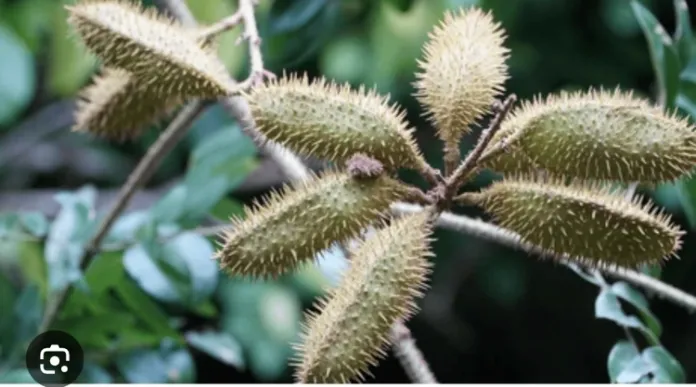
Figure 1: Spiny seed pods of Caesalpinia bonduc (L.) Roxb. on the branch, showing the characteristic prickly pericarp.
2. TAXONOMY AND NOMENCLATURE
The accepted scientific name of the plant according to current botanical classification is Guilandina bonduc L. (World Flora Online, 2023) 15; however, the names Caesalpinia bonduc (L.) Roxb. and Caesalpinia bonducella (L.) Fleming remain widely used in the pharmacological literature and are treated here as synonyms 1,2.
2.1 Taxonomic Classification
Table 1: Taxonomic classification of Caesalpinia bonduc [16, 19].
|
Rank |
Classification |
|
Kingdom |
Plantae |
|
Sub-kingdom |
Tracheobionta |
|
Super-division |
Spermatophyta |
|
Division |
Magnoliophyta |
|
Class |
Magnoliopsida |
|
Sub-class |
Rosidae |
|
Order |
Fabales |
|
Family |
Fabaceae (Caesalpiniaceae) |
|
Sub-family |
Caesalpinioideae |
|
Genus |
Caesalpinia / Guilandina |
|
Species |
bonduc (L.) Roxb. |
2.2 Synonyms
Accepted synonyms include: Caesalpinia bonducella (L.) Fleming; Caesalpinia crista Linn.; Guilandina bonduc L.; Bonduc majus Medik.; Guilandina bonducella L.; Guilandina gemina Lour.; and Caesalpinia jayabo Maza, among others 2,15.
2.3 Vernacular Names
C. bonduc is known by a wide range of common names across the languages and regions where it is traditionally used, including Fevernut, Nicker bean, and Physic nut in English; Katkaranj and Kakachoo in Hindi; Latakaranja in Sanskrit; and corresponding vernacular names in Bengali, Tamil, Telugu, Malayalam, Kannada, Oriya, Arabic, Persian, and French, among other languages 1,2.
3. BOTANICAL DESCRIPTION AND MORPHOLOGY
Caesalpinia bonduc is a large, straggling, perennial, prickly shrub or woody climber that can reach up to 10 m in height when supported 2. The species name 'bonducella' is derived from the Arabic word bonduce, meaning 'little ball', an allusion to the globular shape of the seeds 5.
3.1 Stem and Branches
The stem is woody, green to grey, longitudinally striated, and heavily armed with recurved, hooked, and straight yellow-brown prickles approximately 0.3 cm long 2. Young branches are densely grey-tomentose (finely downy). The thorns are present on both the rachis and branches, facilitating the plant's climbing habit 2,5.
3.2 Leaves
Leaves are large, alternate, bipinnate, 30–90 cm long, with 3–8 pairs of pinnae 2. Each pinna bears 3–4 pairs of opposite or sub-opposite leaflets. Leaflets are oblong to ovate, 2.5–5 cm × 1.5–3 cm, mucronate at apex, and slightly hairy on both surfaces. Stipules are subulate and caducous. The rachis itself is thorny 16.
3.3 Flowers
Flowers are bright yellow, bisexual, arranged in dense axillary or terminal racemes of 15–30 cm length 2. Each flower has 5 petals, the upper petal being smaller than the others with reddish streaks at the base. Sepals are 5, reddish-brown on the inner surface. Stamens are 10, free, with hairy filaments. Flowering season: primarily August to October 5.
3.4 Fruits and Seeds
Fruits are oblong leguminous pods, 5–9 cm × 3.5–5 cm, covered with dense, stiff, yellowish prickles 2. Each pod contains 1–2 seeds. Seeds (the most medicinally prized part) are ovoid to globose, 1.5–2.5 cm in diameter, hard, lead-grey to dark grey in colour with a smooth, lustrous surface 5. The seed coat is extremely hard and durable, enabling seeds to float in seawater for extended periods—an adaptation facilitating long-range ocean dispersal 2. Fruiting season: December to March.
3.5 Roots
Root system is well-developed and woody 5. Root bark is thin, yellowish-grey, and bitter in taste. Roots are used medicinally in Ayurvedic preparations for fever and liver disorders 1,2.
4. GEOGRAPHICAL DISTRIBUTION AND ECOLOGY
Caesalpinia bonduc exhibits a pantropical distribution, occurring across tropical and subtropical regions of Asia, Africa, the Americas, and the Pacific Islands 1,2,5. In India, it is abundantly found in the Andaman and Nicobar Islands, Eastern Ghats, coastal Maharashtra, Goa, Kerala, Tamil Nadu, Karnataka, and Odisha. Beyond India, it is recorded in Sri Lanka, Bangladesh, Myanmar, Vietnam, China, Thailand, Indonesia, Australia, Caribbean islands, and parts of tropical Africa 2.
Ecologically, the plant thrives in moist deciduous forests, evergreen forests, scrub jungles, coastal thickets, and disturbed habitats 5. It shows considerable tolerance to saline coastal environments and is frequently found on seashores, riverbanks, forest margins, and hedges 2. The plant grows best at altitudes below 1,000 m, in sandy to loamy soils with moderate rainfall (1,000–3,000 mm/year) and full to partial sunlight 2.
5. ETHNOPHARMACOLOGY AND TRADITIONAL USES
The ethnomedicinal use of C. bonduc spans centuries and multiple traditional medical systems 1,2. The earliest documented references appear in classical Ayurvedic texts including the Charaka Samhita and Sushruta Samhita, where the plant is described as a febrifuge, anthelmintic, and anti-inflammatory agent 1. Traditional documentation has been consistently reaffirmed by ethnobotanical surveys conducted across India and other tropical regions up to the present day 2,5.
5.1 Ayurveda
In Ayurveda, Latakaranja is classified as having tikta (bitter) and kashaya (astringent) rasa, laghu and ruksha properties, and ushna veerya (hot potency) 1. It is prescribed as a kaphavata pacifying drug. Traditional indications include jwara (fever), shwasa (asthma), kasa (cough), krimi (helminthiasis), udara (abdominal disorders), and arsha (haemorrhoids) 1,2. Formulations include Karanjadi churna and Latakaranjadi kwatha 1.
5.2 Siddha System
In Siddha medicine, practiced predominantly in Tamil Nadu, the plant is known as Kazharchi 1. Seed kernel preparations are used as kashayam (decoctions) to treat recurring fevers, diabetes, and liver diseases 1,2. The seeds are also roasted and administered as a general tonic 1.
5.3 Unani System
In Unani medicine, the nuts and leaves are classified for their Muha'lil-e-waram (anti-inflammatory), Musakkin-e-alam (antipyretic), Musaffi-i-Dam (blood-purifying), and Dafi-i-Tashannuj (anticonvulsant) properties 1,2. Key conditions treated include Humma (seasonal fevers), Diq al-Nafas (bronchial asthma), Su'al-o-Surfa (bronchitis), Istisqa Ziqqi (ascites), Qarw Ma'i (hydrocele), and Dhat al-Janb (pleurisy) 1.
5.4 Folk and Tribal Medicine
Table 2: Traditional uses of various parts of Caesalpinia bonduc [11, 15, 16].
|
Plant Part |
Traditional Use |
Preparation |
|
Seeds (kernel) |
Diabetes, fever, malaria, anthelmintic, hydrocele |
Decoction, powder with milk |
|
Leaves |
Elephantiasis, smallpox, liver diseases, sore throat, intestinal worms |
Juice, paste, gargle, poultice |
|
Root bark |
Fever, liver diseases, intermittent fevers |
Decoction, extract |
|
Stem bark |
Anti-inflammatory, skin disorders, leprosy |
Paste, decoction |
|
Seed oil |
Skin diseases, hair growth, rheumatism |
Topical oil application |
|
Flowers |
Analgesic, anti-inflammatory |
Infusion, powder |
|
Seed coat |
Antimalarial (traditionally chewed) |
Direct use, powder |
|
Whole plant |
Snake bite (water-based extract), expectorant |
With pepper and honey |
6. PHARMACOGNOSTIC EVALUATION
6.1 Macroscopic Characters
Seeds: Ovoid to spherical, 1.5–2.5 cm diameter; surface smooth, glossy, lead-grey; extremely hard testa; cotyledons pale yellow, oily; distinct raphe visible 5,16. Odour: faint, characteristic; taste: bitter and astringent. Leaves: Alternate, bipinnate; leaflets 2–5 cm, oblong, slightly hairy; mid-rib prominent; odour faint; taste slightly bitter 16.
6.2 Microscopic Characters
Seed transverse section reveals a thick, lignified testa composed of palisade-like macrosclereid cells (malpighian cells) forming the outermost layer, followed by a layer of hourglass cells (osteoscleroids) 5,16. The cotyledonary parenchyma is filled with protein bodies and oil globules. Vascular bundles are collateral type. Calcium oxalate crystals (prism type) are present in the seed coat parenchyma. Leaf section shows dorsiventral lamina, anomocytic stomata, unicellular covering trichomes, and a prominent midrib with collateral vascular bundle 16.
6.3 Physicochemical Standards
Table 3: Physicochemical parameters for C. bonduc seed kernel and leaves [11, 17].
|
Parameter |
Seed Kernel |
Leaves |
|
Loss on drying (% w/w) |
≤ 9.0 |
≤ 10.0 |
|
Total ash (% w/w) |
≤ 3.5 |
≤ 15.0 |
|
Acid-insoluble ash (% w/w) |
≤ 0.5 |
≤ 4.0 |
|
Water-soluble extractive (% w/w) |
≥ 12.0 |
≥ 20.0 |
|
Alcohol-soluble extractive (% w/w) |
≥ 8.0 |
≥ 15.0 |
|
Crude fat (% w/w) |
15–18 |
3–5 |
|
Crude protein (% w/w) |
20–25 |
8–12 |
|
Swelling index |
≥ 6 |
– |
6.4 Phytochemical Screening
Preliminary phytochemical screening of various solvent extracts of C. bonduc seeds consistently reveals the presence of: alkaloids (Dragendorff's test +), flavonoids (alkaline reagent +), saponins (froth test +), tannins (FeCl3 +), phytosterols (Liebermann–Burchard +), glycosides (Keller–Kiliani +), terpenoids (Salkowski +), phenolic compounds (+), fixed oils (+), proteins and amino acids (+) 5,12,16,17. Starch and reducing sugars are also detectable in some extracts 12.
7. PHYTOCHEMISTRY
More than 97 phytoconstituents have been isolated and structurally characterized from various parts of C. bonduc 3,4,5. The chemical diversity of this species is remarkable, spanning multiple biosynthetic classes. Seeds (particularly the kernel) are the most extensively studied plant part 1,5.
7.1 Cassane and Norcassane Diterpenoids
This class represents the chemotaxonomic marker of the genus and the primary bioactive scaffold 3. Cassane diterpenoids isolated from seeds, stems, and roots include: caesalpinins A–P, caesalmins A–K, taepeenins A–L, neocaesalpins B, C, D, and H, and caesalpinianone 3,4. Norcassane diterpenoids include norcaesalpinins, nortaepeenins A and B, and related compounds 4. These diterpenes feature a characteristic furanyl ring system (furanoditerpenes) that is linked to their cytotoxic and anti-inflammatory properties 3,5.
7.2 Alkaloids
Alkaloids identified include bonducin (the principal bitter principle), bonducellin, and several uncharacterized minor alkaloids 1,3. Bonducin is a diterpene-related bitter substance responsible for significant antidiabetic and antipyretic activity 7,12.
7.3 Flavonoids and Homoisoflavonoids
The leaves and young twigs are particularly rich in flavonoids 17. Isolated compounds include: apigenin, luteolin, quercetin, kaempferol, quercetin-3-methyl ether, and several isoflavone glycosides 11,17. Legumes (unripe pods) have yielded naringenin and kaempferol 18.
7.4 Phenolic Acids
Leaves contain significant quantities of phenolic acids: caffeic acid, chlorogenic acid, p-coumaric acid, ferulic acid, and gallic acid 11,17,19. These contribute to antioxidant and anti-inflammatory activities 11,19.
7.5 Steroids and Phytosterols
β-sitosterol is the predominant phytosterol, along with stigmasterol, campesterol, and cholesterol in minor amounts 3,5. These compounds contribute to anti-inflammatory, anticancer, and hypocholesterolaemic activities 1,5.
7.6 Fatty Acids and Seed Oil
Fixed oil content of seed kernels ranges from 15–18% (w/w) 5. Major fatty acids include linoleic acid (C18:2), oleic acid (C18:1), palmitic acid (C16:0), and stearic acid (C18:0) 5. The seed oil has been evaluated for anti-inflammatory and antifungal properties 1,5.
7.7 Other Constituents
Additional constituents isolated include: citrulline (an amino acid), homoisoflavonoid sphytosterin, saponins (responsible for the frothy aqueous extract), tannins (gallotannins), polysaccharides from the seed gum, and fixed and volatile oils in minor proportions 3,4,5.
Table 4: Major phytoconstituents isolated from various parts of C. bonduc [6, 7, 9, 10, 11, 12].
|
Class |
Key Compounds |
Plant Part |
|
Cassane diterpenoids |
Caesalpinins A–P, Caesalmins A–K, Taepeenins A–L, Neocaesalpins B/C/D/H |
Seeds, stem, root |
|
Norcassane diterpenoids |
Norcaesalpinins, Nortaepeenins A & B |
Seeds, stems, roots |
|
Alkaloids |
Bonducin, Bonducellin, Caesalpinin |
Seeds, whole plant |
|
Flavonoids |
Apigenin, Luteolin, Quercetin, Kaempferol, Naringenin |
Leaves, twigs, legumes |
|
Phenolic acids |
Caffeic, Chlorogenic, p-Coumaric, Ferulic, Gallic acid |
Leaves |
|
Sterols |
β-Sitosterol, Stigmasterol, Campesterol |
Seeds, leaves |
|
Fatty acids |
Linoleic, Oleic, Palmitic, Stearic acid |
Seed oil |
|
Amino acids |
Citrulline, Glutamic acid, Alanine |
Seeds |
|
Tannins |
Gallotannins, Ellagitannins |
Bark, leaves |
|
Saponins |
Triterpenoid saponins |
Seeds, roots |
8. PHARMACOLOGICAL ACTIVITIES
The pharmacological profile of C. bonduc is exceptionally diverse, encompassing activities documented through in vitro assays, animal models, and limited human studies 1,2,5. Each activity is discussed below with reference to the plant part, extract type, and study model employed.
8.1 Antidiabetic Activity
The antidiabetic potential of C. bonduc is among its best-documented properties 5,12. Seed kernel extracts have demonstrated significant oral hypoglycaemic activity in alloxan-induced and streptozotocin-induced diabetic rodent models 12. The petroleum ether extract of seeds reduced blood glucose levels comparably to the reference drug glibenclamide 12. Bonducellin and cassane diterpenoids are proposed as the primary active agents, acting through stimulation of insulin secretion from pancreatic beta-cells, inhibition of α-glucosidase and α-amylase enzymes, and enhancement of peripheral glucose uptake 12. Antihyperlipidaemic effects have been concurrently observed, with normalization of total cholesterol, LDL, triglycerides, and elevation of HDL in diabetic animals 12.
8.2 Anti-inflammatory and Antipyretic Activity
Archana et al. (2005) demonstrated significant antipyretic activity of C. bonducella seed kernel extract in Brewer's yeast-induced pyrexia in rats (comparable to paracetamol) 7. Anti-inflammatory activity has been established in carrageenan-induced paw oedema, cotton pellet granuloma, and formalin-induced models, with methanol and ethanol seed/flower extracts showing dose-dependent inhibition 7,14. The mechanism involves inhibition of prostaglandin synthesis (COX pathway) and reduction of pro-inflammatory cytokines (TNF-α, IL-6) 14. Arunadevi et al. (2008) validated the anti-inflammatory property of flower extract with HPTLC fingerprinting 14.
8.3 Antimalarial Activity
Traditional use as a malarial febrifuge is supported by experimental data 1,5. Seed extracts have shown suppressive activity against Plasmodium falciparum (in vitro) and Plasmodium berghei (in vivo murine model) 5,8. The cassane furanoditerpene fraction demonstrates the greatest antimalarial potency, with IC50 values in the low micromolar range against chloroquine-sensitive strains 3. Mechanistically, the compounds appear to disrupt haem detoxification within the parasite, similar to chloroquine 5.
8.4 Antimicrobial and Antifungal Activity
Seed extracts prepared with different solvents (ethyl acetate, aqueous, petroleum ether) show broad-spectrum antibacterial activity against Staphylococcus aureus, Escherichia coli, Pseudomonas aeruginosa, Klebsiella pneumoniae, and Salmonella typhi, with MIC values ranging from 0.5–8.0 mg/mL 8. Antifungal activity has been established against Aspergillus niger, Candida albicans, Fusarium oxysporum, and Alternaria solani 10. A mechanistic study by Gowri et al. (2022) demonstrated that ethanolic extract of C. bonduc seeds (EECS) triggers metacaspase-dependent apoptosis in C. albicans, mediated by ROS generation, intracellular Ca2+ elevation, mitochondrial dysfunction, cytochrome c release, and DNA fragmentation—confirming a unique antifungal mechanism of action 10.
8.5 Antioxidant Activity
Methanol and ethanol extracts of leaves, seeds, and young twigs demonstrate potent free radical scavenging activity in DPPH, ABTS, FRAP, and superoxide dismutase assays 11,19. Total phenolic and flavonoid content correlates positively with antioxidant capacity 11. Sembiring et al. (2018) characterized phenolic and flavonoid content across different plant parts using standardized extraction protocols 11. The rich phenolic acid profile (gallic, caffeic, ferulic acids) is primarily responsible for antioxidant activity 11,19.
8.6 Anticancer and Antiproliferative Activity
Cassane and norcassane diterpenoids, along with flavonoids from C. bonduc, have demonstrated cytotoxic activity against multiple cancer cell lines including MCF-7 (breast cancer), HeLa (cervical cancer), A549 (lung cancer), HepG2 (hepatocellular carcinoma), and HCT-116 (colorectal cancer) 3,5. Proposed mechanisms include: (a) induction of apoptosis via caspase-3/7 activation; (b) cell cycle arrest at G0/G1 phase; (c) disruption of mitochondrial membrane potential; (d) modulation of BCL-2/BAX ratio; and (e) inhibition of topoisomerase II 3,5. The IC50 values of seed diterpenoid fractions range from 5–50 µg/mL against sensitive cancer lines 3.
8.7 Hepatoprotective Activity
Seed and leaf extracts exhibit hepatoprotection against paracetamol- and CCl4-induced hepatotoxicity in rats 1,5. Treatment significantly reduces elevated serum transaminases (AST, ALT), alkaline phosphatase (ALP), total bilirubin, and restores hepatic antioxidant enzymes (catalase, SOD, glutathione) 5. Histopathological studies confirm reduced centrilobular necrosis and hepatocyte vacuolation 1,5. The protective mechanism is linked to membrane stabilization and antioxidant activity of flavonoids and phenolics 11.
8.8 Immunomodulatory Activity
Seed extracts of C. bonduc demonstrate immunostimulant activity by enhancing phagocytic index of macrophages, stimulating delayed-type hypersensitivity (DTH) response, increasing antibody titre in SRBC-immunized mice, and promoting proliferation of splenocytes 1,5. At higher doses, immunosuppressive effects have also been noted, suggesting a dose-dependent bidirectional immunomodulatory effect 5.
8.9 Analgesic Activity
Antipyretic and analgesic activities were simultaneously established by Archana et al. (2005) 7. Flower and seed kernel extracts exhibit central and peripheral analgesic properties in hot plate test and acetic acid-induced writhing models 7,9. The mechanism is partly attributed to inhibition of prostaglandin synthesis and interaction with opioidergic pathways 9.
8.10 Anticonvulsant and Anxiolytic Activity
Seed extract of C. bonducella showed anticonvulsant effects in maximal electroshock seizure (MES) and pentylenetetrazole (PTZ)-induced convulsion models in rodents (Ali et al., 2009) 6. The anxiolytic effect has been documented in elevated plus-maze and open-field tests, with activity comparable to diazepam at therapeutic doses 6. The diterpenoid and flavonoid fractions likely interact with GABA-benzodiazepine receptors 6.
8.11 Antifilarial Activity
Seed extracts demonstrate in vitro microfilaricidal activity against Brugia malayi and Setaria cervi microfilariae 1,5. Mortality rates comparable to diethylcarbamazine (DEC) were observed at concentrations of 200–400 µg/mL, suggesting potential in filariasis-endemic regions where the plant is readily available 5.
8.12 Antiestrogenic and Reproductive Effects
The plant's antiestrogenic and antiandrogenic potential is of growing interest for management of Polycystic Ovary Syndrome (PCOS) 2,5. Seed extracts lower testosterone levels and reverse menstrual irregularities in PCOS animal models 5. Compounds act as selective estrogen receptor modulators (SERMs) 5. Anti-implantation and abortifacient effects at higher doses in rats necessitate caution in pregnancy 2.
8.13 Larvicidal Activity
Leaf and seed oil extracts exhibit potent larvicidal properties against Aedes aegypti, Anopheles stephensi, and Culex quinquefasciatus at LC50 values of 50–200 ppm 2,5. Silver nanoparticles biosynthesized using C. bonducella leaf extract (2024) have shown enhanced larvicidal activity, a potentially eco-friendly vector control strategy 2.
8.14 Anti-diarrhoeal Activity
Anti-diarrhoeal activity is among the earliest pharmacologically validated traditional uses of C. bonduc and continues to be corroborated by more recent extract-based studies 20,21. Iyengar and Pendse (1965) first reported that the nut (seed) of C. bonducella produced significant antidiarrhoeal activity in experimental rodent models, providing early pharmacological support for the plant's long-standing folk use against dysentery and gastrointestinal disorders 21.
More recent work by Rahman et al. evaluated the methanol extract of C. bonducella leaves and its ethyl acetate, chloroform, and petroleum ether fractions for antidiarrhoeal activity using the castor oil-induced diarrhoea model in mice 20. Among the tested fractions, the ethyl acetate fraction produced the most pronounced antidiarrhoeal effect, significantly reducing both the frequency of defecation and the wet-stool count compared to castor oil-treated control animals, with efficacy comparable to the standard reference drug loperamide 20.
The proposed mechanisms underlying this activity include: (a) inhibition of intestinal motility and peristalsis, thereby increasing gastrointestinal transit time; (b) reduction of prostaglandin-mediated intestinal fluid and electrolyte secretion; (c) an astringent action attributable to the tannin content of the extract, which precipitates mucosal proteins and reduces intestinal secretions; and (d) a mild antimicrobial effect against enteropathogenic organisms, which may contribute to the resolution of infective diarrhoea 20. Flavonoids, tannins, and saponins present in the leaf and seed extracts are considered the principal phytoconstituents responsible for this activity, acting synergistically to reduce both secretory and motility-driven components of diarrhoea 17,20.
Collectively, these findings lend pharmacological credibility to the traditional use of C. bonduc preparations for diarrhoea and dysentery in Ayurvedic, Siddha, and folk medicine systems, and highlight the leaf and seed extracts as candidates for further isolation-guided studies to identify the specific active anti-diarrhoeal principle(s) 20,21.
8.15 Summary of Pharmacological Activities
Table 5: Summary of pharmacological activities of Caesalpinia bonduc.
|
Activity |
Plant Part/ Extract |
Model System |
Active Compound(s) |
|
Antidiabetic |
Seed kernel (pet. ether, MeOH) |
Alloxan/STZ rats |
Bonducin, cassane diterpenes |
|
Anti-inflammatory |
Seeds, flowers (EtOH) |
Carrageenan rat model |
Flavonoids, phenolics |
|
Antipyretic |
Seed kernel (MeOH) |
Yeast pyrexia in rats |
Bonducin, bonducellin |
|
Antimalarial |
Seeds (various) |
P. berghei mouse model |
Furanoditerpenes |
|
Antimicrobial |
Seeds (EtOAc, aq.) |
MIC assay, in vivo |
Cassane diterpenes |
|
Antifungal |
Seeds (EtOH – EECS) |
C. albicans apoptosis |
Diterpenes, phenolics |
|
Antioxidant |
Leaves, seeds (MeOH) |
DPPH, ABTS, FRAP |
Phenolic acids, flavonoids |
|
Anticancer |
Seeds (various fractions) |
MCF-7, A549, HeLa, HepG2 |
Cassane diterpenes |
|
Hepatoprotective |
Seeds, leaves (MeOH) |
CCl4/paracetamol rats |
Flavonoids, phenolics |
|
Immunomodulatory |
Seeds (aq./EtOH) |
SRBC immunized mice |
Polysaccharides, flavonoids |
|
Anticonvulsant |
Seeds (EtOH) |
MES/PTZ rat model |
Diterpenes, flavonoids |
|
Analgesic |
Seeds, flowers |
Hot plate, writhing test |
Bonducellin, flavonoids |
|
Antifilarial |
Seeds (EtOH) |
B. malayi (in vitro) |
Cassane diterpenes |
|
Antiestrogenic |
Seeds (MeOH) |
PCOS rat model |
Diterpenoids |
|
Larvicidal |
Leaves, seed oil |
Aedes, Anopheles larvae |
Terpenoids, fatty acids |
|
Anti-diarrhoeal |
Leaves (MeOH, EtOAc fraction), seeds |
Castor oil-induced diarrhoea in mice |
Tannins, flavonoids, saponins |
9. STRUCTURE–ACTIVITY RELATIONSHIPS (SAR)
The cassane diterpenoid scaffold of C. bonduc offers rich opportunities for SAR analysis 3. Key structural determinants of bioactivity are:
Furanoditerpene skeleton: The fused furan ring attached to the cassane diterpene backbone is critical for cytotoxic and antimalarial activity 3,5. Removal or saturation of the furanyl moiety dramatically reduces potency. Hydroxylation at specific ring positions (C-7, C-11) enhances anti-inflammatory and antidiabetic activity 3.
Flavonoid hydroxylation pattern: The catechol B-ring (3',4'-dihydroxyl) present in luteolin and quercetin confers superior antioxidant and anti-inflammatory activity compared to monohydroxyl flavones like apigenin 11. Glycosylation at C-3 modulates bioavailability and receptor binding 11,17.
Phenolic acid conjugation: Ester-linked phenolic acids (chlorogenic acid = caffeoylquinic acid) demonstrate stronger antioxidant activity than their free acid counterparts, attributed to the synergistic effect of the quinic acid moiety enhancing electron delocalization 11,19.
10. TOXICOLOGICAL PROFILE
Despite extensive pre-clinical pharmacological data, comprehensive, systematically conducted toxicological assessment of C. bonduc remains one of the principal gaps in the literature 2.
10.1 Acute Toxicity
The LD50 of seed extracts in mice via the oral route is generally reported as >2,000 mg/kg body weight (OECD 423 limit test), classifying the plant as Category 5 (low acute toxicity) by GHS classification 2,5. Intraperitoneal administration yields lower LD50 values (~800–1,200 mg/kg). No significant gross pathological changes were noted in surviving animals at sub-lethal doses 5.
10.2 Sub-chronic and Chronic Toxicity
28-day repeated dose studies in Wistar rats at doses of 250–1,000 mg/kg demonstrated no significant changes in haematological parameters, serum biochemistry (liver enzymes, creatinine, urea), organ weight ratios, or histopathology of liver, kidney, spleen, and testes at doses up to 500 mg/kg 2,5. Mild hepatic changes were observed at 1,000 mg/kg in some studies, warranting caution at very high doses 2.
10.3 Reproductive and Developmental Toxicity
Anti-implantation and abortifacient activity of C. bonduc seed extracts at higher doses has been documented in rats, attributed to antiestrogenic activity 2,5. This constitutes a significant safety concern: the plant is contraindicated in pregnancy and use during breastfeeding should be avoided pending further safety data 2.
10.4 Genotoxicity
Limited Ames test data suggest absence of direct mutagenicity at sub-cytotoxic concentrations 2. However, adequate in vivo genotoxicity studies (micronucleus test, comet assay) with characterized extracts are not yet available in peer-reviewed literature. This represents a regulatory gap for any clinical development pathway 2.
11. MODERN FORMULATIONS AND NANO-FORMULATION APPROACHES
Beyond classical Ayurvedic formulations, recent research has explored modern delivery systems to improve the bioavailability and efficacy of C. bonduc phytoconstituents, which are limited by poor water solubility (diterpenoids) and rapid first-pass metabolism (flavonoids) 2,5.
Nanoparticle formulations: Silver nanoparticles (AgNPs) green-synthesized using C. bonducella leaf extract demonstrate enhanced antimicrobial and larvicidal efficacy compared to the extract alone 2. Polymeric nanoparticles (PLGA-based) encapsulating seed diterpenoid fractions show improved cytotoxicity and sustained release profiles in cancer cell line studies 5.
Phytosomes: Complexation of flavonoid fractions with phosphatidylcholine (phytosome technology) has been investigated to enhance oral bioavailability, with promising results in antioxidant and hepatoprotective assays 5.
Standardized extracts: HPLC/HPTLC-based standardized dry extracts normalized to bonducellin or total cassane diterpenoid content are under development for use in clinical trials, enabling dose precision and reproducibility across batches 2,16.
12. REGULATORY STATUS AND QUALITY CONTROL
Caesalpinia bonduc seed (Latakaranja) is listed in the Ayurvedic Pharmacopoeia of India (API), Volume I, which provides official monograph standards for identity, purity, and strength 1. The drug is also listed in the Indian Herbal Pharmacopoeia (IHP) and several state-level formularies. Internationally, the plant is referenced in the WHO Monographs on Selected Medicinal Plants Series; however, full regulatory approval as a new botanical drug (under CDSCO/AYUSH guidelines for Ayurvedic drugs) remains in the classical use category rather than as a modern phytopharmaceutical 1,13.
For publication and export purposes, the plant drug must comply with: (1) API physicochemical limits; (2) WHO good agricultural and collection practices (GACP) 13; (3) WHO/ICH guidelines on heavy metals (Pb ≤10 ppm, As ≤3 ppm, Cd ≤0.3 ppm, Hg ≤0.2 ppm); (4) Aflatoxin limits (B1+B2+G1+G2 ≤4 ppb); and (5) pesticide residue limits as per European Pharmacopoeia 13.
13. RESEARCH GAPS AND FUTURE PERSPECTIVES
Despite decades of pre-clinical research, several critical gaps limit the translation of C. bonduc from traditional use to modern therapeutic application 1,2,5:
1. Clinical trials: No randomized controlled clinical trials (RCTs) have been conducted for any pharmacological indication 2. Well-designed Phase I/II trials for antidiabetic and antimalarial activity, using standardized, characterized extracts, are urgently needed 2,5.
2. Mechanism elucidation: Detailed molecular mechanisms—target identification, receptor binding studies, signal transduction pathways—remain incomplete for most pharmacological activities 2. Network pharmacology and molecular docking approaches should be systematically applied 2.
3. Comprehensive toxicology: Sub-chronic, chronic, teratogenicity, and genotoxicity studies conforming to OECD guidelines using characterized extracts are lacking 2. Herb–drug interaction studies are essentially absent 2.
4. Bioavailability and pharmacokinetics: ADME profiles of key compounds (bonducin, caesalpinin, major diterpenoids) in relevant animal models and ultimately humans are unavailable, hindering rational dose selection 2,5.
5. Isolation of novel compounds: Advanced analytical techniques (LC-MS/MS, NMR, X-ray crystallography) should be applied to less-studied plant parts (flowers, roots, fresh latex) to identify additional bioactive compounds 3,4.
6. Conservation and sustainability: Given increasing interest in the plant, wild-harvesting pressures are rising 5. Tissue culture-based propagation, sustainable cultivation practices, and quality standardization across growing regions warrant attention 2,5.
7. Nanotechnology-based delivery: Nano-encapsulation of poorly soluble diterpenoids to improve bioavailability, along with targeted delivery systems for anticancer applications, represents a high-priority research direction 2,5.
14. CONCLUSION
Caesalpinia bonduc (L.) Roxb. is a pharmacologically exceptional medicinal plant deeply embedded in the traditional medicine systems of tropical Asia 1,2. Its chemical complexity—anchored by a unique suite of cassane and norcassane diterpenoids alongside diverse flavonoids, phenolic acids, and sterols—underpins a remarkably broad spectrum of biological activities: antidiabetic, antimalarial, anti-inflammatory, antimicrobial, antifungal, antioxidant, anticancer, hepatoprotective, anticonvulsant, immunomodulatory, antifilarial, and antiestrogenic, among others 3,5,6,7,8,9,10,11,12,14.
The convergence of traditional ethnopharmacological evidence and modern pre-clinical validation strongly supports the potential of C. bonduc as a source of novel therapeutic agents, particularly for antidiabetic, anticancer, and antimalarial drug development 2,5. Cassane furanoditerpenes, in particular, represent an underexplored scaffold for medicinal chemistry optimization 3.
However, the journey from bench to bedside remains incomplete 2. The critical next steps—systematic clinical trials, comprehensive toxicological studies, pharmacokinetic characterization, and mechanistic molecular pharmacology—are necessary before C. bonduc-derived preparations can be endorsed for mainstream therapeutic use 2. With appropriate scientific rigour and investment, this remarkable fevernut has the potential to yield valuable contributions to modern medicine in the coming decade 2,5.
ABBREVIATIONS
REFERENCES


Shlesha Chokshi, Jiya Patel, Naisargi Mistry, Neetusingh Vansia, A Comprehensive Review on Caesalpinia bonduc (L.) Roxb. (Fevernut/ Kakachoo): Taxonomy, Ethnopharmacology, Phytochemistry, Pharmacological Activities, and Future Perspectives, Int. J. of Pharm. Sci., 2026, Vol 4, Issue 7, 3691-3704. https://doi.org/10.5281/zenodo.21433266
 10.5281/zenodo.21433266