

We use cookies to ensure our website works properly and to personalise your experience. Cookies policy
Bharatiya Gramin Punarrachna Sanstha’s Srinath College of Pharmacy, Bajajnagar, MIDC Waluj, Chh. Sambhajinagar, Maharashtra, India 431136
Artificial Intelligence has grown to be one of the most powerful technologies transforming the pharmaceutical landscape. With an ability to analyze complex datasets, identify hidden biological patterns, automate workflows of experiments, and generate predictive insights, AI serves to shrink timelines and increase the precision of drug development and therapeutic design. Contemporary pharmaceutical research is evermore dependent on machine learning, deep learning, natural language processing, and generative modeling for accelerating target discovery, molecular structure optimization, refinement in formulation design, strengthening clinical trials execution, and modernization of manufacturing operations. Traditional drug development, often slow and resource-consuming, has gained considerable benefits from AI-enabled decision support, which hastens the processes of screening, safety evaluation, and production. As the regulatory agencies and global health systems adapt to the AI-driven innovation, new vistas are emerging for personalized medicine, digital twin, real-time safety analytics, and predictive modeling. In this background, this report presents a comprehensive, structured overview of the technological foundations of AI, along with its applications, regulatory perspectives, and future advancements impacting the entire pharmaceutical pipeline.
1.1 Context and Importance of AI in Pharma
The pharmaceutical industry is noted as one of the most research-intensive industries, yet long development cycles, high R&D expenditure, and increasing clinical complexity are issues that continue to plague the industry. Traditional discovery involves many years of experimental work with uncertainty at practically every step. AI is now seen as a transformational solution aimed at reducing inefficiencies in integrating multi-omics data, predicting biological behavior, and automating tasks that in the past took extensive manpower to address [4]. AI’s importance has grown even more significant due to the ever-increasing availability of clinical records, genomic datasets, real-world evidence, and high-throughput screening outputs-very large and complex data sets for human capabilities to interpret. As a result, AI provides the analytic strength necessary to find patterns in, assess drug viability, and support strategic decisions not previously possible [5].
1.2 Limitations of Traditional Drug Development
Traditional drug development takes 10-15 years and costs billions of dollars. High attrition rates in early discovery are due to low efficiency in screening and biology. The main causes of preclinical failure are toxicity and metabolic stability issues, while the most significant challenges for clinical trials include patient recruitment, endpoint prediction, and heterogeneity. Challenges in manufacturing and supply chains also arise with regard to variability, forecasting, and ensuring consistent quality. This accumulation of limitations in manufacturing contributes to slower innovation and higher risk and puts immense pressure on developing more predictive and automated methodologies [6].
1.3 Why AI Became Essential
AI can no longer be optional, having brought into view capabilities that change the fundamental nature of pharmaceutical development:
Pharmaceutical analyses have also revealed that AI models considerably speed up the early R&D stage, reduce costs, and improve success probabilities of various stages in drug development [7].
1.4 Scope and Purpose of This Report
The report summarizes the contribution of AI in pharmaceutical science at every important phase:
2. EVOLUTION OF AI IN THE PHARMACEUTICAL INDUSTRY
2.1 Rule-Based Algorithms and QSAR
Before machine learning matured, early pharmaceutical computation depended on rule-based algorithms, expert systems, and Quantitative Structure–Activity Relationship models. Most of those systems were based on predefined chemical rules, linear mathematical relationships that can predict a number of parameters like potency, solubility, and toxicity. Although innovative in their time, these systems were not adaptive and nonlinear biological interactions were difficult to model. Moreover, the perform [1].
In this era, the pharmaceutical industry regarded computational tools as ancillary tools rather than central discovery engines. Limited computational power and chemical datasets further restricted model performance. Thus, early AI tools provided insights but could not significantly accelerate drug development [2].
2.2 Expansion of Machine Learning and Deep Learning
Between 2010 and 2020, AI adoption expanded rapidly with the integration of ML techniques and early DL architectures. ML algorithms such as support vector machines, random forests, naïve Bayes classifiers, and k-nearest neighbor models demonstrated strong predictive performance in ADMET prediction, virtual screening, and target identification. These methods were able to learn from larger datasets and extract more meaningful patterns than earlier rule-based systems [3].
This changed with the introduction of DL, in particular, CNNs and RNNs. While CNNs were able to interpret molecular images and protein structures in an automated manner, RNNs processed genetic sequences and biological time-series data. Furthermore, large chemical databases were also established during this period that allowed the AI models to learn from millions of compounds and thus enhance predictive accuracy [4].
Together, these innovations transformed early-stage research by lessening the manual workload and allowing teams in the pharmaceutical companies to conduct large-scale computational experiments that had previously been unimaginable.
2.3 Post-2020: Generative AI, Transformers & Foundation Models
After 2020, the pharmaceutical industry entered a new era marked by transformers, GNNs, and generative AI. Transformer models, initially developed for natural language processing, were adopted for the analysis of protein sequences, chemical structures, and biomedical literature. Long-range dependencies provided by transformer models made them very powerful for predicting protein folding, biological sequence annotation, and mining scientific texts [5].
Generative AI, including VAEs, GANs, and diffusion models, introduced automated molecule design. These models can generate novel chemical structures with optimized potency, safety, and pharmacokinetic profiles that significantly shorten the ideation-to-candidate timeline [6].
The potential of foundation models trained on millions of chemical and biological entities, enabled new capabilities including:
These breakthroughs set AI not only as a supportive tool but as the main engine for pharmaceutical innovation, reshaping discovery, development, and manufacturing across the industry [7].
3. CORE AI TECHNOLOGIES USED IN PHARMA
3.1 Supervised Learning Models
Supervised learning is one of the most adopted approaches in the pharmaceutical industry due to the fact that it uses labeled training data to predict a specific outcome. These models learn relationships between chemical structures, biological markers, or clinical variables with a known output like toxicity class, drug response, or ADME behavior. Among other applications, the pharmaceutical field utilizes supervised models for forecasting:
It has been shown that by using various machine learning algorithms, the accuracy of predicting metabolic stability and early toxicity supervised models is above 80%, which can reduce animal experimentation and laboratory workload by a large margin. Various techniques like Support Vector Machines, Random Forests, Decision Trees, and Boosting algorithms are applied due to the strength they provide in handling complex chemical descriptors.
3.2 Deep Neural Architectures: CNNs, RNNs, GNNs
Indeed, the rise of DL brought architectures capable of learning patterns from raw biological and chemical data without the need to explicitly engineer features.
Convolutional Neural Networks (CNNs)
CNNs are especially good in the analysis of:
They identify high-dimensional features relevant to binding affinity, toxicity, and disease classification.
Recurrent Neural Networks
Recurrent Neural Networks, and in particular LSTMs, excel in the analysis of sequential data, such as:
This makes them important for the prediction of drug response in biological processes that are time-dependent.
Graph Neural Networks (GNNs)
GNNs treat molecules as a graph of atoms and bonds and have become one of the most powerful tools in computational chemistry. Compared to classical descriptors, GNNs outperform in the following prediction tasks:
Their atom-level view on structural relationships rendered them indispensable components of contemporary workflows of modern drug design [10].
3.3 NLP, Reinforcement Learning & Transformers
Pharma generates tremendous amounts of unstructured text: from clinical notes and biomedical literature to regulatory documents. NLP, as powered by transformer models, extracts insights from this information to identify adverse events and inform decision-making.
Transformers, including attention-based architectures, find their applications in:
Reinforcement learning adds an extra layer of optimization by guiding molecule design through reward systems. RL can balance potency, toxicity, and synthetic feasibility during molecule generation, which allows multi-objective design cycles previously impractical to handle manually [11].
3.4 Generative Chemistry Models (GANs, VAEs)
Generative AI now plays a central role in early drug discovery. There are two major generative approaches:
Variational Autoencoders:
VAEs map molecules to a continuous latent space in which small vector translations are used to generate new meaningful molecular variations. They support:
Generative Adversarial Networks (GANs):
GANs generate novel chemical structures by training two competing networks: a generator and a discriminator. They are particularly effective for:
These models compress ideation cycles in molecules from months to days and greatly reduce synthesis costs [12].
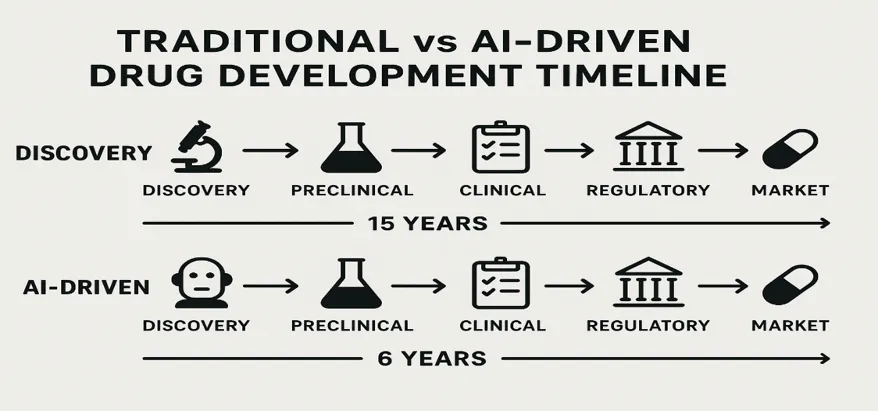
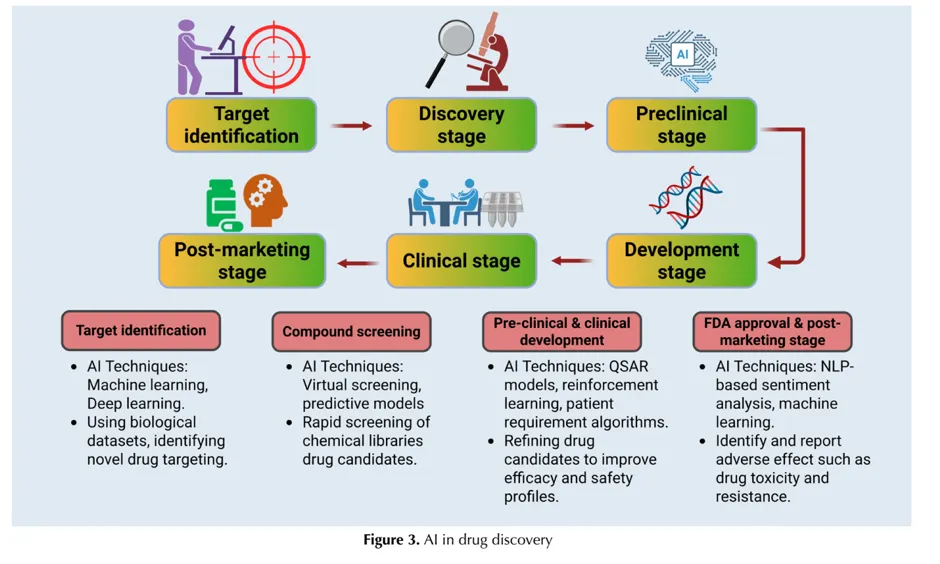
Fig: AI in Drug Discovery, Preclinical Development & Formulation
4. AI-POWERED TARGET IDENTIFICATION
Target identification stands at the very beginning of drug discovery, determining which biological component should be modulated-the gene, protein, receptor, or pathway-to treat a disease. This traditionally required many years of wet-lab investigation, mapping, and trial-and-error screening. AI accelerates this step by integrating multi-omic data, predicting disease-associated targets, and uncovering molecular mechanisms invisible to conventional analysis.
4.1 Integration of Multi-Omics
Modern biomedical research yields extremely large data sets ranging from genomics, proteomics, metabolomics, and transcriptomics to epigenomic signatures. AI algorithms integrate these different datasets into a unified view to reveal the molecular drivers of disease. Machine learning models can rank potential targets based on patterns in expression profiles, network connectivity, or mutational frequency [14].
AI systems also identify relationships between the pathways that were previously unknown, allowing researchers to find novel or unconventional therapeutic targets. This prevents late-stage failures due to mistakenly chosen targets.
4.2 Structural Prediction & the Impact of AI-Driven Protein Modeling
The recent breakthrough in target identification lies in the development of AI-powered protein structure prediction tools. These models can predict the three-dimensional folding of proteins with near-experimental accuracy and speed up structure-based drug design. Using the predicted protein conformations, researchers can rapidly assess binding pockets, allosteric sites, and other ligand-interaction regions [15].
This allows pharmaceutical teams to:
AI-driven structural models have reshaped how targets are selected, validated, and prepared for downstream virtual screening.
5. VIRTUAL SCREENING & HIT IDENTIFICATION
Virtual screening makes use of computational tools in the identification of hits from large chemical libraries. Traditional HTS is expensive and resource-intensive. AI enhances VS by filtering out poor candidates early, predicting binding affinity, and ranking potential hits before experimental validation.
5.1 High-Throughput Virtual Screening (HTVS)
HTVS computationally screens millions of compounds to find those that are likely to bind a biological target. AI enhances this step by:
Studies show that AI-guided HTVS significantly reduces screening costs and improves early success rates [1].
5.2 AI-Accelerated Docking
In simpler terms, docking is the simulation of a ligand interacting with its target protein during drug discovery. Conventional docking tools require considerable computational resources and often face challenges concerning the flexibility of the ligand and receptor. AI enhances docking by predicting favorable binding conformations, prioritizing high-affinity compounds, and reducing the search space considerably. Deep learning models are capable of estimating binding energies and pose quality very accurately, improving the success rate of downstream experimental validation [2].
5.3 Ligand–Protein Interaction Prediction
One of the most transformative applications of AI involves prediction of LPI. The machine learning models evaluate structural compatibility, physicochemical interactions, and thermodynamic feasibility. Graph-based neural networks can model atom-level interactions much more precisely than classical scoring functions, hence offering hit identification faster and with reliability as compared to conventional methods [3]. This prediction supports medicinal chemists in the selection of the optimal scaffolds and discarding the low-potential candidates early.
6. AI FOR LEAD OPTIMIZATION & ADMET
Lead optimization refines the hit compounds for improving activity, selectivity, and drug-likeness. AI plays a central role in predicting chemical modifications that can improve molecular properties while minimizing risk.
6.1 Toxicity Prediction (hERG, Liver Toxicity)
AI models predict cardiotoxicity, especially hERG channel inhibition, and hepatotoxicity using structural descriptors, molecular fingerprints, and deep neural networks. This early screening reduces animal testing and helps avoid late-stage clinical failures [4].
6.2 Metabolic Profiling & Species Translatability
AI has emerged as one of the critical platforms for the prediction of metabolic pathways, enzyme interactions, and species differences in drug metabolism. The traditional study in metabolism is highly dependent on animal models, which cannot be applied to human responses with a high degree of accuracy. Such AI models, trained on large datasets from human and animal studies, can now:
Machine learning systems can emulate how structural changes affect metabolic clearance or bioactivation, enabling the chemists to fine-tune molecules before actual synthesis. This considerably limits the need for in vivo studies and enhances the likelihood of human-relevant results [5].
6.3 Physicochemical Property Prediction
The performance of a drug is controlled by its physicochemical profile, including solubility, permeability, pKa, logP, molecular weight, and stability. All these properties are accurately predicted by AI models using molecular fingerprints, graph embeddings, and neural networks. Predictive tools support the chemist in the design of compounds with improved oral bioavailability, stability, and manufacturability.
Applications include:
With these prediction capabilities, AI helps to rapidly filter out compounds that would otherwise fail during early development.
7. AI IN PRECLINICAL SIMULATION
Traditionally, preclinical development requires several years of laboratory work and extensive animal testing. AI dramatically compresses timelines by allowing for virtual experiments capable of predicting biological behavior with high reliability.
7.1 Digital Twins
A digital twin is a computational replica of a biological system, including a human organ, animal model, or an entire physiological network. AI-powered digital twins simulate:
They help researchers to test multiple hypotheses without actual experiments, hence reducing cost and ethical concerns [7].
7.2 In-Silico Trials
In-silico trials apply AI to virtually simulate large patient populations, predicting drug performance across demographic and genetic variations. These simulations can evaluate:
They are an effective prelude to actual clinical trials, reducing trial risk and enhancing protocol design [8].
7.3 Mechanistic Modeling
Mechanistic AI models combine biological knowledge with data-driven insights to predict drug action at a systems level. These models support:
Identification of biomarkers Mechanistic modeling strengthens early decision-making and enhances translational reliability [9].
8. AI IN FORMULATION SCIENCE
Formulation science is the process by which the drug delivery is rendered safe, effective, and consistent. AI has emerged as a strong enabling force to predict formulation behavior, optimize excipient combinations, and enhance stability and bioavailability profiles.
8.1 Predicting Excipient Function
Excipient selection is often a lengthy process with repeated trials. AI simplifies this by predicting how excipients influence:
Machine learning models analyze large datasets of formulation compositions to select an optimal mix of excipients with improved functionality.
8.2 Dissolution Performance Modeling
Dissolution performance is of paramount importance for oral and controlled-release dosage forms. AI predicts dissolution profiles by analyzing molecular descriptors, formulation parameters, and process variables. Neural networks can model dissolution rates under various conditions, thus enabling the scientists to:
It reduces development time significantly while improving accuracy [11].
8.3 SE-DDS, FDD & Controlled-Release Modeling
Complex physicochemical interactions simulated using AI in SE-DDS, FDD, and various controlled-release platforms have been of significant advantage. AI models can help in forecasting:
These predictions guide the rational design of formulations and minimize trial-and-error experimentation.
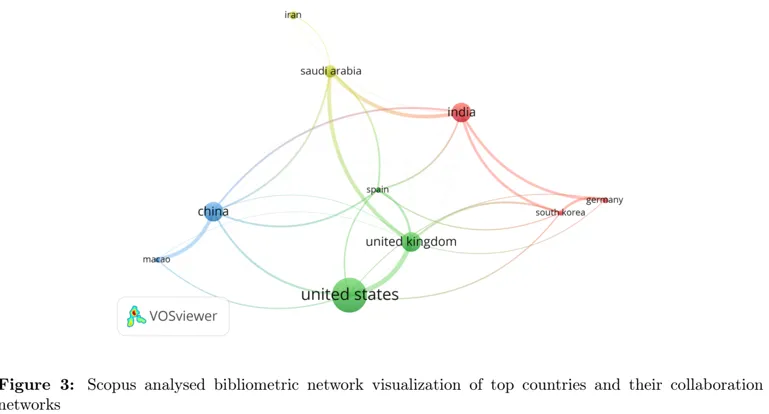
8.4 Bibliometric Trends in AI-Based Formulation Research
Global bibliometric analysis indicates a steep rise in publications combining AI with formulation science. Research hotspots include:
AI is increasingly viewed as a core discipline within pharmaceutical formulation, driving dose design, delivery platform selection, and long-term stability prediction [13].
9. AI IN CLINICAL TRIALS, MANUFACTURING, QUALITY CONTROL & SUPPLY CHAIN
Among the most expensive and time-consuming phases of development in pharmaceuticals are clinical trials. AI has now become a game-changing tool in the planning, execution, and monitoring of clinical trials to reduce failure rates and enhance decision-making. Beyond trials, AI fortifies pharmaceutical manufacturing, enhances quality control and quality assurance, and advances supply chain resilience.
9.1 Adaptive Clinical Trial Design
Adaptive trial design enables the modification of ongoing trials in response to accumulating data. AI enhances such designs by predicting patient responses, recognizing emerging patterns, and adjusting parameters such as:
AI-driven adaptive trials can reduce cost and time while preserving statistical robustness [14].
9.2 Synthetic Control Arms
AI can help generate synthetic control arms using RWD in the form of EHRs, registries, or historical clinical datasets. Instead of exposing patients to placebo or standard-of-care control arms, AI-generated comparator arms may be utilized. This approach:
SCAs have become particularly useful in oncology and rare diseases [15].
9.3 Endpoint Prediction
AI models predict clinical endpoints, such as survival probability, biomarker changes, or detection of adverse events. These predictions enable sponsors to design more efficient protocols and select meaningful endpoints earlier in the trial. Machine learning systems examine patterns in:
Accurately predicting the endpoint will improve trial success rates and reduce late-stage failures [1].
10. MONITORING & REAL-TIME SAFETY MANAGEMENT
Clinical trials require ongoing monitoring, which means the continuous observation of deviations, adverse events, and emerging safety risks. AI enhances this process greatly through real-time analysis of large volumes of clinical, physiological, and real-world data.
10.1 Prediction of Adverse Events (AEs)
Machine learning models can detect the early signals of an adverse event arising from unusual patterns in patient data. Such predictions facilitate early intervention by investigators through treatment adjustment or modifications in trial protocols in accordance with maintaining patient safety [6].
10.2 NLP for AE Detection
Much of the safety information in clinical trials is buried in unstructured text—clinician notes, lab observations, radiology impressions, or patient-reported outcomes. NLP systems automatically extract and classify these signals to allow for the rapid detection of:
10.3 Risk-Based Monitoring
AI is used to focus investigative resources on risky sites or patient subgroups in risk-based monitoring. Protocol deviations, delayed data entry, and other abnormal trends are assessed with machine learning models. It enhances data quality, reduces cost, and boosts site performance [8].
11. AI IN QUALITY ASSURANCE & QUALITY CONTROL
The pharmaceutical industry requires very tight QA and QC to ensure safety, purity, and efficiency. AI significantly enhances these functions.
10.1 Vision-Based Quality Inspection
Computer vision models detect defects in:
Fully automated inspections are faster and more consistent than manual visual checks, increasing accuracy and reducing recall risk [13].
10.2 Batch Release Modeling
AI-driven batch release models integrate manufacturing data, process parameters, and QC test results to determine whether a batch meets release criteria. These models can cut release times from days to hours while maintaining regulatory compliance.
10.3 Deviation Prediction & Trending
Machine learning algorithms detect abnormal patterns within the production and QC datasets to predict deviations even before they happen. Early detection of issues helps manufacturers correct problems proactively, thereby reducing waste, preventing product failures, and enhancing overall reliability [14].
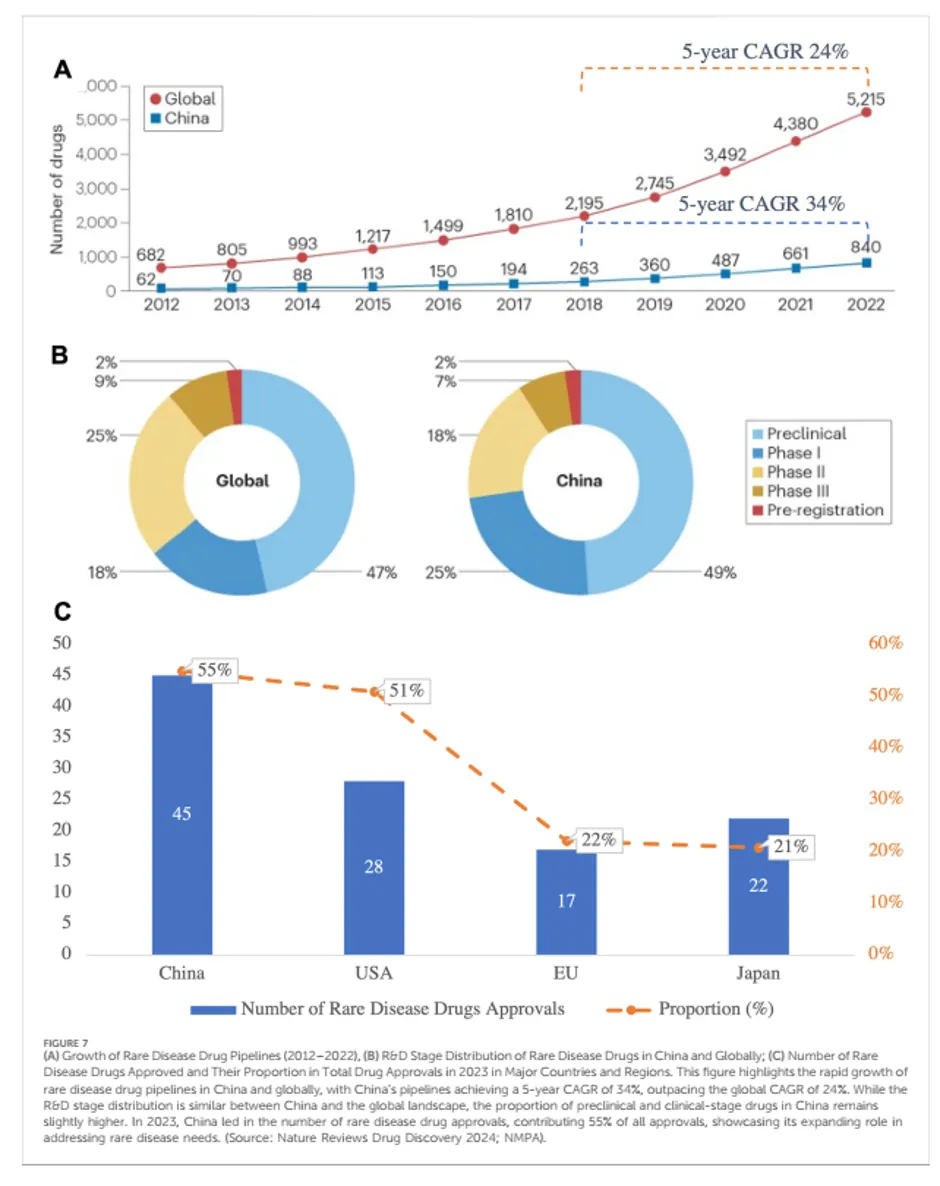
RISING DEMAND FOR RARE DISEASES AND SPECIALTY DRUGS
CONCLUSION
Artificial intelligence has become an indispensable pillar of modern pharmaceutical innovation. From accelerating target discovery to transforming clinical trials, manufacturing, quality control, and global supply chains, AI has redefined how medicines are developed and delivered. What once required years of laboratory work, repetitive experimentation, and substantial financial investment can now be achieved with far greater speed, accuracy, and predictive power. By enabling deeper insights from multi-omics data, simulating virtual patient populations, optimizing complex formulations, and improving manufacturing reliability, AI provides capabilities far beyond what traditional methods could ever achieve.
On the regulatory front, global agencies are rapidly adapting to ensure that AI-enabled systems remain safe, transparent, and trustworthy. Although differences remain between regions, the collective movement toward structured governance reflects the growing importance of AI across all pharmaceutical operations. Ethical considerations—such as fairness, privacy, and explainability—will remain central as AI technologies continue to advance.
Ultimately, AI is not replacing scientific expertise; rather, it is enhancing it. The pharmaceutical industry is entering a new era where human intelligence and machine intelligence work together to make drug development more efficient, more personalized, and more responsive to global health demands. As digital ecosystems mature and AI capabilities expand, the future of therapeutics will become increasingly precise, predictive, and patient-centered. The continued evolution of AI promises not only better medicines, but a faster, smarter, and more resilient pharmaceutical landscape for generations to come.
REFERENCES





Prabal Pardeshi, Rupali Pathre, Anjali Pawar, Rutuja Pawar, Monika Madibone, The Transformative Role of Artificial Intelligence in the Pharmaceutical Sector, Int. J. of Pharm. Sci., 2026, Vol 4, Issue 8, 1478-1491. https://doi.org/10.5281/zenodo.21843372
 10.5281/zenodo.21843372