

We use cookies to ensure our website works properly and to personalise your experience. Cookies policy
Pharmaceutical Research Division, Department of Pharmaceutics, Amar Shaheed Baba Ajit Singh Jujhar Singh Memorial College of Pharmacy, BELA (Ropar), Punjab, INDIA, PIN: 140111.
Emulgel is a novel drug delivery system that combines the properties of emulsions and gels, making it highly suitable for the topical delivery of hydrophobic drugs. Many drugs with poor water solubility face challenges in conventional gel formulations, which limits their effectiveness. Emulgel overcomes this limitation by incorporating the drug into an emulsion and then converting it into a gel using suitable gelling agents. This approach enhances drug stability, spreadability, and patient compliance.The present study focuses on the formulation and evaluation of emulgel for effective topical drug delivery. The formulation involves the preparation of an oil-in-water emulsion using suitable emulsifying agents, followed by incorporation into a gel base such as Carbopol. Various formulation parameters, including pH, viscosity, spreadability, and drug content, are evaluated to ensure quality and consistency. In addition, in-vitro drug release studies are performed to assess the release pattern of the drug from the emulgel.Results indicate that the prepared emulgel exhibits good physical appearance, homogeneity, and stability. The formulation shows controlled and sustained drug release, which enhances therapeutic effectiveness while reducing dosing frequency. Furthermore, the non-greasy nature and ease of application improve patient acceptance.In conclusion, emulgel serves as an effective and promising topical drug delivery system, especially for poorly water-soluble drugs. It offers advantages such as improved drug penetration, better stability, and enhanced bioavailability. Therefore, emulgel has significant potential in pharmaceutical research and development for topical formulations.
Topical formulations have served as skin disorder treatments for hundreds of years. The skin accepts various drug and agent applications which include anti-inflammatory and antiseptic and antibacterial and antifungal and antiviral and anti-acne and anti-pigmentation and anaesthetic agents and skin moisturizers and protective formulations[1]. The topical medication delivery system is a dosage form that is used topically when other drug delivery methods are ineffective for skin conditions. Topical formulations are commonly used for localized action at the site of their application. One benefit of the topical medication delivery method is that it can negotiate first pass metabolism [2]. The production of topical formulations results in three different product forms which include solids and semisolids and liquids. The sticky texture of ointments and semisolid medicines creates application difficulties for patients who need to use these products on their skin. They also need to be rubbed in and do not spread easily. Sometimes one or more formulations are incorporated to enhance the drug delivery for better therapeutical effects; One such combination is an Emulgel. It is a combination of gel and emulsion. They provide faster drug release as compared to the traditional creams and ointments. An Emulgel is formed when gelling ingredients are present in the aqueous phase of a conventional emulsion.
The human body contains three primary skin layers which consist of the epidermis and dermis and hypodermis. The outermost layer of skin called epidermis functions as a protective shield that contains melanin which determines skin color and creates a waterproof barrier to defend the body. The top of the epidermis is called stratum corneum, which prevents deep penetration of many drugs and chemicals. This layer prevents deep penetration of many drugs and chemicals into the skin.
Creams, ointments, gels do not deeply penetrate into the skin layers. Despite their many benefits, gels have a problem when it comes to delivering hydrophobic medications. Emulgels are capable to overcome these limitations [3]. Lipophilic medicines are trapped in the oil-in-water system, whereas hydrophilic drugs are trapped in the water-in-oil system . Emulgels have been used for the treatment of various skin diseases like bacterial infection, fungal infection and other viral species.
TOPICAL DRUG DELIVERY
The treatment of any disease has been cured by administrating the drugs to the human body by various routes like; oral, rectal, sublingual, parental, topical inhalation etc. The topical drug delivery system is a method in which apply the medication directly onto the skin for the treatment of local or sometimes systematic conditions. It involves place the drug formulation on the skin surface to achieve the therapeutic effect either its local or systematic condition.
The topical formulations have many advantages like; avoid the first pass metabolism, painless method, easy application, provide controlled and sustained release. The major limitation of topical delivery is skin barrier that limits the drug penetration (stratum corneum).
EMULGEL
Emulgel are the mixture of emulsion and gel base. There are two types o/w and w/o these are gelled by the addition of a gelling agent [3]. Both types of emulgels are used in the pharmaceutical industry to carry different medicines and apply safely on the skin. They have quality to penetrate into the skin easily. An emulsion becomes an emulgels when gelling agent added to the water part of the emulsion [3]. The gelling agent makes the emulsion thicker and gives gel-like texture. They possess both qualities of gels and emulsions, so they have better patient acceptability [4].
Emulsion has two liquid phases one is dispersed phase and other is continuous phase the emulsifying agents are used for better stability. Emulgels can be o/w or w/o. In an emulgels the drug particles are trapped in the inner phase when applied to the skin, the drug slowly moves from the inner phase to the outer phase and then into the skin. This slow movement helps give a controlled and long-lasting effect [5].
EMULSION GEL + EMULSION
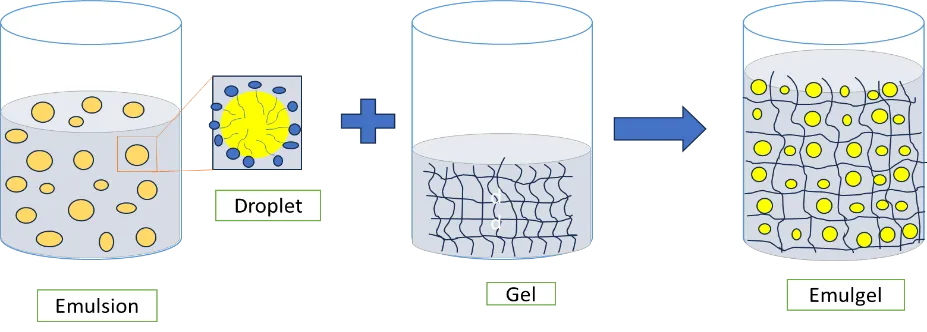
RATIONALE OF EMULGEL AS NEW FORMULATION
Emulsions, creams, ointments, lotions, powders, and other kinds of topical drug delivery are used to treat skin-related diseases [6,7]. These formulations have many disadvantages such as sticky nature, stability issues, spread ability which cause patient compliance. To overcome this problem gel or emulgels are formulated in cosmetics and pharmaceuticals preparation because they are less sticky in nature better spread ability and enhance the patient compliance.
Gels are the new class of dosage form in which trapped large amount of aqueous or hydroalcoholic liquid in a colloidal solid particle [8]. Gel shows a significant disadvantage for the delivery of hydrophobic drugs. To cover this limitation, emulgel a noval approach that came into existence. The emulgel are the combination of emulsion and gel base. They are non-greasy, easy to absorb, and better drug penetration. Because the gel base, emulgels give cooling effect and allow the drug reach the skin more effect.
EXAMPLE
There are many examples of emulgels medicines used in pharmaceutical field, such as Diclofenac emulgel, Mefenamic emulgel, etc. Diclofenac is a common pain relief and anti-inflammatory drug (NSAIDS). It is widely used in painful and inflammatory conditions [9].
In some topical preparations isopropyl alcohol is added for better solubility but its prolonged use causes eczema and sensitivity [10]. To avoid this, diclofenac emulgels are made without isopropyl alcohol so they are gentle on the skin [11]. On the other hand, Mefenamic acid is available as in the form of tablet or suspensions [12]. It can also be prepared in the form of an emulgel. In mefenamic acid emulgel, Carbopol 940 is used as the gelling agent, clove oil and mentha oil are added as penetration enhancers to help the drug enter the skin [13].
ADVANTAGES
DISADVANTAGES
HOW EMULGEL WORKS:
Emulgel works on the skin more effectively then the simple gel or a conventional emulsion because it combines the both systems. A simple gel mainly contains water and gelling agent, so the simple gel is suitable for hydrophilic drugs but they show poor penetration for the lipophilic drugs and limited drug release through the lipid rich stratum corneum. On the other hand, an emulsion carries lipophilic drugs in its oil phase and hydrophilic drugs in its aqueous phase but it feels greasy, spreads less uniformly, and has lower residence time on the skin, which can reduce patient compliance.
Emulgel overcome these limitations by incorporating an emulsion into a gel base. When applied, the gel components hydrate the stratum corneum and forms a thin, non-greasy film that increases the contact time with the skin, while the emulsion droplets act as reservoirs for the drug. The drug is released in a controlled manner from the emulsion, diffuses through the gel network, and penetrates the skin more efficiently due to hydration and penetration enhancers.
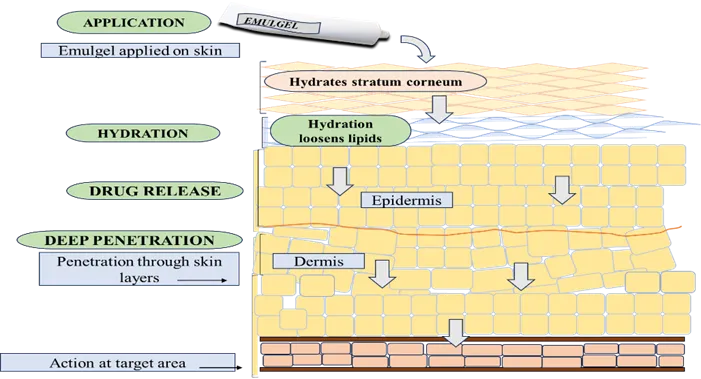
As a result, emulgel provides better drug penetration, prolonged local action, improved stability, and higher patient acceptability as compared to simple gels and emulsions.
FORMULATION CONSIDERATION
In topical formulation, it is important to make the product safe for the skin. This means it should not be toxic, not cause irritation, not block pore, and not create any allergic reactions. It should also look good, feel smooth, and be compatible with the skin. All these properties mainly depend on the ingredients used in the formulations. Therefore, choosing the right excipients becomes a very important part of making a good emulgel [14-18].
The absorption of a drug through the skin depends on the drug’s own properties. These physicochemical properties help whether a drug can be successfully made into an emulgel for topical or transdermal use.
A drug that is suitable for emulgel should have:
Additionally, the drug should not irritate the skin and should have a skin permeability of at least 0.5 × 10⁻³ cm/h [19].
The base or vehicle used in an emulgel significantly influences the drug’s absorption through the skin. A good vehicle should spread evenly on the skin and deposit the drug properly. It should release the drug exactly where it is needed and maintain the drug’s effect in that area for a suitable amount of time. Additionally, the vehicle must be gentle and compatible with the patient’s skin [19].
These are serves as the water-based component in the emulsion system. When a gelling agent is added, this watery part helps change the emulsion into an emulgel. Common ingredients used in this aqueous phase are water and alcohols
Different types of oils are employed in the preparation of emulgels, such as mineral oil, vegetable oils, and fish liver oil, which commonly serves as the oil phase. In oral formulations, non-biodegradable oils like mineral oil and castor oil are frequently used and can produce a local laxative effect. Additionally, vegetable oil such as arachis oil, cottonseed oil, and maize oil are utilized as nutritional supplements [16,17]. The common used oils include: Isopropyl palmitate, Isopropyl myristate, Isopropyl stearate, and liquid paraffin [20].
An emulgel is a combination of an emulsion and a gel, formulated by using a suitable gelling agent. Emulsions are thermodynamically unstable system, but their stability can be improved by adding appropriate emulsifying agents. These agents help by lowering the interfacial tension between the phases [21]. The emulsifying agent needs to demonstrate excellent Hydrophilic-Lipophilic Balance (HLB) properties to create stable emulsions. The emulsion becomes water-in-oil when HLB values remain below 8.HLB > 8: makes oil-in-water emulsion [22]
It promotes emulsification and to control stability. Tween- 20,40,80, PEG-40, stearic acid, sodium stearate is commonly used [5].
These substances help to improve uniformity and can also acts as thickening agents [23]. They are the basic constituent for preparation of emulgel which creates a system thixotropic. These agents help to enhance the texture and overall quality of the dosage form. The type and concentration of the gelling agent play a crucial role in controlling drug release from the emulgel and maintaining its stability. For an example, emulgels made with Hydroxy Propyl Cellulose (HPMC) as the gelling agent have been found to release the drug better than emulgels made with Carbopol polymers [24]. Studies show that increasing the concentration of the gelling agent leads to a reduction in drug release from the emulgel. In other words, more gel makes the drug come out more slowly. While using a combination of different gelling agents together can make the emulgel more stable [17]. Different types of gelling agents are used in emulgel preparation, including natural, semi-synthetic and synthetic ones. The main disadvantage of natural gelling agent is that they can easily break down by the microbes which are responsible to spoil the product. For this reason, semi-synthetic and synthetic gelling agents are commonly preferred in the formulation of emulgels [22].
These agents are commonly used to facilitate the passage of the drug through the skin. An appropriate amount of penetration enhancers are used in an emulgel can greatly affect how the drug moves through the skin. Penetration promoters are used in emulgel preparation should be minimally irritating, low in toxicity and possess good penetration ability.
|
Components |
Examples |
|
Oil phase |
The oil phase contains Liquid paraffin and olive oil and castor oil and sunflower oil and flax seed oil. |
|
Aqueous phase |
The aqueous phase contains purified distilled water. |
|
Emulsifying agent |
The emulsifying agent consists of Span20 and span80 and tween20 and tween 80. |
|
Gelling agent |
The gelling agents include Carbopol 934 and Carbopol 940 and HPMC and Xanthan gum. |
|
Penetration enhancers |
The penetration enhancers include Propylene glycol and ethanol. |
|
Thickening agent |
PEG-400, stearic acid |
|
pH adjusters |
Triethanolamine (TEA) |
|
Active drug |
Mupirocin, Miconazole, Diclofenac |
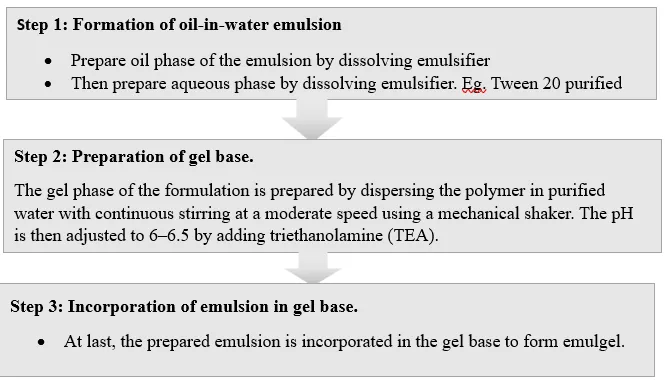
Figure: 1. Basic steps for the preparation of Emulgel
Emulgel preparation is simple and low- cost [25]. There significant steps are explained in fig. 1. Prepare an Emulgel, firstly mix the drug into the formulation [26]. Prepare the gel base first. Then slowly add the prepared emulsion into the gel while stirring continuously [27]. Prepare the emulsion, the aqueous phase is made by mixing purified water with water-loving components. This mixture is heated about 70°C. In this aqueous phase, the emulsifying agents such as Tween is added. This emulsifier helps water and oil mix properly, and forms the stable emulsion [28]. After preparing the aqueous phase, the oil phase is prepared. In this step, a surfactant like span is dissolved in oil [29]. If the drug is hydrophobic in nature, then it is added to this mixture. Heat the oil phase to the same temperature as the water phase. Prepare the gel by mixing polymer with water and stirring well. Adjust the pH to 6-6.5, and then add preservatives to the aqueous phase [30]. Both the phases are heated about 70-80°C. When both phases reach the same temperature, the oil phase is added to the water phase with constant stirring [31]. After cooling at room temperature, mix equal parts of emulsion and gel base to obtain the emulgel [32].
Alternative Methods for The Preparation of Emulgel
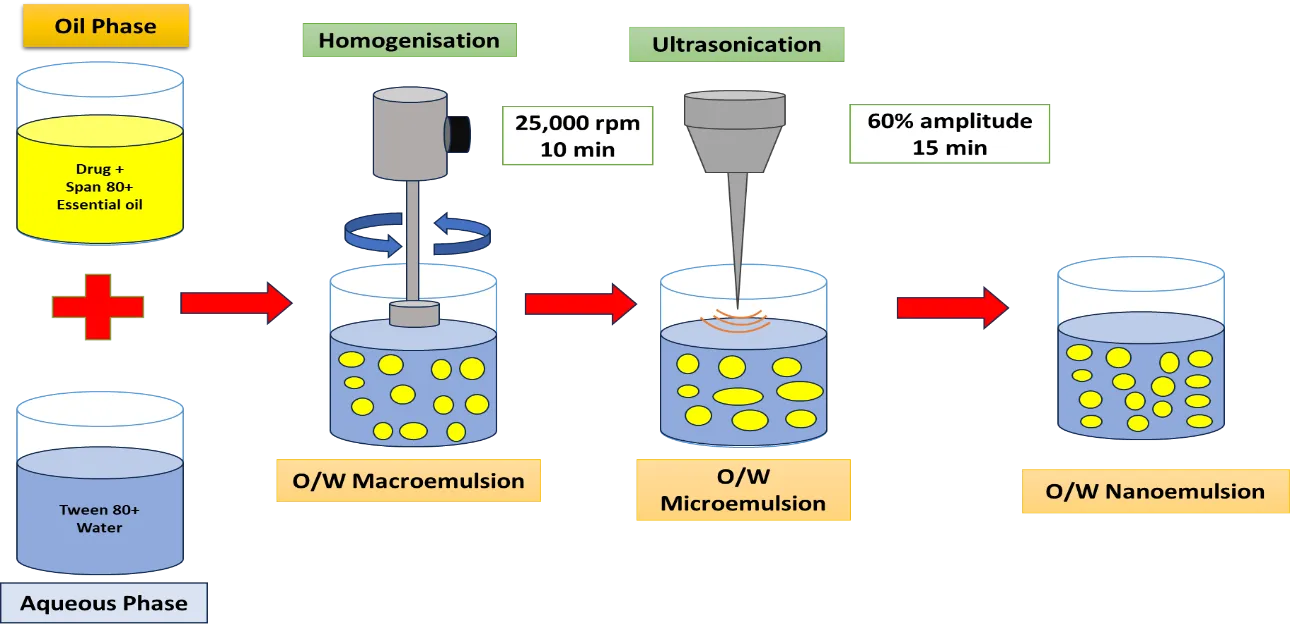
Nanoemulsion-Based emulgel
Nanoemulsions are formed by a mixture of oil, water and an emulsifier (in most cases natural and/or biological) in which the oil droplets are in the nano-scale, thus having a droplet size ranging from 20 to 500 nm. The emulsifier (e.g. lecithin) is used to reduce the surface tension between oil and water in order to create small stable droplets of oil in water or vice versa[33]. There are two different forms of nanoemulsions, known as Water-in-Oil (W/O) and Oil-in-Water (O/W). Both provide excellent skin care properties; however Water-in-Oil nanoemulsions are better suited for moisturizing, whilst they have a greasy feel and are less preferred by most. Oil-in-Water nanoemulsions are the most preferred form as they absorb fast into the skin and are easily washed off.
Nanoemulgels are gels filled with nanoemulsions and have potential applications for topical treatments for diseases such as eczema and psoriasis and for acne. The drug delivery of analgesics, anti-inflammatories, and antimicrobials is also a possible application[33].
Nanogels are very small gel particles used for drug delivery and in medical applications. They are safe, easily degrade in the body and can carry a large amount of drug [33].
Nanoemulgels adhere well to skin and can solubilize more drug in their oil phase. This increases the concentration of the drug, which makes it easier to penetrate the skin. They also make patients more comfortable as they are easy to spread, less sticky and more pleasant to use than creams and ointments.
Procedure [34]

Advantages
Disadvantages
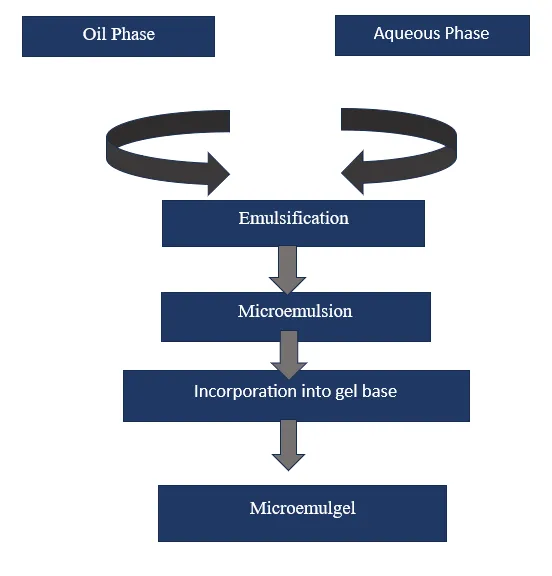
Microemulsion- Based Emulgel Method:
Microemulsions were introduced by Hoar and Schulman in the 1940s. They are clear and stable combinations of oil, water and a surfactant, which is an agent that helps oil and water mix. These systems can improve drug delivery, efficacy and bioavailability. When the surfactant lowers the surface tension between oil and water a microemulsion is formed . The droplets are very small ( 5-200 nm ) . The small size and stability of microemulsions enhance drug penetration into the body and consequently increase the efficacy of the drug [35]. Microemulsion are transparent due to their globule size (less than 25%).
Microemulgel is a combination of microemulsion and gel so it has benefits of both. It is useful to deliver poorly water-soluble (hydrophobic) drugs by first dissolving them in an oil-in-water microemulsion and then mixing this into a gel base. This system enhances drug absorption and penetration leading to increase in bioavailability. The gel also adds stability to the formulation and makes it easy to apply without any mess. Microemulgels are more elegant, non-greasy and easily washed off from the skin as compared to microemulsions alone [35].
Advantages
Disadvantages
Comparative Study of Nanoemulgel, Microemulgel, and Emulgel
Conventional emulgels represent an effective approach for topical delivery of hydrophobic drugs; however, their performance is limited by larger droplet size and lower permeation efficiency. Microemulgels and nanoemulgels overcome these limitations through nanoscale droplet systems that provide enhanced solubilization, improved skin penetration, superior stability, controlled drug release, and higher bioavailability. Among these advanced systems, nanoemulgels are particularly advantageous for achieving enhanced therapeutic efficacy and patient compliance in topical drug delivery applications.
|
Parameter |
Conventional Emulgel |
Microemulgel |
Nnaoemulgel |
||
|
Definition |
A biphasic topical formulation prepared by incorporating an emulsion into a gel base. It combines the properties of emulsions and gels for improved topical delivery of hydrophobic drugs. |
A formulation in which a microemulsion system is incorporated into a gel matrix to improve stability, drug solubilization, and skin permeation. |
A topical formulation consisting of nanoemulsion dispersed within a gel base to enhance drug penetration, bioavailability, and patient acceptability. |
||
|
Droplet Size Range |
Generally contains larger emulsion droplets, usually greater than 1 µm. |
Contains droplets in the range of approximately 10–100 nm. |
Contains nanosized droplets generally between 20–200 nm. |
||
|
Appearance |
Usually opaque or milky due to larger droplet size and light scattering. |
Transparent or translucent because of very fine droplets |
Transparent to translucent with smooth and elegant appearance. |
||
|
Type of Stability |
Thermodynamically unstable and may undergo phase separation over time. |
Thermodynamically stable system that forms spontaneously under suitable conditions. |
Kinetically stable system with improved resistance to coalescence and sedimentation. |
||
|
Surfactant Requirement |
Requires comparatively lower concentration of surfactants for formulation. |
Requires a high concentration of surfactants and co-surfactants to maintain microemulsion stability. |
Requires moderate concentration of surfactants to stabilize nanosized droplets. |
||
|
Drug Solubilization Capacity |
Provides moderate solubilization of hydrophobic drugs. |
Exhibits high drug solubilization capacity due to the presence of oil phase and surfactant system. |
Demonstrates excellent solubilization of poorly water-soluble drugs owing to nanosized droplets and large interfacial area. |
||
|
Surface Area |
Possesses relatively lower interfacial surface area because of larger droplet size. |
Provides very high surface area due to ultrafine droplets. |
Exhibits extremely high surface area, which enhances interaction with biological membranes. |
||
|
Skin Penetration Ability |
Limited penetration through the stratum corneum because of larger droplets. |
Improved skin penetration due to smaller droplet size and penetration-enhancing surfactants. |
Excellent skin permeation and deeper penetration into skin layers because of nanoscale droplet size. |
||
|
Drug Release Profile |
Drug release is comparatively slower and less efficient. |
Faster and more uniform drug release due to increased drug dissolution. |
Enhanced and controlled drug release owing to improved diffusion and larger surface area |
||
|
Bioavailability |
Moderate bioavailability because of limited penetration and solubilization. |
Improved bioavailability due to enhanced permeation and solubilization |
Significantly higher bioavailability resulting from superior penetration and retention at the target site |
||
|
Spreadability |
Good spreadability but may sometimes feel greasy. |
|
Excellent spreadability with non-greasy and aesthetically elegant characteristics |
||
|
Occlusive Effect and Skin Hydration |
Provides moderate occlusion and hydration of the skin surface. |
Produces better hydration of the stratum corneum. |
Offers superior occlusive effect, enhancing skin hydration and drug permeation. |
||
|
Physical Stability Issues |
Susceptible to creaming, flocculation, coalescence, and phase separation. |
Highly stable due to thermodynamic stability of microemulsion system. |
More stable than conventional emulgel because smaller droplets reduce aggregation and creaming. |
||
|
Ease of Preparation |
|
Preparation is relatively complex because precise surfactant ratio is required. |
More sophisticated preparation techniques such as high-pressure homogenization or ultrasonication may be required. |
Characterization of Emulgel:
Visual evaluation of the emulgel includes checking its color, texture, homogeneity, and stability against phase separation [1,21 ].
A digital pH meter is used to measure the pH of the prepared emulgel. For this test, 1g of emulgel is mixed with 100ml of distilled water to prepare a 1% w/v solution. The solution is kept for 2 hours to allow proper dispersion. After that, the pH of each formulation is measured. The pH measurement is carried out three times for each formulation, and then the average pH value is calculated [1].
Using a Mutimer apparatus (wooden block and pulley), the Spreadability coefficient is measured according to the ease of spreading of the formulation.
Spreadability (S) = M × L/T
Where:
A 15 g of emulgel is filled into an aluminium tube. The tube is placed properly in the tube-holding device, and the plunger is adjusted to keep it in position. A pressure of 1kg/cm² is applied to the tube for 30 seconds. After that, the amount of emulgel that came out of the tube is collected and weighed [36].
Rheological studies evaluate the flow behaviour. viscosity, and consistency of an emulgel to ensure easy application and stability. A digital rotational viscometer is used to measure the viscosity of the emulgel at 37°C. The emulgel is filled in a beaker, and spindle number III is carefully positioned in the centre without touching the container. The spindle is revolved at 10rpm (minimum) and 100rpm (maximum) and the viscosity values were recorded [37].
For analysis, the sample is dissolved in purified water and shaken to achieve uniform dispersion, then injected into the zetasizer cell to determine globule size and distribution [38,39,40].
A known amount of emulgel is taken and dissolved in an appropriate solvent like methanol or ethanol to determine drug content. This mixture is then sonicated to help the drug dissolve completely. After that, the solution is filtered to remove any undissolved particles. The filtered solution is measured at the drug’s maximum wavelength using UV-Visible spectrophotometer. This absorbance value is used to calculate how much drug is present in the emulgel [37,38,39].
Swelling index describes how much a gel swells (adsorbs liquid) when it is placed in a solution. Taking 1g sample of gel placed on porous aluminium foil and then kept separately in a 50ml beaker containing 10 ml of 0.1N NaOH. At predetermined time intervals, the sample is taken out of the beaker, allowed to dry for some time, and then reweighed. The swelling index can be measured by following formula:
Swelling index (Sw) % = [(Wt–Wo)/Wo] ×100
Where, (Sw) % =Equilibrium percent swelling; Wo =Original weight of emulgel at zero time after time t and Wt =Weight of swollen emulgel.
The Franz diffusion cell is used to study how a drug is released from a gel formulation. Approximately 200mg of the emulgel is evenly applied onto the surface of the egg membrane. The membrane is then carefully positioned between the donor and receptor compartments of a diffusion cell. The receptor compartment is filled with phosphate buffer (pH 5.5), which facilitates the dissolution of the drug. Solution in the receptor chamber is continuously stirred using a magnetic stirrer for uniform mixing. The samples are collected specific time intervals 1ml solution is taken from the receptor chamber. These samples are diluted if needed and analysed by using UV- Visible spectrophotometer. The total amount of drug that passes through the egg membrane is measured over time [14].
The homogeneity of the formulation was tested by visually examining the emulgel after spreading it as a thin layer on a glass [3].
The formulation is applied to the properly shaved skin of rats. The treated area is monitored for up to 24 hours to detect any adverse effects, such as alternation in skin color or textur.
Pharmacokinetic Study:
Pharmacokinetic studies are carried out for emulgel formulations that show systemic absorption after transdermal application. Rats are used to evaluate various pharmacokinetic parameters, including maximum plasma concentration (Cmax), time required to reach maximum concentration (Tmax), and the total area under curve (AUC). For this purpose, blood samples are collected from the retro-orbital vein at predetermined time intervals following topical application of the formulation. The collected samples are then subjected to centrifugation at 15,000 rpm for 10 minutes at 4°C in order to separate the plasma. About 100 µl of plasma is then mixed with 1ml of acetonitrile to remove protiens. This mixture is centrifuged again at 15,000 rpm for 5 minutes at 4°C. After this, 20 µl of the clear liquid is collected and analysed using High Performance Liquid Chromatography (HPLC) [38].
Marketed Preparation of Emulgel:
|
S. No |
Brand Name |
Active Ingredients |
Manufacturer |
Use |
|
1 |
Voltaren Emulgel |
Diclofenac diethylamine |
Novartis |
Pain & inflammation |
|
2 |
Voveran Emulgel |
Diclofenac diethylamine |
Novartis |
Anti-inflammatory, analgesic |
|
3 |
Fastum Gel |
Ketoprofen |
Menarini |
Local inflammation, arthritis |
|
4 |
Diclomax Emulgel |
Diclofenac diethylamine |
Novartis |
Pain relief, sports injury |
|
5 |
Brufen Emulgel |
Ibuprofen |
Abbott |
Pain relief |
|
6 |
Nizral Emulgel |
Ketoconazol |
Glenmark |
Fungal infection |
|
7 |
Clindac-A Gel |
Clindamycin phosphate |
Galderma |
Acne vulgaris |
|
8 |
Benzac AC Gel |
Benzyl peroxide |
Galderma |
Acne treatment |
|
9 |
Miconaz-H Emulgel |
Miconazole nitrate + Hydrocortisone |
Indian brands |
Fungal infection |
|
10 |
Itracare Emulgel |
Itraconazole |
Indian brands |
Fungal infection |
Patents on Emulgel:
|
Patents No. |
Date of Patents |
Applicant |
Title |
|
5,362,418 |
Nov. 8, 1994 |
Kao Corporation, Tokyo, Japan |
GEL-LIKE EMULSION AND O/W EMULSION OBTANED FROM THE GEL-LIKE EMULSION |
|
WO 2007/129162 A2 |
15 November, 2007 |
ALMA MATER STUDIORUM – UNIVERSITA’ DI BOLOGNA [IT/IT] via ZAMBONI 33, I- 40126 BOLOGNA (IT) |
PHARMACEUTICAL PREPARATIONS FOR TRANSDERMAL USE |
|
WO 2009/056522 AI |
MAY 7, 2009 |
NOVARTIS AG [CH/CH]; Lichtstrasse 35, CH- 4056 Basel (CH). |
TOPICAL COMPOSITION |
|
WO 2016/038553 AI |
March 17, 2016 |
NOVARTIS CONSUMER HEALTH S.A. [CH/CH]; Route de I’Etraz 2, CH-1197 Nayon (CH) |
TOPICAL DICLOFENAC SODIUM COMPOSITIONS |
|
US 9,339,551 B2 |
MAY 17, 2016 |
HZNP Limited, Hamilton Pembroke (BM) |
DICLOFENAC TOPICAL FORMULATION |
|
EP 2 214642 B1 |
MAY 3, 2017 |
CAILLET-BOIS, Fabienne CH-1869 Massongex (CH) |
TOPICALCOMPOSITION |
|
WO 2022/175856 AI |
25 August 2022 |
LYRUS LIFE SCIENCES PVT LTD [IN/IN]; # 54A & 54B [Part], KIADB Industrial Area, Hoskote, Bangalore Rural, Karnataka State, Bangalore 562114 (IN). NOKHA TRADING LLP [IN/IN]; No. 22, 7th Cross, Jaibharath Nagar, Karnataka State, Bangalore 560033(IN). |
NOVEL ARTHRITIS EMULGEL COMPOSITION AND ITS PREPARATION PROCESS |
|
EP 3 760 198 B1 |
Sept 6, 2023 |
NAKANISHI Toshihiro Tosu-shi, Saga 841-0017 (JP) NAGASE Yuko Tosu-shi, Saga 841-0017 (JP) MATSUMURA Shinya Tosu-shi, Saga 841-0017 (JP) |
DICLOFENAC- CONTAINING EMULSIFIED GEL COMPOSITION |
FUTURE PROSPECTS
Emulgel is a modern topical drug delivery system that has attracted considerable interest in both pharmaceutical and cosmetic application due to its capability to effectively deliver both hydrophilic and lipophilic drugs. With ongoing advancements in formulation technology, emulgel system are anticipated to play a more significant role in future topical and transdermal drug delivery.
One of the most promising future prospects of emulgel lies in enhanced drug delivery and targeting. Advanced emulgel formulations incorporating nanoemulsions, microemulsions, and vesicular carriers such as liposomes, niosomes, and microsponges can significantly improve drug penetration through the stratum corneum. These system enable controlled and sustained drug release, which helps reduce the frequency of dosing and enhances patient compliance. In the future, emulgels may be designed to target specific skin layers or diseased tissues, making them highly effective for localized therapy.
Another important area is the development of emulgel-based delivery for low solubility drugs. A large number of new drug molecules discovered today belong to the Biopharmaceutics Classification System (BCS) class II and IV, which exhibit poor solubility and limited bioavailability. Emulgel systems offer an ideal platform for solubilizing such drugs using suitable oils and surfactants while maintaining good spreadability and cosmetic elegance. This makes emulgel a strong candidate for future dermatological and transdermal drug products.
To apply emulgels in transdermal drug delivery systems (TDDS) is another growing prospect. With the incorporation of penetration enhancers, polymers, and novel excipients, emulgels can deliver drugs systemically through the skin, bypassing first-pass metabolism and reducing gastrointestinal side effects. This approach could be particularly beneficial for drugs used in chronic conditions such as pain management, hormonal therapy, and cardiovascular diseases.
Emulgel formulations also show great potential in the treatment of chronic skin disorders, including psoriasis, eczema, acne, and fungal infections. Future emulgels may include anti-inflammatory agents, antifungals, antibiotics, herbal extracts, and biological molecules in a single formulation, offering combination therapy with improved efficacy and safety. Additionally, stimulus-responsive emulgels that respond to pH, temperature, or enzymes are expected to provide on-demand drug release at the diseased site.
In the cosmetic and cosmeceutical industry, emulgels are expected to gain wider acceptance due to their non-greasy nature, easy application, and pleasant skin feel. Future cosmetic emulgels may incorporate antioxidants, vitamins, peptides, and herbal ingredients for anti-aging, skin hydration, and skin protection purposes. The growing consumer demand for natural and sustainable products will further encourage the use of biodegradable and biocompatible polymers in emulgel formulations.
Lastly, advancements in quality by design (QbD), regulatory acceptance, and large-scale manufacturing technologies will support the commercialization of novel emulgel products. Improved stability, reproducibility, and cost-effective production will make emulgels more accessible in global markets.
CONCLUSION
Emulgel is an effective and promising topical drug delivery system that combines the advantages of emulsions and gels. It is especially suitable for delivering poorly water-soluble drugs and provides better stability, enhanced skin penetration, and improved patient compliance. Emulgels are non-greasy, easily spreadable, and cosmetically acceptable, making them preferable over conventional creams and ointments. Due to their versatility, emulgels are widely used for anti-inflammatory, antifungal, and antimicrobial therapies. With ongoing research and advancements in formulation technology, emulgel systems are expected to play an important role in future pharmaceutical and cosmetic applications.
REFERENCES




Sukhvir Kaur, Harshita, Sukhpreet Kaur, Shailesh Sharma, Satnam Singh, A Comprehensive Review on Emulgel: Formulation, Characterization, Applications and Future Perspectives, Int. J. of Pharm. Sci., 2026, Vol 4, Issue 6, 5933-5949, https://doi.org/10.5281/zenodo.20813081
 10.5281/zenodo.20813081