We use cookies to ensure our website works properly and to personalise your experience. Cookies policy
Department of Pharmaceutical Analysis, Karnataka College of Pharmacy, Bangalore, Karnataka-560064.
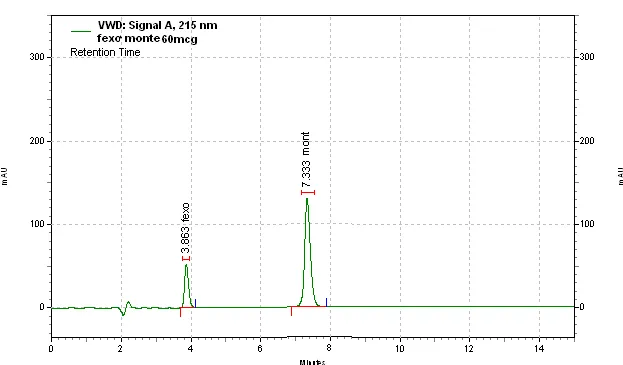
A novel, sensitive, accurate, and robust reverse-phase high-performance liquid chromatography (RP-HPLC) method was developed and validated for the simultaneous determination of fexofenadine hydrochloride (FEX) and montelukast sodium (MON) in bulk drugs and pharmaceutical dosage forms. Chromatographic separation was achieved using an XBridge C18 column (250 × 4.5 mm, 5 µm) with a mobile phase consisting of trifluoroacetic acid buffer (pH 2.1) and methanol in a ratio of 70:30 (v/v). The analysis was performed at a flow rate of 1.0 mL/min with a 20 µL injection volume, detection wavelength of 215 nm, and a total run time of 10 min. The method was validated according to ICH Q2 guidelines for linearity, precision, accuracy, robustness, limit of detection (LOD), and limit of quantification (LOQ). Good linearity was observed over 20–120 µg/mL for FEXOFENADINE and 10–60 µg/mL for MONTELUKAST, with correlation coefficients of 0.9965 and 0.9980, respectively. The method showed acceptable precision, accuracy, and robustness. LOD/LOQ values were 5.31/17.49 µg/mL for FEX and 2.88/9.50 µg/mL for MON. Retention times were 3.863 and 7.333 min, respectively. The method was successfully applied to tablet formulations and is suitable for routine quality control analysis
Fexofenadine Hydrochloride is freely soluble in methanol and ethanol, slightly soluble in chloroform and water, and insoluble in hexane,chemically designated as 2-[4-[1-hydroxy-4-[4-[hydroxy(diphenyl)methyl]piperidin-1-yl]butyl]phenyl]-2-methylpropanoic acid Fexofenadine hydrochloride is a second-generation antihistamine, has minimal anticholinergic effects due to low affinity for cholinergic and α-adrenergic receptors. In addition to H₁-receptor blockade, it exhibits anti-inflammatory activity by inhibiting leukotrienes, prostaglandins, COX-2, thromboxane, and iNOS-derived nitric oxide. It also downregulates cytokines and adhesion molecules (e.g., ICAM-1, VCAM-1, RANTES) and reduces eosinophil activation, contributing to its efficacy in allergic conditions [1,2]Montelukast,sodium chemically designated as2-[1-[[(1R)-1-[3-[(E)-2-(7-chloroquinolin-2-yl)ethenyl]yl)ethenyl]phenyl]-3-[2-(2-hydroxypropan-yl)phenyl]propyl]sulfanylmethyl] cyclopropyl]acetate is very soluble in methanol and in ethanol, and freely soluble in water is a potent and selective cysteinyl leukotriene receptor 1 (CysLT1) antagonist selectively binds to the CysLT1 receptor, inhibiting the binding of leukotrienes such as LTD4.This blockade prevents the downstream signaling effects typically induced by leukotriene receptor activation, by inhibiting the action of LTD₄, montelukast alleviates bronchoconstriction promoting bronchodilation and improving airflow in patients with asthma. It is primarily indicated for the prophylaxis and chronic treatment of asthma in adults and children, used in management of Chronic Urticaria.[3,4,5]
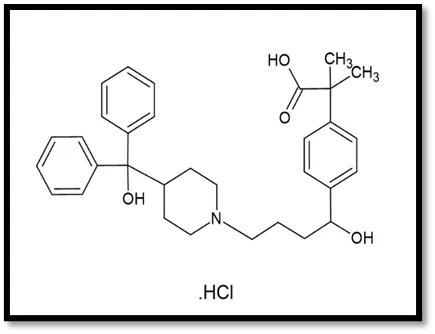
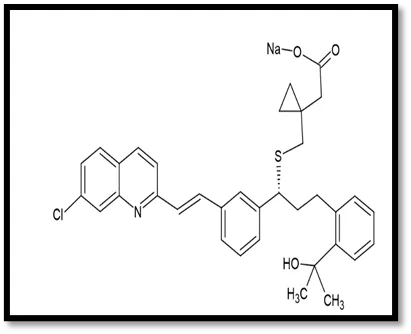
Figure 1: Structure of [a] Fexofenadine hydrochloride [b] Montelukast Sodium
There for the present research work aims to develop a simple, sensitive, accurate and reproducible method for simultaneous estimation of Montelukast Sodium and Fexofenadine hydrochloride in combined dosage form by RP-HPLC method.
2. MATERIALS AND METHODS
2.1. Chemicals and reagents
Active pharmaceutical ingredient of Montelukast Sodium and Fexofenadine hydrochloride was obtained as a gift sample from Anglo french Pharmaceutical Pvt. Ltd and Micro labs Pvt. Ltd, India.
2.2. Instrumentation and chromatographic conditions
The chromatographic analysis was performed using an Agilent 1120 Compact LC HPLC system equipped with a gradient pump, Rheodyne injector, UV–Visible variable-wavelength detector, and standard flow cell. Chromatographic separation was achieved on an X-Bridge C18 column (250 mm × 4.5 mm, 5 µm) maintained under ambient conditions. The mobile phase was optimized after evaluating different solvent combinations and ratios and consisted of trifluoroacetic acid buffer (pH 2.1) and methanol in a ratio of 70:30 (v/v). The system was operated at a flow rate of 1.0 mL/min with an injection volume of 20 µL and UV detection at 215 nm. The total chromatographic run time was 10 min. Under the optimized conditions, well-resolved peaks were obtained with retention times of 3.863 min for fexofenadine hydrochloride and 7.333 min for montelukast sodium. Analytical weighing was performed using a Shimadzu AUX 220 balance, while an Equitron sonicator was used for sample and solvent preparation. A Super Fit vacuum pump and Tarsons filtration assembly with 0.45 µm nylon membrane filters (Merck Millipore) were used for filtration. A Shimadzu UV-1800 double-beam UV–Visible spectrophotometer was used for wavelength selection and spectral analysis. Chromatographic data acquisition, evaluation, and storage were performed using EZChrome Elite software.
2.3 Preparation of mobile phase:
The buffer solution was prepared by dissolving 1g of 0.1% of Trifluoroacetic acid buffer in 1000 ml HPLC grade water (20 mM). The pH of the resulting solution was adjusted to 2.1 by using HPLC grade Triethylamine. HPLC experiments were carried out using a binary pump, pump A containing Methanol and pump B containing Trifluoroacetic acid buffer.
2.4 Standard solutions preparation of Fexofenadine Hydrochloride and Montelukast Sodium
The standard stock solution of Fexofenadine Hydrochloride and Montelukast Sodium was prepared by dissolving 50 mg of the drug into 50 ml of the volumetric flask in Methanol (HPLC grade), volume was made up to the mark with the same solvent. This gave the concentration of 1000 µg/ml for both Fexofenadine Hydrochloride and Montelukast Sodium (Stock-1). Further dilution of 10 ml in 100 ml volumetric flask makes up the volume with Methanol gives 100 µg ml-1(stock-2). From stock solution-2, 6 dilutions were prepared between 120 µg/ml for Fexofenadine Hydrochloride and 60 µg/ml .Montelukast Sodium from the above dilutions of working concentration made up by using Methanol in the ratio of 70:30 Trifluoroacetic acid buffer: Methanol.
3.1 Validation of analytical method
1.Linearity and range:
By using the working standard, aliquots of 10-120µg/ml,of Fexofenadine hydrochloride and montelukast sodium, were prepared with methanol. Six dilutions of each of the above-mentioned concentrations were prepared separately and from these six dilutions, 20µl of each concentration was injected into the HPLC system. Then their chromatogram was recorded. Peak areas were recorded for all the peaks and a standard calibration curve of peak area against concentration was plotted.
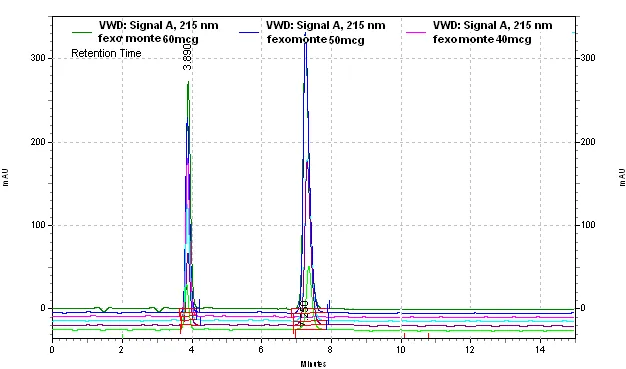
Figure 3: Linearity Chromatogram for Fexofenadine Hydrochloride and Montelukast Sodium 40-60µg/ml
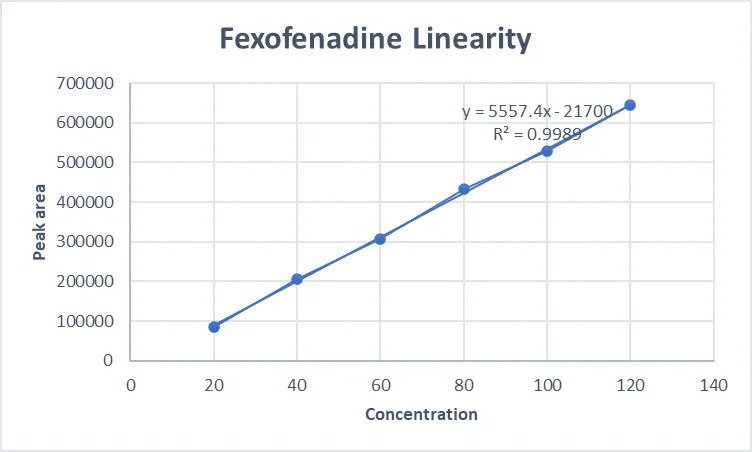
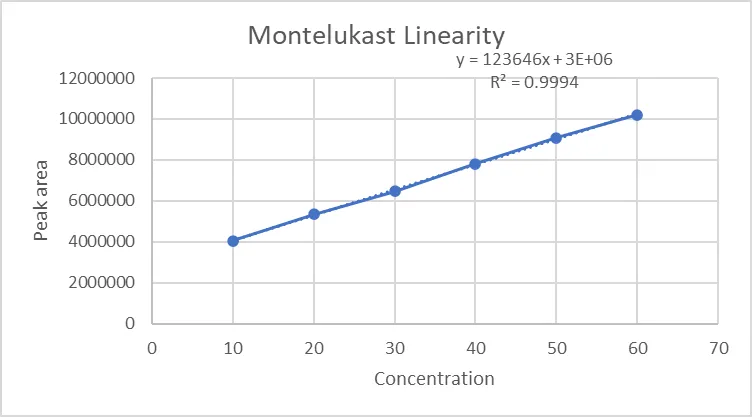
Figure 4: Linearity graph of Fexofenadine Hydrochloride and Montelukast sodium
Table 1: Linearity data for Fexofenadine Hydrochloride and Montelukast Sodium
Specfication r2 = 1
2.Precision
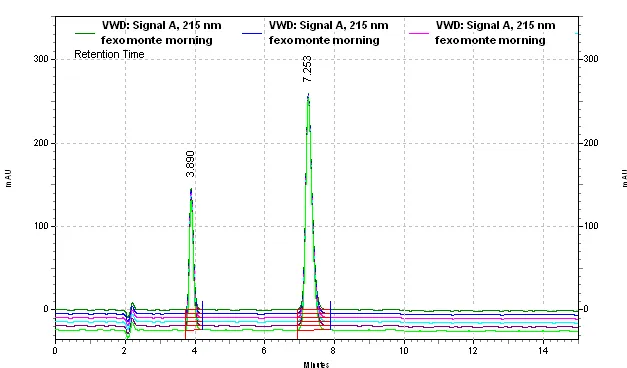
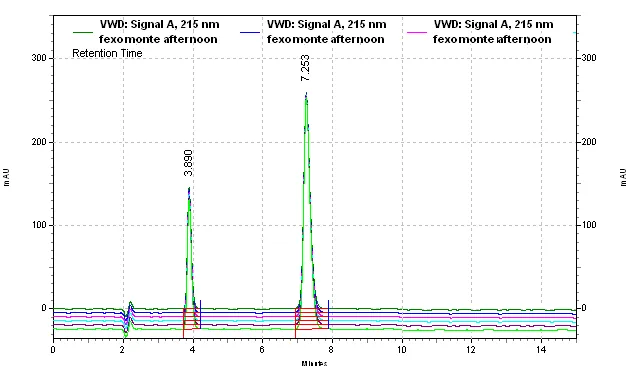
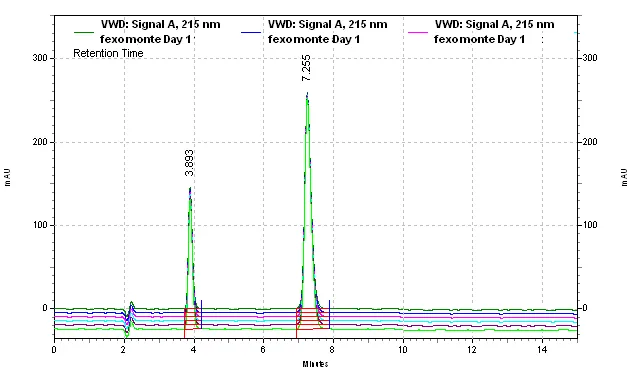
The precision of the assay was determined in terms of intra-day and inter-day variation in the peak area for a set of drug solutions 50-50µg/ml, assayed six times on the same day and on different 2 days.
a b
Figure 5: Intraday Chromatogram for Fexofenadine Hydrochloride and Montelukast Sodium a) Morning b) Afternoon
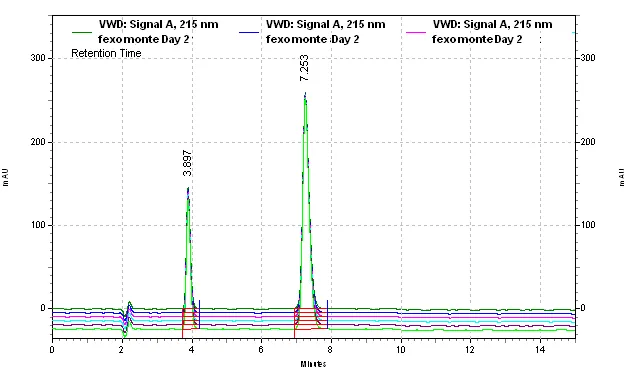
a b
Figure 6: Intraday Chromatogram for Fexofenadine Hydrochloride and Montelukast Sodium a) Day 1& b) Day 2
4.Limit of detection and limit of quantification
LOD and LOQ were calculated according to ICH recommendations where the approach is based on the signal-to-noise ratio. Chromatogram signals obtained with known low concentrations of analytes were compared with the signals of the blank samples. A signal–to–noise ratio of 3:1 and 10:1 was considered for calculating LOD and LOQ respectively.
Table 2: LOD and LOQ for simultaneous estimation of Fexofenadine Hydrochloride and Montelukast Sodium
|
Name of the drug |
LOD µg/ml |
LOQ µg/ml |
|
Fexofenadine Hydrochloride |
5.31 |
17.49 |
|
Montelukast Sodium |
2.88 |
9.50 |
5.System Suitability
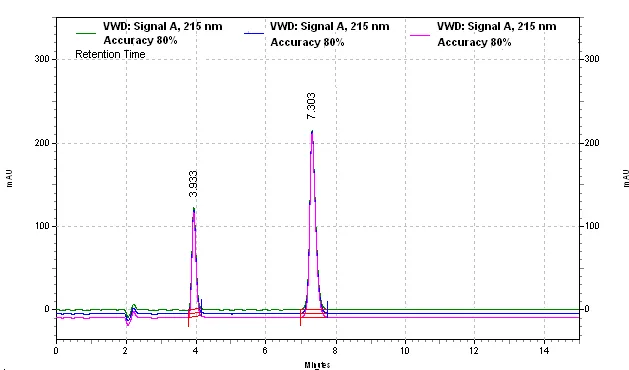
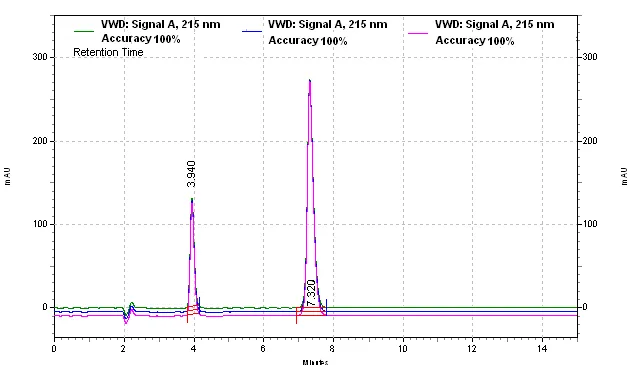
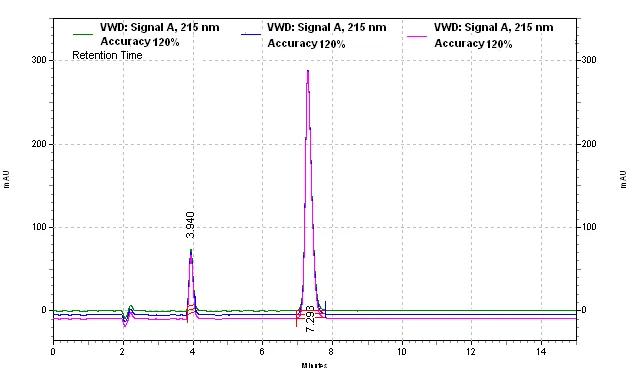
The resolution, number of theoretical plates, Capacity Factor, S/N (6 Sigma) and peak asymmetry were calculated for the standard solutions.
Table 3: Optimum conditions in RP-HPLC method for simultaneous estimation of Fexofenadine Hydrochloride and Montelukast Sodium
|
Parameter |
Method |
Acceptance Criteria |
|
|
Fexofenadine Hydrochloride |
Montelukast Sodium |
||
|
λ max (nm) |
215nm |
215nm |
- |
|
Linear Range(µg/ml) |
20-120 µg/ml |
10 -60µg/ml |
- |
|
Correlation Coefficient(r2) |
0.9965 |
0.998 |
NMT 1 |
|
Precision (RSD) |
0.2824-0.4946 |
0.0737-0.3868 |
NMT 2 |
|
Accuracy (% Recovery) |
100 to 101% |
100 to 102% |
Between 100-102% |
|
Limit of Detection (µg/ml) |
5.31 µg/ml |
17.49 µg/ml |
- |
|
Limit of Quantification(µg/ml) |
2.88µg/ml |
9.50 µg/ml |
- |
|
Number of Theoretical Plates per meter |
3281 |
3569 |
NLT 2000 |
|
Tailing Factor |
0.9281 |
0.8254 |
NMT 2 |
CONCLUSION
In conclusion, a simple, sensitive, precise, and accurate reverse-phase high-performance liquid chromatography (RP-HPLC) method was successfully developed and validated for the simultaneous estimation of Fexofenadine Hydrochloride and Montelukast sodium in both bulk and pharmaceutical dosage forms. In the method employed a mobile phase consisting of Trifluoroacetic acid buffer pH 2.1: Acetonitrile (70:30 v/v), with separation achieved using an X bridge C-18 column (250 mm x 4.5 mm, 5µ). The retention times were minutes for Fexofenadine Hydrochloride and minutes for Montelukast sodium, with a total run time of 10 minutes. The method demonstrated excellent precision with %RSD values below 2% and exhibited good linearity over a concentration range of 20 µg/ml to 120 µg/ml. Accuracy was confirmed through recovery studies, with results ranging between 100-102%. The limits of detection (LOD) and quantification (LOQ) were determined for both compounds. The method adhered to ICH guidelines for analytical method validation, demonstrating its reliability. Overall, this RP-HPLC method is rapid, economical, and well-suited for routine analysis of Fexofenadine Hydrochloride and Montelukast sodium in both bulk and pharmaceutical formulations.The proposed method is novel, validated, and suitable for regular quality control testing in pharmaceutical laboratories
REFERENCES


Maheen Fathima, Manju S. V., Chandanam Sreedhar, A Novel and Validated RP-HPLC Method for the Simultaneous Determination of Fexofenadine Hydrochloride and Montelukast Sodium in Bulk Drug and Pharmaceutical Dosage Forms, Int. J. of Pharm. Sci., 2026, Vol 4, Issue 9, 942-949, https://doi.org/10.5281/zenodo.22677626
 10.5281/zenodo.22677626