

We use cookies to ensure our website works properly and to personalise your experience. Cookies policy
Department of Pharmaceutics, Smt. Tarawati Institute of Bio-medical & Allied Sciences, Roorkee.
Metformin hydrochloride is a widely used first-line antidiabetic drug for the management of type 2 diabetes mellitus. Although conventional metformin tablets are therapeutically effective, their relatively high dose and requirement for swallowing may reduce acceptability in patients who experience difficulty swallowing solid dosage forms. Mouth dissolving tablets (MDTs), also referred to as orally disintegrating tablets (ODTs), are an attractive alternative because they rapidly disintegrate or disperse in the oral cavity in the presence of saliva and can be administered without water. The development of metformin hydrochloride MDTs requires careful selection of excipients and optimization of tablet properties because metformin is a high-dose, highly water-soluble drug and its cohesive powder characteristics can make direct compression challenging. Literature reports demonstrate that metformin-containing ODTs can be successfully developed using direct compression, effervescent, sublimation, freeze-drying, and moisture-activated dry granulation approaches. Superdisintegrants such as crospovidone and sodium starch glycolate, together with water-soluble diluents such as mannitol, can facilitate rapid wetting and disintegration. Evaluation includes pre-compression studies, tablet weight variation, hardness, friability, drug content, wetting time, water absorption ratio, disintegration time, and in-vitro dissolution. The FDA considers rapid disintegration in the oral cavity without chewing or additional liquid to be a defining characteristic of an ODT and identifies approximately 30 seconds as a desirable disintegration time. Recent research also emphasizes quality-by-design approaches for optimizing high-dose metformin ODTs. Thus, properly designed metformin hydrochloride MDTs may provide a convenient and patient-friendly immediate-release dosage form with rapid tablet dispersion and drug release
Diabetes mellitus is a chronic metabolic disorder characterized by persistent elevation of blood glucose levels resulting from impaired insulin secretion, impaired insulin action, or a combination of both. Type 2 diabetes mellitus represents the most common form of diabetes and requires long-term pharmacological and lifestyle management. Metformin hydrochloride remains one of the most extensively used oral antidiabetic drugs because of its established glucose-lowering efficacy and clinical experience.
Conventional immediate-release metformin tablets are generally administered with water. However, tablet swallowing can be difficult for some patients, particularly individuals with dysphagia, elderly patients, pediatric populations, and patients who have difficulty taking medication outside the home. These limitations have encouraged the development of alternative oral dosage forms.
Mouth dissolving tablets are designed to disintegrate rapidly after contact with saliva, producing a suspension or solution that can subsequently be swallowed. ODTs are also described in the literature as mouth-dissolving, fast-dissolving, fast-disintegrating, or orodispersible tablets. Their principal advantage is administration without the need for additional water.1
The U.S. Food and Drug Administration (FDA) describes an orally disintegrating tablet as a solid dosage form that rapidly disintegrates in the oral cavity, generally without the need for chewing or liquids. A disintegration time of approximately 30 seconds is identified as a desirable target during development, although it is not an absolute boundary for every ODT product.9
Metformin presents an interesting formulation challenge. It is highly water soluble but is administered at relatively high doses, making it difficult to achieve the combination of adequate tablet strength, acceptable tablet size, rapid disintegration, and good mouthfeel. Published research has therefore investigated several approaches for developing metformin ODTs.2
2. Metformin Hydrochloride
Metformin hydrochloride is a biguanide antidiabetic agent used primarily in the management of type 2 diabetes mellitus. It decreases hepatic glucose production and improves insulin-mediated glucose utilization.
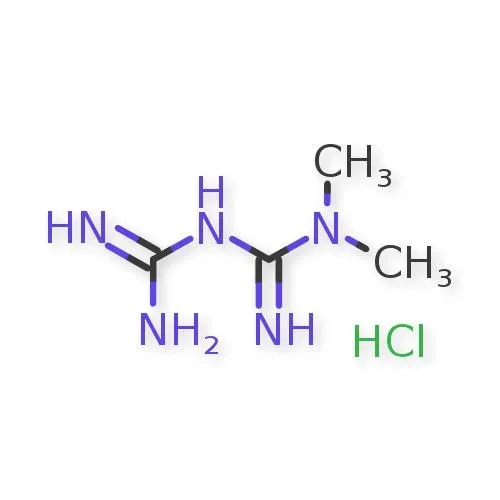
Fig 2.1 Structure of Metformin Hydrochloride
Table 2.1 Drug profile
|
Parameter |
Description |
|
Drug |
Metformin hydrochloride |
|
Therapeutic class |
Oral antidiabetic |
|
Pharmacological class |
Biguanide |
|
Molecular formula |
C₄H₁₂ClN₅ |
|
Molecular weight |
Approximately 165.63 g/mol |
|
Appearance |
White crystalline powder |
|
Solubility |
Freely soluble in water |
|
Route |
Oral |
|
Dosage form |
Conventional tablets, extended-release tablets and other oral formulations |
|
BCS consideration |
Commonly described as BCS Class III |
|
Major formulation challenge |
High dose and cohesive powder characteristics |
Metformin has high aqueous solubility, but only about 50% of an orally administered dose is absorbed from the gastrointestinal tract. A published biowaiver assessment describes metformin hydrochloride as a BCS Class III substance and emphasizes the importance of rapid dissolution and consideration of excipient effects during formulation development.2
3. Rationale for Developing Metformin Mouth Dissolving Tablets
The development of a mouth dissolving dosage form of metformin hydrochloride is based on several potential advantages:
However, MDT development is not simply a matter of making a conventional tablet disintegrate rapidly. The formulation must simultaneously demonstrate acceptable mechanical strength, low friability, rapid wetting, rapid disintegration, adequate drug content, acceptable taste, and satisfactory dissolution.
The major challenge with metformin is its relatively high dose. Published research specifically identifies compression of cohesive, poorly compactable, high-dose metformin hydrochloride as a challenge in ODT development.2
4. Advantages of Mouth Dissolving Tablets
Mouth dissolving tablets provide several advantages over conventional tablets.
4.1 Patient compliance- Patients who have difficulty swallowing conventional tablets may find MDTs easier to administer.
4.2 No requirement for water- The tablet is designed to disintegrate in saliva, reducing dependence on drinking water.
4.3 Rapid disintegration- A properly designed ODT rapidly breaks down into smaller particles after contact with saliva.
4.4 Rapid drug release- Rapid disintegration can facilitate rapid drug dissolution when the drug and formulation are appropriately designed.
4.5 Convenient administration- The dosage form is particularly useful when water is unavailable.
4.6 Potential for improved acceptability- Small, rapidly disintegrating tablets can provide a convenient alternative to large conventional tablets.
However, ODTs also have limitations, including taste, moisture sensitivity, mechanical fragility, packaging requirements, and restrictions associated with high-dose drugs.1
5. Excipients Used in Metformin MDTs
5.1 Superdisintegrants
Superdisintegrants are essential components of most MDT formulations. They promote rapid breakup of the tablet after contact with water or saliva.
Common examples include:
5.2 Crospovidone
Crospovidone promotes rapid liquid uptake through capillary action and facilitates tablet breakup. It is particularly useful when rapid disintegration is required without excessive gelling.
Sodium starch glycolate
Sodium starch glycolate undergoes substantial swelling after hydration and can promote rapid disintegration.
Croscarmellose sodium
Croscarmellose sodium provides swelling and wicking properties and is widely used in immediate-release formulations.
5.3 Diluent
Suitable diluents may include:
Mannitol is particularly attractive for MDTs because of its water solubility and pleasant cooling sensation in the mouth.
Microcrystalline cellulose can improve compactibility and tablet mechanical strength.
5.4 Binder
Binders may be required to achieve adequate tablet strength. Examples include:
The concentration should be carefully optimized because excessive binder can increase tablet hardness and prolong disintegration.
5.5 Lubricant
Magnesium stearate is commonly employed as a lubricant. However, excessive lubrication can decrease wettability and may adversely affect tablet disintegration and dissolution.
5.6 Glidant
Colloidal silicon dioxide may be incorporated to improve powder flow.
5.7 Sweeteners and taste-masking agents
Taste masking is particularly important for oral disintegrating formulations because the drug may remain in contact with taste receptors before swallowing.
Potential ingredients include:
A specialized research approach has investigated formation of a sweet metformin-acesulfame salt to improve taste and tabletability, allowing high drug loading in an ODT prepared by direct compaction.3
6. Methods of Preparation
Several techniques can be used to manufacture metformin MDTs.
6.1 Direct compression
Direct compression is one of the simplest methods.
Procedure
Metformin hydrochloride and excipients are accurately weighed, passed through a suitable sieve, blended uniformly, lubricated, and compressed into tablets.
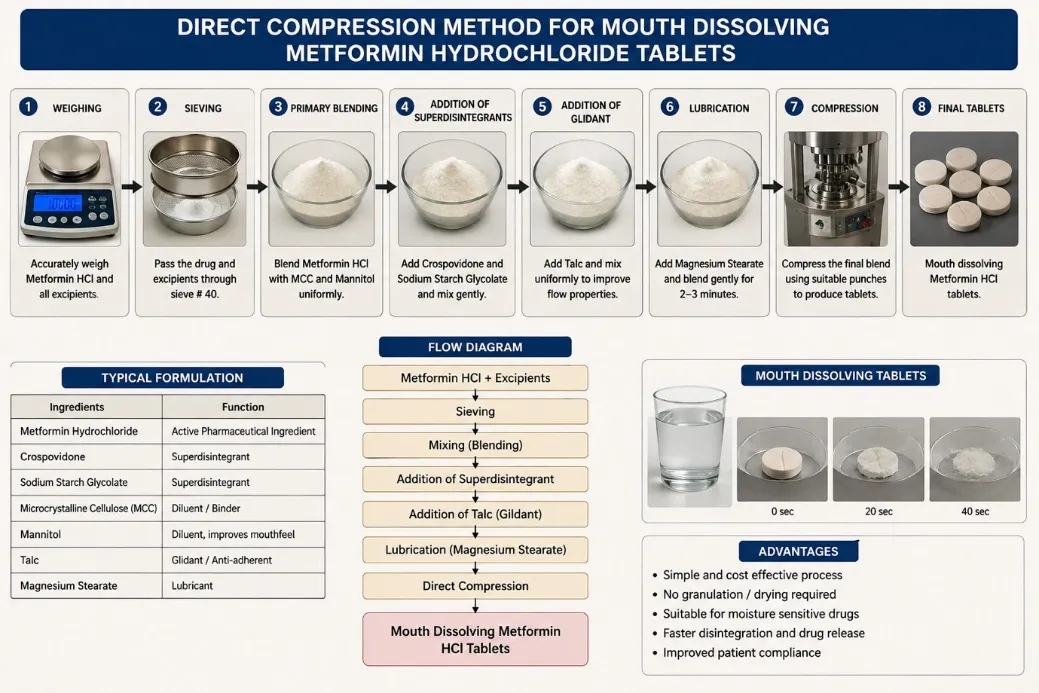
Fig 6.1- Direct Compression Method for Mouth Dissolving Metformin HCl Tablets.
Advantages
Limitations
Published metformin ODT research has successfully investigated direct compression as a manufacturing approach.4
6.2 Wet Granulation
In wet granulation, the drug and excipients are mixed and granulated using a binder solution. The wet mass is screened, dried and lubricated before compression.
The method can improve flow and compressibility, but additional processing steps and moisture exposure may be undesirable for some formulations.
6.3 Sublimation Method
Volatile materials such as camphor or ammonium bicarbonate may be incorporated into the formulation and subsequently removed by sublimation.
Removal of the volatile material generates pores within the tablet matrix, increasing porosity and facilitating rapid penetration of saliva.
Advantages
Limitations
6.4 Freeze-Drying
Freeze-drying or lyophilization produces highly porous tablets.
The process generally involves freezing a solution or suspension followed by sublimation of ice under reduced pressure.
Advantages
Disadvantages
Research comparing direct-compression and freeze-dried ODTs containing metformin hydrochloride and glyburide found rapid disintegration and high dissolution for both approaches; more than 90% of metformin and glyburide dissolved within 5 minutes in the investigated formulations.5
6.5 Moisture-Activated Dry Granulation
Moisture-activated dry granulation (MADG) is a useful approach for high-dose metformin ODTs.
A study specifically investigated metformin ODT development using MADG combined with a 3² factorial design. Water amount and pregelatinized starch were studied as formulation variables, and water amount showed a predominant influence on important granule and tablet properties.6
This approach is particularly interesting because it can improve granule properties while avoiding conventional wet-granulation drying.6
7. Proposed Formulation Design
A preliminary formulation can be designed using the following excipients:
|
Ingredient |
Function |
|
Metformin hydrochloride |
Antidiabetic active pharmaceutical ingredient |
|
Mannitol |
Water-soluble diluent and mouthfeel enhancer |
|
Microcrystalline cellulose |
Diluent/compression aid |
|
Crospovidone |
Superdisintegrant |
|
Sodium starch glycolate |
Superdisintegrant |
|
Povidone K30 |
Binder |
|
Aspartame/Sucralose |
Sweetener |
|
Flavour |
Taste masking |
|
Colloidal silicon dioxide |
Glidant |
|
Magnesium stearate |
Lubricant |
The exact quantities should be optimized experimentally rather than adopted as fixed values because metformin is a high-dose drug and the appropriate excipient concentration depends on tablet strength, target tablet weight, compression force, and manufacturing method.7
8. Post-Compression Evaluation
8.1 Appearance
Tablets should be examined for:
8.2 Thickness
Tablet thickness is measured using a vernier caliper or suitable digital thickness tester.
Consistent thickness indicates uniform compression.
8.3 Weight variation
Individual tablets are weighed and compared with the average tablet weight.
This test evaluates manufacturing uniformity
8.4 Hardness
Hardness determines the resistance of the tablet to mechanical fracture.
MDTs require sufficient hardness for handling but excessive hardness should be avoided because it can delay disintegration.
Drug content determines the amount of metformin hydrochloride present in individual tablets.
A suitable validated analytical method, such as UV-visible spectrophotometry or HPLC, can be used.
For UV analysis, the wavelength should be experimentally confirmed using the selected dissolution medium because analytical conditions can influence the observed absorbance.
Wetting time is an important parameter for MDTs.
A tablet is placed on a piece of tissue paper or suitable absorbent material previously wetted with a defined volume of water or simulated saliva.
The time required for complete wetting is recorded.
Lower wetting time generally supports faster tablet disintegration.
Disintegration is one of the most important quality attributes of an MDT.
The test may be performed using a suitable pharmacopoeial apparatus or a validated alternative method appropriate for ODT development.
The FDA identifies rapid disintegration in the oral cavity as a defining characteristic and notes approximately 30 seconds as a desirable development target. 9
The target should therefore be established during formulation development based on the intended product characteristics rather than treating 30 seconds as an absolute universal specification.
Taste is a critical quality attribute for MDTs because the formulation disintegrates directly in the oral cavity.
Taste may be assessed using:
Sweeteners, flavours, complexation, coating, or salt modification can be investigated to improve palatability.7
FTIR spectroscopy can be used to investigate drug-excipient compatibility.
The spectra of:
The disappearance, appearance, or significant shifting of characteristic peaks may indicate possible interactions. However, minor peak shifts alone should not automatically be interpreted as chemical incompatibility; results should be evaluated together with thermal and pharmaceutical characterization.8
14. Stability Studies
The optimized formulation should undergo stability studies according to an appropriate regulatory stability protocol.
Parameters that may be monitored include:
Stability studies are especially important for MDTs because their porous structure and hygroscopic excipients can make them more sensitive to moisture and mechanical damage.10
15. Optimization of Formulation
Optimization is necessary to obtain a balance between rapid disintegration and adequate mechanical strength.
Important independent variables may include:
Important dependent variables may include:
A factorial design or response-surface methodology can be used to investigate interactions among formulation variables. A 3² factorial design has already been reported for high-dose metformin ODT development using the MADG approach.11
16. FUTURE PERSPECTIVES
Future research should focus on improving the formulation of high-dose metformin MDTs through advanced manufacturing and systematic optimization. QbD and design-of-experiment approaches can reduce experimental burden and provide a better understanding of formulation-variable interactions.
Advanced taste-masking systems, co-processed excipients, novel superdisintegrants, porous carriers, and optimized direct-compression excipient systems may improve the balance between rapid disintegration and mechanical strength.
Continuous manufacturing and process analytical technology may further improve batch-to-batch consistency. Three-dimensional printing and advanced porous tablet technologies may also provide opportunities for personalized dosing, although their practical application to high-dose metformin remains an area requiring further investigation.
An important future research direction is the development of metformin ODTs that combine high drug loading, rapid disintegration, acceptable mouthfeel, adequate mechanical strength, and robust stability.12\
CONCLUSION
Mouth dissolving tablets represent a promising alternative to conventional metformin hydrochloride tablets for improving convenience and ease of administration. Metformin is a particularly interesting candidate because of its extensive clinical use and high aqueous solubility, while its high dose and cohesive powder characteristics create important formulation challenges. Successful MDT development requires careful selection of superdisintegrants, diluents, binders, lubricants, sweeteners, and taste-masking agents.
Direct compression provides a simple and economical manufacturing route, whereas effervescent, sublimation, freeze-drying, and moisture-activated dry granulation approaches can be explored when conventional compression does not provide the required performance. Evaluation should include powder-flow properties, tablet physical characteristics, drug content, wetting time, water absorption, disintegration, dissolution, compatibility studies, and stability testing.
Literature evidence confirms that metformin-containing ODTs can achieve rapid disintegration and dissolution when formulation variables are appropriately optimized. (PubMed) The FDA's ODT guidance further emphasizes rapid disintegration in the oral cavity without chewing or additional liquid as a key characteristic of this dosage form. (U.S. Food and Drug Administration)
Therefore, systematic formulation development using appropriate excipients and QbD-based optimization can provide a robust metformin hydrochloride mouth dissolving tablet with desirable pharmaceutical characteristics, potentially improving convenience and patient acceptability of antidiabetic therapy.
REFERENCES



Arsala Kaleem, Dr. Shami Ratra Chaddha, Deepak Saini, A Review Article on Formulation And Evaluation Of Antidiabetic Mouth Dissolving Tablets Of Metformin Hydrochloride: Characterization And Development, Int. J. of Pharm. Sci., 2026, Vol 4, Issue 8, 5201-5210, https://doi.org/10.5281/zenodo.22204462
 10.5281/zenodo.22204462