

We use cookies to ensure our website works properly and to personalise your experience. Cookies policy
School of Pharmacy, YBN University Ranchi, Jharkhand, India
The growing demand for sustainable pharmaceutical excipients has encouraged the exploration of plant-derived materials as eco-friendly alternatives to conventional synthetic binders. There has been a lot of buzz about using natural polymeric materials from agricultural waste as a substitute pharmaceutical excipient, thanks to the growing demand for eco-friendly and sustainable medications. Paracetamol tablets bindered with Ambon banana starch (Musa paradisiaca var. sapientum L.) were the focus of this physical characterisation investigation. Research Tools and Procedures: The wet granulation process was used to compress paracetamol tablets with the addition of a binder called Ambon banana starch mucilago. Formulas I, II, and III of Ambon banana starch were employed in the following proportions: 15%, 17.5%, and 20%. The criteria of granule testing and tablet testing are used to evaluate the physical features of the product. The results show that all three formulations passed the granule test. At the same time, all formulations passed the necessary tests for tablet consistency in terms of size, weight, hardness, and disintegration time. Formulas II and III fulfilled the criteria, however Formula I (15%) failed with a result of 2.07% (requirement < %) in the friability test. The results of this investigation demonstrate that Ambon banana starch is a viable option for use in tablet formulation as a binder.
Excipients are an important component in the design and development of finished drug products in the pharmaceutical industry as they contribute to enhance the stability, quality, efficacy and bioavailability of these products. Among different excipients, binders provide the binding force necessary for tablet formulation to agglomerate powder particles enabling granulation and producing a tablet of sufficient mechanical strength. Traditional binders that are widely used in pharmaceutical manufacturing are starch, polyvinylpyrrolidone (PVP) and hydroxypropyl methylcellulose (HPMC) and have various benefits and drawbacks. Issues such as cost, environmental friendliness, and the reliance on synthetic substances have prompted extensive search for suitable natural substitute (Bishnoi et al., 2023).
Natural polymers derived from plants sources have merits such as biocompatibility, degradability, non-toxicity and cost effectiveness. The starch isolated from plant origin is extensively use as the natural binder for preparing pharmaceutical dosage form, due to its ability to produce strong coherent tablets based on swelling, gelatinization and binding potential. Native starches from maize, potato, rice and cassava are commercially available in large quantity and commonly used. However, the demand for novel low-cost starch source sources have prompted investigation into starch that can be extracted from waste matter produced during food processing as well as from agricultural industry. Banana is an extremely extensively grown fruit around world, the peels of this fruit have substantial amounts; that are mostly removed and thus become source of waste during utilization of banana and industrial products production of banana, banana peel generally accounts for 30%−40% of the total weight of fruit mass. The peel of the banana is appreciable with the quantity of carbohydrates, particularly starches, together with cellulose, hemicelluloses, pectin, proteins and minerals. Physicochemical attributes of the starch isolated from the banana peel that have beneficial qualities comparable to higher water absorption and swelling capabilities together with adhesives have indicated prospects for its pharmaceutical excipients’ application. Processing of the starch obtained from the peel of the banana presents the prospect of valorizing agricultural refuse alongside green chemistry in formulation of medicines for the patients’ safety, while decreasing the manufacture cost and foreign substitute-based excipients consumption (Khairnar et al., 2024).
The Pharmaceutical tablets binders play significant position in improving granule formation, promoting compression and diminishing disintegration time and friability of tablet. They are essential to provide optimum hardness for correct handling and for reducing disintegration time and friability and for regulating disintegration or to prolong drug release in pharmaceutical applications. Concentration and the form of binders are very significant in deciding the characteristic of tablets such as strength, disintegration and dissolution rates of tablets. Some other work of various Researchers’ is suggesting a suitable option for alternate binder derived from medicinal plant resources, namely ‘seeds’,’ stem’,’ leaf’ and ‘flower’ starches being used as binder, disintegrant and as diluent Interest in fruit waste utilization for medicinal use is rapidly increasing as this has potential commercial advantages and eco-friendly benefits. Banana peel starch is a sustainable, biodegradable material which fits into waste valorization, as well as in circular bioeconomy and sustainable production paradigms of industrial products such as pharmaceutical excipients. Our study concentrates on extraction of starch from banana peel for possible use as natural binder in tableting processes and study of some of the physico-chemical properties of the starch extracted, and effect on physical characteristics of resulting granules and tablets and discuss its use in alternative to traditional binders.
Pharmaceutical Excipients and the Role of Binders
More Than Just Ingredients: How to Make Drugs Stable, Manufacture-Ready and Function at Their Peak A significant proportion of pharmaceutical formulations includes excipients which are crucial in providing the stability, manufacturability, and functioning of pharmaceutical products. Of the many excipients in tablet preparation, the role of binders is central – they add a sense of stickiness that binds powder particles together and enables granulation. Aulton and Taylor (2018) explain that binders provide increase in compressibility of powders and allow production of tablets of the required hardness, robustness to any stress. Bondoc et al., (2023) observed that an efficient binder would have favorable adhesive properties, should be free from toxicity, and must be chemically inert to act with active components. While starch, polyvinylpyrrolidone, hydroxypropyl methylcellulose etc. Are frequently used traditional binders in tablets, efforts towards sustainability and reduced cost is leading to research into their natural analogs.
Natural Polymers in Pharmaceutical Formulations
The interest in natural polymers has increased due to the fact that they offer significant advantage such as biodegradability, biocompatibility, reduced toxicity and good availability. Cheiya et al., (2024) highlighted that plant-based materials are potential excipients for novel and controlled drug delivery devices because they are renewable and environmentally sound. Natural excipients may serve as effective substitute to natural excipients and have desirable properties. Another benefit of using naturally occurring polymers is that they possess functional groups which enable ease of derivatization, are cost-effective and can contribute to patient acceptances (Singh et al., 2025). As a result, the use of plants for novel sustainable excipients is a promising perspective in the pharmaceutical sector.
Banana Peel as an Agricultural Waste Resource
Banana (Musa paradisiaca) one of the leading cultivated fruits globally. Banana is known to be a good producer of peels (waste product) Olatunji et al., (2025) says that banana peel accounts for about 30–40% by weight of the fruit. banana peels are largely discarded by Consumers or industrial. These are waste materials causing environment. Gozalil et al., (2021) reveals that banana peel a rich source carbohydrate such as cellulose, hemicellulose, pectin, starch and minerals useful in any industrial application, in fact. Mutmainnah et al., (2023) indicated that banana peel has high content of nutrients, physicochemical composition exploitable.
Starch Composition and Pharmaceutical Potential of Banana Peel
It is one of the most used natural pharmaceutical excipients since it is capable of absorbing water and swelling with remarkable binding power. Potato, Rice, Wheat is among the most utilized sources. According to Bishnoi et al., (2023) Starch is a polymer of carbohydrate containing primarily the polysaccharides amylose and amylopectin in which ratio between these two components have an important influence on functional properties of the starch. Banana based starch has been investigated by Khairnar et al., (2024) for their physicochemical characteristics and properties like swelling index, degree of swelling, pasting properties and they have found that the starch from banana possesses adequate swelling and pasting properties to be applicable at industrial level. Another group of researchers have reported that the banana residue starch has good film forming and binding properties and they can be utilized in some pharmaceutical dosage form (Kankanamge et al., 2025). Based on this property, banana peel can be used as effective binder for the formulation of tablet.
Importance of Binders in Tablet Manufacturing
Binder: In tablet formulation, binders play an important role to increase the coherence of granule, and to achieve sufficient mechanical strength of the tablet. Kapoor et al., (2025) stated that the strength, friability, disintegration and dissolution characteristics of tablets depend on the concentration and nature of binders. Trivedi et al., (2025) said that if there is no or excessive use of the binder the result will be the fragile or unduly hard tablets with the increase in disintegrating time. Seth et al., (2025) observed that starch-based binders are more suitable due to compatibility and safety, but the discovery of alternative sources of starch, for tablet making with an acceptable quality attributes will be of value for pharmaceutical.
MATERIAL AND METHODS
Materials
The fresh banana peel which is known as Musa paradisiaca L. is obtained from fruit markets in the Makassar area of South Sulawesi Indonesia. The tablet formulation utilized paracetamol as the model drug. Lactose-monohydrate was used as a diluent. The magnesium stearate served as the lubricant while the talc was the glidant. A purified water was applied during the extraction of starch and preparation of binder solution. All chemicals used in this study are pharmaceutical grade.
Extraction of Banana Peel Starch
Banana peels were well lavished first in distilled water for the removal of adhering impurities and surface contaminants. The cleaned peels were later chopped into small pieces and blended with distilled water using a laboratory blender. The resulting mixture was passed through a muslin cloth for the separation of fibrous materials from starch. The liquid portion was collected in a sedimentation container to allow for proper starch sedimentation for about 24 hours before removing the liquid moisture. The starch formation was then taken and dried in hot air at a temperature of 50°C until a constant weight was obtained. The dried starch was then ground and made to pass through an 80-mesh sieve for proper consistency before a tablet formulation (Kapoor et al., 2025).
Preparation of Banana Peel Starch Binder
Solutions with 15%, 17.5%, and 20% banana peel starch were mixed with distilled water. The recommended amount of starch was dissolved in a small amount of cold water to get a homogeneous mixture. The mixture was then slowly heated and stirred constantly until the starch was completely gelatinized. Then, the remaining quantity of distilled water was added to reach the volume required in order to obtain a uniform starch mucilage suitable for wet granulation (Elisabeth et al., 2018).
Formulation of Paracetamol Tablets
Three formulations known as F1, F2, and F3 were prepared by varying the concentration of the binder derived from banana peel starch while keeping the combination of other excipients constant. Wet granulation was chosen for making tablets since paracetamol powder is characterized by poor flowability and compressibility.
To start with, paracetamol and lactose were weighed and mixed to obtain a uniform powder mix. The banana peel starch mucilage was then added to the powder mix gradually and mixed thoroughly until a moist mass was obtained. The moist mass was sieved through a 20-mesh sieve to obtain wet granules, which were dried in the hot air oven at 45 °C up to the required moisture content. The dried granules were sieved through a 24-mesh sieve to obtain equally-sized granules (Ahmed et al., 2024).
Finally, magnesium stearate and talc were added and mixed to dried granules to ensure proper mixing of the lubricant and glidant. After these steps completed, granules were compressed into tablets of specified weight using single punch tablet making equipment.
Table 1. Composition of Paracetamol Tablet Formulations Containing Banana Peel Starch as Natural Binder
|
Ingredient |
Function |
F1 |
F2 |
F3 |
|
Paracetamol |
Active pharmaceutical ingredient |
500 mg |
500 mg |
500 mg |
|
Banana peel starch |
Natural binder |
15% (w/v) |
17.5% (w/v) |
20% (w/v) |
|
Lactose monohydrate |
Diluent |
q.s. to 650 mg |
q.s. to 650 mg |
q.s. to 650 mg |
|
Magnesium stearate |
Lubricant |
0.15 mg |
0.15 mg |
0.15 mg |
|
Talc |
Glidant |
0.15 mg |
0.15 mg |
0.15 mg |
Evaluation of Tablet Properties
Weight Uniformity Test:
Thoroughly measure out 10 pills, one at a time. If the acceptability value of the first 10 dose units is less than or equal to L1%, then the preparations are uniform enough. Conduct the test on an extra 20 units of preparation and determine the acceptability value if it exceeds L1% (Kapoor et al., 2025).
Size Uniformity Test :
A calliper was used to measure 20 pills for this test. For tablets to be considered compliant, their diameter must be between one-third and three times the thickness of the tablet, but less than one-fourth of the thickness.
Hardness Test:
A hardness tester and six tablets make up the tablet hardness test. The test works on the basis of applying pressure until the tablet breaks; the tablet's minimum strength is 4-8 kg/cm3 (Olatunji et al., 2025).
Friability Test:
The number of pills tested is determined by their total weight, which is about 6.5 g, and is equal to or less than 650 mg. On the other hand, only 10 pills were examined for tablets with a weight more than 650 mg. Both the pre- and post-test weights of the pills were recorded. Following this, the two masses are contrasted. Dust is removed from the tablet that will be examined first. When the fragility of a pill exceeds 1%, it is deemed fragile and unsuitable for use (Ulfa et al, 2018).
Disintegration Time Test:
The instrument used for this test is known as a disintegration tester. If not, use one disc per tube; otherwise, fill all six tubes from the basket with one tablet. Unless specified otherwise in the corresponding monograph, run the tool with water as the medium at a temperature of 37 ± 2°. Once the allotted fifteen minutes have elapsed, remove the basket and check the pills; each one must be fully crushed. Try again with 12 pills if the first one or two don't dissolve entirely. At least sixteen out of the eighteen pills must have dissolved entirely.
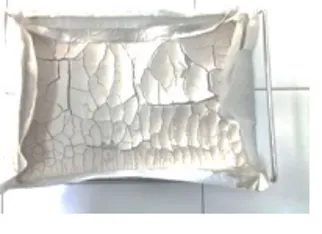
Figure 1. Dried ambon banana starch.
The paracetamol tablets used in this investigation were made using wet granulation and binders such as Ambon banana starch (Musa paradisiaca var. sapientum L.). Materials that are resistant to both heat and moisture are ideal for the wet granulation process, which is used to make tablets. According to Kurniati et al. (2017), paracetamol is known for its poor flow characteristic. Using the wet granulation process, the flow characteristic may be improved. Using a binder in the form of a solution, this approach enhances cohesiveness, leading to a corresponding rise in tablet hardness.
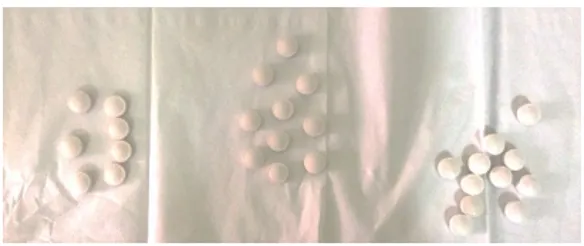
Figure 2. Paracetamol tablets from Ambon banana starch.
Statistical Analysis
All experimental data were presented as mean ± SD. The three formulations were compared descriptively using standard pharmacopoeia acceptance criteria. If required, statistical analysis may involve one-way ANOVA followed by relevant post hoc tests with a significance level of p < 0.05.
RESULTS
Characteristics of Banana Peel Starch
Following the processes of drying and sieving, banana peel starch was exhibited in the form of a fine cream powder. According to the flow and handling characteristics, this starch was ready for application as a binding agent in wet granulation. The gelatinized starch made it possible to prepare a homogenous mucilage with a sufficient level of viscosity for the uniform living of the powder mixture during the granulation process. All these features support earlier studies indicating favorable technical characteristics of starch coming from various plant sources. (Kaur et al., 2020).
Evaluation of Tablet Quality
The prepared paracetamol tablets by incorporating banana peel starch as binder were tested for weight uniformity, dimensional uniformity, hardness, friability and disintegration time as per standard pharmacopeial specification.
Weight Uniformity:
Uniformity of tablet weight is an important aspect since it indicates that the dies have been filled uniformly, thus impacting dosing accuracy. The outcomes in all three formulations have provided weight variations that lie within the limits established by pharmacopeias. This, in turn, points to smooth flow of granules and uniform compaction.
Table 2. Paracetamol Tablets of uniform weight by using banana peel starch
|
Parameter |
F1 (15%) |
F2 (17.5%) |
F3 (20%) |
Acceptance Criteria |
|
Mean tablet weight (g) |
0.458 |
0.473 |
0.485 |
Pharmacopeial limits |
|
Standard deviation |
0.0075 |
0.0067 |
0.0086 |
Acceptable |
The low variability shown by data pertaining to weight of all preparations indicates good stability of weight. The increase in the concentration of binding agent did not have a negative impact on charging the die or on weight variability indicating satisfactory flowability of granules made of banana peel starch (Kankanamge et al., 2025).
Tablet Dimensions:
Tablet dimensions was kept the same for all formulations The tablet thickness, diameter needs to be maintained in order to keep the acceptable packaging quality and tablets’ physical appearance, the mechanical behavior.
Table 3. Dimensional Uniformity of Prepared Tablets
|
Parameter |
F1 |
F2 |
F3 |
Requirement |
|
Diameter (cm) |
1.089 |
1.091 |
1.097 |
Pharmacopeial limits |
|
Thickness (cm) |
0.494 |
0.503 |
0.506 |
Pharmacopeial limits |
The observed variations in dimensions are minute and within limits of the specification as mentioned in pharmacopeia. It can be concluded that banana peel starch has no adverse effect on compression parameters of tablets.
Tablet Hardness:
Tablet Hardness is defined as a physical property that measures a tablets' ability to endure mechanical stress during production, packing, transport, and handling.
Table 4. Hardness of Paracetamol Tablets
|
Formulation |
Hardness (kg/cm²) |
Standard Deviation |
Evaluation |
|
F1 |
4.67 |
0.165 |
Acceptable |
|
F2 |
5.33 |
0.098 |
Acceptable |
|
F3 |
5.67 |
0.165 |
Acceptable |
The tablet hardness shows gradual increase with increasing concentrations of banana peel starch. It is possibly due to increased inter-particle bonding because of availability of more starch mucilage in wet granulation. Similar findings have also reported for different natural starches used as binder in the formulation of tablets (Trivedi et al., 2025).
Friability:
Friability - Resistance of a Tablet to Mechanical Stress The friability is the extent to which tablets lose their mass as a result of friction and Mechanical Impact while they are being tumbled.
Table 5. The friability of prepared tablets
|
Formulation |
Friability (%) |
Standard Deviation |
Specification |
|
F1 |
2.07 |
0.058 |
Failed |
|
F2 |
0.96 |
0.017 |
Passed |
|
F3 |
0.89 |
0.140 |
Passed |
The results indicate that an increase in banana peel starch concentration reduced the tablet friability. The friability of the F1 formulation was greater than 1%, suggesting inadequate binding properties. However, both F2 and F3 formulations met the pharmacopoeia standards of friability, thereby affirming that increased starch concentrations improved the bond formation. This confirms other studies that reported the effect of starch concentration on the compactness and mechanical strength of tablets (Ulfa et al., 2018).
Disintegration Time:
Quick tablet disintegration is a critical requirement for timely release of drugs from traditional immediate-release tablets.
Table 6. Disintegration time for freshly prepared tablet
|
Formulation |
Disintegration Time (min) |
Standard Deviation |
Requirement |
|
F1 |
3.61 |
0.060 |
Pass |
|
F2 |
5.28 |
0.182 |
Pass |
|
F3 |
6.14 |
0.170 |
Pass |
Despite the fact that the disintegration time was prolonged when the proportion of binder increased, all the formulations were still well below the pharmacopeial limit of 15 min characteristic of uncoated tablets. The observed extension can be attributed to the emergence of stronger bonds between the particles with higher concentrations of starch, which lengthened the time needed for water to penetrate into the tablet matrix. Nevertheless, the disintegration times remained acceptable для formulations of the immediate-release tablets (Mutmainnah et al., 2023).
DISCUSSION
The current study shows that banana peel starch has good properties for binding in tablet production. By increasing the concentration of starch, the tablets became harder and offered less friability. However, the higher concentration of binding material made the disintegration times longer; nonetheless, all the tested samples showed their disintegration time in an acceptable range. Among all three tested samples, Formulation F3 (20% solution) was the one showing the best balancing performance of the sample, is strong, has acceptable friability, offers similar dimensions, and has satisfactory disintegration time. These results show that banana peel starch can be a great source for biodegradable binders giving people an opportunity to effectively utilize agricultural waste materials.
CONCLUSION
This study showed that Ambon banana starch (Musa paradisiaca var. sapientum L.) can be used as a binder in tablet formulations by using an appropriate starch concentration and has met the requirements for testing the physical properties of tablets. Granule and tablet parameters as a function of banana peel starch concentration revealed that all tablets’ formulations had favorable flow properties, weight variation, sufficient mechanical strength and adequate crushing force, low friability and acceptable drug content. Tablet properties were positively affected with increase in banana peel starch concentration; however, it increases the hardness and decreases friability of tablets. On the other hand, increases in banana peel starch content increases disintegration time of tablet and retards drug release. Batches F3 containing 6% banana peel starch showed optimal characteristics in term of tablet hardness and disintegration time and acceptable drug release properties which may be favorable for pharmaceutical application. Appropriate concentration of banana peel starch is possible to make tablets having acceptable characteristics as to other synthetic binders. Banana peel starch as a natural biodegradable and economical alternative over chemical synthetic binders to overcome hazards effects and enhance production of quality tablets. Furthermore, the exploitation of agricultural solid waste contributes toward more sustainable and green pharmacy and development of cheap pharmaceutical products. Further study is necessary on scale production and stability of tablets so as to establish on industrial scale tablet production and further utilize the agricultural waste.
DECLARATION OF AI USE
This manuscript was prepared through the combined contributions of all author(s), including contributions to the study design, data, content development, results, interpretation, and related scholarly work. The author(s) acknowledge the use of Grammarly and ChatGPT to assist with grammar checking, language refinement, reference formatting. These AI-assisted tools were not used as authors and did not replace the intellectual contributions or scholarly judgment of the author(s). All AI-assisted outputs, including content, references, and interpretations, were carefully reviewed, revised, verified, and approved by the author(s). The author(s) accept full responsibility for the accuracy, integrity, and final content of the manuscript.
REFERENCES


Nitesh Kumar Yadav, Souvik Mal, Dr. Ashish Sarkar, Development and Evaluation of Banana Peel Starch as a Sustainable Natural Binder for Pharmaceutical Tablet, Int. J. of Pharm. Sci., 2026, Vol 4, Issue 10, 1307-1317. https://doi.org/10.5281/zenodo.23241935
 10.5281/zenodo.23241935