

We use cookies to ensure our website works properly and to personalise your experience. Cookies policy
Department of Pharmacy Practice, Visveswarapura Institute of Pharmaceutical Sciences, Bengaluru-560070, Karnataka, India.
Background: Blood transfusion is life-saving but may cause acute transfusion reactions (ATRs) within 24 hours. This study determined the incidence, type, severity and imputability of ATRs using the International Society of Blood Transfusion (ISBT) scale. Methods: A nine-month prospective observational study was conducted at a tertiary care teaching hospital in Bengaluru after ethics approval. Inpatients aged up to 65 years who received blood or blood components were monitored during transfusion and followed up for 24 hours; demographic, transfusion and pre-medication details and vital signs were recorded. Reactions were classified by type, severity and imputability using ISBT criteria; additionally, associations were tested with Chi-square or Fisher’s exact tests. Results: Of 290 patients (57% female; 65.2% aged 41–65 years), 87.6% received packed red blood cells. Twenty-nine ATRs occurred (incidence 10.0%). Febrile non-haemolytic reactions (48.3%) and allergic reactions (27.6%) were the most common, and 65.5% began 1–5 hours after the start of transfusion. Reactions were Grade 1 (non-severe) in 59% and Grade 2 (severe) in 41%; 62.1% were of probable imputability, and all patients recovered. Pre-medication was given to 3.8% of patients, selectively to those with previous reactions (p<0.001). A recovery rate of 100% was achieved with timely management. None of the factors showed a significant association with adverse transfusion reactions. Conclusion: These findings emphasizes the importance of continuous bedside monitoring, structured haemovigilance practices, and timely management. To ensure transfusion safety, active surveillance plays a crucial role in early detection and reporting of adverse transfusion reactions.
Blood transfusion is an essential therapeutic intervention that involves the administration of whole blood or its components. The components commonly used in transfusion practice include red blood cells, fresh frozen plasma (FFP), platelets and cryoprecipitate, with plasma, platelets and cryoprecipitate primarily indicated for the prevention and management of bleeding disorders.¹ Acute transfusion reactions (ATRs) refer to adverse events that develop during transfusion or within 24 hours of its initiation. Early identification, appropriate classification, assessment of severity and timely management of these reactions are important to minimise complications and prevent fatal outcomes. The International Society of Blood Transfusion (ISBT) has established standardised criteria for classifying ATRs, including haemolytic reactions, febrile non-haemolytic transfusion reactions (FNHTRs), allergic reactions, transfusion-related acute lung injury (TRALI), transfusion-associated dyspnea (TAD), transfusion-associated circulatory overload (TACO) and hypotensive reactions. The ISBT framework also facilitates the assessment of reaction severity using Grades 1–4 and the evaluation of imputability as definite, probable, possible, unlikely or excluded, thereby supporting consistent reporting and comparison across studies.²
Haemovigilance is a systematic surveillance process that monitors the safety of blood transfusion throughout the transfusion chain, beginning with donor selection and extending to the follow-up of recipients.³ In India, the Haemovigilance Programme of India (HvPI) was launched in December 2012 by the Indian Pharmacopoeia Commission in collaboration with the National Institute of Biologicals. The programme primarily depends on voluntary reporting to identify and monitor serious adverse events associated with blood transfusion.³ According to data from the International Haemovigilance Network's ISTARE database, which includes 29 national haemovigilance systems and over 107 million blood components, FNHTRs and allergic reactions constitute the most frequently reported events. Although TRALI, TACO, acute haemolytic reactions and septic reactions occur less frequently, they remain important because of their potential clinical consequences.⁴ The reported incidence of ATRs generally varies from 0.5% to 3%, influenced by differences in surveillance methods, reporting practices and the intensity of monitoring.⁵
An assessment of HvPI data collected between January 2013 and April 2016 identified 3,903 transfusion reactions among 3,807 recipients across 104 centres. FNHTRs accounted for the largest proportion of reported reactions (40.84%), followed by hypersensitivity or anaphylactic reactions (12.68%).⁶ A subsequent analysis covering five years demonstrated an increase in reporting activity and participation in the programme across India.⁷ Regional studies have also described the pattern of transfusion reactions in Karnataka. A four-year haemovigilance study conducted in Bengaluru identified reactions in 0.5% of 6,910 transfused blood components, with FNHTRs (51.4%) and allergic reactions (40%) being the predominant categories.⁸ Similarly, a study at a rural tertiary-care hospital in Bengaluru reported 72 reactions among 10,114 transfused components, corresponding to an incidence of 0.71%, with FNHTRs being the most frequently observed reaction type.⁹
Premedication is commonly administered before blood transfusion based on the assumption that it may reduce the occurrence of transfusion-related reactions.¹⁰ Paracetamol and antihistamines, including diphenhydramine, are frequently used with the intention of preventing febrile and urticarial reactions.¹¹ However, antihistamines may not provide complete protection against allergic reactions because their development involves multiple inflammatory mediators.¹² Furosemide is also used in clinical practice to reduce the risk of TACO, although this practice is largely empirical.¹³˒¹⁴ Evidence supporting its optimal dosage, administration timing and safety in transfusion recipients remains limited.¹⁴˒¹⁵ Healthcare professionals, including clinical pharmacists, support haemovigilance activities through adverse reaction surveillance, healthcare professional education, incident reporting and quality improvement initiatives.¹⁶
Despite the availability of published evidence on the incidence and characteristics of ATRs, under-reporting, particularly of mild reactions, continues to present a challenge.¹⁷ Active monitoring through prospective haemovigilance may facilitate the early recognition and documentation of transfusion-related adverse events. Nevertheless, prospective, institution-specific evidence describing the incidence, clinical pattern, severity and imputability of ATRs remains limited. In view of this need, the present study was undertaken with two objectives to determine the incidence of acute transfusion reactions among patients receiving blood or blood components at a tertiary-care teaching hospital and to characterise the reactions according to their type, severity and imputability using the ISBT classification framework.
MATERIALS AND METHODS
Study design and setting
A prospective, hospital-based observational study was conducted over a period of nine months at Kempegowda Institute of Medical Sciences Hospital and Research Centre (KIMS), Bengaluru. KIMS is a tertiary-care teaching and super-speciality hospital with approximately 1200 beds.
Study population
Patients admitted to the wards of various speciality departments who received blood or blood components during the study period were considered eligible for enrollment. A total of 290 patients were included in the study. For each participant, one transfusion episode was directly monitored during the transfusion and followed for 24 hours to identify acute transfusion reactions.
Inclusion criteria
Patients were eligible for inclusion if they:
Exclusion criteria
Patients were excluded if they met any of the following criteria.
Ethical considerations
The study was conducted following approval from the Institutional Ethics Committee of KIMS (Reference No. KIMS/IEC/D597/P/2025). Informed consent was obtained from all participants or their legally authorised representatives before enrollment. The confidentiality and anonymity of participant information were maintained throughout the study and after its completion.
Data collection and monitoring
Requests for blood and blood components from different wards were identified through the hospital blood bank. Information regarding demographic characteristics, ward, indication for transfusion, type of blood component, blood group, storage duration of the blood component, pre-medications administered and their indications, and medications given between transfusions was collected using a structured, self-designed data collection form.
Data were obtained from patient case records, direct observation, and information provided by patients or their caregivers, nurses, postgraduate doctors, and physicians. Vital signs were recorded before, during, and after transfusion. Each enrolled patient was monitored throughout the transfusion and followed for 24 hours following transfusion for the detection of acute transfusion reactions.
Suspected transfusion reactions were immediately communicated to the treating physician and the blood bank. Clinical manifestations, laboratory investigations, treatment provided, and the patient's subsequent clinical condition were documented in self-prepared data collection form. Confirmed transfusion reactions were recorded using the transfusion reaction reporting form and reported to the blood bank and the Haemovigilance Programme of India (HvPI).
Classification of reactions
Acute transfusion reactions were classified according to their type, severity, and imputability based on the definitions provided by the International Society of Blood Transfusion (ISBT). Severity was categorized as Grade 1 (non-severe), Grade 2 (severe), Grade 3 (life-threatening), or Grade 4 (death). Imputability was classified as definite, probable, possible, unlikely, or excluded based on the available clinical and laboratory findings.
Statistical analysis
The collected data were entered into Google Forms, exported to Microsoft Excel for coding and organization, and subsequently analyzed using JAMOVI version 2.6.44. Categorical variables were expressed as frequencies and percentages. Additionally, the association between pre-medication and combined previous transfusion and reaction history, as well as the association between acute transfusion reactions and patient- or transfusion-related variables, was assessed using the Chi-square test or Fisher's exact test, as appropriate. A p-value <0.05 was considered statistically significant.
RESULTS
Characteristics of study participants
A total of 290 patients were included in the study, with one transfusion episode per patient directly monitored and followed for 24 hours. Females accounted for 57% (n=165) of the study population. The majority of patients (65.2%, n=189) belonged to the 41–65-year age group, while 15 patients (5.2%) were aged below one year. Co-morbid conditions were reported in 131 patients (45%) (Table 1).
Table 1: Baseline Characteristics of the Study Participants (N=290)
| Characteristic | n | % |
|---|---|---|
| Gender | ||
| Female | 165 | 57 |
| Male | 125 | 43 |
| Age Group (Years) | ||
| <1 | 15 | 5.2 |
| 1-15 | 7 | 2.4 |
| 16-40 | 79 | 27.2 |
| 41-65 | 189 | 65.2 |
| Co-Morbidities | ||
| Present | 131 | 45 |
| Absent | 159 | 55 |
Transfusion characteristics
PRBCs constituted the majority of transfused blood components, accounting for 87.5% (n=254) of transfusions, followed by FFP at 8.3% (n=24), random donor platelets at 3.8% (n=11), and apheresis platelets at 0.3% (n=1). O-positive (33.4%) and B-positive (32.4%) were the most frequently represented blood groups, while 18 recipients (6.2%) were Rh-negative. More than half of the blood components (57.9%) had a storage duration of less than seven days, and 257 patients (88.6%) received a single transfusion, where remaining received passive multiple transfusions. (Table 2).
Anaemia was the most frequent indication for transfusion (49.0%, n=142), followed by pre-operative surgical support (20.3%), post-operative surgical support (12.1%), increased PT/PTT (7.9%), and thrombocytopenia (4.1%). Other indications, including blood loss, sepsis, and postpartum haemorrhage, each represented less than 3% of transfusions. General Medicine (29.3%), Orthopaedics (17.6%), and Surgery (17.2%) accounted for the highest utilization of blood components (Table 3).
Table 2: Transfusion Characteristics of the Study Participants (N=290)
| Characteristic | n | % |
|---|---|---|
| Blood Component | ||
| Packed red blood cells | 254 | 87.6 |
| Fresh frozen plasma | 24 | 8.3 |
| Random donor platelets | 11 | 3.8 |
| Apheresis platelets | 1 | 0.3 |
| Recipient Blood Group | ||
| O positive | 97 | 33.4 |
| B positive | 94 | 32.4 |
| A positive | 58 | 20.0 |
| AB positive | 23 | 7.9 |
| O negative | 6 | 2.1 |
| AB negative | 6 | 2.1 |
| A negative | 3 | 1.0 |
| B negative | 3 | 1.0 |
| Storage duration of the component | ||
| <7 days | 168 | 57.9 |
| 7–14 days | 71 | 24.5 |
| >14 days | 51 | 17.6 |
| Transfusion status | ||
| Single transfusion | 257 | 88.6 |
| Multiple transfusions | 33 | 11.4 |
Table 3: Ward-wise Distribution of Transfusion
| Ward/ department | n | % |
|---|---|---|
| General Medicine | 85 | 29.3 |
| Orthopaedics | 51 | 17.6 |
| Surgery | 50 | 17.2 |
| Obstetrics and Gynaecology | 38 | 13.1 |
| Casualty ICU | 27 | 9.3 |
| Emergency Medicine | 17 | 5.9 |
| Neonatal ICU | 14 | 4.8 |
| Paediatrics | 6 | 2.1 |
| ENT | 1 | 0.3 |
| Respiratory Medicine | 1 | 0.3 |
Pre-medication and medications between transfusions
Pre-medication was administered to 11 of the 290 patients (3.8%). Six patients with both previous transfusion and reaction histories and two with a previous reaction history alone received pre-medications. In contrast, none of the 20 patients with a history of previous transfusion alone or an unknown history received pre-medication. Additionally, three of the 262 patients without any documented previous transfusion or reaction history received pre-medication, presumably based on clinical judgement (Table 4, Figure 1). A statistically significant association was observed between history status and pre-medication use (Fisher–Freeman–Halton exact test, p<0.001).
The most commonly used pre-medication regimen was hydrocortisone combined with pheniramine maleate (n=5; 45.5%), followed by furosemide alone (n=3; 27.3%), furosemide combined with hydrocortisone and pheniramine maleate (n=2; 18.2%), and a four-drug combination of furosemide, paracetamol, hydrocortisone, and pheniramine maleate (n=1; 9.1%). Hypersensitivity was the most frequently documented indication for pre-medication (n=8; 72.7%), followed by anaemia in failure (n=1), prevention of fluid overload (n=1), and other clinical reasons (n=1).
Among the 290 patients, 59 (20.3%) received medication during the interval between transfusion episodes. Furosemide was the medication administered in all 59 patients. It was given primarily to prevent fluid overload (n=32; 54.2%) and in patients with anaemia in failure (n=27; 45.8%).
Table 4: Pre-medication Use According to Previous Reaction and Transfusion History
| Combined History Status | Pre-Medication Not Given (n) | Pre-Medication Not Given (%) | Pre-Medication Given (n) | Pre-Medication Given (%) |
|---|---|---|---|---|
| Both Present | 0 | 0.0 | 6 | 100.0 |
| Neither Present | 259 | 98.9 | 3 | 1.1 |
| Only reaction history | 0 | 0.0 | 2 | 100.0 |
| Only transfusion history | 9 | 100.0 | 0 | 0.0 |
| Unknown | 11 | 100.0 | 0 | 0.0 |
| Total | 279 | 96.2 | 11 | 3.8 |
Fisher-Freeman-Halton exact test: p<0.001.
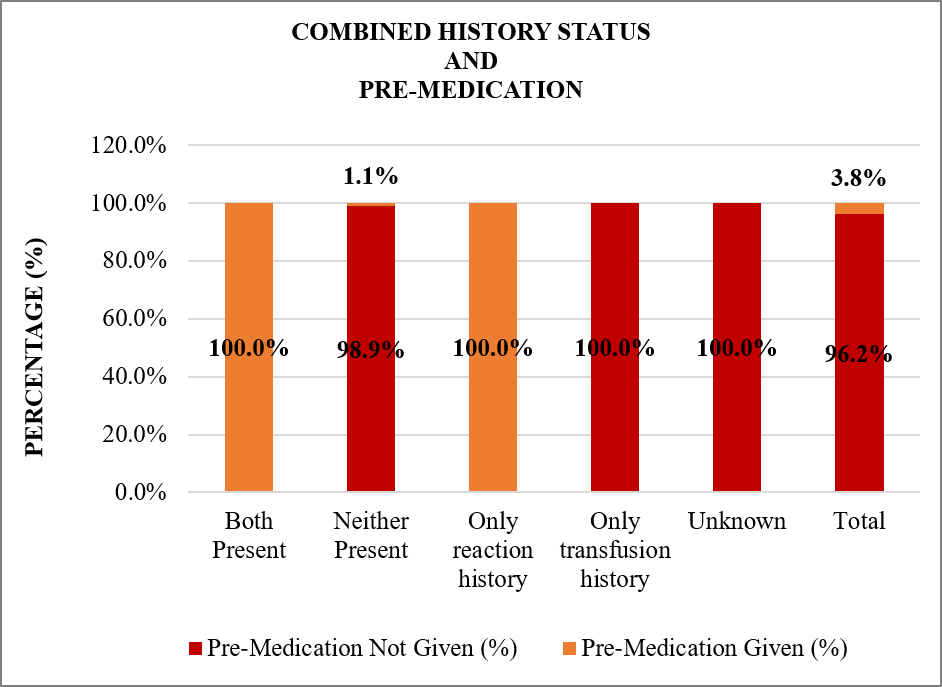
Figure 1: Pre-medication Use to Previous Reaction and Transfusion History
Incidence, type and clinical features of acute transfusion reactions
Acute transfusion reactions were identified in 29 of the 290 patients, corresponding to an incidence of 10.0%. FNHTR was the most frequently observed reaction, accounting for 14 cases (48.3%), followed by allergic reactions in 8 cases (27.6%). TACO was reported in 3 cases (10.3%), while TRALI and Transfusion-Associated Dyspnea (TAD) were each observed in 1 case (3.4%). Two reactions (6.9%) could not be assigned to a specific reaction category and were therefore classified as unclassified reactions (Table 5, Figure 2).
Table 5: Types of Acute Transfusion Reactions (N=29)
| Type of reaction | n | % of ATRs | % of all transfusions |
|---|---|---|---|
| Febrile non-haemolytic transfusion reaction (FNHTR) | 14 | 48.3 | 4.8 |
| Allergic reaction | 8 | 27.6 | 2.8 |
| Transfusion-associated circulatory overload (TACO) | 3 | 10.3 | 1.0 |
| Transfusion-Related Acute Lung Injury (TRALI) | 1 | 3.4 | 0.3 |
| Transfusion-Associated Dyspnea (TAD) | 1 | 3.4 | 0.3 |
| Unclassified | 2 | 6.9 | 0.7 |
| Total | 29 | 100.0 | 10.0 |
ATRs= Acute Transfusion Reactions
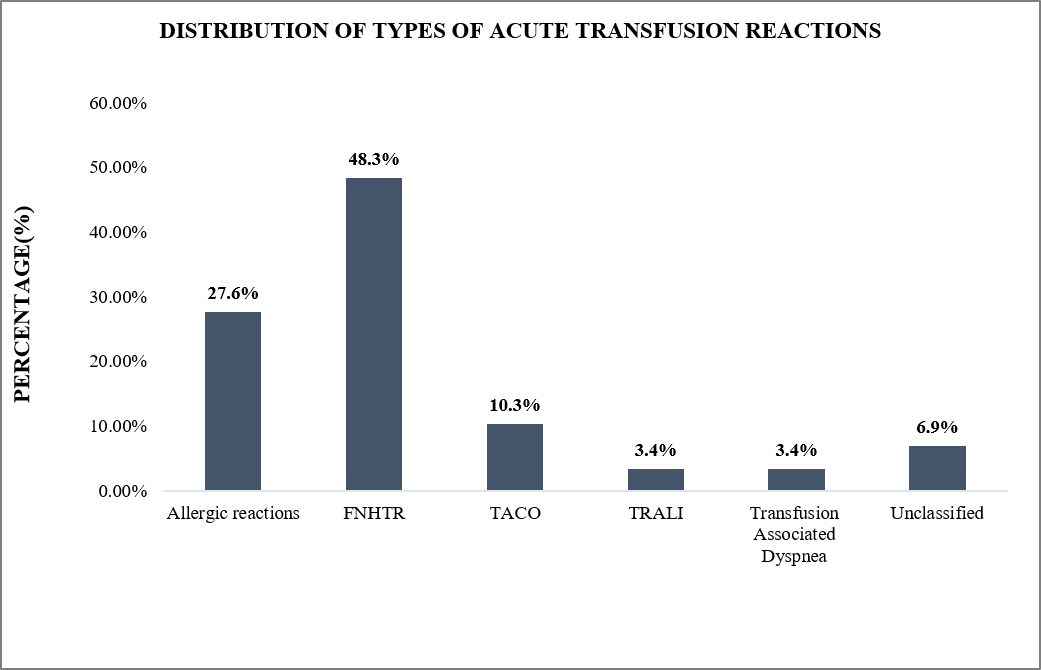
Figure 2: Distribution of Types of Acute Transfusion Reactions (FNHTR: Febrile Non-Haemolytic Transfusion Reaction; TACO: Transfusion-Associated Circulatory Overload; TRALI: Transfusion-Related Acute Lung Injury; TAD: Transfusion-Associated Dyspnea).
Fever was the most frequently reported clinical feature, occurring in 15 of the 29 patients with acute transfusion reactions (51.7%), followed by increased blood pressure in 6 patients (20.6%), chills and rigours in 4 patients (13.7%), and dyspnea in 3 patients (10.3%). As some patients presented with more than one clinical feature, the individual symptom frequencies were not mutually exclusive (Table 6). Regarding the timing of reaction onset, 19 reactions (65.5%) occurred within 1–5 hours of initiation of transfusion, while 5 reactions (17.2%) developed within the first 15 minutes and another 5 reactions (17.2%) occurred later, within 24 hours of transfusion initiation.
Table 6: Clinical Features and Time of Onset of Acute Transfusion Reactions (N=29)
| Feature | n | % |
|---|---|---|
| Signs and symptoms | ||
| Fever | 15 | 51.7 |
| Increased blood pressure | 6 | 20.7 |
| Chills and rigors | 4 | 13.8 |
| Dyspnea | 3 | 10.3 |
| Urticaria and rash | 2 | 6.9 |
| Hypoxia | 1 | 3.4 |
| Chest pain | 1 | 3.4 |
| Itching | 1 | 3.4 |
| Abdominal distress | 1 | 3.4 |
| Tachycardia | 1 | 3.4 |
| Nausea and vomiting | 1 | 3.4 |
| Time of onset after start of transfusion | ||
| Within 15 minutes | 5 | 17.2 |
| 1–5 hours | 19 | 65.5 |
| Up to 24 hours | 5 | 17.2 |
Some patients had more than one sign or symptom, percentages are of the 29 patients with reactions.
Severity, imputability, management and outcome
Among the 29 acute transfusion reactions, 17 (59%) were classified as Grade 1 (non-severe), while 12 (41%) were classified as Grade 2 (severe). No Grade 3 (life-threatening) or Grade 4 (death) reactions were observed. In terms of imputability, 18 reactions (62.1%) were considered probable, 7 (24.1%) possible, 2 (6.9%) unlikely, and 1 (3.4%) was classified as definite and excluded (Table 7).
The most common management approach involved administering medication followed by restarting the transfusion (n=15; 51.7%), while 9 reactions (31.0%) were managed by discontinuing the transfusion and administering medication. 4 patients were given medication during transfusion without discontinuing, and one patient (3.4%) required management in the intensive care unit. All 29 patients recovered following appropriate and timely management, with no deaths reported (Table 7).
Table 7: Severity, Imputability, Management and Outcome of Acute Transfusion Reactions (N = 29)
| Category | n | % |
|---|---|---|
| Severity grade (ISBT) | ||
| Grade 1 (non-severe) | 17 | 58.6 |
| Grade 2 (severe) | 12 | 41.4 |
| Grade 3 (life-threatening) | 0 | 0.0 |
| Grade 4 (death) | 0 | 0.0 |
| Imputability (ISBT) | ||
| Definite | 1 | 3.4 |
| Probable | 18 | 62.1 |
| Possible | 7 | 24.1 |
| Unlikely | 2 | 6.9 |
| Excluded | 1 | 3.4 |
| Management | ||
| Transfusion stopped, medications given | 9 | 31.0 |
| Medications given, transfusion restarted | 15 | 51.7 |
| Medications given during transfusion without interruption | 4 | 13.8 |
| ICU management | 1 | 3.4 |
| Outcome | ||
| Recovered | 29 | 100.0 |
Factors associated with acute transfusion reactions
No statistically significant differences in ATR rates were observed according to age, gender, co-morbidity, blood group, transfusion frequency (single versus multiple), or storage duration of PRBC units (all p>0.05; Table 8). Although females accounted for a slightly higher proportion of reactions (n=16; 55.2%) and most reactions occurred among patients aged 41–65 years (n=22; 75.9%), these findings reflected the distribution of these groups within the study population. The reaction rates between females and males were 55.2% and 44.8%.
Additionally, no statistically significant associations were observed between ATR occurrence and different variables.
| Variable | Category | Transfusions, (n) | ATRs, (n) | p-value |
|---|---|---|---|---|
| Age (years) | <1 | 15 | 0 | 0.668 |
| 1–15 | 7 | 1 | ||
| 16–40 | 79 | 6 | ||
| 41–65 | 189 | 22 | ||
| Gender | Female | 165 | 16 | 0.843 |
| Male | 125 | 13 | ||
| Co-morbidity | Present | 131 | 17 | 0.237 |
| Absent | 159 | 12 | ||
| Blood component | Packed red blood cells | 254 | 23 | 0.185 |
| Fresh frozen plasma | 24 | 2 | ||
| Random donor platelets | 11 | 3 | ||
| Apheresis platelets | 1 | 1 | ||
| Blood group | O positive | 97 | 13 | 0.940 |
| B positive | 94 | 8 | ||
| A positive | 58 | 5 | ||
| AB positive | 23 | 3 | ||
| O negative | 6 | 0 | ||
| AB negative | 6 | 0 | ||
| A negative | 3 | 0 | ||
| B negative | 3 | 0 | ||
| Indication for transfusion | Anaemia | 142 | 13 | 0.211 |
| Pre-operative surgery | 59 | 2 | ||
| Post-operative surgery | 35 | 7 | ||
| Increased PT/PTT | 23 | 2 | ||
| Thrombocytopenia | 12 | 5 | ||
| Other indications | 19 | 0 | ||
| Transfusion status | Single transfusion | 257 | 26 | 0.666 |
| Multiple transfusions | 33 | 3 | ||
| Storage duration of PRBC units | <7 days | 145 | 18 | 0.810 |
| 7–14 days | 65 | 7 | ||
| >14 days | 44 | 4 |
ATR: acute transfusion reaction; PRBC: packed red blood cells. Blood loss (trauma/accident), unspecified or emergency surgery, sepsis and postpartum haemorrhage (no reactions). Fisher’s exact test for 2 × 2 tables, Fisher–Freeman–Halton exact test for larger tables, Chi-square test for storage duration.
DISCUSSION AND CONCLUSION
This nine-month prospective observational haemovigilance study conducted at KIMS Hospital assessed blood component utilization, premedication practices and the incidence of acute transfusion reactions (ATRs) among 290 patients. Each participant was prospectively observed during one transfusion episode and monitored for 24 hours. Females constituted the majority of the study population (57%), and patients aged 41–65 years represented the largest age group (65.2%). Neonates and paediatric patients accounted for less than 10% of the participants. Comorbid conditions were identified in 45% of patients, reflecting the complex clinical conditions and underlying illnesses commonly encountered among transfusion recipients in tertiary-care settings.
Packed red blood cells (PRBCs) were the predominant blood component administered, accounting for 87.5% of transfusions, followed by fresh frozen plasma (FFP), random donor platelets and apheresis platelets. This distribution was consistent with the frequent requirement for red cell support in patients with anaemia and those undergoing surgical procedures. Anaemia was the most common indication for transfusion (48.9%), followed by preoperative and postoperative support. O-positive and B-positive were the most frequently observed blood groups, whereas Rh-negative groups were less common. General Medicine, Orthopaedics and Surgery accounted for the highest utilization of blood components. More than half of the transfused units (57.9%) had been stored for fewer than seven days, while 88.6% of patients received a single transfusion, indicating that most participants required only one transfusion during the study period.
Premedication was administered to 3.8% of patients, indicating that its use was limited to selected clinical situations rather than being routinely practised. Premedication was strongly associated with a documented history of previous transfusion reactions, irrespective of previous transfusion exposure, and was not administered to patients with a history of previous transfusion alone or an unknown history (p<0.001). Hydrocortisone combined with pheniramine maleate was the most frequently used regimen. Furosemide monotherapy was employed when the prevention or management of circulatory overload was a concern, while hypersensitivity was the principal indication for premedication. Additionally, 20.3% of patients received furosemide between transfusions, primarily for fluid overload prevention or in the context of anaemia with heart failure. This pattern suggests that furosemide use was directed towards specific clinical needs rather than being uniformly administered to all recipients.
The overall incidence of ATRs was 10.0%. Febrile non-haemolytic transfusion reactions (FNHTRs) constituted the largest proportion of reported reactions (48.3%), followed by allergic reactions (27.6%). TACO, TRALI and TAD were reported less frequently. Fever was the most frequently documented clinical manifestation (51.7%), followed by elevated blood pressure, chills and rigors, dyspnea, and urticaria or skin rash. Some patients presented with multiple symptoms. Most reactions (65.5%) developed within one to five hours after transfusion initiation, where as smaller proportions occurred within the first 15 minutes or later within the 24-hour observation period. These findings emphasize the importance of maintaining appropriate clinical observation and monitoring vital signs throughout transfusion and during the subsequent follow-up period.
According to the ISBT severity classification, Grade 1 reactions accounted for 59% of cases, while Grade 2 reactions represented 41%. One patient required intensive care unit (ICU) management, underscoring the importance of timely clinical assessment, access to appropriate emergency medications and clearly defined escalation procedures. Regarding imputability, 62.1% of reactions were classified as probable and 24.1% as possible. These classifications indicate varying degrees of confidence in the relationship between transfusion and the observed adverse event. Management most commonly involved medication administration followed by restarting the transfusion, while other approaches included discontinuation of transfusion with medication or medication administration without interruption. All affected patients recovered following intervention, with no reported fatalities, demonstrating favourable clinical outcomes in the observed cases.
Although the identification of risk factors was not a primary objective of this study, descriptive findings showed a greater number of reactions among females, patients aged 41–65 years, individuals with comorbidities, PRBC recipients and patients with O-positive blood groups. These observations should be interpreted in the context of the distribution of transfusions among the study population and do not necessarily indicate an increased intrinsic risk in these groups. Statistical analysis using the Chi-square test and Fisher’s exact test did not demonstrate significant associations between ATR occurrence and storage duration, transfusion frequency, age, gender or comorbidity (p>0.05). Therefore, the observed findings did not establish these characteristics as statistically significant predictors of ATRs in this study. The results support the importance of maintaining consistent transfusion surveillance and bedside monitoring for all recipients, irrespective of their demographic or clinical characteristics.
ACKNOWLEDGMENT
The authors sincerely thank Dr Suja Ajay Kumar, Department of Pathology, KIMS Hospital, Bengaluru, as well as the paramedical staff of the blood bank, postgraduate doctors, and nursing staff of KIMS Hospital for their valuable support and guidance throughout the study.
FUNDING
None
CONFLICT OF INTEREST
The authors declare that there is no conflict of interest.
REFERENCES



K. C. Nishmitha, K. S. Prasanna Babu, H. S. Shekar, Assessment of Acute Adverse Reactions Following Blood Transfusion in KIMS Hospital: A Prospective Haemovigilance Study, Int. J. of Pharm. Sci., 2026, Vol 4, Issue 10, 3066-3077. https://doi.org/10.5281/zenodo.23524678
 10.5281/zenodo.23524678