

We use cookies to ensure our website works properly and to personalise your experience. Cookies policy
Department of Pharmaceutics, Indore Institute of Pharmacy, Opposite IIM, Rau-Pithampur Road, Rau, Indore, Madhya Pradesh, India, 453331.
Mucoadhesive drug delivery systems have attracted considerable attention for their ability to prolong the residence time of a dosage form at its site of absorption. By adhering to mucosal surfaces, these systems can improve bioavailability, reduce dosing frequency, and provide controlled, sustained drug release. Mucoadhesion arises from physical and chemical interactions between polymeric materials and the mucus layer, and is generally described through six classical theories electronic, adsorption, wetting, diffusion, fracture, and mechanical operating across the contact and consolidation stages of adhesion. Natural and synthetic polymers such as Carbopol, hydroxypropyl methylcellulose (HPMC), chitosan, and sodium alginate are widely used in mucoadhesive formulations, prepared by techniques including direct compression, wet granulation, dry granulation, and solvent casting. Formulation performance is assessed through pre- and post-compression parameters such as swelling index, mucoadhesive strength, hardness, friability, drug content, in-vitro release kinetics, and residence time. This review examines the mechanisms and theories of mucoadhesion, the polymers and excipients used in formulation development, preparation methods, formulation design considerations, evaluation techniques, and applications of mucoadhesive drug delivery systems, with reference to published formulation studies across buccal, sublingual, gastroretentive, and ocular routes.
Oral drug delivery remains the most widely used route of drug administration because of its low cost, convenience, ease of self-administration, and the resulting improvement in patient compliance. Conventional oral dosage forms, however, are frequently limited by short residence times at the site of absorption, the need for frequent dosing, rapid drug release, and reduced bioavailability for certain drugs 1-3. These limitations can lead to fluctuating plasma drug concentrations and reduced therapeutic efficacy. Controlled and sustained-release drug delivery systems have therefore been developed to maintain drug concentrations within the therapeutic range for a longer period 1.
Among the strategies used for controlled drug delivery, mucoadhesive drug delivery systems have received considerable research attention in recent years 4. Mucoadhesion is the process by which a dosage form adheres to a mucosal surface using natural or synthetic polymeric materials. When a dosage form adheres to the mucosal membrane, drug absorption and residence time at the application site are both extended, which can improve therapeutic efficacy 5. Mucoadhesive systems can also improve patient compliance by reducing the frequency of dosing 6.
Mucoadhesive drug delivery systems are used across a range of administration routes, including buccal, sublingual, nasal, ocular, gastrointestinal, vaginal, and rectal delivery 2,3. Oral mucoadhesive tablets are among the most widely studied of these because they are straightforward to manufacture and can provide extended drug release 7. The performance of a mucoadhesive system depends heavily on the choice of polymer; HPMC and Carbopol are commonly selected for their swelling, gel-forming, and adhesive properties 6,7.
Mucoadhesive tablets are typically prepared by direct compression, wet granulation, or dry granulation 1,2. To confirm the quality and performance of the finished dosage form, these formulations are assessed through a range of pre-compression and post-compression parameters, including angle of repose, hardness, friability, swelling index, mucoadhesive strength, surface pH, drug content, and in-vitro dissolution 1,2.
This review discusses the mechanisms and theories of mucoadhesion, the polymers used in formulation development, preparation techniques, formulation design considerations, evaluation parameters, applications, and recent developments in mucoadhesive drug delivery systems.
TYPES OF MUCOADHESIVE DRUG DELIVERY SYSTEMS
Mucoadhesive drug delivery systems are generally classified by administration route and application site. Each route offers a different balance of bioavailability, patient compliance, and controlled-release potential 3,4,7.
Buccal Mucoadhesive Drug Delivery Systems
Buccal mucoadhesive systems deliver drug through the buccal mucosa of the oral cavity. By adhering to the mucosal surface for an extended period, these systems can improve both residence time and bioavailability while avoiding hepatic first-pass metabolism 7. Mucoadhesive polymers such as HPMC, Carbopol, and chitosan are used to formulate buccal tablets, films, patches, and gels for both local and systemic drug delivery 7,8.
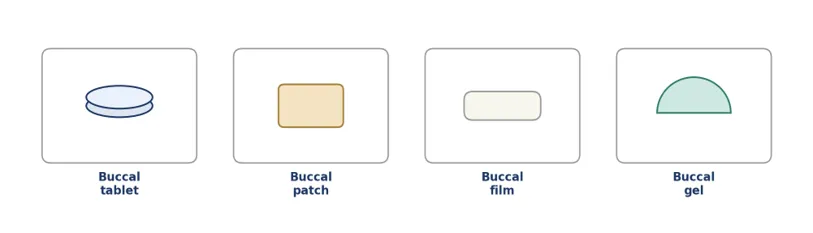
Figure 1. Common buccal mucoadhesive dosage forms: tablet, patch, film, and gel.
Sublingual Mucoadhesive Drug Delivery Systems
Sublingual mucoadhesive systems deliver drug across the mucosal membrane beneath the tongue. Because this region is thin and highly vascularized, it supports rapid drug absorption and a quicker onset of action than conventional oral dosage forms, while also avoiding first-pass metabolism 7,8. HPMC, Carbopol, and chitosan are again the polymers most commonly used for sublingual formulations, which are particularly suited to drugs that require rapid onset or improved bioavailability 8.
Gastroretentive Mucoadhesive Drug Delivery Systems
Gastroretentive mucoadhesive systems are designed to adhere directly to the gastric mucosa, prolonging gastric residence time for drugs that are absorbed preferentially in the stomach or upper gastrointestinal tract. Polymers such as sodium alginate, HPMC, Carbopol, and chitosan provide the necessary adhesion and sustained release 9.
It is worth distinguishing mucoadhesive gastroretentive systems from floating (buoyant) gastroretentive systems, with which they are sometimes conflated. Floating systems rely on a low bulk density or a gas-generating (effervescent) mechanism to remain buoyant on gastric fluid, whereas mucoadhesive systems are retained through direct polymer–mucin binding at the gastric epithelium. The two mechanisms are not mutually exclusive, and several gastroretentive dosage forms combine both floating and bioadhesive elements to improve retention reliability 9. Gastroretentive dosage forms include microspheres, expandable systems, bioadhesive tablets, and floating tablets 4,9.
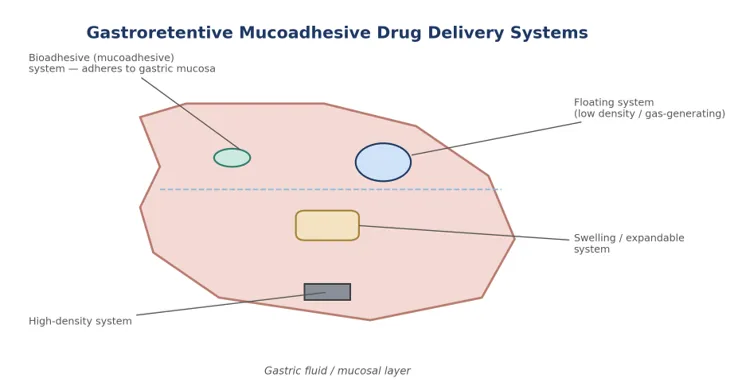
Figure 2. Categories of gastroretentive drug delivery systems, showing floating (buoyant), bioadhesive (mucoadhesive), swelling/expandable, and high-density approaches within the stomach.
Ocular Mucoadhesive Drug Delivery Systems
Ocular mucoadhesive systems aim to prolong residence time on the ocular surface and improve drug absorption through the ocular tissues. Conventional eye drops are rapidly cleared by blinking and tear turnover, which limits their bioavailability 10. Mucoadhesive polymers such as chitosan, Carbopol, HPMC, and polyvinyl alcohol are used to improve adhesion to the ocular mucosa and extend drug release; dosage forms include mucoadhesive eye drops, gels, inserts, and nanoparticles 3,10,11.
MECHANISM AND THEORIES OF MUCOADHESION
Stages of Mucoadhesion
Mucoadhesion proceeds through physical and chemical interactions between a polymer and the mucus layer, generally described in two stages 1,5.
In the contact stage, the mucoadhesive dosage form comes into contact with the mucosal membrane, absorbs moisture from the mucus layer, and becomes hydrated. Hydration causes the polymer to swell, increasing the surface area available for adhesion 1,5.
In the consolidation stage, polymer chains interpenetrate the mucin glycoprotein network of the mucus layer. Secondary interactions between the polymer and the mucosal surface including hydrogen bonding, van der Waals forces, electrostatic interactions, and hydrophobic interactions then produce strong adhesion of the dosage form 1,5. The resulting prolonged attachment at the site of absorption increases residence time, improves bioavailability, and supports controlled or sustained drug release 1,2,5.
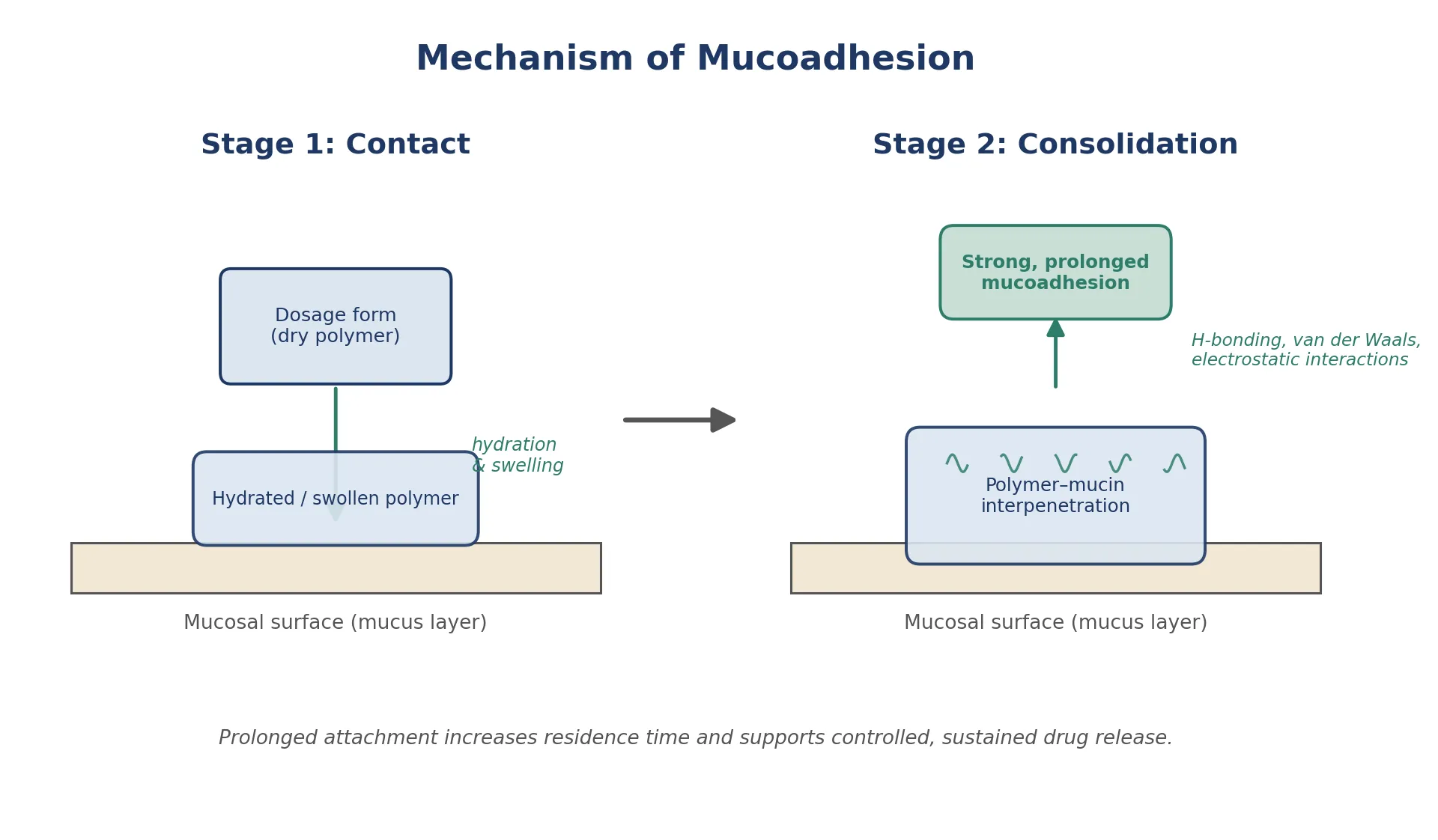
Figure 3. Schematic representation of the two stages of mucoadhesion — contact (hydration and swelling) and consolidation (polymer–mucin chain interpenetration and secondary bonding).
Theories of Mucoadhesion
The mechanisms underlying mucoadhesion are commonly explained through six classical theories, which are not mutually exclusive and often act together within a single formulation 1,2,4,5:
POLYMERS USED IN MUCOADHESIVE DRUG DELIVERY SYSTEMS
Classification of Mucoadhesive Polymers
Mucoadhesive polymers can be broadly classified as natural or synthetic. Natural polymers, including chitosan, sodium alginate, and hyaluronic acid, are generally favoured for their biocompatibility and biodegradability, while synthetic polymers such as Carbopol (polyacrylic acid derivatives) and HPMC offer more predictable and reproducible swelling and adhesive behaviour 6,12,13.
Mucoadhesive polymers are also described in terms of generation. First-generation mucoadhesive polymers including Carbopol, HPMC, and chitosan form largely non-specific interactions with the mucus layer through hydrogen bonding, electrostatic attraction, and chain interpenetration. Second-generation polymers are designed for more specific, receptor-mediated adhesion, using ligands such as lectins or chemically modified (for example, thiolated) polymers that bind directly to mucin glycoproteins or epithelial cell-surface receptors, generally producing stronger and more selective adhesion than first-generation systems 8.
FORMULATION STRATEGIES FOR MUCOADHESIVE DRUG DELIVERY SYSTEMS
To achieve adequate adhesion, controlled drug release, and therapeutic efficacy, mucoadhesive drug delivery systems are developed using a combination of excipients, polymers, and preparation techniques 1,2.
Methods of Preparation
Direct Compression
Direct compression is a simple, widely used method for producing mucoadhesive tablets, in which drug, polymers, and excipients are blended and compressed directly without granulation. It is comparatively inexpensive and requires less processing time than granulation-based methods 1,2.
Wet Granulation
In wet granulation, granules are formed using a binder solution; the wet mass is then dried, sieved, and compressed into tablets. This method generally improves flow properties, compressibility, and content uniformity compared with direct compression of poorly flowing blends 1,2.
Dry Granulation
Dry granulation is used mainly for moisture-sensitive drugs. Powder is first compacted into slugs or sheets, which are then milled into granules before final compression. No heat or solvent is required during processing 1,2.
Solvent Casting
Solvent casting is used mainly for mucoadhesive films and patches. Drug and polymer are dissolved in a suitable solvent, cast into moulds, and dried, producing flexible films with a relatively uniform drug distribution 1,2.
Formulation Design Considerations
Beyond the choice of manufacturing method, several formulation-level decisions strongly influence mucoadhesive performance. Polymer concentration and, where more than one polymer is used, the blend ratio between them, directly affects swelling behaviour, mucoadhesive strength, and drug release rate; higher polymer concentrations generally increase mucoadhesive strength and residence time up to a point, beyond which excessive viscosity can slow drug release and hydration 8,12. The ratio of drug to polymer is likewise an important design variable, since it must be balanced to achieve adequate drug loading without compromising the mechanical and adhesive properties of the matrix.
Matrix tablets release drug from a single homogeneous polymer network, while bilayer and multilayer designs are used to combine a mucoadhesive layer with a drug-impermeable backing layer; backing layers are intended to direct drug release unidirectionally toward the mucosa, reducing loss of drug into saliva or gastrointestinal fluid 8. Penetration enhancers are sometimes incorporated to improve the permeability of the mucosal membrane to the drug; for example, the permeation enhancer sodium N-[8-(2-hydroxybenzoyl)amino]caprylate (SNAC) has been co-formulated with Carbopol and Eudragit in a mucoadhesive, 3D-printed tablet platform to improve the oral delivery of enoxaparin, a macromolecule that would otherwise show poor mucosal permeability 14.
Excipients and Polymers
Polymers and excipients are central to the performance of a mucoadhesive dosage form. Polymers such as sodium alginate, Carbopol, HPMC, and chitosan provide mucoadhesion, swelling, and controlled-release behaviour, while excipients such as lactose, microcrystalline cellulose, magnesium stearate, talc, and povidone are added to improve flow, compressibility, and overall formulation stability 6,13,15. The choice and proportion of these materials directly influences residence time, bioavailability, and therapeutic outcome.
Table 1. Polymers and excipients used in mucoadhesive drug delivery systems.
|
Material |
Category |
Function / Use |
Ref. |
|
HPMC (hydroxypropyl methylcellulose) |
Mucoadhesive polymer |
Provides sustained drug release and swelling-controlled gelation |
6,12 |
|
Carbopol |
Mucoadhesive polymer |
Functions as a mucoadhesive agent and release retardant |
5,6,12 |
|
Microcrystalline cellulose (MCC) |
Excipient – binder/diluent |
Improves tablet hardness, binding, and powder flow |
16 |
|
Magnesium stearate |
Excipient – lubricant |
Prevents sticking to punches and dies during compression |
17 |
|
Talc |
Excipient – glidant |
Improves powder flow during manufacturing |
18 |
|
Povidone (PVP K30) |
Excipient – binder |
Used as a binder in wet granulation to improve granule formation |
19 |
|
Crospovidone |
Excipient – superdisintegrant |
Promotes rapid tablet disintegration |
2,11 |
|
Sodium carboxymethylcellulose |
Mucoadhesive polymer |
Provides mucoadhesion and viscosity enhancement |
6,12 |
|
Chitosan |
Mucoadhesive polymer (natural) |
Improves adhesion and supports controlled drug release |
12 |
|
Polycarbophil |
Mucoadhesive polymer |
Enhances mucoadhesive strength and prolongs residence time |
12 |
|
Sodium alginate |
Mucoadhesive polymer (natural) |
Forms a gel matrix supporting sustained drug release |
12 |
|
Lactose |
Excipient – diluent |
Increases tablet weight and improves compressibility |
15 |
ADVANTAGES AND LIMITATIONS
Advantages
Limitations
EVALUATION OF MUCOADHESIVE DRUG DELIVERY SYSTEMS
Evaluating a mucoadhesive drug delivery system is essential to confirm its quality, stability, drug-release behaviour, and mucoadhesive performance. Formulations are typically assessed through a series of pre-compression and post-compression parameters 11,20.
Pre-Compression Evaluation
Bulk Density
Bulk density is determined by weighing a known quantity of powder blend and transferring it, without compaction, into a graduated cylinder. The bulk volume is recorded, and bulk density is calculated as the ratio of powder mass to bulk volume 21.
Tapped Density
Tapped density is measured by placing a graduated cylinder containing the powder blend on a tapped-density apparatus and tapping it until the powder volume no longer changes. Tapped density is then calculated by dividing powder mass by the final tapped volume 21.
Angle of Repose
The angle of repose is determined by allowing the powder to flow through a funnel of fixed height onto a level surface, forming a conical pile. The angle between the slope of the pile and the horizontal plane is then measured 21.
Carr's Index
Carr's Index is calculated from bulk and tapped density and is used to assess the compressibility and flow behaviour of a powder blend; a lower Carr's Index indicates better flow properties 21.
Hausner Ratio
The Hausner ratio is calculated by dividing tapped density by bulk density, and reflects interparticle friction and powder flow. A lower Hausner ratio indicates better flowability of the powder blend 21.
Post-Compression / Dosage-Form Evaluation
Weight Variation
Individual tablet weights are compared against the average weight of the batch as part of routine dosage-unit quality control 22.
Thickness
Tablet thickness is measured with a calibrated micrometer or digital caliper across a representative sample of tablets, since consistent thickness reflects uniform die fill and compression force during manufacture 11.
Hardness
Tablet hardness is measured with a tablet hardness tester, which records the force required to break the tablet; this provides an indirect measure of mechanical strength and resistance to handling stresses 22,23.
Friability
Friability is assessed with a Roche friabilator. Pre-weighed tablets are rotated at 25 rpm for four minutes, then dedusted and reweighed; the percentage weight loss is reported as the friability value 22.
Drug Content and Content Uniformity
Drug content is determined by assaying a defined number of tablets against a validated analytical method (commonly UV spectrophotometry or HPLC) and expressing the result as a percentage of the labelled dose; content uniformity testing extends this assessment across individual dosage units to confirm consistent drug distribution within the batch 22,24.
Swelling Index
Swelling index reflects the percentage increase in the weight or volume of a tablet or polymer after exposure to water or a swelling medium over a defined period, and indicates the extent to which the formulation can absorb fluid and swell 5,11.
Surface pH
Surface pH is measured to confirm that a formulation will not irritate the target mucosal tissue. Tablets are allowed to swell on moistened filter paper or agar gel for approximately two hours, after which a calibrated pH electrode is placed on the tablet surface. A surface pH close to the physiological pH of the intended mucosal site is generally preferred to minimise irritation 10,25.
Mucoadhesive Strength
Mucoadhesive strength is the force required to detach a tablet from a mucosal surface, typically measured using fresh animal (commonly goat, pig, or rabbit) buccal or gastric mucosa mounted between two platforms on a texture analyser or a modified balance. The mucosal tissue is fixed to one platform and the tablet to the other; the force needed to separate them is recorded as the mucoadhesive strength. Higher mucoadhesive strength is generally associated with longer residence time and stronger adherence 11,25.
In-Vitro Drug Release and Release Kinetics
In-vitro drug release is assessed using standard dissolution apparatus under conditions representative of the intended application site (for example, pH 6.8 phosphate buffer for buccal formulations). Release data are commonly fitted to kinetic models zero-order, first-order, Higuchi, and Korsmeyer–Peppas to characterise the release mechanism and rate-controlling step. In a mucoadhesive buccal tablet combining metformin and sitagliptin, for example, the optimised formulation best fitted a first-order model for metformin and a Korsmeyer–Peppas model for sitagliptin 24.
Ex-Vivo and In-Vivo Residence Time
Residence time is assessed ex vivo by monitoring how long a formulation remains attached to excised mucosal tissue under simulated physiological flow, and in vivo by direct observation or pharmacokinetic sampling in animal or human volunteers; both approaches have been used to characterise the retention of mucoadhesive buccal tablets 24,25.
FTIR and DSC Compatibility Studies
Fourier-transform infrared spectroscopy (FTIR) and differential scanning calorimetry (DSC) are used to assess physical and chemical compatibility between the drug and the selected polymers and excipients. The absence of new or shifted spectral peaks (FTIR) or unexpected thermal events (DSC) in the physical mixture, relative to the individual components, supports the absence of a significant drug–excipient interaction 24.
Stability Studies
Short- and long-term stability studies assess whether a mucoadhesive formulation retains its physicochemical and mucoadhesive properties, and its drug content, over a defined storage period under controlled temperature and humidity conditions 24.
APPLICATIONS OF MUCOADHESIVE DRUG DELIVERY SYSTEMS IN DISEASE MANAGEMENT
Mucoadhesive drug delivery systems are used across a range of therapeutic areas because of their ability to improve bioavailability, extend residence time, and enable site-specific, controlled drug release. They are particularly useful for drugs with a short half-life, poor gastrointestinal stability, or extensive first-pass metabolism 2,4,12.
In hypertension, mucoadhesive buccal tablets have been formulated and evaluated for both captopril and propranolol hydrochloride. Captopril mucoadhesive buccal tablets have been prepared by direct compression using the bioadhesive polymers Acritamer 940 (a carbomer, structurally analogous to Carbopol), sodium alginate (Manugel), and hypromellose (Hypromellose K100) in varying ratios, and evaluated for thickness, hardness, weight uniformity, and content uniformity 26. Propranolol hydrochloride mucoadhesive buccal tablets have been developed and evaluated both in vitro and, in one study, in vivo in spontaneously hypertensive rats, where the extended-release mucoadhesive tablets produced a significantly greater extent of propranolol absorption (higher AUC) and a more pronounced, longer-lasting reduction in heart rate and blood pressure than a commercial immediate-release tablet 23,25.
In diabetes mellitus, a mucoadhesive buccal tablet combining metformin hydrochloride and sitagliptin has been formulated using a Carbopol 940/polyvinylpyrrolidone K30 polymer blend, prepared by direct compression, and characterised in vitro and in an in-vivo volunteer study; the optimised formulation showed sustained drug release, adequate ex-vivo mucoadhesive strength and residence time, and confirmed drug–excipient compatibility by FTIR and DSC 24. This class of formulation illustrates a genuine, evidence-based application of mucoadhesive delivery in diabetes management, in contrast to earlier, more general claims about compliance benefits that were not tied to a specific published formulation.
In ocular disease, chitosan and its derivatives have been used to formulate mucoadhesive nanoparticles, gels, inserts, and coatings intended to prolong retention on the ocular surface and improve drug bioavailability relative to conventional eye drops 10.
Gastroretentive mucoadhesive systems extend the residence time of drugs absorbed in the stomach or upper gastrointestinal tract, and are used for site-specific gastric drug delivery in addition to, or instead of, floating gastroretentive approaches 9. Mucoadhesive systems are also used for mouth infections, oral mucosal disease, and other site-specific applications where local, prolonged drug contact with the mucosa is therapeutically useful 3,8.
RECENT ADVANCES IN MUCOADHESIVE DRUG DELIVERY SYSTEMS
Recent work in mucoadhesive drug delivery has focused on improving bioavailability, site-specific targeting, and patient compliance through new polymers and delivery technologies. Natural biopolymers such as chitosan, sodium alginate, and hyaluronic acid have attracted particular interest for their mucoadhesive character and biocompatibility 12,13.
Nanotechnology has extended mucoadhesive drug delivery through nanoparticles, nanogels, microspheres, and lipid-based carriers, which have been investigated for controlled drug release, improved delivery of poorly absorbed drugs, enhanced drug stability, and closer interaction with the mucus layer across oral, buccal, nasal, ocular, and vaginal routes 10,12,27.
Three-dimensional printing has also been applied to mucoadhesive dosage-form design. A 3D-printed Carbopol/Eudragit tablet platform incorporating the permeation enhancer SNAC has, for example, been used to formulate a mucoadhesive oral dosage form for enoxaparin, a macromolecule that is not normally suited to oral delivery, demonstrating that 3D printing can support both dose customisation and the formulation of drugs with challenging permeability profiles 14.
FUTURE PERSPECTIVES
Biopolymer-based mucoadhesive drug delivery systems continue to show promise for improving oral drug delivery through enhanced mucoadhesion, prolonged gastrointestinal residence time, and controlled drug release. Future work should focus on developing natural biopolymers with improved mucoadhesive strength, biocompatibility, and reduced toxicity; further tuning of cross-linking density and polymer blend ratios may improve formulation stability and drug-loading capacity 12,16.
Precision medicine and 3D printing represent emerging approaches to mucoadhesive dosage-form design, allowing dose, geometry, and release profile to be tailored to individual patient needs 14. Artificial intelligence and machine-learning approaches, including artificial neural networks, are also being investigated for formulation prediction and optimisation, including excipient selection and drug-release modelling; while these approaches may improve the efficiency of future formulation development, their practical adoption in mucoadhesive drug delivery still requires further validation and regulatory consideration 28.
CONCLUSION
Mucoadhesive drug delivery systems offer a well-established route to improving the residence time, bioavailability, and controlled release of a wide range of drugs across buccal, sublingual, gastroretentive, and ocular sites. Their performance depends on a combination of polymer selection, formulation design, and manufacturing method, and is characterised through a defined set of pre-compression and post-compression evaluation parameters. Published formulation studies of captopril, propranolol, and metformin/sitagliptin mucoadhesive buccal tablets illustrate that these systems can be translated into evaluable, evidence-based dosage forms rather than remaining a purely conceptual delivery strategy. Continued development of natural biopolymers, nanotechnology-based carriers, 3D-printed dosage forms, and computationally guided formulation design is likely to extend the range of drugs including macromolecules that are otherwise difficult to deliver orally that can benefit from mucoadhesive drug delivery in the future.
REFERENCES


Bhupendra Saratkar, Nadeem Farooqui, Nayany Sharma, Nimita Manocha, A Review on Mucoadhesive Drug Delivery Systems: Formulation Strategies and Evaluation Parameters, Int. J. of Pharm. Sci., 2026, Vol 4, Issue 8, 4897-4909. https://doi.org/10.5281/zenodo.22162554
 10.5281/zenodo.22162554