

We use cookies to ensure our website works properly and to personalise your experience. Cookies policy
Shankarrao ursal college of pharmaceutical sciences and research center kharadi, Pune 14.
Tridax procumbens, known as Ghamra (Hindi) or coat buttons (English), is a widespread perennial herb from the Asteraceae family, highly valued in traditional and Ayurvedic medicine for diverse therapeutic applications. Once considered an invasive weed, this plant has gained recognition for its roles in treating wounds, infections, bleeding, metabolic disorders, hypertension, liver ailments, and more, mainly through its inclusion in major ethnomedical formulations. Extensive phytochemical studies reveal the presence of compounds such as flavonoids, catechins, alkaloids, tannins, saponins, carotenoids, phenolics, and crucial minerals. These constituents contribute to a broad spectrum of pharmacological activities: antioxidant, anti-inflammatory, antimicrobial, antifungal, anticoagulant, and robust woundhealing effects. Modern research has validated further actions, including antidiabetic, immunomodulatory, anticancer, analgesic, antihypertensive, and anti-obesity properties, making T. procumbens a potent resource for contemporary herbal medicine. Despite substantial preclinical evidence supporting its safety and efficacy, especially in wound healing and infection management, there is a recognized need for standardized extraction protocols, largescale human clinical studies, and deeper mechanistic insights to fully exploit its therapeutic promise for broader clinical use.
Tridax procumbens, commonly recognized as ‘Ghamra’ in Hindi and ‘coat buttons’ in English for its unique floral structure, is a perennial herb from the family Asteraceae widely distributed across tropical and subtropical regions, including India, Africa, Australia, and its native America. Traditionally considered an invasive weed due to its rapid spread by prolific seed production, Tridax procumbens has, paradoxically, achieved notable status among ethnomedical and Ayurvedic practitioners for its multifaceted remedial uses. The plant is employed in various traditional healing systems such as Ayurveda, Siddha, and Unani for treating wounds, infections, bleeding, metabolic disorders, hypertension, and liver ailments; in fact, it is an essential ingredient in many Ayurvedic compound formulations, popularly known as ‘Bhringraj’ for liver treatment. (1) (11, 12, 25)
Phytochemical investigations have revealed the extensive presence of bioactive compounds in Tridax procumbens—including flavonoids (catechins, flavones, quercetin, glucoluteolin), alkaloids, tannins, saponins, carotenoids, and essential mineral elements—which collectively contribute to its antioxidant, anti-inflammatory, antimicrobial, antifungal, anticoagulant, and wound-healing properties. Modern pharmacological evaluations support its use against diabetes, malaria, various infections, and even demonstrate promising activities such as immunomodulation, anticancer, analgesic, antihypertensive, and antiobesity effects. Given the global reliance on medicinal plants—up to 54% of the world's population utilizes herbal medicine as a primary health care modality—Tridax procumbens stands out as a versatile and potent ethnobotanical resource whose traditional applications are increasingly corroborated by scientific studies, advocating its value for safer, more synergistic therapies in contemporary medicine. (2) (2, 24, 25)
This review aims to bring together the taxonomy, distribution, phytochemistry, and diversity of ethnopharmacological uses of Tridax procumbens, providing a comprehensive perspective that bridges indigenous knowledge and modern research, and highlights its significance for future therapeutic development.(3)
➢ literature survey
1. Review on Tridax procumbens
This review summarizes the ethnomedicinal uses, phytochemistry, and pharmacological profile of Tridax procumbens. It notes the plant’s widespread nature, especially in disturbed habitats, and its customary application for wound healing, infections, diabetes, diarrhea, and as an
Ayurvedic liver remedy. The article details the main chemical constituents—flavonoids (catechins, flavones), saponins, alkaloids, carotenoids, and tannins. It includes a thorough presentation of bioactivities: antidiabetic, anticancer, anti-inflammatory, anti-arthritic, immunomodulatory, hepatoprotective, hypotensive, and anti-ulcer activities, referencing contemporary pharmacological studies. The review also lists vernacular names, outlines plant morphology, and describes both anti-Parkinson's and anti-obesity research. The conclusion highlights the value of Tridax procumbens in Indian traditional medicine and the need for advanced research to substantiate its molecular therapeutic effects. (1)
2. Traditional Uses and Pharmacology of Plant Tridax procumbens: A Review
This systematic review brings together global folk uses, pharmacology, phyto-constituents, and detailed scientific evidence, from taxonomic and chemical analysis to modern extraction methods. Traditional applications range from bronchitis and diarrhea to wound healing, withevidence for antidiabetic, antimicrobial, antiplasmodial, antioxidant, hepatoprotective, antiinflammatory, antihypertensive, and repellent effects. The review includes numerous tables of constituent classes, pharmacological effects, and mechanisms; for example, identification of active fractions responsible for inhibitory activity against COX enzymes or for enhancing liver antioxidant defense. Emphasis is placed on the pharmacodynamics and broad cultural value of the plant, advocating its inclusion in low-cost, plant-based health solutions in developing regions.(2)
3. A review: Pharmacognostic, Phytochemical and Pharmacological study of Tridax procumbens
foundational study covers the taxonomic classification, habitat, plant morphology, traditional uses, and anatomical features of Tridax procumbens. It includes a comprehensive overview of its ethnobotanical application in wound healing, diabetes, hypertension, and pain relief.The article also discusses powder analysis, microscopy, and the presence of trichomes,
laticifers, and vascular bundles. Recipes and procedures for extracting plant constituents and developing herbal formulations (such as soaps) are presented, followed by descriptions of chemical evaluation tests for active compounds (flavonoids, phenols, alkaloids, saponins). Thearticle emphasizes standard evaluation methods for prepared formulations, such as pH, free alkali, foam height, retention, alcohol-insoluble matter, and moisture content, highlighting the practical potential of Tridax procumbens in modern herbal products.(3)
4. A Research Analysis of Tridax procumbens Linn: Historical Background, Botanical Characteristics, Soap Formulation, and Evaluation Parameters
This review provides a historical and botanical overview of Tridax procumbens, detailing its traditional applications, morphological features, and unique phytochemical profile. Thedocument highlights the plant's global ubiquity as both a weed and medicinal resource. It presents tables of common names, classification, and distribution, followed by a summary of major secondary metabolites (flavonoids, terpenes, alkaloids, saponins). The review includes distinct sections on methodical extraction, qualitative and quantitative phytochemical analyses, and protocols for herbal soap formulation containing Tridax procumbens extract. Evaluation parameters such as pH, moisture, foam retention, and antimicrobial activity in finished products are also covered, illustrating its practical versatility in therapeutic and personal care items.(4)
5. A comprehensive review on phytochemistry and pharmacological use of Tridax procumbens Linn
This paper investigates the phytochemistry and biological activities (antioxidant, hypoglycemic, and antibacterial) of various solvent fractions from the leaves of Tridax procumbens. Using chromatographic techniques (TLC, VLC), the authors identify multiple flavonoids, phenolic compounds, and polysaccharides. Antioxidant potential is assessed by DPPH assay; the butanol and ethyl acetate fractions show highest antidiabetic and antioxidant activity. Antimicrobial testing against both Gram-positive and Gram-negative bacteria displays significant zones of inhibition, notably against Staphylococcus aureus. The discussion ties these biological effects to phytochemical content, especially high flavonoid and phenolic fractions, and highlights the leaves' prospective use in the development of antidiabetic and antibacterial agents.
6. A REVIEW: PHARMACOLOGY OF TRIDAX PROCUMBENS
This review offers an in-depth account of the pharmacological activities of Tridax procumbens, with sections on its morpho-anatomy, phytochemistry, wide geographical distribution, and pharmacology. The review encapsulates its antioxidant, antimicrobial, antiinflammatory, antidiabetic, anti-arthritic, hepatoprotective, immunity-enhancing, antihypertensive, vasorelaxant, mosquito-repellent, and wound-healing properties, supported by in vitro and in vivo results. The review highlights the diversity of bioactive compounds flavone glycosides, terpenes, polysaccharides, sterols and detailed mechanisms for several activities, such as COX inhibition, DNA fragmentation in cancer cells, stimulation of insulin secretion, and increases in phagocytic index. The conclusion encourages further bioactivity-guided isolation and clinical validation of individual phytoconstituents.
7. Evaluation of Wound Healing Potential of ethanolic extract of Tridax procumbens L. in clinical models
The article investigates and compiles various studies related to the healing (mainly wound healing) properties of Tridax procumbens, with a focus on ethanolic extracts. It reviews animal and cell-based models demonstrating accelerated wound closure, enhanced collagen synthesis,and increased lysyl oxidase activity, even under corticosteroid-induced impaired healing conditions. The review also explores antioxidant and anti-inflammatory effects as mechanisms contributing to wound healing, as well as antiulcer, antidiabetic, and hepatoprotective activities observed in experimental studies. The file provides quantitative data from biochemical assays, discusses modes of delivery (topical, oral), and concludes by supporting the use of Tridax procumbens as an effective, natural agent for wound management and tissue regeneration.
8. Assessment of anti-inflammatory activity of Tridax procumbens in wistar
rats: This experimental study examines the anti-inflammatory effect of ethanolic extracts of
Tridax procumbens leaves in animal models (Wistar rats). Using Irish moss-induced paw edema and cotton pellet-induced granuloma methods, the research finds significant and dosedependent suppression of inflammatory response, comparable to standard drugs like indomethacin. Reduction in paw thickness and granuloma weight is observed, indicating efficacy in both acute and chronic inflammation. The study also confirms the presence of flavonoids, alkaloids, saponins, and phenolic compounds in the extract through phytochemical analysis.
The results are contextualized in relation to inflammation mediators and compared to synthetic reference compounds, suggesting Tridax procumbens as a safe, natural anti-inflammatory agent for further development.
9. Antimicrobial efficacy of chitosan-Tridax procumbens extract composite on selected wound surface microorganisms
This recent research explores the synergistic antimicrobial effects of combining ethanolic extract of Tridax procumbens with chitosan. Standard microbial laboratory techniques including agar well diffusion, broth dilution, and zone of inhibition measurements were used to evaluate activity against common wound pathogens (e.g. Staphylococcus aureus, E. coli, K. pneumoniae, P. aeruginosa), as well as fungi (A. niger, M. canis, C. acremonium). Results show significantly improved antimicrobial efficacy with the composite over either agent alone, with detailed values for minimum inhibitory and bactericidal/fungicidal concentrations. The study also provides quantitative phytochemical and antioxidant profiles, demonstrating rich phenol and flavonoid content. The conclusion positions the composite as a promising wound care and infection-control material.
10. Phytochemical and Biological Investigation of the Leaves of Tridax procumbens
This paper investigates the phytochemistry and biological activities (antioxidant, hypoglycemic, and antibacterial) of various solvent fractions from the leaves of Tridax procumbens. Using chromatographic techniques (TLC, VLC), the authors identify multiple flavonoids, phenolic compounds, and polysaccharides. Antioxidant potential is assessed by DPPH assay; the butanol and ethyl acetate fractions show highest antidiabetic and antioxidant activity. Antimicrobial testing against both Gram-positive and Gram-negative bacteria displays significant zones of inhibition, notably against Staphylococcus aureus. The discussion ties these biological effects to phytochemical content, especially high flavonoid and phenolic fractions, and highlights the leaves' prospective use in the development of antidiabetic and antibacterial agents.
Botanical Description and Ethnomedical Context
Tridax procumbens L. was targeted in this study as it is widely spreaded as a common weed in Indian subcontinent as well as all over the world Tridax procumbens is native to many parts of Africa, Asia, America, Australia and some part of Europe. They are given many names depending on the regions.
Table 1: (4)
| Sr.no | Common name | Language Of Tribe |
|---|---|---|
| 1 | English | Coat Buttons and Tridax Daisy |
| 2 | Hindi | Ghamra |
| 3 | Sanskrit | Jayanti Veda |
| 4 | Marathi | Dagadi pala |
| 5 | Telugu | Gaddi Chemanthi |
| 6 | Tamil | Thatapoodu |
| 7 | Malayalam | Chiravanak |
| 8 | Spanish | Cadillp Chisaca |
| 9 | French | Herbe Caille |
| 10 | Chinese | Kotobukigiku |
| 11 | Oriya | Bisshalyakarani |
| 12 | Japanese | Kotobukigiku |
| 13 | Thai | Gecko feet |
| 14 | Yoruba | Yunyun |
Geographical Source
Tridax procumbens, commonly known as coatbuttons or tridax daisy, is native to the tropical Americas, including Mexico, but has been introduced to tropical, subtropical, and mild temperate regions worldwide. It is a widespread weed and pest plant, listed as a noxious weed in the United States and having pest status in nine states. Tridax procumbens is found in various regions globally, including India, Seychelles, South Africa, West Indies, Central Africa, Brazil, China, Comoros, Madagascar, Mauritius, Mayotte, New Caledonia, Nicaragua, Reunion, and more.This plant thrives in ruderal environments along roadsides and as a weed in crops and disturbed areas. It can grow from sea level up to 1700 meters in altitude and is adaptable to various soil types and climates.The geographical source of Tridax procumbens is native to Central and South America but has been introduced into tropical, subtropical, and mild temperate regions worldwide. (4)
➢ Scientific classification (1,5)
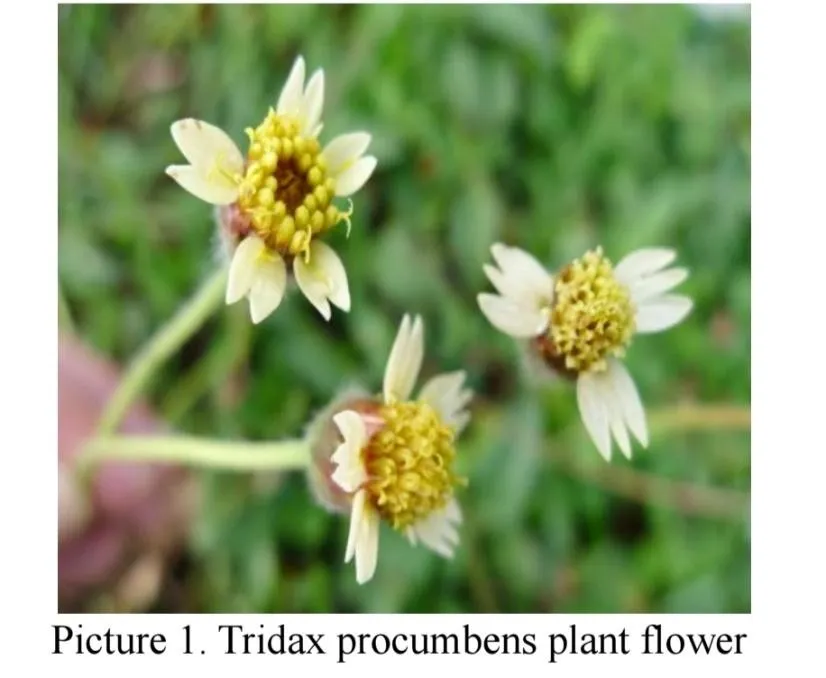
Kingdom - Plantae,
Subkingdom - Tracheobionta,
Division - Magnoliophyta,
Class - Magnoliopsida,
Subclass - Asteridae,
Clade- Angiosperms
Order - Asterales,
Family - Asteraceae,
Tribe- Heliantheae
Genus – Tridax ,
Species - Tridax procumbens
Morphology (8)
Table 2:
| Plant Part | Description |
|---|---|
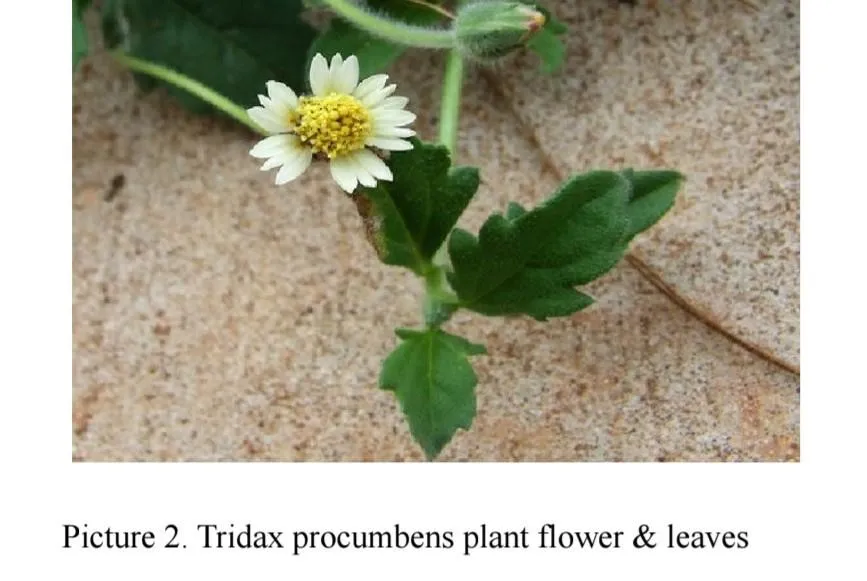
| Stem | Creeping at the base, branched, pilose (densely hairy), suberect, or trailing above. |
| Leaf | Simple, opposite, acute apex, elliptic-rhomboid or ovate lanceolate or elliptic-rhomboid, cuneate base, patently hispid, and serrated to the coarsely dentate margin, 2.5–7 cm long |
| Flowers/Inflorescence | Heads are bisexual, pentamerous and actinomorphic solitary with yellowish numerous tubular-campanulate involucres of disc floret per head, 1.2–1.5 cm across. The peduncle is 10– 30 cm long |
| Calyx | Characterized with scales, reduced to pappus. |
| Fruit | Hard achene fruit covered with stiff hairs and at one end it has feathery, plume-like white pappus. |
| Seed | The plant seeds have a pendulous embryo so there is no endosperm. |
Phytochemical Profile Of Tridax Procumbens
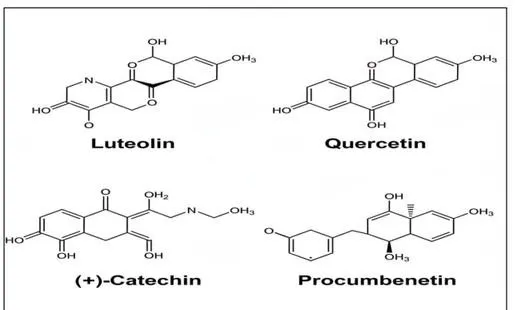
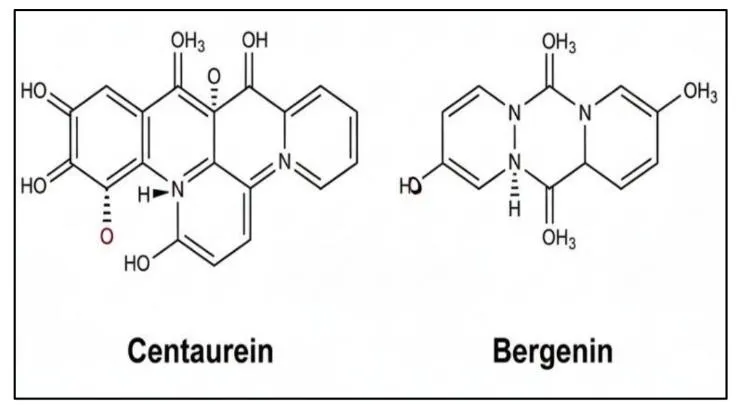
A number active chemical constituent were isolated & reported from the plant Tridax procumbens. As a alkaloids, flavonoids, carotenoids, β-sitosterol, fumeric acid, Luteolin, quercetin, oxoester, lauric acid, myristic, palmitic, arachidic, linoleic acid and tannin etc . Earlier researchers reported presence of dexamethasone, Luteolin, glucoluteolin, beta sitosterol and quercetin. .Mineral composition of T. procumbens reported from leaves is calcium, magnesium, potassium, sodium and selenium. It has been observed that T. procumbens can serve as a good source of plant protein and potassium supplement, as well as being potential source of provitamin A (carotenoids) to the population (5)
MINERAL CONTENT IN TRIDAX PROCUMBENS (8)
Table 3:
| Mineral | Dry weight (mg/kg) | Wet weight (mg/kg) |
|---|---|---|
| Calcium | 20.96 | 2.09 |
| Magnesium | 3.56 | 0.35 |
| Potassium | 31.92 | 3.18 |
| Sodium | 50.44 | 5.02 |
| Selenium | 0.20 | 0.02 |
Phytochemicals which include quercetagetin-3,5,3’-trimethoxy-7-O-neohesperidoside (flavonol diglycoside), 1,2 dihydrodendroarboreol B (a polyacetylene), and (3S,4R,5S,7E)three- tetradecanoate-4,5-epoxy-β-ionone (ionone derivative) have been pronounced from the ethanolic extract of the plant . The general chlorophyll content material and general carotenoids content material of Tridax procumbens have been expected as 1.323±0.017 mg/g tissue and 0.723±0.007 mg/g tissue respectively . The plant include excessive quantity of alkaloids, hydroxycinnamates, flavonoids, tannins and phytosterols .
Mechanisms of T. procumbens Constituents
Wound healing is not a single event; it is a coordinated process involving haemostasis, inflammation, proliferation and tissue remodelling. Platelets and inflammatory cells act early, while fibroblasts, keratinocytes and endothelial cells later contribute to matrix formation, reepithelialisation and new blood-vessel growth. This framework helps explain why woundhealing studies should measure more than wound size alone, including collagen-related markers, epithelialisation time and tissue strength (11,12).
1. Wound healing:
The leaf extract is commonly used in Indian traditional medicine and topically applied on open wound to stop bleeding and enhance the healing process. T. procumbens enhances wound healing by interacting with epidermal cells, dermal cells, ECM, soluble proteins and angiogenesis processes co-ordinated by an array of cytokines and growth factors . The ethanolic extract showed significant wound healing activity in gel based formulation . In excision wound healing process, T. procumbens extract shows indirect corticotropic effects. This increases the tensile strength of collagen fibers and rate of epithelialization .The leaf extract is also reported to stop bleeding when applied topically. (6)
Tridax antagonized anti-epithelization and tensile strength depressing effect of dexamethasone (a known healing suppressant agent)without affecting anticontraction and antigranulation action of dexamethasone. Aqueous extract was alsoeffective in increasing lysyl oxidase but to a lesserdegree than whole plant extract. Further it has been shown that extract of leaves of this plant also promotes wound healing in both normal and immunocompromised (steroid treated) rats in dead space wound healing model. The plant increase not only lysyl oxidase but also, protein and nucleic acid content in the granulation tissue, probably as a resultof increase in glycosamino glycan content.(4) 2. Antimicrobial activity
The methanolic extracts of Tridax procumbens leaves display broad-spectrum antibacterial activity against both gram-positive and gram-negative bacteria, with strongest effects observed against Salmonella Typhi and Shigella flexneri, and least against Escherichia coli. Whole plant extracts show activity limited to Pseudomonas aeruginosa. Various extracts, such as n-hexane, ethyl acetate, and aqueous forms, differ in their target organisms; n-hexane and ethyl acetate flower extracts are active against E. coli, Mycobacterium smegmatis, Salmonella group C, and Bacillus cereus, while aqueous extracts sometimes show no activity. A novel flavone glycoside isolated from the leaves has shown antibiotic activity greater than that of Penicillin G when
formulated in a mineral base. Flavonoid extracts demonstrate significant antifungal activity against Aspergillus niger, whereas alkaloids are generally inactive against fungi. Overall, Tridax procumbens shows promise as a source of antimicrobial and antifungal agents for treating various infections and diseases. (5) (20–22)
3. Anti-inflammatory
The anti-inflammatory findings should be interpreted as preclinical evidence rather than proof of clinical benefit. Inflammation is necessary during the early stage of repair, but prolonged or excessive inflammation can delay tissue recovery. Therefore, a useful topical preparation would ideally reduce excessive inflammation without disrupting normal defence and repair processes (11,13).
activity Tridax procumbens extracts significantly reduced parameters like exudates volume leukocyte migration, edema fluid, granuloma tissue and γ-glutamyl transpeptidase depicted the good anti-inflammatory action of this plant. Tridax procumbens has negligible ulcerogenic property and causes anti-inflammatory activity through inhibiting SRs and PGs[36] . The aqueous extract of T. procumbens leaves was lyophilized and studied on the excision wound model, rat skin fibroblastand rat paw oedema. T. Procumbens did not significantly increase the fibroblast could compared with ibuprofen. The fibroblast cell count, hydroxyproline/DNA ratio collagen synthesis was insignificant in the control and T. procumbens treatment while ibuprofen and aspirin treatment had a significant effect on the above mentioned parameters. In the Carrageenan induced Oedema model, inhibition of Oedema was comparable in 200mg/kg Tridax procumbens and 40mg/kg ibuprofen treatment and the specific activity of the enzyme gamma glutamyl transpeptidase was comparable in the Tridax procumbens, ibuprofen and aspirin at 200 mg/ kg . The antiinflammatory activity of Tridax procumbens was carried out on carrageenin-induced paw edema along with standard drug, Ibuprofen. The ibuprofen significantly reduced paw edema. The oral administration equi-effective dose of Tridax procumbens revealed about 20-34% more activity than the one rendered by Ibuprofen. The effect of Tridax procumbens along with various dose regimen of Ibuprofen showed greater anti-inflammatory activity than the Ibuprofen alone [31-32]. Anti-inflammatory activity of Tridax procumbens of aerial parts could be at least in part due to COX-1 and COX-2 enzyme inhibition and free radical scavenging activities may be attributed to the presence of flavonoids and other polyphenols in the extract. (5)
4. Analgesic activity
Lyophilized decoctions of Tridax procumbens leaves were used to investigate analgesic activity in rats by using Acetic acid-induced Writhing test, Formalin induced persistent pain, and Complete Freund’s adjuvant (CFA) induced hyper analgesia. A significant and dosedependent decrease in the abdominal writhing was observed in the Acetic acid- induced abdominal constriction test. Extract administration significantly inhibits the late phase of moderate pain in the Formalin test. A significant decrease in mechanical hyper analgesia was found in CFA-injected rats treated with extract orally. Hence the results revealed the analgesic property of Tridax procumbens which might be due to both centrally and peripherally mediated mechanisms. (1)
➢ Bioactive Compound-Specific Roles in Cutaneous Wound Healing
The proposed roles of individual phytochemical groups are biologically plausible, but the activity of a crude plant extract cannot automatically be attributed to one compound. Flavonoids and phenolic compounds may contribute antioxidant and inflammation-modulating effects, while tannins can produce astringent effects. However, their concentrations vary with plant part, growing conditions, extraction solvent and processing method. Standardised chemical profiling is therefore important before comparing results between studies (2,5,11,14).
Flavonoids
sites. (5, 6)
(5, 6)
Alkaloids
Tannins
barrier. (5)
Saponins
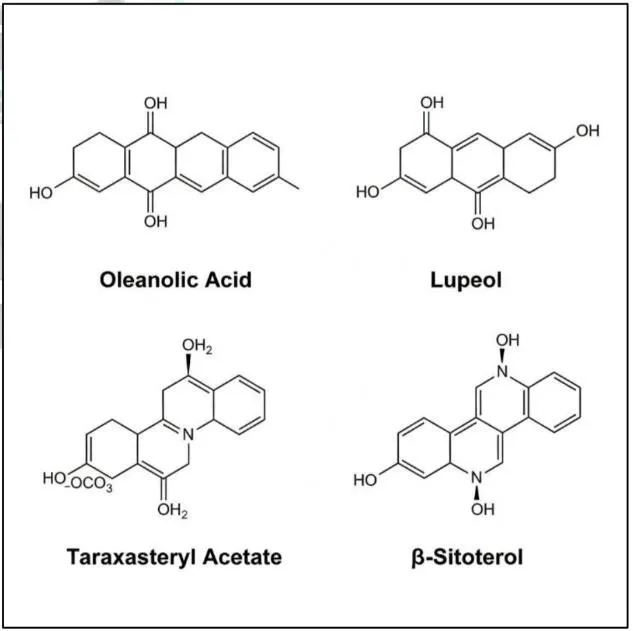
(5,6)
Terpenoids
crosslinking and increased tensile strength during tissue remodeling. (5)(6)
Phenolic Acids
• Compounds like gallic acid and fumaric acid impart strong antioxidant effects, mitigating oxidative stress at the wound site and promoting healing. (5,6)
➢ Preclinical Evidence
More recent experimental work has examined Tridax extract in delivery systems rather than only as a crude extract. Shrivastav and colleagues evaluated leaf extracts in diabetic and nondiabetic laboratory-animal wound models, supporting further investigation while remaining preclinical evidence (15). A separate study developed a Tridax extract-loaded carboxymethylcellulose film and reported antibacterial activity against selected organisms, with high cell viability in the tested cell line. These findings suggest that a polymer film may be a useful research platform, but they do not establish safety or effectiveness in patients (16).
• Animal Wound Models:
repair .(6,7,2)
A specific protein fraction has also been investigated. Gubbiveeranna and colleagues characterised ‘procumbenase’, a serine protease obtained from an aqueous extract, and reported improved wound contraction, tensile strength and hydroxyproline levels in experimental models, along with increased cell migration in a scratch assay. These results offer a possible mechanistic lead, but the findings need independent replication and clinical evaluation before any claim of scar-free healing in humans can be made (17).
➢ Safety Profile:
• Acute and subchronic toxicity assessments report high LD40 values, and no significant adverse effects at therapeutic doses are observed in animal studies, supporting safe topical and systemic use (2).
➢ Clinical and Translational Evidence
At present, traditional use and laboratory findings should be distinguished from demonstrated clinical efficacy. The available literature is weighted towards phytochemical studies, in-vitro antimicrobial tests and animal models. Cell-based scratch assays, for example, can help examine cell migration but do not reproduce the full environment of a human wound. Welldesigned human studies would need a clearly characterised preparation, appropriate comparator, defined wound type, safety monitoring and clinically meaningful outcomes (11,12,18).
• Topical Use in Human Traditions:
• Emerging Clinical Models:
• Modern Formulations:
➢ Summary Table: Key Preclinical Findings
Table 4:
| Model & Formulation | Parameter Improved |
|---|---|
| Incision/excision (rat, ointment) | Wound contraction, tensile strength, epithelialization |
| Burn wound (diabetic rat) | Epithelialization, wound index |
| Rat & zebrafish (hydroxyapatite composite) | Re-epithelialization, histological tissue organization |
| Paw oedema, granuloma (rat) | Inflammation reduction, granuloma inhibition |
| In vitro antibacterial | Pathogen inhibition (S. aureus, E. coli, Pseudomonas) |
| Safety (rat, acute & chronic) | High LD40, no major adverse effects |
Extensive animal studies and early translational models provide strong support for the woundhealing potential of Tridax procumbens, notably through mechanisms involving collagen synthesis, tissue regeneration, anti-inflammatory, and antimicrobial effects However, largescale, controlled clinical trials in humans remain limited, signaling the need for further research before widespread clinical adoption (1,6,7,2)
Development of Novel Delivery Systems
Recent formulation research has explored phospholipid-complex (phytosome) gel as a way to improve delivery of Tridax constituents. Jadhav, Shinde and Mulla reported a phytosomal gel with improved in-vitro antimicrobial activity compared with the plain ethanolic extract and greater cell-based wound closure than the extract alone, although it did not outperform the reference wound-care product in that assay. This illustrates why formulation studies should compare the extract, carrier, combination and suitable standard control, rather than relying on a single test result (19).
Novel delivery systems have been developed for the enhanced therapeutic potential of plant extracts, such as Tridax procumbens, by combining plant-based bioactives with advanced carriers. These innovations offer better stability, bioavailability, and targeted delivery, especially for antimicrobial and wound healing purposes.
• Chitosan–Plant Extract Composite Systems
Recent research highlights the efficacy of composites formed from chitosan and Tridax procumbens ethanol extracts. Chitosan, a polysaccharide derived from shellfish, acts as a biocompatible and antimicrobial carrier. When combined with Tridax procumbens extract, the composite demonstrates a significantly higher antimicrobial activity against both bacteria and fungi related to wound infections, compared to the single components. This synergistic effect arises from joint action of chitosan and plant-derived saponins and flavonoids, which increase membrane permeability and disrupt microbial efflux pumps. Such composite systems show promise for topical delivery in wound care applications (20)
• Herbal Soap Formulations
Innovative herbal soap delivery systems utilize Tridax procumbens leaf extract incorporated in a soap base, with excipients like cocoa butter, glycerine, and vitamin E. These soaps undergo rigorous evaluation of physicochemical properties, antimicrobial activity, foam stability, and skin sensitivity. The integration of Tridax procumbens ensures both cleansing action and sustained release of active compounds for skin infections and daily dermatological care (4).
• Nanoparticle and Polymeric Systems
Polysaccharide-based systems and nanoformulations are increasingly used for chronic wound management. These systems enable prolonged release, enhanced penetration, and improved stability of phytochemicals like phenols, flavonoids, and alkaloids. Such delivery systems help overcome the challenges of multidrug resistance and provide a possibletreatment option via localized therapy.(9)
• Extraction and Delivery Optimization
Standardized extraction and maceration techniques ensure effective recovery of plant bioactives, which are then incorporated into these novel delivery systems. Soxhlet extraction using solvents like ethyl acetate allows for targeted isolation of active phytochemicals that can be stably integrated into carriers for further topical or transdermal applications (4)
➢ Medicated Bandages from Tridax procumbens
Medicated bandages developed from Tridax procumbens extracts represent an innovativeand advanced wound care option. These bandages harness the rich phytochemical profile of the plant—flavonoids, tannins, saponins, alkaloids, terpenoids, and fatty acids—to provide multifaceted therapeutic benefits for enhanced cutaneous wound management. The bioactive compounds impart antimicrobial, anti-inflammatory, hemostatic, antioxidant, and tissue regenerative properties directly at the wound site.
Advantages of Tridax procumbens Medicated Bandages
Advantages, Limitations, and Research Gaps
A further limitation is the lack of uniformity between studies. Results can differ because investigators use different plant parts, solvents, extract concentrations, test organisms, wound models and outcome measures. Antimicrobial activity in a laboratory plate does not by itself prove that a preparation will prevent wound infection in clinical use. Likewise, evidence from animals or cultured cells cannot be directly converted into a human dose. Future studies should report botanical authentication, extraction yield, chemical fingerprints, formulation composition, stability and toxicity in a reproducible way (2,11,14,18).
• Advantages
diseases (2,1,6).
. • Limitations
challenging (2,1,4)
. • Limited Clinical Evidence Most pharmacological evaluations are restricted to in vitro assays or animal models. Robust human clinical trials confirming safety and efficacy are mostly
lacking (1,4)
• Research Gaps
(1,2)
Future perspectives
For future work, a practical sequence would be to authenticate the plant material, define a reproducible extraction method, establish a chemical profile, and test the preparation for stability, skin irritation and relevant antimicrobial activity. Cell-based studies may then help assess compatibility and cell migration, followed by suitable preclinical evaluation where ethically justified. Only after adequate safety and quality data are available should controlled human studies be considered. This staged approach is consistent with broader wound-repair research, where complex biological outcomes require multiple complementary measures rather than a single endpoint (11,12,18).
The future perspectives for research and application of Tridax procumbens are promising, focusing on deeper phytochemical studies, advanced pharmacological evaluations, dose standardization, and novel biomedical formulations. Here are focused points on future directions, each referenced per your format:
CONCLUSION
Tridax procumbens demonstrates a broad spectrum of pharmacological activities including wound healing, anti-inflammatory, antimicrobial, antioxidant, antidiabetic, and immunomodulatory effects, largely due to its rich profile of flavonoids, alkaloids, tannins, saponins, carotenoids, and essential minerals. Preclinical animal studies and traditional medicinal use support its efficacy for wound repair, infection management, and alleviating various disorders, making it a promising candidate for herbal and integrative medicine.However, major limitations remain, notably the lack of standardized extraction methods, variable phytochemical content, insufficient human clinical evidence, and the need for refined evaluation of toxicity and dosage. Future research should focus on advanced phytochemical profiling, robust controlled clinical trials, innovative formulation strategies, and mechanistic studies to fully validate and harness Tridax procumbens' therapeutic potential for modern healthcare.
REFERENCES



Sakshi Thorat, Shambala Taur, Nitin Neharkar, A Review on Phytochemical Constituents of Tridax Procumbens: And Their Role in Cutaneous Wound Management, Int. J. of Pharm. Sci., 2026, Vol 4, Issue 11, 3479-3494. https://doi.org/10.5281/zenodo.24387545
 10.5281/zenodo.24387545