

We use cookies to ensure our website works properly and to personalise your experience. Cookies policy
Mula Education Society’s College of Pharmacy, Sonai, Tal. Newasa, Dist, Ahilyanagar
Bacterial skin infections continue to represent a significant healthcare challenge due to their high prevalence, recurrent nature, and growing resistance to conventional antimicrobial therapies. Topical drug delivery systems based on natural polymers have gained increasing attention because they can provide localized treatment while minimizing systemic side effects. Among these systems, pH-responsive hydrogels have emerged as promising platforms for controlled and targeted drug delivery. Pectin and chitosan, two naturally derived biopolymers, can form a stable polyelectrolyte complex capable of responding to environmental pH changes. Incorporation of barbaloin, a bioactive compound obtained from Aloe vera, further enhances the therapeutic potential of these hydrogels through its antimicrobial, anti-inflammatory, and wound-healing properties. Objectives :The primary objective of this review is to provide a comprehensive overview of the development and optimization of pH-responsive pectin–chitosan polyelectrolyte hydrogels loaded with barbaloin for the targeted treatment of bacterial skin infections. The review aims to discuss the physicochemical properties of the constituent materials, mechanisms of hydrogel formation, factors influencing formulation performance, drug release behavior, antibacterial effectiveness, and wound-healing applications. Additionally, the article highlights recent advancements and future opportunities in hydrogel-based topical drug delivery systems.
Bacterial Skin Infections :
Bacterial skin infections are among the most common dermatological disorders affecting individuals of all age groups. These infections occur when pathogenic microorganisms invade the skin and underlying tissues, leading to inflammation, pain, redness, swelling, and tissue damage. Factors such as impaired skin barrier function, poor hygiene, trauma, burns, diabetes, and weakened immune responses can increase susceptibility to bacterial infections. Common causative organisms include Staphylococcus aureus, Streptococcus pyogenes, and Pseudomonas aeruginosa. If left untreated, bacterial skin infections may progress to severe complications, delay wound healing, and negatively impact patient quality of life.
Current Treatment Limitations :
Conventional management of bacterial skin infections primarily relies on topical and systemic antibiotics. Although these therapies have demonstrated clinical effectiveness, several limitations remain. Frequent drug administration is often required to maintain therapeutic concentrations at the infection site, which may reduce patient compliance. Systemic antibiotic therapy can also produce undesirable side effects and expose non-target tissues to medication. Furthermore, the widespread and prolonged use of antibiotics has contributed to the emergence of antimicrobial resistance, reducing the effectiveness of many currently available treatments. In addition, inadequate drug penetration into infected tissues and rapid drug clearance may further compromise therapeutic outcomes.
Need for Targeted Drug Delivery Systems :
To overcome the shortcomings associated with conventional therapies, considerable attention has been directed toward the development of targeted drug delivery systems. These advanced delivery platforms are designed to transport therapeutic agents directly to the site of infection while minimizing exposure to healthy tissues. Targeted delivery improves local drug concentration, enhances therapeutic efficacy, reduces dosing frequency, and decreases the likelihood of systemic adverse effects. Responsive drug delivery systems capable of releasing medication in response to specific physiological conditions, such as changes in pH, temperature, or enzymatic activity, have shown particular promise for the treatment of localized infections and chronic wounds.
Hydrogel-Based Therapies :
Hydrogels are three-dimensional polymeric networks capable of absorbing and retaining substantial amounts of water while maintaining their structural integrity. Due to their high water content, flexibility, biocompatibility, and ability to mimic natural tissue environments, hydrogels have become attractive materials for biomedical and pharmaceutical applications. In wound management, hydrogel-based systems can provide a moist healing environment, protect damaged tissue from external contamination, and facilitate sustained drug release. Among various hydrogel formulations, pH-responsive hydrogels have gained significant interest because they can modulate drug release according to the pH conditions present at infected or inflamed sites. The combination of pectin and chitosan to form a polyelectrolyte complex hydrogel offers enhanced
mechanical stability, biodegradability, and controlled release characteristics. When loaded with barbaloin, a bioactive constituent derived from Aloe vera, these hydrogels may provide synergistic antibacterial, anti-inflammatory, and wound-healing effects, making them promising candidates for the targeted treatment of bacterial skin infections.
3. Bacterial Skin Infections :
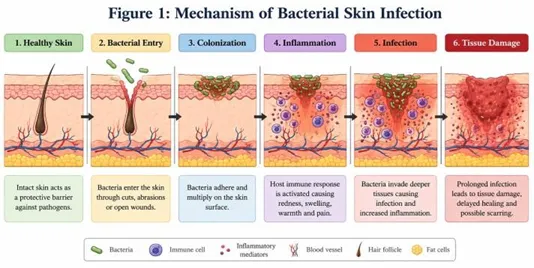
Fig 01 : Skin Infections
Types of Bacterial Skin Infections :
Bacterial skin infections encompass a broad range of conditions that vary in severity, depth of tissue involvement, and clinical presentation. These infections develop when pathogenic bacteria penetrate the skin barrier and multiply within the affected tissues. Among the most frequently encountered bacterial skin infections are impetigo, cellulitis, and folliculitis.
Impetigo :
Impetigo is a highly contagious superficial skin infection that commonly affects infants and young children, although it can occur in individuals of any age. The condition is characterized by the formation of small vesicles or pustules that eventually rupture and produce distinctive honey-colored crusts. Impetigo generally affects exposed areas such as the face, arms, and legs. Poor hygiene, crowded living conditions, and minor skin injuries can increase the risk of infection. Although usually mild, untreated impetigo may spread to surrounding skin and contribute to secondary complications.
Cellulitis :
Cellulitis is an acute bacterial infection involving the deeper layers of the skin and subcutaneous tissues. It typically presents with redness, swelling, warmth, tenderness, and pain at the affected site. In severe cases, patients may also experience fever and systemic symptoms. Cellulitis often develops following skin trauma, insect bites, surgical wounds, or chronic skin disorders that compromise the protective barrier of the skin. Prompt treatment is important because the infection can spread rapidly and potentially lead to serious complications.
Folliculitis :
Folliculitis refers to inflammation and infection of hair follicles. It commonly appears as clusters of small red bumps or pus-filled lesions surrounding hair follicles. The condition may result from bacterial contamination, friction, excessive sweating, or prolonged occlusion of the skin. Although most cases are mild and self-limiting, recurrent or severe folliculitis can cause discomfort, scarring, and persistent skin irritation.
Common Pathogens Associated with Skin Infections :
A variety of bacterial species are responsible for skin and soft tissue infections. The prevalence of specific pathogens depends on the type of infection, patient characteristics, and environmental factors. Among the numerous bacterial organisms involved, Staphylococcus aureus and Pseudomonas aeruginosa are recognized as particularly important pathogens because of their high virulence and association with treatment-resistant infections.
Staphylococcus aureus :
Staphylococcus aureus is one of the most frequently isolated pathogens in bacterial skin infections. It is commonly present on the skin and mucosal surfaces of healthy individuals but can become pathogenic when the skin barrier is disrupted. This microorganism is associated with a wide spectrum of infections, including impetigo, folliculitis, abscesses, cellulitis, and infected wounds. The bacterium produces various toxins and virulence factors that facilitate tissue invasion and immune evasion. Its ability to form biofilms further enhances persistence and complicates treatment.
Pseudomonas aeruginosa :
Pseudomonas aeruginosa is an opportunistic Gram-negative bacterium frequently associated with chronic wounds, burn injuries, and healthcare-related infections. The organism possesses remarkable adaptability and can survive in diverse environmental conditions. It produces multiple virulence factors, including enzymes and toxins that contribute to tissue destruction and delayed wound healing. In addition, its ability to develop biofilms and resist antimicrobial agents makes it a significant concern in wound management and dermatological therapy.
Antibiotic Resistance Issues :
The emergence and spread of antibiotic-resistant bacteria have become major global healthcare challenges. Extensive and inappropriate use of antibiotics has accelerated the development of resistant strains, reducing the effectiveness of conventional antimicrobial therapies. Resistant organisms can survive exposure to commonly prescribed antibiotics, resulting in prolonged infections, increased treatment costs, and greater risk of complications.
Drug-resistant strains of Staphylococcus aureus, particularly methicillin-resistant variants, have become increasingly prevalent in both hospital and community settings. Similarly, Pseudomonas aeruginosa exhibits intrinsic and acquired resistance mechanisms that limit therapeutic options. The growing burden of antimicrobial resistance highlights the urgent need for innovative treatment strategies capable of delivering antimicrobial agents more efficiently and reducing the likelihood of resistance development.
Advanced drug delivery systems, including pH-responsive hydrogels, have emerged as promising alternatives because they can provide localized and controlled release of therapeutic agents directly at the infection site. Such approaches may improve treatment effectiveness, minimize systemic exposure, and contribute to more rational antimicrobial therapy for bacterial skin infections.
4. Hydrogels in Drug Delivery :
Definition and Classification :
Hydrogels are three-dimensional, cross-linked polymeric networks capable of absorbing and retaining large amounts of water or biological fluids without losing their structural integrity. The unique architecture of hydrogels allows them to mimic the characteristics of natural soft tissues, making them highly suitable for pharmaceutical and biomedical applications. Hydrogels can be synthesized from natural polymers, synthetic polymers, or combinations of both, depending on the desired therapeutic properties.
Hydrogels may be classified based on several criteria, including source, method of preparation, charge characteristics, and responsiveness to environmental stimuli. Based on origin, they can be categorized as natural hydrogels, synthetic hydrogels, and hybrid hydrogels. According to their ionic nature, hydrogels may be nonionic, anionic, cationic, or amphoteric. Furthermore, they can be classified as conventional hydrogels or smart hydrogels depending on their ability to respond to external or internal stimuli.
Advantages of Hydrogels :
Hydrogels possess numerous properties that make them attractive carriers for drug delivery applications. Their high water content provides a moist environment that supports tissue repair and patient comfort. They exhibit excellent biocompatibility and biodegradability, reducing the risk of adverse reactions following administration. Hydrogels can encapsulate a wide variety of therapeutic agents, including small molecules, proteins, peptides, and natural bioactive compounds.
Another important advantage is their ability to provide controlled and sustained drug release, thereby maintaining therapeutic concentrations over extended periods. Their soft and flexible nature enables close contact with biological tissues, improving drug retention at the target site. In addition, hydrogels can be engineered to possess specific mechanical and physicochemical properties according to the intended application.
Biomedical Applications :
Hydrogels have found extensive use in diverse biomedical fields due to their versatility and safety profile. In wound care, hydrogel dressings help maintain moisture balance, absorb wound exudates, and facilitate tissue regeneration. In drug delivery systems, hydrogels serve as reservoirs for controlled release of therapeutic agents. They are also employed in tissue engineering as scaffolds that support cell attachment, proliferation, and differentiation.Additional applications include ophthalmic formulations, transdermal drug delivery, biosensors, regenerative medicine, and localized treatment of infections. The ability to
tailor hydrogel composition and functionality has significantly expanded their role in modern healthcare and pharmaceutical sciences.
Stimuli-Responsive Hydrogels :
Stimuli-responsive hydrogels, often referred to as smart hydrogels, are advanced materials capable of altering their physical or chemical properties in response to specific environmental triggers. These triggers may include changes in pH, temperature, ionic strength, enzymes, electric fields, magnetic fields, or light exposure.
Upon exposure to a particular stimulus, the hydrogel network undergoes structural modifications such as swelling, shrinking, degradation, or alteration of permeability. These changes can regulate the release of incorporated therapeutic agents in a controlled manner. Because of their ability to respond dynamically to physiological conditions, stimuli-responsive hydrogels have emerged as promising platforms for targeted and personalized drug delivery systems.
5. pH-Responsive Hydrogels :
Mechanism of pH Responsiveness :
pH-responsive hydrogels are a specialized class of smart hydrogels designed to react to variations in environmental pH. These materials contain ionizable functional groups that can accept or release protons depending on the surrounding pH conditions. As the pH changes, the degree of ionization within the polymer network also changes, resulting in electrostatic interactions that influence hydrogel swelling behavior.
At specific pH values, repulsive forces between charged polymer chains increase, causing expansion of the hydrogel structure and enhanced water uptake. Conversely, reduced ionization can lead to contraction of the polymer network. This reversible swelling and deswelling phenomenon forms the basis of controlled drug release from pH-responsive hydrogels.
In pectin–chitosan hydrogels, pectin contributes negatively charged carboxyl groups, whereas chitosan contains positively charged amino groups. The interaction between these functional groups forms a stable polyelectrolyte complex capable of responding to pH variations present in infected or inflamed tissues.
Drug Release Behavior :
Drug release from pH-responsive hydrogels is influenced by swelling characteristics, polymer composition, cross-linking density, drug-polymer interactions, and environmental conditions. Changes in pH can alter hydrogel porosity and permeability, thereby controlling the diffusion of encapsulated therapeutic agents.
Under favorable pH conditions, increased swelling enlarges the internal network structure, allowing more efficient diffusion of drug molecules from the hydrogel matrix. This mechanism enables localized and sustained drug delivery while minimizing premature release. As a result, pH-responsive hydrogels can maintain effective drug concentrations at the target site for extended durations, reducing the need for frequent administration.
Applications in Wound Healing :
The wound environment often undergoes dynamic pH changes during infection and tissue repair. Healthy skin generally exhibits a mildly acidic pH, whereas infected wounds frequently become more alkaline due to bacterial activity and inflammation. pH-responsive hydrogels can exploit these variations to achieve site-specific drug release.
In wound-healing applications, these hydrogels provide multiple therapeutic benefits. They maintain a moist environment that supports cellular migration and tissue regeneration, protect wounds from external contamination, and facilitate sustained delivery of antimicrobial agents. Additionally, the controlled release of bioactive compounds can help reduce inflammation, suppress microbial growth, and accelerate healing processes.
Hydrogels composed of pectin and chitosan are particularly attractive for wound management because both polymers exhibit excellent biocompatibility and biodegradability. When loaded with barbaloin, the hydrogel system may offer enhanced antibacterial, anti-inflammatory, and regenerative properties, making it a promising platform for the targeted treatment of bacterial skin infections and chronic wounds.
6. Pectin: Structure and Pharmaceutical Applications :
Source
Pectin is a naturally occurring polysaccharide predominantly obtained from the cell walls of higher plants. It is widely distributed in fruits and vegetables, where it contributes to structural integrity and cellular adhesion. Commercially, pectin is primarily extracted from citrus peels, apple pomace, and other fruit-processing by-products. Due to its natural origin, renewability, and availability in large quantities, pectin has gained considerable importance in pharmaceutical, food, and biomedical industries. Its non-toxic nature and environmentally friendly profile further enhance its suitability as a biomaterial for drug delivery and tissue engineering applications.
Chemical Structure :
Pectin is a complex heteropolysaccharide mainly composed of α-(1→4)-linked D-galacturonic acid units. Some of the carboxyl groups present in galacturonic acid residues may be esterified with methanol, giving rise to different degrees of esterification. Based on this characteristic, pectin is generally classified into high-methoxyl pectin and low-methoxyl pectin.The molecular structure of pectin contains numerous hydroxyl and carboxyl functional groups, which contribute significantly to its hydrophilic nature and interaction with water molecules. These functional groups also enable pectin to participate in ionic interactions and hydrogen bonding with other polymers, making it highly suitable for the formation of polyelectrolyte complexes. In pectin–chitosan hydrogel systems, negatively charged carboxyl groups of pectin interact electrostatically with positively charged amino groups of chitosan, resulting in stable hydrogel networks with improved mechanical and drug delivery properties.
Biocompatibility :
One of the most important attributes of pectin is its excellent biocompatibility. As a naturally derived polymer, pectin exhibits minimal toxicity and is generally well tolerated by biological tissues. Its biodegradability allows gradual breakdown into harmless components without causing significant adverse effects. These characteristics make pectin an attractive material for pharmaceutical formulations intended for prolonged contact with skin and other biological surfaces.
Pectin-based materials have demonstrated good compatibility with cells and tissues, supporting their use in wound dressings, drug delivery systems, and regenerative medicine applications. Furthermore, pectin can provide a protective environment for incorporated therapeutic agents while minimizing irritation at the site of administration. The favorable safety profile of pectin has contributed to its widespread acceptance in the development of advanced biomedical products.
Gel-Forming Properties :
Pectin possesses remarkable gel-forming capabilities, which represent one of its most valuable pharmaceutical characteristics. Under appropriate conditions, pectin molecules can interact with one another and with cross-linking agents to form three-dimensional gel networks capable of entrapping water and bioactive compounds. The gelation behavior of pectin depends on factors such as degree of esterification, pH, ionic strength, polymer concentration, and the presence of multivalent ions.
The ability of pectin to form hydrogels offers several advantages for controlled drug delivery applications. These gel networks can encapsulate therapeutic agents, protect them from premature degradation, and regulate their release over time. Additionally, pectin hydrogels exhibit high swelling capacity, allowing them to absorb wound exudates and maintain a moist environment favorable for tissue repair.
When combined with chitosan, pectin forms a polyelectrolyte complex hydrogel with enhanced structural stability and improved responsiveness to environmental conditions. Such hydrogel systems have shown significant potential in topical drug delivery, wound healing, and targeted treatment of bacterial skin infections. The combination of excellent gel-forming ability, biodegradability, and biocompatibility makes pectin a highly valuable polymer in the design of modern pharmaceutical and biomedical formulations.
8. Pectin–Chitosan Polyelectrolyte Complex (PEC) :
Formation Mechanism ;
Pectin–chitosan polyelectrolyte complex is formed through the interaction of oppositely charged polymers. Negatively charged carboxyl groups of pectin interact with positively charged amino groups of chitosan, resulting in the formation of a stable three-dimensional network.
Ionic Interactions :
The stability of the PEC hydrogel is primarily due to electrostatic attractions between the anionic pectin chains and cationic chitosan chains. These ionic interactions improve the structural integrity and functionality of the hydrogel system.
Advantages over Single Polymers :
Compared with individual polymers, pectin–chitosan complexes exhibit enhanced mechanical strength, improved stability, higher drug-loading capacity, better swellingbehavior, and more controlled drug release. The combination also improves biocompatibility and wound-healing performance.
Recent Research Findings :
Recent studies have reported that pectin–chitosan hydrogels demonstrate excellent antimicrobial activity, sustained drug release, and enhanced wound-healing potential. Their pH-responsive behavior makes them promising carriers for targeted topical drug delivery applications.
9. Barbaloin :
Source from Aloe vera :

Fig 02 : Aloe Vera
Barbaloin is a naturally occurring bioactive anthraquinone glycoside mainly isolated from the leaves of the medicinal plant Aloe vera. It is one of the major compounds responsible for the therapeutic properties of Aloe vera.
Chemical Properties :
Barbaloin is a yellow-colored phenolic compound with good biological activity. Its chemical structure contains hydroxyl groups that contribute to its antioxidant and pharmacological properties.
Antibacterial Activity :
Barbaloin has demonstrated inhibitory effects against several pathogenic bacteria. It can interfere with bacterial growth and may help reduce microbial colonization at infected sites.
Anti-Inflammatory Activity :
Barbaloin possesses anti-inflammatory properties that help reduce inflammation, redness, and tissue irritation. It may modulate inflammatory mediators involved in the wound-healing process.
Wound Healing Effects :
Barbaloin promotes tissue regeneration and supports wound repair by enhancing cellular proliferation and reducing oxidative stress. Its combined antibacterial and anti-inflammatory actions contribute to faster healing and improved skin recovery.
10. Barbaloin-Loaded Hydrogel Systems :
Drug Incorporation Methods :
Barbaloin can be incorporated into hydrogels by dissolving or dispersing it in the polymer solution before gel formation. This method ensures uniform distribution of the drug throughout the hydrogel matrix and improves drug retention within the system.
Drug–Polymer Interactions :
Barbaloin interacts with pectin and chitosan through hydrogen bonding and weak electrostatic interactions. These interactions help stabilize the drug within the hydrogel network and contribute to controlled drug release.
Release Kinetics :
The release of barbaloin from hydrogels is mainly governed by polymer swelling, diffusion, and matrix erosion. pH-responsive hydrogels can regulate drug release according to environmental conditions, providing sustained and localized delivery at the infected site.
11. Formulation Development and Optimization :
Factors Affecting Hydrogel Formation :
Hydrogel formation is influenced by polymer concentration, mixing conditions, pH, temperature, and cross-linking density. These parameters significantly affect the physical stability and performance of the final formulation.
Polymer Ratio ;
The ratio of pectin to chitosan plays a crucial role in determining swelling behavior, mechanical strength, and drug release characteristics. An optimized polymer ratio ensures the formation of a stable and effective hydrogel system.
Cross-Linking Agents :
Cross-linking agents help strengthen the hydrogel network by creating additional bonds between polymer chains. Appropriate cross-linking improves structural integrity, drug entrapment, and controlled release properties.
pH Effect :
Environmental pH directly influences hydrogel swelling and drug release. Changes in pH alter the ionization of functional groups present in pectin and chitosan, resulting in variations in hydrogel structure and permeability.
Design of Experiments (DoE) :
Design of Experiments (DoE) is a statistical approach used to evaluate the effects of multiple formulation variables simultaneously. It helps identify critical factors and optimize the formulation with fewer experimental trials.
Response Surface Methodology (RSM) :
Response Surface Methodology (RSM) is an optimization technique used to study the relationship between formulation variables and responses such as swelling index, drug release, and entrapment efficiency. It assists in selecting the optimal formulation conditions for improved product performance.
12. Characterization of Hydrogels :
Swelling Index :
The swelling index measures the water absorption capacity of a hydrogel. A higher swelling index indicates greater fluid uptake and improved drug release potential.
Gel Fraction :
Gel fraction represents the proportion of polymer successfully incorporated into the hydrogel network. It reflects the stability and degree of cross-linking within the formulation.
Drug Content :
Drug content analysis determines the amount of barbaloin present in the hydrogel and ensures uniform drug distribution throughout the system.
Entrapment Efficiency :
Entrapment efficiency indicates the percentage of drug successfully retained within the hydrogel matrix during formulation.
Rheological Studies :
Rheological evaluation measures the flow and deformation behavior of hydrogels, providing information about viscosity, spreadability, and mechanical stability.
FTIR :
Fourier Transform Infrared Spectroscopy (FTIR) is used to identify functional groups and investigate interactions between polymers and the incorporated drug.
DSC :
Differential Scanning Calorimetry (DSC) evaluates thermal properties and helps determine the compatibility of formulation components.
SEM :
Scanning Electron Microscopy (SEM) provides detailed images of hydrogel surface morphology, porosity, and internal structure.
XRD :
X-ray Diffraction (XRD) is used to determine the crystalline or amorphous nature of the drug and polymer matrix.
13. Evaluation of Antibacterial Activity :
Agar Diffusion Method :
The agar diffusion method assesses antibacterial activity by measuring bacterial growth inhibition around the hydrogel sample placed on agar media.
MIC Studies :
Minimum Inhibitory Concentration (MIC) studies determine the lowest concentration of the formulation required to inhibit visible bacterial growth.
Zone of Inhibition :
The zone of inhibition represents the clear area surrounding the sample where bacterial growth is prevented. Larger zones generally indicate stronger antibacterial activity.
Biofilm Inhibition :
Biofilm inhibition studies evaluate the ability of the hydrogel to prevent bacterial attachment and biofilm formation, which are common causes of persistent infections.
14. Wound Healing and Skin Application Studies :
In Vitro Studies :
In vitro experiments evaluate drug release, antibacterial activity, cytocompatibility, and hydrogel performance under controlled laboratory conditions.
Ex Vivo Skin Permeation :
Ex vivo permeation studies use excised animal or human skin to assess the penetration and retention of drugs within skin layers.
In Vivo Wound Healing Studies:
In vivo studies investigate the therapeutic effectiveness of hydrogels in animal wound models by monitoring wound contraction, tissue regeneration, and healing rate.
15. Challenges and Limitations :
Stability Issues :
Hydrogels may undergo physical or chemical changes during storage, affecting their mechanical strength, swelling behavior, and drug release characteristics.
Scale-Up Challenges :
Large-scale production requires consistent manufacturing processes, quality control, and reproducibility, which can be difficult to achieve.
Regulatory Concerns :
Hydrogel-based drug delivery systems must comply with strict regulatory requirements related to safety, efficacy, quality, and clinical performance before commercialization.
FUTURE PERSPECTIVES
Smart Hydrogels :
Future hydrogel systems may incorporate advanced stimuli-responsive properties, enabling precise and on-demand drug release according to physiological conditions.
Nanocomposite Hydrogels :
The integration of nanoparticles into hydrogel matrices can improve antimicrobial activity, mechanical strength, and drug delivery efficiency.
Clinical Translation Opportunities :
Further preclinical and clinical investigations may facilitate the development of commercially viable hydrogel formulations for effective management of bacterial skin infections.
CONCLUSION
Barbaloin-loaded pH-responsive pectin–chitosan hydrogels represent a promising approach for targeted treatment of bacterial skin infections. The combination of controlled drug release, antibacterial activity, biocompatibility, and wound-healing potential makes these systems attractive candidates for advanced topical drug delivery. Continued research and optimization may support their future clinical application.
REFERENCES

Arun Khamkar, Payal Kadus, Manasi Jadhav, Dr. Anil Pawar, A Review on the Development and Optimization of Barbaloin-Loaded pH-Responsive Pectin–Chitosan Hydrogels for Bacterial Skin Infection Treatment, Int. J. of Pharm. Sci., 2026, Vol 4, Issue 6, 3567-3578, https://doi.org/10.5281/zenodo.20701200
 10.5281/zenodo.20701200