

We use cookies to ensure our website works properly and to personalise your experience. Cookies policy
1Assistant professor, Department of Pharmacology, Nurul Institute of Medical Sciences and Research Laboratory, Chengmaritari, Khagenhat, Falakata, Alipurduar, West Bengal, PIN-735204, India
2Assistant Professor, Bharat Pharmaceutical Technology, Amtali, Agartala, Tripura, PIN- 799130, India
Cocos nucifera (L.) or the coconut tree is the only tree under the Cocos genus of the Aceraceae family. It is commonly known as ‘Kalpavriksha’ in Ayurveda for its capability to provide various benefits. The fruit of the coconut tree has been used in many different ways by different civilisations for many centuries. The outside of the fruit is called the epicarp, then there is a fibrous mesocarp, and the inner solid part is called the endocarp. Inside the endocarp, there is a solid white albumen layer and watery liquid albumen or coconut water. The albumen is consumed throughout the world. The mesocarp, though not eaten, has many functions in different civilisations. In this review, we have collected and presented data on phytochemicals present in coconut mesocarp and the pharmacological actions the extract of mesocarp of coconut has shown in various studies conducted in various laboratories. The phytoconstituents that are present in the mesocarp extract of coconut are phenols, condensed tannins, flavonoids, triterpenes, steroids, alkaloids, leucoanthocyanidins, saponins, condensed tannins, polyphenols, catechins, epicatechins, tannins, and flavonoids. The TPC content of the mesocarp extract was found to be 48±0.61 mg GAE g-1, and the antioxidant value was found to be 88±0.62%. The total flavonoid content of the mesocarp of Cocos nucifera is found to be 15.48±1.876 mg QE/g. The pharmacological actions that we have managed to collect data on are antibacterial activity, anthelminthic activity, antioxidant activity, anti-larvicidal activity, anti-diabetic activity, anti-cancer activity, anti-inflammatory activity, anti-leishmania activity, analgesic activity, antiparasitic activity, antidepressant activity, and hypolipidemic activity
Cocos nucifera (L.) is a member of the Aceraceae family commonly known as the coconut tree. It is the only tree under the Cocos genus. It is said to be the “Kalpavriksha” (the tree that grants all desires) in India. This is an arborescent monocotyledon tree of 25 meters. The stem is unbranched. Under favourable conditions, the coconut emits 12-14 inflorescence spikes per year. It is a monoecious plant. The fruit has an outer epicarp, then a mesocarp, then the inner endocarp. Inside the solid endocarp, a solid white albumen is present. Then there is the watery liquid albumen, which is called coconut water. The water is sweet, thick and slightly acidic[1]. The mesocarp is used in the world for various purposes around the world. Coir is produced from the coconut mesocarp. Coir is used to make various things like ropes, mats, bags, etc. The dried mesocarp is used for conditioning of the soil, as a fuel source in rural areas, making mats that prevent soil erosion on the river banks, for making eco-friendly packaging, etc. The foundation for treating human illness has been natural products derived from plants, animals, and minerals. Approximately 80% of people in underdeveloped nations still receive their primary medical care from traditional medicine, which is mostly focused on plant and animal species. The demand for herbal remedies is currently high, and their acceptance is growing daily. Approximately 800 plants have been utilised in traditional medical systems, and 500 plants with therapeutic properties have been documented in ancient literature. India has an extensive collection of medicinal plants that are utilised in conventional medicine[2]. This review signifies the phytoconstituents isolated from the mesocarp of the plant and its pharmacological activity.
Taxonomy: Coconut belongs to the Palmae family. Taxonomic hierarchy of the coconut is:
Kingdom: Plantae
Division: Magnoliophyte
Class: Liliopsida
Subclass: Arecidae
Order: Arecales
Family: Arecaceae
Genus: Cocos
Species: Cocos nucifera
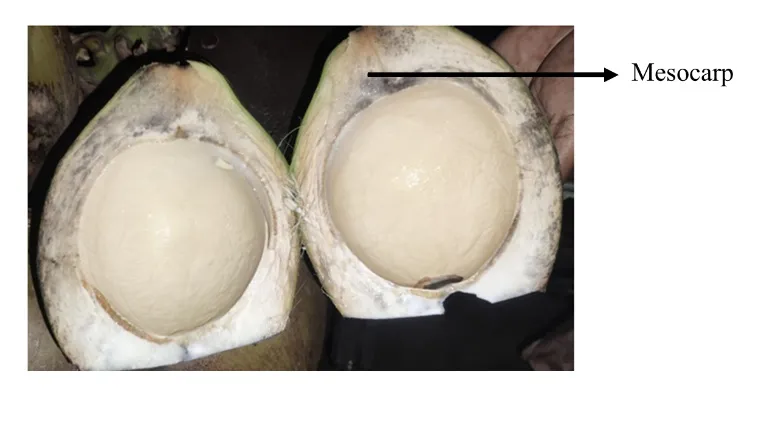
Figure 1: Longitudinal cross-section of a coconut, identifying the fibrous mesocarp
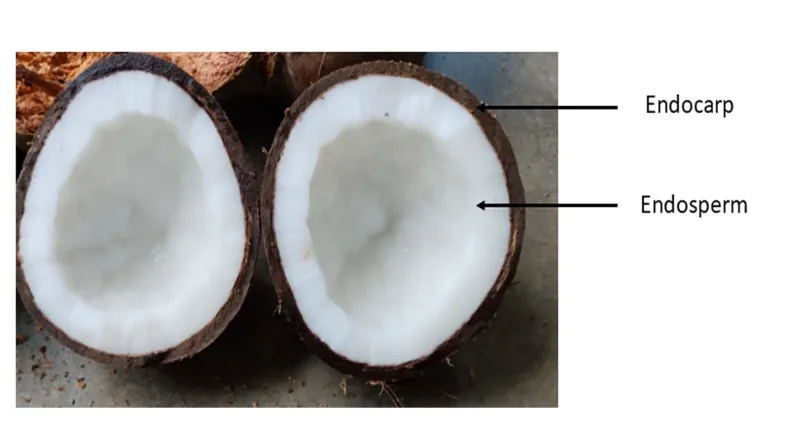
Figure 2: Internal Structure of a coconut fruit
MATERIALS AND METHODS:
The online databases Scopus, Science Direct, PubMed, SciVerse, and Scientific Electronic Library Online were searched for English-language articles without any time restrictions. Combinations of "Cocos nucifera," "C. nucifera and phytochemical profile," "C. nucifera and pharmacological properties," "C. nucifera and toxicology", and “C. nucifera and mesocarp” were among the search phrases used.
TRADITIONAL USES [3,4]:
The ripe and green coconut is used traditionally for various purposes. The coconut is used in different cultures throughout the world. About 83 functional uses of coconut and its various parts have been reported. Various things like pillows, ropes, mats, brooms, musical instruments, brushes, fuel, toothbrushes, belts, etc., are produced worldwide from the coconut. Coconut gives 5 different types of food products: coconut milk, coconut water, coconut meat, oil, and sugar. The water inside is sterile until opened; various drinks like munir, Nata de coco are made from it. The coconut water, if put inside a brass container, turns into alcohol. The nutmeat is consumed everywhere. The meat is squeezed in a cloth to produce milk or cream. The milk is cooked with rice to make ‘arroz con coco’. Cream is produced when the milk is kept in a refrigerator. Oil is made from the dried coconut meat. The dried meat is used to make various sweets, candies, etc. When the seed germinates, the inner cavity fills with a spongy mass, which can be eaten as well. From dried coconut meat, copra oil is produced. That oil is used in cooking, hair oil, and body oil. This oil has been used for centuries in making various cosmetic products like detergents, shampoos, soap, cream, toothpaste, lotion, lipstick, moisture cream, etc. In Kiribati, India, coconut flower cluster juice is consumed for breakfast and dinner. It ferments to produce vinegar, tuwak, tuba, and toddy. 'Arrack' is a spirituous beverage, while coconut fenny is a distilled toddy. In the Maldives, ruku raa, a rare nectar extract, is consumed in the morning. Palm wine plays an important role in customary rites and festivities [3].In India, coconut has been used medicinally from ancient times. In Ayurveda, coconut is used to treat fever, gastritis, cracked feet, hemicrania, gravel, worms, wounds, and vomiting. It is used in folk medicines in the treatment of abscesses, alopecia, amenorrhea, asthma, blennorrhagia, burns, bronchitis, cachexia, cold, cough, constipation, dysentery, dropsy, fever, flu, gonorrhoea, jaundice, nausea, rash, scabies, stomach-ache, tumours, typhoid, syphilis, etc[3][4].
PHYTOCHEMISTRY [1,5,6,7,8,9]:
Phytochemical studies of the coconut ethanolic extract identify various phytoconstituents. The phytochemicals that are isolated from the extract are phenols, condensed tannins, flavonoids, triterpenes, steroids, alkaloids, and leucoanthocyanidins[5],[1] and butanol extracts isolated triterpenes, saponins, condensed tannins[6], [1]. Lyophilised extract, fractions, and ethyl acetate extract are rich in polyphenols, catechins, epicatechins, tannins, and flavonoids[7],
Table 1: Different phytoconstituents present in different extracts (different solvents) of the mesocarp of Cocos nucifera.
|
Different Extracts |
Phytoconstituents |
|
Ethanolic extract |
Phenols, condensed tannins, flavonoids, triterpenes, steroids, alkaloids, leucoanthocyanidins |
|
Butanol extract |
Triterpenes, saponins, condensed tannins |
|
Ethyl acetate extract |
Polyphenols, catechins, epicatechins, tannins, flavonoids |
Total Phenolic Content: The total phenolic content of an extract was evaluated using the Folin–Ciocalteu technique. Gallic acid contents were determined by mixing the extract with 10% Folin-Ciocalteu reagent, sodium carbonate, and a UV-Vis spectrophotometer. Gallic acid equivalents were used to express the results. An extract's antioxidant capacity was assessed using a 2,2-diphenyl-1-picrylhydrazyl (DPPH) solution. A UV-Vis spectrophotometer was used to measure the absorbance value after the mixture had been homogenised and incubated for 30 minutes. The DPPH inhibition % was computed.
The formula for calculating the antioxidant activity is:
DPPH scavenging activity (%) = Absorbance od control-Absorbence of SampleAbsorbance of control

× 100
The TPC value of the coconut mesocarp was 48±0.61 mg GAE g-1, and the antioxidant value was 88±0.62%. The phenolic compounds found in the mesocarp of the coconut are catechin, caffeic acid, protocatechuic acid, and chlorogenic acid[8].
Tannin Content: The total tannin content is measured in a study. The total tannin content of the mesocarp of Cocos nucifera is much higher than that of the exocarp. The tannin content is found to be 134.82±2.16 mg/g in the mesocarp extract of the plant Cocos nucifera. As tannin is present in huge amounts, the taste of this part is bound to be astringent. For this reason, adding it to the food may hamper the absorption of proteins and carbohydrates as tannins bind to these nutrients. But the presence of tannins indicates the extract’s antiviral, antibacterial activity[9].
Total Flavonoid content: Flavonoids are a kind of low molecular weight secondary metabolite. These are produced in the cytosols and vacuoles of the plant cells. When the plant is infected with microbes, these compounds are synthesised as a response. The total flavonoid content of the mesocarp of Cocos nucifera is found to be 15.48±1.876 mg QE/g. The presence of flavonoids indicates the anti-cancer activity of the plant[9].
Cardiac Glycoside content: The presence of cardiac glycosides is proven and measured in various studies. The number of cardiac glycosides present in the mesocarp is found to be 43.7 %, and in the exocarp, to be 44.4%. This suggests the blood pressure-lowering activity of the plant extract. Cardiac glycosides are present in both aqueous and n-hexane extracts of the mesocarp of the plant. This study suggests that the use of this plant extract in the treatment of various types of arrhythmias and cardiac congestion[9].
Terpenoid content: Terpenoids are the main compounds responsible for the aroma of the plant materials. Terpenoid content in the coconut mesocarp is very high. The terpenoid content is measured to be 1535.61±2.16 mg/g. For this compound is present in the extract of the mesocarp of the Cocos nucifera, this extract shows anti-inflammatory, anti-viral, and anti-malarial activity[9].
PHARMACOLOGICAL ACTIVITY [7,8,10,11,12,13,14,15,16,17,18,19]:
The reported pharmacological activities of the mesocarp of Cocos nucifera are described below,
Antimicrobial activity:
Verma et,al. In 2012, the antibacterial activity of Cocos nucifera mesocarp powder was studied against Salmonella typhi and Escherichia coli. The disc diffusion method was used to measure the antibacterial activity of six solvents (acetone, benzene, chloroform, diethyl ether, ethanol and formaldehyde) extracts. Diethyl ether demonstrated the best antibacterial action against Salmonella typhi, but benzene solvent exhibited the highest activity against E. coli. According to the study, powdered Cocos nucifera mesocarp may be utilised to create domestic antibiotics[10].
Anthelminthic activity:
The anthelminthic activity of the ethyl acetate extract of the mesocarp of the coconut has been studied by both in vivo and in-vitro tests. The in-vitro assay that we have found is the egg hatching test and larval development test. The in-vivo test that we have reviewed is the sheep model. The sheep were infected with nematodes and then divided into 3 groups (each containing 6 animals). The first group of animals were treated with 400 mg/kg extract, the second group of animals was treated with 0.2mg/kg moxidectin(standard), and the third group was treated with 3% DMSO. The extract’s efficacy in the Egg Hatching test was found to be 100%, and in the larval development test, the efficacy is 99.77%. But in the sheep model, the extract showed no efficacy[11].
Antioxidant activity:
An extract's antioxidant capacity was assessed using a 2,2-diphenyl-1-picrylhydrazyl (DPPH) solution. A UV-Vis spectrophotometer was used to measure the absorbance value after the mixture had been homogenised and incubated for 30 minutes. The DPPH inhibition % was computed.
The formula for calculating the antioxidant activity is:
DPPH scavenging activity (%) = Absorbance od control-Absorbence of SampleAbsorbance of control

× 100
The antioxidant value was found to be 88±0.62% [8].
Ant-larvicidal activity:
The study uses an extract from the mesocarp layer of Cocos nucifera to investigate the Phyto-synthesis of transition metal nanoparticles. Silver nitrate solution was treated with an aqueous extract of C. nucifera coir at 60°C to create silver nanoparticles. TEM, XRD, and surface plasmon resonance were used to confirm the nanoparticles. Hydrocarbons were detected in the coir extract, which might have affected the reduction process. It was discovered that the nanoparticles were efficient anti-larvicidal agents against C. quinquefasciatus and Anopheles stephensi[12].
Anti-diabetic activity:
One research showed that the Cocos nucifera mesocarp extract enhanced glucose homeostasis and tissue architecture while partially restoring biochemical indicators, particularly ALT, AST, creatinine, uric acid, and lipid profiles. In order to safeguard the dysregulation of the pancreas and kidney in animals with STZ diabetes, the target compounds of Cocos nucifera mesocarp extract increased the genes CASP3, COMT, CYP1B1, DPYD, NQO1, and PTGS1 while downregulating the genes CAT and OGG1. As a result, it is proposed that the extract from coconut mesocarp juice has antidiabetic effects in animal models that have been produced[13].
Anti-cancer activity:
In their study, Ismail et al,. (2024) have conducted an anticancer study on the extract of coconut husk and shell. For their study, they used six different polarities of solvent. In that study, they found that the propanol extract of the mesocarp showed the highest cytotoxicity (32.42%) against MCF-7, and the acetone extract of the shell showed the highest cytotoxicity of 34.80%. Further GCMS analysis has confirmed the presence of dodecanoic acid, tetradecanoic acid, n-hexadecenoic acid, and oxime-methoxy-phenyl in the mesocarp of the coconut[14].
Anti-inflammatory activity:
In this study, Silva et al,. (2013) studied the anti-inflammatory activity of the extract of the mesocarp of the coconut. They conducted the study on the formalin-induced licking model. During the inflammatory pain response, the extract treatment induced inhibition, which indicates the anti-inflammatory activity of the extract. Another model, called the subcutaneous air pouch model, is used to understand exactly how the extract shows anti-inflammatory activity. The study concluded that the extract of the mesocarp of Cocos nucifera showed anti-inflammatory activity by reducing the inflammatory mediators, such as TNF-α[15].
Anti-leishmania activity:
In the mentioned study, Filho et al, (2004) studied the anti-leishmanial activity of the mesocarp extract of coconut by testing the extract against Leishmania amazonensis. The MIC was found to be 10µg/ml. Pretreatment with 10 µg/ml extract reduced 44% the association index between the macrophages and Leishmania amazonensis and increase of 182% in NO production in comparison to nontreated macrophages[7].
Analgesic activity:
Rinaldi et al. (2009) have studied the analgesic activity of the mesocarp of the coconut. For this study, they have considered the tail flick mice test and the hot plate test. The mouse tail was immersed in a water bath with the temperature set at 50±1 ˚ C. Reaction time was recorded with paw licks, and the reaction time is recorded after 30, 60, 90, 120, 150 and 180 minutes after oral administration of the extract. The baseline was considered as the mean of the reaction time that is measured 30 and 60 minutes before administration of the extract. Another study was conducted by them where they used the hot plate method, and similarly, the reaction time was measured. The temperature is set at 55±1˚ C and the reaction time is measured at 30, 60, 90, 120, 150, 180 minutes after administration of the dose, and for baseline, the reaction time is taken at 30 and 60 minutes before administration of the extract[16].
Antiparasitic activity:
In their study, Adebayo et al,. (2013) used the ethyl acetate fraction of the coconut mesocarp extract for its antiparasitic activity. For this study, they have used varying doses from 31.25 mg/kg to 500 mg/kg. The antiparasitic activity of the fraction is measured in vivo against Plasmodium berghei NK65, where more than 50% parasitaemia is reduced in 4 and 6 days after administration of the doses. It suggests that the ethyl acetate fraction of the mesocarp extract of the Cocos nucifera has anti-parasitic activity[17].
Anti-depressant activity:
Lima et al,. (2016) have conducted a study on the extract of mesocarp of the coconut to prove the antidepressant effects. The study was done on the hydroalcoholic extract of the husk fibre. They have also studied the oxidative effects in the prefrontal cortex, hippocampus and striatum, levels of the brain-derived neurotrophic factor in the hippocampus of the brain of the mice. The male mice were treated for 7 days with distilled water (for control) or the extract (for test). The extract is administered in various doses (50, 100 or 200 mg/kg), or the mice were administered intraperitoneally with vitamin E (400mg/kg). The result confirmed that the extract decreased the immobility time in both the Forced Swimming Test and Tail suspension Test. This confirms the antidepressant activity of the extract[18].
Hypolipidemic effect:
The hypolipidemic effect of the mesocarp extract of Cocos nucifera is studied and found in the study done by Onasanya et al,. (2015). For this study, they have taken mice and treated them with a high-fat diet and streptozotocin. The mice were treated with the extract (10, 30, 90 mg/kg). For standard, they have used Glibenclamide. The extract at a 90 mg/kg dose has shown optimum hypolipidemic effect. The total cholesterol level also dropped[19].
DISCUSSION
The pharmacological actions of the extract of coconut mesocarp were searched meticulously in different search engines. As a result, various research articles were found relating to this topic. The pharmacological actions that have been found in this review are antimicrobial, anthelminthic, antioxidant, anti-larvicidal, anti-diabetic, anti-cancer, anti-inflammatory, anti-leishmania, analgesic, antiparasitic, antidepressant, and hypolipidemic activity. These findings suggest that coconut mesocarp is potent in treating various diseases. Though there is hardly any medicine that has coconut mesocarp as its main ingredient.
CONCLUSION
From ancient times, various plant parts have been used traditionally for various pharmacological benefits. In ancient India, the coconut was called ‘shrifala’ for its vast range of benefits in promoting human health. Various parts of this fruit are used in various parts of the world. And many parts have been studied for their pharmacological activity. The mesocarp of this fruit has been used for various reasons in different places. The mesocarp of the coconut is used as medicine in different places, as this part is rich in phytoconstituents like phenols, condensed tannins, flavonoids, triterpenes, steroids, alkaloids, and leucoanthocyanidins. The mesocarp has shown efficacy in treating various diseases and health problems, such as antimicrobial, anthelminthic, antioxidant, anti-larvicidal, antidiabetic, anti-cancer, anti-inflammatory, anti-leishmania, analgesic, antiparasitic, antidepressant, and hypolipidemic activities.
REFERENCES


Sandip Mandal, Ayati Kar, A Systematic Review on Pharmacological Effects of Mesocarp of Cocos Nucifera (L.), Int. J. of Pharm. Sci., 2026, Vol 4, Issue 6, 1924-1931, https://doi.org/10.5281/zenodo.20592235
 10.5281/zenodo.20592235