

We use cookies to ensure our website works properly and to personalise your experience. Cookies policy
Centre for Pharmaceutical Sciences, UCESTH, JNTUH, Kukatpally, Hyderabad- 500058, Telangana (India).
Benzothiazoles are an important class of heterocyclic compound; it is a fused structure of both benzene and thiazole rings. It may have the multiple substitutions on both rings, to give different biological activity. Benzothiazoles having the diverse pharmacological activities like antibacterial, antifungal, anticancer, antidiabetic, antioxidant, antiviral, anti-tubercular and analgesic. The present study title was ‘Design, synthesis, in-silico studies and evaluation of antimicrobial activity of benzothiazole derivatives. In this study some of the novel benzothiazole derivatives were synthesized after completion of molecular docking. The derivatives were characterized by m.p, FTIR, 1H NMR and MASS. Based on docking results compound A3 having the highest binding energy (-8.21 kcal. mol) towards the DHFR (PDB ID-3FYV). The molecular property of synthesized compounds was predicted by using Lipinski rule of 5 (SWISS ADME), PASS and OSIRIS, Molsoft and Docking Software's. All synthesized compounds were showed good binding energies towards protein. The standard drug Trimethoprim showed -5.42 kcal. mol binding energy towards selected 3FYV protein. All the synthesized derivatives were tested for their antibacterial activity. All the derivatives showed good antibacterial activity towards E. coli and S. aureus. Compared the results with standard drug trimethoprim and derivative A3 showing the good antibacterial activity with MIC 22 and 24 for respected bacteria, MIC values of Trimethoprim are 20 and 22 for respective bacteria. Derivative A3 and A1 was showed good antibacterial activity compared to standard drug.
Benzothiazole derivatives have drawn a lot of interest as useful scaffolds in medicinal chemistry and pharmaceutical research due to their varied biological and pharmacological characteristics.[1] Benzothiazoles having the diverse pharmacological activities like antibacterial, antifungal, anticancer, antidiabetic, antioxidant, antiviral, anti-tubercular and analgesic. [2] The benzothiazole nucleus is a fused structure of both benzene and thiazole rings and it offers a wide variety of replacements on both the benzene and thiazole rings, leading to considerable variations in its chemical and biological features The creation of molecules with improved and targeted therapeutic effects against particular biological targets is made easier by these structural changes.[3]
Several synthetic methods can be used to create benzothiazole derivatives. One of the most popular and effective techniques for creating benzothiazole derivatives is the cyclization of 2-aminothiophenols with aldehydes. [4] Benzothiazole derivatives exhibit a wide spectrum of biological actions, making them an important class of molecules in medicinal chemistry. By blocking important enzymes and lowering oxidative stress, several benzothiazole derivatives have also demonstrated encouraging efficacy against neurodegenerative illnesses like Alzheimer’s disease.[5] Now a days benzothiazoles are widely using in the treatment and diagnosis of different types of diseases. They are acting by different mechanism of action in the treatment. Benzothiazoles are widely used in cancer treatment and poses several pharmacological activities like antibacterial, antifungal, anticancer, antidiabetic, antioxidant, antiviral, anti-tubercular and analgesic. [6,7,8] The present study may prove that benzothialzoles may also use in the treatment of different types of bacterial infection in the future.
Benzothiazole moiety
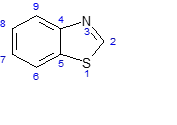
Figure- 1: Structure of benzothiazole
Table-1: Ligands with their IUPAC names
|
S. No |
Functional Group |
Labelled As |
IUPAC Name |
|
1 |
C2H5 |
A1 |
(Z)-N-(6-chloro-1,3-benzothiazol-2-yl)-1-(3-ethylphenyl)-methanimine |
|
2 |
F |
A2 |
(Z)-N-(6-chloro-1,3-benzothiazol-2-yl)-1-(3-fluorophenyl)-methanimine |
|
3 |
CL |
A3 |
(Z)-N-(6-chloro-1,3-benzothiazol-2-yl)-1-(3-chlorophenyl)-methanimine |
|
4 |
OCH3 |
A4 |
(Z)-N-(6-chloro-1,3-benzothiazol-2-yl)-1-(3-methoxyphenyl)-methanimine |
|
5 |
NH3 |
A5 |
3-{(Z)-[(6-chloro-1,3-benzothiazol-2-yl) imino] methyl} aniline |
MATERIALS AND METHOD
Materials
Chemicals used for the synthetic work were p-chloro aniline, potassium thiocyanate, bromine (br2), glacial acetic acid, 3-chloro benzaldehyde, 3-ethyl benzaldehyde, 3-fluoro benzaldehyde, 3-methoxy benzaldehyde and 3-amino benzaldehyde.
The complete reaction was performed in dried borosilicate glass round bottom flask, beakers, conical flask and some other necessary glassware like filtration funnel, glass rod etc are used during synthesis. Precoated silica gel plate were used for monitoring of rection progress by TLC and spots in TLC were checked in UV Cabinet. Microprocessor melting point apparatus used for determination of melting point of synthesized compounds by using capillary method and HEIDOLPH Labo rota 4000 efficient were used for concentration and drying of compounds. FTIR spectra were recorded in BRUCKER ALPHA.
Experimental Section
Insilico Screening
Lipinski’s rule of 5 filtration
The smile format of the compound was created in Chemsketch Or chemdraw and pasted in SWISS ADME. Also insert the file in different formats like *.pdb, *.mol, *. mol2, *.xyz, *.sdf. Care was taken to avoid whitespace(s) in the input file name. The window opened and the files were uploaded in the above-mentioned formats and click run to get the results. pH was adjusted from 0-14 as required. [9]
Prediction of activity spectra for substances (PASS)
Molecules which have been filtered through Lipinski rule were subjected to online PASS software to predict their biological activities. This software may give the Pa and Pi values for respective activity. The Pa and Pi values should be between 0.000 to 1.000. The software may help in selecting type of activity to be predicted.
OSIRIS property explorer (version 2)
OSIRIS property explores version 2 (which requires JAVA platform to run) was used in the present study. The smiles of the compound were pasted in search bar, and it will show the results at right side with colour coding. A green colour indicates non-toxic and red indicates toxicity. It also gives the compound solubility profile, druglikeness and drug score.
Molsoft property explorer (version v.3.7-2)
In this present study Molsoft property explorer version v.3.7-2 was used for molecular exposure of compounds. When the structure of compounds drawn directly on the window or when inserted in mol, Inch, smiles formats will calculate properties like MlogP, MlogS.[10]
Docking (version 4.0)
AutoDock is a computational molecule modelling simulation software. It is especially effective for protein ligand docking. It has two versions Auto Dock 4.0, vina. Vina is a advanced version [11].
Ligand Modelling
These ligands are selected based Novelty. The structures of ligands were drawn in Chemsketch, generated their SMILES and saved as MDL mole file. By using generated SMILES, we can check ADME properties, toxicity profile and predict the activity of compounds. The selected ligands were converted into PDB format from mole file by using open babel software. Now the ligands are ready for molecular docking.[12]
Protein preparation
Tization. After energy minimization the protein was ready for molecular docking studies. The protein was selected based on literature survey. Structure of protein was downloaded from RCSB Protein Data Bank in legacy pdb format. (PDB ID: 3FYV). The downloaded protein was opened in SPDBV-SWISS-PDB viewer software, this software is used for protein energy minim
Experimental procedure
General method for synthesis Benzothiazoles
Step-1 To Synthesis of 2-substituted amino benzothiazole
Take p-chloroaniline (1mole) and KSCN (1mole) into a dried round bottom flask. Add glacial acetic acid until it dissolves and stirred at 10°C. After dissolving add Br2 (1mole) and continue stirring at cold condition for 20 min. Now remove the cold-water bath and start heating slowly. Reflux the reaction mixture for 3-4hrs, change reaction colour will be observed. Reaction competition will be monitored by TLC. After completion of reaction cool the reaction mixture and add NaOH solution for basification. During basification the temperature of the round bottom flask should be cold, keep RBF in ice bath after that add NaOH solution. After pH of the reaction mixture reached base slowly precipitation will form, keep RBF in ice bath until complete precipitation will be formed. Filter the precipitate and dry it. Recrystalize with ethanol. Confirm the identity and purity of 2-amino benzothiazole using NMR and IR. [13]
Step-2 To synthesize the Schiff base
Take 2-amino benzothiazole (1mole) and substituted benzaldehyde (1mole) into an RBF. Add excess ethanol and continue stirring at room temperature until colour change occur. To enhance the reaction efficiency, add drops of glacial acetic acid. After completion of reaction precipitate the Schiff base by adding diethyl ether. Filter the precipitate and dry it. Further the Schiff base was purified using Recrystallization and column chromatography. After purification, the pure form of compound sends to spectral analysis like FTIR,1H-NMR and Mass to confirm the identity of compounds.[14]
Scheme
A1-R-C2H5; A2-R-F; A3-R-CL; A4-R-OCH3; A5-R-NH2
Synthesis of (Z)-N-(6-chloro-1,3-benzothiazol-2-yl)-1-(3-ethylphenyl)-methanimine (A1)
3-ethyl benzaldehyde (0.01 mol) and 2-amino benzothiazole (0.01mol) were taken into RBF. Dissolved in minimum quantity of ethanol and continue stirring at room temperature until colour change occur. To enhance the reaction efficiency, add few drops of glacial acetic acid. After completion of reaction precipitate the Schiff base by adding diethyl ether. Filter the precipitate and dry it. Dried compound was recrystallised from ethanol to get (Z)-N-(6-chloro-1,3-benzothiazol-2-yl)-1-(3-ethylphenyl)-methanimine.
Synthesis of (Z)-N-(6-chloro-1,3-benzothiazol-2-yl)-1-(3-fluorophenyl)-methanimine (A2)
3-fluoro benzaldehyde (0.01 mol) and 2-amino benzothiazole (0.01mol) were taken into RBF. Dissolved in minimum quantity of ethanol and continue stirring at room temperature until colour change occur. To enhance the reaction efficiency, add few drops of glacial acetic acid. After completion of reaction precipitate the Schiff base by adding diethyl ether. Filter the precipitate and dry it. Dried compound was recrystallised from ethanol to get (Z)-N-(6-chloro-1,3-benzothiazol-2-yl)-1-(3-fluorophenyl)-methaniine.
Synthesis of (Z)-N-(6-chloro-1,3-benzothiazol-2-yl)-1-(3-chlorophenyl)-methanimine (A3)
3-chloro benzaldehyde (0.01 mol) and 2-amino benzothiazole (0.01mol) were taken into RBF. Dissolved in minimum quantity of ethanol and continue stirring at room temperature until colour change occur. To enhance the reaction efficiency, add few drops of glacial acetic acid. After completion of reaction precipitate the Schiff base by adding diethyl ether. Filter the precipitate and dry it. Dried compound was recrystallised from ethanol to get (Z)-N-(6-chloro-1,3-benzothiazol-2-yl)-1-(3-chlorophenyl)-methanimine.
Synthesis of (Z)-N-(6-chloro-1,3-benzothiazol-2-yl)-1-(3-methoxyphenyl)-methanimine (A4)
3-methoxy benzaldehyde (0.01 mol) and 2-amino benzothiazole (0.01mol) were taken into RBF. Dissolved in minimum quantity of ethanol and continue stirring at room temperature until colour change occur. To enhance the reaction efficiency, add few drops of glacial acetic acid. After completion of reaction precipitate the Schiff base by adding diethyl ether. Filter the precipitate and dry it. Dried compound was recrystallised from ethanol to get (Z)-N-(6-chloro-1,3-benzothiazol-2-yl)-1-(3-methoxyphenyl)-methanimine.
Synthesis of 3-{(Z)-[(6-chloro-1,3-benzothiazol-2-yl) imino] methyl} aniline (A5)
3-amino benzaldehyde (0.01 mol) and 2-amino benzothiazole (0.01mol) were taken into RBF. Dissolved in minimum quantity of ethanol and continue stirring at room temperature until colour change occur. To enhance the reaction efficiency, add few drops of glacial acetic acid. After completion of reaction precipitate the Schiff base by adding diethyl ether. Filter the precipitate and dry it. Dried compound was recrystallised from ethanol to get 3-{(Z)-[(6-chloro-1,3-benzothiazol-2-yl) imino] methyl} aniline.
Structures of some novel benzothiazole derivatives
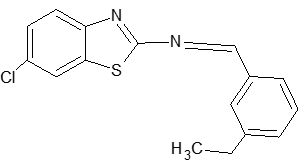
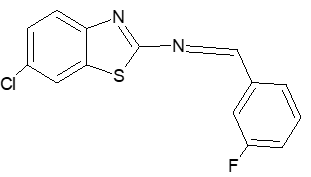
Compound A1 Compound A2
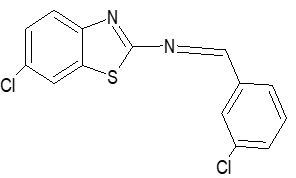
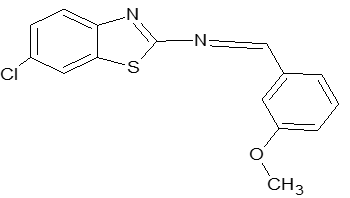
Compound A3 Compound A4
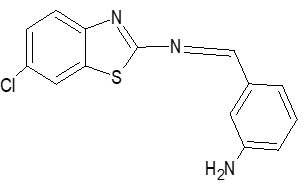
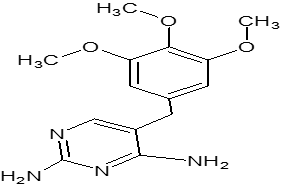
Compound A5 Standard-Trimethoprim
Procedure for Biological activity evaluation
Anti-bacterial activity Antibacterial activity of test compounds was detected by observing the growth response of various micro-organism Staphylococcus aureus (Gram-positive) and Escherichia coli (Gram-negative)) to those test compounds which are placed in contact with them, many methods are available for detecting antimicrobial activity.
Antimicrobial test methods: Cup-plate agar Diffusion Method
A volume of 25 ml of sterile hot agar medium was poured into each plate and allowed to harden on a level surface. The agar plates were inoculated with 24-hour test cultures by spreading uniformly with sterile cotton swabs. The plates were then allowed to dry in the inverted position in an incubator for 30 min. Afterward, they were removed and bores were made on the medium using a sterile borer. A volume of 0.1 ml of test solution was added to respective bores. Trimethoprim at a concentration of 100 µg/ 0.1 ml was taken as standard reference. A control having only DMSO in the cup was maintained on each plate. The Petri plates were kept in the refrigerator at 4°C for 15 min for diffusion to take place. Afterward, they were incubated at 37°C for 24 hrs. The zones of inhibition were observed and measured using a scale and the mean diameter of the inhibition zone was recorded. [15,16]
RESULTS
Molecular docking was performed using above mentioned software to assess the binding efficiency of some novel Benzothiazole derivatives with Dihydrofolate reductase (PDB ID-3FYV). The docking was focused on the ligand and receptor interactions, and binding affinities were measured in terms of kcal/mol. The more negative binding energy, the stronger interaction between the receptor and ligand.
Some novel Benzothiazole derivatives were synthesized using above mentioned method. The purified form of derivatives was isolated using purification techniques and based on TLC. The resulted products were confirmed by spectral analysis like NMR, and FTIR. Also tested their antibacterial activity by taking trimethoprim (PubChem ID:5578) as standard drug. Compared to the standard drug A3 having high antibacterial activity and all other also having good antibacterial activity.
Table-2: Lipinski rule evaluation of ligands
|
S. No |
Ligand |
MW g/mol |
HBD |
HBA |
LogP |
Lipinski violation |
|
1 |
A1 |
300.81 |
0 |
2 |
4.42 |
Yes, 1 |
|
2 |
A2 |
290.74 |
0 |
3 |
4.32 |
Yes, 1 |
|
3 |
A3 |
307.20 |
0 |
2 |
4.45 |
Yes, 1 |
|
4 |
A4 |
302.78 |
0 |
3 |
3.57 |
Yes, 0 |
|
5 |
A5 |
287.77 |
1 |
2 |
3.32 |
Yes, 0 |
Results of Prediction of activity spectra for substances (PASS)
The Pa values for all the synthesized compounds were found to be greater than 0.1. compound A5 exhibited higher Pa value among the series. The synthesized compounds were having less Pa value compared to the standard drug (Trimethoprim). all the Pa and Pi values are given in the below table (table-3).
Table-3: Results of PASS prediction
|
S. No |
Compound |
Antibacterial activity |
|
|
Pa |
Pi |
||
|
1 |
A1 |
0.179 |
0.137 |
|
2 |
A2 |
0.159 |
0.157 |
|
3 |
A3 |
0.209 |
0.109 |
|
4 |
A4 |
0.186 |
0.131 |
|
5 |
A5 |
0.255 |
0.081 |
|
6 |
Std (Trimrthoprim) |
0.81 |
0.02 |
Pa- Probability to be active; Pi- Probability to be inactive
Results of OSIRIS molecular property explorer
By the results of OSIRIS Molecular Property explorer, the synthesized molecules are not showing any type of toxicity.
Table-4: OSIRIS molecular property explorer
|
Compound |
Toxicity |
Clogp |
Solubility |
Mol.wt |
TPSA |
Drug Likeness |
Drug Score |
|
A1 |
NO |
5.2 |
-5.36 |
300 |
53.49 |
0.7 |
0.41 |
|
A2 |
NO |
4.54 |
-5.17 |
290 |
53.49 |
-1.42 |
0.34 |
|
A3 |
NO |
5.05 |
-5.6 |
306 |
53.49 |
1.15 |
0.42 |
|
A4 |
NO |
4.37 |
-4.88 |
302 |
62.72 |
1.01 |
0.52 |
|
A5 |
NO |
3.76 |
-4.94 |
287 |
79.51 |
-0.63 |
0.44 |
|
STD (Trimethoprim) |
NO |
1.76 |
-3.33 |
290 |
105.5 |
4.95 |
0.88 |
Molsoft Property explorer
All the synthesized compounds show significant molsoft values.
Table-5: Results of Molsoft Molecular Property explorer
|
Compound |
Mol.formula |
Mol.wt |
HBA |
HBD |
MlogP |
Mol PSA (A2) |
Mol volume (A3) |
|
A1 |
C16H13CLN2S |
300.05 |
3 |
0 |
5.79 |
18.13 |
275.87 |
|
A2 |
C14H8CLFN2S |
290.01 |
3 |
0 |
4.89 |
18.13 |
242.71 |
|
A3 |
C14H8CL2N2S |
305.98 |
3 |
0 |
5.37 |
18.13 |
253.99 |
|
A4 |
C15H11CLN2OS |
302.03 |
4 |
0 |
4.77 |
25.67 |
268.64 |
|
A5 |
C14H10CLN3S |
287.03 |
3 |
2 |
3.80 |
38.93 |
244.29 |
Docking Analysis
Docking is used to find the exact binding conformation and orientation of the ligand molecule into the active site of the protein. The synthesized five thiazole compounds and standard (Mebendazole) were docked against beta tubulin using Auto-Dock Tool 4.0, an automated docking tool
The docking process involves four main steps,
(i) Protein preparation
(ii) Ligand preparation
(iii) Grid preparation and
(iv) Docking
The Lamarckian genetic algorithm has been used as the search algorithm to search for the best conformers. The kollman chareges ae 3.0 and the grid box size was set as to include all the active site residues present in rigid macromolecules. the dimensions of the grid box have been set as 24.579, 11.615, 38.457 (X, Y, Z co-ordinates) to include all the active site residues.
Table-6: Interaction between protein and ligands
|
S. No |
Ligand |
Amino acid |
Distance (°A) |
No. of Hydrogens |
Docking Score |
|
1 |
A1 |
ALA ALA |
3.024 2.932 |
2 |
-8.19 |
|
2 |
A2 |
ALA ALA |
3.022 2.970 |
2 |
-7.69 |
|
3 |
A3 |
ALA ALA |
2.997 3.051 |
2 |
-8.21 |
|
4 |
A4 |
ALA ALA |
2.932 3.010 |
2 |
-7.77 |
|
5 |
A5 |
ALA |
3.004 |
1 |
-7.48 |
|
6 |
Trimethoprim (std) |
PHE LEU ASP |
2.162 2.467 1.978 |
3 |
-5.42 |
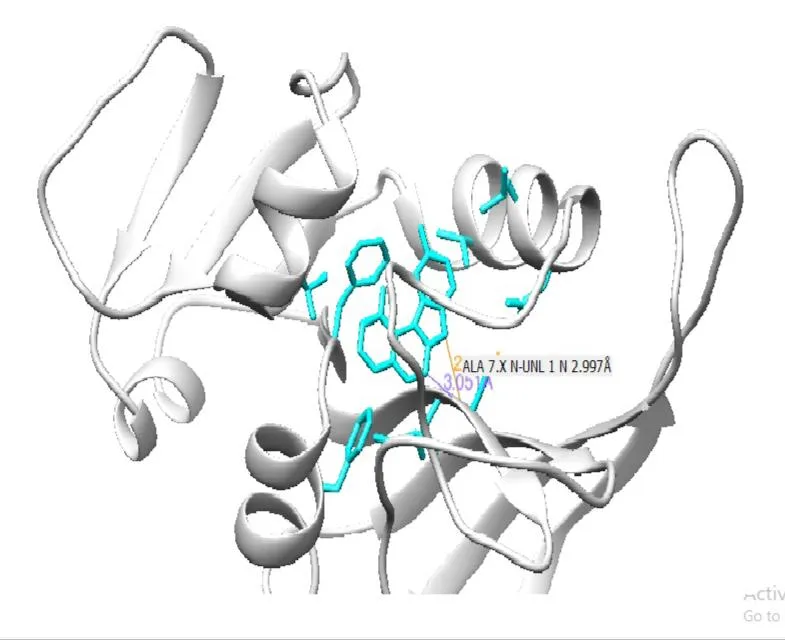
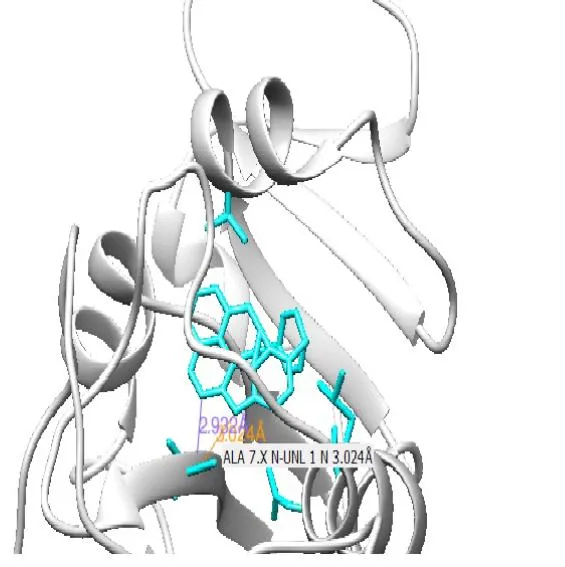
Figure-2: Compound A1 Figure-3: Compound A3
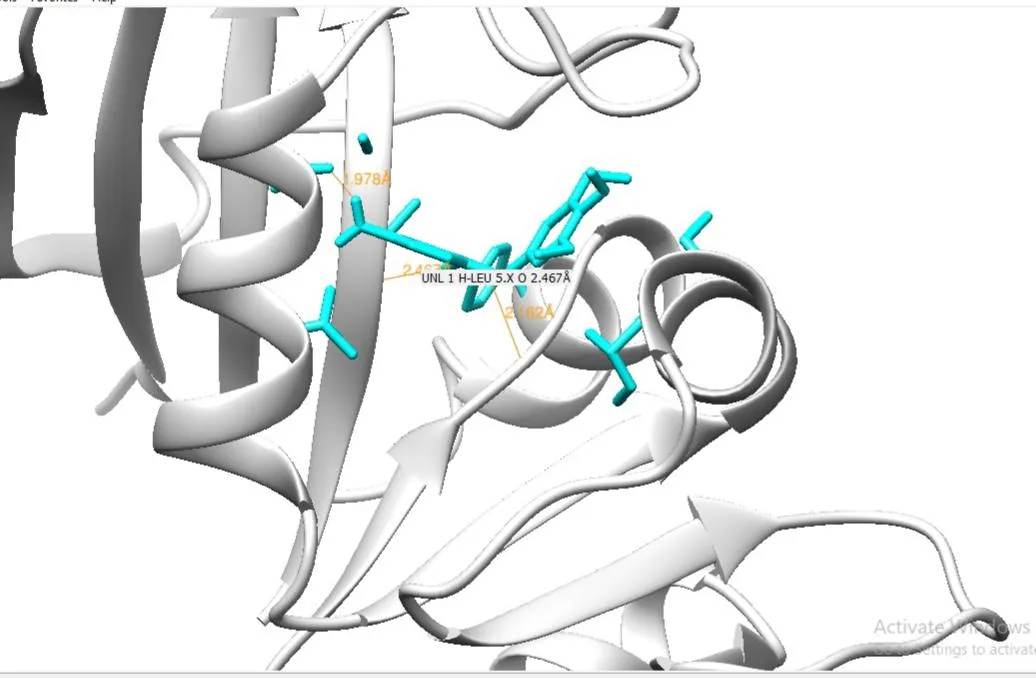
Figure-4: Trimethoprim (std)
Table-7: Physicochemical properties of synthesized ligands
|
S. No |
Ligand |
Molecular formula |
Molecular weight |
Melting point (°C) |
Rf value |
%yield |
|
1 |
A1 |
C16H13CLN2S |
300.81 |
179 |
0.63 |
60 |
|
2 |
A2 |
C14H8CLFN2S |
290.74 |
193 |
0.56 |
58 |
|
3 |
A3 |
C14H8CL2N2S |
307.20 |
198 |
0.54 |
68 |
|
4 |
A4 |
C15H11CLN2OS |
302.78 |
187 |
0.59 |
70 |
|
5 |
A5 |
C14H10CLN3S |
287.77 |
205 |
0.50 |
67 |
Table-8: Biological activity evaluation
|
Compound |
E. coli |
S. aureus |
|
A1 |
21 |
23 |
|
A2 |
17 |
19 |
|
A3 |
22 |
24 |
|
A4 |
18 |
20 |
|
A5 |
15 |
17 |
|
Trimethoprim (std) |
20 |
22 |
SPECTRAL INTERPRETATION
(Z)-N-(6-chloro-1,3-benzothiazol-2-yl) -1-(3-ethylphenyl) -methanimine (A1), FTIR (KBr cm-1) : 3060 (Ar C-H, str), 2962 (C-H, C2H5 str), 1618 (C=N, str), 1585 (Ar C=C, str), 1492 (C-N, str), 1246 (C-N, str), 758 (C-Cl, str), 699 (C-S, str); 1H NMR (δ ppm. DMSO): 1.20 (t, 3H, CH₃), 2.65 (q,2H, CH2), 7.12 (d,1H, Ar-H), 7.28 (d, 2H, Ar-H), 7.42 (dd, IH, Ar-H), 7.55 (d, 2H, Ar-H), 7.76 (d,1H, Ar-H), 8.21 (d,1H, Ar-H), 8.82 (S,1H, CH=N). EI-MS : m/z 300 (M+1).
(Z)-N-(6-chloro-1,3-benzothiazol-2-yl)-1-(3-fluorophenyl)-methanimine (A2), FTIR (KBr cm-1): 3062 (Ar C-H, str), 1619 (C=N, str), 1586 (Ar C=C, str), 1494 (C-N, str), 1324 (C-N, str), 1248 (C-F, str), 760 (C-Cl, str), 698 (C-S, str); 1H NMR (δ ppm. DMSO): 7.10 (d, 1H, Ar-H), 7.24-7.17 (m, 2H, Ar-H), 7.44 (dd, 1H, Ar-H), 7.60-7.54 (m, 2H, Ar-H), 7.79 (d, 1H, Ar-H), 8.20 (d, 1H, Ar-H), 8.84 (s, 1H, CH=N). EI-MS: m/z 291 (M+1).
(Z)-N-(6-chloro-1,3-benzothiazol-2-yl)-1-(3-chlorophenyl)-methanimine (A3), FTIR (KBr cm-1): 3060 (Ar C-H, str), 1619 (C=N, str), 1584 (C=N, str), 1491 (Ar C=C, str), 1245 (C-N, str), 759 (C-Cl, str), 699 (C-S, str); 1H NMR (δ ppm. DMSO): 7.45-7.32 (m, 3H, Ar-H), 7.55 (t, 1H, Ar-H), 7.72 (dd, 1H, Ar-H), 7.88 (d, 1H, Ar-H), 8.22 (d, 1H, Ar-H), 8.85 (s, 1H, CH=N). EI-MS: m/z 308 (M+1).
(Z)-N-(6-chloro-1,3-benzothiazol-2-yl)-1-(3-methoxyphenyl)-methanimine (A4), FTIR ( KBr cm-1) : 3058 (Ar C-H, str), 2942 (C-H,str), 1619 (C=N, str), 1584 (Ar C=C, str), 1492 (C-N, str), 1320 (C-N, str), 1248 (Ar O-CH3), 1172 (C-O,str), 758 (C-Cl, str), 699 (C-S, str); 1H NMR (δ ppm. DMSO): 3.84 (s, 3H, OCH3), 6.98 (d, 2H, Ar-H), 7.56 (d, 2H, Ar-H), 7.68 (dd, 1H, Ar-H), 7.82 (d, 1H, Ar-H), 8.16 (d, 1H, Ar-H), 8.88 (s, 1H, CH=N). EI-MS: m/z 304 (M+1).
3-{(Z)-[(6-chloro-1,3-benzothiazol-2-yl) imino] methyl} aniline (A5), FTIR (KBr cm-1): 3365 (N-H, str), 3058 (Ar C-H, str), 1618 (C=N, str), 1582 (Ar C=C, str), 1490 (C-N, str), 1322 (C-N, str), 760 (C-Cl, str), 700 (C-S, str); 1H NMR (δ ppm. DMSO): 5.18 (s, 2H, NH2), 6.72 (d, 2H, Ar-H), 7.38 (d, 2H, Ar-H), 7.56 (dd, 1H, Ar-H), 7.78 (d, 1H, Ar-H), 7.98 (d, 1H, Ar-H), 8.86 (s, 1H, CH=N). EI-MS: m/z 288 (M+1).
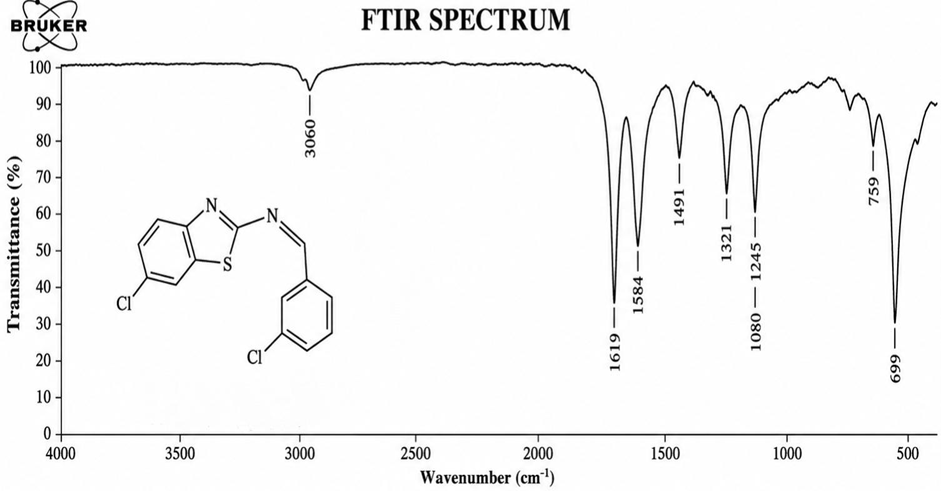
Figure-5: FTIR Spectra of compound A3
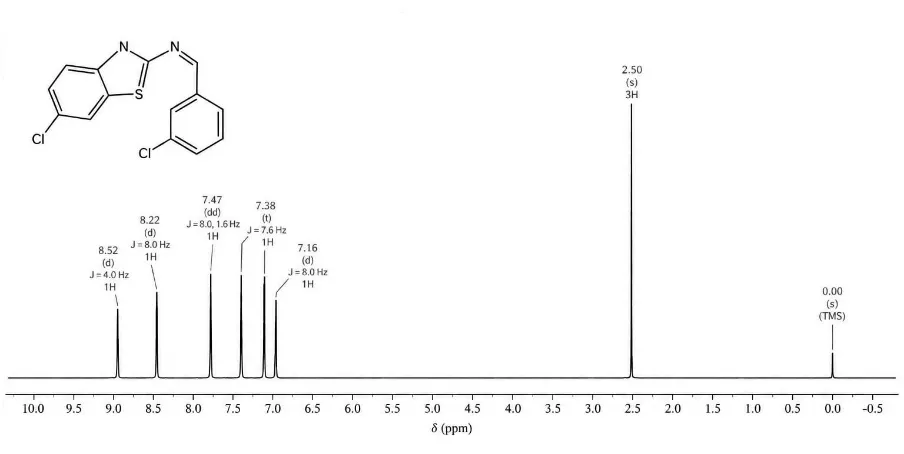
Figure-6: 1H-NMR Spectra of compound A3
DISCUSSION
An in-silico modelling method called molecular docking is used to investigate how tiny ligands (compounds) interact with protein targets. Important information on the binding modalities and affinities of the chosen bioactive compounds towards DHFR was revealed by the molecular docking research. A1, A2, A3, A4 and A5 showed a high affinity for the target protein DHFR (PDB ID:3FYV) in compared to standard ligand their docking results, suggesting that they may interact with the protein’s active sites and alter its enzymatic activity.
The novel Benzothiazole derivatives were prepared and checked identity and purity by 1H NMR and FTIR. All derivatives having good ADME properties, they don’t have any type of toxicity, but all are poorly soluble compounds. A3 showing the high binding affinity towards the protein. The compound A3 having the high antibacterial activity among the synthesized derivative A1, A4 and A2 showing good antibacterial activity, A5 has the least antibacterial activity.
CONCLUSION
In this present study some novel benzothiazole derivatives were checked their novelty and synthesized using a cyclization of 2-aminothiophenols with aldehydes procedure. Also performed the molecular docking studies for all 5 derivatives before starting synthetic procedure. Checked the toxicity profile, ADME properties and pass prediction studies to know some basic details of derivatives. All the derivatives were showed good binding effinity towards the selected protein 3FYV. Evaluated the antibacterial activity of all synthesized derivatives using E. coli and S. aureus and compared the docking score and anti-bacterial activity score with standard drug trimethoprim. Compound A3 (22 and 24) showed the better antibacterial activity than standard drug (20 and 22) against respected bactirial specis. This study needs to evaluate the anti-fungal activity of synthesized derivatives for future aspects.
ACKNOWLEDGEMENTS
The authors are grateful to the HOD and Staff of Centre for Pharmaceutical Sciences, UCESTH, JNTUH, Kukatpally, Hyderabad- 500085, Telangana (India) for providing necessary research facilities.
REFERENCES



Methari Bhanumathi, Dr. Satla Shobha Rani, Guduru Sai Krishna, Synthesis, In-silico Studies and Evaluation of Antimicrobial Activity of Benzothiazole Derivatives, Int. J. of Pharm. Sci., 2026, Vol 4, Issue 8, 1518-1529, https://doi.org/10.5281/zenodo.21850841
 10.5281/zenodo.21850841