
View Article

Abstract

Ornidazole, a nitroimidazole derivative, is an antimicrobial agent used for protozoal and anaerobic bacterial infections. Conventional formulations often require frequent dosing, leading to poor patient compliance. Microsphere-based delivery systems offer controlled release, targeted delivery and improved therapeutic outcomes by modulating drug release through polymer matrices. Recent developments in microsphere design including solvent evaporation, ionotropic gelation, polymer coating, and bioadhesive systems facilitate enhanced encapsulation efficiency, sustained release, and site-specific targeting. Ornidazole microspheres have been investigated using polymers such as Eudragit, chitosan and PLGA for oral, vaginal and periodontal applications demonstrating improved drug release profiles, enhanced bioavailability and extended activity. Nonetheless, challenges in scale-up, reproducibility, and in-vivo performance remain. This review discusses formulation strategies, classification, evaluation, advantages, limitations, challenges and future perspectives of ornidazole-loaded microspheres, highlighting their potential to improve therapeutic efficacy and patient adherence.

Keywords

Ornidazole, microspheres, controlled release, polymeric delivery, therapeutic efficacy

Introduction

× Popup Image

Microspheres are multiparticulate drug carriers (1–1000 µm) composed of biodegradable polymers that enable controlled release and targeted delivery of drugs, thereby improving pharmacokinetics and reducing side effects. Drug-loaded microspheres are an innovative technology in drug delivery systems (DDS), addressing many limitations of conventional methods. Their ability to enable controlled release, precise targeting, and broad drug compatibility makes them a versatile platform with significant potential in modern medicine.1 This review explores the unique properties of microspheres, including their biocompatibility, biodegradability, and customizable architecture, positioning them as promising candidates for therapeutic use in cancer, diabetes and other disease.

The concept of controlled targeted drug delivery emerged in the mid-20th century to overcome the limitations associated with conventional dosage forms such as frequent dosing, fluctuating plasma drug levels, and poor patient compliance. Among various controlled delivery systems, microspheres gained significant attention during the 1970s and 1980s due to their ability to provide sustained and targeted drug release using biodegradable polymers.2-3 Early microsphere research primarily focused on protein and vaccine delivery, gradually expanding to antimicrobial and antiparasitic agents.

Ornidazole, a second-generation nitroimidazole derivative, was introduced in the 1980s as an effective antiprotozoal and anti-anaerobic agent with improved tolerability compared to metronidazole. Initial formulations of ornidazole were conventional tablets and suspensions; however, their short biological half-life and dose-related side effects prompted research into modified drug delivery approaches.4-5

In the early 2000s, researchers began exploring microsphere-based systems for ornidazole to achieve taste masking, controlled release, and site-specific delivery. Advancements in polymer science, including the use of chitosan, Eudragit, and PLGA, further accelerated the development of ornidazole-loaded microspheres for oral, vaginal, and periodontal applications. These historical developments laid the foundation for current research focusing on enhanced therapeutic efficacy and patient compliance.6-9
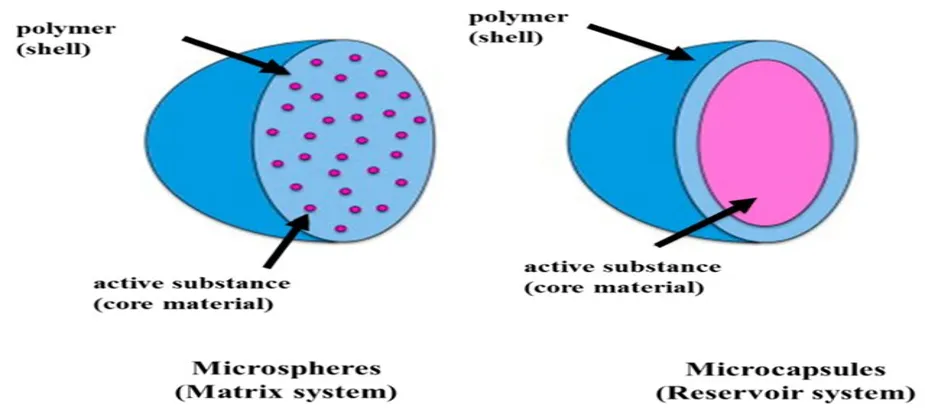
Figure 1. Schematic structure of microspheres and microcapsules (adapted from Paulo and Santos201710-11

Formulation Strategies for Ornidazole-Loaded Microspheres

The formulation of ornidazole-loaded microspheres is primarily aimed at achieving controlled drug release, enhanced bioavailability, and site-specific delivery while maintaining drug stability. Selection of suitable polymers, preparation methods, and formulation variables plays a crucial role in determining microsphere performance.12

  1. Polymer Selection

Both natural and synthetic polymers have been extensively employed. Chitosan is preferred for its biodegradability, bioadhesive properties, and pH-responsive behavior, making it suitable for colon-specific and mucosal delivery. Eudragit polymers (S100, L100, RS, RL) are widely used for enteric and controlled release applications due to their pH-dependent solubility. PLGA and ethyl cellulose are selected for sustained release and enhanced encapsulation efficiency. Polymer concentration directly influences particle size, drug entrapment, and release kinetics.

  1. Drug–Polymer Compatibility

Compatibility studies using FTIR, DSC, and XRD are essential to confirm the absence of chemical interaction between ornidazole and polymers. Stable drug–polymer interaction ensures uniform drug distribution and sustained release.13

  1. Preparation Method

Solvent evaporation and solvent diffusion techniques are commonly employed to produce ornidazole microspheres with uniform size and high entrapment efficiency. Ionotropic gelation is preferred when using chitosan, as it avoids organic solvents and allows mild processing conditions. Emulsion cross-linking is used to enhance mechanical strength and control drug release.

  1. Release Modulation

Drug release is controlled by polymer type, cross-linking density, and coating thickness. pH-sensitive coatings using Eudragit enable colon-targeted delivery, while bioadhesive formulations prolong residence time at the site of action. Multi-layer coating and polymer blending strategies are increasingly used to achieve biphasic or zero-order release profiles.14

  1. Optimization and Evaluation

Formulation optimization using Design of Experiments (DoE) helps in identifying critical formulation parameters affecting particle size, encapsulation efficiency, and release behavior. In-vitro drug release, swelling studies, mucoadhesion testing, and stability studies are essential for evaluating formulation performance.15

Classification of Microspheres

Microspheres used for ornidazole delivery can be classified based on polymer type, functionality, and release mechanism. This classification helps in selecting an appropriate system for specific therapeutic applications.

1. Based on Polymer Type

  1. Natural polymer microspheres: Prepared using polymers such as chitosan, alginate, gelatin, and guar gum. These systems are biodegradable, biocompatible, and suitable for mucoadhesive and colon-targeted delivery of ornidazole.
  2. Synthetic polymer microspheres: Composed of polymers like Eudragit (RS, RL, L100, S100), ethyl cellulose, and PLGA. These provide better mechanical strength, reproducibility, and controlled release profiles.16

2. Based on Functional Behavior

  1. Bioadhesive microspheres: Designed to adhere to mucosal surfaces, increasing residence time and enhancing local drug concentration, particularly useful in vaginal and periodontal ornidazole therapy.
  2. Floating microspheres: Low-density systems that remain buoyant in gastric fluid, improving gastric retention and sustained drug release.
  3. pH-sensitive microspheres: Formulated using enteric polymers to release ornidazole at specific intestinal or colonic pH.17
  4. Magnetic microspheres: Incorporate magnetic materials for site-specific targeting, though limited studies exist for ornidazole.18

3. Based on Release Mechanism

  1. Matrix microspheres: Drug is uniformly dispersed throughout the polymer matrix, providing diffusion-controlled release.
  2. Reservoir microspheres: Drug core surrounded by a polymer membrane, offering controlled and delayed release.19

Table 1: Evaluation Parameters of Ornidazole-Loaded Microspheres20-29

Evaluation Parameter

Purpose

Method / Instrument Used

Significance

Particle Size

Determines uniformity and release behavior

Optical microscopy, Laser diffraction, DLS

Influences drug release rate and stability

Surface Morphology

Examines shape and surface texture

Scanning Electron Microscopy (SEM)

Confirms spherical nature and surface smoothness

Percentage Yield

Assesses process efficiency

Gravimetric method

Indicates reproducibility of formulation method

Drug Content

Determines amount of drug present

UV–Visible spectrophotometry / HPLC

Ensures dose accuracy

Encapsulation Efficiency (%)

Measures drug entrapment ability

Drug extraction followed by analysis

Reflects formulation effectiveness

Bulk Density

Evaluates packing ability

Graduated cylinder method

Important for capsule/tablet filling

Tapped Density

Measures compressibility

Tapped density apparatus

Indicates flow and compaction behavior

Angle of Repose

Assesses flow property

Fixed funnel method

Predicts handling and processing behavior

Carr’s Index

Evaluates compressibility

Calculated from bulk and tapped density

Indicates powder flow characteristics

Hausner’s Ratio

Measures cohesiveness

Derived parameter

Lower values indicate better flow

In-Vitro Drug Release

Studies release pattern

USP Dissolution Apparatus (I or II)

Determines sustained or controlled release

Release Kinetics

Analyzes release mechanism

Zero-order, First-order, Higuchi, Korsmeyer–Peppas models

Explains drug release behavior

Swelling Index

Evaluates hydration behavior

Gravimetric method

Affects drug diffusion and release

Mucoadhesive Strength

Measures adhesion to mucosa

Ex-vivo mucosal detachment method

Enhances residence time at target site

pH-Dependent Release

Confirms site-specific delivery

Dissolution in varying pH media

Useful for colon-targeted systems

Stability Studies

Evaluates formulation stability

ICH guidelines (40 °C/75% RH)

Ensures shelf-life and performance

Residual Solvent Content

Detects solvent traces

Gas Chromatography (if applicable)

Ensures safety and compliance

Advantages, Limitations, and Challenges of Ornidazole-Loaded Microspheres

Advantages30-35

Ornidazole-loaded microspheres offer several benefits over conventional dosage forms:

  1. Controlled Release

Microspheres provide a sustained release of ornidazole, maintaining therapeutic levels for longer durations and reducing dosing frequency.

  1. Improved Patient Compliance

Reduced dosing frequency improves adherence, especially in chronic infections requiring prolonged therapy.

  1. Targeted Delivery

Site-specific delivery (e.g., colon-targeted, vaginal, periodontal) can be achieved using pH-sensitive or bioadhesive polymers, enhancing local drug concentration and reducing systemic side effects.

  1. Reduced Side Effects

Sustained release and targeted delivery minimize peak plasma concentration and associated adverse effects.

  1. Enhanced Stability

Encapsulation protects the drug from degradation and improves chemical stability.

  1. Versatility in Administration

Microspheres can be formulated for oral, vaginal, periodontal, and parenteral applications.

Limitations36-37

Despite their advantages, microspheres have some limitations:

  1. Complex Manufacturing Process

Techniques such as solvent evaporation, ionotropic gelation, and spray drying require specialized equipment and expertise.

  1. Scale-Up Issues

Reproducibility and uniformity during large-scale production remain challenging.

  1. Batch-to-Batch Variability

Minor changes in process parameters can significantly affect particle size, drug loading, and release profile.

  1. Drug Leakage During Preparation

Drug diffusion into the external phase during emulsification can reduce encapsulation efficiency.

  1. High Cost of Polymers and Processing

Biodegradable polymers and controlled-release technology increase production costs.

Challenges38-39

The major challenges for successful development and commercialization include:

  1. Optimization of Release Profile

Achieving a desired release pattern (zero-order or biphasic) requires precise control over polymer type, drug loading, and crosslinking.

  1. In-Vivo–In-Vitro Correlation (IVIVC)

Translating in-vitro release data to in-vivo performance remains difficult due to varying physiological conditions.

  1. Stability under Physiological Conditions

Microspheres must withstand gastric and intestinal environments without premature drug release.

  1. Regulatory and Safety Concerns

Ensuring absence of residual solvents, toxic cross-linkers, and immunogenicity is essential for clinical use.

  1. Clinical Validation

Most ornidazole microsphere studies are limited to in-vitro or animal models; clinical trials are needed for market translation.

Future Perspectives of Ornidazole-Loaded Microspheres

Ornidazole-loaded microspheres hold significant promise as advanced drug delivery systems, but their full potential is yet to be realized in clinical practice. Future research should prioritize translational studies that bridge in-vitro findings with in-vivo efficacy and patient outcomes. Integrating smart and stimuli-responsive polymers (e.g., pH-, enzyme- or microbiota-triggered systems) could enable more precise site-specific release particularly in gastrointestinal and vaginal infections reducing systemic exposure and minimizing adverse effects.40

Emerging fabrication technologies such as microfluidics, spray drying with controlled atomization, and 3D printing can improve batch-to-batch uniformity, scalability, and tunable release profiles. Combining microspheres with bioadhesive in-situ gels or nanocarriers may further enhance mucosal retention and drug absorption, improving local therapeutic concentrations while reducing dosing frequency.

Digital health tools (e.g., smart packaging and adherence sensors) could complement advanced microsphere therapies by monitoring adherence and optimizing dosing schedules. Additionally, clinical trials evaluating pharmacokinetics, safety, and patient-reported outcomes will be vital for regulatory approval and real-world adoption.41-43

With multidisciplinary innovation spanning formulation science, materials engineering, and clinical pharmacology, ornidazole-loaded microspheres can evolve from experimental formulations to effective, patient-centric therapies that offer sustained antimicrobial action, improved adherence, and better overall treatment outcomes.

REFERENCES

  1. Ye Jin Lee, Moon Suk Kim,Advances in drug-loaded microspheres for targeted, controlled, and sustained drug delivery: Potential, applications, and future directions, Biomedicine & Pharmacotherapy 2025, 189,118244.
  2. Shajan Abraham, Vijayan K., Sherin Koshy, Namitha Navas, Steffy P. Raju, Shahana S., Elessey Abraham, Beena P. Formulation Design and Evaluation of Ornidazole Microsphere in a Bioadhesive Gel for Local Therapy of Vaginal Candidiasis. Res J Pharm Technol. 2022;15(8):3396-3400.
  3. Liu Y., Tang P., Qian H., et al. Study on the Synthesis and Drug-Loading Optimization of β-Cyclodextrin Polymer Microspheres Containing Ornidazole. J Drug Deliv Sci Technol. 2020;58:101836.
  4. Dias R.J., Havaldar V.D., Ghorpade V.S., Mali K.K., Gaikwad V.K., Kumbhar D.M. Development and Evaluation of In-Situ Gel Containing Ornidazole Loaded Microspheres for Treatment of Periodontitis. J Appl Pharm Sci. 2016;6(10):200-209.
  5. Kapoor V.R., Shishu, Bhatti A. Taste-Masked Oral Formulation of Ornidazole Microspheres by pH-Sensitive Polymer-Based Solvent Evaporation. Crit Rev Ther Drug Carrier Syst. 2010;21(6):433-476.
  6. Sushma M., Pavani S. Development and Evaluation of a Novel Time and pH-Dependent Colon Targeted Drug Delivery of Ornidazole. Asian J Pharm Clin Res. 2021;14(6):xx-xx.
  7. Neurgaonkar M., Kothiwale S.V. Evaluation of Controlled Release Patterns of Ornidazole Using Bio-degradable Polymers and Antibacterial Activity. Indian J Pharm Educ Res. 2019;55(1s):46-52.
  8. Samanta M.S., Gautam D., Chandel M.W., Sawant G., Sharma K. A Review on Microspheres as a Novel Controlled Drug Delivery System. Asian J Pharm Clin Res. 2021;14(4):3-11.
  9. Yadav M., Mandhare T.A., Jadhav V., Otari K. A Review on Microspheres as a Promising Drug Carrier. J Drug Deliv Ther. 2024;14(7):120-128.
  10. Eghbal, N.; Liao, W.;Dumas, E.; Azabou, S.; Dantigny, P.;Gharsallaoui, A. Microencapsulationof Natural Food Antimicrobials:Methods and Applications. Appl. Sci.2022, 12, 3837.
  11. Paulo, F.; Santos, L. Design of experiments for microencapsulation applications: A review. Mater. Sci. Eng. C 2017, 77, 1327–1340.
  12. Sharma N., Purwar N., Gupta P.C. Microspheres as Drug Carriers for Controlled Drug Delivery: A Review. Int J Pharm Sci Res. 2015;6(11):4579-4587.
  13. Hans Raj, Shagun Sharma, Ankita Sharma, Kapil Kumar Verma, Amit Chaudhary. A Novel Drug Delivery System: Review on Microspheres. J Drug Deliv Ther. 2025;11(2-S):xx-xx.
  14. Nisha Sharma, Neha Purwar, Prakash Chandra Gupta. Microspheres as Drug Delivery Systems. Int J Pharm Sci Rev Res. 2015;65(1):143-149.
  15. Jain A., Kakar S. Magnetic Microspheres: An Overview. Asian Pac J Health Sci. 2019;6:81-89.
  16. Farraj N.F., Johansen B.R., Davis S.S., Illum L. Nasal Administration of Insulin Using Bioadhesive Microspheres. J Control Release. 1990;13(3):253-261.
  17. Genta I., Conti B., Perugini P., Pavanetto F., Spadaro A., Puglisi G. Bioadhesive Microspheres for Ophthalmic Administration of Acyclovir. J Pharm Pharmacol. 1997;49(9):737-742.
  18. Srivastava A.K., Ridhurkar D.N., Wadhwa S. Floating Microspheres of Cimetidine: Formulation and In Vitro Evaluation. Acta Pharm. 2005;55(3):277-285.
  19. Cortesi R., Esposito E., Osti M., Menegatti E., Squarzoni G. Dextran Cross-Linked Gelatin Microspheres as Drug Delivery System. Eur J Pharm Biopharm. 1999;47(3):303-308.
  20. Udupa N., Ridhurkar D.N. Microspheres in Novel Drug Delivery Systems. Pharm Times. 2002;34(5):25-31. (Foundational reference on microsphere use.)
  21. Jain K.K. Microsphere Technologies: Controlled Drug Delivery and Targeting. Drug Dev Ind Pharm. 2000;26(1):1-18. (General microsphere delivery overview.)
  22. Patel M., Vavia P.R. Microspheres for Targeted Drug Delivery: Recent Advances. J Microencapsul. 2012;29(7):593-608. (General review.)
  23. Jain N.K. Controlled and Novel Drug Delivery. CBS Publishers & Distributors. 2014;4th Ed.:125-160. (Book on microspheres.)
  24. Kumari A., Yadav S.K., Yadav S.C. Biodegradable Polymeric Microspheres for Drug Delivery. Crit Rev Ther Drug Carrier Syst. 2010;27(3):215-247. (Comprehensive polymer microsphere review.)
  25. Panyam J., Labhasetwar V. Biodegradable Nanoparticles for Drug and Gene Delivery. Adv Drug Deliv Rev. 2003;55(3):329-347. (Microsphere polymer context.)
  26. Duncan R., Izzo L. Dendrimer Biocompatibility and Drug Delivery. Adv Drug Deliv Rev. 2005;57(15):2215-2237. (Polymeric carriers overview.)
  27. Park K. Controlled Drug Delivery Systems: Past Forward and Future Back. J Control Release. 2014;190:3-8. (Controlled release context.)
  28. Agnihotri S.A., Mallikarjuna N.N., Aminabhavi T.M. Recent Advances on Chitosan-Based Micro- and Nanoparticles in Drug Delivery. J Control Release. 2004;100(1):5-28.
  29. Kumari S., Singh S., Dhiman S. Recent Trends on Microsphere Based Controlled Release Drug Delivery Systems. Int J Pharm Sci Res. 2019;10(4):1589-1601.
  30. Parashar B., Bansal A. Polymeric Microspheres: Methods and Applications. Int J Pharm Sci Rev Res. 2018;51(2):125-134.
  31. Jain S.K., Gupta Y., Jain A. Microspheres as Carriers for Drug Delivery. Indian J Pharm Sci. 2011;73(2):149-162.
  32. Gupta P., Vermani K., Garg S. Hydrogel Microspheres for Biomedical Applications. J Control Release. 2002;85(1-3):161-173.
  33. Mundargi R.C., Babu V.R., Rangaswamy V., Patel P., Aminabhavi T.M. Nano/Micro Technologies for Delivering Macromolecular Therapeutics. Adv Drug Deliv Rev. 2008;60(15):1570-1589.
  34. Soppimath K.S., Aminabhavi T.M., Kulkarni A.R., Rudzinski W.E. Biodegradable Polymer Microspheres as Drug Delivery Devices. J Control Release. 2001;70(1-2):1-20.
  35. Singh S., Saini T.R., Rizvi M.M.A. Microspheres: A Review. Int J Pharm Sci Res. 2016;7(1):25-34.
  36. Chandel M.W., Sawant G., Samanta M.S. Bioadhesive Microspheres: Contemporary Trends. Asian J Pharm Clin Res. 2021;14(5):xx-xx.
  37. Jain R.A. The Manufacturing Techniques of Various Drug Loaded Polymeric Microspheres. Biomaterials. 2000;21(7):1055-1065.
  38. Zhang J., Zhang S., Wang Y., Zeng J. Composite Magnetic Microspheres: Preparation and Characterization. J Magn Magn Mater. 2007;309(1):197-201.
  39. Virmani T., Gupta J. Pharmaceutical Application of Microspheres. Int J Pharm Sci Res. 2017;8(8):3252-3260.
  40. Sonaje K., Zeng X., Chen Y., et al. Enteric Nanoparticles for Oral Delivery of Protein Drugs. Biomaterials. 2010;31(1):28-37.
  41. Calvo P., Remuñán-López C., Vila-Jato J.L., Alonso M.J. Chitosan and Chitosan/EDTA Microspheres for Oral Peptide Drug Delivery. J Microencapsul. 1997;14(5):548-560.
  42. Nagai T., Machida Y., Ogawa S., et al. pH-Sensitive Microspheres for Colon Specific Drug Delivery. Int J Pharm. 1991;74(1):195-199.
  43. Jain D.K., Jhanji V., Narendra C., et al. Microsphere Based Sustained Release Systems: Evaluation and Challenges. J Pharm Res. 2013;6(7):1031-1038.

Reference

  1. Ye Jin Lee, Moon Suk Kim,Advances in drug-loaded microspheres for targeted, controlled, and sustained drug delivery: Potential, applications, and future directions, Biomedicine & Pharmacotherapy 2025, 189,118244.
  2. Shajan Abraham, Vijayan K., Sherin Koshy, Namitha Navas, Steffy P. Raju, Shahana S., Elessey Abraham, Beena P. Formulation Design and Evaluation of Ornidazole Microsphere in a Bioadhesive Gel for Local Therapy of Vaginal Candidiasis. Res J Pharm Technol. 2022;15(8):3396-3400.
  3. Liu Y., Tang P., Qian H., et al. Study on the Synthesis and Drug-Loading Optimization of β-Cyclodextrin Polymer Microspheres Containing Ornidazole. J Drug Deliv Sci Technol. 2020;58:101836.
  4. Dias R.J., Havaldar V.D., Ghorpade V.S., Mali K.K., Gaikwad V.K., Kumbhar D.M. Development and Evaluation of In-Situ Gel Containing Ornidazole Loaded Microspheres for Treatment of Periodontitis. J Appl Pharm Sci. 2016;6(10):200-209.
  5. Kapoor V.R., Shishu, Bhatti A. Taste-Masked Oral Formulation of Ornidazole Microspheres by pH-Sensitive Polymer-Based Solvent Evaporation. Crit Rev Ther Drug Carrier Syst. 2010;21(6):433-476.
  6. Sushma M., Pavani S. Development and Evaluation of a Novel Time and pH-Dependent Colon Targeted Drug Delivery of Ornidazole. Asian J Pharm Clin Res. 2021;14(6):xx-xx.
  7. Neurgaonkar M., Kothiwale S.V. Evaluation of Controlled Release Patterns of Ornidazole Using Bio-degradable Polymers and Antibacterial Activity. Indian J Pharm Educ Res. 2019;55(1s):46-52.
  8. Samanta M.S., Gautam D., Chandel M.W., Sawant G., Sharma K. A Review on Microspheres as a Novel Controlled Drug Delivery System. Asian J Pharm Clin Res. 2021;14(4):3-11.
  9. Yadav M., Mandhare T.A., Jadhav V., Otari K. A Review on Microspheres as a Promising Drug Carrier. J Drug Deliv Ther. 2024;14(7):120-128.
  10. Eghbal, N.; Liao, W.;Dumas, E.; Azabou, S.; Dantigny, P.;Gharsallaoui, A. Microencapsulationof Natural Food Antimicrobials:Methods and Applications. Appl. Sci.2022, 12, 3837.
  11. Paulo, F.; Santos, L. Design of experiments for microencapsulation applications: A review. Mater. Sci. Eng. C 2017, 77, 1327–1340.
  12. Sharma N., Purwar N., Gupta P.C. Microspheres as Drug Carriers for Controlled Drug Delivery: A Review. Int J Pharm Sci Res. 2015;6(11):4579-4587.
  13. Hans Raj, Shagun Sharma, Ankita Sharma, Kapil Kumar Verma, Amit Chaudhary. A Novel Drug Delivery System: Review on Microspheres. J Drug Deliv Ther. 2025;11(2-S):xx-xx.
  14. Nisha Sharma, Neha Purwar, Prakash Chandra Gupta. Microspheres as Drug Delivery Systems. Int J Pharm Sci Rev Res. 2015;65(1):143-149.
  15. Jain A., Kakar S. Magnetic Microspheres: An Overview. Asian Pac J Health Sci. 2019;6:81-89.
  16. Farraj N.F., Johansen B.R., Davis S.S., Illum L. Nasal Administration of Insulin Using Bioadhesive Microspheres. J Control Release. 1990;13(3):253-261.
  17. Genta I., Conti B., Perugini P., Pavanetto F., Spadaro A., Puglisi G. Bioadhesive Microspheres for Ophthalmic Administration of Acyclovir. J Pharm Pharmacol. 1997;49(9):737-742.
  18. Srivastava A.K., Ridhurkar D.N., Wadhwa S. Floating Microspheres of Cimetidine: Formulation and In Vitro Evaluation. Acta Pharm. 2005;55(3):277-285.
  19. Cortesi R., Esposito E., Osti M., Menegatti E., Squarzoni G. Dextran Cross-Linked Gelatin Microspheres as Drug Delivery System. Eur J Pharm Biopharm. 1999;47(3):303-308.
  20. Udupa N., Ridhurkar D.N. Microspheres in Novel Drug Delivery Systems. Pharm Times. 2002;34(5):25-31. (Foundational reference on microsphere use.)
  21. Jain K.K. Microsphere Technologies: Controlled Drug Delivery and Targeting. Drug Dev Ind Pharm. 2000;26(1):1-18. (General microsphere delivery overview.)
  22. Patel M., Vavia P.R. Microspheres for Targeted Drug Delivery: Recent Advances. J Microencapsul. 2012;29(7):593-608. (General review.)
  23. Jain N.K. Controlled and Novel Drug Delivery. CBS Publishers & Distributors. 2014;4th Ed.:125-160. (Book on microspheres.)
  24. Kumari A., Yadav S.K., Yadav S.C. Biodegradable Polymeric Microspheres for Drug Delivery. Crit Rev Ther Drug Carrier Syst. 2010;27(3):215-247. (Comprehensive polymer microsphere review.)
  25. Panyam J., Labhasetwar V. Biodegradable Nanoparticles for Drug and Gene Delivery. Adv Drug Deliv Rev. 2003;55(3):329-347. (Microsphere polymer context.)
  26. Duncan R., Izzo L. Dendrimer Biocompatibility and Drug Delivery. Adv Drug Deliv Rev. 2005;57(15):2215-2237. (Polymeric carriers overview.)
  27. Park K. Controlled Drug Delivery Systems: Past Forward and Future Back. J Control Release. 2014;190:3-8. (Controlled release context.)
  28. Agnihotri S.A., Mallikarjuna N.N., Aminabhavi T.M. Recent Advances on Chitosan-Based Micro- and Nanoparticles in Drug Delivery. J Control Release. 2004;100(1):5-28.
  29. Kumari S., Singh S., Dhiman S. Recent Trends on Microsphere Based Controlled Release Drug Delivery Systems. Int J Pharm Sci Res. 2019;10(4):1589-1601.
  30. Parashar B., Bansal A. Polymeric Microspheres: Methods and Applications. Int J Pharm Sci Rev Res. 2018;51(2):125-134.
  31. Jain S.K., Gupta Y., Jain A. Microspheres as Carriers for Drug Delivery. Indian J Pharm Sci. 2011;73(2):149-162.
  32. Gupta P., Vermani K., Garg S. Hydrogel Microspheres for Biomedical Applications. J Control Release. 2002;85(1-3):161-173.
  33. Mundargi R.C., Babu V.R., Rangaswamy V., Patel P., Aminabhavi T.M. Nano/Micro Technologies for Delivering Macromolecular Therapeutics. Adv Drug Deliv Rev. 2008;60(15):1570-1589.
  34. Soppimath K.S., Aminabhavi T.M., Kulkarni A.R., Rudzinski W.E. Biodegradable Polymer Microspheres as Drug Delivery Devices. J Control Release. 2001;70(1-2):1-20.
  35. Singh S., Saini T.R., Rizvi M.M.A. Microspheres: A Review. Int J Pharm Sci Res. 2016;7(1):25-34.
  36. Chandel M.W., Sawant G., Samanta M.S. Bioadhesive Microspheres: Contemporary Trends. Asian J Pharm Clin Res. 2021;14(5):xx-xx.
  37. Jain R.A. The Manufacturing Techniques of Various Drug Loaded Polymeric Microspheres. Biomaterials. 2000;21(7):1055-1065.
  38. Zhang J., Zhang S., Wang Y., Zeng J. Composite Magnetic Microspheres: Preparation and Characterization. J Magn Magn Mater. 2007;309(1):197-201.
  39. Virmani T., Gupta J. Pharmaceutical Application of Microspheres. Int J Pharm Sci Res. 2017;8(8):3252-3260.
  40. Sonaje K., Zeng X., Chen Y., et al. Enteric Nanoparticles for Oral Delivery of Protein Drugs. Biomaterials. 2010;31(1):28-37.
  41. Calvo P., Remuñán-López C., Vila-Jato J.L., Alonso M.J. Chitosan and Chitosan/EDTA Microspheres for Oral Peptide Drug Delivery. J Microencapsul. 1997;14(5):548-560.
  42. Nagai T., Machida Y., Ogawa S., et al. pH-Sensitive Microspheres for Colon Specific Drug Delivery. Int J Pharm. 1991;74(1):195-199.
  43. Jain D.K., Jhanji V., Narendra C., et al. Microsphere Based Sustained Release Systems: Evaluation and Challenges. J Pharm Res. 2013;6(7):1031-1038.

Photo
Neha Bombilwar
Corresponding author

Yash Institute of Pharmacy, Chhatrapati Sambhajinagar, Maharashtra, India, 431136.

Photo
Gaytri Mapari
Co-author

Yash Institute of Pharmacy, Chhatrapati Sambhajinagar, Maharashtra, India, 431136.

Photo
Reshama Patil
Co-author

Yash Institute of Pharmacy, Chhatrapati Sambhajinagar, Maharashtra, India, 431136.

Photo
Vandana Patil
Co-author

Yash Institute of Pharmacy, Chhatrapati Sambhajinagar, Maharashtra, India, 431136.

Photo
Schidanand Angad
Co-author

Yash Institute of Pharmacy, Chhatrapati Sambhajinagar, Maharashtra, India, 431136.

Neha Bombilwar, Gaytri Mapari, Reshama Patil, Vandana Patil, Schidanand Angad, Advances in Ornidazole-Loaded Microspheres for Improved Therapeutic Efficacy: A Review, Int. J. of Pharm. Sci., 2026, Vol 4, Issue 7, 2630-2637. https://doi.org/10.5281/zenodo.21343301

More related articles
Engineered Bilosomes: Formulation Strategies, Surf...
Nebin Koshy, Sarath S, Sreejith V, Anandhu Dineshan, Akhila P, Ar...
Antibiotic Prophylaxis Practices in Orthopedic Sur...
Adithi G, Anakha Shibu, Amina Ameer, Aksa George, J. S. Venkates...
Phytopharmacology and Characterization of Differen...
Priti Mastud, Swapnali Kasture, Aarti Varne...
A Comprehensive Guide to Topical Cosmetic Science: From Formulation to Global Tr...
Dr. Deepu S, M Afiya Fathima, Jyothika Shamil T, Shifana A, Danushma P Menon, Farseena Thazhathethil...
Review on Phytosomal Gel for Enhanced Topical Drug Delivery...
Vishakha Sawant, Schidanand Angad, Reshma Patil, Vandana Patil, Aditi Dhondre...
Related Articles
Development of Neem and Tulsi Tablets for Cardiovascular Care...
Roshan Kumar, Ritesh Jain, Sudhir Kathane ...
Analytical Approaches for the Determination of Antineoplastic Agent: A Review...
Kedar Bhagyesh, Mogal N. K., Ghodake S. R., Dr. Kamble H.V., Dr. Jain P. P., Sonawane A. A....
Lifecycle Analysis of Medicines Withdrawn, Restricted, or Label Updated Due to S...
Md Sayeed Anwar, Shyam Lal Yadav, Lakshyadeep Choudhary, Khushi Gupta, Piyush Ranjan Gupta, Robin Si...
Engineered Bilosomes: Formulation Strategies, Surface Modifications, and Deliver...
Nebin Koshy, Sarath S, Sreejith V, Anandhu Dineshan, Akhila P, Arun Raj R, Sudhir M R...
More related articles
Engineered Bilosomes: Formulation Strategies, Surface Modifications, and Deliver...
Nebin Koshy, Sarath S, Sreejith V, Anandhu Dineshan, Akhila P, Arun Raj R, Sudhir M R...
Antibiotic Prophylaxis Practices in Orthopedic Surgery: A Prospective Observatio...
Adithi G, Anakha Shibu, Amina Ameer, Aksa George, J. S. Venkatesh...
Engineered Bilosomes: Formulation Strategies, Surface Modifications, and Deliver...
Nebin Koshy, Sarath S, Sreejith V, Anandhu Dineshan, Akhila P, Arun Raj R, Sudhir M R...
Antibiotic Prophylaxis Practices in Orthopedic Surgery: A Prospective Observatio...
Adithi G, Anakha Shibu, Amina Ameer, Aksa George, J. S. Venkatesh...