

We use cookies to ensure our website works properly and to personalise your experience. Cookies policy
1235Research scholar, Department of Pharmaceutics, Dr. shivajirao Kadam College of Pharmacy, Kasabe Digraj, Maharashtra, India
4Research scholar, Department of Pharmaceutics,Maratha Vidya Prasarak Samaj College of Pharmacy,Nashik, Maharashtra, India
Cancer remains a major global health concern, with incidence rates rising significantly in both developed and developing nations. Conventional anticancer treatments, particularly oral therapy, are frequently restricted by many pharmacological compounds with inadequate absorption and low solubility in water. A large proportion of newly discovered anticancer agents fall into BCS Class II and IV, characterized by poor solubility &/or limited permeability, resulting in inadequate systemic exposure and inconsistent therapeutic response To overcome solubility-related challenges, various formulation strategies have been explored, including nanosuspensions, micelles, liposomes, cyclodextrin complexes, and amorphous systems. Among these, ASDs have emerged as being best methods for enhancing solubility and dissolution rate. The amorphous state presents higher Gibbs free energy compared to crystalline forms, promoting faster dissolution and improved bioavailability. However, due to thermodynamic instability, amorphous drugs tend to recrystallize. Incorporating suitable polymers can inhibit crystallization, stabilize the amorphous form, & prolong supersaturation during gastrointestinal dissolution.ASD technology has evolved through several generations. Early systems involved simple polymer matrices, while later generations incorporated surfactants and stabilizers to enhance solubility & prevent recrystallization. Fourth-generation ASDs, also known as controlled-release solid dispersions (CRSDs), designed to improve both solubility and release kinetics, making them particularly beneficial for anticancer drugs requiring sustained plasma levels. Several manufacturing techniques are used to produce ASDs, including hot melt extrusion, spray drying, freeze drying, ball milling, etc. Among these, hot melt extrusion & spray drying are generally used extensively due to their scalability, continuous processing potential, & suitability for temperature-sensitive APIs when optimized.Characterization of ASDs requires analytical techniques such as Differential Scanning Calorimetry X-ray Powder Diffraction, FTIR spectroscopy, Raman spectroscopy, & Scanning Electron Microscopy to confirm amorphicity, molecular interactions, & physical stability.Overall, ASDs represent a promising formulation platform to enhance solubility-limited anticancer drugs, improve therapeutic outcomes, and enable effective oral delivery.
Worldwide mortality has been caused by cancer, a global threat to health. Global Cancer Incidence, Mortality & Prevalence (GLOBOCAN) is an accessible website application that provides cancer data by forecasting the number of cancer cases in 185 different countries in addition for incidence & mortality of 36 distinct types of cancer. According to data collected in 2020, fifty percent of population worldwide are expected to have cancer at any moment in their life, and 1/8 gents & 1/11 ladies are expected to die from the disease. These estimated numbers increase as a result of socioeconomic risk factors and the aging of the population. Cancer remains one of the key global health issues that continues to cause death worldwide. Therapy for cancer has a low achievement rate & needs to be better than existing options, despite an increase in research relevant to their discovery also to the development. Inadequate pharmacokinetics, which are mostly brought on by low water solubility, are a major reason in the poor efficacy. Besides, this restriction limits the potential therapeutic effects of about 65% of currently approved oral anticancer medications. Despite these precautions, patients continue to encounter severe responses, some of which are life-threatening. The therapeutic management of cancer typically involves a multimodal approach comprising surgical intervention, radiotherapy, and chemotherapy. Surgical resection is primarily employed for localized tumors, whereas radiotherapy uses high-energy ionizing radiation to induce DNA damage & subsequent apoptosis of malignant cells. Poor water solubility is seen in about 75% of recently produced pharmacological candidates, including anticancer medicines. Additionally, this constraint limits the prospective therapeutic effects of roughly 65% of currently licensed oral anticancer drugs. Chemotherapy’s quick emergence of drug resistance, molecular instability, and low water solubility are further drawbacks that impair its capacity to effectively pass through cell membranes. Enhancing the water solubility of anticancer medicines remains a serious problem, especially for oral delivery.[1,2] Dosage form, medications/ novel systems which contains oil in there preparation appears to be main obstacle for compound lipophilicity. However, their usefulness is restricted because the drug content in these systems is usually low.[1]The Biopharmaceutical Classification System (BCS) applies mathematical analysis to assess a drug's solubility and permeability through experimentation. The BCS provides systematic arrangement to classifying drug compounds according to two critical biopharmaceutical properties: aqueous solubility and intestinal permeability.[3] Medicinal compounds with low solubility are often treated with amorphous solid dispersions, or ASDs. ASD, is an medicinal modification of drug's crystalline structure which increases its tendency to dissolve by producing an amorphous form with a higher energy state. Some primary obstacles are associated with modern creation of medicines is poor aqueous dissolving capacity: a significant portion of novel chemical entities (as well as many commercially available small-molecule medications) exhibit poor water solubility, which frequently results in low oral bioavailability, high inter-subject variability, & formulation failure. Many present small-molecule anticancer drugs are quite effective, but they have very poor aqueous solubility (as well as frequently high lipophilicity & melting temperatures), which makes oral dosage difficult and inhibits the flexibility of the therapeutic window. Formulation strategies that consistently increase solubility and bioavailability without affecting stability or safety are highly valuable since cancer development is increasingly looking for oral targeted medicines and kinase inhibitors. An increasing number and successful case studies where ASD techniques resulted in significant improvements in dissolution and in vivo exposure are evident in recent topical reviews that particularly address ASDs for poorly water-soluble anticancer medicines.Here at Amorphous Solid Dispersion, drug's ability to dissolve is boosted through reordering crystal structure to produce an amorphous form with a higher energy state. Additionally, polymers are essential for increasing the drug's biological & miscibility properties through liaison between drugs & polymer. Prior to a number of accelerated stability conditions, including high heats & moisture levels, polymeric substance may maintain ASD, avoid drug from crystallising, & provide greater thermal stability. For difficult to dissolve drugs, an amorphous slid dispersion may be preferable over various documented dissolving methods. The improvement in bioavailability is due to ASD maintaining its excessive water intake throughout the digestive system. The soaking ability of a material may have raised to exceed that of a saturated solution scenario where the concentration is controlled.[4]In addition to acting as processing matrices, polymers (such as, PVP, HPMC, & HPMCP) also improve drug–polymer miscibility, reduce molecular mobility (thus kinetically stabilising the amorphous state), prevent development and crystal growth, and can provide precipitation inhibition in the aqueous phase to maintain supersaturation. ASD design and stability are based on the equilibrium of kinetic constraints (molecular mobility, glass transition temperature) & thermodynamic driving forces (drug–polymer miscibility). An ASD system would normally have a glass transition temperature (Tg) among the API's and polyester's, since the Tg of the usually under those of polyester for noncrystalline APIs. Kinetic barrier to crystallisation rises by this increase in Tg40, 41. This is also the major reason for the ‘Tg 50 C’ guideline.[4] This rule states that an amorphous solid's molecular mobility becomes insignificant under temperature 42. Consequently, high Tg polymer is typically essential for an ASD. The ASD is thermodynamically stable when the drug-polymer system is miscible & drug quantity remains lower than the polymer's saturation solubility. Therefore, amorphous formulation benefit from the inclusion of a polymeric carrier, which functions as an amorphous form stabiliser. The majority of polymers utilized at solid dispersion preparation belongs to water-friendly nature which improves medication solubility by improving formulation wetting capacity. Furthermore, with certain dosage methods, polymer's solubility controls the medication's solubility. The characteristics of polymer compounds for producing successful solid dispersion have been comprehensively reviewed in the past along with a description of approaches and methods for a reasonable polymer selection.[5,6]
BCS –
The Biopharmaceutics Classification System (BCS), developed by Amidon et al. A scientific foundation for categorising medicinal compounds according to their intestinal permeability & aqueous solubility is provided by the Biopharmaceutics Classification System (BCS). Oral drug absorption is mostly determined by solubility and permeability. BCS is currently frequently used in drug development and discovery. The BCS paradigm has been accepted by regulatory organizations such the US FDA, EMA, WHO, and ICH for dissolution testing and bioavailability/bioequivalency evaluations in quality control. Medication performance is influenced from several dimensionless parameters: absorbing value, dissolving quantity, & dosage amount classification in addition to solubility and permeability. Despite being widely used, the BCS model has been found to have a number of drawbacks. Biopharmaceutics Classification System system & manufacturing techniques for each class are outlined in figure no.1.
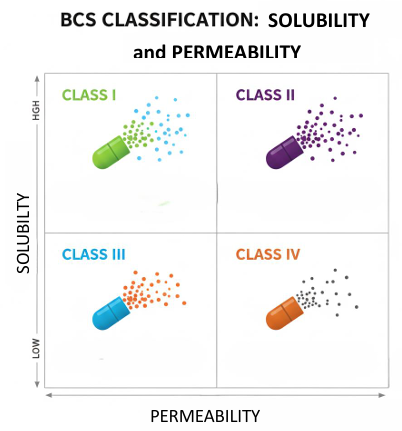
Fig.1 Biopharmaceutics Classification System (BCS)
The guideline document on IR solid oral dosage forms: Scale-Up and Post-Approval Changes (SUPAC) was first to incorporate the Biopharmaceutics Classification System (BCS) into the regulatory decision-making process. In order to guarantee constant quality and effectiveness of IR oral dosage forms, the BCS offered an organised method to evaluate the effects of such modifications on medication performance.[4,7]
AMORPHOUS SOLID DISPERSION-
Formation of drug–polymer connections and the disruption of connections among molecules in the API's crystalline structure are probably what lead to the stability of an ASD. By transforming crystalline medications into an amorphous state with greater free energy and better solubility, amorphous solid dispersions (ASDs) improve drug bioavailability. The choice of polymer is crucial since it increases solubility, facilitates amorphization, improves dissolving kinetics, & stabilises. Noncrystalline state occurs through increasing Tg & decreasing mobility of molecules. Drug-polymer interactions & broken crystal lattice interactions lead to the stability of ASDs. In ASD, a polymer carrier transforms crystalline medication into its amorphous form & stabilises it. By lowering the drug's chemical flexibility & raising its heating capacity, polymer carrier not only increases drug's dissolution & solubility but also enhances its solid-state physical stability. When the molecule is only accessible in its amorphous form, it may provide extra advantages. When an amorphous molecule is not chemically stable throughout storage, transportation, or manufacturing operations, this tactic has been used to stabilise it. Additionally, when the neat amorphous compound cannot maintain supersaturation on its own, it has been used. The formation of drug–polymer connections and the disruption of intermolecular interactions in the drug's crystal structure are probably what lead to the stability of an ASD. Hydrophobic interactions and steric hindrance can also impede the processes of API form conversion and ASD phase separation.Hydrophobic interactions & steric hindrance can also impede the processes of API form conversion and ASD formation. Performance increase is facilitated by both kinetic and thermodynamic factors. Polymers sustain supersaturation by providing steric hindrance & preventing nucleation and crystal formation.[4,8]
Importance of Polymer Selection in Drug Dispersion:
The effectiveness of solid dispersion system largely depends on the careful choice of polymer. A suitable polymer should improve the solubility & dissolution behavior of low aqueous-soluble drugs while maintaining the drug in a stable amorphous state & minimizing the risk of recrystallization during storage. It must be physicochemically compatible with the drug substance, sufficiently hydrophilic to facilitate efficient drug release, and meet safety, biocompatibility, and regulatory requirements. Furthermore, the polymer should possess appropriate thermal and mechanical characteristics to withstand the intended processing method. Therefore, selecting a polymer through a rational, science-based approach that considers drug–polymer interactions and formulation objectives is crucial for achieving enhanced drug performance and long-term stability.[9]
Generations-
First Generation:
First-generation solid dispersions have crystalline carriers based on polymers. Scientific theory states that crystalline carriers are used to make eutectic mixes that release the drug and increase its solubility. The crystalline carriers in first-generation solid dispersions are a mixture of urea & sugars such as sorbitol and mannitol.[10]
Crystalline carriers are used in the preparation of ASDs. Glucose & ammonia containing compounds are very initial translucent carriers used to create ASDs. That having the disadvantage to be thermally unsteady as well as dispersing the drug rapidly enough.[11]
Second Generation
Such solid dispersions are made with unstructured components rather than crystal-forming ones. The drug is dispersed chemically within the polyester vehicle. Polymeric vehicles fall into two kinds:
a. Synthetic Polymers: Polymers made from non-natural materials include PEGs, & povidone.
b. Natural polymers, like ethyl cellulose, hydroxypropylmethylcellulose, starch derivatives like cyclodextrin.[11]Amorphous polymer carriers as HPMC, HPC, PVP, and PEG are used in second-generation solid dispersions. By decreasing particle size at the molecular level, these carriers increase dissolution and bioavailability while also improving medication solubility and wettability.[12]
Third Generation-
Third-generation solid dispersions improve drug solubility and stability by using self-emulsifiers or surfactants as carriers. By creating micelles or coating drug particles, they decrease recrystallisation, enhance miscibility, and boost wettability. Gelucire 44/14, Poloxamer 407, Tween 80, SDS, and Kolliphor RH 40 are examples of common carriers.[10]
Third-generation solid dispersions increase the bioavailability of poorly soluble medications by using surfactants or a combination of polymers and surfactants. Poloxamer 407 & inulin are examples of common surfactants.[13]
Fourth Generation -
Drugs that are difficult to dissolve in water can have their solubility improved and their release regulated by fourth-generation or controlled-release solid dispersions (CRSD). While dispersion of molecules improves solubility, water-soluble or flexible polymers postpone medication release. CRSD provides improved patient compliance, less adverse effects, and longer-lasting therapeutic results. Ethyl cellulose, HPC, Eudragit RS/RL, PEO, as well as carbovinyl polymer are examples of common polymers.[14]
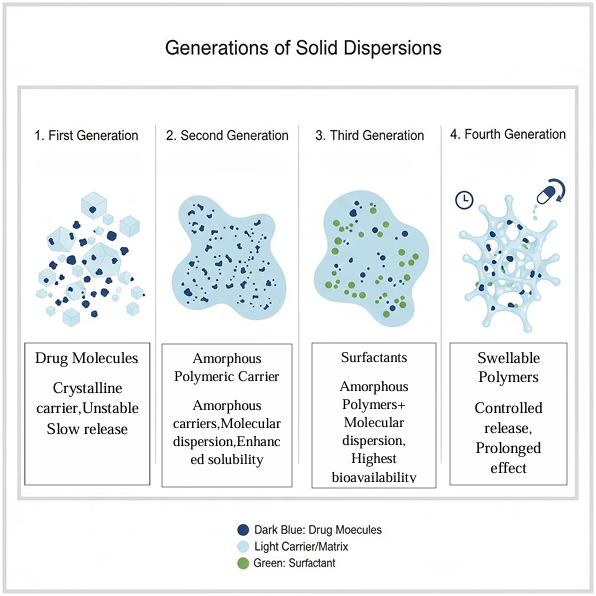
Fig.2 Generations of solid dispersion
Advantages: of ASD
By molecularly dispersing weakly water-soluble medications within hydrophilic polymers or surfactants, solid dispersions greatly increase their aqueous solubility and dissolution performance.[10]For thermolabile drugs, solid dispersion minimizes dust and eliminates explosion risks compared to milling.[10] The choice of carrier in solid dispersions is critical for improving drug wettability, which subsequently enhances solubility and bioavailability.[15]Improved solubility and dissolution from solid dispersions generally enhances oral bioavailability, particularly for classes two & four medicines with low aqueous solubility.[10]Among all formulation techniques are solubility and particle size reduction. Instead of a liquid dose form, the formulation in ASDs results in a solid dosage form.[15]
Disadvantages:
Amorphous to crystalline transformation during manufacturing or storage under stress conditions restricts the commercial usage of solid dispersions.[16]
Drug mobility is enhanced by moisture absorption by polymers, which promotes phase separation & crystal formation.[17]Amorphous drugs can form crystals due to mechanical force, temperature, & humidity.[16]Solubility & dissolution rate decreased when metastable crystalline forms change into stable forms.[18]An increase in production scale may lead to changes in the particle size of amorphous solid dispersions, thereby necessitating optimization of processing parameters before commercialization.[19]
Method Of Preparation:
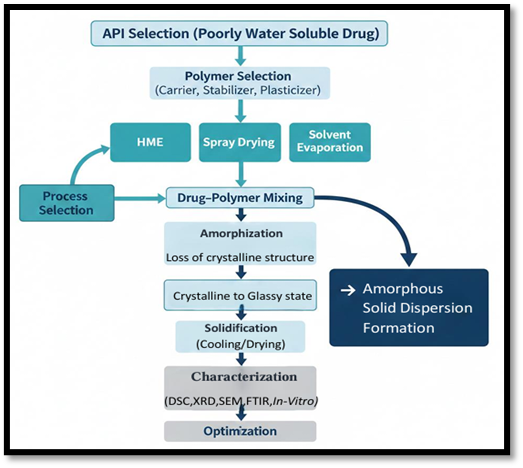
Fig.3. Solid Dispersion Preparation
Methods: -
Table.no. 1 Comparison of three techniques of solid dispersion
|
Parameter |
Hot-Melt Extrusion (HME) |
Spray Drying (SD) |
Solvent Evaporation (SE) |
|
Basic principle |
Drug and polymer are melted and mixed under heat and shear to form a homogeneous amorphous dispersion |
Drug–polymer solution/suspension is atomized into hot air, leading to rapid solvent evaporation and particle formation |
Drug and polymer are dissolved in a solvent and solvent is evaporated to form solid dispersion |
|
Nature of process |
Thermal and mechanical process |
Solvent-based and rapid drying process |
Solvent-based evaporation process |
|
Solvent requirement |
Not required (solvent-free) |
Required (volatile solvents) |
Required (organic solvents or co-solvents) |
|
Temperature exposure |
High temperature |
Moderate temperature with evaporative cooling |
Low to moderate temperature |
|
Suitability for APIs |
Suitable for thermally stable drugs |
Suitable for thermolabile drugs |
Suitable for drugs stable in solvents |
|
Mixing efficiency |
High due to shear and mechanical energy |
High molecular-level mixing |
Moderate mixing |
|
Product form |
Extrudates, pellets, films, granules |
Fine porous particles |
Solid mass that is milled into powder |
|
Advantages |
Solvent-free, continuous, scalable, improved content uniformity and bioavailability |
Suitable for heat-sensitive drugs, fast solvent removal, porous particles, good drug–polymer mixing |
Simple, low equipment cost, flexible formulation |
|
Major limitations |
Not suitable for thermolabile drugs, limited polymer choices, risk of thermal degradation |
Requires large solvent volumes, high cost, solvent recovery needed |
Residual solvent risk, poor scalability, structural changes in matrix |
|
Industrial applicability |
Widely used in continuous manufacturing |
Widely used in pharmaceutical industry |
Mostly laboratory-scale |
HME-
Principle-
It represents a best techniques for creating ASDs. The idea behind technique serves to mix & shape medicinal components into a consistent treatment that doesn't require chemicals by applying heat and mechanical force.[20] This method involves adding a combination of thermoplastic polymeric excipients and the active pharmaceutical ingredient (API) to an extruder, where it melts as a result of vigorous mixing by rotating screws and regulated heating.[21] To guarantee that the medication is evenly distributed throughout the polymer matrix, the substance is completely homogenised as it softens.[22]The molten mass is then cooled and hardened to preserve its structure after being pressed via punch to create sheets, grains, elsewhere tubes, among various forms. By creating amorphous solid dispersions, this method improves the absorption & permeability of drugs with low aqueous solution. It is a useful technology in contemporary pharmaceutical manufacture since it is scalable, environmentally benign, and solvent-free.[7]The main pieces of the HME extruder are hole, hopper, & chamber parts. The extruder barrel consists of a permeable region also tightly sealed portion arrangement. Material is supplied into a heated barrel for hot-melt extrusion (HME), where screw elements facilitate melt transfer, mixing, passing, and grinding. By lowering the viscosity of the polymer, heating enables crystalline medication to either dissolve or disperse at the molecular level within the molten polymer using mechanical and thermal energy. Shear intensity can be controlled with starvation feeders and screw designs that can be adjusted. Shear forces disperse the drug at the molecular level, producing a uniform amorphous solid dispersion with improved solubility. To avoid thermal degradation & guarantee the creation of a stable amorphous solid dispersion, critical processing parameters like managing chamber humidity, device shape, pressure & stress is necessary.[23]
Types of Extrusion Systems-
Single-Screw Extrusion:
The simplest type of HME machinery is a single-screw extruder, which has a single revolving screw inside optimized chamber temperature. After getting introduced inside the chamber, material liquifies & is then pushed through tool that creates final outcome. Such processes work well for straightforward formulations that don't need a lot of mixing because they mainly use drag flow.Single-screw extruders are nevertheless useful in some situations even though they are not frequently utilised for pharmaceutical applications because of their restricted ability for sophisticated mixing & decreased control over process factors. For simple melt processing jobs and solvent removal, when little mixing is required, they are especially helpful. They are a good option for small-scale or early-stage development because of their simple design, cheap operating expenses, & low maintenance requirements.[24]
Twin-Screw Extrusion:
Because of their better performance and versatility, is commonly used kind in HME. These systems are made up of two screws that can either connect or function independently, & they can rotate in a parallel order (co-rotating) or in opposite ways (counter-rotating). Because of their effective dispersive & distributive mixing capabilities, co-rotating mixing designs are particularly preferred among them.[25] Such machines are effective at producing ASs, which improve the absorption & solubility of medications which don't dissolve well in aqueous media. They are also used in the production of oral films, flavor-masked dosage forms, & controlled-release formulations. The procedure can be tailored correspond with flow & physical characteristics of the parts in composition thanks to the modular screw assembly. Twin-screw systems increase batch homogeneity & process productivity by supporting continuous processing and providing dependable growth from laboratory to commercial-scale manufacture.[26]
Advantages-
The technique is solvent-free and sustainable, thus being harmless to the environment while also
Boosting safety and compliance with regulation.[27]
Continuous and flexible manufacturing allows for secure development from laboratory to manufacturing for sale.[28]
HME is more cost-effective since it uses less excipients, solvents, and drying stages.[29]
Shear pressures during extrusion and effective inline mixing result in improved content uniformity.[30]It permits the usage of materials with low compressibility properties regardless of powder compressibility.[31]
Multipurpose polymers that serve as release modifiers, matrix formers, and solubility agents simplify formulations[32]Amorphous solid dispersions enhances ability to dissolve & bioavailability where some drugs which have poor aqueous solubility.[33]The final product has been highly thermodynamically stable, with a low tendency for recrystallisation.[34]
The enclosed extrusion environment minimises oxygen exposure, which is favourable for oxygen-sensitive APIs.[35]
No need for downstream processing, which eliminates extra stages like milling or drying and streamlines total production.[36]
Disadvantages-
Because of the possibility of thermal deterioration during high-temperature processing, this
method is not recommended for thermolabile drugs.[37]
The limited availability of suitable polymers capable of withstanding thermal and mechanical
stress limits formulation design freedom.[32]
Dependence on material flow characteristics, since low flowability can cause feeding errors, agglomeration, and differences in product quality.[38]
MONITORING AND CONTROLLING PARAMETERS
Extrusion processing involves the tracking and analysis of several characteristics, including viscosity, viscosity fluctuation involves flexibility, strength, & heat. Extruders now offer in-process parameter management and control, including temperature, head, and die pressure. The primary monitoring and control parameters include pressure ,stress & speed.
Barrel temperatures: The temperatures are often determined medication & polymers or Tg.[39]
Feed rate and screw speed: It is crucial to maintain a steady pace during the procedure since these two elements work together to ascertain finished product position of expander. Because it controls the equilibrium among the fragile and potent mass transfer modes, this is crucial to the process. The total amount where material at extruder will stay unchanged due to consistent pace of this two elements; hence, shear stress as well as residence time imparted to the material will stay consistent.[40]
The motor load and melt pressure: Machine velocity & speed of feed have an impact on these variables. Chemicals mass of the drug & polymer, also solubility of the polymer using various combinations, determine these values with constant feed rate &/ or screw speed.[41]
Spray Drying-
The liquid is evaporated through medication &polymer mixture to create spray-dried amorphous solid dispersions (ASDs). Several steps and a variety of components are used in the spray-drying process. A nozzle is used to inject the feed solution or suspension into the drying chamber, where it is atomised into tiny droplets that come into contact with the hot drying gas, usually air. Solvent evaporation and particle production result from energy & mass transfer at the droplet surface during their brief stay in the chamber, which typically lasts a few milliseconds. While exhaust gases are screened by HEPA filters, the dried particles are separated from the drying gas using cyclones or bag filters and gathered in a vessel. The type of atomiser system used & viscosity of the feed substance determine which feed pump is best.Solution viscosity, total solid content are important factors influencing the process. Reverse-flow cyclones, which use centrifugal force to separate particles from gas, are frequently used in pharmaceutical applications due to the small particle size of pharmaceuticals. Controlling processing conditions is crucial for both this & above techniques order to prevent drug or polymer degradation & produce a stable amorphous dispersion.[42]Liquids can be turned into dry particles by using a hot gaseous drying agent.[43] Drugs as well as polymers are sprayed via a nozzle in spray drying, hence type of nozzle must be carefully chosen. Pressurised nozzle types are frequently used. Additionally, especially in cases where medication is completely solubilized at chosen network of liquids, it has been shown that solvent's composition during the process has a substantial impact on ASDs.[44,45] The process's fundamental goal that eliminate water level subjecting feeding outcome on heated atmosphere. This process consists of three primary stages, namely, atomisation, the transformation of droplets into particles, and particle accumulation.[1]This method lets the solvent evaporate very quickly, which quickly turns an active pharmaceutical substance & chemical mixture into mixture particles. It involves spraying of medication and polymer mixture as tiny drips entering area with regulated ventilation, humidity, and heat in order to evaporate the mixture. After drying is finished, the product is separated using air as a drying medium. The size of the droplets produced by spray drying will be altered by a protruding spout to satisfy advanced applications or processing specifications.[15] As droplets are only exposed to lower temperatures for milliseconds, spray drying (SD) is a better option for thermally sensitive materials than fusion-generated techniques like HME. Evaporative cooling keeps evaporating droplets colder even when entrance temperatures can reach 120°C.[46] Outlet temperatures are usually ≤60°C. In order to dissolve both hydrophobic APIs and hydrophilic polymers in a usual volatile solvent—which might be challenging to identify—SD frequently needs a high volume of solvent. Nevertheless, solvent removal is far more effective than methods like Rotary Evaporation.[47] Additionally, SD offers better molecular-level drug and polymer mixing than ball milling or solvent evaporation. In pharmaceutical research, the emergence of sophisticated benchtop mist blowers (ProCepT, Niro SD mini,etc) has improved accessibility and usage. Major pharmaceutical companies, such as Abbott, Merck, Novartis, Pfizer, Roche, Sanofi, BMS, and others, have consequently adopted SD extensively.[8]
Advantages of Spray Drying-
For thermosensitive APIs, a non-thermal method is appropriate.[4]ASD particles are porous & less dense, they dissolve quickly.[48]
Unlike the HME dispersions, this type is more beneficiary with increased dosing of medication.
Non-thermal method appropriate for APIs that are sensitive to heat.[49]
Disadvantages of Spray Drying-
The process can create health & nature risks due to the use of chemicals, & it requires costly recovery procedures to control liquid consumption.[4]
Although it has chemical-free technique that works well for temperature susceptible frequently needs further drying to get rid of any remaining solvent. Amorphous solid dispersion can become flexible leftover water content, which raises the risk of reassembling & movement of molecules.[50]
SD may generate solid dispersion at larger medication dosages compared to hot-melt extrusion, but it is challenging to find a solution that dissolves both medication & polymer.[4]
The granules diameter of solid dispersion can change when expanding, hence process modifications required. Consistent quality across various production is ensured by proper management.[51]
Solvent Evaporation-
Solid dispersion being achieved by volatizing of mixture comprising drug with a suitable carrier. Certain polymers are employed transporters employed here in method because of elevated liquification points, which confer stability during processing. A critical prerequisite for this approach has adequate dissolving power through both drug and the carrier in a co-solvent or solvent system. For improving medication's dissolution & carriers, various surfactants such as sodium lauryl sulfate (SLS) and Tween 80 are often incorporated.On the other hand, using a lot of solvents might cause the matrix structure to change significantly. As a result, methods such as vacuum drying and hot plate heating have been developed to enable quick solvent removal.[52,15]
The medication & transporters dispersed with an typical organic chemical liquid, that evaporates to produce a solid mass that is then sieved, dried, and ground. The type of solvent and the temperature at which it evaporates have a major impact on the characteristics of the final solid dispersion. Spray drying is an expansion of the traditional solvent evaporation method in which the solution is exposed to hot air to evaporate the solvent. As an alternative, lyophilization (freeze-drying) creates a molecular dispersion by dissolving drug & medium into fluid, which is frozen & sublimated. The performance of the finished product is greatly impacted by differences in solvent evaporation conditions between these techniques. Complete solvent removal is crucial because most organic solvents have toxicity issues.[53]
Characterization
DSC –
DSC is the most often used method for figuring out the Tg of ASDs. It is divided into following parts: heat-flux DSC & power-compensation. Heat-flux uses symmetrically placed thermocouples to monitor the experimental & comparison pans, allowing for quantitative flow measurement & thermal transition determination. Although power-compensation allows for significantly higher heating & cooling rates, heat-flux designs are still the most popular due to their durability & ease of operation.[54] Thermal events such as crystallisation, curing, and degradation use Arrhenius-based kinetics, which allows the measured heat flow to be correlated to the reaction rate by incorporating proportionality constants & heat capacity contribution Melting, glass transition are the most commonly studied thermal transitions in pharmaceutical systems. Since Tg represents molecular mobility and physical stability. Vibrational motion dominates Cp below Tg, & as the temperature rises, rotational and translational mobility gradually become more significant. Although both conventional DSC and modulated DSC (MDSC) may measure Tg, MDSC offers superior sensitivity and resolution, particularly for systems with subtle transitions.[55,56]
Modulated DSC-
To better distinguish overlapping thermal events, MDSC divides overall heat flow into reversing (heat-capacity–dependent) & non-reversing (kinetic) components. Although this method aids in distinguishing irreversible processes from reversible thermodynamic transitions, interpretation is not always clearly binary. Because melting's latent heat contribution is linearly dependent on heating rate & hence mostly manifests in the reverse signal, it continues to be an outlier. However, crystal flaws, recrystallisation, strong modulation amplitudes, or big sample mass may shift some of the melting process into the non-reversing signal, confounding data interpretation. Compared to traditional DSC, MDSC often offers better resolution of complicated transitions; nonetheless, careful control over experimental conditions is necessary. MDSC splits the overall heat flow into reversing & non-reversing, facilitating resolution of overlapping events. However, because of modulation circumstances, crystal flaws, & latent heat behaviour, which might change melting contributions between signals, melting cannot be completely separated. Therefore, interpretation is required even though MDSC provides a clearer understanding of complex transitions than traditional DSC.[57]The distinction helps differentiate reversible thermodynamic transitions from irreversible processes; however, interpretation is not always straightforward. Melting remains a notable exception because its latent heat is heating-rate dependent and primarily appears in the reversing signal, yet factors such as recrystallisation, defects, large sample mass, or strong modulation can shift part of the melting response into the non-reversing signal. Thus, although MDSC offers clearer insight into complex transitions compared to conventional DSC, careful optimisation of experimental conditions and thoughtful interpretation remain essential.[58]
PLM –
A quick & useful method for evaluating the solidified characteristics for ASDs, especially for verifying amorphization, is polarised light microscopy (PLM). Its sensitivity to optical anisotropy permits separation between crystallised and amorphous state based on birefringence characteristic. While isotropic components, including amorphous systems, show no impact on colours, anisotropic crystalline pharmaceuticals exhibit unique optical patterns, permitting meaningful assessment of crystallinity. Hot-stage polarised light microscopy (HSPLM) is a quick & adaptable technique for monitoring thermal behaviour in samples using a polarised light microscope. When paired with a heating stage (HSPLM), PLM provides extra insight into thermal behaviour, drug–polymer miscibility, crystallising processes, complementing techniques such as XRD, DSC, NMR, and vibrational spectroscopy.[59]
PXRD-
One of the commonly used to characterize non amorphous structures into organic, inorganic along with polymeric materials. As each crystal form has a unique atomic arrangement, PXRD yields specific diffraction peak patterns that permit clear identification of crystalline phases, even when chemical composition is equivalent. PXRD is based on the interaction between sequential crystal lattices and X-rays, which are electromagnetic radiation with wavelengths ranging from around 10?³ to several hundred angströms. The crystal lattice functions as a three-dimensional diffraction grating according to Bragg's diffraction principle. PXRD is widely utilised in both pharmaceutical research and industrial applications because of its speed, dependability, & adaptability for powdered samples.[59,60]
SEM-
Scanning electron microscopy (SEM) is commonly utilised in pharmaceutical research for product development & quality control, notably for determining particle size, shape, & surface properties. Unlike optical systems, SEM images are produced by complicated electron-specimen interactions that yield various signals—secondary electrons (SE), backscattered electrons (BSE), Auger electrons, and distinctive X-rays—which is detected by specifically designed sensors. These signals are outcome between flexible & inflexible, with BSE providing compositional contrast & SE providing high-resolution imaging. Additional signals, such as Bremsstrahlung radiation, enhance material identification. SEM is useful for evaluating processing impacts &, when paired through ultrasound, permits to elemental mapping & better interpretation of miscibility & material properties.[61]
FTIR-
One useful analytical method for examining the molecular makeup and interactions of ASD is this technique. It provides comprehensive information about the molecular vibrations & chemical bonds present in the material by measuring the sample's absorption of infrared radiation as a function of wavelength.[62] Identification of Drug-Carrier Interactions: FTIR can identify changes in functional group vibrational frequencies that point to interactions between the drug and the carrier, different types of chemical bonding. Compatibility Studies: By comparing the FTIR spectra of the pure medication, carrier, solid dispersion, potential differences or interactions can be detected.[63]
In –Vitro Study-
The bioavailability pathway's initial crucial stage, dissolution, is intimately related to later absorption activities. Drug dissolution testing is critical for assessing the performance of hot-melt extrusion (HME) formulations because it measures the dissociation behaviour of drug molecules distributed within hydrophilic polymers following melting, blending, and shear process. Establishing an accurate, effective, & validated dissolve method for poorly soluble medicines is crucial for comparing in vitro release to in vivo performance. According to reported studies, dissolving media with varied pH, volumes, and surfactant concentrations (e.g., Tween 80®, SLS) can improve drug wettability and imitate physiological circumstances. Dissolution in ASDs comprises three different concepts: solubilisation (surfactant-enhanced solubility), supersaturation (drug concentration above crystalline solubility), and solubility (molecularly dissolved API). According to research, depending on the drug–polymer system, ASDs may display limited disintegration and occasionally form colloidal rather than totally dissolved forms. For adequate intestinal absorption, the transition from colloidal dispersion to a molecularly dissolved form must be successful.[1]
Applications-
Solubility/bioavailability enhancement:
Nifedipine's solubility and bioavailability are greatly increased by using HME with Kollidon® VA 64 to create solid dispersions. Amorphization and steady extrudates over time were verified by DSC and XRD.[64]
Co-crystallization:
Carbamazepine–nicotinamide cocrystals were created using MAC and 20% Soluplus®. While Soluplus® improved the dissolving profile, the polymer melt promoted cocrystal generation with quality superior to solvent-evaporated cocrystals.[65]
Taste masking:
HME to mask caffeine citrate's bitter flavour. To boost medication release, mixture has mannitol, & caffeine citrate.[66]
Targeted drug delivery systems:
Targeted intestinal distribution was supported by the amorphous solid dispersion of itraconazole created by HME using carbopol and eudragit, which allowed for a prolonged, constant release and decreased absorption variability.[67]
Table no. 2 Anticancer drugs (BCS II/IV), method of preparation, solubility & their ratios
|
Drug |
Technique |
Solubility |
Ratio Ref. |
|
Abiraterone Acetate |
Solvent granulation method |
1.16-fold to 52 fold increased in different media |
1:2 [68] |
|
Gefitinib |
Dry grinding |
Improved solubility |
2:1 [69] |
|
Artemisinin |
Solvent Evaporation |
16% increase of dissolution |
1:1 [70] |
|
Dasatinib |
Solvent Evaporation |
3.7–4.9 fold increased |
1:5 [71] |
|
Palbociclib |
Slow Evaporation |
1.24 fold Increased BA |
1:2 [72] |
|
Pterostilbene |
Solvent-Mediated Transformation Methodology |
9.9-fold |
1:1 [73] |
|
Pazopanib |
Hot Melt Extrusion |
4.97 fold Increased BA |
1:2 [74] |
|
Regorafenib |
Liquid-assisted grinding |
1.49 fold increased |
1:1 [75] |
|
Axitinib |
Slurry Method |
Good solubility |
1:1 [76] |
|
Ceritinib |
Dry grinding method |
155 fold increased |
1:2 [77] |
CONCLUSION
A significant formulation difficulty that directly impacts oral absorption, therapeutic consistency, & clinical results is the rising incidence of limited aqueous miscible medications. By changing of solid-state characteristics of medicinal molecules & encasing them in polymeric carriers that improve dissolving behaviour and physical stability, amorphous solid dispersion (ASD) technology provides a logical and adaptable alternative. ASDs boost apparent solubility and facilitate the production and maintenance of supersaturated drug concentrations, which are necessary for enhanced gastrointestinal absorption, by removing long-range crystalline order.Glass transition temperature, drug–polymer miscibility, the polymer's capacity to prevent molecular mobility and recrystallisation all have a significant impact on an ASD system's function. Therefore, polymers serve as crucial supports that regulate the kinetic & thermodynamic features of amorphous systems in addition to being processing aids. From basic crystalline carriers through polymer–surfactant combinations and controlled-release matrices, advances in ASD developments show a definite trend towards improving stability, dissolution control, and patient compliance.
The practical application of ASDs at both laboratory and industrial sizes has been made possible by manufacturing processes including spray drying and hot melt extrusion. These procedures enable exact control over crucial variables, guaranteeing scalable production & repeatable product quality. However, issues with moisture sensitivity, temperature stress, and long-term physical stability continue to be significant factors.ASDs are a fundamental formulation method used in the creation of contemporary anticancer drugs. The increasing need for efficient oral cancer treatments is well served by their capacity to increase solubility and bioavailability while permitting solid oral dosage forms. The application and dependability of ASD-based formulations will be further expanded by ongoing advancements in polymer science, processing technologies, and stability evaluation.
REFERENCES





Aishwarya Pachore, Sharvari Chavan, Trupti Abhivant, Shivraj Sulgudle, Santosh Gejage, Amorphous Solid Dispersions: A Promising Strategy to Overcome Solubility Challenges in Anticancer Drug Delivery, Int. J. of Pharm. Sci., 2026, Vol 4, Issue 2, 2435-2453. https://doi.org/10.5281/zenodo.18667174
 10.5281/zenodo.18667174