
View Article

  • Pharmacological Potential and Characterization of Isolated Phytoconstituents from Leptadenia Reticulata: A Review

  • Hygia Institute of Pharmaceutical Education & Research, Lucknow.

Abstract

Leptadenia reticulata (Jivanti) is a valued Ayurvedic medicinal plant known for revitalizing and lactogenic properties. Contemporary phytochemical investigations have revealed that L. reticulata contains a broad range of bioactive secondary metabolites, including triterpenoids, phytosterols, flavonoids, phenolic acids, long-chain aliphatic compounds, and pregnane glycosides. Evidence from in vitro and in vivo studies suggests that major constituents such as rutin, quercetin, p-coumaric acid, luteolin, diosmetin, ?-amyrin, ?-amyrin, stigmasterol, ?-sitosterol, lupeol, and the pregnane glycosides reticulin, deniculatin, and leptaculatin contribute to anti-inflammatory, antioxidant, analgesic, hepatoprotective, immunomodulatory, anticancer, and reproductive benefits. Among the studied fractions, ethyl acetate-rich preparations consistently showed strong anti-inflammatory and analgesic effects in animal models, with HPLC-confirmed enrichment of p-coumaric acid, rutin, and quercetin. Overall, the evidence supports L. reticulata as a promising source of bioactive lead molecules, although many isolated compounds still need direct pharmacological validation and mechanistic work. Their isolation has largely relied on solvent extraction and chromatographic separation, whereas characterization has been accomplished through spectroscopic and hyphenated analytical techniques such as UV, IR, NMR, MS, GC-MS, HPTLC, HPLC, and more recently HR-LCMS/MS. However, the current evidence remains constrained by limited bioactivity-guided isolation, inadequate standardization, insufficient toxicological assessment, and minimal clinical validation. This review critically compiles the available evidence on the phytochemical isolation, structural characterization, and pharmacological evaluation of L. reticulata, and highlights key research gaps for its development as a standardized phytopharmaceutical candidate.

Keywords

Leptadenia reticulata, Jivanti, Phytochemistry, Bioactive compounds, Isolation, Characterization, Pharmacological activity

Introduction

× Popup Image

Because of its long history of traditional usage and its increasingly acknowledged phytochemical richness, Leptadenia reticulata holds a unique place among Ayurvedic medicinal plants [1,2,41–46]. Jivanti is the common name for this species, which has been regarded as a rejuvenating herb and has long been used in formulations to support lactation, boost reproductive health, increase vitality, and reduce overall weakness [1,2,19–21,41–46]. Its usage in cough, fever, diarrhoea, wound diseases, inflammatory illnesses, and times of dietary scarcity is also documented in ethnomedical and historical sources, highlighting its broader social and therapeutic relevance [1,2,43,47,48].

Over the past 20 years, there has been a significant increase in scientific interest in L. reticulata due to its wide variety of biological activities and chemically diversified metabolite profile [1-4]. However, a large portion of the evidence that has been published still depends on crude extracts or partially purified fractions, and very few papers directly link isolated chemicals to confirmed pharmacological effects[1,3,5,6]. A targeted synthesis of the literature addressing isolation, characterisation, and pharmacological evaluation is clearly required in light of this gap. The present review therefore compiles current knowledge on the phytochemistry of L. reticulata, summarizes the principal analytical approaches used for compound identification, and evaluates the pharmacological evidence available for extracts, active fractions, and isolated constituents [1–4].
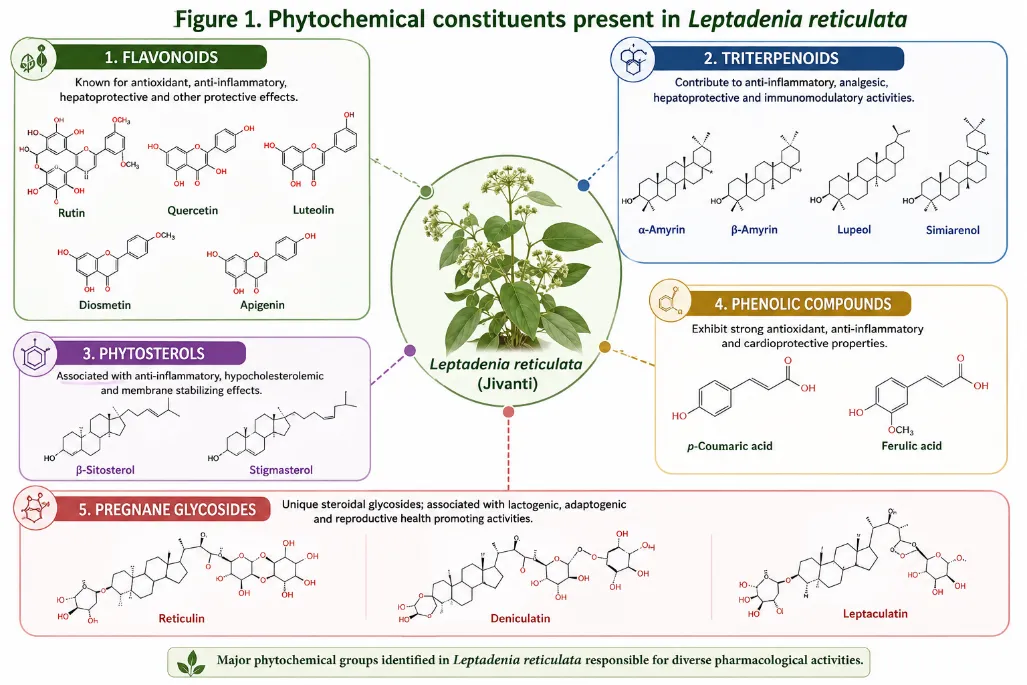
figure

Figure 1: Phytochemical Constituents Present Leptadenia reticulata

2. Methods of Literature Collection

The present review was prepared using published literature from peer-reviewed journals, review articles, pharmacological studies, phytochemical reports, and analytical investigations dealing with Leptadenia reticulata. Particular emphasis was placed on studies addressing phytochemical composition, solvent extraction, chromatographic isolation, spectroscopic and hyphenated characterization, and pharmacological evaluation in experimental models.

Priority was given to studies reporting isolated compounds, bioactivity-guided fractionation, metabolomic profiling, or experimentally supported biological activity. Older pharmacological, botanical, and Ayurvedic references were also incorporated where they contributed to the historical understanding of the species, its traditional indications, or its early phytochemical documentation.

3. Botanical Profile and Ethnomedicinal Significance

Leptadenia reticulata (Retz.) Wight & Arn. belongs to the family Apocynaceae and is widely accepted as the authentic botanical source of Jivanti in Ayurveda [1,41–46]. The plant is a perennial twining shrub or climber, and several reports have highlighted concerns regarding overexploitation, restricted natural availability, and substitution in commercial trade [1,38–40]. These concerns have made authentication, conservation, and standardization particularly important for both research and medicinal use [1,33–40].

Ethnomedicinally, the roots, stems, leaves, and whole plant have been used in respiratory complaints, weakness, reproductive disorders, wounds, gastrointestinal disturbances, and inflammatory conditions [1,2,19–21,41–46]. Galactagogue use remains one of the plant’s most historically important applications, supported by classical Ayurvedic descriptions as well as older experimental and veterinary studies [20,21,50]. Historical famine-food reports also suggest that the plant held supplementary nutritional value in certain contexts, reflecting the broader ethnobotanical relevance of the species [47,48].

4. Phytochemical Profile of Leptadenia reticulata

The best-studied isolated constituents of L. reticulata include flavonoids, triterpenoids, sterols, phenolic acids, and pregnane glycosides. Reported compounds include α-amyrin, β-amyrin, ferulic acid, luteolin, diosmetin, rutin, β-sitosterol, stigmasterol, hentriacontanol, simiarenol, apigenin, reticulin, deniculatin, and leptaculatin. A detailed review also reports lupeol, p-coumaric acid, quercetin, isoquercetin, α-tocopherol, and other metabolites across different plant parts [51]. The phytochemical profile varies with plant part, extraction method, and geography, which may explain why some fractions show stronger biological effects than others [22,26,28].

Table 1: Isolated Compounds from L. reticulata and Their Main Reported Activity

Sr. No. Isolated compound Main reported activity
  Rutin Anti-inflammatory, antioxidant, analgesic relevance [51].
  Quercetin Anti-inflammatory, antioxidant, analgesic relevance [51].
  p-Coumaric acid Antioxidant, anti-inflammatory [51].
  Luteolin Anti-inflammatory, antioxidant [52].
  Diosmetin Anti-inflammatory, antioxidant [53].
  α-Amyrin, β-Amyrin Anti-inflammatory, wound-healing, antioxidant potential[54].
  β-Sitosterol, stigmasterol Anti-inflammatory and membrane-modulating potential[55].
  Lupeol Anti-inflammatory and cytoprotective potential [56].

Chemical composition varies with plant part, extraction solvent, geographical source, and growth conditions [1,4,29]. A comparative GC-MS investigation of leaf, stem, root, and callus extracts reported 77 phytochemicals, including γ-sitosterol, campesterol, fatty acids, alcohols, and terpenoid-related compounds, demonstrating marked tissue-specific and solvent-dependent variation [4]. More recent HR-LCMS/MS-based metabolomic profiling identified 113 compounds in the methanolic extract and linked them to inflammatory-disease-related targets through network pharmacology and docking studies [3]. Taken together, these observations support the conclusion that the therapeutic profile of L. reticulata is likely the result of multiple interacting constituents rather than a single dominant active principle [1,3,4].

5. Isolation of Bioactive Phytochemicals

5.1 Extraction Strategies

Isolation of phytoconstituents from L. reticulata generally begins with drying, pulverization, and extraction using solvents of increasing polarity, including petroleum ether, chloroform, ethyl acetate, methanol, ethanol, and water [1,4,5]. Non-polar solvents are more suitable for triterpenoids, sterols, and aliphatic compounds, while polar and semi-polar solvents preferentially extract flavonoids, phenolic acids, and glycosidic constituents [1,4,22–29]. Sequential extraction remains particularly useful because it enables fractionation of metabolites according to polarity and supports subsequent biological screening of chemically enriched fractions [1].

5.2 Chromatographic Isolation

After extraction, silica gel column chromatography is the most commonly reported method for separation and purification of compounds from L. reticulata [1,5]. Fractions are generally monitored using TLC or HPTLC and eluted with solvent systems of gradually increasing polarity [1,27,28]. One of the best documented examples is the isolation of lupeol from the chloroform extract of the roots. Rajanna and colleagues further evaluated the isolated lupeol for antimicrobial activity, thereby providing an example of direct linkage between compound isolation and pharmacological testing [5].

5.3 Bioactivity-Guided Fractionation

Bioactivity-guided fractionation has been explored in the context of antidiabetic investigation. An active fraction isolated from the leaf extract significantly improved serum glucose and lipid parameters in diabetic rats, highlighting the value of targeted fractionation compared with extract-level screening alone [6]. Although this direction is promising, the overall literature still contains relatively few rigorous bioactivity-guided isolation studies, indicating considerable scope for further work [1,3,6].
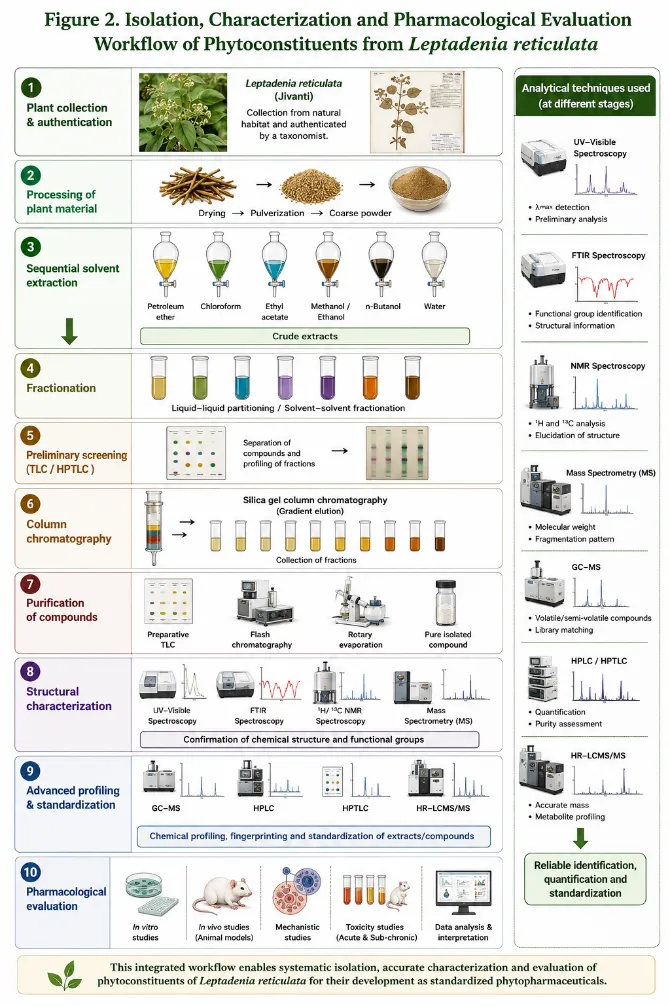
figure

Figure 2: Isolation and Characterization Flowchart

6. Characterization of Isolated Compounds

6.1 Spectroscopic Characterization

Structural elucidation of isolated compounds from L. reticulata has primarily relied on UV-visible spectroscopy, infrared spectroscopy, ^1H NMR, ^13C NMR, and mass spectrometry [1,5,25]. Lupeol isolated from the roots represents one of the clearest compound-level examples in this species and was characterized using UV, IR, ^1H NMR, ^13C NMR, and FAB-MS [5]. Earlier phytochemical investigations also documented crystalline principles and characteristic triterpenoid or sterol constituents using classical natural product chemistry approaches [22–26].

6.2 GC-MS Profiling

GC-MS has been widely used for characterization of volatile and semi-volatile compounds, including terpenoids, sterols, fatty acids, and long-chain aliphatics [4,29,32]. Comparative GC-MS studies across plant tissues have highlighted major chemical differences between leaf, stem, root, and callus extracts, underscoring the importance of analytical profiling in authentication and standardization [4,29].

6.3 HPTLC, HPLC, and Advanced Profiling

Marker-based standardization using HPTLC and HPLC has been reported for compounds such as rutin, stigmasterol, tocopherol acetate, β-sitosterol, lupeol, quercetin, and related phytochemical markers [27,28,30]. These methods are critical because L. reticulata is commercially important and susceptible to substitution and compositional variability [1,27,28]. More recently, HR-LCMS/MS, metabolomics, and network pharmacology have expanded the chemical understanding of the species beyond conventional profiling and have provided a systems-level framework for linking multiple metabolites with predicted biological targets and pathways [3].

7. Pharmacological Evaluation

7.1 Antioxidant Activity

Antioxidant activity is among the most frequently reported pharmacological properties of L. reticulata. Ethanolic leaf extract has been shown to produce antioxidant effects in rodent models, and the activity is generally attributed to flavonoids and phenolic constituents present in the plant [7,10]. Such antioxidant potential may contribute significantly to its traditional reputation as a rejuvenative and restorative herb [1,2,7].

7.2 Anti-inflammatory and Analgesic Activity

A substantial body of evidence supports the anti-inflammatory and analgesic potential of L. reticulata. Experimental studies have demonstrated anti-inflammatory, analgesic, and anti-lipoxygenase activities, while recent metabolomic and docking work also supports anti-inflammatory effects mediated through multiple targets and pathways [3,9]. The plant’s triterpenoids, phytosterols, and polyphenolic constituents likely contribute collectively to these actions [1,3,9].

7.3 Immunomodulatory Activity

Immunomodulatory activity is another important pharmacological property of L. reticulata. Ethanolic leaf extract has been reported to modulate both humoral and cell-mediated immune responses in rodents [7]. In another study, the plant alleviated chromate-induced immunosuppression and oxidative stress, supporting its immunorestorative potential [8]. These observations align closely with its traditional rasayana-like use [1,7,8].

7.4 Antimicrobial and Antifungal Activity

Antimicrobial activity has been demonstrated for both crude extracts and isolated compounds of L. reticulata. Lupeol isolated from the root extract exhibited activity against bacterial and fungal strains [5]. Additional reports have documented antibacterial or antifungal properties of extracts and phytochemical fractions, lending support to the traditional use of the plant in infection-associated conditions and wound management [16,17,30].
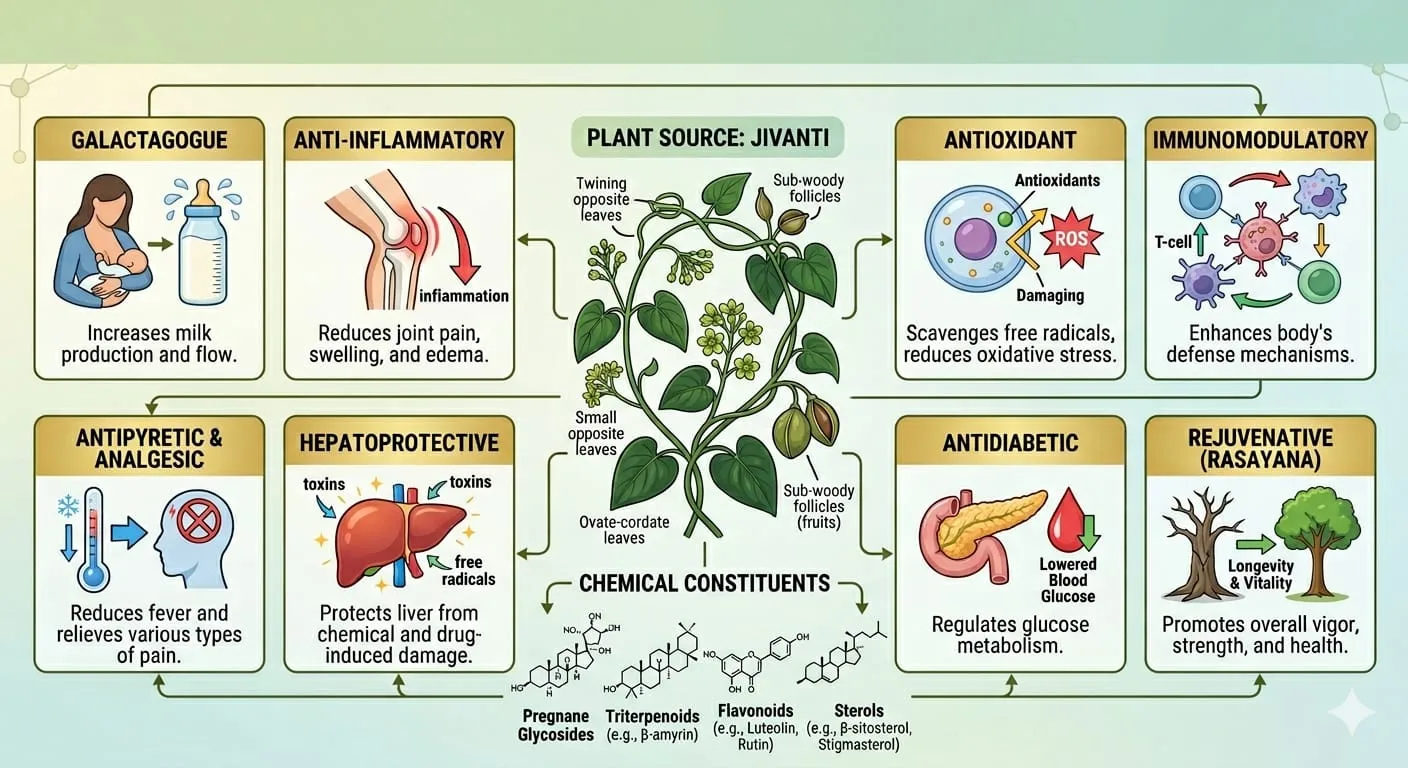
figure

Figure 3: Various Pharmacological Activities of Leptadenia reticulata

7.5 Wound-Healing Activity

Wound-healing activity has been reported for aqueous extract formulations of L. reticulata in excision and burn wound models. Improvement in wound contraction and tissue repair is pharmacologically plausible in view of the combined antioxidant, anti-inflammatory, and antimicrobial properties of the plant[11].

7.6 Antidiabetic and Hypolipidemic Activity

Antidiabetic studies on L. reticulata have yielded promising results. An active leaf fraction significantly lowered serum glucose and improved lipid profiles in normal and diabetic rats. This suggests that the plant contains constituents capable of modulating carbohydrate and lipid metabolism, although further purification and mechanism-oriented work remain necessary Experimental studies on Leptadenia reticulata have demonstrated both antidiabetic and hypolipidemic potential. In streptozotocin-induced diabetic rats, the ethanol extract of the leaves reduced fasting blood glucose, while the isolated active fraction Lr-1 significantly decreased glucose, cholesterol, and triglyceride levels and improved HDL, indicating a dual metabolic benefit. Reviews of the plant’s pharmacological profile also list antidiabetic activity among its documented effects, supporting its traditional use in metabolic disorders [6]. Venkatesan & Arul Gnana Dhas, 2014 tested Petroleum ether, ethyl acetate, and ethanol leaf extracts on normal and diabetic rats models. The ethanol extract was most active, and the purified fraction Lr-1 had stronger glucose- and lipid-lowering effects than the crude extract [57].

7.7 Antiulcer and Hepatoprotective Activity

The literature also attributes antiulcer activity to L. reticulata, with extract-level studies reporting reductions in ulcer index and improvement in gastric parameters in experimental models. Hepatoprotective potential has also been suggested in paracetamol-induced hepatotoxicity models, indicating that the plant may possess additional protective effects in oxidative and inflammatory injury states. Bodhanapu et al., 2011 perform ethanol, indomethacin, and pylorus ligation induced ulcer models in rats. The aqueous leaf extract reduced ulcer index, acidity, and acid volume, and increased gastric pH[12-13].

7.8 Reproductive, Neuropharmacological, and Anticancer-Related Activity

Preliminary studies have examined anti-implantation, neuropharmacological, antiepileptic, and anticarcinogenic activity, although the evidence in these areas remains less extensive than for the anti-inflammatory or antioxidant effects [14,15,18,50]. These findings nevertheless expand the biological scope of the plant and indicate several avenues for future mechanistic investigation.

7.9 Lactogenic Activity

The galactagogue effect of L. reticulata remains one of its most historically important medicinal applications. Older experimental and veterinary studies, along with subsequent review literature, support the view that the plant and related formulations may promote lactation [20,21,50]. However, stronger modern validation using standardized extracts and controlled clinical study designs is still needed [1,2].

DISCUSSION

The available evidence clearly establishes Leptadenia reticulata as a phytochemically rich medicinal plant with a broad spectrum of experimentally supported biological activities. One of the main strengths of the literature is the general consistency between traditional claims and modern pharmacological observations, especially in the areas of antioxidant, anti-inflammatory, immunomodulatory, antimicrobial, and metabolic activity. The plant’s diverse chemical composition, particularly its triterpenoids, phytosterols, flavonoids, phenolic acids, and pregnane glycosides, provides a plausible mechanistic basis for these effects.

At the same time, the literature reveals significant limitations. Most studies remain extract-based rather than compound-based, and relatively few have employed rigorous bioactivity-guided isolation. Standardization remains inconsistent across plant parts, extraction solvents, and analytical methods. Toxicological assessment, pharmacokinetic profiling, and clinical evidence are sparse. These limitations restrict the translation of L. reticulata from a promising ethnomedicinal resource to an evidence-based phytopharmaceutical candidate.

Another important theme emerging from the literature is the need to connect phytochemistry with conservation. Since the plant is considered threatened or vulnerable in several regional contexts, sustainable sourcing, micropropagation, somatic embryogenesis, and in vitro conservation strategies are critical for ensuring future availability of authenticated material. Biotechnological interventions, including nodal culture, somatic embryogenesis, and cost-effective micropropagation systems, have already demonstrated value in the conservation and multiplication of the species.

9. Future Perspectives

Future research on L. reticulata should prioritize robust bioactivity-guided fractionation, isolation of active principles, and structure-confirmed compound-level pharmacology. Standardized analytical platforms such as HPTLC, HPLC, GC-MS, and HR-LCMS/MS should be routinely integrated into phytochemical and pharmacological studies. Particular attention should be directed toward anti-inflammatory, wound-healing, metabolic, and lactogenic applications, as these areas presently combine traditional relevance with promising experimental support.

There is also a clear need for better toxicological assessment, pharmacokinetic studies, and controlled clinical evaluation. In parallel, conservation-oriented cultivation, authenticated sourcing, and tissue culture-assisted propagation should be strengthened to ensure both scientific reproducibility and sustainable medicinal use.

CONCLUSION

Leptadenia reticulata is a therapeutically promising medicinal plant with strong traditional relevance and an expanding modern evidence base. Published studies show that it contains a wide spectrum of bioactive metabolites and exhibits antioxidant, anti-inflammatory, analgesic, immunomodulatory, antimicrobial, wound-healing, antidiabetic, hypolipidemic, antiulcer, hepatoprotective, neuropharmacological, and lactogenic activities. However, to achieve wider scientific and pharmaceutical acceptance, future work must move beyond crude extract pharmacology toward rigorous compound isolation, robust structural characterization, validated standardization, toxicological assessment, and clinical validation. In this regard, L. reticulata remains a valuable and underdeveloped source of bioactive phytochemicals with significant potential for phytopharmaceutical development.

REFERENCES

  1. Mohanty SK, Swamy MK, Sinniah UR, Anuradha M. Leptadenia reticulata (Retz.) Wight & Arn. (Jivanti): botanical, agronomical, phytochemical, pharmacological, and biotechnological aspects. Molecules. 2017;22 (6):1019.
  2. Kumari S, Saini R, Bhatnagar A, Mishra A. A comprehensive review on Ayurvedic herb Leptadenia reticulata (Jeevanti): a phytochemistry and pharmacological perspective. Nat Prod Res. 2024.
  3. Mallepura Adinarayanaswamy Y, Padmanabhan D, Natarajan P, Palanisamy S. Metabolomic profiling of Leptadenia reticulata: unveiling therapeutic potential for inflammatory diseases through network pharmacology and docking studies. Pharmaceuticals (Basel). 2024;17 (4):423.
  4. Godara P, Dulara BK, Barwer N, Chaudhary NS. Comparative GC-MS analysis of bioactive phytochemicals from different plant parts and callus of Leptadenia reticulata. Pharmacogn J. 2019.
  5. Rajanna LN, Seetharam YN, Devendra NK. Isolation and characterization of lupeol from roots of Leptadenia reticulata and its antimicrobial activity. Pharmacologyonline. 2009;3:489-494.
  6. Venkatesan N, Thiyagarajan V, Narayanan S, et al. Effect of an active fraction isolated from the leaf extract of Leptadenia reticulata on serum glucose and lipid profile in normal and diabetic rats. J Ethnopharmacol. 2014.
  7. Pravansha S, Thippeswamy BS, Veerapur VP. Immunomodulatory and antioxidant effect of Leptadenia reticulata leaf extract in rodents: possible modulation of cell and humoral immune response. Immunopharmacol Immunotoxicol. 2012;34 (6):1010-1019.
  8. Girishkumar V, Sreepriya M, Praveenkumar S, Bali G, Jagadeesh MS. Modulating effect of Leptadenia reticulata against chromate-induced immunosuppression and oxidative stress. J Ethnopharmacol. 2010.
  9. Mohanty SK, et al. Analgesic, anti-inflammatory, anti-lipoxygenase activity and characterization of the most active fraction of Leptadenia reticulata. 2015.
  10. Mohanty SK, Mallappa KS, Godavarthi A, Subbanarasiman B, Maniyam A. Evaluation of antioxidant and in vitro cytotoxicity of micropropagated and naturally grown plants of Leptadenia reticulata—an endangered medicinal plant. Asian Pac J Trop Med. 2014;7 Suppl 1:S267-S271.
  11. Sneha B, et al. Wound healing activity of aqueous extract of Leptadenia reticulata in Wistar albino rats. Int J Pharm Sci Res. 2016.
  12. Bodhanapu S, Sreedhar S, Pasumarthi P, Tamizhmani, Satyakumar B. Antiulcer activity of ethanolic extract of Leptadenia reticulata leaves. Pharmacologyonline. 2011;2:1190-1196.
  13. Nema AK, Agarwal A, Kashaw V. Screening of hepatoprotective potential of Leptadenia reticulata stems against paracetamol-induced hepatotoxicity in rats. Int J Res Pharm Biomed Sci. 2011;2 (2):666-671.
  14. Rani S, Manavalan R, Kilimozhi D, Balamurugan K. Preliminary study on the anti-implantation activity of Leptadenia reticulata in female rats. Int J PharmTech Res. 2009;1:1403-1405.
  15. Kumari BP, Reddy RM, Veena BM, Babu TM, Ranganayakulu D. Antiepileptic activity and neuropharmacological screening of methanolic extract of Leptadenia reticulata against different experimental models. J Adv Drug Res. 2010;1:1-9.
  16. Sureshkumar P. Anti-fungal activity of Leptadenia reticulata in rat animal model in vivo. J Basic Appl Biol. 2008;2 (1):9-13.
  17. Raman N, Sundaram M, Raghunathan R, Thyagarajan SP. Phytochemical isolation and antimicrobial activity of Leptadenia reticulata Wight & Arn. In: Proceedings of the 3rd International Conference on Natural Products: Natural Products—A Must for Human Survival; 2004.
  18. Sathiyanarayanan L, Arulmozhi S, Chidambaranathan N. Anticarcinogenic activity of Leptadenia reticulata against Dalton’s ascitic lymphoma. Iran J Pharmacol Ther. 2007;6:133-135.
  19. Agarwal SL, Deshmankar BS, Verma SCL, Saxena SP. Studies on Leptadenia reticulata. Part I. Pharmacological actions of aqueous extract. Indian J Med Res. 1960;48:457-464.
  20. Anjaria JV, Gupta I. Studies on lactogenic property of Leptadenia reticulata (Jivanti) and Leptaden tablets in goats, sheep, cows and buffaloes. Indian Vet J. 1967;44:967-974.
  21. Anjaria JV, Varia MR, Janakiraman K, Gulati OD. Studies on Leptadenia reticulata: lactogenic effects on rats. Indian J Exp Biol. 1975;13:448-449.
  22. Krishna PV, Rao EV, Rao DV. Crystalline principles from the leaves and twigs of Leptadenia reticulata. Planta Med. 1975;27:395-400.
  23. Subramanian PS, Lakshmanan AJ. On the constituents of Leptadenia reticulata Wight & Arn.: occurrence of simiarenol. Indian J Chem B. 1977;5B:180.
  24. Sastry BS, Vijayalakshmi T, Venkata RD, Venkata RE. Chemical constituents of stem bark of Leptadenia reticulata. Indian Drugs. 1985;22:612.
  25. Srivastav S, Deepak D, Khare A. Three novel pregnane glycosides from Leptadenia reticulata Wight & Arn. Tetrahedron. 1994;50:789-798.
  26. Anjaria JV, Mankad BN, Gulati OD. Isolation of stigmasterols and tocopherols from Leptadenia reticulata by a shortcut method. Indian J Pharm. 1974;36:148-149.
  27. Prashanth KV, Ravishankara MN, Padh H, Rajani M. High-performance thin-layer chromatographic method for estimation of rutin in medicinal plants. J Planar Chromatogr. 2003;16:386-389.
  28. Hamrapurkar P, Karishma P. HPTLC determination of stigmasterol and tocopherol acetate in Leptadenia reticulata and in its formulation. J Planar Chromatogr. 2007;20 (3):183-187.
  29. Rajeswari J, Rani S. GC-MS analysis of whole plant of Leptadenia reticulata. Int J PharmTech Res. 2014;6 (7):2043-2050.
  30. Godara P, Kumari P, Chaudhary NS. Antimicrobial activity and qualitative assessment of β-sitosterol, lupeol, and quercetin from extracts of Leptadenia reticulata. Vegetos. 2025.
  31. Sharma RK, et al. Molecular genetic diversity and biological activity profile of Leptadenia reticulata (Jivanti). Plant Gene. 2024.
  32. Mamgain J, et al. Genome size and gas chromatography-mass spectrometry profile of Leptadenia reticulata. 2022.
  33. Parabia FM, Gami B, Kothari IL, Mohan JSS, Parabia HM. Effect of plant growth regulators on in vitro morphogenesis of Leptadenia reticulata from nodal explants. Curr Sci. 2007;92 (9):1290-1293.
  34. Arya V, Shekhawat NS, Singh RP. Micropropagation of Leptadenia reticulata: a medicinal plant. In Vitro Cell Dev Biol Plant. 2003;39:180-185.
  35. Martin KP. Benzyladenine-induced somatic embryogenesis and plant regeneration of Leptadenia reticulata. Biol Plant. 2004;48:285-288.
  36. Sudipta KM, Kumara Swamy M, Balasubramanya S, Anuradha M. Cost effective approach for in vitro propagation of Leptadenia reticulata Wight & Arn.—a threatened plant of medicinal importance. J Phytol. 2011;3 (2):72-79.
  37. Bhatt T, Jain V, Jayathirtha MG, Banerjee G, Mishra SH. In vitro regeneration of roots of Phyla nodiflora and Leptadenia reticulata, and comparison of roots from cultured and natural plants for secondary metabolites. Indian J Exp Biol. 2006;40:1382-1386.
  38. Rathore MS, Shekhawat NS. Biotechnological approaches for conservation of germplasm, problems of propagation and sustainable utilization of important Asclepiadaceae plants of Indian Thar Desert. Global J Environ Res. 2009;3:46-51.
  39. Sonara GB, Saralaya MG, Gheewala NK. A review on phytochemical and pharmacological properties of Leptadenia reticulata. Int J Pharm Sci Rev Res. 2013;4 (1):3408-3417.
  40. Dhawan P, Kour M, Damor S. A review on phytochemical and pharmacological profile of endangered medicinal plant Leptadenia reticulata (Retz.) Wight & Arn. Int J Sci Res. 2013;2 (10):1-4.
  41. Gupta RC. Botanical identity of Jivanti—the Ayurvedic rejuvenant par excellence. Appl Bot. 1997;17:49-63.
  42. Gupta AK, Tandon N, Sharma M. Quality Standards of Indian Medicinal Plants. Vol. 2. New Delhi: Oxford University Press; 2005.
  43. Kirtikar KR, Basu BD. Indian Medicinal Plants. Vol. 3. New Delhi: Bishen Singh Mahendrapal Singh; 1975.
  44. Khare CP. Encyclopedia of Indian Medicinal Plants. New York: Springer; 2004.
  45. Satyavati GV, Gupta AK, Tandon N, Seth SD. Medicinal Plants of India. Vol. 2. New Delhi: Indian Council of Medical Research; 1987.
  46. Vaidya BG. Nighantu Adarsha. Vol. 2. Surat: Shri Swami Atmanand Saraswati Ayurved Sahakari Pharmacy Ltd; 1965.
  47. Shortt J. List of wild plants and vegetables used as food by people in famine times. Indian For. 1887;3:232-238.
  48. Gammie AG. A note on plants used for food during famines and seasons of scarcity in the Bombay Presidency. India Bot Surv. 1902;2:171-196.
  49. Dandiya PC, Chopra YM. CNS-active drugs from plants indigenous to India. Indian J Pharm. 1970;2:67-90.
  50. Achari K, Sinha R. Treatment of threatened and recurrent abortions: a clinical study of 62 cases with Leptaden. Patna J Med. 1966;30:1-3.
  51. Mohanty SK, Swamy MK, Sinniah UR, Anuradha M. Leptadenia reticulata (Retz.) Wight & Arn. (Jivanti): Botanical, Agronomical, Phytochemical, Pharmacological, and Biotechnological Aspects. Molecules. 2017 Jun 19;22 (6):1019. doi: 10.3390/molecules22061019. PMID: 28629185; PMCID: PMC6152761.
  52. Seelinger G, Merfort I, Schempp CM. Anti-oxidant, anti-inflammatory and anti-allergic activities of luteolin. Planta medica. 2008 Nov;74 (14):1667-77.
  53. Fang Y, Xiang W, Cui J, Jiao B, Su X. Anti-inflammatory properties of the Citrus Flavonoid Diosmetin: an updated review of experimental models. Molecules. 2024 Jan;29 (7):1521.
  54. Anyanwu EG, Onuchukwu CL, Ojukwu CP, Anyanwu CN. Ethnopharmacological Evaluation of Vitellaria paradoxa Triterpenes for Wound Healing: In Vivo Evidence of Lupeol and α/β-Amyrin in Promoting Dermal Regeneration. Journal of Ethnopharmacology. 2026 Jan 29:121293.
  55. Usin SG, Nwankwo DO, Ruggah AH, Oluwadarasimi AA, Ali MA, Ayeni TO, Ohilebo AA, Aiyelabegan AO, De Campos OC, Yomi KR, Lakrikh S. Kaempferols from Echinacea purpurea demonstrate anti-cancer potential by targeting anexelekto in breast cancer therapy using chemoinformatics approach. Discover Oncology. 2025 Dec;16 (1):1-37.
  56. Banu Z. Therapeutic promise of Lupeol: a comprehensive review of its pharmacological potential. Annals of Phytomedicine. 2024;13 (2):63-74.
  57. Venkatesan N, Anton Smith AG. Effect of an active fraction isolated from the leaf extract of Leptadenia reticulata on plasma glucose concentration and lipid profile in streptozotocin-induced diabetic rats. Chin J Nat Med. 2014 Jun;12 (6):455-60. doi: 10.1016/S1875-5364 (14)60071-6. PMID: 24969527.

Reference

  1. Mohanty SK, Swamy MK, Sinniah UR, Anuradha M. Leptadenia reticulata (Retz.) Wight & Arn. (Jivanti): botanical, agronomical, phytochemical, pharmacological, and biotechnological aspects. Molecules. 2017;22 (6):1019.
  2. Kumari S, Saini R, Bhatnagar A, Mishra A. A comprehensive review on Ayurvedic herb Leptadenia reticulata (Jeevanti): a phytochemistry and pharmacological perspective. Nat Prod Res. 2024.
  3. Mallepura Adinarayanaswamy Y, Padmanabhan D, Natarajan P, Palanisamy S. Metabolomic profiling of Leptadenia reticulata: unveiling therapeutic potential for inflammatory diseases through network pharmacology and docking studies. Pharmaceuticals (Basel). 2024;17 (4):423.
  4. Godara P, Dulara BK, Barwer N, Chaudhary NS. Comparative GC-MS analysis of bioactive phytochemicals from different plant parts and callus of Leptadenia reticulata. Pharmacogn J. 2019.
  5. Rajanna LN, Seetharam YN, Devendra NK. Isolation and characterization of lupeol from roots of Leptadenia reticulata and its antimicrobial activity. Pharmacologyonline. 2009;3:489-494.
  6. Venkatesan N, Thiyagarajan V, Narayanan S, et al. Effect of an active fraction isolated from the leaf extract of Leptadenia reticulata on serum glucose and lipid profile in normal and diabetic rats. J Ethnopharmacol. 2014.
  7. Pravansha S, Thippeswamy BS, Veerapur VP. Immunomodulatory and antioxidant effect of Leptadenia reticulata leaf extract in rodents: possible modulation of cell and humoral immune response. Immunopharmacol Immunotoxicol. 2012;34 (6):1010-1019.
  8. Girishkumar V, Sreepriya M, Praveenkumar S, Bali G, Jagadeesh MS. Modulating effect of Leptadenia reticulata against chromate-induced immunosuppression and oxidative stress. J Ethnopharmacol. 2010.
  9. Mohanty SK, et al. Analgesic, anti-inflammatory, anti-lipoxygenase activity and characterization of the most active fraction of Leptadenia reticulata. 2015.
  10. Mohanty SK, Mallappa KS, Godavarthi A, Subbanarasiman B, Maniyam A. Evaluation of antioxidant and in vitro cytotoxicity of micropropagated and naturally grown plants of Leptadenia reticulata—an endangered medicinal plant. Asian Pac J Trop Med. 2014;7 Suppl 1:S267-S271.
  11. Sneha B, et al. Wound healing activity of aqueous extract of Leptadenia reticulata in Wistar albino rats. Int J Pharm Sci Res. 2016.
  12. Bodhanapu S, Sreedhar S, Pasumarthi P, Tamizhmani, Satyakumar B. Antiulcer activity of ethanolic extract of Leptadenia reticulata leaves. Pharmacologyonline. 2011;2:1190-1196.
  13. Nema AK, Agarwal A, Kashaw V. Screening of hepatoprotective potential of Leptadenia reticulata stems against paracetamol-induced hepatotoxicity in rats. Int J Res Pharm Biomed Sci. 2011;2 (2):666-671.
  14. Rani S, Manavalan R, Kilimozhi D, Balamurugan K. Preliminary study on the anti-implantation activity of Leptadenia reticulata in female rats. Int J PharmTech Res. 2009;1:1403-1405.
  15. Kumari BP, Reddy RM, Veena BM, Babu TM, Ranganayakulu D. Antiepileptic activity and neuropharmacological screening of methanolic extract of Leptadenia reticulata against different experimental models. J Adv Drug Res. 2010;1:1-9.
  16. Sureshkumar P. Anti-fungal activity of Leptadenia reticulata in rat animal model in vivo. J Basic Appl Biol. 2008;2 (1):9-13.
  17. Raman N, Sundaram M, Raghunathan R, Thyagarajan SP. Phytochemical isolation and antimicrobial activity of Leptadenia reticulata Wight & Arn. In: Proceedings of the 3rd International Conference on Natural Products: Natural Products—A Must for Human Survival; 2004.
  18. Sathiyanarayanan L, Arulmozhi S, Chidambaranathan N. Anticarcinogenic activity of Leptadenia reticulata against Dalton’s ascitic lymphoma. Iran J Pharmacol Ther. 2007;6:133-135.
  19. Agarwal SL, Deshmankar BS, Verma SCL, Saxena SP. Studies on Leptadenia reticulata. Part I. Pharmacological actions of aqueous extract. Indian J Med Res. 1960;48:457-464.
  20. Anjaria JV, Gupta I. Studies on lactogenic property of Leptadenia reticulata (Jivanti) and Leptaden tablets in goats, sheep, cows and buffaloes. Indian Vet J. 1967;44:967-974.
  21. Anjaria JV, Varia MR, Janakiraman K, Gulati OD. Studies on Leptadenia reticulata: lactogenic effects on rats. Indian J Exp Biol. 1975;13:448-449.
  22. Krishna PV, Rao EV, Rao DV. Crystalline principles from the leaves and twigs of Leptadenia reticulata. Planta Med. 1975;27:395-400.
  23. Subramanian PS, Lakshmanan AJ. On the constituents of Leptadenia reticulata Wight & Arn.: occurrence of simiarenol. Indian J Chem B. 1977;5B:180.
  24. Sastry BS, Vijayalakshmi T, Venkata RD, Venkata RE. Chemical constituents of stem bark of Leptadenia reticulata. Indian Drugs. 1985;22:612.
  25. Srivastav S, Deepak D, Khare A. Three novel pregnane glycosides from Leptadenia reticulata Wight & Arn. Tetrahedron. 1994;50:789-798.
  26. Anjaria JV, Mankad BN, Gulati OD. Isolation of stigmasterols and tocopherols from Leptadenia reticulata by a shortcut method. Indian J Pharm. 1974;36:148-149.
  27. Prashanth KV, Ravishankara MN, Padh H, Rajani M. High-performance thin-layer chromatographic method for estimation of rutin in medicinal plants. J Planar Chromatogr. 2003;16:386-389.
  28. Hamrapurkar P, Karishma P. HPTLC determination of stigmasterol and tocopherol acetate in Leptadenia reticulata and in its formulation. J Planar Chromatogr. 2007;20 (3):183-187.
  29. Rajeswari J, Rani S. GC-MS analysis of whole plant of Leptadenia reticulata. Int J PharmTech Res. 2014;6 (7):2043-2050.
  30. Godara P, Kumari P, Chaudhary NS. Antimicrobial activity and qualitative assessment of β-sitosterol, lupeol, and quercetin from extracts of Leptadenia reticulata. Vegetos. 2025.
  31. Sharma RK, et al. Molecular genetic diversity and biological activity profile of Leptadenia reticulata (Jivanti). Plant Gene. 2024.
  32. Mamgain J, et al. Genome size and gas chromatography-mass spectrometry profile of Leptadenia reticulata. 2022.
  33. Parabia FM, Gami B, Kothari IL, Mohan JSS, Parabia HM. Effect of plant growth regulators on in vitro morphogenesis of Leptadenia reticulata from nodal explants. Curr Sci. 2007;92 (9):1290-1293.
  34. Arya V, Shekhawat NS, Singh RP. Micropropagation of Leptadenia reticulata: a medicinal plant. In Vitro Cell Dev Biol Plant. 2003;39:180-185.
  35. Martin KP. Benzyladenine-induced somatic embryogenesis and plant regeneration of Leptadenia reticulata. Biol Plant. 2004;48:285-288.
  36. Sudipta KM, Kumara Swamy M, Balasubramanya S, Anuradha M. Cost effective approach for in vitro propagation of Leptadenia reticulata Wight & Arn.—a threatened plant of medicinal importance. J Phytol. 2011;3 (2):72-79.
  37. Bhatt T, Jain V, Jayathirtha MG, Banerjee G, Mishra SH. In vitro regeneration of roots of Phyla nodiflora and Leptadenia reticulata, and comparison of roots from cultured and natural plants for secondary metabolites. Indian J Exp Biol. 2006;40:1382-1386.
  38. Rathore MS, Shekhawat NS. Biotechnological approaches for conservation of germplasm, problems of propagation and sustainable utilization of important Asclepiadaceae plants of Indian Thar Desert. Global J Environ Res. 2009;3:46-51.
  39. Sonara GB, Saralaya MG, Gheewala NK. A review on phytochemical and pharmacological properties of Leptadenia reticulata. Int J Pharm Sci Rev Res. 2013;4 (1):3408-3417.
  40. Dhawan P, Kour M, Damor S. A review on phytochemical and pharmacological profile of endangered medicinal plant Leptadenia reticulata (Retz.) Wight & Arn. Int J Sci Res. 2013;2 (10):1-4.
  41. Gupta RC. Botanical identity of Jivanti—the Ayurvedic rejuvenant par excellence. Appl Bot. 1997;17:49-63.
  42. Gupta AK, Tandon N, Sharma M. Quality Standards of Indian Medicinal Plants. Vol. 2. New Delhi: Oxford University Press; 2005.
  43. Kirtikar KR, Basu BD. Indian Medicinal Plants. Vol. 3. New Delhi: Bishen Singh Mahendrapal Singh; 1975.
  44. Khare CP. Encyclopedia of Indian Medicinal Plants. New York: Springer; 2004.
  45. Satyavati GV, Gupta AK, Tandon N, Seth SD. Medicinal Plants of India. Vol. 2. New Delhi: Indian Council of Medical Research; 1987.
  46. Vaidya BG. Nighantu Adarsha. Vol. 2. Surat: Shri Swami Atmanand Saraswati Ayurved Sahakari Pharmacy Ltd; 1965.
  47. Shortt J. List of wild plants and vegetables used as food by people in famine times. Indian For. 1887;3:232-238.
  48. Gammie AG. A note on plants used for food during famines and seasons of scarcity in the Bombay Presidency. India Bot Surv. 1902;2:171-196.
  49. Dandiya PC, Chopra YM. CNS-active drugs from plants indigenous to India. Indian J Pharm. 1970;2:67-90.
  50. Achari K, Sinha R. Treatment of threatened and recurrent abortions: a clinical study of 62 cases with Leptaden. Patna J Med. 1966;30:1-3.
  51. Mohanty SK, Swamy MK, Sinniah UR, Anuradha M. Leptadenia reticulata (Retz.) Wight & Arn. (Jivanti): Botanical, Agronomical, Phytochemical, Pharmacological, and Biotechnological Aspects. Molecules. 2017 Jun 19;22 (6):1019. doi: 10.3390/molecules22061019. PMID: 28629185; PMCID: PMC6152761.
  52. Seelinger G, Merfort I, Schempp CM. Anti-oxidant, anti-inflammatory and anti-allergic activities of luteolin. Planta medica. 2008 Nov;74 (14):1667-77.
  53. Fang Y, Xiang W, Cui J, Jiao B, Su X. Anti-inflammatory properties of the Citrus Flavonoid Diosmetin: an updated review of experimental models. Molecules. 2024 Jan;29 (7):1521.
  54. Anyanwu EG, Onuchukwu CL, Ojukwu CP, Anyanwu CN. Ethnopharmacological Evaluation of Vitellaria paradoxa Triterpenes for Wound Healing: In Vivo Evidence of Lupeol and α/β-Amyrin in Promoting Dermal Regeneration. Journal of Ethnopharmacology. 2026 Jan 29:121293.
  55. Usin SG, Nwankwo DO, Ruggah AH, Oluwadarasimi AA, Ali MA, Ayeni TO, Ohilebo AA, Aiyelabegan AO, De Campos OC, Yomi KR, Lakrikh S. Kaempferols from Echinacea purpurea demonstrate anti-cancer potential by targeting anexelekto in breast cancer therapy using chemoinformatics approach. Discover Oncology. 2025 Dec;16 (1):1-37.
  56. Banu Z. Therapeutic promise of Lupeol: a comprehensive review of its pharmacological potential. Annals of Phytomedicine. 2024;13 (2):63-74.
  57. Venkatesan N, Anton Smith AG. Effect of an active fraction isolated from the leaf extract of Leptadenia reticulata on plasma glucose concentration and lipid profile in streptozotocin-induced diabetic rats. Chin J Nat Med. 2014 Jun;12 (6):455-60. doi: 10.1016/S1875-5364 (14)60071-6. PMID: 24969527.

Photo
Nupur Snehi
Corresponding author

Hygia Institute of Pharmaceutical Education & Research, Lucknow.

Photo
Dr. Arvind Kumar
Co-author

Hygia Institute of Pharmaceutical Education & Research, Lucknow.

Nupur Snehi, Dr. Arvind Kumar, Pharmacological Potential and Characterization of Isolated Phytoconstituents from Leptadenia Reticulata: A Review, Int. J. of Pharm. Sci., 2026, Vol 4, Issue 10, 2877-2887. https://doi.org/10.5281/zenodo.23466544

More related articles
Pharmacological Evaluation of Cardioprotective Act...
Mukesh Rathod, Dr. Sachin Kumar Jain, Dr. Sudha Vengurlekar, Dr. ...
A Review on Therapeutic Proteins: Therapeutic Moda...
Pradeep Chauhan, Urvesh Singh Narwaria...
Related Articles
Hydroxypropyl-?-Cyclodextrin-Complexed Sublingual Films for Anti-Vertigo Drug De...
Atharv Swami, I. D. Gonjari, Yash Yadav, Shirish Naik, Sudarshan Kamble...
Artificial Intelligence and Machine Learning in Solubility Enhancement of Poorly...
K. Ravi, Nannam. Ramabrahmam, Kodali. Ragini, K. Narendra Kumar Reddy...
Gastroretentive Floating Drug Delivery Systems of Ranitidine Hydrochloride: A Re...
Sandhya R., Suresh, Rebisha, Mathina, Bharath, Akshaya Prasad, Kenneth...