

We use cookies to ensure our website works properly and to personalise your experience. Cookies policy
Department of Pharmaceutical Chemistry, Goel Institute of Pharmacy and Sciences, Lucknow.
If we look closely at the building blocks of modern drugs, you will see nitrogen-containing rings—specifically imidazole and benzimidazole—everywhere. Because they closely resemble the natural purines our bodies already use, they are highly effective at interacting with biological targets. This review explores how chemists are currently building these molecules, using computer simulations to test them, and deploying them to fight resistant bacteria, stubborn fungal infections, and complex cancers. From traditional laboratory synthesis to eco-friendly green chemistry, we highlight how tweaking these molecular structures can turn a basic chemical into a targeted, multi-tasking therapeutic.
Heterocyclic rings are the unsung heroes of medicinal chemistry. Among them, the imidazole ring and its fused cousin, benzimidazole, are absolute standouts. The imidazole ring acts as a molecular chameleon, featuring two different types of nitrogen atoms: one that can accept hydrogen bonds, and another that can donate them. This allows the molecule to latch onto enzymes, coordinate with metals, and stack neatly alongside the aromatic structures inside our cells.
Because they are such exceptional molecular mimics, benzimidazole cores form the foundation of many household drugs. These include stomach acid reducers like omeprazole and pantoprazole, parasite-fighting medications like albendazole and mebendazole, blood pressure medications like telmisartan, and antifungal treatments like ketoconazole and clotrimazole. However, as superbugs evolve and cancers become more resistant to standard therapies, chemists are combining these cores with other active molecules, such as thiophenes or oxadiazoles, to create dual-action drugs capable of outsmarting resistance.
MATERIALS AND METHODS
Making and testing these molecules has evolved from harsh chemical reactions to sustainable, digitally enhanced methods.
In the laboratory, the traditional Debus-Radziszewski condensation remains a classic one-pot recipe that mixes a 1,2-dicarbonyl, an aldehyde, and an ammonia source to build the imidazole ring from scratch. Alternatively, chemists often start with o-phenylenediamine, reacting it with acids to form the benzimidazole core before attaching other functional groups. Today, researchers are increasingly shifting toward green chemistry by using solvent-free environments, water-based reactions, reusable catalysts, and even microwaves or ultrasound to complete reactions in minutes rather than hours.
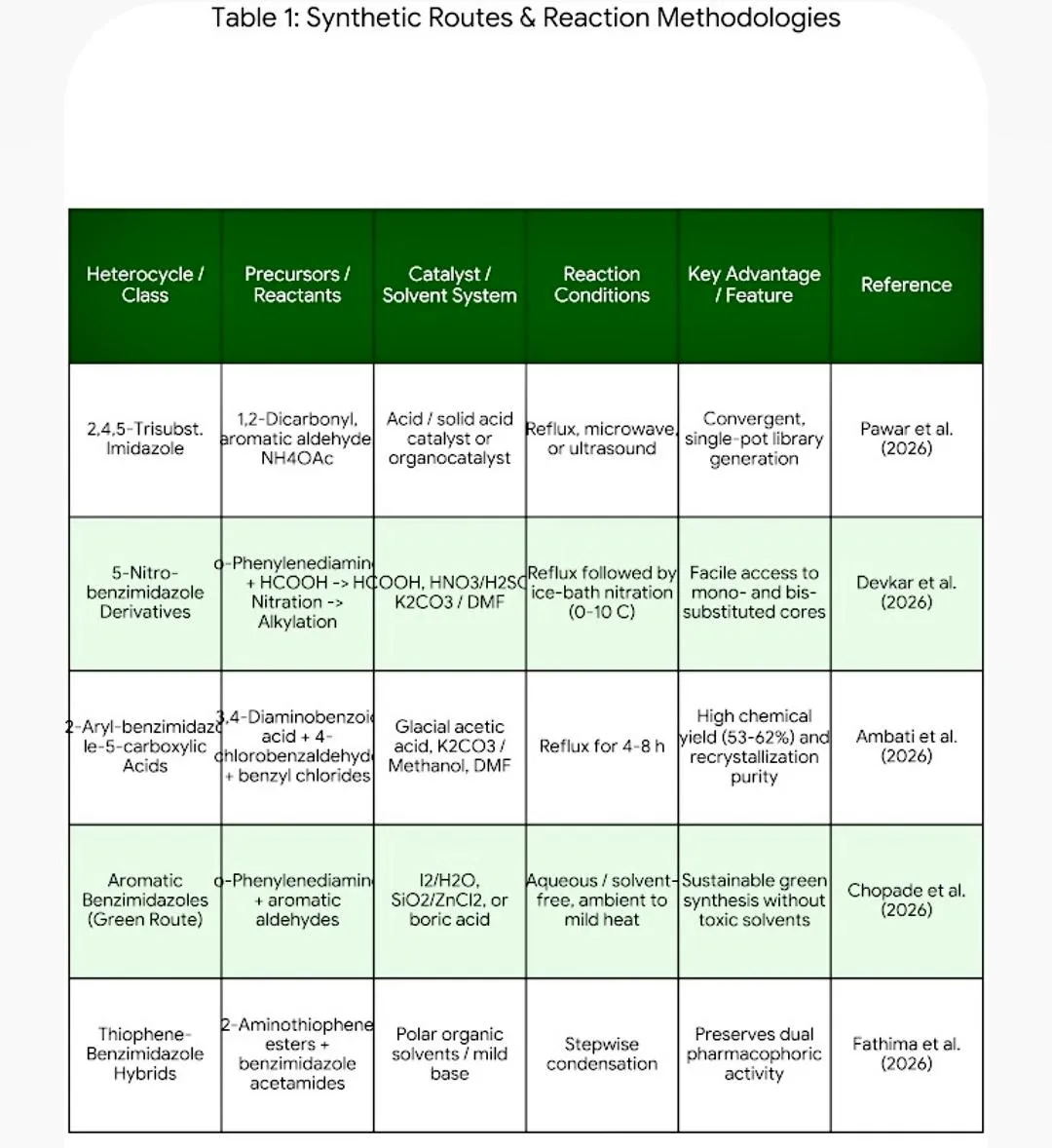
Table 1: Synthetic Routes and Reaction Methodologies for Imidazole and Benzimidazole Scaffolds
Before any physical synthesis begins, these molecules go through rigorous digital screening. Using AI and software like AutoDock Vina, researchers simulate how a new drug candidate physically docks into a target protein. For example, scientists can predict exactly how a new benzimidazole drug binds to the bacterial enzyme DHFR by calculating the binding energy. Additionally, computer models predict a molecule’s Absorption, Distribution, Metabolism, Excretion, and Toxicity (ADMET) to eliminate poor candidates early and ensure they follow Lipinski’s Rule of Five for drug-likeness.
RESULTS
The resulting molecules demonstrate impressive capabilities across a variety of diseases.
Against bacterial superbugs, tweaking the benzimidazole structure by adding electron-withdrawing groups, such as a nitro or chlorine group, drastically improves the drug’s ability to pierce through bacterial cell walls. Certain novel benzimidazole derivatives have shown antibacterial activity against Staphylococcus aureus that outperforms standard antibiotics like ciprofloxacin.
For fungal infections, which rely on ergosterol to keep their cell membranes intact, imidazole drugs block the enzyme CYP51 responsible for building this sterol. Recent computer simulations show that newly designed imidazole-5-ones bind to this fungal target with incredible stability, mimicking the success of clinical drugs like ketoconazole.
In cancer treatment, hybrids that combine thiophene and benzimidazole can directly block EGFR and VEGFR-2, proteins that help tumors grow and build blood vessels. Other derivatives, like aliphatic oxadiazole-benzimidazoles, force breast cancer cells to pause their replication cycle and trigger apoptosis, while leaving healthy cells relatively unharmed.
Furthermore, specific derivatives have shown excellent anti-inflammatory and neuroprotective results. In animal models, certain chlorophenyl-substituted benzimidazoles reduced pain as effectively as morphine and fought inflammation similarly to diclofenac. Select derivatives are also potent antioxidants and inhibit cholinesterase enzymes, marking them as exciting potential treatments for neurodegenerative conditions.
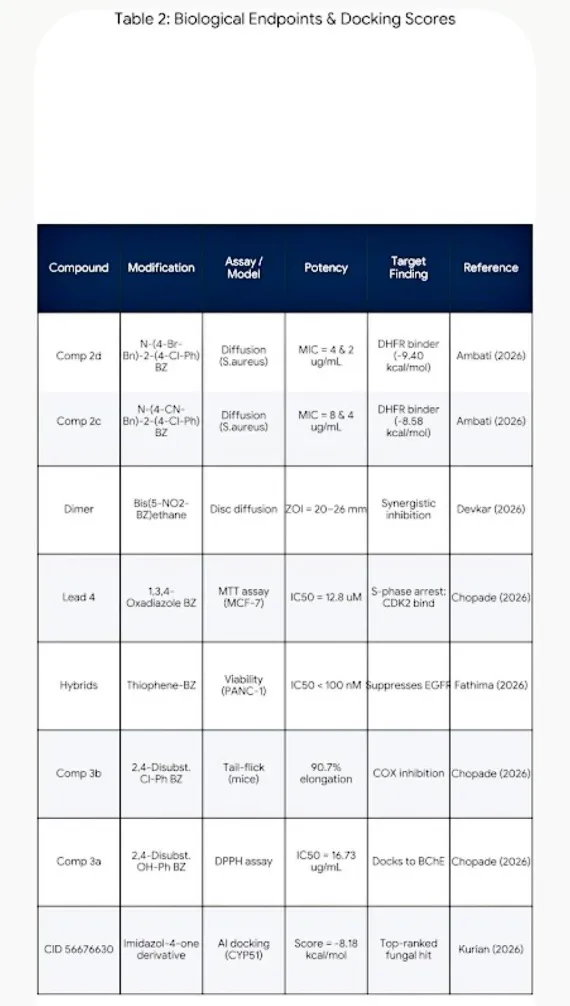
Table 2: Biological Endpoints and Docking Scores of Highlighted Imidazole and Benzimidazole Leads
DISCUSSION
The success of these molecules relies heavily on the Structure-Activity Relationship (SAR), which is the practice of finding the perfect molecular balance. Adding halogens, like fluorine or chlorine, makes the drug more fat-soluble, helping it slip through cell membranes. Adding nitro groups creates a stronger electrical pull that enhances antibacterial activity, though chemists must carefully monitor for added toxicity. Creating hybrids by tying the benzimidazole ring to another active shape, like a thiophene ring, creates a larger molecular footprint, allowing the drug to bind effectively to more complex targets like cancer proteins.

Table 3: Structure-activity Relationship (SAR) Summary of Functional Modifications
CONCLUSION
Imidazole and benzimidazole are active, evolving platforms for modern drug discovery. By pairing sustainable, green chemistry with advanced computer simulations, researchers are designing smarter, safer, and more effective therapies. As medicine continues to face treatment-resistant pathogens and complex cancers, these versatile nitrogen rings will undoubtedly remain at the forefront of pharmaceutical development.
Acknowledgment
This review synthesizes the collective efforts of medicinal chemists, computational biologists, and researchers whose innovative approaches to heterocyclic chemistry continue to push the boundaries of modern therapeutics.
REFERENCES


Vinay Yadav, Salil Tiwari, The Benzimidazole and Imidazole Playbook: How Molecular Tweaks Are Shaping Modern Medicine, Int. J. of Pharm. Sci., 2026, Vol 4, Issue 10, 2872-2876. https://doi.org/10.5281/zenodo.23466435
 10.5281/zenodo.23466435