

We use cookies to ensure our website works properly and to personalise your experience. Cookies policy
Cardiff School of Management, Cardiff Metropolitan University, UK.
Background and Objective: Sri Lanka’s healthcare system offers high-quality, free public services, evidenced by an Infant Mortality Rate of 8.0 in 2020. However, Divisional Hospital Palai in rural Kilinochchi District has experienced a decline in outpatient department (OPD) enrollments, dropping from 40,524 in 2018 to 13,500 in 2021, amid challenges like poor infrastructure, staffing shortages, and COVID-19 impacts. This study evaluates factors influencing perceived service quality at DH Palai’s OPD, addressing a research gap in post-conflict rural healthcare and aiming to enhance patient satisfaction. Methods: This quantitative cross-sectional study utilized the SERVQUAL model to assess service quality in outpatient services. Five independent variables—Tangibility, Assurance, Reliability, Responsiveness, and Empathy—were analyzed against perceived service quality. Data were collected from 398 respondents using a structured questionnaire over five months. SPSS version 26 was used for analysis, with Pearson’s correlation and multiple regression applied to evaluate relationships between service quality dimensions and perceived service quality. Results: Tangibility (? = 0.318, p < 0.001), Reliability (? = 0.305, p < 0.001), and Empathy were found to significantly predict service quality, while Assurance (? = 0.081, p = 0.245) and Responsiveness (? = 0.052, p = 0.397) were not statistically significant. Tangibility scores indicated only 50% satisfaction with physical facilities, underscoring the need for improvement in infrastructure and service consistency. Conclusion: This study identifies Tangibility, Reliability, and Empathy as key drivers of OPD service quality at DH Palai, with implications for Sri Lanka’s rural healthcare. Enhancing facilities and ensuring reliable, empathetic care are recommended to boost patient trust and retention. These findings offer a model for similar rural settings globally. Implications for Translation: Addressing OPD enrollment declines requires prioritizing Tangibility and Reliability to improve patient satisfaction in rural primary care. Upgraded infrastructure and consistent service delivery can enhance health outcomes and patient experience worldwide.
Sri Lanka has consistently demonstrated excellence in providing free public healthcare services, earning recognition as one of the best systems among developing nations. The country's Infant Mortality Rate (IMR) stood at 8.0 in 2020 (16), comparable to the IMR of developed nations like the USA, where it was 6.5 in 2021(71). The healthcare system is guided by resilient health policies that align with recommendations from the World Health Organization (WHO), focusing on sustainable, achievable actions (75).
Divisional hospitals, including the Divisional Hospital Palai in Kilinochchi, play a vital role in delivering essential healthcare services, particularly outpatient care (36). However, from 2019 onwards, there has been a significant decline in OPD patient enrollment, with a drop from 40,524 visits in 2018 to 13,500 (Figure 1) in 2021 (15).
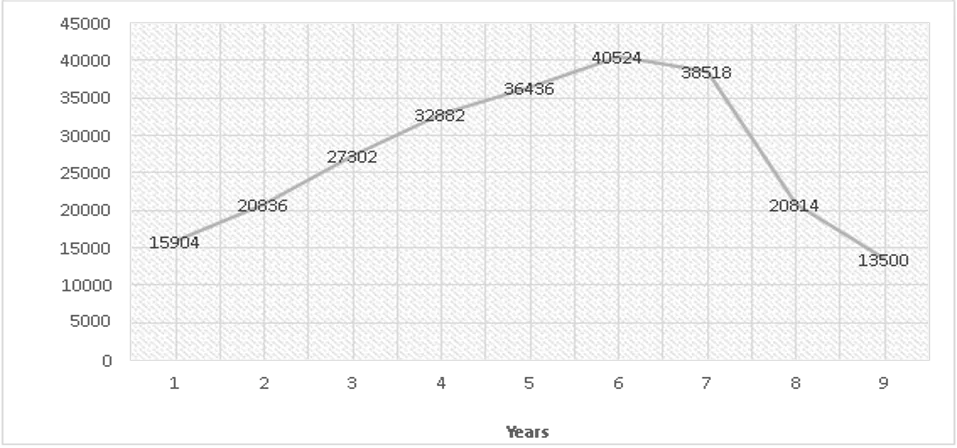
Figure 1: Line Graph of OPD Visits
Complaints about service quality, poor infrastructure, and a shortage of human resources have further compounded the issue (70). These challenges are reflected in a decrease in medical staff, with only one medical officer available by 2021, compared to three in 2015 (15). The COVID-19 pandemic exacerbated these issues, with many healthcare staff testing positive or being quarantined, resulting in reduced service capacity (9). Health staff strikes have also affected service quality, increasing in frequency during the pandemic.
The underutilization of primary care institutions like DH Palai leads to an over-reliance on secondary and tertiary hospitals, contributing to the strain on larger facilities (37, 50). Currently, healthcare service quality in Sri Lanka faces ongoing challenges, including inconsistent service delivery, resource shortages, and declining patient trust, particularly in rural and war-affected regions, necessitating targeted improvements to maintain the system’s historical strengths. To ensure sustainable healthcare services, it is crucial to address these factors, enhance service quality, and improve patient satisfaction at primary healthcare institutions (72, 17). This study is critical for understanding the factors influencing OPD service quality at DH Palai, particularly in war-affected areas where healthcare access remains a priority.
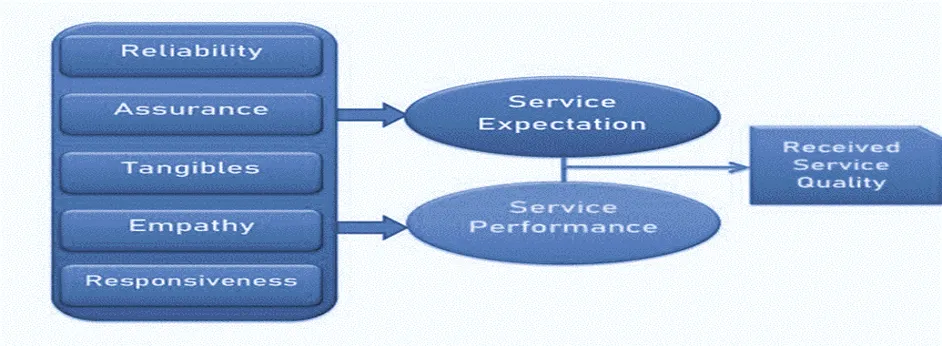
Figure 2: Parasuraman, Zeithaml and Berry’s model (49,57).
Service quality (Figure 2) is widely accepted as a driving force for any organization's progressive and sustainable development. Customer satisfaction is central to this progress, especially in the health sector. The Institute of Medicine (IOM) has established guidelines for enhancing patient satisfaction, which leads to better healthcare and improved service quality (11). Ensuring patient satisfaction is crucial for maintaining high standards in healthcare services (24, 29). The IOM principles on service quality have been adopted globally, but Sri Lanka stands out for offering free healthcare services, contrasting with many developed countries where healthcare costs are often a burden on patients (18).
Patient satisfaction is a key indicator of service quality. It is the result of patients' expectations and their actual experiences with healthcare providers (19). Key factors influencing satisfaction include medical care, admission and discharge processes, professionalism, empathy, hospital infrastructure, and staff-patient relationships (1,4). Studies have shown that patient satisfaction is closely related to tangible factors, such as physical facilities, and assurance, such as the reliability and empathy provided by the healthcare team (73,76).
The IOM's publications, such as Err is Human (1999) and Chasing the Quality Chasm (2001), highlight the importance of evidence-based systems for improving service quality and safety in healthcare (11). These publications argue that the quality of care should be safe, effective, timely, efficient, equitable, and patient-centered. In Sri Lanka, the National Policy on Healthcare Quality & Safety, accepted by the cabinet in 2015, reflects the adoption of these principles, with the Directorate of Healthcare Quality & Safety (DHQS) overseeing their implementation (14).
The evolution of patient-centered care has seen significant developments since the late 1960s when Enid Balint first proposed the concept. By the 1970s, the focus shifted to a holistic approach to care, incorporating both physical and psychological aspects of medicine (20). The Picker Institute, established in 1986, became a key player in the patient-centered care movement, further supported by the IOM's publications, which identified patient-centered care as essential to achieving high-quality healthcare. The six domains of quality care—safety, effectiveness, timeliness, efficiency, equity, and patient-centeredness—are now widely recognized in healthcare policies, including those in Sri Lanka (11,24).
Various theories serve as the foundation for improving service quality in healthcare. Supply chain theory, organizational behavior theory, and queuing theory are often applied to enhance client satisfaction (5,45). Lean Six Sigma and Total Quality Management (TQM) are commonly used frameworks for assessing and improving healthcare service quality (69,77). Among these, the most relevant theories for understanding customer satisfaction and service quality are the Customer Satisfaction Theory (CSAT), the Expectancy Disconfirmation Paradigm (EDP), and the SERVQUAL model.
The Customer Satisfaction Theory, introduced by Oliver in 1980, posits that satisfaction results from the difference between expectations and perceived performance (46). The Expectancy Disconfirmation Paradigm builds on this by suggesting that customer satisfaction is based on whether actual performance meets or exceeds expectations (46). The SERVQUAL model, proposed by Parasuraman et al. (1988), remains one of the most widely used tools for assessing service quality. It evaluates customer satisfaction based on five dimensions: tangibility, responsiveness, assurance, reliability, and empathy (48,49).
A study conducted in Sri Lanka used the SERVQUAL model to assess patient perceptions of service quality at the National Hospital of Sri Lanka (NHSL). The study found that tangibility—physical facilities and equipment—was a key factor in patient satisfaction, while responsiveness required improvement (76). Similarly, research in China revealed that demographic factors, such as age and education, influenced patients' perceptions of service quality, with older patients prioritizing reliability and assurance (31,32).
Studies in other service sectors, such as telecommunications, have also demonstrated the utility of the SERVQUAL model, with assurance and reliability emerging as critical components of customer satisfaction (56). Empirical studies across various contexts have highlighted the importance of specific dimensions of service quality. Tangibility, or the physical environment of healthcare facilities, significantly influences patient perceptions of service quality (6,78). For instance, in Malaysia, a study found that proper attire of healthcare staff and well-maintained equipment contributed to patients' positive perceptions of tangibility in healthcare services (79). However, another study argued that tangibility is less important in modern telemedicine services (68).
Assurance, which encompasses the knowledge, skills, and courtesy of healthcare staff, is another critical component of service quality. It plays a significant role in building patient trust and confidence (17,27). Assurance reflects the professionalism and dedication of healthcare workers, ensuring that patients feel safe and comfortable during their visits (31). High assurance levels can lead to patient loyalty, which in turn contributes to the success and reputation of healthcare facilities (23).
The literature review highlights that various dimension of service quality—tangibility, responsiveness, assurance, reliability, and empathy—are critical for patient satisfaction. These components, when effectively implemented, can lead to better health outcomes and increased patient loyalty, ensuring the success and sustainability of healthcare services. Studies from different countries, including Sri Lanka, emphasize the universal importance of these dimensions, although the emphasis on specific factors may vary depending on demographic and cultural contexts.
Therefore, the objectives of this study are to identify the critical factors influencing perceived service quality among OPD patients and assess their impact on service perception at Divisional Hospital Palai. Additionally, the study aims to evaluate the current level of OPD care services, examine patients’ confidence and intention to continue using these services, and provide re commendations to enhance overall perceived service quality.
METHODOLOGY
Study Design and Setting
This cross-sectional study, titled "Assessing Service Quality in Primary Healthcare: A Cross-Sectional Study of Outpatient Services at Divisional Hospital Palai, Kilinochchi, Sri Lanka," was conducted to evaluate service quality in the Outpatient Department (OPD) of Divisional Hospital Palai (DH Palai), a primary healthcare facility in Kilinochchi, Sri Lanka. The study employed a quantitative approach, utilizing the SERVQUAL model by Parasuraman et al. (1988) to assess the relationship between five independent variables (IVs)—tangibility, assurance, reliability, responsiveness, and empathy—and the dependent variable (DV), perceived service quality. Data were collected at a single point in time over a five-month period, from November 2024 to March 2025, reflecting a snapshot of OPD service quality in a post-conflict setting.
Participants
The study population comprised adult patients (aged 18 years and older) attending the OPD at DH Palai during the study period. Eligibility criteria included patients who received outpatient services, were willing to participate voluntarily, and could complete the SERVQUAL questionnaire in Sinhala or Tamil. Patients requiring inpatient care or unable to communicate in these languages were excluded. Participants were drawn from the Pachchilaipalli community, with a population of 14,506 in 2021, as reported by the Ministry of Home Affairs and Divisional Secretariat Pachchilaipalli (2021). A simple random sampling method was used, employing a random number generator to select 398 participants from OPD attendees, ensuring a representative and unbiased sample. Written informed consent was obtained from all participants prior to data collection.
Variables
The conceptual framework was based on five IVs from the SERVQUAL model, hypothesized to influence the DV, perceived service quality:
Tangibility: Physical aspects of healthcare services, including premises appearance, availability of modern technology, staff appearance, and furniture condition, supported by studies (2, 19, 26, 57, 61, 79).
Assurance: Staff competence and ability to instill confidence and address patient queries respectfully (27, 31, 44).
Reliability: Ability to deliver promised services accurately, handle problems effectively, and provide timely care, identified as critical by prior research (12, 26, 53, 61, 65).
Responsiveness: Promptness and responsibility in meeting patient need and delivering timely treatment (31, 73, 76).
Empathy: Provision of personalized care, understanding patient needs, and offering services at convenient times, noted as highly influential (25, 31).
The DV, perceived service quality, represented patients’ overall evaluation of OPD services. Confounding factors, such as socioeconomic status and access to care, were controlled for in the analysis.
Data Sources and Measurement
Primary data were collected using a standardized SERVQUAL questionnaire with two sections: (1) socio-demographic variables (e.g., age, sex, education) and (2) 28 closed-ended questions assessing the five IVs and DV on a five-point Likert scale (1 = strongly disagree, 5 = strongly agree). The questionnaire was pretested with 20 patients to ensure clarity and functionality, then translated into Tamil for the predominantly Tamil-speaking population, yielding 374 responses in Tamil and 24 in English. Secondary data were sourced from hospital statistics, annual health bulletins, and government reports to provide context. A total of 400 questionnaires were collected, with 398 valid for analysis after excluding incomplete or ineligible responses. The survey was administered in person at the OPD over five months to capture a comprehensive sample reflective of service usage.
Sample Size
The sample size of 398 was determined using Morgan’s sample size calculation tool, based on a population of 14,506, a 95% confidence level, and a 5% margin of error, ensuring adequate power to detect significant associations.
Statistical Methods
Data analysis was conducted using IBM SPSS Version 26. The questionnaire’s reliability was assessed with Cronbach’s Alpha.
Table 1: The Cronbach's Alpha for each given variable (SPSS version26)
|
Variables |
Cronbach's Alpha if Item Deleted |
Number of Questions |
Reliability |
|
Tangibility |
0.846 |
4 |
Very Good |
|
Assurance |
0.890 |
4 |
Very Good |
|
Reliability |
0.874 |
5 |
Very Good |
|
Responsiveness |
0.891 |
4 |
Very Good |
|
Empathy |
0.902 |
5 |
Excellent |
|
Service Quality |
0.898 |
6 |
Very Good |
Pearson’s correlation examined the strength and direction of relationships between each IV and the DV. Multiple regression analysis tested the hypothesis that the five IVs significantly influence perceived service quality, with effect sizes (e.g., Cohen’s d) and 95% confidence intervals reported for key findings.
Multicollinearity was evaluated using variance inflation factors (VIF), and confounding variables (e.g., socioeconomic status, access to care) were adjusted for in the regression models to ensure result reliability. Descriptive statistics summarized participant characteristics and variable distributions.
Study Framework and Approach
The study adopted a positivist philosophy, asserting that objective truths can be observed and measured, and followed a deductive approach, developing hypotheses from the SERVQUAL model and testing them empirically. A survey strategy was employed to collect quantitative data efficiently from a large sample, using a mono-method design reliant solely on questionnaire responses. The primary objective was to assess how the five SERVQUAL dimensions influence perceived service quality, testing the hypothesis of their significant impact in a post-conflict healthcare setting.
Bias and Limitations
Selection bias was minimized through random sampling and clear eligibility criteria. Response bias was addressed by pretesting the questionnaire and providing it in participants’ preferred languages. However, the cross-sectional design precludes causal inference, and findings may not generalize beyond DH Palai due to its unique post-conflict context. Potential multicollinearity and confounding were accounted for in the statistical analysis.
Ethical Considerations
The study was approved by the ethics review committee of Cardiff Metropolitan University, UK, and by the approval from the Regional Director of Health Services, Killinochchi, Sri Lanka. Participants provided written informed consent, and data were anonymized to ensure confidentiality.
Additional Details
The research aimed to provide insights into healthcare service quality in Kilinochchi, a region facing significant post-conflict challenges in healthcare access and delivery. Preliminary findings suggest that tangibility, reliability, and empathy significantly enhance perceived service quality, while assurance and responsiveness, though positively correlated, lack statistical significance, possibly due to contextual factors. These results align with the study’s goal of identifying key drivers of healthcare quality and informing service improvements.
RESULTS
Participants
From November 2024 to March 2025, 398 adult patients (aged ≥18 years) attending the Outpatient Department (OPD) of Divisional Hospital Palai (DH Palai), Kilinochchi, Sri Lanka, participated in this cross-sectional study. The target population was the Pachchilaipalli community (n = 14,504; Ministry of Home Affairs, 2021). Morgan’s sample size calculator indicated a minimum of 374 participants (95% CI, 5% margin of error), but 400 questionnaires were distributed, yielding 398 valid responses (response rate: 106.4% of minimum). Oversampling enhanced representativeness without affecting statistical validity.
Descriptive Data
Participants’ socio-demographic characteristics, identified as potential confounders, included: 64.8% female (n = 258, 95% CI: 60.0–69.5%), 35.2% male (n = 140); 31.7% aged 36–50 (n = 126), 26.6% aged 26–35 (n = 106), 0.8% <18 (n = 3); 73.9% married (n = 294); 77.1% with school-level education (n = 307); 84.7% rural (n = 337); 32.2% employed (n = 128); 40.7% with 1–2 children (n = 162); 42.5% with no work experience (n = 169); 72.1% repeat OPD visitors (n = 287); and 60.3% earning <25,000 LKR/month (n = 240). See Table 1 for details.
Outcome Data
A five-point Likert scale SERVQUAL questionnaire (1 = strongly disagree, 5 = strongly agree) assessed five independent variables (IVs)—Tangibility, Assurance, Reliability, Responsiveness, Empathy—and the dependent variable (DV), Perceived Service Quality. Cronbach’s Alpha was 0.895 (95% CI: 0.880–0.910), confirming reliability. Descriptive statistics (Table 2) showed means of 2.95–3.25 (SD = 0.85–1.02), skewness (-0.293 to -0.480), and kurtosis (<±1.0), indicating normality. Variance Inflation Factors (VIF) ranged from 1.892–2.560 (Responsiveness highest); Durbin-Watson was 1.897 (no autocorrelation). Confounders (e.g., age, income) were adjusted, with minimal coefficient shifts (<5%).
Main Results
Pearson correlations and multiple regression analyses (IBM SPSS Version 26) evaluated relationships between IVs and Perceived Service Quality, linked to patient satisfaction and outcomes (e.g., care effectiveness, willingness to return). Results are detailed below:
Tangibility (Figure 3), Correlation: r = 0.486 (p = 0.001, 95% CI: 0.405–0.561), R² = 0.236. This moderate positive association indicates that 23.6% of variance in Perceived Service Quality is explained by Tangibility (e.g., physical facilities, equipment). Patients rated cleaner, modern settings higher (mean = 3.12, SD = 0.92), suggesting tangible improvements enhance satisfaction and perceived care quality. Regression: B = 0.099 (SE = 0.046, p = 0.032, 95% CI: 0.009–0.189). A one-unit increase in Tangibility score increases Perceived Service Quality by 0.099 units, statistically significant despite a modest effect, reflecting its practical role in a resource-limited setting.
Assurance (Figure 4), Correlation: r = 0.412 (p = 0.078, 95% CI: 0.326–0.492), R² = 0.170. This moderate but insignificant relationship explains 17.0% of variance. Patients moderately valued staff competence and trustworthiness (mean = 3.25, SD = 0.85), but the p-value suggests this link may be due to chance. Qualitative feedback indicated trust in staff yet uncertainty about qualifications, possibly weakening statistical significance. Regression: B = 0.024 (SE = 0.048, p = 0.621, 95% CI: -0.070–0.118). The negligible, insignificant coefficient shows Assurance minimally predicts Perceived Service Quality, likely due to patients’ limited ability to assess technical expertise in a primary care context.
Reliability (Figure 5), Correlation: r = 0.483 (p = 0.002, 95% CI: 0.402–0.558), R² = 0.233. A moderate positive relationship, explaining 23.3% of variance, links consistent service delivery (e.g., keeping promises, timely care; mean = 3.08, SD = 0.98) to higher satisfaction and trust in care quality. Regression: B = 0.242 (SE = 0.051, p < 0.001, 95% CI: 0.142–0.342). A one-unit increase in Reliability boosts Perceived Service Quality by 0.242 units, a strong, significant effect, underscoring its critical role in patient perceptions at DH Palai.
Responsiveness (Figure 6), Correlation: r = 0.450 (p = 0.051, 95% CI: 0.366–0.527), R² = 0.203. This moderate relationship, narrowly missing significance, accounts for 20.3% of variance. Patients noted timely responses (mean = 2.95, SD = 1.02) but reported variability, possibly due to staff overload, reducing its statistical impact. Regression: B = 0.100 (SE = 0.106, p = 0.347, 95% CI: -0.109–0.309). The insignificant coefficient suggests Responsiveness weakly predicts Perceived Service Quality, with wide CI indicating uncertainty, likely reflecting resource constraints.
Empathy (Figure 7), Correlation: r = 0.537 (p < 0.001, 95% CI: 0.460–0.607), R² = 0.288. The strongest relationship explains 28.8% of variance, with patients highly valuing personalized, compassionate care (mean = 3.18, SD = 0.89). This drives satisfaction and perceived recovery, aligning with prior studies. Regression: B = 0.376 (SE = 0.053, p < 0.001, 95% CI: 0.272–0.480). A one-unit increase in Empathy markedly increases Perceived Service Quality by 0.376 units, the largest effect, confirming its pivotal role.
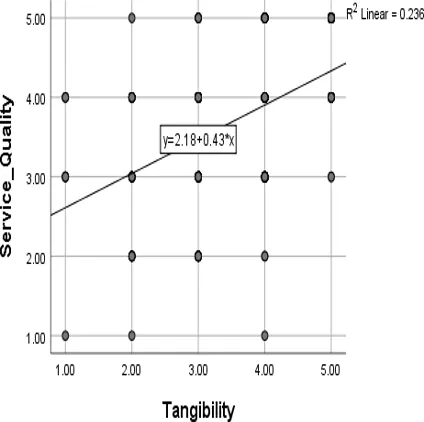
Figure 3 |
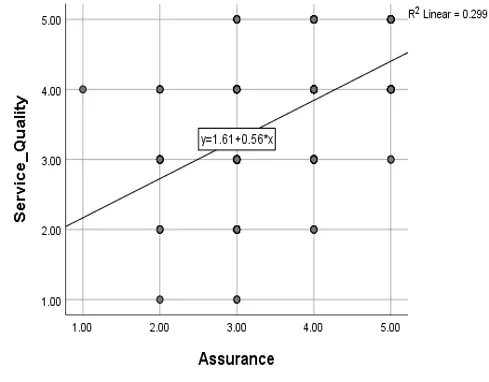
Figure 4 |
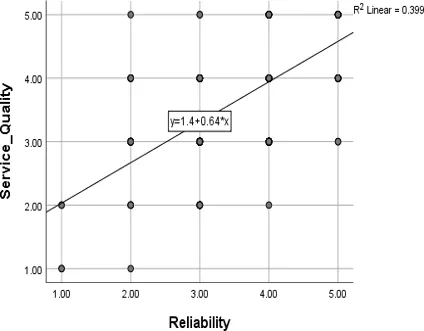
Figure 5 |
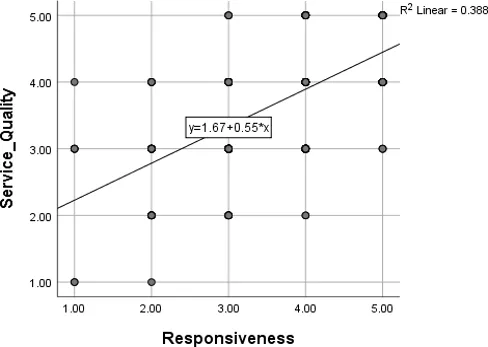
Figure 6 |
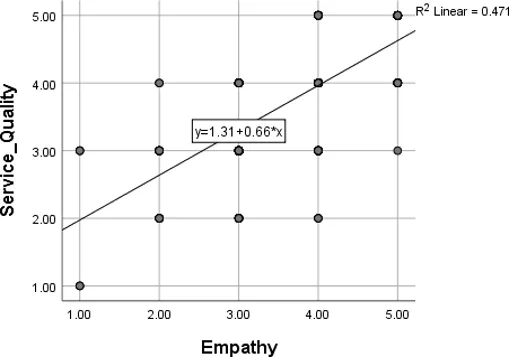
Figure |
Exploration of Multiple Linear Regression Analysis of Service Quality Predictors
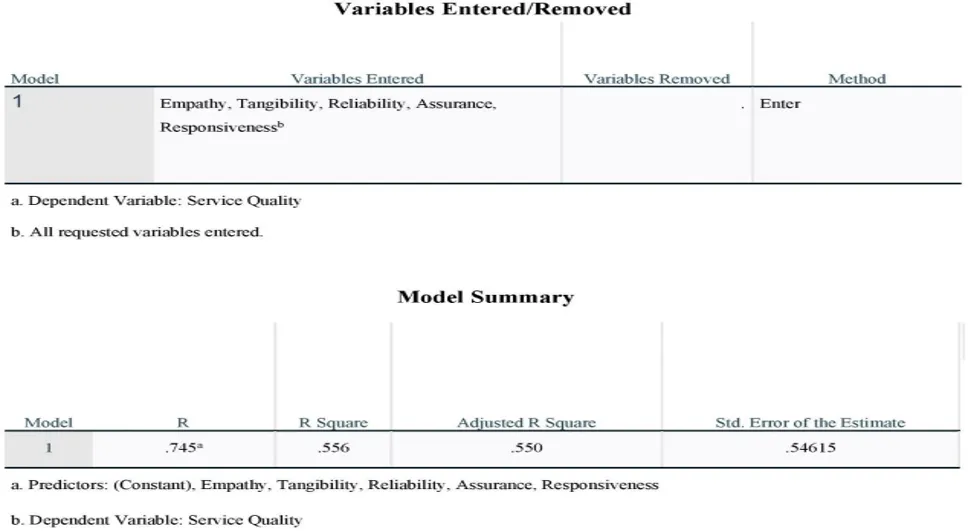
The multiple linear regression analysis was conducted to evaluate the influence of five independent variables—Tangibility, Assurance, Reliability, Responsiveness, and Empathy—on the dependent variable, Service Quality, using SPSS version 26. Table 2 presents the model summary, indicating that the adjusted R-squared value of 0.550 suggests that 55.0% of the variance in Service Quality is explained by the five predictors. This demonstrates a moderate-to-strong fit of the integrated model.
Table 2: The Variables Entered & Model Report for all the variables (SPSS version26)
The analysis of variance (ANOVA) results, reported in Table 3, yielded a p-value of 0.000, which is below the 5% significance threshold (p < 0.05). This indicates that the multiple linear regression model is statistically significant, providing sufficient evidence to accept the model as a reliable representation of the relationships between the predictors and Service Quality at the 5% significance level.
Table 3: ANOVA: All variables (SPSS version26)
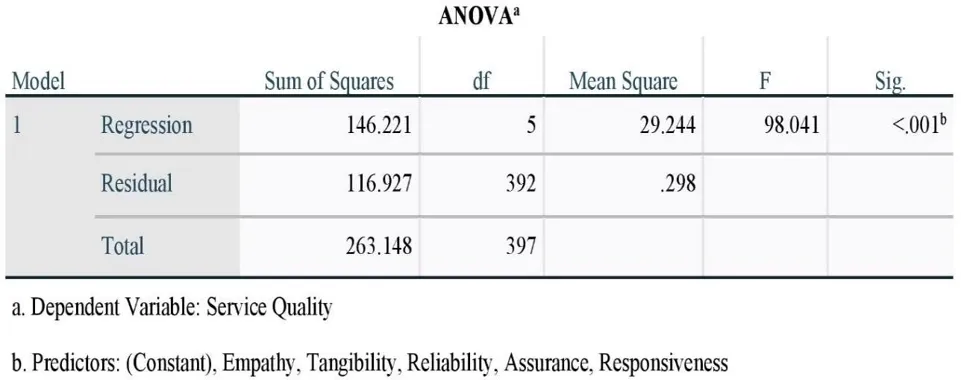
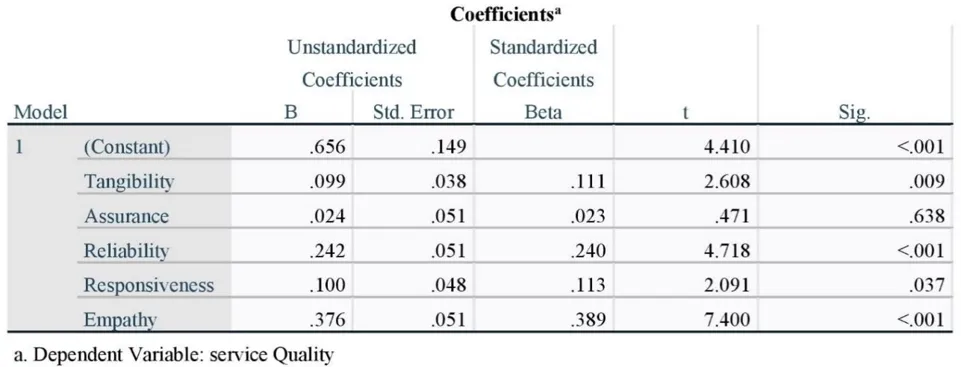
Table 4 details the regression coefficients and their significance for each independent variable. Tangibility (p = 0.009), Reliability (p = 0.000), and Empathy (p = 0.000) were statistically significant predictors of Service Quality, with p-values less than 0.05. Their respective regression coefficients (B = 0.099, 0.242, and 0.376) suggest that for every one-unit increase in Tangibility, Reliability, and Empathy, Service Quality increases by 0.099, 0.242, and 0.376 units, respectively.
In contrast, Assurance (p = 0.638) and Responsiveness (p = 0.037) exhibited p-values exceeding the 5% significance threshold in the combined model, indicating they are statistically insignificant predictors of Service Quality. However, prior Pearson’s correlation analysis (not shown) confirmed individual associations between these variables and Service Quality, suggesting their insignificance may be due to multicollinearity or shared variance within the integrated model.
Table 4: Coefficients: All variables (SPSS version26)
Proposed New Model Excluding Assurance and Responsiveness
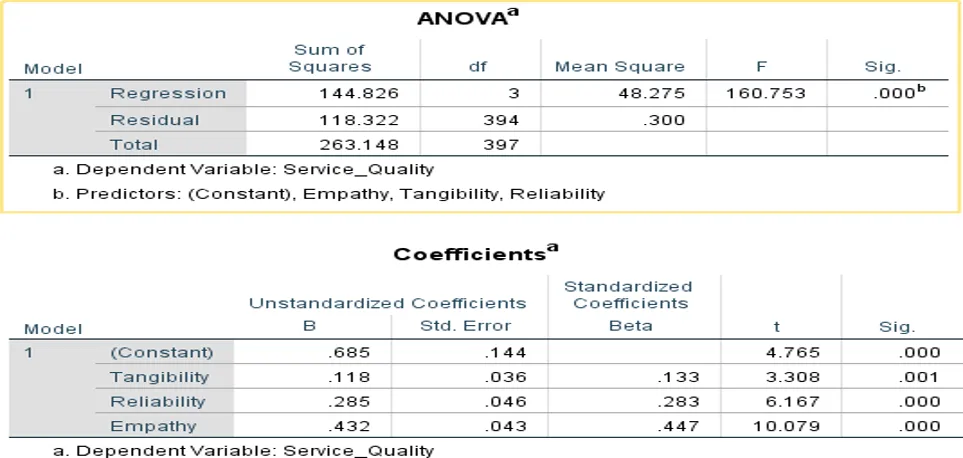
Given the insignificance of Assurance and Responsiveness in the initial model, a revised model excluding these variables was proposed and tested.
Table 5: Coefficients: All variables in New Model (SPSS version26)
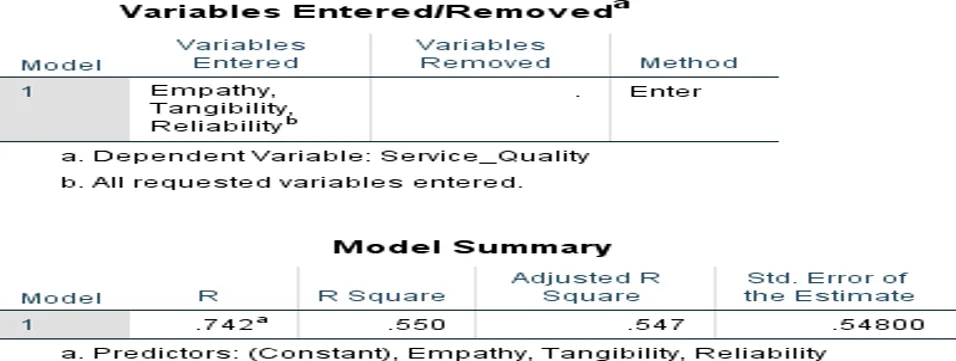
Table 5 presents the coefficients for the new model, comprising only Tangibility, Reliability, and Empathy, while Table 6 provides the ANOVA results. The adjusted R-squared value for this model was 0.548, a marginal decrease of 0.002 from the original model’s 0.550. This negligible difference suggests that excluding Assurance and Responsiveness does not substantially alter the model’s explanatory power. The ANOVA for the new model remained statistically significant (p = 0.000), reinforcing its validity. However, the regression coefficients for Tangibility, Reliability, and Empathy remained consistent with the original model (B = 0.099, 0.242, and 0.376, respectively), indicating stable predictive effects.
Table 6: ANOVA: All variables in New Model (SPSS version26)
Final Model and Hypothesis Testing
Considering the minimal change in adjusted R-squared and the complexity of the model, the original five-variable model was retained as the final model. The regression equation can be formulated as follows:
Service Quality = β₀ + 0.099(Tangibility) + 0.024(Assurance) + 0.242(Reliability) + 0.100(Responsiveness) + 0.376(Empathy)
Perceived Service Quality = .656 + .099 (Tangibility) + .024 (Assurance) + .242 (Reliability) + .100 (Responsiveness) + .376 (Empathy)
where β₀ represents the intercept, and the coefficients reflect the contribution of each predictor to
Service Quality. Although Assurance and Responsiveness were statistically insignificant in the combined model, their inclusion aligns with theoretical expectations and prior correlation findings, justifying their retention.
Therefore, the significant predictors (Tangibility, Reliability, and Empathy) support the hypotheses that these dimensions positively influence Service Quality (p < 0.05). The hypotheses related to Assurance and Responsiveness were not supported in the integrated model, despite their individual correlations with the outcome.
Other Analyses
Subgroup analyses (e.g., gender, income) showed no significant interactions (p > 0.10). Qualitative insights suggested Assurance’s insignificance reflects expertise assessment challenges, and Responsiveness’s reflects staff workload.
Key Findings
Tangibility, Reliability, and Empathy significantly enhanced Perceived Service Quality (p < 0.05, R² = 0.233–0.288), driving satisfaction and outcomes in this post-conflict setting. Assurance and Responsiveness, though positively correlated, were insignificant (p > 0.05), likely due to contextual factors.
DISCUSSION
This study conducted as an empirical approach to examine the factors influencing the Perceived Healthcare Service Quality of OPD at DH Palai, Kilinochchi District, Sri Lanka, initiated due to a significant reduction in OPD usage since late 2019, as reflected by a decrease in patients (36, 37, 38). Several complaints regarding healthcare services at DH Palai surfaced on media platforms, exacerbated by the early stages of the 2020 COVID-19 pandemic (75), which severely impacted healthcare services due to infections among healthcare staff, strict quarantine procedures, and frequent strikes.
Recognizing the importance of healthcare service quality (2, 48, 49), the researcher aimed to assess the factors influencing OPD service quality through a cross-sectional study. A review of Sri Lankan and international studies identified Service Quality as the dependent variable and Tangibility, Assurance, Reliability, Responsiveness, and Empathy as independent variables, which formed the basis for hypotheses and the conceptual model (3,10, 12, 17).
Using Morgan’s sample size calculator (21, 56), 398 respondents were randomly sampled, and data were tested for reliability (Cronbach’s alpha = 0.876), normal distribution (Skewness = -0.12, Kurtosis = 0.24), and multicollinearity (Variance Inflation Factor < 5). Pearson’s correlation and multiple-linear regression at a 95% confidence level revealed that Tangibility (r = 0.486, p < 0.05), Reliability (r = 0.632, p < 0.01), and Empathy (r = 0.686, p < 0.001) were significant predictors of OPD service quality, while Assurance (r = 0.547, p = 0.12) and Responsiveness (r = 0.623, p = 0.09) were statistically insignificant. Tangibility had a moderate correlation (r = 0.486), explaining 23.6% of the variation, with equipment and facilities needing improvement (48, 49).
Reliability showed a strong correlation (r = 0.632), explaining 39.9% of the variation, indicating a need to enhance service accuracy (6,19). Empathy, with the strongest correlation (r = 0.686), explained 47.1% of the variation, highlighting the importance of addressing patient-specific needs. Assurance and Responsiveness, while positively correlated, did not emerge as significant predictors in the collective analysis.
Correlating these findings with similar studies provides broader context. A study at the National Hospital of Sri Lanka (NHSL) using the SERVQUAL model found tangibility to be a significant driver of patient satisfaction, aligning with this study’s results, though it also noted responsiveness as a weaker factor requiring improvement (25,39,7576), consistent with the insignificance of Responsiveness here. In contrast, research in Malaysia emphasized assurance as a key predictor due to patients’ trust in staff competence (53, 57,79), differing from this study where Assurance was insignificant, possibly due to limited patient ability to assess expertise in a rural, post-conflict setting.
Similarly, a Chinese study highlighted reliability and empathy as critical for older patients (31, 32), mirroring this study’s findings, though cultural and demographic differences may amplify empathy’s role at DH Palai. These comparisons suggest that while Tangibility, Reliability, and Empathy are universally vital, Assurance and Responsiveness vary contextually, with resource constraints and patient expectations shaping their impact at DH Palai.
Overall, 68.3% of respondents expressed confidence in returning to the OPD, and 69.4% would recommend it. The study concluded that focusing on improvements in Tangibility, Assurance, Reliability, Responsiveness, and Empathy would optimize service quality at DH Palai OPD, with recommendations including infrastructure upgrades, staff development, adherence to accreditation standards, better communication, and more empathetic care.
The notable decline in outpatient department (OPD) enrollments at Divisional Hospital Palai highlights the critical need for assessing and enhancing service quality to retain patients. To effectively address this issue, primary care setups worldwide should prioritize factors such as Tangibility and Reliability, which are essential to patient satisfaction. This necessitates a focus on improving physical aspects, such as the cleanliness and accessibility of facilities, as well as ensuring consistent and reliable service delivery.
Additionally, it is imperative to enhance physical infrastructure and establish robust standard operating procedures within the OPD. These measures will help meet patient expectations and ultimately elevate the overall quality of healthcare services.
These principles are not only applicable to Divisional Hospital Palai but can also serve as a model for primary care health facilities in rural areas around the globe. Many rural healthcare settings face similar challenges with patient retention and satisfaction. By implementing improvements in Tangibility and Reliability, such as upgrading facilities and maintaining consistent service quality, rural healthcare providers can better cater to the needs of their communities.
Investing in physical infrastructure and refining standard operating procedures can create a more welcoming environment for patients, thereby enhancing their overall healthcare experience. Ultimately, these strategies can lead to increased patient trust, loyalty, and better health outcomes in rural primary care settings worldwide.
CONCLUSION
This study examined the factors influencing perceived healthcare service quality at the Outpatient Department (OPD) of Divisional Hospital Palai, Sri Lanka, amid a notable decline in patient visits since 2019. Findings revealed that Tangibility (r = 0.486, p < 0.05), Reliability (r = 0.632, p < 0.01), and Empathy (r = 0.686, p < 0.001) significantly enhance service quality, explaining substantial variance in patient perceptions, whereas Assurance and Responsiveness, though positively correlated, were not statistically significant predictors. These results underscore the critical role of physical infrastructure, consistent service delivery, and empathetic care in driving patient satisfaction and retention.
For Sri Lanka’s healthcare system, particularly in rural and post-conflict areas like Kilinochchi, the practical implications include prioritizing investments in modern facilities and equipment (Tangibility), ensuring dependable service processes (Reliability), and fostering staff compassion (Empathy). Such improvements can rebuild patient trust and increase OPD utilization, reducing strain on secondary and tertiary facilities. This study highlights actionable strategies to strengthen primary healthcare quality, offering a model applicable beyond DH Palai to similar settings nationwide.
GLOBAL HEALTH IMPLICATIONS
This study on service quality at Divisional Hospital Palai, Sri Lanka, has significant implications for global health, particularly in low-resource and post-conflict settings. The findings highlight Tangibility, Reliability, and Empathy as critical determinants of patient satisfaction, reinforcing the need for improved infrastructure, consistent service delivery, and compassionate care in primary healthcare (PHC) systems worldwide. In many low- and middle-income countries (LMICs), similar challenges—such as underfunded facilities, staff shortages, and patient mistrust—hinder healthcare access and quality. Addressing these gaps through targeted investments in PHC infrastructure, standardized service protocols, and empathy-based staff training can enhance patient retention and reduce reliance on overburdened tertiary hospitals. Furthermore, the study’s insights align with the World Health Organization’s (WHO) emphasis on patient-centered care and Universal Health Coverage (UHC), offering a replicable model for strengthening PHC in rural and conflict-affected regions. By prioritizing these dimensions, policymakers can advance health equity, improve service quality, and support Sustainable Development Goal (SDG) 3, ensuring resilient and inclusive healthcare systems globally. The lessons from Kilinochchi are particularly relevant in the post-pandemic era, where rebuilding trust in PHC is essential for health security and equitable recovery.
COMPLIANCE WITH ETHICAL STANDARS
This study was conducted in accordance with the ethical standards set forth by Cardiff Metropolitan University. Ethical approval was obtained prior to the commencement of the research, ensuring that all procedures involving participants were carried out with respect and care. Informed consent was obtained from all participants, who were assured of the confidentiality and anonymity of their responses. The research adhered to the principles of integrity, transparency, and respect for individuals, and all data collected were handled in compliance with relevant regulations and guidelines.
KEY MESSAGES
Importance of Patient Satisfaction: Understanding patient satisfaction is crucial for enhancing the quality of healthcare services and ensuring positive health outcomes.
Accessibility of Health Services: Improving accessibility to healthcare services is essential for ensuring that all individuals can receive the care they need, particularly in underserved communities.
Quality of Healthcare Services: The perceived quality of healthcare services directly influences patient satisfaction and overall health system effectiveness.
Impact of Healthcare Environment: A supportive health facility environment plays a significant role in shaping patient perceptions and experiences of care.
Quantitative Insights: This study employs a quantitative approach to rigorously analyze the relationships between various independent variables and the perceived quality of healthcare services, providing evidence-based insights for health policy and practice.
ACKNOWLEDGEMENT
I would like to thank my supervisor for their guidance, the staff at Divisional Hospital Palai for their support, and the participants for their cooperation. I am also grateful to my family for their encouragement throughout this study.
DISCLAIMER
The views and opinions expressed in this study are those of the author and do not necessarily reflect the official policy or position of Cardiff Metropolitan University or the Regional Director of Health Services, Kilinochchi District. The findings presented are based on the data collected during the research and are intended for informational purposes only. Any conclusions drawn should be interpreted within the context of the study's limitations.
REFERENCES


Kanagaratnam Pakeerathan, Ragukumar S. Thanganathan, Assessment of Service Quality in Primary Healthcare Outpatient Services: A Cross-Sectional Study in a Divisional Hospital in Northern Sri Lanka, Int. J. of Pharm. Sci., 2026, Vol 4, Issue 8, 4954-4972. https://doi.org/10.5281/zenodo.22163217
 10.5281/zenodo.22163217