
View Article

Abstract

Porphyrias are rare inherited or acquired disorders of heme biosynthesis characterized by accumulation of porphyrins or their precursors and a heterogeneous spectrum of neurovisceral, cutaneous, hepatic, and systemic manifestations. Diagnostic delay remains an important clinical problem because symptoms may mimic common gastrointestinal, neurological, psychiatric, and dermatological disorders. Drug exposure is a particularly important modifiable factor in acute hepatic porphyrias, making drug–disease interactions and pharmacovigilance central to safe pharmacological care. This review integrates recent advances in biochemical and genetic diagnosis with practical considerations for medication safety, adverse drug reactions, hormonal triggers, pregnancy and lactation, and emerging targeted therapies. Particular attention is given to ALAS1-directed RNA interference with givosiran, biomarker development, and individualized risk assessment. Recent 2025–2026 clinical guidance and pharmacovigilance evidence are incorporated to distinguish established management from emerging strategies. The review emphasizes a pharmacist-oriented framework for prevention of drug-induced exacerbations, early recognition, appropriate laboratory confirmation, and personalized long-term monitoring

Keywords

Porphyria; neurovisceral crises; cutanea tarda; porphyrinogenic drugs; Drug-disease interaction; Biomarkers; Givosiran; Acute hepatic porphyria; Pharmacovigilance; Rare diseases

Introduction

× Popup Image

Porphyrias are orphan disease resulting from partial deficiencies of enzymes involved in heme synthesis, causing accumulation of porphyrins or their precursors¹. The disease spectrum is broad, and symptoms often mimic common neurological, gastrointestinal, or psychiatric conditions, leading to frequent misdiagnosis². Acute hepatic porphyrias are particularly dangerous due to life-threatening neurovisceral crises. Medications remain one of the most important modifiable triggers of disease exacerbation³. Understanding of drug safety and recent therapeutic innovations and emerged new therapies has shifted management toward prevention and disease modification.

Epidemiology of Porphyria

The prevalence of symptomatic acute porphyrias is estimated at 1–5 per 100,000 individuals globally¹⁵. Acute intermittent porphyria is the most common acute subtype, particularly in Northern Europe, while porphyria cutanea tarda is the most widespread worldwide⁵. Many individuals carry pathogenic mutations but remain asymptomatic, reflecting low disease penetrance⁶. In developing countries, underdiagnosis is common due to lack of awareness and limited laboratory facilities⁷.

Classification of Porphyria’s

Porphyrias are classified based on the primary site of porphyrin accumulation as hepatic or erythropoietic⁸. Hepatic porphyria’s include acute intermittent porphyria, variegate porphyria, hereditary coproporphyria, and porphyria cutanea tarda. Erythropoietic forms include erythropoietic protoporphyria and congenital erythropoietic porphyria⁹. Clinically, porphyrias are further divided into acute and cutaneous types, which aids diagnosis and management.

Causes of Porphyria

Porphyria is fundamentally caused by inherited defects in enzymes of the heme biosynthesis pathway¹⁰. However, genetic mutations alone are often insufficient to produce clinical disease. Environmental and acquired triggers such as porphyrinogenic drugs, alcohol, fasting, infections, smoking, and psychological stress play a crucial role¹¹. Porphyria cutanea tarda is strongly associated with liver disease, hepatitis C infection, iron overload, and estrogen exposure¹². These factors increase hepatic oxidative stress and disrupt heme metabolism.

Etiology of Porphyria

Defective enzyme activity results in accumulation of intermediates such as δ-aminolevulinic acid (ALA) and porphobilinogen (PBG), which are neurotoxic¹³. Reduced heme availability upregulates hepatic ALA synthase, further amplifying precursor production¹⁴. In acute porphyria’s, this leads to autonomic dysfunction, neuropathy, and psychiatric symptoms. In cutaneous porphyria’s, porphyrins absorb ultraviolet light, generating reactive oxygen species that damage skin tissues¹⁵.

Genetic Basis and Enzyme Defects

Most porphyrias are inherited in an autosomal dominant pattern with incomplete penetrance¹⁶. Mutations commonly involve genes encoding hydroxymethylbilane synthase, uroporphyrinogen decarboxylase, and protoporphyrinogen oxidase¹⁷. Genetic testing confirms diagnosis, allows family screening, and enables preventive counseling for asymptomatic carriers¹⁸.

Biomarkers in Porphyria

Biochemical biomarkers are essential for diagnosis and disease monitoring. Elevated urinary ALA and PBG during acute attacks are diagnostic hallmarks of acute hepatic porphyrias¹⁹. Plasma and fecal porphyria profiling helps differentiate subtypes²⁰. Plasma fluorescence emission scanning is useful in variegate porphyria²¹. Emerging biomarkers, including suppression of hepatic ALAS1 and homocysteine elevation during givosiran therapy, support personalized treatment strategies²².

Mechanisms of Drug-Induced Porphyria

Many drugs precipitate porphyria by inducing cytochrome P450 enzymes, increasing hepatic heme demand²³. This induction enhances ALA synthase activity and accumulation of toxic intermediates. Drugs affecting steroid metabolism or hepatic enzyme induction are particularly high risk²⁴. Understanding these mechanisms is essential for safe prescribing.

Adverse Drug Reactions in Porphyria

Drug-induced attacks often present with severe abdominal pain, vomiting, hypertension, neuropathy, and psychiatric disturbances²⁵. These reactions are frequently misinterpreted, leading to further exposure to unsafe medications²⁶. Early recognition and withdrawal of offending drugs are critical.

Usage of Safe and Unsafe Medications that affect porphyria

International porphyria drug databases classify medications based on porphyrinogenic risk²⁷. Opioid analgesics, beta-blockers, and penicillin antibiotics are generally safe. In contrast, barbiturates, carbamazepine, rifampicin, and certain antifungals are contraindicated²⁸.

Advances in Pharmacovigilance for detection of porphyria’s

Pharmacovigilance systems have improved detection of drug-related porphyria exacerbations²⁹. Analysis of adverse event databases has refined drug safety classifications and updated prescribing guidelines³⁰. Pharmacovigilance is especially important with newly approved therapies.

Common Drug Triggers

Frequently implicated drug classes include antiepileptics, hormonal contraceptives, antifungals, and some psychotropic agents³¹. Awareness of these triggers helps prevent avoidable attacks and improves patient counseling.

Pharmacogenomics and Personalized Medicine

Pharmacogenomic approaches explains disparity in drug response³². Genetic profiling may predict susceptibility to drug-induced porphyria and support individualized therapy³³.

Differential Diagnosis and Misdiagnosis of Porphyria

Diagnosis relies on clinical suspicion supported by biochemical testing. Measurement of urinary PBG during symptomatic periods is the most reliable initial investigation³⁴. Delayed diagnosis remains common and increases morbidity³⁵.

Biochemical diagnosis of acute porphyria is based on detecting significantly increased urinary porphobilinogen and δ-aminolevulinic acid, preferably measured during symptomatic episodes. Porphyrin profiling helps define the specific subtype, while genetic testing is used only to
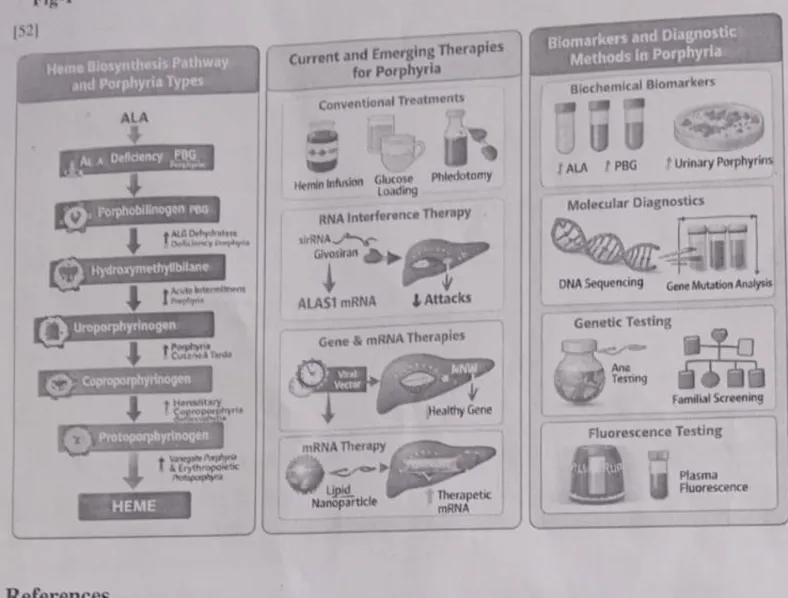


Fig-1


Hormonal influence on porphyria disease

Hormonal fluctuations, particularly progesterone surges, can precipitate attacks in susceptible women⁴⁹. Individualized hormonal management is often necessary.

Pregnancy and Lactation considerations of porphyria

With appropriate monitoring and safe medication selection, pregnancy outcomes are generally favorable⁵⁰. However, drug safety remains a major concern.

Future Directions and Research Gaps

Future research should focus on long-term outcomes of RNA-based therapies, discovery of novel biomarkers, and improved access to diagnostics in resource-limited settings⁵¹.

CONCLUSION

Recent advances in biomarker research have significantly improved diagnostic precision, early detection, and longitudinal disease monitoring. The development of targeted and RNA-based therapies has shifted treatment strategies toward mechanism-driven and disease-modifying approaches. Careful drug selection, pharmacovigilance and patient education gives optimal outcomes. Enhanced understanding of drug–disease interactions has strengthened porphyria preventive care and reduced acute exacerbations. Collectively, these innovations support a more personalized outcomes.

Novelty and Clinical Relevance

The distinguishing focus of this review is the integration of diagnostic advances with medication safety and pharmacovigilance. Rather than presenting emerging therapies alone, the review links porphyrinogenic drug exposure, adverse drug reactions, biochemical confirmation, genetic clarification, and targeted treatment within a pharmacist-oriented framework. This approach is intended to support practical prevention of avoidable exacerbations while highlighting areas where evidence remains limited.


Clinical domain

Key assessment

Pharmacological relevance

Practical implication

Acute hepatic porphyria

Urinary ALA/PBG during suspected attacks

Avoid porphyrinogenic triggers

Early testing and medication review

Drug safety

Check drug-specific porphyrogenicity

Prevent drug-induced attacks

Use validated specialist drug-safety resources

Recurrent attacks

Attack frequency and biochemical activity

Hemin or givosiran may be considered

Long-term monitoring is required

Erythropoietic/cutaneous forms

Porphyrin pattern and clinical phenotype

Treatment differs by subtype

Avoid applying AHP drug rules indiscriminately

Pharmacovigilance

Adverse-event and post-marketing signals

Refines safety knowledge for newer therapies

Report and monitor suspected adverse events


REFERENCES

  1. Dickey AK, Karp Leaf R, Balwani M. Update on the Porphyrias. Annual Review of Medicine. 2024;75:321-335. doi:10.1146/annurev-med-042921-123602.
  2. Aarsand AK, et al. Practical recommendations for biochemical and genetic diagnosis of the porphyrias. Liver International. 2025. doi:10.1111/liv.16012.
  3. Minder AE, Kluijver LG, Barman-Aksözen J, Minder EI, Langendonk JG. Erythropoietic protoporphyrias: Pathogenesis, diagnosis and management. Liver International. 2025;45(1):e16027. doi:10.1111/liv.16027.
  4. Balwani M, et al. Case-based discussion of the acute hepatic porphyrias: Updates on pathogenesis, diagnosis and management. Liver International. 2025;45:e15924. doi:10.1111/liv.15924.
  5. International Porphyria Network. Guidelines for the management of acute porphyria: recommendations from the International Porphyria Network. Lancet Haematology. 2026.

Puy H, Gouya L, Deybach JC. Porphyrias. Lancet. 2010; 375(9718):924–37.

  1. Thadani H, Deacon A, Peters T. Diagnosis and management of porphyria. BMJ. 2000; 320(7250):1647–51.
  2. Anderson KE. Diagnosis and management of porphyria. Ann Intern Med. 2005; 142(6):439–50.
  3. Balwani M, Desnick RJ. The porphyria’s: advances in diagnosis and treatment. N Engl J Med. 2012; 366(9):848–59.
  4. Elder GH. Porphyria cutanea tarda. Semin Liver Dis. 1998; 18(1):67–75.
  5. Stein PE, Badminton MN, Barth JH, Rees DC. Acute intermittent porphyria: clinical features, pathogenesis, and management. Br J Haematol. 2017; 176(4):527–38.
  6. Ramanujam VM, Anderson KE. Porphyria diagnostics—part I: biochemical testing. Curr Protoc Hum Genet. 2015; 86:17.20.1–26.
  7. Desnick RJ. The porphyrias. In: Scriver CR, Beaudet AL, Sly WS, Valle D, editors. The Metabolic and Molecular Bases of Inherited Disease. New York: McGraw-Hill; 2001. p. 2991–3062.
  8. Minder EI, Schneider-Yin X. Erythropoietic porphyrias: pathophysiology and management. Orphanet J Rare Dis. 2009; 4:19.
  9. Balwani M, Desnick RJ. Porphyrias. Blood. 2013; 122(8):1341–52.
  10. Bonkovsky HL. Neurovisceral manifestations of porphyria. Semin Liver Dis. 1998; 18(1):55–61.
  11. Sardh E, et al. Liver complications in acute hepatic porphyria. J Hepatol. 2021; 74(3):623–35.
  12. Elder GH, Hift RJ, Meissner PN. The acute porphyrias. Lancet. 1997; 349(9065):1613–17.
  13. Innala E, Andersson C. Screening and management of drug safety in acute porphyria. Orphanet J Rare Dis. 2011; 6:24.
  14. Badminton MN, Elder GH. Management of acute and cutaneous porphyrias. Int J Clin Pract. 2002; 56(4):272–78.
  15. European Porphyria Network (EPNET). Drug safety database for acute porphyria.
  16. U.S. Food and Drug Administration. FDA Adverse Event Reporting System (FAERS) public dashboard.
  17. Whatley SD, Badminton MN. Role of pharmacogenetics in acute porphyria. Clin Chem. 2013; 59(7):1019–28.
  18. Marsden JT, Rees DC. Molecular genetics of porphyria. Br J Haematol. 2014; 164(3):301–10.
  19. Mustajoki P, Heinonen J. General anesthesia in acute porphyria. Anesthesiology. 1988; 69(1):102–05.
  20. Thunell S, Harper P, Brock A. Drug safety in porphyria. Acta Anaesthesiol Scand. 2000; 44(2):132–41.
  21. Yasuda M, et al. RNA interference therapy in acute intermittent porphyria. N Engl J Med. 2019; 380(6):549–58.
  22. Balwani M, et al. Phase 3 trial of givosiran for acute hepatic porphyria. N Engl J Med. 2020; 382(24):2289–301.
  23. Lazareth H, et al. Hepatic safety of givosiran. Hepatology. 2021; 74(4):1905–14.
  24. Sardh E, Harper P, Balwani M, Stein P, Rees D, Bissell DM. Phase 1 trial of an RNA interference therapy for acute intermittent porphyria. N Engl J Med. 2019; 380(6):549–58.
  25. Balwani M, Sardh E, Ventura P, et al. Phase 3 trial of RNAi therapeutic givosiran for acute hepatic porphyria. N Engl J Med. 2020; 382(24):2289–301.
  26. Lazareth H, Poli A, Puy H, et al. Safety profile of givosiran in patients with acute hepatic porphyria. Hepatology. 2021; 74(4):1905–14.
  27. Syed YY. Givosiran: a review in acute hepatic porphyria. Drugs. 2021; 81(7):841–8.
  28. Anderson KE, Bloomer JR, Bonkovsky HL, Kushner JP, Peachey CA, Pimstone NR. Recommendations for the diagnosis and treatment of the acute porphyrias. Ann Intern Med. 2005; 142(6):439–50.
  29. Stein PE, Badminton MN, Barth JH, Rees DC. Acute intermittent porphyria: clinical features, pathogenesis, and management. Br J Haematol. 2017; 176(4):527–38.
  30. Whatley SD, Badminton MN. Role of pharmacogenetics in acute porphyria. Clin Chem. 2013; 59(7):1019–28.
  31. Innala E, Andersson C. Screening and management of drug safety in acute porphyria. Orphanet J Rare Dis. 2011; 6:24.
  32. Wang J, Bissell DM, Bonkovsky HL. Drug-associated porphyria: mechanisms and clinical implications. Orphanet J Rare Dis. 2024; 19:286.
  33. Elder GH, Hift RJ, Meissner PN. The acute porphyrias. Lancet. 1997; 349(9065):1613–7.
  34. Thadani H, Deacon A, Peters T. Diagnosis and management of porphyria. BMJ. 2000; 320(7250):1647–51.
  35. Badminton MN, Elder GH. Management of acute and cutaneous porphyrias. Int J Clin Pract. 2002; 56(4):272–8.
  36. Bonkovsky HL. Neurovisceral manifestations of porphyria. Semin Liver Dis. 1998; 18(1):55–66.
  37. Ramanujam VM, Anderson KE. Porphyria diagnostics—part 1: biochemical testing. Curr Protoc Hum Genet. 2015; 86:17.20.1–26.
  38. Marsden JT, Rees DC. A review of the molecular genetics of porphyria. Br J Haematol. 2014; 164(3):301–10.
  39. Mustajoki P, Heinonen J. General anesthesia in acute porphyria. Anesthesiology. 1988; 69(1):102–5.
  40. Thunell S, Harper P, Brock A. Drug safety in porphyria: risks and recommendations. Acta Anaesthesiol Scand. 2000; 44(2):132–41.
  41. Sardh E, Wahlin S, Björnsson E, et al. Long-term outcomes in acute hepatic porphyria. J Intern Med. 2018; 284(6):588–97.
  42. Desnick RJ, Astrin KH. Heme biosynthesis and the porphyrias. In: Scriver CR, Beaudet AL, Sly WS, Valle D, editors. The Metabolic and Molecular Bases of Inherited Disease. 8th ed. New York: McGraw-Hill; 2001. p. 2991–3062.
  43. Minder EI, Schneider-Yin X. Erythropoietic porphyrias: pathophysiology and management. Orphanet J Rare Dis. 2009; 4:19.
  44. European Porphyria Network (EPNET). Drug safety database for acute porphyria.
  45. American Porphyria Foundation. Drug safety and clinical guidance in porphyria.
  46. U.S. Food and Drug Administration. FDA Adverse Event Reporting System (FAERS) public dashboard.
  47. Rees DC, Kelsey H, Richards JD. Acute porphyria: clinical features and management. Clin Med (Lond). 2015; 15(4):360–4.
  48. Anderson KE. Diagnosis and management of porphyria. Curr Opin Hematol. 2009; 16(3):190–7.
  49. Harper P, Sardh E. Management of acute intermittent porphyria. Expert Opin Orphan Drugs. 2014; 2(4):349–68.
  50. Sardh E, Rees DC. Future directions in porphyria research and therapy. Br J Haematol. 2020; 189(2):211–20.
  51. Figure 1. Illustration of heme biosynthesis pathway, biomarkers, and emerging therapies in porphyria [AI-generated figure]. Generated using ChatGPT (OpenAI), 2026.

Reference

  1. Dickey AK, Karp Leaf R, Balwani M. Update on the Porphyrias. Annual Review of Medicine. 2024;75:321-335. doi:10.1146/annurev-med-042921-123602.
  2. Aarsand AK, et al. Practical recommendations for biochemical and genetic diagnosis of the porphyrias. Liver International. 2025. doi:10.1111/liv.16012.
  3. Minder AE, Kluijver LG, Barman-Aksözen J, Minder EI, Langendonk JG. Erythropoietic protoporphyrias: Pathogenesis, diagnosis and management. Liver International. 2025;45(1):e16027. doi:10.1111/liv.16027.
  4. Balwani M, et al. Case-based discussion of the acute hepatic porphyrias: Updates on pathogenesis, diagnosis and management. Liver International. 2025;45:e15924. doi:10.1111/liv.15924.
  5. International Porphyria Network. Guidelines for the management of acute porphyria: recommendations from the International Porphyria Network. Lancet Haematology. 2026.

Puy H, Gouya L, Deybach JC. Porphyrias. Lancet. 2010; 375(9718):924–37.

  1. Thadani H, Deacon A, Peters T. Diagnosis and management of porphyria. BMJ. 2000; 320(7250):1647–51.
  2. Anderson KE. Diagnosis and management of porphyria. Ann Intern Med. 2005; 142(6):439–50.
  3. Balwani M, Desnick RJ. The porphyria’s: advances in diagnosis and treatment. N Engl J Med. 2012; 366(9):848–59.
  4. Elder GH. Porphyria cutanea tarda. Semin Liver Dis. 1998; 18(1):67–75.
  5. Stein PE, Badminton MN, Barth JH, Rees DC. Acute intermittent porphyria: clinical features, pathogenesis, and management. Br J Haematol. 2017; 176(4):527–38.
  6. Ramanujam VM, Anderson KE. Porphyria diagnostics—part I: biochemical testing. Curr Protoc Hum Genet. 2015; 86:17.20.1–26.
  7. Desnick RJ. The porphyrias. In: Scriver CR, Beaudet AL, Sly WS, Valle D, editors. The Metabolic and Molecular Bases of Inherited Disease. New York: McGraw-Hill; 2001. p. 2991–3062.
  8. Minder EI, Schneider-Yin X. Erythropoietic porphyrias: pathophysiology and management. Orphanet J Rare Dis. 2009; 4:19.
  9. Balwani M, Desnick RJ. Porphyrias. Blood. 2013; 122(8):1341–52.
  10. Bonkovsky HL. Neurovisceral manifestations of porphyria. Semin Liver Dis. 1998; 18(1):55–61.
  11. Sardh E, et al. Liver complications in acute hepatic porphyria. J Hepatol. 2021; 74(3):623–35.
  12. Elder GH, Hift RJ, Meissner PN. The acute porphyrias. Lancet. 1997; 349(9065):1613–17.
  13. Innala E, Andersson C. Screening and management of drug safety in acute porphyria. Orphanet J Rare Dis. 2011; 6:24.
  14. Badminton MN, Elder GH. Management of acute and cutaneous porphyrias. Int J Clin Pract. 2002; 56(4):272–78.
  15. European Porphyria Network (EPNET). Drug safety database for acute porphyria.
  16. U.S. Food and Drug Administration. FDA Adverse Event Reporting System (FAERS) public dashboard.
  17. Whatley SD, Badminton MN. Role of pharmacogenetics in acute porphyria. Clin Chem. 2013; 59(7):1019–28.
  18. Marsden JT, Rees DC. Molecular genetics of porphyria. Br J Haematol. 2014; 164(3):301–10.
  19. Mustajoki P, Heinonen J. General anesthesia in acute porphyria. Anesthesiology. 1988; 69(1):102–05.
  20. Thunell S, Harper P, Brock A. Drug safety in porphyria. Acta Anaesthesiol Scand. 2000; 44(2):132–41.
  21. Yasuda M, et al. RNA interference therapy in acute intermittent porphyria. N Engl J Med. 2019; 380(6):549–58.
  22. Balwani M, et al. Phase 3 trial of givosiran for acute hepatic porphyria. N Engl J Med. 2020; 382(24):2289–301.
  23. Lazareth H, et al. Hepatic safety of givosiran. Hepatology. 2021; 74(4):1905–14.
  24. Sardh E, Harper P, Balwani M, Stein P, Rees D, Bissell DM. Phase 1 trial of an RNA interference therapy for acute intermittent porphyria. N Engl J Med. 2019; 380(6):549–58.
  25. Balwani M, Sardh E, Ventura P, et al. Phase 3 trial of RNAi therapeutic givosiran for acute hepatic porphyria. N Engl J Med. 2020; 382(24):2289–301.
  26. Lazareth H, Poli A, Puy H, et al. Safety profile of givosiran in patients with acute hepatic porphyria. Hepatology. 2021; 74(4):1905–14.
  27. Syed YY. Givosiran: a review in acute hepatic porphyria. Drugs. 2021; 81(7):841–8.
  28. Anderson KE, Bloomer JR, Bonkovsky HL, Kushner JP, Peachey CA, Pimstone NR. Recommendations for the diagnosis and treatment of the acute porphyrias. Ann Intern Med. 2005; 142(6):439–50.
  29. Stein PE, Badminton MN, Barth JH, Rees DC. Acute intermittent porphyria: clinical features, pathogenesis, and management. Br J Haematol. 2017; 176(4):527–38.
  30. Whatley SD, Badminton MN. Role of pharmacogenetics in acute porphyria. Clin Chem. 2013; 59(7):1019–28.
  31. Innala E, Andersson C. Screening and management of drug safety in acute porphyria. Orphanet J Rare Dis. 2011; 6:24.
  32. Wang J, Bissell DM, Bonkovsky HL. Drug-associated porphyria: mechanisms and clinical implications. Orphanet J Rare Dis. 2024; 19:286.
  33. Elder GH, Hift RJ, Meissner PN. The acute porphyrias. Lancet. 1997; 349(9065):1613–7.
  34. Thadani H, Deacon A, Peters T. Diagnosis and management of porphyria. BMJ. 2000; 320(7250):1647–51.
  35. Badminton MN, Elder GH. Management of acute and cutaneous porphyrias. Int J Clin Pract. 2002; 56(4):272–8.
  36. Bonkovsky HL. Neurovisceral manifestations of porphyria. Semin Liver Dis. 1998; 18(1):55–66.
  37. Ramanujam VM, Anderson KE. Porphyria diagnostics—part 1: biochemical testing. Curr Protoc Hum Genet. 2015; 86:17.20.1–26.
  38. Marsden JT, Rees DC. A review of the molecular genetics of porphyria. Br J Haematol. 2014; 164(3):301–10.
  39. Mustajoki P, Heinonen J. General anesthesia in acute porphyria. Anesthesiology. 1988; 69(1):102–5.
  40. Thunell S, Harper P, Brock A. Drug safety in porphyria: risks and recommendations. Acta Anaesthesiol Scand. 2000; 44(2):132–41.
  41. Sardh E, Wahlin S, Björnsson E, et al. Long-term outcomes in acute hepatic porphyria. J Intern Med. 2018; 284(6):588–97.
  42. Desnick RJ, Astrin KH. Heme biosynthesis and the porphyrias. In: Scriver CR, Beaudet AL, Sly WS, Valle D, editors. The Metabolic and Molecular Bases of Inherited Disease. 8th ed. New York: McGraw-Hill; 2001. p. 2991–3062.
  43. Minder EI, Schneider-Yin X. Erythropoietic porphyrias: pathophysiology and management. Orphanet J Rare Dis. 2009; 4:19.
  44. European Porphyria Network (EPNET). Drug safety database for acute porphyria.
  45. American Porphyria Foundation. Drug safety and clinical guidance in porphyria.
  46. U.S. Food and Drug Administration. FDA Adverse Event Reporting System (FAERS) public dashboard.
  47. Rees DC, Kelsey H, Richards JD. Acute porphyria: clinical features and management. Clin Med (Lond). 2015; 15(4):360–4.
  48. Anderson KE. Diagnosis and management of porphyria. Curr Opin Hematol. 2009; 16(3):190–7.
  49. Harper P, Sardh E. Management of acute intermittent porphyria. Expert Opin Orphan Drugs. 2014; 2(4):349–68.
  50. Sardh E, Rees DC. Future directions in porphyria research and therapy. Br J Haematol. 2020; 189(2):211–20.
  51. Figure 1. Illustration of heme biosynthesis pathway, biomarkers, and emerging therapies in porphyria [AI-generated figure]. Generated using ChatGPT (OpenAI), 2026.

Photo
Reem Muayad Ahmed
Corresponding author

Andhra University

Photo
Ali Abdullah Ahmed AL-Salami
Co-author

Andhra University.

Reem Muayad Ahmed, Ali Abdullah Ahmed AL-Salami, Porphyria’s Molecular Pathogenesis, Diagnostic Advances, and Emerging Therapeutic Strategies, Int. J. of Pharm. Sci., 2026, Vol 4, Issue 10, 281-287, https://doi.org/10.5281/zenodo.23120087

More related articles
AI-Driven 3D Printing of Personalized Medicines: I...
Ajit Kumar Prasad, Siddharth Kowsik...
Physicochemical characterization and GC/MS analysi...
KATOU Yapo Séverin, et BÉKRO Yves-Alain, MAMYRBEKOVA-BÉKRO Jan...
Sphingosomes: A Novel Lipoidal Vesicular Drug Delivery System – A Review...
Dr. Sachitanand Biradar, Vaishnavi Dhore, Kondlyade Sai ...
Multitarget Computational Investigation of Novel Pyrimidine Scaffolds Against Ov...
K. P. Beena, Rajanandhini S., Ragul Prasanth T. R., Priyanka P., Priyadharshini Bai M., Priyadharshi...
Related Articles
Pharmacological Insights into Amino Acid-Based Schiff bases: Trends and Therapeu...
Amit Kumar, Surender Verma, Manish Devgun, Mohit Sharma...
Exosomes as Smart Nanocarriers for Precision Drug Delivery...
Dhanashri Ghotekar, Rajeshwari Gangurde, Asmita Bhoasale, Diksha Jadhav...
Photodynamic Therapy ...
Saniya Firdous ...
Polycystic Ovary Syndrome: A Decade in Review (2016–2026)—Evolving Understan...
Deepika V, Saila Sri V, Vimala G, Karthika M, Vishnu G...
More related articles
Physicochemical characterization and GC/MS analysis of fatty acids in Myrianthus...
KATOU Yapo Séverin, et BÉKRO Yves-Alain, MAMYRBEKOVA-BÉKRO Janat Akhnovna, ETEKPO Dossou Sylvestr...
Physicochemical characterization and GC/MS analysis of fatty acids in Myrianthus...
KATOU Yapo Séverin, et BÉKRO Yves-Alain, MAMYRBEKOVA-BÉKRO Janat Akhnovna, ETEKPO Dossou Sylvestr...