

We use cookies to ensure our website works properly and to personalise your experience. Cookies policy
Department of Pharmacy, Shivaji Rao Pawar College of Pharmacy, Pachegaon.
Pregnant women frequently suffer from iron deficiency anaemia (IDA), which can cause problems for both the mother and the unborn child. In order to treat IDA, this study focusses on the creation and assessment of a nutraceutical Chyawanprash enhanced with natural iron-rich components. Known for their haematinic and bioavailability-enhancing qualities, the formulation includes herbal additives such as Moringa (Moringa oleifera), Spinach (Spinacia oleracea), Amaranthus (Amaranthus spp.), Carrot (Daucus carota), Beetroot (Beta vulgaris), Pumpkin seeds (Cucurbita pepo), Honey, Jaggery, Ghee, Amla pulp (Emblica officinalis) and Prakshyap Dravya. Iron content, stability, bioavailability, physicochemical parameters, and organoleptic characteristics were assessed for the produced product. According to preliminary findings, the formulation is tasty, high in accessible iron and has antioxidant qualities since it contains vitamin C from Amla, which improves iron absorption.
Chyawanprash (CP), also called Cyavanaprasa, Chyavanaprasha, Chyavanaprash, Chyavanaprash, Chyavanaprasam, and Chyawanaprash, is a well-known Ayurvedic composition with deep historical and cultural roots in Indian literature and traditional medicine. Legendary stories of CP's origins can be found in ancient Indian texts from the early Christian era. According to legend, Sukanya, the daughter of King Sharyati, accidentally punctured the eyes of the sage Chyavan while he was meditating, with only his nose and eyes visible due to his body being covered by an anthill. Blind and in pain, Chyavan cursed the princess. The king arranged for Sukanya and the sage to get married in order to make apologies. Amla (Amalaki), also known as Indian gooseberry (Phyllanthus emblica), is the main component of Chyawanprash and is thought to be one of the best Rasayanas for preserving homeostasis. CP is a complex, flavors, flavors, flavors, flavors, flavors, flavors, flavors, flavors. Regular consumption promotes vitality, supports physiological processes, and revitalizes every bodily system.
Role of Iron in Pregnant women’s
During pregnancy, the body requires a lot more iron to support the growth of the fetus and placenta as well as the adaptation of the mother. The iron-regulatory hormone hepcidin plays a major role in enhancing both the release of iron from reserves and the absorption of iron from food in order to satisfy these demands. Hepcidin is still regulated during pregnancy by known factors like inflammation, erythropoiesis, and iron levels, even though the precise mechanism causing this decrease is unknown. High levels of maternal hepcidin during pregnancy may reduce the amount of iron available for placental transfer and reduce the efficacy of iron supplements. How fetal hepcidin regulates placental iron transport is still unknown. The state of knowledge and knowledge gaps about hematologic and iron changes during pregnancy are reviewed, along with the regulatory mechanisms of iron homeostasis in the mother, fetus, and placenta (1).
Iron Metabolism and Its Regulation During Pregnancy
Increased absorption and effective mobilization of iron reserves during pregnancy control iron availability. Nonheme iron absorption gradually increases as gestation progresses, according to studies employing stable or radioactive iron isotopes; heme iron absorption most likely follows a similar trend. Furthermore, animal models show that iron concentrations in the liver and spleen drop when compared to nonpregnant situations, indicating that iron stored in these organs is mobilized more effectively. These procedures improve the availability of iron for maternal hematologic adaptations and placental translocation (2).
Maternal hepcidin, a liver-derived hormone that regulates iron distribution in tissues and its level in plasma, plays a vital role in controlling iron availability during pregnancy. It maintains iron balance by blocking three major pathways of iron entry into plasma: release from hepatic stores, iron recycled by macrophages from senescent red blood cells, and dietary iron absorption in the gut. Hepcidin exerts its effect through ferroportin, an iron export protein present on iron-transporting tissues. Upon binding to ferroportin, hepcidin induces its internalization and degradation, leading to intracellular iron trapping and reduced plasma iron levels. Therefore, hepcidin concentration is inversely related to iron delivery to key organs such as the bone marrow and placenta (3).
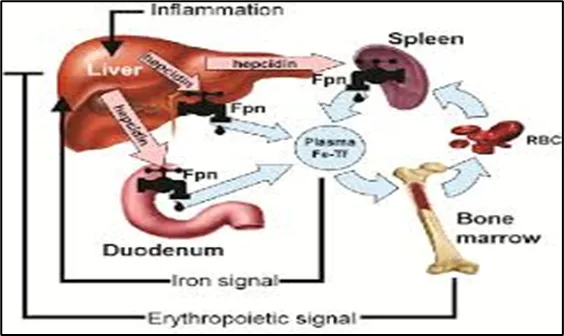
Figure 1: Iron Metabolism and Its Regulation During Pregnancy
MATERIAL AND METHODS
The proposed iron-rich Chyawanprash is formulated with iron and nutrient-dense base ingredients including Black Dates (Phoenix dactylifera), Pumpkin Seeds (Cucurbita pepo), Carrot (Daucus carota), Spinach (Spinacia oleracea), Beetroot (Beta vulgaris), Moringa (Moringa oleifera), Tandulja (Amaranthus tricolor) and Amla (Emblica officinalis) as a rich source of natural iron, folate, vitamin C and antioxidants. Jaggery (Saccharum officinarum), Honey, Ghee and Peanut Oil (Arachis hypogaea) are used as a base, bio-enhancer and natural sweetener to improve iron absorption and energy. For enhanced efficacy, palatability and preservation, Prakshepa Dravyas such as Cardamom (Elettaria cardamomum), Cinnamon (Cinnamomum verum), Bay Leaf (Laurus nobilis), Rose Petals (Rosa spp.) and Black Pepper (Piper nigrum) are added in small quantities (4,5).
Iron-rich Chyawanprash was formulated using natural iron sources such as Amla, Moringa, Spinach, Beetroot, Pumpkin Seeds, Black Dates and Carrot, with Jaggery, Ghee, Peanut Oil and Honey as base, binder and preservative to enhance absorption and shelf-life, and Prakshepa Dravya like Cardamom, Cinnamon, Bay Leaf and Rose as flavoring and bioavailability enhancers. For manufacturing, fresh raw materials were selected, washed, peeled and cut into uniform pieces, then dried in a hot air oven at 50-60°C with periodic tray rotation and monitoring till moisture was reduced to <10%. The dried materials were cooled, stored in airtight containers and subjected to quality control for moisture, iron content and microbial load (6).
PART 2: Procedure of Chywanprash:
Fresh Amla fruits are taken and boiled in water until soft. After boiling, they are mashed and the pulp is extracted. This pulp serves as the base for Chyawanprash.
Prepare a decoction of the various medicinal herbs (such as Ashwagandha, Brahmi, etc.) by boiling them in water. The herbs are boiled until the water reduces to about one-fourth of the original volume.
Ghee is heated in a large vessel. Once the ghee is warm, add the Amla pulp along with the herbal decoction and stir the mixture to combine well. Continue to cook this mixture on low heat while stirring occasionally.
Once the Amla pulp and herbal decoction have combined well with the ghee, sugar is added to the mixture. Stir continuously to ensure that the sugar dissolves completely and integrates into the mixture. After the sugar dissolves, add honey to the mixture, stirring well(7,8).
Continue simmering on low heat until the mixture reaches the desired consistency. It should be thick enough to coat the back of a spoon but not too sticky or hard. The texture of the Chyawanprash should resemble a thick, smooth jam or preserve (10).
Once the desired consistency is achieved, remove the Chyawanprash from heat and let it cool to room temperature. Store the cooled Chyawanprash in an airtight container, preferably in glass jars (11).
Some recipes also suggest the addition of Rose petals or other fragrant oils at the end of the preparation to enhance the aroma and therapeutic effects (12,13)
Different Formulations Prepared:
Table 1: Different Formula Ratios
|
Ingredients |
F1 |
F2 |
F3 |
F4 |
F5 |
F6 |
|
Amla |
30 |
30 |
30 |
35 |
35 |
40 |
|
Black Dates |
03 |
04 |
03 |
03 |
04 |
04 |
|
Moringa |
02 |
01 |
01 |
01 |
01 |
01 |
|
Tandulja |
01 |
02 |
02 |
01 |
01 |
02 |
|
Pumkin Seeds |
01 |
01 |
01 |
02 |
01 |
01 |
|
Beetroot |
01 |
0.5 |
01 |
01 |
01 |
1.5 |
|
Carrot |
01 |
0.5 |
01 |
01 |
1.5 |
01 |
|
Spinach |
01 |
02 |
1.5 |
02 |
01 |
01 |
|
Jaggery (in ml) |
25 |
20 |
30 |
35 |
30 |
30 |
|
Honey (in ml) |
05 |
10 |
05 |
10 |
7.5 |
10 |
|
Additives |
|
|||||
|
Cardamon |
01 |
01 |
01 |
0.5 |
0.5 |
1.5 |
|
Cinnamon |
01 |
0.5 |
01 |
0.5 |
01 |
0.5 |
|
Bay Leaf |
01 |
01 |
0.5 |
0.5 |
01 |
0.5 |
|
Black Pepper |
0.5 |
0.5 |
01 |
01 |
0.5 |
01 |
*All Quantities are measured in gram
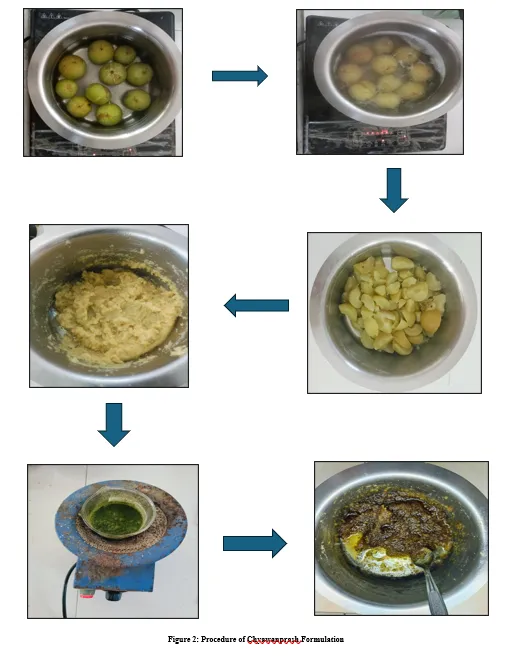
Figure 2: Procedure of Chyawanprash Formulation
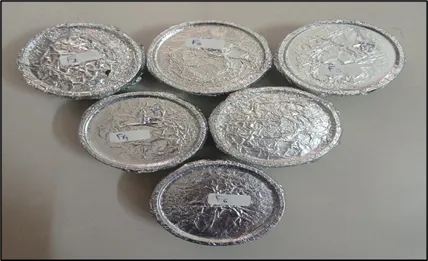
Figure 3: Final Product
Evaluation Parameters:
Morphological, chemical and physical evaluation test for phytoconstituents is performed of every sample from F1 to F6 (14).
Morphological Characterization:
Colour, taste odour, texture may vary from sample to sample. Hence this parameter is also important for quality control analysis of product. (15,16)
Physical Evaluation:
Physical evaluation includes mainly Ash Value determination, moisture content and loss on drying of each formulation (17,18).
1.Ash Value:
Ash value is used to assess the quality, purity, and identity of a drug. The ash content contains inorganic compounds like phosphates, carbonates, and silicates of elements such as sodium, potassium, magnesium, and calcium. These compounds are present in specific amounts in a given crude drug, and their quantitative determination through ash values helps standardize the drug. To measure the ash content, the plant material is incinerated, and the residual ash is quantified as total ash and acid-insoluble ash. Total ash reflects the total material left after burning, including ash derived from the plant and acid-insoluble components. Acid-insoluble ash is the residue obtained by boiling the total ash with dilute hydrochloric acid, followed by incineration of the remaining insoluble matter. This method specifically quantifies the silica content, often present as sand or siliceous earth (19,20)
2. Moisture Content and Loss on Drying (LOD):
Moisture is an inherent component of crude herbal drugs, but it should be minimized as much as possible. Proper drying of the crude drug is crucial during both the collection and preservation stages. It helps prevent the hydrolytic degradation of active compounds and facilitates easier size reduction of the drug. Excess moisture or inadequate drying can lead to spoilage due to microbial growth. Therefore, the drying process should ensure that the moisture content is reduced to below the critical level to maintain the quality and longevity of the drug (21,22).
3.Chemical Evaluation:
Identification of different phytoconstituent is done from the product or extract using different reagents. To perform the test, sample extract is prepared by dissolving the small amount of product in sufficient amount of water. (23,24)
a. Test for Carbohydrates (Molish Test):
Take 2 mL of plant extract solution in a test tube Add 2 drops of 10% alcoholic α-naphthol and mix well. Carefully add 2 mL of conc. H₂SO₄ along the test tube’s side to form a separate layer Observe the junction for a reddish-violet ring (positive result). On standing or shaking, a dark purple solution may form.
b. Test for Glycosides:
Dissolve a small amount of alcoholic extract in water and alcohol. Boil with Fehling’s solutions A & B → Yellow colour indicates glucosides. Dissolve another portion in water and alcohol, add dil. H₂SO₄, boil. Neutralize with NaOH, then boil with Fehling’s solutions A & B. Brick-red precipitate confirms glucosides (25,26).
c. Test for Tanin (Ferric chloride test)
Testing for tannins can be done using various methods. A common and simple test for tannins is the Ferric chloride Test.
Take a small sample of the substance (plant extract or material suspected of containing tannins). Add a few drops of ferric chloride solution to the sample. Observe the colour change: If tannins are present, the solution will turn blue, green, or black depending on the type of tannins (27,28).
d. Test for Flavonoids (Shinoda Test)
Take a small amount of plant extract in a test tube. Add a few drops of concentrated HCl. Add small pieces of magnesium turnings. Observe for a pink, red, or orange coloration, indicating the presence of flavonoids (29,30).
e. Test for Saponin (Foam Test):
Take 1 mL of plant extract in a test tube. Add 5–10 mL of distilled water and shake vigorously for 30 second. Allow it to stand for 10–15 minutes. Persistent froth (foam) formation indicates the presence of saponins. (31,32,33)
Table 2: Morphological and Physical Evaluation of Chyawanprash
|
Parameter |
Ref. Sample |
Observation of Formulated Samples |
Inference |
|||||
|
|
|
F1 |
F2 |
F3 |
F4 |
F5 |
F6 |
|
|
Colour |
Brown |
Brown |
Brown |
Brown |
Brown |
Brown |
Brown |
Acceptable |
|
Odour |
Specific Odour |
Specific Odour |
Specific Odour |
Specific Odour |
Specific Odour |
Specific Odour |
Specific Odour |
Acceptable |
|
Taste |
Pleasant |
Pleasant |
Pleasant |
Pleasant |
Pleasant |
Pleasant |
Pleasant |
Acceptable |
|
Nature |
Semisolid |
Semisolid |
Semisolid |
Semisolid |
Semisolid |
Semisolid |
Semisolid |
Acceptable |
|
PH |
4.35–5.20 |
4.5 |
5.0 |
5.1 |
4.7 |
4.85 |
5.02 |
Acceptable |
|
Moisture content |
Not more than 13% |
9 |
8 |
7 |
10 |
11 |
6 |
Acceptable |
|
Ash value |
Not more than 9% |
5 |
7 |
8 |
7 |
6 |
4 |
Acceptable |
Table 3: Identification Test Observations
|
Test |
Reference Sample |
F1 |
F2 |
F3 |
F4 |
F5 |
F6 |
|
Carbohydrates (Molish Test) |
+ |
+ |
+ |
+ |
+ |
+ |
+ |
|
Glycosides |
+ |
+ |
+ |
+ |
+ |
+ |
+ |
|
Tanins |
+ |
+ |
+ |
+ |
+ |
+ |
+ |
|
Flavonoids (Shioda Test) |
+ |
+ |
+ |
+ |
+ |
+ |
+ |
|
Saponin (Foam Test) |
+ |
+ |
+ |
+ |
+ |
+ |
+ |
|
Phenolic Content |
+ |
+ |
+ |
+ |
+ |
+ |
+ |
|
Inorganic Analysis (Iron Test) |
− |
+ |
+ |
+ |
+ |
+ |
+ |
CONCLUSION
The developed iron-rich Chyawanprash is a safe, natural and cost-effective Ayurvedic formulation prepared from iron and Vitamin-C rich ingredients like Amla, Moringa, Spinach, Beetroot, Pumpkin Seeds, Black Dates and Carrot. The addition of Jaggery, Ghee, Peanut Oil and Honey not only improves taste and shelf-life but also enhances iron absorption, while Prakshepa Dravyas act as bioenhancers. The low-temperature drying method (50-60°C) retains nutrients and ensures stability with moisture <10%. Regular consumption of this formulation may help prevent iron deficiency anemia, support maternal health during pregnancy and menstruation, improve immunity and reduce complications like preterm birth and fetal growth restriction. Hence, this Chyawanprash can be a promising community-level nutritional supplement for women's health.

Akanksha Dale, Siddharth Shende, Ayurvedic Iron Chywanprash: As Pregnancy Supplement, Int. J. of Pharm. Sci., 2026, Vol 4, Issue 10, 272-280, https://doi.org/10.5281/zenodo.23120027
 10.5281/zenodo.23120027