

We use cookies to ensure our website works properly and to personalise your experience. Cookies policy
Department of Pharmaceutics, Deccan School of Pharmacy, Hyderabad, India.
Oral Disintegrating Films (ODFs) are drug delivery systems that are produced using a variety of techniques for both small-scale pharmacies and personalized medications on a large scale. There are specific restrictions on both ODFs and their manufacturing processes. In order to address these problems and discover novel formulations for a variety of APIs that might make their job profitable for them as well as advantageous for patients, numerous pharmaceutical corporations and academic research institutions worldwide collaborate. There is no doubt that the production of ODFs has advanced due to the large number of pending patent applications and issued patents with their creative methods. The quantity of ODFs that are offered for sale is still increasing. Some of them, nevertheless, were withdrawn and are no longer offered in stores. This article seeks to provide an overview of already marketed ODFs and those that have been taken off the market, as well as offering a glimpse into recently released research on Oral Disintegrating films with a focus on APIs used. The book also emphasizes the efforts made by scientific groups to get over the restrictions of ODF's production techniques
Solid oral medication forms that are frequently utilized include tablets and capsules. However, some individuals find it difficult or even impossible to use these dosage forms on a daily basis. Some people have dysphagia, a fear of choking, or difficulty swallowing. Patients who are elderly, young, mentally sick, recovering from anesthesia, have Parkinson's disease, or have Alzheimer's disease may encounter these issues. 1,2,3,4,5. There are additional reasons why some patients avoid swallowing tablets or capsules, such as nausea or a goal to drink less water. Additionally, as tablets and capsules require water for the correct breakdown and release of active pharmaceutical ingredients (API) along the gastrointestinal tract (GIT), travelers' occasionally limited access to water may be problematic. According to American studies, 4% of patients stop treatment due to trouble swallowing tablets, while 8% of patients miss doses.6 Oral Disintegrating films (ODFs) are thought to be a substitute medication form for tablets or capsules in order to address these problems. When ODFs come into contact with saliva, they dissolve or disintegrate in the mouth (no water is required for this process) and create an easily ingested solution or suspension. Patients' discomfort is avoided by breaking down into soft particles in the mouth. Additionally, the application of API taste-masking technology or the addition of flavor enhancers might significantly boost the preference for this drug form, particularly in children. 7,8 Drugs having low bioavailability when supplied by other means can also be effectively delivered using fast-dissolving films. 9,10,11,12,13,14 Lastly, ODFs are great methods for customized treatment, particularly for APIs with a limited therapeutic index.15 ODFs may be created at hospitals or community pharmacies according to the patient's requirements in these customized medication concepts. 16,17 It makes sense, primarily because there are numerous technological problems that could arise during large-scale ODF manufacturing. The most prevalent and noteworthy concerns in this discipline are batch-to-batch variability and homogeneity problems. The ODFs are nevertheless becoming more and more popular in spite of these drawbacks. This medication form was first conceived in 1955. However, the introduction of Listerine by Pfizer in 2001 sparked genuine interest on a large scale.18 Since then, ODFs have been effectively developed, leading to a variety of products being offered on global markets. ODFs are carriers of vaccines 19, probiotics 20, herbal extracts 21, and nutrients like vitamins22, in addition to common APIs like sildenafil, ondansetron, or zolpidem. Implementing methods that allow regulating the rate of medication release was prompted by improving the bioavailability of specific APIs. ODFs thus become a vehicle for self-emulsifying systems25, microparticles23, nanoparticles24, or nanocrystals18and systems that self-emulsify25. Another area where the improvement is evident is in manufacturing techniques. The most common of them is solvent casting, but there are also other techniques like electrospinning or hot-melt extrusion, as well as extremely promising printing technologies (two-dimensional inkjet printing, three-dimensional, additive printing, and flexographic printing methods)18. The future of ODFs will likely be determined by the combination of the aforementioned techniques or their various variations, which are frequently patented. ODF is defined by the European Pharmacopeia (Ph.Eur.) as melting films of one or more layers made with appropriate materials that are placed in the mouth and quickly dissolve.26 The avoidance of the hepatic first pass impact is a significant advantage of ODFs. Larger dosages of APIs may enter the systemic circulation because they are released and primarily absorbed in the mouth, as opposed to the gastrointestinal tract (GIT), where hepatic activity causes the dose to be reduced. Additionally, fewer adverse effects may arise because the liver produces less metabolites. Many APIs are being used in a lot of research these days, which could help ODFs be used to cure more and more illnesses. Some of the newly created formulations have reached or will reach the market. However, it has recently been noted that some ODF preparations have been ceased.27,28 This manuscript's objective was to examine recent research on the production of ODFs using various APIs and contrast it with the variety of ODFs on the commercial market. To put it another way, what is the relationship between the APIs that are sold by the ODF and the APIs that are published in scholarly literature? This review also aims to draw attention to ODFs' shortcomings and offer some technological solutions to get around them.
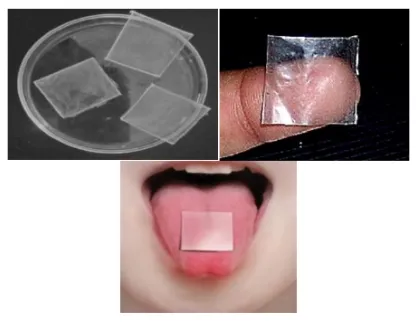
Fig.No 1 : Example of oro-dispersible film.
Oral Disintegrating film is a flexible, square or rectangle-shaped oral strip that is postage stamp-sized, extremely thin, and esthetically pleasing, as seen in Figure 1. It is composed of polymers that, when applied to a patient's tongue or any other mucosal tissue, are instantly moistened by saliva and rapidly break down to release the medication, which dissolves or disperses in the saliva. The drug may be absorbed from the pharynx, esophagus, or other GIT secretions as the saliva falls. In some circumstances, bioavailability is higher than with traditional dose forms. 29,30,31
Table 1: Comparative properties of ODF 32,33,34,35
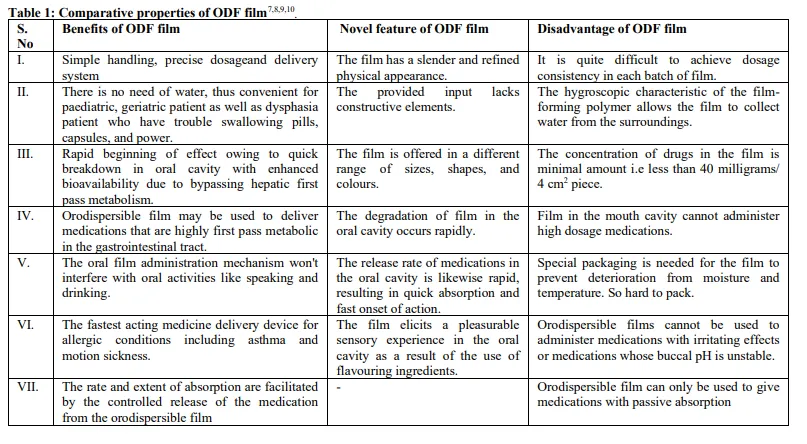
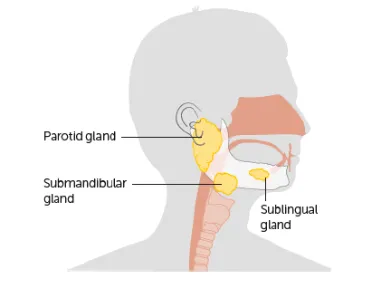
Fig.No 2 : Salivary glands
Figure 2 illustrates the location of the parotid, submandibular, and sublingual salivary glands in the oral cavity. Saliva, which has a pH range of 5.5-7 and is relatively less viscous than GI fluids, is secreted by the salivary glands. Water makes up the majority of it, with 1% organic and inorganic material. An oral mucosal dose form can be hydrated by the salivary gland's total production of 0.5 – 62 litters of saliva. When oro dispersible films come into contact with saliva without the use of water, they disintegrate in a couple of seconds.
Salient Features36
• Easy administration to patients who are unable to swallow, including the elderly, stroke victims, bedridden patients, patients suffering from renal failure, and individuals who refuse to swallow, including pediatric, geriatric, and psychiatric patients.
• The dose form doesn't require water to be swallowed, which is a very practical feature for patients who are traveling and don't have instant access to water.
• The medication dissolves and is absorbed quickly, resulting in a rapid commencement of effect.
• As saliva descends into the stomach, certain medications are absorbed from the mouth, pharynx, and esophagus. The drug's bioavailability is enhanced under certain situations.
• Due to lower dosage, pre-gastric absorption may lead to enhanced bioavailability;
TYPES OF RAPIDLY DISPERSIBLE DRUG SYSTEMS
Although the oral route is still the most common way to administer drugs, the buccal route has recently gained popularity as a viable substitute due to its many benefits. Buccal films are made especially to have mucoadhesive qualities. To increase medication bioavailability, these films frequently include permeability enhancers. Based on the data that is currently available, the buccal epithelium appears to be a good route for administering several medications. Clinical trials are still in progress as a result, suggesting that there is increasing interest in registering and marketing the first biologic product in the form of a buccal film. Many researchers studying instant-release products are focusing on "oral strip technology." These researchers claim that oral strips have significant benefits, especially for populations that have trouble swallowing. Both instant release (IR) and sustained release (SR) medication formulations can benefit from this approach. Oral films are therefore regarded as an alternate drug delivery method, especially for medications with problems with bioavailability and first-pass effects.37
Fast dissolving oral dispersible tablets
In the conventional method, the delivery system is made by directly compressing the excipients. The hardness and friability of the system may be affected by the manufacturing process. Compared to simple/conventional units, these systems allow for faster disintegration and better water penetration into the core since they are made of water-soluble materials and contain a super-disintegrant/effervescent component. It has a large capacity for medication medium and other compounds that hide taste. Its lengthier disintegration period in comparison to other quickly dispersible systems is a disadvantage, too. When building these systems, a lot of branded companies and generic pharmaceutical companies use loose compression techniques.
Thin oral films/wafers
Flat films that are advised for use in the oral cavity make up thin oral films, sometimes referred to as "wafers" in contemporary literature. Manufacturers interested in developing fast-dissolving systems are paying more attention to this class, despite its recent emergence. Similar technology has been used by certain companies working on transdermal delivery systems to create thin oral films. These days, tiny oral films are widely used to deliver the active ingredients of several prescription drugs and over-the-counter treatments. These films are made using hydrophilic polymers. These films include certain taste-masked active chemicals as well as soluble or insoluble substances.38
Lyophilized systems
In order to produce different tablet-shaped fragments, liquid solutions containing the medicine are poured into specific molds. These pieces are then allowed to freeze before being lyophilized. These pieces might break down quickly and have more water or saliva penetration because of their high porosity. Depending on whether the active medication is soluble or insoluble, these systems have different dose management capacities. Additionally, taste-masking substances may be added.39
Buccal films
Buccal films are incredibly thin films that are applied on the tongue and rapidly hydrate to release the medication. They resemble postage stamps in both size and form. Both Japan and the United States have allowed these films under prescription. It seems that buccal films will outsell alternative dose forms that contain the same active medications. Mucoadhesive polymers are used to create buccal adhesive films, a novel medication delivery method. Because of their flexibility, convenience, and comparatively extended residence time, buccal films are favored on the mucosa over sticky tablets and oral gels. Furthermore, buccal films can shield wound surfaces, which lessens discomfort and improves the efficacy of treating mouth diseases. The benefit of bi-layer films is that they can transport many drugs at once. Bi-layer films offer versatility and adaptability as a drug delivery technology, enabling the integration of two medicines in different layers. This strategy has a number of advantages, including the capacity to create a single layer for instant release, guaranteeing a quick start to activity. In the meantime, the second layer can serve as a sustained release layer, giving the medications a regulated and extended release. Using maltodextrins and glycerin as a plasticizer, fast-dissolving buccal films were created, and an in vitro assessment was carried out. The results showed that the best composition of the films was obtained with a glycerin to polymer concentration range of 16–20% w/w. Microcrystalline cellulose served as a carrier for the piroxicam in this particular formulation. The study's findings demonstrated that despite the films' decreased flexibility due to these specific chemicals, they still maintained a great drug loading capacity of 25 mg per 6 cm2 area. Based on their release mechanisms and production processes, buccal films can be divided into three different categories: mucoadhesive sustained-release films, mucoadhesive melt-away films, and flash-release films. Every kind has distinct qualities and uses.6 Flash-release films usually cover a tiny area (2–8 cm2) and are single-layered. They can have both local and systemic effects because they dissolve in 60 seconds when applied to the tongue. Mucoadhesive melt-away films stick to the buccal mucosa and break down in a matter of minutes. They can be single or multi-layered. They are typically employed in situations where a marginally extended release is required. Mucoadhesive sustained-release films cover a tiny area (2-4 cm2) and are made up of several layers. These films use non-dissolvable polymers to release the drug over an extended period (up to 8-10 hours), providing a controlled, sustained effect in the buccal cavity.40
Advantages of Oral Disintegrating Films 41,42
• ODFs taste good, dissolve readily in saliva, are readily ionized when they break down on the tongue, penetrate the mucosal membrane, and have quick drug action.
• They have better absorption, increased bioavailability, stability, and efficacy.
• Because elderly, young, and crippled patients may simply take them without water and without choking issues, they have a greater patient compliance rate.
• ODF technology makes it easier to include medications at low dosages, as well as medications that are incompatible with the gastrointestinal system and bioavailability issues.
• ODF development is a simple process that may be finished in a few days.
• They have immediate impact on intraoral diseases, asthma attacks, migraine attacks, and angina attacks, among other emergency situations.
There is no chance of choking.
• A rise in patient adherence.
• Taste masking is compatible with it.
• It leaves the mouth with little to no residue.
• Handling and transportation are simple.
• Improved stability.
• The dose form dissolves quickly and doesn't require water.
• Administration is simple for mentally ill, impaired, and uncooperative individuals.
• It is helpful when quick action is needed, such as in cases of motion sickness, bronchitis, asthma, or abrupt episodes of coughing or allergy attacks.
Limitations of Oral Disintegrating Films
• Increase the bioavailability of a specific medicinal component.
need certain tools for storage and packaging.
• Large dosages of medications are not appropriate for this technique.
• They are difficult to protect since they are hygroscopic and thus prone to deterioration.
• Dosage termination cannot be the same as with tablets because to their rapid dissolution and disintegration processes.
It is not possible to provide medications that irritate the mucosa.
• It needs specific packaging because it is delicate and needs to be kept dry.
CLASSIFICATION OF ORAL DISINTEGRATING FILMS 41
ODFs are generally classified into three classes: type 1, according to dissolution; type 2, according to layering; and type 3, according to the nature of the API.
Type 1 ODFs: Fast, moderate, and slow are the three subtypes of Type 1 ODFs. Large dosages of medications are not appropriate for this technique. They are difficult to protect since they are hygroscopic and thus prone to deterioration. Dosage termination cannot be the same as with tablets because to their rapid dissolution and disintegration processes. It is not possible to provide medications that irritate the mucosa.Fast-dissolving ODFs are films with a thickness of about 50–150 µm that dissolve in thirty seconds; moderately dissolving ODFs are films that dissolve in one to thirty minutes; and slow-dissolving ODFs can take longer than thirty minutes. While slow/moderately dissolving films are used to create nicotine-based medicines because they help reduce or eliminate cravings in patients who have routinely used tobacco and developed a dependency, fast-dissolving films are employed in emergency situations.
Type 2 ODFs: Type 2 ODFs are categorized based on how many layers they have. Large dosages of medications are not appropriate for this technique.They are difficult to protect since they are hygroscopic and thus prone to deterioration.Dosage termination cannot be the same as with tablets because to their rapid dissolution and disintegration processes. It is not possible to provide medications that irritate the mucosa.There are three types of layers: monolayers, bilayers, and multilayers. An API, a film-forming polymer, and excipients make up monolayer oral films, whereas a taste-masking or permeation-enhancing layer and an API layer make up bilayer or double layer films. The API layer is positioned between two layers in multilayer films.
Type 3 ODFs: Type 3 ODFs are further categorized based on the API source, which can be either synthetic (like sildenafil) or natural (like ginger and turmeric).
• Large dosages of medications are not appropriate for this technique.
• They are difficult to protect since they are hygroscopic and thus prone to deterioration.
• Dosage termination cannot be the same as with tablets because to their rapid dissolution and disintegration processes.
It is not possible to provide medications that irritate the mucosa.
The other class of type 3 ODFs, such as vitamin D ODFs, are films made with minerals, vaccines, vitamins, or micronutrients. While ODFs made from plant sources are challenging to produce, all of these ODFs incorporate over-the-counter or prescription medications.
Physiochemical Properties and Role of Oral Mucosa:
The term "oral mucosa" refers to the anatomical structure located inside the oral cavity that is distinguished by a moist, flexible tissue membrane.
• Large dosages of medications are not appropriate for this technique.
• They are difficult to protect since they are hygroscopic and thus prone to deterioration.
• Dosage termination cannot be the same as with tablets because to their rapid dissolution and disintegration processes.
It is not possible to provide medications that irritate the mucosa.
There are three different layers that make up the oral mucosa.
i. The outermost layer of the mouth cavity is called the oral epithelium.
ii. The middle layer of the oral cavity contains the lamina propria.
iii. The oral cavity's deepest layer is called the submucosa.
The thickness of the oral mucosa epithelium ranges from 40 to 50 cell layers. Proteins and carbohydrates make up the mucus-based intercellular ground substance that makes up the majority of this epithelium. Mucous, a gel-like substance produced by the submucosal layer, is made up of water (90–99%), water-insoluble glycoprotein (about 1–5%), and trace amounts of bioactive compounds.
• Large dosages of medications are not appropriate for this technique.
• They are difficult to protect since they are hygroscopic and thus prone to deterioration.
• Dosage termination cannot be the same as with tablets because to their rapid dissolution and disintegration processes. It is not possible to provide medications that irritate the mucosa.Depending on where it comes from within the body, mucus has a different particular composition.35,43,44.
Functions of oral mucosa
The oral mucosa serves several crucial purposes, including the following:
• Large dosages of medications are not appropriate for this technique.
• They are difficult to protect since they are hygroscopic and thus prone to deterioration.
• Dosage termination cannot be the same as with tablets because to their rapid dissolution and disintegration processes.
It is not possible to provide medications that irritate the mucosa.Hydration levels are successfully maintained by the mouth cavity.It offers the underlying tissues physical defense against oral poisons, bacteria, and mechanical pressures.Saliva is secreted by the mouth mucosa and helps with immunological defense, pH regulation, and lubrication.A drug's permeability coefficient quantifies and describes its ability to cross a membrane. The intestine has the highest permeability, followed by the oral mucosa, and the skin has the lowest permeability among the gut, mouth mucosa, and skin. To increase the oral mucosa's permeability in comparison to the gut, various permeability enhancers have been added to the oral mucosal drug delivery system. Large dosages of medications are not appropriate for this technique.They are difficult to protect since they are hygroscopic and thus prone to deterioration.Dosage termination cannot be the same as with tablets because to their rapid dissolution and disintegration processes. It is not possible to provide medications that irritate the mucosa.Among the permeability enhancers are dextran sulfate, 23-lauryl ether, benzalkonium chloride, sodium taurodeoxycholate, and aprotinin. Mucosa therefore provides an effective drug delivery and absorption system. The transcellular (intracellular) and paracellular (intercellular) pathways are the two main ways that Oral Disintegrating film is absorbed. 11,12,13-43,44,45
Mechanism of Oral Absorption:
A first-order rate mechanism provides a sufficient description of the pharmacokinetics of drug absorption in the buccal cavity. Large dosages of medications are not appropriate for this technique.They are difficult to protect since they are hygroscopic and thus prone to deterioration.Dosage termination cannot be the same as with tablets because to their rapid dissolution and disintegration processes. It is not possible to provide medications that irritate the mucosa.
There are several possible obstacles to medication absorption via the buccal route. According to Dearden and Tomlison (1971), saliva secretion and drug concentration in the oral cavity affect the kinetics of buccal absorption from buccal film. Salivary secretion and time have a direct link, which can be expressed mathematically as follows.46,47,48
- dm/ dt = Kc/ViVt
Where,m - Mass of drug in mouth at time, K - Proportionality constant,c - Concentration of drug in the mouth at time, Vi - The volume of the solution put into mouth cavity and Vt - Salivary secretion rate
Table 2: Types of Oro-dispersible Films and Their Properties:49
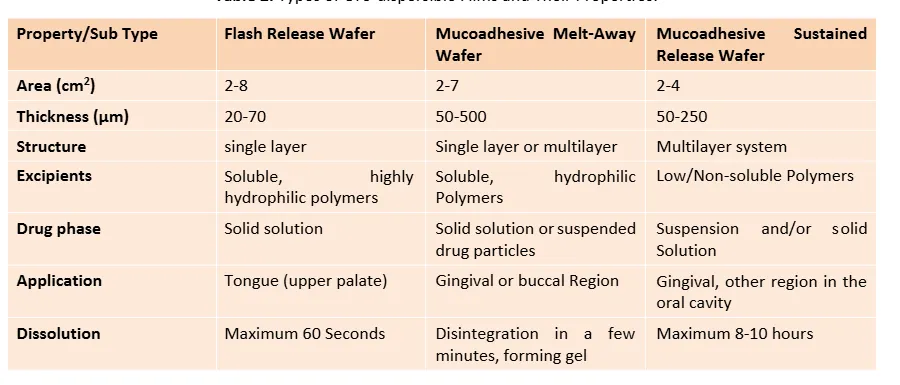
Table 3: A typical formulation ingredients of oro-dispersible films
|
S.No. |
Ingredients |
Concentration W/W |
|
1 |
Drug (API) |
1-30% |
|
2 |
Film Forming Polymer |
30-40% |
|
3 |
Plasticizer |
0-20% |
|
4 |
Saliva Stimulating agent |
2-6% |
|
5 |
Sweetening Agent |
3-6% |
|
6 |
Flavouring agent |
q.s. |
|
7 |
Surfactant |
q.s. |
|
8 |
Colour,filter |
q.s |
COMPOSITION OF BUCCAL FILMS
In the mouth cavity, buccal films quickly break down. They are designed as mucoadhesive films with sustained release that help drugs pass through the throat, esophagus, and oral mucosa. Depending on the dose and drug loading in the film, the area of thin, rapidly dissolving films varies from 1 to 20 cm². For uploading, a single dose of less than 30 mg is advised. Important formulation factors, including the selection of polymer or plasticizer, have a significant impact on the films' mechanical characteristics.50
Film-forming polymers A wide variety of polymers are available for the production of quickly dissolving films. These polymers can be chosen separately or in combination with other polymers in the formulation, depending on the desired properties of the film. An important factor in the buccal film formulation is the kind and concentration of the polymer. It is crucial that the final film have the necessary stiffness and durability. However, in order to release the medication after oral administration, a rapidly dissolving film needs to be able to disintegrate quickly. In order to transport drugs to the intended place effectively, this procedure is essential. Because the amount of polymer directly affects the dissolving, figuring out the right amount of the polymer in the formulation is a crucial step in the creation of films. Pullulan, gelatin, pectin, hydroxypropyl methylcellulose, carboxymethyl cellulose (CMC), sodium carboxymethyl cellulose (NaCMC), hydroxyethyl cellulose (HEC), sodium alginate, etc. are among the most often used film-forming polymers 51,52 Some of them are presented below.
Pullulan
Three glucose molecules and maltotriose units make up pullulan, a naturally occurring polysaccharide. Its amorphous properties and structural flexibility are attributed to the recurrent maltotriose units. At 250 °C, this white, tasteless powder begins to break down.Pullulan, which is well-known for its adhesive, binding, and film-forming qualities, forms clear solutions in water and alkaline solutions but is insoluble in all organic solvents.53
Gelatin
Collagen is the source of the protein gelatin. Animal collagen, which is derived from the hides and bones of cattle, is usually the main source of gelatin. Gelatin comes in two primary varieties. Type A is made from animal collagen that has been acid-treated; this collagen is often produced from pig skins and is broken down into gelatin by the acid treatment. Animal collagen is subjected to type B gelatin ften from the bones of cattle to an alkaline treatment. The amount of amino acids in gelatin affects its stability; higher levels are associated with greater stability. Gelatin's capacity to produce films is correlated with its molecular weight; a higher molecular weight is connected with a greater capacity to make films. Gelatin has a pleasant mouthfeel, is a great taste transporter, and dissolves quickly.54
Sodium alginate
The salt version of alginate, sodium alginate, has a higher water solubility than its parent chemical and is used as a source of dietary fiber.Because of its unique colloidal qualities, alginate is used as a component in coatings and polymer-containing films for a variety of purposes, including suspension, gel production, emulsion stabilization, thickening, and film formation. Sodium alginate, which is hydrophilic, has a remarkable ability to gel and form strong films. The films' mechanical qualities are improved by the starch and alginate mixture.55
Chitosan
Because chitosan contains a glycopyranose ring, a viscous polymer substance that seems porous is formed. The films made using chitosan have consistent cohesiveness, thickness, and compactness.56
Hydroxypropyl methylcellulose
Hydroxypropyl methylcellulose makes up this cellulose derivative.Hydroxypropyl methylcellulose (HPMC) exhibits exceptional film-forming capabilities and exceptional acceptance. HPMC produces translucent, flexible films in an aqueous solution that are resistant to moisture and environmental elements. There are several grades of HPMC, with lower viscosity grades like E3, E5, and E15 being used especially for film formation.57
Polyvinyl alcohol
Vinyl acetate is polymerized to create polyvinyl alcohol (PVA), a synthetic polymer in which the acetate group is either fully or partially hydrolyzed. It dissolves in water to form a transparent, colorless solution. It has good film-forming qualities. PVA films are robust, flexible, and have good oxygen barrier qualities. PVA is a component of controlled-release medication formulations and is used in the pharmaceutical industry to coat tablets. Under some circumstances, PVA is thought to be biodegradable, making it eco-friendly.58
Polyvinylpyrollidone
One synthetic polymer that is a member of the polyvinyl polymer class is polyvinylpyrrolidone (PVP). PVP is a water-soluble substance made of repeating vinylpyrollidone monomer. The structure of the monomer unit is lactam. Because PVP dissolves readily in water and other polar solvents, it can be used in a variety of formulations. PVP possesses hygroscopic qualities. PVP is frequently utilized in tablet formulations as a dissolving agent, filmformer, and binder in the pharmaceutical sector. PVP is useful in applications where a thin, consistent coating is required because of its capacity to form films. This is especially important for formulations used in pharmaceuticals and cosmetics
Active pharmaceutical ingredients (APIs)
There is a need for the medicine to be released quickly in order to provide immediate relief in cases of various clinical complications. In situations like migraine episodes, where a prompt clinical reaction is required, this urgency is especially crucial. In order to deliver different active pharmaceutical ingredients (APIs) while avoiding the possible risks associated with the gastrointestinal tract (GIT), researchers have focused on the buccal cavity for the development of fast dissolving and mucoadhesive buccal systems for drug delivery.7 Different active medications can be delivered using thin oral dissolving films. Many medications, including those for ailments like fungal infections, colds, coughs, anxiety, cardiovascular problems, throat inflammation, erectile dysfunction, severe allergic reactions, asthma, gastrointestinal problems, nausea, and some disorders of the central nervous system, can be absorbed and delivered using these kinds of systems. The majority of powerful medications with low therapeutic dosages, including expectorants, antitussives, antihistamines, and antiepileptics, can be made into buccal drug delivery systems. Dosage is a crucial factor: medications with lower dosages and molecular weights are typically selected because to the films' limited loading capacity. Drug content ranging from 5 to 30% (w/w) is successfully integrated into these films as a result. Additionally, prospective medications must have desirable stability and solubility profiles in saliva and aquatic conditions. Additionally, the medication should show effective penetration across the oral mucosal epithelial barrier and stay partially unionized at the pH of the buccal cavity. 14 Usually, hydrophilic medications are dissolved and added to the films in dose forms that dissolve quickly. In contrast, hydrophobic medications are distributed throughout the film's polymeric matrix. Drug molecules can be ground, encapsulated into nanoparticles, and micronized during this process to improve the drug release profile in the films and boost the drug's solubility.15. By using their salts or creating complexes, medications that are only weakly soluble in water can nonetheless be included into buccal films. Furthermore, since their quick disintegration in the mouth promotes quick absorption through the gastrointestinal system, medications with little or no absorption through the oral mucosa can still be regarded as promising choices.
Surfactants
Surfactants operate on the principle of solubilizing the components of a formulation, inducing wetting, or making the compound available for dispersion. In the formulation pattern, the film is designed to dissolve rapidly, often within a few seconds, facilitating the swift release of the pharmaceutical agent. Commonly used surfactants include Tweens, sodium lauryl sulfate (SLS), propylene glycol (PEG), and benzalkonium chloride. Polaxamer 407 is a significant type of surfactant, employed for the purpose of dispersing, wetting, and solubilizing materials.
Plasticizers
The choice of plasticizer is influenced by how well the polymer and plasticizer work together. Before selecting the plasticizer, the kind of solvent is also a crucial factor. This decision helps to increase the film's tensile strength and decrease its brittleness. In a film, the plasticizer usually makes up 0–20% w/v of the total weight of the dry polymeric substance.Propylene glycol, glycerol, PEG-400, PEG-600, PEG-2000, sorbitol, and castor oil are a few examples of these substances. Their inclusion has the benefit of avoiding problems such film peeling, splitting, and cracking.
Unsweetened APIs may taste bad, particularly to young patients.
Therefore, before adding such chemicals to the formulation, flavor masking becomes crucial.
To make the flavor of the formulation palatable, a number of techniques are used. Sweeteners can be artificial or natural, and their concentrations range from 3% to 6% w/w. Depending on the requirements, these masking agents can be applied singly or in combination. Since sweeteners are intended to dissolve in the oral cavity, they are crucial to the formulations of both medicines and nutraceuticals. Maltose, fructose, and glucose are common sweeteners. Because fructose tastes sweeter than mannitol and sorbitol, it is the most often used sweetener among them. Sweeteners also contribute to a cooling effect and a tasty mouthfeel.
Artificial sweeteners are divided into two generations and have become increasingly popular and marketable. While sucralose has a sweetness level of 600 times, acesulfame-K, which belongs to generation I, is 200 times sweeter than other sweeteners. Neotame has a 2000 sweetening potential in generation II.
Flavours
A composition may contain tastes that have been approved by the US FDA. This contains strong mint, sweet flavors sometimes seen in confections, and sour fruity flavors. The kind and strength of the flavoring ingredient are taken into account when determining the necessary amount to hide the taste of a composite.
Components for saliva secretion
It is crucial to promote excessive salivary outflow in order to guaranty the quick disintegration of quickly dissolving films. Acidic components are used as saliva-stimulating agents in the creation of these films. Citric acid, lactic acid, ascorbic acid, tartaric acid, and malic acid are common elements in this category.
Colorants
A suitable colorant is added to a pharmaceutical form to give it a unique appearance.
The market today offers a wide variety of colorants, such as titanium dioxide and other pigments, as well as C&FD and EU colors.
Furthermore, naturally occurring hues like the well-known carotenoids, curcumin, and chlorophylls are also good choices.
General recipes and features of buccal films are presented in Table 4 and Table 5, respectively.
Table.No 4 : General Formulation of rapidly dispersible thin oral films
|
Ingredient |
Quantity %(w/w) |
|
Water dissolvable polymers |
45-50 |
|
Drug |
5-30 |
|
Plasticizer |
0-20 |
|
Sweetening Agents |
3-7 |
|
Saliva Stimulants |
2-5 |
|
Surfactant |
q.s |
Table No.5: Special Features of buccal films
|
|
|
|
Thin films |
Convenient Dosing |
|
Different Size and shapes |
Less or no need of water |
|
Non-obstructive |
No choking risk |
|
Mucoadhesive |
Taste of drugs can be masked |
|
Rapid Disintergration |
Stable |
|
Dissolve quickly |
Better patient compliance |
MANUFACTURING TECHNIQUES OF BUCCAL FILMS
Buccal films are prepared using a variety of techniques, each with pros and cons. The requirements of the medication, the desired qualities of the buccal film, and pragmatic factors all play a role in the choice of the production process. The following lists a few typical techniques for making buccal films.
Solvent casting technique
When creating buccal films, the solvent casting method is frequently employed. A thin film is created by casting the polymeric solution containing the medication and additional excipients onto a substrate and then letting the solvent evaporate. This technique enables the creation of homogeneous, flexible films that stick to the buccal mucosa to release drugs. The desired characteristics of the buccal film are taken into consideration when selecting appropriate polymers. Next, a solvent or combination of solvents that effectively dissolves the selected polymers and additional excipients is chosen. To create a homogenous mixture, the medication is dissolved in the solvent and then combined with the polymer solution. To guaranty uniformity, stirring or other mixing methods may be used. Next, a flat, inert substrate or casting surface is covered with the polymer solution. Steel, glass, plastic, and other materials can be used to make the substrate. At regulated humidity and temperature, the solvent is permitted to evaporate. The polymers create a thin, pliable layer on the substrate as the solvent evaporates. The buccal film must be carefully removed from the substrate after the solvent has entirely evaporated. The finished film should be defect-free, consistent, and flexible. The buccal films are then wrapped in suitable materials to shield them from moisture and environmental elements after being cut into the required size and shape.59
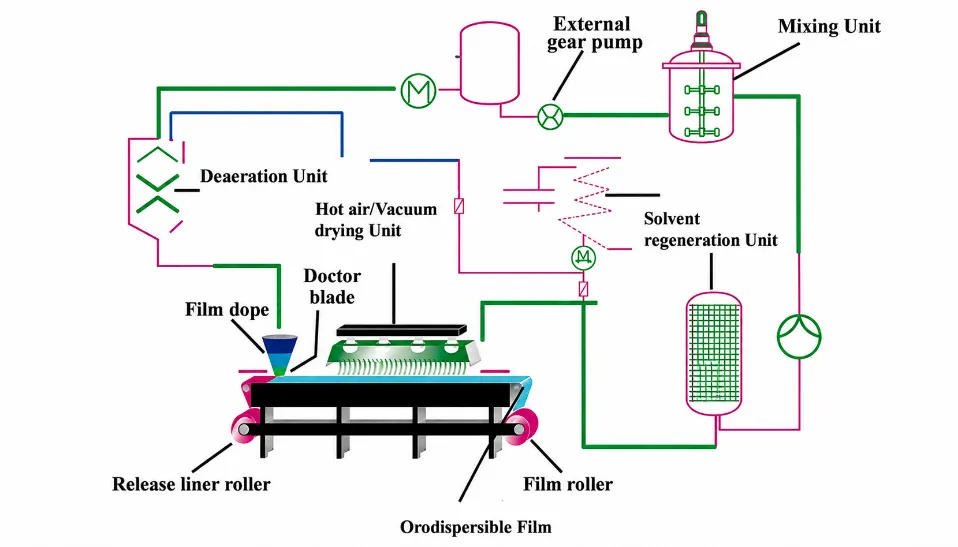
Fig.No 3 : Solvent casting technique
Semi-solid casting method
This process dissolves the mixture of medications, polymers, and excipients in a harmonious manner. After homogenizing the mixture using a magnetic stirrer, it is left undisturbed for eight hours. A Petri dish is then used for the casting procedure. The resulting films are dried in a hot air oven set between 45 and 50°C Once dried, the films are peeled and trimmed to suitable sizes for characterization.60
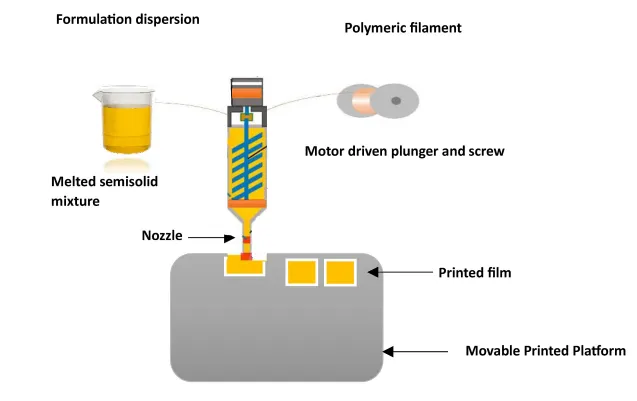
Fig.No 4 : Semi-solid casting method
Hot melt extrusion technique
This process creates a consistent and solid dosage form by continuously extruding a molten mixture of medication, polymers, plasticizers, and other excipients. The medication is mixed in the necessary amounts with polymers, plasticizers, and additional excipients. After that, the mixture is heated until it turns into a uniform molten mass. The extruder receives the molten mixture. To move and compress the molten material through the barrel, the screw turns. The die can be set up to create a flat, ribbon-like structure for buccal film processing. The extrudate is quickly cooled as it leaves the die, solidifying the molten substance into a film.
In order to preserve the intended film structure, this cooling step is essential. The film is cut into the appropriate size and form when it has solidified. The hot melt extrusion process is not frequently used in film production.
Solid dispersion extrusion is a version of this technique to create a homogenous bulk, the prepared solid dispersion is extruded.
Domperidone was converted into an oral buccal film using this solid dispersion extrusion method. PEG 400, HPMC E15, and beta-cyclodextrin were all incorporated into the process. 60
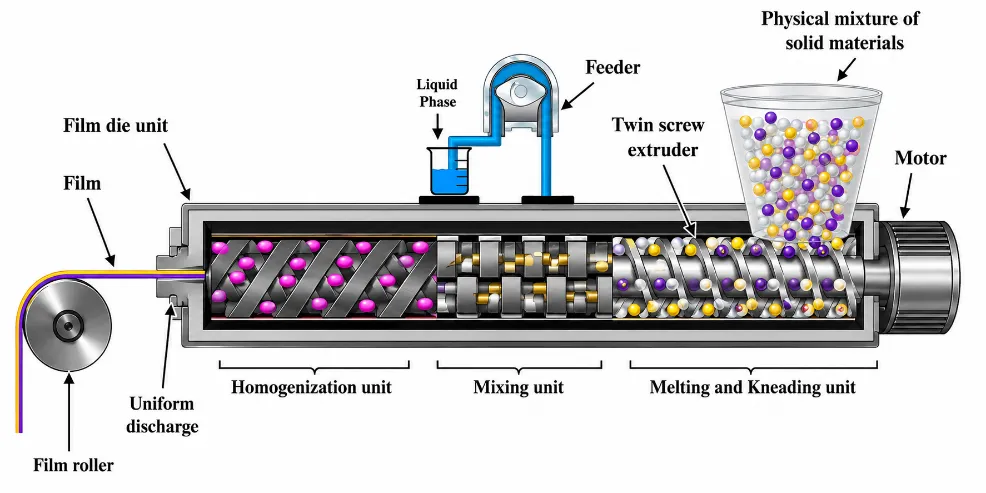
Fig.No 5 : Hot melt extrusion technique
Spray coating technique
The medicine, polymer, and excipients are dissolved in an appropriate solvent to create a transparent solution in the spray coating method. After that, this solution is evenly sprayed or poured onto a substrate, like glass, Kraft paper, or Teflon sheets. An oral film is created when the polymer separates from the support after the drying process.61
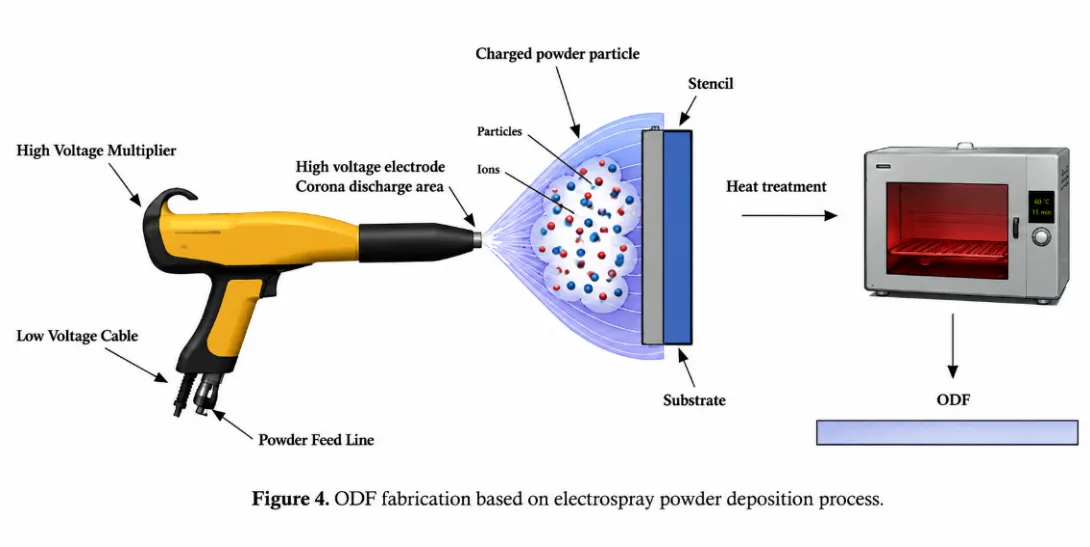
Fig.No 6 : Spray Coating technique
Emulsion solvent evaporation technique
Using this technique, a drug-polymer solution is emulsified in a continuous phase to create an emulsion, and then the solvent is evaporated to create the film. To create a homogenous mixture, the medication is combined with the polymer solution. The drug-polymer solution (internal phase), an exterior phase with an emulsifying agent, and a continuous phase (often water) are combined to create an emulsion. To help the solvent evaporate, either the emulsion is let to stand or mild heat is given. A high-shear homogenizer or an ultrasonic homogenizer is used to create a stable emulsion.
The medication and polymer are dispersed in a thin, flexible film that forms when the solvent evaporates. The film is gently removed from the substrate after the solvent has entirely evaporated.
EVALUATION PARAMETERS
Visual appearance:62,63
The film's physical appearance is examined visually, and its surface texture is assessed by touching or feeling it.
Weight variation:64
Five films of each formulation are weighed separately on a digital balance in order to determine weight variance.
The standard deviation from the average weight is measured once the average weight has been determined.
pH measurement: 65,66,67
One oral film can be dissolved in ten milliliters of distilled water, and the pH of the resulting solution can be measured to find the pH value. After contacting the formulation's surface with the pH meter's electrode and letting it equilibrate for a minute, the pH is recorded. For every formulation, the average of three determinations is calculated.
Thickness: 68,69
A micrometer screw gage can be used to measure the film's thickness at five or more important spots. Determining uniformity in the film's thickness is crucial since it directly affects the film's dosing accuracy.
Folding endurance: 69,70
The films' flexibility is determined by their folding durability. A short strip is repeatedly folded in the same spot until it breaks to determine it. The value of folding endurance is determined by how many times strips can be folded in the same spot without breaking .
Tensile strength:68,72
The highest stress that a strip specimen can withstand before breaking is known as its tensile strength. It is computed as follows: the cross-sectional area of the film divided by the applied load at rupture
Tensile Strength = Load at failureStrip thickness x Strip Width
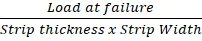
X 100
Swelling index: 73,74
After being weighed, each film sample is put inside a stainless steel wire mesh that has already been weighed. The mesh containing the film sample is then placed in a plastic container with 15 milliliters of medium (a saliva-simulation solution). The film's weight increases at predetermined intervals until a steady weight is noted. The following formula is used to determine the degree of swelling:
Degree of Swelling = Wt-WoWo

Where, Wt is weight of film at time t, and Wo is weight of film at time zero.
In vitro disintegration time:75,76
The disintegration test is carried out by placing the film on the surface of a petri plate with five milliliters of pH 6.8 phosphate buffer. The disintegration time is the amount of time it takes for the film to break down. Three films from the same batch are used in this experiment, and the average of the three values is calculated.
Drug content uniformity: 72
The film having the specific dimension is dissolved phosphate buffer pH 6.8. It is sonicated for 15 min, and then filtered using Wattmann filter paper. The absorbance is measured using an UV spectrophotometer and then concentration of drug is determined
In vitro dissolution studies:77,78,79
USP is used to calculate the drug's release rate.Testing equipment for dissolution type II (paddle type). After cutting the film to the proper size, it is put in dissolving media.300ml of newly made phosphate buffer (pH 6.8) kept at 37 ± 0.5 ºC and agitated at 50 rpm make up the dissolving media. At different intervals of 2, 4, 6, 8, 10, 12, 14, 16, 18, and 20 minutes, 5 ml samples are removed and replaced with new medium. The samples undergo UV examination, and the percentage of drug release is computed.
Stability studies:80,81
The Oro-dispersible films' stability is investigated in various environmental Conditions
According to ICH forms, the formulations packaged in aluminum foil are put through three months of accelerated stability testing at 40 ± 2°C and 75 ± 5% relative humidity.
Over the course of three months, samples are collected at regular intervals of one month, and the previously described process is used to analyze the samples for changes in physical appearance as well as other factors.
FUTURE PERSPECTIVES
The future of Oral Disintegrating films (ODFs) lies in the development of next-generation, patient-centric drug delivery systems with improved therapeutic performance and convenience. Advancements in nanotechnology, 3D printing, and smart polymers may enable precise drug loading, controlled release, and personalized dosing. The incorporation of nanoparticles, nanocrystals, and lipid-based carriers could enhance the solubility and bioavailability of poorly water-soluble drugs. AI and Quality-by-Design (QbD) approaches may further optimize formulation and manufacturing processes. ODFs are also expected to expand their applications in pediatric, geriatric, and dysphagia patients. Future research may focus on multilayer and stimuli-responsive films capable of delivering multiple drugs or achieving site-specific release. With advances in sustainable polymers and manufacturing technologies, ODFs have the potential to become a versatile, personalized, and environmentally friendly platform for modern oral drug delivery.
CONCLUSION
When it comes to cost-effectiveness, efficacy, and convenience of administration, ODF is a good substitute for other traditional dosage forms. It is appropriate for BCS class II medication dose development. To make the medications more soluble in the ODFs, a variety of methods are employed. The printing method is superior to the current technologies because it allows us to precisely and accurately apply tiny doses of extremely powerful medications onto the films. It is a flexible and affordable technology that may be applied to small-scale manufacturing. Additionally, it enables the creation of multidrug dosage forms.
The main disadvantage of ODFs is the lack of pharmacopeia specifications and the need for upgrades for large-scale manufacture.
REFERENCES


S. M. Shahidulla, Syed Salman. Beyond Conventional Tablets: Revolutionizing Oral Disintegrating Films - Emerging Technologies, Formulation Strategies, and Future Perspectives, Int. J. of Pharm. Sci., 2026, Vol 4, Issue 8, 3756-3778, https://doi.org/10.5281/zenodo.22076115
 10.5281/zenodo.22076115