

We use cookies to ensure our website works properly and to personalise your experience. Cookies policy
1,2,3 Department of Pharmacognosy, SMBT College of Pharmacy, Nashik, Maharashtra, India 422403
4 Pacific Academy of Higher Education and Research university, Udaipur, Rajsthan, India
Tannins are a wide-ranging class of polyphenols found in many medicinal plants and have considerable industrial and medicinal uses. This review provides a summary of the traditional uses, chemical categorization, phytochemical screening tests, and biological activities of plants that contain a high amount of tannins. These can be categorized into three broad groups, namely hydrolyzable, condensed (proanthocyanidins), and complex tannins. As a result of their excellent antioxidant, antimicrobial, antiparasitic, and anti-inflammatory properties, tannins serve as essential components in preventing and treating several chronic diseases like heart problems, neurodegeneration, and cancer. Some examples of medicinal plants containing a high amount of tannins include Saraca indica, Uncaria gambier, and Ipomoea nil. They have been widely employed in traditional medicine due to their significant health benefits. Various phytochemical screening procedures for identifying tannins are discussed in this paper. In addition, the reactions of tannins with proteins, enzymes, and other molecules provide insights into their biological importance and medical value. However, more extensive research on animals and humans is necessary to prove their effectiveness and safety.
Since ancient times, tannins have been known for their medicinal uses within the framework of plants and herbs. Furthermore, they have been extensively utilized from the eighteenth century onwards by leather manufacturers in order to enhance the resistance of leather during the dyeing process, since tannins can cause gelatine that is attached to the skin of animals to form a precipitate and give it a brown color[1]. The tannins are a diverse group of polyphenolic substances which are plant secondary metabolic compounds produced as a result of both biotic and abiotic stress inducers. Their chemical structure contains phenolic ring systems and hydroxyl groups, which make them exhibit antioxidant and protein-binding abilities due to their wide molecular weight range, from 500 to 20,000 Daltons[2]. Such characteristic is a feature shared by all tannins; however, it appears that because of their association with polysaccharides, there would be low chances for these tannins to bond and interact with proteins. While numerous classifications have been proposed in relation to tannins based on molecular weights, physical and chemical properties, and origins, tannins appear to be classified into their functional groups. Accordingly, HT, CT, and CoT can be isolated from terrestrial plants, whereas PT can only be obtained from brown macroalgae[3]. However, tannins have some unfavourable sensory characteristics since they are bitter and cause the brown appearance of food. However, they exhibit exceptional antioxidant characteristics that support their application as food preservatives to extend the shelf life and safety of food products, which is why several types of tannins have been tested for their legal usage in food processing. Additionally, their precipitating ability has been responsible for their extensive use for clarifying beverages such as beer, juice, and wines[4]. The same can be said for other research work on the bioactive characteristics of tannins conducted using various in vitro, in vivo, and clinical trials over time[5]. It is clear from their versatile uses, whether as supplements, nutraceuticals, or pharmacological products. These findings are coupled with an increasing need for natural products, which would prefer not to use any synthetic products in food and other substances[6]. Sources of commercially produced tannin include trees like chestnut for HT and quebracho for CT[7].For these kinds of trees, tannin percentage in their bark is up to 38% of their dried material for quebracho or 16% of that of chestnut. Additionally, it is worth mentioning that according to the statement made, brown seaweeds are regarded as a good source of tannins, along with many other bioactive components, since their extraction is quite easy and they remain unexploited[8]. Considering all these properties of tannins, one can probably provide an explanation for the efficiency of medicinal plants containing tannins, which are traditionally used in folk remedies, since the medicinal properties of such plants are also associated with the synergy of tannins and other bioactive polyphenols[9]. The usage of tannin extract medicines and the tannin containing plants shall be considered concurrently with the examination of the major chemical composition of the mentioned tannin containing plants. It can thus be concluded that the main purpose of this review shall be connecting traditional knowledge gathered through years of practice with scientific information on the targeted molecules.
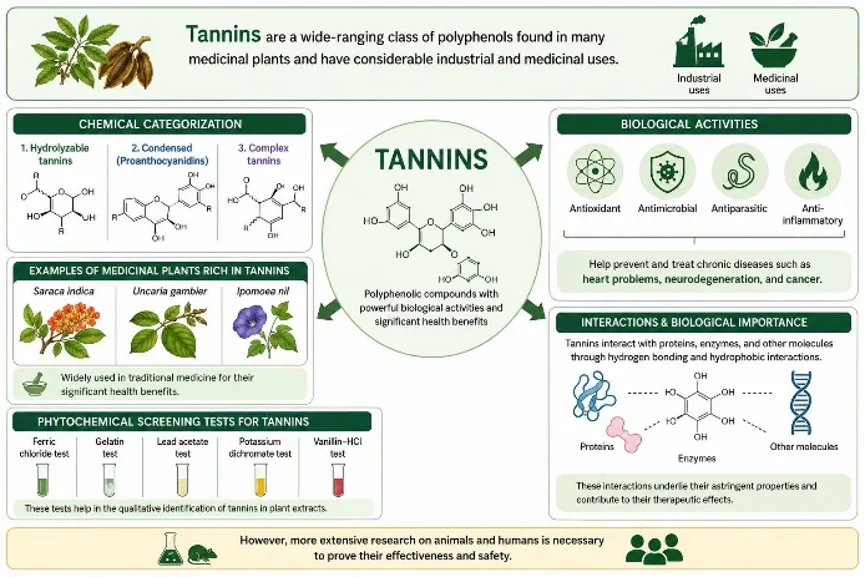
1. Structure and classification of tannins:
The term tannin refers to a diverse range of polyphenolic substances from plants, whose naming and classification are quite complicated. During the 1950s, Bate-Smith and Swain referred to plant tannins as soluble phenolic substances with a molecular weight ranging between 500 and 3000 daltons and reacting with alkaloids, proteins, and gelatin[10]. This lack of clarity in defining it is also felt in its classification as well. Tannins have been classified by Freudenberg based upon their structural types into two broad categories which are condensed tannins and hydrolysable tannins. Despite its wide acceptance up to this day, there are complicated structures made up of condensed tannin and hydrolysable tannin subunits discovered later on[11].
1.1 Condensed tannins (proanthocyanidins):
Condensed tannins represent the second most common class of phenolic substances in nature after lignin. They are better recognized by their alternative name of proanthocyanidins. They are complex, non-hydrolysable oligomers and polymers that are produced due to linkage between flavan-3-ol units featuring an OH group attached to the third carbon atom through interflavan linkages (C-C linkages). They cannot be hydrolysed. The oxidation of C-C bonds under hot alcoholic conditions produces coloured anthocyanidins[12].
Proanthocyanidins and procyanidins are both classes of flavonoid compounds, sharing similar structures but being distinct compounds. The fourth carbon atom in the initiating unit is bonded to make an interflavan linkage (C-C) with either the sixth or eighth carbon atoms of the bound units in A-type proanthocyanidins. At the same time, the second carbon atom in the initiating unit is bound to make an ether bond with either hydroxyl group in the A ring of the bound unit. Therefore, it is recognized for its molecular structure containing two ether bonds. Unlike B-type proanthocyanidins, A-type proanthocyanidins are rare isolated plant compounds that are unknown to many people. However, since their discovery, they have been found in several plants, including those used for food[13]. Proanthocyanidins type B is the most abundant form of proanthocyanidins that are regularly extracted from plant material and commonly present in food sources like chocolate and apple products. This compound is synthesized due to the connection of the 6th or 8th carbon atom in the initial unit and the 4th carbon atom in the additional unit through an α-or β-interflavan link[14].
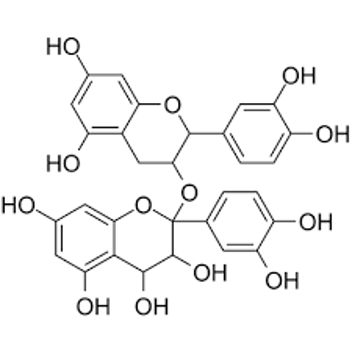
Fig., proanthocyanidins
1.2 Hydrolysable tannins:
This category is characterized by tannin types that are hydrolysable through easy reactions using acids, bases, heat, and tannases. Hydrolysable tannins are usually present in plant parts like barks, stems and galls, fruits, and leaves[15]. Hydrolysable tannins are subdivided into two categories, which include: gallotannins and ellagitannins[16].
1.2.1 Gallotannins:
Gallotannins are simple hydrolysable tannins resulting from the esterification of gallic acid with a polyol residue (which can be β-D-glucose, guinic acid or some polyhydric alcohol). Even though a variety of polyol residues are conceivable, gallotannins extracted from plants almost always come from β-D-glucose. The extent of substitution of this monester with gallic acid can grow until all bonds in glucose molecule are fully esterified. From monoster to pentester these structures belong to simple gallotannins (galloglucoses). However, such terminology is ignored because only tetra and partially pentagalloyl glucose molecules possess notable tannin properties. As a consequence, complex gallotannins emerge as a result of increased number of gallool groups attached to pentagalloylglycose framework. Hexagallooolglucose is the typical representative of complex gallotannins. Such compounds can have as much as ten or even more gallol moieties. Meta- and para-digallol esters can also be found in their structure. The occurrence of gallotannins in nature is quite limited[17]. The term tannic acid refers to a combination of gallotannins and serves as a clarifying agent in beer and fruit juice processing.
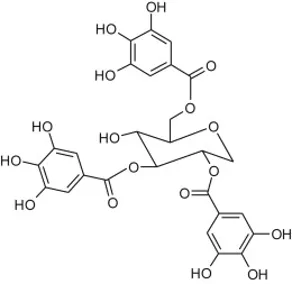
Fig., Gallotannins
1.2.2 Ellagitannins:
Ellagitannis (ETs) are the biggest group of tannins. They represent usual elements of different plants’ families, and over 500 natural samples containing these elements have been isolated from nature[14]. Ellagitannis are synthesized from gallotannins due to galloyl bonds, which are properly orientated relative to each other during oxidative reactions[18].
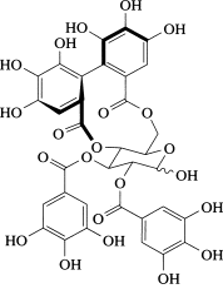
Fig., Ellagitannis
1.3 Complex tannins:
Complex tannins are substances that were isolated for the first time from the bark of Quercus stenophylla. Plants that have both hydrolysable and condensed tannins are usually rich in complex tannins. Complex tannins are usually studied under three categories. Flavano-ellajitanens (for example, acuteisimin A).Over thirty kinds of complex tannins have been identified[19].
2. Potential properties of tannins
2.1. Antiparasitic
Parasite infection has been shown to affect the body in several ways, including immune regulation, cardiac rhythms, and immunity. Further, development of resistance to different artificially-produced antiparasitic drugs has led to exploration of other means, which include use of natural products that have antiparasitic functions. One such group of secondary metabolites that have antiparasitic activities include tannins. These are polyphenolic secondary compounds naturally occurring in plants, and have different modes of action against parasites. For one, tannins have been shown to have the ability to degrade proteins by virtue of their chemical composition, thus increasing protein levels. This effect contributes to increased immune response against parasites. Tannins inhibit different growth phases of parasite egg, including larvae stages (1st, 2nd and 3rd), and the adult stage[20]. From recent studies, a relationship between low dosage and bioavailability of tannins has been noted but has not produced any conclusive evidence[21].
2.2. Antioxidant
Free radical formation due to oxidation or oxidative stress caused by several reasons results in an imbalance, which causes chronic illnesses and the production of toxic substances[22]. There is sufficient evidence that tannins have the capability of lowering oxidative stress and oxidation due to their effectiveness in neutralizing different kinds of free radicals. This is done via the fact that tannins have the ability to complex and neutralize free radicals, hence lowering stress levels through boosting the functionality of the immune system by increasing Immunoglobulin [23].
2.3. Antimicrobial
Antimicrobials can be described as chemicals that are used to inhibit the growth of microorganisms that cause diseases and spoilage. There have been several studies conducted which have found the harmful impacts of chemical preservatives on human health. The matter of concern related to the resistance of antimicrobials has led people to doubt the over-reliance on artificial antimicrobials for treating infections caused by microbes. This explains why there has been a shift towards the use of natural antimicrobials due to their varied antimicrobial properties. Tannins have been found to show antimicrobial properties by bringing about the aggregation of the cells, reducing oxygen diffusion and adhesion, which leads to cell death, disruption and permeabilization of cell membranes, antilocal activity, changing the pH within the cells, chelation of metal ions leading to the breakdown of structural proteins and metabolic impairment[24].
2.4. Nutritional
Tannins have been considered to be a broad category of chemicals that are beneficial in many ways as nutritional components. Therefore, many studies are now taking place in evaluating different tannins obtained from nature and having possible uses in the nutraceutical industry. Tannins from different sources can be used for treating neurodegenerative diseases, type 2 diabetes, and obesity, in addition to their role as an antidiarrheal[25]. Tannins extracted from sorghum have shown that they can affect the invitro digestibility of starch in waxy maize which could be applied for the creation of nutritional foods[26].
3. Potential health benefits of tannins
3.1. Anti-inflammatory properties
inflammation is a body’s natural reaction to any kind of injury or infection. However, continuous inflammation can result in the formation of various illnesses like cancer, arthritis, or heart diseases[27]. Tannins have anti-inflammatory effects, and research has proven that tannins can assist in reducing inflammation in the body, lowering the chances of developing diseases such as cancer, diabetes, heart disease, and neuroinflammation[28]. The way tannins operate is through suppression of the enzymes that lead to the inflammation process and production of cytokines. Condensed tannins, as well as hydrolysable ones, have the ability to function anti-inflammatorily due to antioxidant properties.
3.2. Neurodegenerative diseases
Degenerative diseases of the nervous system arise from the destruction of various cell groups, such as astrocytes and microglial action[29]. Tannins are known for their capacity to reduce Alzheimer's and Parkinson's disease, and they have been reported as compounds which may have beneficial effects on other neurodegenerative disorders[30].
3.3. Cardiovascular health
In addition, condensed and hydrolysable tannins might also have positive effects on heart health. Some studies indicate that tannins play an important role in lowering blood pressure, reducing blood cholesterol levels, and promoting better circulation within the body[31]. Recent research revealed that oligomeric proanthocyanidins (OPC), which are condensed tannins, which are mostly found in fruits like grape, berries, and pomegranate, are the main sources of tannins, which can be attributed to cardiovascular benefits. Oligomeric proanthocyanidins have been associated with improved vascular health, reduced inflammation, lowered blood pressure, and reducing the oxidation of LDL cholesterol. [32].
3.4. Cancer prevention
It has been found out that tannins may possess anticancerogenic activity in a number of studies. Both hydrolysable and condensed tannins can be responsible for the inhibition of growth of cancerous cells as well as prevention of tumor formation in various body parts. Furthermore, both hydrolysable and condensed tannins can act as antioxidants[32]. The anti-proliferation, anti-angiogenesis effects, and pro-apoptotic capabilities of hydrolysable tannins are yet another way that they help to prevent cancer[33]. a hydrolysable tannin like tannic acid (gallotannin), which can be found in coffee, gall nuts, and many other plants, are very important for preventing cancers, especially cancers of the lungs and breasts, because they affect many oncological signal transduction pathways[34].
4.Phytochemical Screening Methods
Qualitative Tests:
|
Test |
Obeservstion |
Inference |
Reference |
|
Gelatin Test: Prepare a 1% gelatin solution with 10% NaCl. Take 1-2 mL of the plant extract in a test tube. Add the same volume of the gelatin solution. Mix the solution and observe for the formation of a precipitate. |
White or cream-colored precipitate → indicates the presence of tannins. No precipitate → indicates that tannins are absent. |
tannins are Present |
[35] |
|
Ferric chloride test: A small quantity (1-2 ml) of the plant’s extract is taken in a test tube. 2-3 drops of 5% ferric chloride solution are added. |
Blue-black colour → indicates the presence of hydrolysable tannins. Green-black or dark green colour → indicates the presence of condensed tannins. No colour change → indicates that tannins are absent. |
tannins are Present |
[36] |
5. Medicinal plants containing tannins:
5.1 Ashoka:
Dried bark/stem is used. Scientific name is Saraca indica. Name of family is Leguminosae. It is grown in India, Color of the bark is dark blackish brown in color. Bark is without any odor. Taste is astringent. Bark contains condensed tannins. It contains leucocyanidin, leucopelargonidin, haematoxylin, saponin, ketosterol, minerals. Used as sedative. It is used as uterine tonic. It is useful for treatment of menorrhagia. Used for uterine bleeding prevention[37].
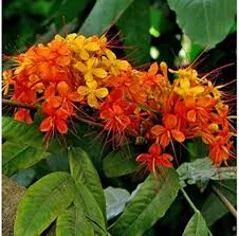
Fig., Ashoka
5.2 Pale catechu:
Its other names include Gambier and Gambir. It is an aqueous extract which is dehydrated. Its extraction is gotten from the shoots and leaves of Uncaria gambier plant. This plant belongs to the Rubiaceae family. This plant is grown in southeast Asia, including Malaysia, Singapore, and Indonesia. Pale catechu is reddish-brown in appearance. It has an astringent taste but lacks smell. Tannin substances such as catechin, catechu red, catechutannic acid, and quercerin are some of its contents. It is used in dyeing and treating diarrhea and is an astringent[37].
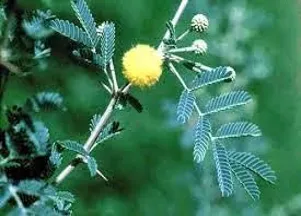
Fig., Pale catechu
Ipomoea nil of the Convolvulaceae family is a vascular plant that is classified as an angiosperm of the order Solanales, family asterid of the Eudicots clade of the kingdom Plantae. The species is referred to as regional name Nilpushpi. Studies on the phytochemistry of the plant reveal that tannoids are the major phytoconstituents responsible for the medicinal value of the plant. The seeds are traditionally used as a purgative after being mixed with salt and ginger powder. The leaves are traditionally used for their healing properties on wounds.
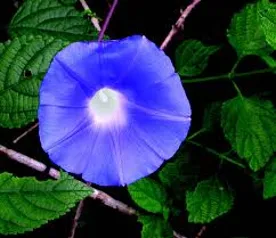
Fig., Ipomoea nil (L.) Roth.
6. Interaction of Tannins
6.1 Interaction of Tannins with Proteins
As defined by Bate-Smith and Swain, “tannins are water-soluble phenolic compounds having a molecular weight range from 0.5 to 3 kDa and which can coagulate proteins and alkaloids.” However, the limitation in regard to the tannin molecular weights (0.5-3kDa) is outdated since other polyphenols having lesser or greater molecular weights may coagulate proteins as well[38]. On the other hand, the capability of forming protein complexes remains the specific property of tannins.16 For instance, it was known in ancient times that the use of tannins could help in converting animal skin into leather. The interaction of tannins with proteins consists of two phases: binding and aggregation, leading to the precipitation of the complex[39][40]. Formation of tannin-protein complexes requires many parameters that are controlled by the properties of the tannins and proteins (e.g., proline level), their concentrations, isoelectric point of proteins, pH, and ionic strength of the medium[41]. Despite extensive studies on protein–tannin interactions carried out in the last five decades, a comprehensive knowledge on all regulatory processes of protein–tannin interactions is not yet available.
6.2 Specific Interaction of Tannins with Enzymes
Since most enzymes are proteins, the common view is that tannins inhibit enzymatic reactions due to enzyme complexation[42]. Despite the findings from various researches conducted over the last few decades proving tannins' ability to inhibit enzymes' activities, there are some pieces of research indicating only a slight reduction in their activities[43]. Therefore, the current scientific understanding regarding the inhibitory properties of these substances is not complete. In addition, despite the decades of scientific neglect of the possibility of enhancing enzyme activity through tannins, a few researches have proved this phenomenon. For example, Tagliazucchi et al.'s research indicated that certain phenolic compounds can enhance pepsin activity; however, it can be attributed to the alterations of the substrate protein caused by phenols. Also, an experiment involving highly heterogeneous incubation proved that leaves rich in tannins in nylon-gauze bags in rumens increased glutamate ammonia ligase activity[44]. Enzyme response to tannins was different based on the enzyme used. The relationship between tannins and enzymes can be considered similar to the relationship between tannins and non-enzymatic proteins. Section . Nevertheless, some enzymes display varying affinities to tannins, and therefore, the effect of tannins which may not be known on any particular enzyme cannot be predicted. Some new discoveries in this field have shown that tannins are not just inhibitors but are also responsible for altering the activity of enzymes and can create an interest among people dealing with enzyme activity control.
6.3 Tannin Interactions with Organic Non‐ Protein N Compounds
Tannins react with proteins in order to form precipitates. But there is no denial that tannins also react with metals as well as other substances, for instance, tannic acid belongs to the category of hydrolysable tannins, forms complexes with choline[45]. It is commonly believed that tannins from all groups of organic N-containing substances cause precipitation of proteins/peptides. Only lately, it was demonstrated that tannins may bind with diverse organic N-containing compounds like arginine nitrogen bases, polyamines, chitin, and chitosan. Like tannin-protein binding, here too, factors such as tannin concentration, tannin chemistry, and pH value play an important role[46].In the case of nitrogen bases, those lacking amine groups exhibited lower reactivity towards tannins. Hence, based on the findings on tannin-nonprotein associations, we need to underscore the significance of tannin chemistry. Furthermore, tannin's association with multiple N molecules necessitates a new perspective regarding its chemical properties; like proteins, tannins can associate with nonprotein organic N molecules[45].
CONCLUSION:
Natural polyphenolic compounds, tannins are known to have great biological and pharmacological significance. This review paper provides information about the structural variety, classification, presence in medicinal plants, and their utilization in traditional medicine of tannins. Bioactivities of tannins, namely, their antioxidant, antimicrobial, antiparasitic, anti-inflammatory, and anticancer activities reveal their relevance in the treatment and prevention of a number of chronic conditions.
The presence of tannins in Saraca indica, Uncaria gambier, and Ipomoea nil as well as modern studies concerning their interaction with various proteins, enzymes, and other biomolecules prove the medicinal value of tannins. At the same time, there are some limitations in terms of tannins' variable composition, availability issues, and lack of proper clinical trials that make their wide-scale utilization challenging.
However, further studies should concentrate on in vivo studies and clinical trials in order to develop more efficient strategies in using tannins as natural remedies. Thus, further efforts can contribute significantly to the development of new drugs, foods, and supplements based on tannins.
In summary, tannins show great promise in serving as medicinal compounds with different biological activities. Further investigation in this area will prove to be useful in introducing these compounds into practical use.
FUTURE PERSPECTIVES:
With the increase in the popularity of biologically active compounds obtained from plants, tannins appear to be prospective agents for application in pharmaceutical, nutraceutical, and industrial industries. Although there is plenty of research in vitro confirming the antioxidative, antibacterial, and medicinal effects of tannins, the importance of further in vivo investigations can hardly be overstated, as they will provide necessary information regarding the efficacy, safety, absorption rate, and dose of these natural compounds. The investigation of structure–function relations and mechanisms of action using molecular biology methods appears to be relevant as well.
Nanotechnological innovations and the development of new drug delivery systems can contribute to increased stability, bioavailability, and targeting effects of tannins. Moreover, the possibility of creating synergic combinations of tannins with other natural chemicals can result in more efficient treatments. Finally, the improvement of sustainable ways for tannin extraction as well as mass production techniques will make it possible to provide a stable source of raw material for further research and commercial applications.
REFERENCES


Dipikarani Das, Yogesh Ushir, Krishna Kapure, Sakshi Kapure, Bioactive Tannins in Medicinal Plants: Phytochemical Insights, Therapeutic Potential, and Future Perspectives: A Review, Int. J. of Pharm. Sci., 2026, Vol 4, Issue 7, 4049-4061. https://doi.org/10.5281/zenodo.21462489
 10.5281/zenodo.21462489