

We use cookies to ensure our website works properly and to personalise your experience. Cookies policy
IVM's Krishnarao Bhegade Institute of Pharmaceutical Education and Research, Talegaon Dabhade, Pune 410507
Cardamom (Elettaria cardamomum), commonly referred to as the “Queen of Spices,” is one of the most valued and widely used spices in the world [1]. It belongs to the family Zingiberaceae and is native to the tropical forests of Southern India and Sri Lanka [2]. Cardamom has been used for centuries in culinary, medicinal, cosmetic, and pharmaceutical applications due to its pleasant aroma, flavor, and therapeutic properties [3,4]. The spice contains volatile oils, flavonoids, terpenoids, phenolic compounds, and various bioactive constituents responsible for antioxidant, antimicrobial, anti-inflammatory, digestive, and cardioprotective effects [5,6]. Cardamom cultivation plays an important economic role in countries such as India, Guatemala, and Sri Lanka [7]. This review paper discusses the taxonomy, morphology, cultivation practices, phytochemical composition, medicinal properties, pharmacological activities, industrial applications, and future prospects of cardamom [4,5]. The paper also highlights the importance of cardamom in traditional medicine and modern pharmaceutical research [8].
Cardamom (Elettaria cardamomum) is regarded as one of the oldest and most valuable spices utilized by humans since ancient times [1]. Owing to its unique fragrance, pleasant taste, and remarkable economic importance, it is popularly referred to as the “Queen of Spices” [1]. The plant belongs to the family Zingiberaceae, which also comprises other important spices such as ginger and turmeric. It is indigenous to the evergreen tropical forests of Southern India and Sri Lanka [2,5]. Historical evidence suggests that cardamom has been employed for more than four millennia in culinary practices, traditional medicine, religious ceremonies, and perfumery [3].
The spice is derived from the dried capsules of Elettaria cardamomum [1]. These capsules contain numerous aromatic seeds enriched with volatile oils and bioactive constituents responsible for their medicinal and flavoring characteristics [5]. Ancient civilizations including the Egyptians, Greeks, and Romans highly appreciated cardamom because of its fragrance and therapeutic value [3]. Egyptians reportedly used it for oral hygiene and embalming procedures, whereas Greeks and Romans incorporated it into perfumes and food preparations [4].
In traditional medicinal systems such as Ayurveda, Siddha, and Unani, cardamom has long been recognized as a digestive stimulant, carminative agent, expectorant, and natural breath freshener [9]. It has commonly been prescribed for the treatment of indigestion, nausea, vomiting, respiratory ailments, and urinary disorders [6]. Contemporary scientific investigations have validated many of these traditional applications and demonstrated that cardamom exhibits antioxidant, antimicrobial, anti-inflammatory, cardioprotective, antidiabetic, and anticancer properties [5,13].
At present, cardamom is cultivated commercially in several tropical nations including India, Guatemala, Sri Lanka, Tanzania, and Vietnam [7]. Guatemala is considered one of the leading exporters globally, whereas India remains a major producer and consumer of the spice [19]. The increasing preference for natural flavoring substances, herbal medicines, and nutraceutical products has contributed significantly to the expansion of the global cardamom market [18].
Cardamom can generally be categorized into three principal groups:
Among these varieties, green cardamom is recognized as the true cardamom and possesses superior medicinal and commercial significance [7].
2. Taxonomy and Botanical Classification
Scientific classification of cardamom is essential for understanding its botanical identity, evolutionary relationships, and medicinal relevance [5].
|
Classification |
Details |
|
Kingdom |
Plantae |
|
Division |
Angiosperms |
|
Class |
Monocotyledonae |
|
Order |
Zingiberales |
|
Family |
Zingiberaceae |
|
Genus |
Elettaria |
|
Species |
Elettaria cardamomum |
Cardamom belongs to the Zingiberaceae family, one of the most important groups of aromatic and medicinal plants [5]. Members of this family are generally characterized by rhizomatous growth habits, aromatic essential oils, and monocotyledonous leaves. Economically significant relatives include ginger (Zingiber officinale), turmeric (Curcuma longa), galangal, and allspice [3].
The genus Elettaria contains only a limited number of species, among which Elettaria cardamomum is the most commercially valuable [5]. The plant is a perennial herb possessing underground rhizomes and leafy shoots. Taxonomically, it shares several morphological and phytochemical similarities with ginger [5].
Botanical classification also plays an important role in identifying improved cultivars, disease-resistant varieties, and genetically superior planting materials utilized in crop improvement programs [12].
3. Botanical Description
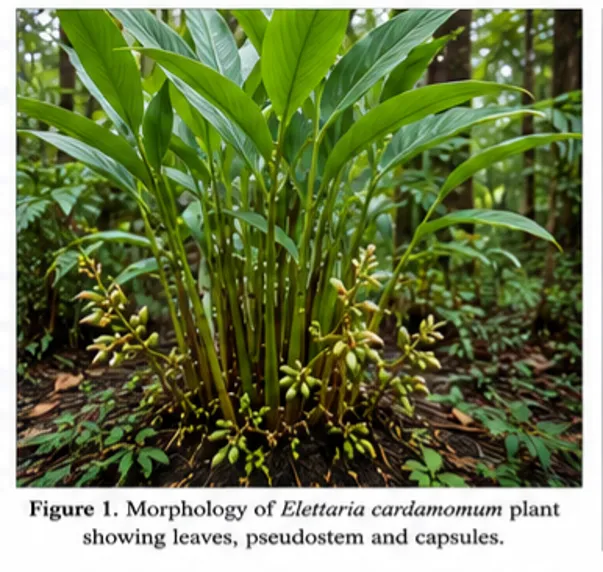
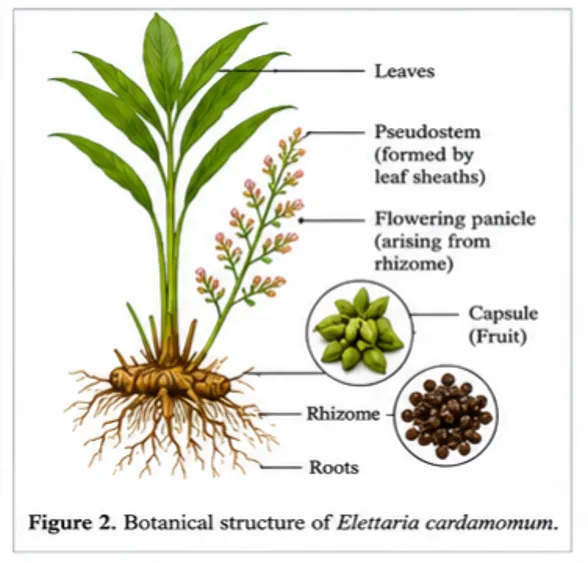
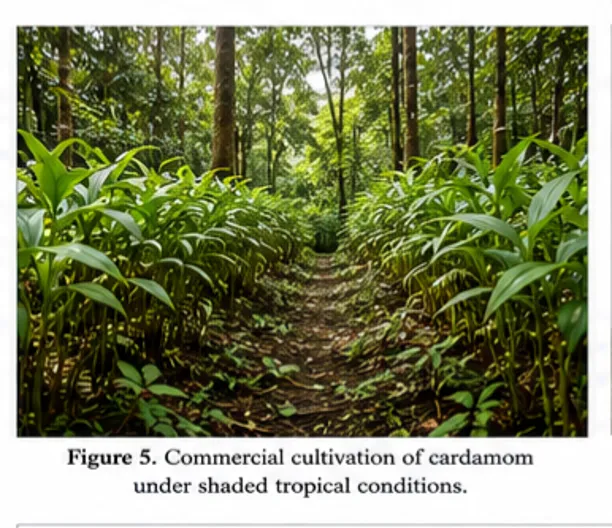
Cardamom is a perennial herbaceous plant that thrives under shaded tropical forest ecosystems [11]. It develops thick underground rhizomes from which leafy shoots and flowering panicles emerge [5]. Under suitable environmental conditions, the plant may attain a height ranging from 2 to 5 meters [11].
The plant exhibits specialized morphological adaptations that enable survival in humid tropical climates. Different plant parts including rhizomes, leaves, flowers, fruits, and seeds contribute significantly to growth, reproduction, and essential oil production [5].
3.1 Root System
The root system mainly comprises adventitious fibrous roots originating from underground rhizomes [11]. These roots spread horizontally within the upper soil layers and facilitate efficient absorption of water and nutrients from moist forest soils.
Rhizomes function as storage organs and also aid in vegetative propagation [7]. Vigorous rhizomes are essential for healthy plant development and enhanced productivity. Their underground nature also assists the plant in surviving unfavorable environmental conditions.
3.2 Stem
Cardamom does not possess a true woody stem; instead, it forms pseudostems composed of tightly overlapping leaf sheaths arising from the rhizome [5]. These pseudostems are erect, cylindrical, smooth, and green in appearance [11].
The pseudostem provides mechanical support to leaves and reproductive structures while facilitating the transport of water and nutrients throughout the aerial portions of the plant.
3.3 Leaves
The leaves are elongated, lanceolate, narrow, and dark green in color [11]. Depending on the cultivar and environmental conditions, they may reach lengths of 30–60 cm. Parallel venation, a characteristic feature of monocot plants, is clearly observed.
Cardamom leaves contain numerous oil glands responsible for producing aromatic essential oils [5]. Besides contributing to aroma, the leaves perform vital physiological processes such as photosynthesis and transpiration. Proper leaf development is crucial for flowering and fruit production.
3.4 Flowers
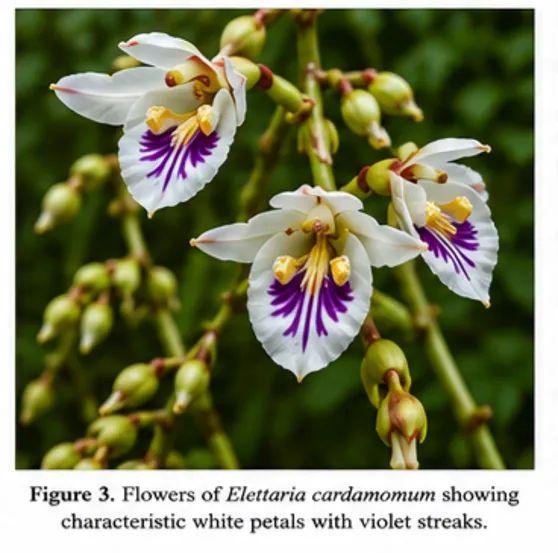
Flowers arise on elongated panicles directly from the rhizome [5]. They are generally white to pale green with violet streaks and contain bisexual reproductive organs [1].
Flowering occurs predominantly during the rainy season when humidity and temperature conditions are favorable. Pollination is mainly facilitated by insects such as honeybees, and successful pollination is necessary for fruit and seed formation.
3.5 Fruits
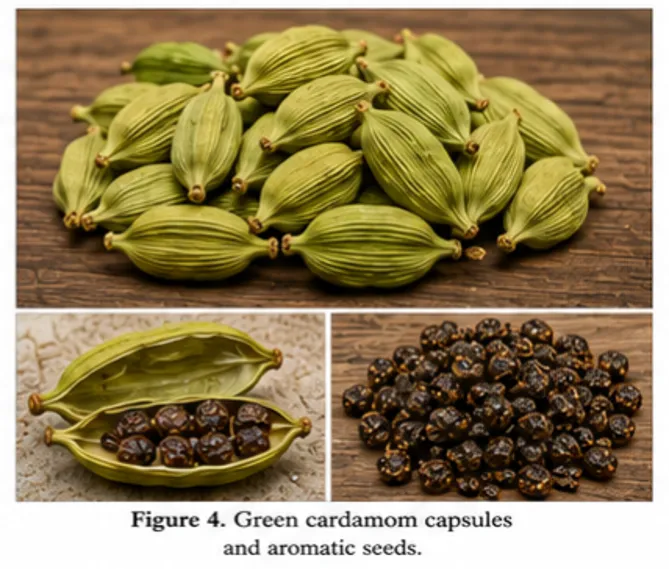
The fruit is a trilocular capsule containing numerous aromatic seeds [1]. Capsules may be oval or spindle-shaped depending on the cultivar and stage of maturity.
Harvesting is usually carried out before complete ripening in order to retain the green color and volatile oil content [12]. Overripe capsules often split open, resulting in seed loss and deterioration in market quality.
3.6 Seeds
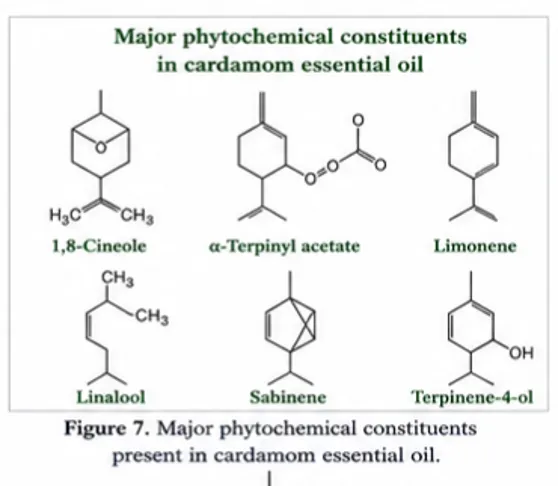
The seeds are small, angular, highly aromatic, and dark brown to black in color [1]. They are rich in essential oils containing compounds such as cineole, terpinyl acetate, limonene, and other volatile constituents responsible for the characteristic aroma and medicinal value of cardamom [5].
These seeds represent the most economically important component of the plant and are extensively used in food, pharmaceutical, and industrial applications.
4. Geographic Distribution and Cultivation
Cardamom is mainly cultivated in tropical and subtropical regions characterized by high humidity, warm temperatures, and substantial rainfall [7]. Although native to the Western Ghats of Southern India and Sri Lanka, its cultivation has expanded to numerous countries worldwide.
Major cardamom-producing countries include:
India remains one of the leading producers and consumers of cardamom, with cultivation concentrated mainly in Kerala, Karnataka, and Tamil Nadu [12,19].
4.1 Climatic Requirements
Successful cultivation of cardamom requires specific climatic conditions [11].
|
Factor |
Requirement |
|
Temperature |
10°C–35°C |
|
Rainfall |
1500–4000 mm |
|
Humidity |
High |
|
Altitude |
600–1500 m |
|
Soil |
Fertile loamy soil |
Moderate temperatures and high atmospheric humidity are essential for proper flowering and capsule development. Both drought and waterlogging negatively influence plant growth and yield.
4.2 Soil Requirements
Cardamom grows optimally in fertile, well-drained loamy soils rich in organic matter [11]. Slightly acidic soils with a pH range of 5.5–6.5 are considered most suitable.
Incorporation of organic matter improves moisture retention capacity and nutrient availability. Mulching and proper shade regulation are important agronomic practices in cardamom plantations.
4.3 Propagation
Propagation can be achieved through:
Commercial cultivation generally favors vegetative propagation through rhizomes because it ensures uniformity and early yield production [11].
4.4 Planting
Planting operations are commonly performed during the monsoon season. Seedlings or rhizome suckers are planted in pits enriched with compost and organic manure [12].
Adequate spacing between plants is maintained to facilitate proper aeration and sunlight penetration.
4.5 Irrigation and Fertilization
Regular irrigation is essential during dry seasons [11]. Organic manures along with balanced applications of nitrogen, phosphorus, and potassium fertilizers are applied to improve growth and productivity.
4.6 Harvesting
Harvesting usually commences 2–3 years after planting [7]. Mature capsules are handpicked at intervals of approximately 30–40 days [12].
Timely harvesting is crucial for preserving aroma, color, and overall quality.
4.7 Processing
Post-harvest processing generally includes:
Drying helps reduce moisture content and minimizes microbial spoilage, while appropriate curing techniques preserve the green color and essential oil composition of the capsules.
5. Chemical Composition
Cardamom is rich in numerous phytoconstituents and volatile oils that contribute to its characteristic aroma as well as its therapeutic potential [5]. The seeds generally contain about 2–8% essential oil composed predominantly of monoterpenes and sesquiterpenes [10].
Major Bioactive Constituents
|
Compound |
Biological Role |
|
1,8-Cineole |
Antimicrobial activity |
|
a-Terpinyl acetate |
Aroma and flavor enhancement |
|
Limonene |
Antioxidant property |
|
Linalool |
Fragrance component |
|
Sabinene |
Flavor constituent |
|
Flavonoids |
Antioxidant action |
|
Phenolic compounds |
Anti-inflammatory effect |
The characteristic fragrance of cardamom is primarily attributed to cineole and terpinyl acetate [5].
Nutritional Composition
Cardamom also contains several nutritional components, including:
These nutrients contribute to the spice’s nutritional significance and health-promoting properties.
6. Medicinal and Pharmacological Properties
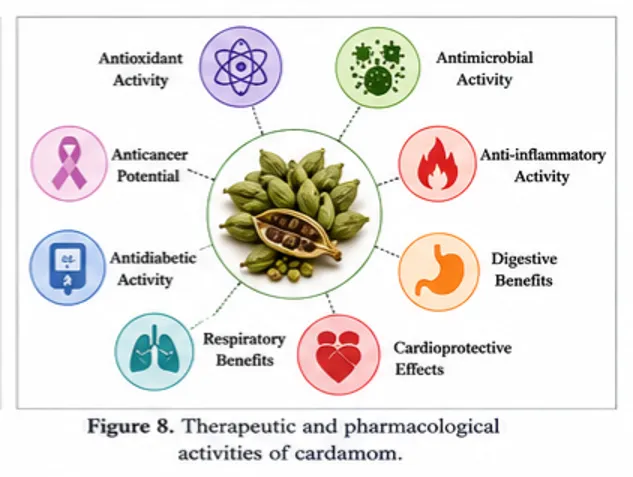
Cardamom (Elettaria cardamomum) possesses numerous medicinal and pharmacological properties owing to the presence of volatile oils, flavonoids, terpenoids, alkaloids, and phenolic compounds [5]. Traditionally, cardamom has been employed in Ayurveda, Siddha, and Unani systems of medicine for the management of digestive disorders, respiratory ailments, oral infections, and urinary complications [6]. Modern scientific investigations have further validated several of these therapeutic claims and demonstrated that cardamom exhibits antioxidant, antimicrobial, anti-inflammatory, antihypertensive, antidiabetic, gastroprotective, and anticancer activities [13–16].
6.1 Antioxidant Activity
Cardamom is rich in flavonoids, phenolic acids, and essential oils that possess strong antioxidant potential [13]. These compounds neutralize free radicals and reactive oxygen species (ROS), thereby protecting cellular components from oxidative damage.
Oxidative stress is associated with aging and various chronic diseases such as cardiovascular disorders, diabetes mellitus, neurodegenerative diseases, and cancer. Cardamom extracts have demonstrated significant free radical scavenging activity in several in vitro studies.
Major antioxidant constituents include:
6.2 Antimicrobial Activity
Cardamom essential oil exhibits broad-spectrum antimicrobial activity against various bacterial and fungal pathogens [14]. The volatile oil components disrupt microbial cell membranes, inhibit enzyme systems, and interfere with microbial growth.
Studies have shown inhibitory effects against:
Due to its antimicrobial properties, cardamom is extensively used in:
The antimicrobial effects are mainly attributed to cineole, terpineol, and limonene present in the essential oil..
6.3 Anti-inflammatory Activity
Cardamom possesses significant anti-inflammatory activity through the suppression of inflammatory mediators and cytokines [5]. Experimental studies indicate that cardamom extracts inhibit pathways involved in inflammation, thereby reducing tissue swelling and pain.
The anti-inflammatory mechanisms include:
These properties may be beneficial in inflammatory disorders such as:
6.4 Digestive & Gastroprotective Properties
Cardamom has long been recognized as an effective digestive stimulant and carminative agent in traditional medicine [6]. It stimulates the secretion of digestive enzymes and improves gastrointestinal motility.
Traditional uses include management of:
Cardamom also exhibits gastroprotective effects by protecting gastric mucosa from ulcer formation and irritation. Its soothing action on the digestive tract may help reduce gastric acidity and improve digestion.
6.5 Cardioprotective & Antihypertensive Effects
Several studies suggest that cardamom may contribute to cardiovascular health through antioxidant and vasodilatory mechanisms [13]. Cardamom helps improve blood circulation and reduce oxidative stress in cardiovascular tissues.
Reported cardioprotective effects include:
Potassium and antioxidant compounds present in cardamom may assist in regulating heart function and maintaining vascular health.
6.6 Respiratory Benefits
Cardamom acts as a natural expectorant and bronchodilator, making it useful in respiratory disorders [9]. The volatile oils help loosen mucus deposits and facilitate easier breathing.
It has traditionally been used for:
Inhalation of cardamom vapors may help relieve nasal blockage and respiratory discomfort. The warming effect of the spice also provides soothing action in throat infections.
6.7 Antidiabetic Activity
Research studies indicate that cardamom may improve glucose metabolism and insulin sensitivity [15]. Antioxidant constituents help reduce oxidative stress associated with diabetes mellitus.
Possible antidiabetic mechanisms include:
Dietary incorporation of cardamom may therefore contribute to better glycemic control and prevention of diabetic complications.
6.8 Anticancer Potential
Cardamom contains bioactive compounds capable of inhibiting cancer cell proliferation and reducing oxidative DNA damage [16]. Experimental studies have demonstrated anticancer effects against several types of cancer cells.
The anticancer mechanisms may involve:
Phytochemicals such as flavonoids and terpenoids are believed to play an important role in these activities. However, further clinical investigations are necessary to establish therapeutic efficacy in humans.
7. Uses of Cardamom
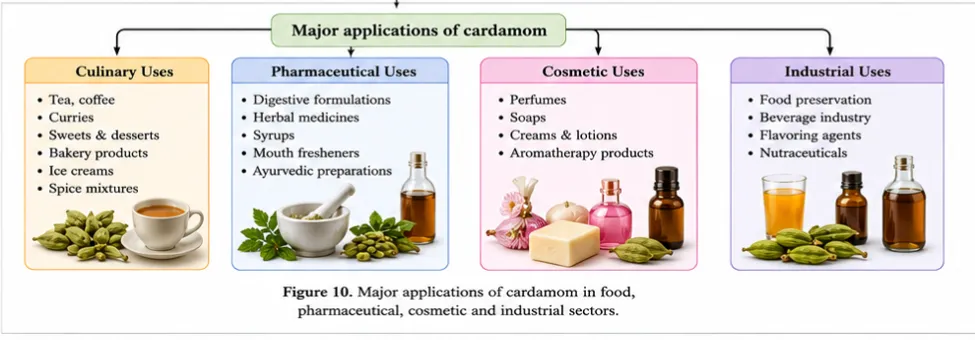
7.1 Culinary Applications
Cardamom is extensively utilized in numerous food preparations, including:
7.2 Pharmaceutical Applications
Cardamom is incorporated into herbal medicines, digestive formulations, syrups, mouth fresheners, and Ayurvedic preparations because of its medicinal properties [6].
7.3 Cosmetic Applications
Cardamom essential oil is widely used in perfumes, soaps, creams, lotions, and aromatherapy products owing to its pleasant fragrance [17].
7.4 Industrial Applications
Several industries utilize cardamom in:
8. Cardamom Essential Oil
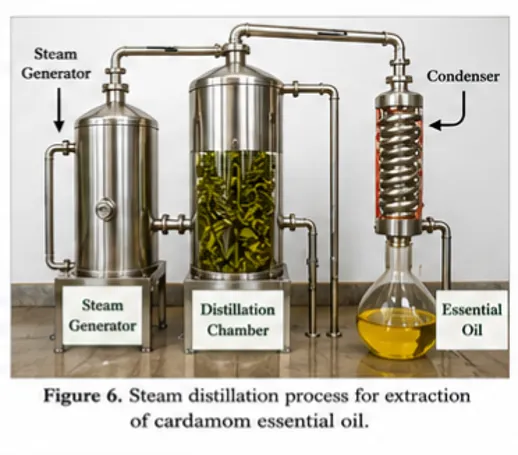
Cardamom essential oil is primarily extracted from the seeds through steam distillation techniques [17].
Physical Characteristics
Applications
The essential oil is widely used in:
Therapeutic Importance
Cardamom oil possesses several therapeutic properties including stress relief, relaxation, digestive stimulation, and antimicrobial activity [6]
9. Economic Importance
Cardamom is considered one of the costliest spices in the world after saffron and vanilla [1]. It plays a significant role in generating export revenue and providing employment opportunities in producing countries [7].
Its economic contributions include:
The increasing global demand for natural products, herbal medicines, and functional foods has further enhanced the commercial value of cardamom.
10. Diseases and Pests
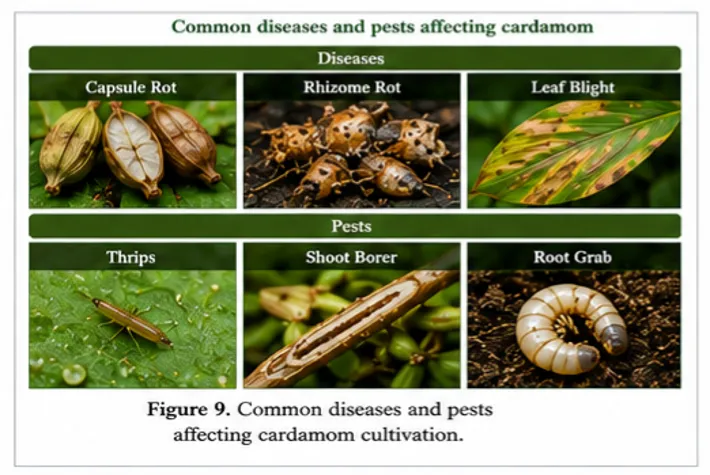
Cardamom cultivation is affected by several diseases and insect pests that reduce yield and quality.
Common Diseases
Capsule Rot
This disease is caused by fungal pathogens that result in rotting of capsules and substantial yield reduction [12].
Rhizome Rot
Rhizome rot is a severe disease affecting underground rhizomes, often leading to plant mortality.
Leaf Blight
Leaf blight causes drying and destruction of leaves, thereby reducing photosynthetic efficiency.
Major Pests
Thrips
Thrips feed on leaves and capsules, leading to discoloration and poor-quality produce.
Shoot Borer
This pest damages young shoots and flower panicles, adversely affecting plant growth and yield.
Root Grub
Root grubs feed on roots, resulting in wilting and poor plant development.
Management Strategies
Effective management practices include:
11. Future Prospects
The future of cardamom cultivation and utilization appears highly promising because of the increasing demand for herbal medicines, nutraceuticals, and functional food products [18].
Important areas requiring future research include:
Advancements in biotechnology, phytochemistry, and pharmacology may facilitate the development of novel therapeutic agents and value-added products derived from cardamom.
CONCLUSION
Cardamom is an economically and medicinally important spice possessing extensive culinary, pharmaceutical, industrial, and therapeutic applications [1]. Its rich phytochemical profile contributes to various biological activities including antioxidant, antimicrobial, anti-inflammatory, digestive, cardioprotective, antidiabetic, and anticancer effects [5].
For centuries, cardamom has occupied an important position in traditional medicinal systems and continues to gain significance in modern pharmaceutical and nutraceutical industries [18]. In addition to its medicinal value, cardamom cultivation supports the livelihoods of farmers and contributes considerably to the economies of tropical countries [7].Ongoing scientific investigations into its phytochemistry and pharmacological properties may lead to the discovery of new herbal medicines, functional foods, and therapeutic formulations in the coming years [16].
REFERENCES

Balkrishna Vanve, Vinay Dhakane, Aniket Surwase, Sarthak Potdar, Vilasini Pandav, Cardamom (Elettaria cardamomum): The Queen of Spices & Its Therapeutic Potential, Int. J. of Pharm. Sci., 2026, Vol 4, Issue 6, 2841-2853. https://doi.org/10.5281/zenodo.20636169
 10.5281/zenodo.20636169