View Article

Abstract

The COVID-19 pandemic and the increasing burden of cardiovascular disease (CVD) have created an unprecedented public health challenge in India. There was a 20-30% increase in cases of acute myocardial infarction (AMI) and sudden cardiac death during the pandemic, and there was a concerning rise in the number of young adults who died from cardiac causes. While many people believe that this trend is due to vaccination efforts, large-scale multi-center studies show that it is primarily caused by the pathophysiological effects of severe acute respiratory syndrome coronavirus 2 (SARS-CoV-2) infections as well as associated behavior changes. This paper uses recent scientific research on how COVID-19 causes cardiovascular damage, analyzes key national data sources—including the Indian Council of Medical Research (ICMR) Registry—describes the clinical signs of "thrombotic load," and develops long-term treatment strategies tailored for the Indian population.

Keywords

COVID-19, Heart attack, myocardial infarction, epidemiology, thrombus

Introduction

× Popup Image

India's vulnerability to heart disease has been compounded by several factors including genetics (high levels of lipoprotein a), metabolic vulnerabilities and now, the spread of sars-cov-2. After the first wave of infection, hospitals across india reported a dramatic increase in cases of sudden cardiac death and acute coronary syndrome (acs). What makes this trend even more concerning is the fact that it is beginning to impact young people in the workforce. These young people were previously thought to be at very low risk (1). It will be important to distinguish between the longer-term impacts of the virus and those of other environmental variables, so that medical professionals can develop appropriate treatment options and government agencies can implement effective public health policies. The pathogen that causes covid-19, sars-cov-2, is a single stranded rna virus with an envelope. It belongs to the family coronaviridae. The virus is spherical in shape but its size varies from approximately 60-140 nm (2). Protein molecules are embedded in a lipid bilayer surrounding the viral genome. Symptoms of covid-19 range from mild upper respiratory problems to severe medical emergencies (2,3). Symptoms typically emerge within 2-14 days after exposure to sars-cov-2. Common symptoms include fever/shivering, dry cough, extreme tiredness/exhaustion and loss of taste/smell. Additional symptoms can include symptoms similar to the common cold, flu or allergy-related symptoms such as: Respiratory: shortness of breath, sore throat, nasal congestion, runny nose. Pain: headaches, body aches/universal joint pain/muscle soreness. Gastrointestinal: nausea/vomiting/decreased appetite/diarrhea. Less common symptoms: rashes on skin/redness/inflammation around eyes/toes/fingers changing color/swelling (4).

Emergency warning signs:

If a person exhibits any of these serious signs/symptoms they need to seek emergency medical attention immediately:

Severe breathing difficulty/labored respiration, Constant chest pain/pressure, Sudden confusion/mental fog Difficulty waking/staying awake Skin/finger/toe nails/lips turning blue/gray/pale (indicating lack of oxygen)

Treatment protocol:

The level of therapy required for COVID-19 will be determined by how severe an individual's symptoms are and what their risk of developing complications is. A registered healthcare provider should always be consulted before beginning any type of medication plan. Mild to Moderate COVID-19 (not hospitalized or outpatient)(4,5)

Palliative Care: Resting physically and having adequate fluids are important. Pharmacologic interventions that do not require prescription, such as acetaminophen, can help relieve fever, body aches and cough. Antiviral Therapies (High Risk Groups):

Paxlovid (a combination of nirmatrelvir and ritonavir) – An oral tablet regimen. For patients aged 12 years and older with a high risk of progression of COVID-19. Treatment should begin no later than 5 days after the onset of symptoms.

Lagevrio (molnupiravir) – An oral capsule. For adult patients who qualify for treatment but cannot use Paxlovid. Treatment should be initiated no later than 5 days after the onset of symptoms.

Remdesivir (Veklury) – An intravenous (IV) infusion. Administered within a 7-day period from the onset of symptoms. For use in outpatient settings or early phase clinical trials for those at high risk.

Primary Architectural Components (7,8):

Spike (S) Glycoprotein: The spike glycoprotein is perhaps the most unique feature of the virion. The glycoprotein forms a "crown-like" (corona) protrusion from the outer surface of the virion. The glycoprotein has two distinct functional subunits:

S1 Subunit: The receptor-binding domain (RBD) of the S1 subunit is responsible for the specific binding of the virus to angiotensin converting enzyme 2 (ACE2) receptor sites on the surface of human cells.

S2 Subunit: The S2 subunit mediates the fusion of the virion envelope with the plasma membrane of the host cell and ultimately allows entry of the virion into the cytoplasm of the host cell. Envelope

(E) Protein: The E protein is a very small structural component. The concentration of the E protein is low. The E protein plays an important role in the assembly and release of new virus particles from infected cells.

Membrane (M) Protein: The M protein is the most abundant structural protein found on the outer surface of the virion. The M protein extends through the lipid bilayer and helps to maintain the overall shape and morphology of the virion. In addition, the M protein acts as the main organizer in the process of virion assembly. Nucleocapsid (N) Protein: Unlike the other three structural proteins listed above, the N protein resides inside the virion. The N protein binds directly to the virion RNA genome and organizes it into a stable helical structure that protects it from degradation (9).

Viral Genome: The viral genome is composed of a single strand, positive-sense RNA molecule. The viral genome measures approximately 30,000 nucleotides long. Due to its characteristics as a messenger RNA (mRNA), the ribosomes of the host cell are able to begin producing viral proteins immediately after the virus infects the cell.

Lipid Bilayer: A protective fatty membrane stolen from the host cell during viral replication. This layer anchors the S, E, and M proteins and is easily disrupted by soap and alcohol-based sanitizers (10).
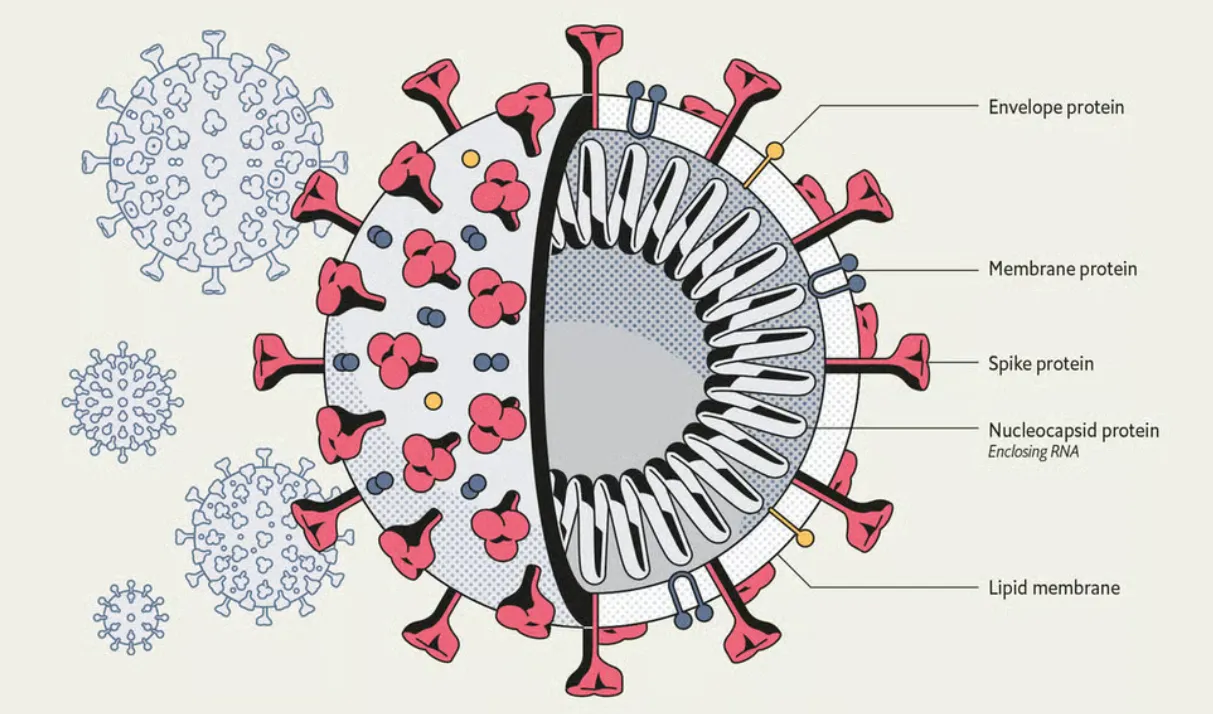
figure

Pathophysiological Mechanisms of COVID-19-Induced Cardiac Damage

SARS-CoV-2 induces myocardial injury through several interconnected pathways that damage both the myocardium and the vascular endothelium (11):

1. Endothelialitis and Plaque Rupture: The virus enters host cells by binding to Angiotensin-Converting Enzyme 2 (ACE2) receptors, which are highly expressed on vascular endothelial cells and myocardial macrophages. This binding triggers direct endothelial inflammation (endothelialitis), destabilising pre-existing, non-calcified atherosclerotic plaques. The subsequent rupture of these vulnerable plaques leads to acute coronary occlusion (18).

2. Hypercoagulability and Thrombosis: Systemic inflammation induces a severe pro-thrombotic state. The upregulation of tissue factor pathways, platelet hyperactivation, and the formation of Neutrophil Extracellular Traps (NETs) drastically increase blood viscosity. This environment promotes de novo microvascular thrombosis and macrovascular coronary occlusion, resulting in high-thrombus-burden myocardial infarctions (37).

Immune-Mediated Myocarditis: Severe viral infection can provoke an exaggerated immune response (cytokine storm), releasing massive quantities of Interleukin-6 (IL-6), Interleukin-1β (IL-1β), and Tumor Necrosis Factor-alpha (TNF-α). This systemic cascade causes direct myocardial cell death, manifesting clinically as acute myocarditis, stress cardiomyopathy,severe cardiac arrhythmias (19,20).

SARS-COV-2 Pathophysiology:direct vs indirect cardiovascular injury
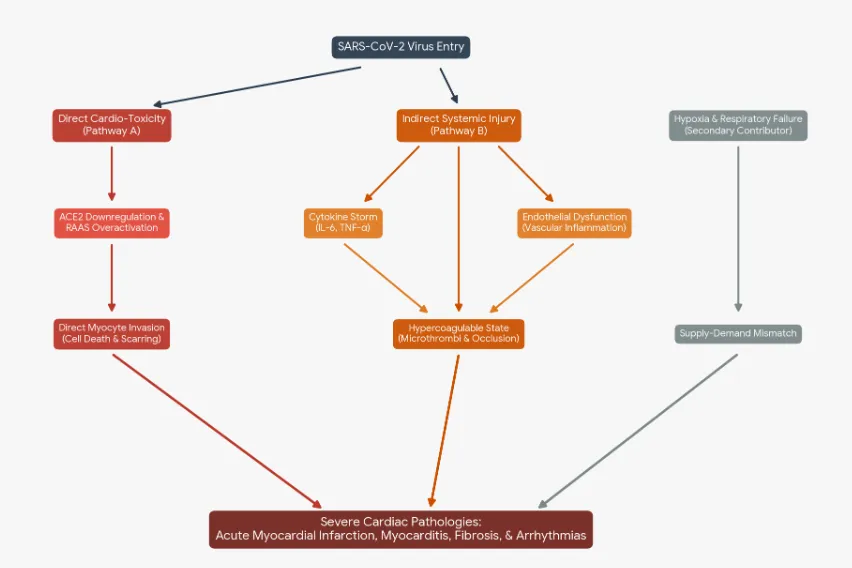
figure

Review of literature:

A comprehensive review of literature compiling data from global health databases (including PubMed, Embase, and Cochrane) demonstrates a clear consensus: COVID-19 vaccines do not increase the risk of acute myocardial infarction (heart attack), and instead significantly reduce overall major adverse cardiovascular events (MACE) by preventing severe infection (40).

While individual case reports have noted rare, isolated temporal instances of heart attacks occurring shortly after vaccination, extensive population-scale literature clarifies that these events represent background noise or individual preexisting comorbidities rather than a causal vaccine effect (46).

1. Large-Scale Epidemiological & Cohort Literature

The strongest evidence in the literature comes from multi-million-patient electronic health record (EHR) studies designed to track cardiovascular outcomes post-vaccination.

  • The 46 Million Adult Cohort (England): A massive study published in Nature Communications evaluated the cardiovascular safety of various COVID-19 vaccine doses across 45.7 million adults. The investigators found that the incidence of arterial thromboses (including heart attacks) and venous thromboembolic events was lower after each vaccine dose compared to the pre-vaccination or unvaccinated baseline (64).
  • The US Veterans Cohort: A 2024 study in JAMA Internal Medicine tracking over 1 million US veterans emulated a clinical trial to evaluate MACE. The literature showed a 37.7% relative risk reduction for heart attacks and strokes and a 57.9% reduction in cardiovascular mortality among vaccinated individuals, particularly among older populations with preexisting coronary artery disease (44).
  • The South Korean National Cohort: Published in The BMJ, a nationwide study evaluating over 23 million individuals concluded that the risk of acute myocardial infarction and ischemic stroke was significantly lower in fully vaccinated individuals compared to unvaccinated individuals who contracted COVID-19.

Systematic Reviews and Meta-Analyses

When researchers pool the data from hundreds of smaller clinical trials and observational studies, the overarching statistical trends become clear.

  • Arterial vs. Venous Events: Systematic reviews (such as those indexed in PubMed Central) separating different cardiovascular endpoints note that while venous thromboembolism (blood clots in veins) was a verified, ultra-rare complication associated with older adenoviral-vector vaccines (like AstraZeneca's VITT), arterial events (like coronary artery heart attacks) show no statistically significant elevation across any of the major vaccine platforms (Pfizer-BioNTech, Moderna, Novavax).
  • The "Temporal vs. Causal" Distinction: The literature frequently identifies a critical confounding factor: case studies reporting post-vaccine heart attacks almost universally involve patients who are elderly or possess severe baseline cardiovascular risk factors (e.g., advanced hypertension, diabetes, hyperlipidemia). Meta-analyses conclude that these events match expected background rates for those demographics (44).

Mechanistic Literature: Vaccine vs. Natural Infection

Cardiology literature heavily explores the biological mechanisms driving heart injuries to explain why the vaccine shows a protective benefit.

[Natural SARS-CoV-2 Infection] ──> Uncontrolled Spike Protein + Systemic Hyper-Inflammation ──> Endothelial Dysfunction ──> High Risk of Heart Attack

[COVID-19 Vaccination] ──> Controlled, Localized Spike Expression ──> Neutralising Antibodies ──> Lower Risk of Heart Attack

  • The Hyper-Inflammatory State: Natural COVID-19 infection triggers a "cytokine storm," direct endothelial (blood vessel lining) damage, and a hypercoagulable state (thickened blood). This environment frequently causes plaque rupture, resulting in traditional Type 1 or Type 2 myocardial infarctions in infected patients.
  • The Vaccine Mechanism: Because the vaccine exposes the body to a controlled, localized amount of spike protein without the replicating virus, it avoids systemic endothelial devastation. By neutralizing the live virus upon exposure, the vaccine prevents the severe vascular inflammation that drives infection-induced heart attacks (50).

Differentiating Myocarditis from Heart Attacks

The literature makes an absolute, unambiguous distinction between a heart attack (coronary artery blockage causing tissue death) and myocarditis (inflammation of the heart muscle).

  • The Myocarditis Literature: Global safety surveillance (published via CDC MMWR and European Medicines Agency data) successfully identified a rare, verified risk of mRNA-vaccine-induced myocarditis.
  • The Profiles differ entirely: Unlike heart attacks, post-vaccine myocarditis predominantly affects young males (ages 12–29) after the second dose. The literature shows that these cases are overwhelmingly mild, clinically distinct from ischemic heart attacks, resolve rapidly with standard anti-inflammatory drugs, and carry a far lower risk of permanent damage than the severe myocarditis caused by a natural COVID-19 infection (52).

Analysis of Epidemiological Data and the Vaccine Consensus in India

The ICMR Case-Control Landmark Study

To address growing public concern regarding sudden unexplained deaths among young adults, the Indian Council of Medical Research (ICMR) conducted a comprehensive, multi-centric case-control study reviewing 729 sudden death cases and 2,916 matched controls aged 18–45 (42).

  • Vaccine Safety: The study conclusively showed that COVID-19 vaccination did not increase the risk of unexplained sudden death. Instead, receiving two doses of the vaccine was associated with a reduced risk of sudden death (Odds Ratio [OR] 0.51).
  • Primary Risk Drivers: The strongest independent risk factor identified was a history of prior hospitalisation due to severe COVID-19 (40).

Institutional Observations (AIIMS & CSI)

A one-year observational study conducted jointly by the departments of Pathology and Forensic Medicine at AIIMS Delhi corroborated these findings. Autopsy-driven data confirmed that coronary artery disease and advanced atherosclerotic plaque progression remained the primary causes of sudden deaths. Additionally, the Cardiological Society of India (CSI) noted that roughly 20% to 30% of hospitalised COVID-19 patients exhibited elevated cardiac troponins, indicating direct acute myocardial injury during the acute phase (51).

The Evolving Clinical Phenotype in Post-COVID India

High Thrombus Burden STEMI

Indian interventional cardiologists have identified a distinct clinical profile in post-COVID patients presenting with ST-Elevation Myocardial Infarction (STEMI). Angiographic assessments often reveal long, dense, gelatinous thrombi that span multiple coronary segments, even in the absence of severe underlying calcification. Managing these cases frequently requires advanced aspiration thrombectomy, prolonged glycoprotein IIb/IIIa inhibitor infusions, and cautious stent deployment to mitigate the risk of no-reflow phenomena (46).

The Timeline of Persistent Risk

Long-term cardiovascular risk extends well past the initial phase of the infection. Longitudinal data indicates that the risk of incident coronary artery disease, cardiac arrhythmias, and new-onset hypertension remains elevated for 12 to 24 months post-infection, particularly in patients who experienced severe acute illness.

Clinical Metric Post-COVID Presentation Changes Primary Mechanism
Thrombus Characteristics Multi-vessel, highly dense macro-thrombi Systemic hypercoagulability, NETosis
Demographic Shift Marked increase in presentations among ages 18–45 Viral-induced accelerated atherosclerosis
Risk Duration Elevated vascular vulnerability persisting for 1–2 years Persistent low-grade endothelial inflammation

Compounding Risk Factors: Behavioral and Lifestyle Shifts

The widespread impact of the pandemic on heart health has been exacerbated by a multitude of new daily routines in India. These changes include:

• Increased Atherosclerosis: During the pandemic, people experienced prolonged periods of stress and inactivity; they also developed metabolic abnormalities such as dyslipidemia and insulin resistance. The result was an increase in the prevalence of atherosclerosis (55).

• Behavior-Related Cardiac Events: As noted in the ICMR Registry Analysis, there is a strong correlation between sudden cardiac events and lifestyle behaviors that occurred shortly prior to the event.For example, binge drinking (OR=5.29) or engaging in strenuous physical activity that the individual had never done before within 48 hours of the event. Strategies for Prevention and Medical Treatment In order to control the growing threat to cardiovascular health, a systematic approach to healthcare delivery is needed. This includes:

1. Assessment of Post-Illness Risk: All individuals who experienced either a moderate or severe case of COVID-19 should undergo a comprehensive evaluation for potential cardiac risk. Evaluations should include a standard 12-lead ECG, a routine fasting lipid profile, and measurement of hs-CRP (49).

2. Gradual Reintroduction to Physical Activity: Medical personnel should advise patients not to begin aggressive fitness regimens immediately after recovering from their illness. Rather, patients' physical activity levels should be gradually increased over approximately three to six months to avoid placing excessive stress on weakened blood vessels.

3. Aggressive Prophylactic Therapy: Patients with preexisting metabolic disorders or evidence of arterial plaque should receive aggressive therapy aimed at controlling their blood pressure and initiating statin therapy to stabilize their vascular endothelium and prevent rupture of plaques (41).

CONCLUSION:

The move from the time before COVID-19 to the time after COVID-19 has dramatically changed how Acute Myocardial Infarction (AMI) looks in India. A combination of the existing metabolic risk factors and the specific ways that SARS-CoV-2 affects the body — such as increasing inflammation, damaging blood vessels, and making the blood clot too easily — have created a more dangerous environment for heart attacks. In terms of patient care, we see an increase in the number of patients who do not fit the "classic" AMI profile; an increase in AMI cases in younger people; and an increase in the number of AMI cases where there is blockage in multiple blood vessels and large amounts of clots that make it difficult to perform percutaneous coronary intervention (PCI).In addition to highlighting many of the weaknesses in the Indian healthcare system, the COVID-19 pandemic also sped up the development of remote medical care, hub-and-spoke models for treating ST-segment elevation myocardial infarction (STEMI) and pharmacoinvasive treatment protocols. As India moves forward in the post-COVID world, the traditional ways of assessing and managing cardiovascular disease are no longer sufficient. To better manage cardiovascular disease in India going forward, we need to focus on adding information about a person's history of infection with viruses into their cardiovascular risk assessment; developing stronger secondary prevention programs; and building large national registries to track the long-term effects of COVID-19 on cardiovascular health.

REFERENCES

  1. Aneja, A., et al. Cardiological Society of India position statement on COVID-19 and heart failure. Indian Heart Journal, 72 (4), 2020. PMC7219407.
  2. Indian Council of Medical Research (ICMR). Factors associated with unexplained sudden deaths among young adults in India: A multicentric case-control study. Indian Journal of Medical Research, 158 (4), 2023. PubMed/37988028.
  3. World Heart Federation (WHF). COVID-19 and Heart Risks: New Evidence Highlights Lasting Risks. WHF Global Research Update, 2025. World Heart Federation.
  4. Lindberg, P., et al. Long COVID and risk of incident cardiovascular disease: a population-based cohort study. eClinicalMedicine (Part of The Lancet), 82, 2026. eClinicalMedicine.
  5. All India Institute of Medical Sciences (AIIMS) & ICMR. Burden of Sudden Death in Young Adults: A One-Year Observational Study at a Tertiary Care Centre in India. Indian Journal of Medical Research, 2024. AIIMS Study Report.
  6. World Health Organization (WHO): WHO Coronavirus (COVID-19) Dashboard & Technical Guidance [1]
  7. The Lancet Commission: Sachs JD, et al. The Lancet Commission on lessons for the future from the COVID-19 pandemic. The Lancet (2022) [1]
  8. U.S. Centers for Disease Control and Prevention (CDC): CDC COVID-19 Science Briefs and Public Health Reports (PMC9692168) [1]
  9. National Institutes of Health (NIH): LitCovid Literature Hub via PubMed [1]
  10. Pan American Health Organization: PAHO COVID-19 References and Regional Analysis [1]
  11. Huang C, et al. Clinical features of patients infected with 2019 novel coronavirus in Wuhan, China. The Lancet (2020)
  12. Guan WJ, et al. Clinical characteristics of coronavirus disease 2019 in China. New England Journal of Medicine (NEJM, 2020)
  13. Zhou F, et al. Clinical course and risk factors for mortality of adult inpatients with COVID-19 in Wuhan, China. The Lancet (2020)
  14. Wu Z, McGoogan JM. Characteristics of and important lessons from the outbreak of coronavirus disease 2019 (COVID-19) in China. JAMA (2020)
  15. Zhou P, et al. A pneumonia outbreak associated with a new coronavirus of probable bat origin. Nature (2020)
  16. Zhu N, et al. A novel coronavirus from patients with pneumonia in China, 2019. NEJM (2020)
  17. Rothan HA, Byrareddy SN. The epidemiology and pathogenesis of coronavirus disease (COVID-19) outbreak. Journal of Autoimmunity (2020)
  18. Chan JF, et al. A familial cluster of pneumonia associated with the 2019 novel coronavirus indicating person-to-person transmission. The Lancet (2020)
  19. Shi Y, et al. Current knowledge of COVID-19 and SARS-CoV-2 evolution. (PMC8176881)
  20. Liew YY, et al. The 100 most-cited articles in COVID-19: a bibliometric analysis. (PMC11293834
  21. RECOVERY Collaborative Group. Dexamethasone in Hospitalized Patients with Covid-19. NEJM (2021)
  22. Beigel JH, et al. Remdesivir for the Treatment of Covid-19 — Final Report. NEJM (2020)
  23. Horby P, et al. Tocilizumab in patients admitted to hospital with COVID-19 (RECOVERY): a randomised, controlled, open-label, platform trial. The Lancet (2021)
  24. Hammond TP, et al. Oral Nirmatrelvir for High-Risk, Nonhospitalized Adults with Covid-19 (EPIC-HR). NEJM (2022)
  25. Cao B, et al. A Trial of Lopinavir–Ritonavir in Adults Hospitalized with Severe Covid-19. NEJM (2020)
  26. Pan H, et al. Repurposed Antiviral Drugs for Covid-19 — Interim WHO Solidarity Trial Results. NEJM (2021)
  27. Gottlieb RL, et al. Early Remdesivir to Prevent Progression to Severe Covid-19 in Outpatients. NEJM (2022)
  28. Montgomery H, et al. Efficacy and Safety of Molnupiravir in Covid-19 (MOVe-OUT). NEJM (2022)
  29. Weinreich DM, et al. REGN-COV2 Antibody Cocktail in Outpatients with Covid-19. NEJM (2021)
  30. Gupta A, et al. Early Treatment for Covid-19 with SARS-CoV-2 Neutralizing Antibody Sotrovimab. NEJM (2021)
  31. Polack FP, et al. Safety and Efficacy of the BNT162b2 mRNA Covid-19 Vaccine. NEJM (2020)
  32. Baden LR, et al. Efficacy and Safety of the mRNA-1273 SARS-CoV-2 Vaccine. NEJM (2021)
  33. Voysey M, et al. Safety and efficacy of the ChAdOx1 nCoV-19 vaccine (AZD1222). The Lancet (2021)
  34. Sadoff J, et al. Safety and Efficacy of Single-Dose Ad26.COV2.S Vaccine against Covid-19. NEJM (2021)
  35. Link-Gelles R, et al. Association of 2024–2025 Covid-19 Vaccine with Covid-19 Outcomes in U.S. Veterans. NEJM (2025)
  36. Krammer F. SARS-CoV-2 vaccines in development. Nature (2020)
  37. Wölfel R, et al. Virological assessment of hospitalized patients with COVID-2019. Nature (2020)
  38. Corley PK, et al. Durability of immune responses after COVID-19 vaccination. Science (2021)
  39. Khoury DS, et al. Neutralizing antibody levels are highly predictive of immune protection from symptomatic SARS-CoV-2 infection. Nature Medicine (2021)
  40. Andrews N, et al. Effectiveness of COVID-19 vaccines against the Omicron (B.1.1.529) variant. NEJM (2022)
  41. Hoffmann M, et al. SARS-CoV-2 Cell Entry Depends on ACE2 and TMPRSS2 and Is Blocked by a Clinically Proven Protease Inhibitor. Cell (2020)
  42. Wrapp D, et al. Cryo-EM structure of the 2019-nCoV spike in the prefusion conformation. Science (2020)
  43. Corman VM, et al. Detection of 2019 novel coronavirus (2019-nCoV) by real-time RT-PCR. Eurosurveillance (2020)
  44. Sethuraman N, Jeremiah SS, Ryo A. Interpreting Diagnostic Tests for SARS-CoV-2. JAMA (2020)
  45. V’kovski P, et al. Coronavirus biology, replication and pathogenesis. Nature Reviews Microbiology (2021)
  46. Post-acute COVID-19 syndrome. Nature Medicine (2021)
  47. Lopez-Leon S, et al. More than 50 long-term effects of COVID-19: a systematic review and meta-analysis. Scientific Reports (2021)
  48. Kedor C, et al. A prospective observational study of post-COVID-19 chronic fatigue syndrome following the first pandemic wave in Germany. Nature Communications (2022)
  49. Al-Aly Z, Xie Y, Bowe B. High-dimensional characterization of post-acute sequelae of COVID-19. Nature (2021)
  50. Davis HE, et al. Long COVID: major findings, mechanisms and recommendations. Nature Reviews Microbiology (2023) [1]
  51. Ferguson NM, et al. Impact of non-pharmaceutical interventions (NPIs) to reduce COVID-19 mortality and healthcare demand. Imperial College COVID-19 Response Team (2020)
  52. Flaxman S, et al. Estimating the effects of non-pharmaceutical interventions on COVID-19 in Europe. Nature (2020)
  53. Ebrahim SH, et al. Global health security and public health measures for COVID-19. BMJ (2020)
  54. Prather KA, et al. Aerosol-routes of transmission of SARS-CoV-2 and public health response. Science (2020)
  55. Springer Nature COVID-19 Research Highlights & Open Access Dataset Repository

Reference

  1. Aneja, A., et al. Cardiological Society of India position statement on COVID-19 and heart failure. Indian Heart Journal, 72 (4), 2020. PMC7219407.
  2. Indian Council of Medical Research (ICMR). Factors associated with unexplained sudden deaths among young adults in India: A multicentric case-control study. Indian Journal of Medical Research, 158 (4), 2023. PubMed/37988028.
  3. World Heart Federation (WHF). COVID-19 and Heart Risks: New Evidence Highlights Lasting Risks. WHF Global Research Update, 2025. World Heart Federation.
  4. Lindberg, P., et al. Long COVID and risk of incident cardiovascular disease: a population-based cohort study. eClinicalMedicine (Part of The Lancet), 82, 2026. eClinicalMedicine.
  5. All India Institute of Medical Sciences (AIIMS) & ICMR. Burden of Sudden Death in Young Adults: A One-Year Observational Study at a Tertiary Care Centre in India. Indian Journal of Medical Research, 2024. AIIMS Study Report.
  6. World Health Organization (WHO): WHO Coronavirus (COVID-19) Dashboard & Technical Guidance [1]
  7. The Lancet Commission: Sachs JD, et al. The Lancet Commission on lessons for the future from the COVID-19 pandemic. The Lancet (2022) [1]
  8. U.S. Centers for Disease Control and Prevention (CDC): CDC COVID-19 Science Briefs and Public Health Reports (PMC9692168) [1]
  9. National Institutes of Health (NIH): LitCovid Literature Hub via PubMed [1]
  10. Pan American Health Organization: PAHO COVID-19 References and Regional Analysis [1]
  11. Huang C, et al. Clinical features of patients infected with 2019 novel coronavirus in Wuhan, China. The Lancet (2020)
  12. Guan WJ, et al. Clinical characteristics of coronavirus disease 2019 in China. New England Journal of Medicine (NEJM, 2020)
  13. Zhou F, et al. Clinical course and risk factors for mortality of adult inpatients with COVID-19 in Wuhan, China. The Lancet (2020)
  14. Wu Z, McGoogan JM. Characteristics of and important lessons from the outbreak of coronavirus disease 2019 (COVID-19) in China. JAMA (2020)
  15. Zhou P, et al. A pneumonia outbreak associated with a new coronavirus of probable bat origin. Nature (2020)
  16. Zhu N, et al. A novel coronavirus from patients with pneumonia in China, 2019. NEJM (2020)
  17. Rothan HA, Byrareddy SN. The epidemiology and pathogenesis of coronavirus disease (COVID-19) outbreak. Journal of Autoimmunity (2020)
  18. Chan JF, et al. A familial cluster of pneumonia associated with the 2019 novel coronavirus indicating person-to-person transmission. The Lancet (2020)
  19. Shi Y, et al. Current knowledge of COVID-19 and SARS-CoV-2 evolution. (PMC8176881)
  20. Liew YY, et al. The 100 most-cited articles in COVID-19: a bibliometric analysis. (PMC11293834
  21. RECOVERY Collaborative Group. Dexamethasone in Hospitalized Patients with Covid-19. NEJM (2021)
  22. Beigel JH, et al. Remdesivir for the Treatment of Covid-19 — Final Report. NEJM (2020)
  23. Horby P, et al. Tocilizumab in patients admitted to hospital with COVID-19 (RECOVERY): a randomised, controlled, open-label, platform trial. The Lancet (2021)
  24. Hammond TP, et al. Oral Nirmatrelvir for High-Risk, Nonhospitalized Adults with Covid-19 (EPIC-HR). NEJM (2022)
  25. Cao B, et al. A Trial of Lopinavir–Ritonavir in Adults Hospitalized with Severe Covid-19. NEJM (2020)
  26. Pan H, et al. Repurposed Antiviral Drugs for Covid-19 — Interim WHO Solidarity Trial Results. NEJM (2021)
  27. Gottlieb RL, et al. Early Remdesivir to Prevent Progression to Severe Covid-19 in Outpatients. NEJM (2022)
  28. Montgomery H, et al. Efficacy and Safety of Molnupiravir in Covid-19 (MOVe-OUT). NEJM (2022)
  29. Weinreich DM, et al. REGN-COV2 Antibody Cocktail in Outpatients with Covid-19. NEJM (2021)
  30. Gupta A, et al. Early Treatment for Covid-19 with SARS-CoV-2 Neutralizing Antibody Sotrovimab. NEJM (2021)
  31. Polack FP, et al. Safety and Efficacy of the BNT162b2 mRNA Covid-19 Vaccine. NEJM (2020)
  32. Baden LR, et al. Efficacy and Safety of the mRNA-1273 SARS-CoV-2 Vaccine. NEJM (2021)
  33. Voysey M, et al. Safety and efficacy of the ChAdOx1 nCoV-19 vaccine (AZD1222). The Lancet (2021)
  34. Sadoff J, et al. Safety and Efficacy of Single-Dose Ad26.COV2.S Vaccine against Covid-19. NEJM (2021)
  35. Link-Gelles R, et al. Association of 2024–2025 Covid-19 Vaccine with Covid-19 Outcomes in U.S. Veterans. NEJM (2025)
  36. Krammer F. SARS-CoV-2 vaccines in development. Nature (2020)
  37. Wölfel R, et al. Virological assessment of hospitalized patients with COVID-2019. Nature (2020)
  38. Corley PK, et al. Durability of immune responses after COVID-19 vaccination. Science (2021)
  39. Khoury DS, et al. Neutralizing antibody levels are highly predictive of immune protection from symptomatic SARS-CoV-2 infection. Nature Medicine (2021)
  40. Andrews N, et al. Effectiveness of COVID-19 vaccines against the Omicron (B.1.1.529) variant. NEJM (2022)
  41. Hoffmann M, et al. SARS-CoV-2 Cell Entry Depends on ACE2 and TMPRSS2 and Is Blocked by a Clinically Proven Protease Inhibitor. Cell (2020)
  42. Wrapp D, et al. Cryo-EM structure of the 2019-nCoV spike in the prefusion conformation. Science (2020)
  43. Corman VM, et al. Detection of 2019 novel coronavirus (2019-nCoV) by real-time RT-PCR. Eurosurveillance (2020)
  44. Sethuraman N, Jeremiah SS, Ryo A. Interpreting Diagnostic Tests for SARS-CoV-2. JAMA (2020)
  45. V’kovski P, et al. Coronavirus biology, replication and pathogenesis. Nature Reviews Microbiology (2021)
  46. Post-acute COVID-19 syndrome. Nature Medicine (2021)
  47. Lopez-Leon S, et al. More than 50 long-term effects of COVID-19: a systematic review and meta-analysis. Scientific Reports (2021)
  48. Kedor C, et al. A prospective observational study of post-COVID-19 chronic fatigue syndrome following the first pandemic wave in Germany. Nature Communications (2022)
  49. Al-Aly Z, Xie Y, Bowe B. High-dimensional characterization of post-acute sequelae of COVID-19. Nature (2021)
  50. Davis HE, et al. Long COVID: major findings, mechanisms and recommendations. Nature Reviews Microbiology (2023) [1]
  51. Ferguson NM, et al. Impact of non-pharmaceutical interventions (NPIs) to reduce COVID-19 mortality and healthcare demand. Imperial College COVID-19 Response Team (2020)
  52. Flaxman S, et al. Estimating the effects of non-pharmaceutical interventions on COVID-19 in Europe. Nature (2020)
  53. Ebrahim SH, et al. Global health security and public health measures for COVID-19. BMJ (2020)
  54. Prather KA, et al. Aerosol-routes of transmission of SARS-CoV-2 and public health response. Science (2020)
  55. Springer Nature COVID-19 Research Highlights & Open Access Dataset Repository

Photo
Md Afaque Ali
Corresponding author

JP College of pharmacy Nalanda Bihar.

Photo
Sani Das
Co-author

JP College of pharmacy Nalanda Bihar.

Photo
Rajiv Ranjan Kumar
Co-author

JP College of pharmacy Nalanda Bihar.

Md Afaque Ali, Sani Das, Rajiv Ranjan Kumar, Changing Dynamics of Acute Myocardial Infarction in India: A Review of the Pre- Versus Post-COVID-19 Eras, Int. J. of Pharm. Sci., 2026, Vol 4, Issue 10, 4168-4176. https://doi.org/10.5281/zenodo.23685360

More related articles
Influence of Food Intake on Drug Absorption and Sy...
Satvik Kanade, Dr. M. S. Umashankar, Athisivam P., Anantha Kumar...
Medicinal Herbal Plants and Their Pharmacological ...
Miganka Karmakar, Sanchita poddar, Probal Dhara, Gargi Seth, Muns...
Exploring the Relationship Between Consciousness, the Human Body, and Biofabrica...
Prabhat Tiwari, Dr. Tarkeshwar Prashad Shukla, Pramod Mishra, Sujeet Pratap Singh...
Advances in Nano Formulation for Drug Delivery...
Hemant Vadak, Gaurav Ghawate, Aniket Tupe...
More related articles
Influence of Food Intake on Drug Absorption and Systemic Bioavailability...
Satvik Kanade, Dr. M. S. Umashankar, Athisivam P., Anantha Kumar...
Medicinal Herbal Plants and Their Pharmacological Activities: A Comprehensive Re...
Miganka Karmakar, Sanchita poddar, Probal Dhara, Gargi Seth, Munshi Azmat Hossain, Rudrajit Saha, Ni...