

We use cookies to ensure our website works properly and to personalise your experience. Cookies policy
Department of Pharmaceutics, Srinivas College of Pharmacy, Mangalore, Karnataka
Gastroretentive drug delivery systems (GRDDS) are designed to prolong the retention of the dosage form in the stomach, resulting in an improved bioavailability and therapeutic effectiveness of drugs that possess a narrow absorption window, act locally in the stomach, or are unstable in the intestinal milieu. Among the polymers explored for GRDDS, chitosan has gained significant interest due to its good physicochemical and biological properties. Chitosan is a naturally derived, biodegradable and biocompatible polysaccharide obtained through the deacetylation of chitin. In acidic conditions, its cationic nature allows strong electrostatic interactions with negatively charged gastric mucin, resulting in excellent mucoadhesive properties that support prolonged gastric retention.Within GRDDS, chitosan serves multiple functions, including mucoadhesion, swelling, gel formation, and drug release modulation. When exposed to the acidic gastric environment, protonation of chitosan’s amino groups leads to pronounced swelling and the formation of a viscous gel layer. The swollen matrix helps delay gastric emptying and simultaneously acts as a diffusion barrier, allowing sustained and controlled release of the incorporated drug. Chitosan is therefore widely used in the formulation of gastroretentive tablets, beads, microspheres, hydrogels and floating systems, either alone or in combination with other polymers.Numerous studies reported in pharmaceutical literature indicate that chitosan-based GRDDS can improve bioavailability, reduce dosing frequency, and enhance patient compliance compared to conventional oral dosage forms. Despite, these advantages, challenges such as variability in gastric physiology, rapid mucus turnover and limited mechanical strength still require further investigation. Overall, chitosan remains a versatile and promising polymer for GRDDS, and continued research and formulation optimization are expected to broaden its clinical potential
The Oral administration of drugs is the most preferred mode of drug delivery for systemic delivery of drugs because of its convenience, patient compliance, and cost-effectiveness [1]. However, traditional oral dosage forms are subject to unpredictable gastric emptying, short transit time in the GI tract, incomplete drug absorption and variable bioavailability, especially with drugs having an narrow absorption window or pH-dependent stability. This requires the design of novel oral drug delivery systems to overcome the physiological barriers [2].
Gastroretentive drug delivery systems (GRDDS) have been developed to increase the residence time of dosage forms in the stomach to augment drug delivery absorption enhanced by availability, and reduce dosing frequency [3]. These types of systems are particularly useful for drugs that exert a local action in the stomach and are mainly observed in the upper region of the gastrointestinal tract. Sustained gastric retention also allows sustained and controlled release of the drug for better therapy [4].
Gastric retention can be achieved using several formulation techniques, such as floating, mucoadhesive, swelling or expandable, and raft forming systems [5]. Of these, polymer-based systems are the most common approach due to their high formulation adaptability, acceptability, and the ability to alter the drug release pattern. Choosing the right polymer is critical because it directly influences key formulation properties such as buoyancy, swelling behaviour, mucoadhesion, mechanical strength and the drug release profile [6].
Chitosan is a cationic polysaccharide which is derived from the natural polymer chitin through deacetylation, has been widely exploited as a functional polymer for gastroretentive drug delivery applications [7]. The existence of protonable amino groups makes chitosan become positively charged in acidic pH, and molecules with negative charges, such as gastric mucin, could interact with the unionised amino groups of chitosan strongly by electrostatic force. This inherent mucoadhesive characteristic of Chitosan renders the polymer particularly useful for gastric retention-based drug delivery [8].
Besides its mucoadhesive nature, chitosan exhibit excellent swelling, gelling, and film-forming properties in acidic conditions. Chitosan binds to the drug and provides sustained drug release as it swells on hydration, while upon miscibility with gastric fluid, chitosan builds up a saturated viscous gel layer around the solid core, controlling drug diffusion and promoting sustained drug release [9]. Moreover, chitosan-based matrices may be designed to exhibit low densities to float in the gastric contents and thus escape from early evacuation from stomach [10]. The ability of systems to enhance gastric residence time and provide sustained drug delivery has been widely reported in gastroretentive drug delivery system. Chitosan is also well known for its biocompatibility, biodegradability and low toxic profile, which render its wide application in pharmaceuticals. Its degradation products are non toxic and readily eliminated from the body. Moreover, chitosan has been reported to enhance drug absorption by temporarily opening epithelial tight junctions, facilitating paracellular transport of drugs in the upper gastrointestinal tract.
However, native Chitosan has some limitations for formulation, such as poor solubility at neutral pH, weak mechanical strength, and batch-to-batch variations due to molecular weight and degree of deacetylation. Chemically modified chitosan derivatives and polymer blends have been prepared to overcome these problems [11].
Several advances have been reported regarding chitosan-based gastrointestinal drug delivery systems in recent years [12]. Several in vivo studies have shown enhanced gastric residence time, controlled drug release and increased drug availability.However, challenges related to formulation optimisation, scale-up, and in vivo predictability still remain. Therefore, a systematic investigation of the role of chitosan in GRDDS is necessary to further enhance its pharmaceutical applications [13].
OVERVIEW:
Gastroretentive drug delivery systems (GRDDS) are developed to prolong drugs in the stomach for longer period, which helps improve their bioavailability and overall therapeutic effectiveness by retaining the dosage form in the stomach or the upper gastrointestinal tract [14]. GRDDS allows targeted local drug action and addresses the problem of rapid gastric emptying commonly seen in conventional oral dosage forms [15].
TYPES OF GRDDS:[16]
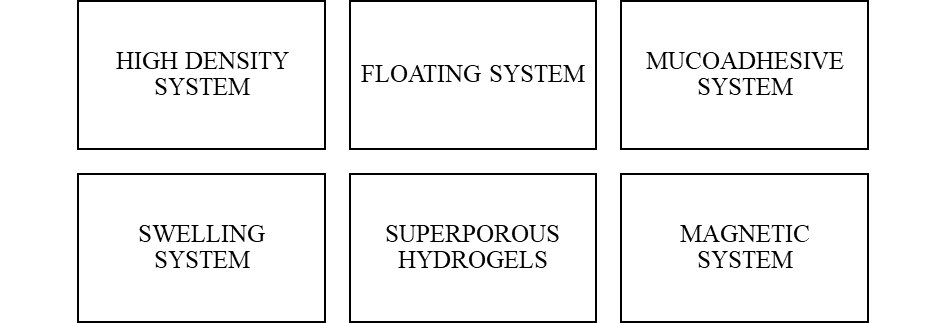
High Density System:
This approach involves formulation of dosage forms with density of normal stomach content content 1.004 g/ml, these formulations are prepared by coating drug on a heavy core or mixed with heavy inhert material such as iron powder, zinc oxide, titanium dioxide, barium sulphate the resultant can be coated with diffusion controlled membrane.
Floating System:
Floating drug delivery system (FDDS) possesses a density lower than gastric fluids which allowing them to remain beyond for prolonged periods and provide sustained drug release. These systems are widely investigated because they do not interfere with normal gastrointestinal motility. Their clinical relevance is evident from the large number of floating dosage forms successfully commercialized worldwide.
i] Volatile liquid containing systems:
In the systems, gastric retention is achieved using an inflatable chamber containing a volatile liquid (Eg: ether or cyclopentane) that vaporizes at body temperature causing chamber inflation in the stomach. The device may include a bioerodable plug (Eg:poly vinyl alcohol or polyethylene) that dissolves gradually allowing gas release and collapse of the system after a pre-determined time enabling its safe evacuation from the stomach.
ii] Gas generating systems:
Gas generating systems relay on effervescent reaction between carbonate or bicarbonate salts and organic acids example citric or titaric acid. The carbon dioxide generated is entrapped within a swollen hydrochloroid matrix reducing the systems density and enabling it to float on gastric contents.
Non effervescent FDDS function through polymer swelling and/or bioadition to the gastric mucosa. They typically contain gel-forming or highly swellable polymers such as cellulose derivatives, hydrophilic gums, polysaccharides and matrix forming polymers (Eg: polycarbonates, polyacrylates, polymethylacrylates) as well as bio adhesive polymers like chitosan.
Mucoadhesive Systems:
Mucoadhesive GRDDS employ polymers that adhere to gastric mucosal surface thereby prolonging gastric residence time. Common polymers include natural materials (sodium alginate, gelatin, guar gum) and semisynthetic polymers (HPMC, carbopol, sodium carboxymethyl cellulose). Adhesion may occur through hydration-mediated mechanisms, physical or chemical bonding (ionic, covalent or van der Waals forces) or receptor-mediated interactions. Polymers may be cationic, anionic or neutral.
Swelling Systems:
Swelling systems are designed to expand significantly upon contact with gastric fluids, preventing their passage through the pylorus and retaining them in the stomach for extended periods. These plug-type systems achieve controlled and sustained drug release through the use of appropriately cross-linked hydrophilic polymers.Optimal cross-linking maintains structural integrity while allowing sufficient swelling to retard drug release.
Magnetic Systems:
Magnetic GRDDS consists of dosage form containing an internal magnet, which is retained in the stomach by an external magnet placed over the abdominal region.This approach can significantly prolong gastric residence time through external control.
ADVANTAGES OF GRDDS [17]:
DISADVANTAGES OF GRDDS [17]:
CHITOSAN: SOURCE, STRUCTURE AND PHYSICAL PROPERTIES
Origin and chemical structure of chitosan:
Chitosan is a cationic natural polysaccharide, obtained by deacetylation of chitin, which is a main component of crustacean exoskeletons, and exhibits biocompatibility and biodegradability [18].
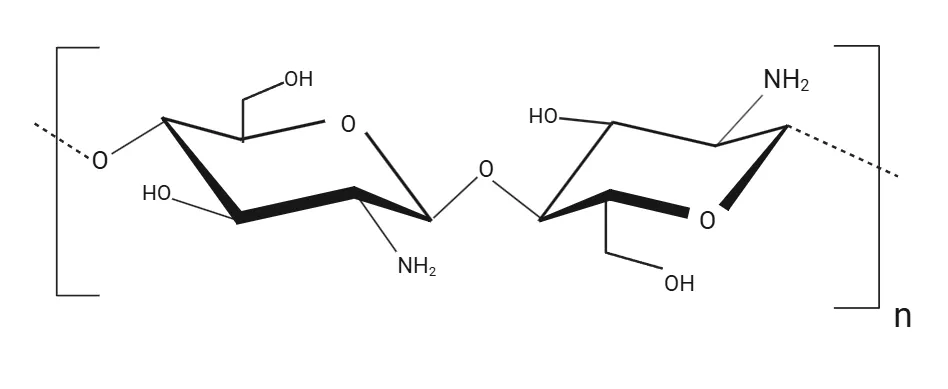
STRUCTURE OF CHITOSAN
Degree of deacetylation and molecular weight:
The solubility, swelling and performance in drug delivery systems of chitosan are strongly affected by the degree of deacetylation (DD) and molecular weight [18].
Solubility and pH sensitivity:
Due to its amino groups, chitosan readily dissolves in acidic solutions, undergoes swelling and gel formation in the acidic gastric milieu, and exhibits pH-dependent behaviour that can be exploited for pH-sensitive, controlled drug release [19].
Biocompatibility and Biodegradable:
The non-toxic and biodegradable properties of chitosan and its natural mucoadhesive property endows it with excellent potential as an oral drug carrier for gastric retention [20].
ROLE OF CHITOSAN IN GRDDS
Mucoadhesive properties in GRDDS:
The cationic nature of chitosan empowers the electrostatic attraction with the anionic gastric mucin, enhancing the mucoadhesive property and the gastric retention [21].
Chitosan in Floating drug delivery systems:
Chitosan-based systems have been developed to float over gastric fluids, leading to gastric retention for longer periods while the drug within the system is being released [22].
Swellable and Expandable Chitosan based systems:
Chitosan can form hydrogels that swell drastically in acidic environment, resulting in enlarged hydrogel matrix that can act as barrier to migration across the pyloric sphincter [23].
Chitosan based raft-forming systems:
Chitosan under gastric conditions forms a gel, a property exploited in raft-forming systems that are buoyant, delivers the drug gradually and remain in close association with the gastric mucosa [24].
Polymer blends and composite GRDDS using chitosan:
The combination of chitosan with other polymers (e.g. Hydroxypropylmethylcelullose (HPMC) or Polyvinyl alcohol (PVA) can furthermore enhance mechanical stability, mucoadhesion and modulate release profiles, allowing the development of composite GRDDSs with customised behaviour [25].
CHITOSAN – BASED GRDD APPROACHES
Mucoadhesive systems (tablets, beads and microspheres):
Protonated amino groups of chitosan interact strongly with gastric mucosal glycoproteins, and thus chitosan is commonly chosen as the mucoadhesive in gastrointestinal systems. When chitosan is used in the formulation of tablets, beads or microspheres, it favours an extended adhesion to the gastric mucosa [26]. This prolongs the attachment time and residence time in the stomach and thus allows for a sustained availability of the drug at the site of absorption. Therefore, a mucoadhesive system based on chitosan can take advantage of prolonged retention in the stomach for drugs that benefit from extended gastric exposure [27].
Floating Drug Delivery Systems:
Chitosan-based floating gastrointestinal systems are designed to float with a bulk density lower than the top gastric fluid [28]. Porous chitosan matrix and low-density beads formulation allow extended floating and controlled drug diffusion. In contrast, acidic gastric conditions cause the formation of carbon dioxide in the gas-forming systems, which further contributes to flotation. These attributes, in turn, slow down the process of gastric emptying and also sustained drug release [29].
Expandable and Swellable Systems:
Chitosan-based expandable and swellable gastroretentive systems are capable of experiencing significant dimensional changes as they absorb fluid in the environment of the stomach. These volumetric swelling limits the movement through the pyloric sphincter and results in prolonged gastric retention [30]. Recent trends are represented by chitosan-based systems that unfold or exhibit shape-memory triggered by physiological stimuli. These types of formulations offer mechanical strength and extended and predictable drug release [31].
Chitosan–coated Alignate Beads and Advantages of Coating:
Chitosan coatings are frequently on gastroretentive carriers to provide good functional performance in the stomach. Chitosan-coated alginate beads enhance surface adhesion, mechanical strength and stability in acidic medium [32]. The chitosan layer also controls the drug diffusion as a semi-permeable membrane layer. Thus, chitosan-coated systems exhibit enhanced gastric retention and superior controlled release profiles [33].
FORMULATION TECHNIQUES INVOLVING CHITOSAN
Ionotropic Gelation:
Preparation of chitosan nanoparticles by ionotropic gelation exploits the electrostatic interactions of positively charged protonated chitosan and negatively charged anionic like triphosphates (TPP) to produce stable nano-sized complexes with an overcharged surface, having favourable drug loading and release behaviour. The method is mild and reputable, and can produce spherical particles without toxic cross-linkers, which is important for encapsulating sensitive drugs and has potential for oral delivery [34].
Emulsion Cross – linking:
Chitosan is a suitable polymer to be used with the emulsion cross linking technique as gel beads can be formed by cross-linking the aqueous chitosan phase which includes drug, with the oil phase to harden the droplets, and orbital cross-linkers assist in controlling the release mechanism [35]. Emulsion gel beads based on chitin have been prepared via emulsification and extrusion and demonstrated sustained release of active ingredients with a good floating stability in gastric fluid, appropriate for gastrointestinal dosage [36].
Spray Drying:
Spray drying has become a versatile tool for the production of shaped chitosan micro-particles with controlled morphology where atomised chitosan/drug solution droplets dry in the air to yield separated, free-flowing particles [37]. The above progress of SD chitosan hydrogel particles supports normal particle morphology, the possibility to tailor size and sustained release for the loaded drug, providing evidence for oral and mucosal delivery applications [38].
Extrusion – Spheronization:
Extrusion-spheronization is a multiparticulate production process that involves extruding a wet mass, composed of chitosan, into cylindrical rods, which are then rounded into spherical particles to improve the flow, packing and controlled release characteristics. Although traditional art teaches difficulties in achieving sustained release using chitosan matrices alone, current formulations incorporate chitosan with other excipients to modify pellet shape and release profile in oral dosage forms [39].
Polyelectrolyte Complexation:
The cationic chitosan and anionic polymers (e.g., hyaluronic acid or carboxymethylpullulan) are assembled electrostatically to form polyelectrolyte complexes (PECs), which give rise to nanoparticles that possess improved stability and a controlled drug release pattern [40].
EVALUATION PARAMETERS FOR CHITOSAN-BASED GRDDS
Particle Size and Morphology:
The mean particle size is an important factor for gastric retention gastroretentive chitosan coated microspheres, as a larger and uniform size distribution results in enhanced mucoadhesion and reduced premature gastric emptying. Scanning electron microscopy (SEM) observation usually demonstrates a spherical shape with a smooth external surface, which is associated with a predicted release and stable formulation. Particle size affects not only floatation and residence time, but also drug diffusion routes through the polymer matrix. Consistent morphology and tight size distribution enable better reproducibility and controlled drug release. These physical features are key to reproducing bioavailability and in vivo performance [41].
Drug Entrapment Efficiency:
The high entrapment efficiency (EE) is important to achieve adequate drug loading and to minimise dose variation in gastroretentive formulation. In modified chitosan microsphere systems, EE has been reported to be up to 80%, indicating effective loading of the drug in the polymer matrix. Polymer concentration, degree of cross-linking, and method of preparation have an effect on the entrapment efficiency, which is related to sustained release behaviour. Increased EE also leads to less drug wastage and better therapeutic efficacy as a result of sustained release curves with no interruption. Hence, the assessment of EE offers a straight forward indicator of the quality of the formulation and the potential of drug delivery [42].
Floating Lag Time and Duration:
Floating lag time (FLT) is the time required for a gastroretentive dosage form to float on the surface of the gastric fluid, an important parameter for efficient gastric retention [43]. Chitosan floatable beads generally exhibit short FLT and long floating time due to their low density and high porosity. Longer floating duration leads to the retention of the formulation in the stomach to release drug in the window of absorption. The buoyant nature is usually tested in vitro in simulated gastric fluid, and sustained flotation for 8-10h is regarded as the best. These characteristics are essential for extending drug bioavailability and therapeutic efficiency [44].
Mucoadhesive Strength:
The mucoadhesive strength is a measurement of the adhesive force between chitosan-based carriers and gastric mucosa, which has a direct influence on residence time at the site of action. Reports have shown that higher chitosan concentration favours adhesion to mucus, thus increasing the residence time in the stomach. The enhanced mucoadhesive strength may lead to a long-standing gastric contact to enhance local therapy and to decrease dosing frequency. Wash-off or tensile in vitro mucoadhesion experiments are commonly used to estimate the retention behaviour in vivo. Formulation parameters can be adjusted to modify mucoadhesive strength to obtain the desired gastroretentive performance [45].
Swelling Index:
Swelling index evaluates how chitosan-based carriers absorb fluid and swell in the gastric media, affecting retention and release profiles. Due to its hydrophilicity, chitosan formulations may show a considerable swelling and swelling indices higher than 90% in acidic media have been reported. Increased swelling improves mucoadhesion and exposes larger surface for drug diffusion, thus leading to sustained release. The amount of swelling depends on the polymer concentration, the degree of cross-linking, and the method of preparation. Quantitative evaluation of swellability gives an idea of formulation potential to avoid premature gastric emptying and to sustain release [46].
In–Vitro Drug Release Studies:
In-vitro release of drugs from chitosan gastroretentive systems mimics fluctuating pH and gastric condition exposure to the system in-vivo and offers information on release kinetics and predicted bioavailability. In case of chitosan mucoadhesive as well as floating formulations, the release profiles generally exhibit sustained/prolonged release pattern for multiple hours, usually implying >90 % release at pre-determined time point(s). The release data are fitted to rate equations to identify possible mechanisms, namely diffusion, erosion, or anomalous transport. The sustained release is due to the interplay of polymer swelling, matrix diffusion and mucoadhesion. These investigations help to foresee the in-vivo behaviour of the dosage form and to optimise the design of the formulation [47].
Release Kinetics and Mechanism:
The evaluation of release kinetics and mechanism of the drug from the chitosan gastroretentive platform gives a mechanistic view of drug release with time. Models such as the Korsmeyer–Peppas, Higuchi and zero order are applied to the release data to identify the dominant mechanism. Several chitosan-based systems demonstrate anomalous (Non-Fickian) transport, and release is controlled by both diffusion of the drug through the swollen matrix and relaxation of the polymer. Kinetic studies allow the further development of formulations for controlled therapeutic levels. An insight into the mechanism of action is very important to the rational design of gastroretentive systems with sustained drug delivery [48].
APPLICATIONS OF CHITOSAN IN GRDDS
Antibiotics (e.g. Amoxicillin):
Chitosan-based gastroretentive carriers containing amoxicillin showed a notable enhancement of the antibacterial activity against Helicobacter pylori and an improved gastric retention due to the extended mucoadhesion and the controlled release at acidic pH [49].
Amoxicillin encapsulated in chitosan nanoparticles, with co-administration of prebiotics, minimises antibiotic resistance and protects the beneficial microbiota, combined with sustained drug delivery for longer durations [50]. These chitosan systems enable localised stomach delivery and have the potential to better eradicate infections than the free forms of antibiotics. The improved therapeutic results in animal studies indeed suggest that chitosan vehicles have the ability to improve gastric antibiotic efficacy against organisms such as H. pylori [51].
Antiepileptic Drugs (e.g. Oxcarbazepine):
The chitosan coating was studied for the enhancement of delivery and bioavailability of antiepileptic drug oxcarbazepine in the form of mucoadhesive and permeation enhancer formulations. In chitosan-coated lipid carrier systems, oxcarbazepine showed better permeation as well as release patterns compared to the traditional systems. The bioadhesive properties of chitosan lead to extended retention time on mucosal surfaces, which could lead to enhanced systemic absorption of antiepileptics given by non-oral routes. While dedicated chitosan GRDDS for antiepileptics are already the subject of further investigations, the current results further strengthen their value for the drug delivery field [52].
Antiulcer and Anti H. pylori Drugs:
The mucoadhesive strength and sustained release of chitosan-hydrogel drug delivery systems for the gastroretentive delivery of antiulcer agents such as ranitidine are enhanced in the acidic environment of the stomach. Chitosan hydrogels have better coverage of the gastric mucosa, and the resulting ulcer indices are decreased further than those of the traditional formulations [53]. The chitosan matrices also increase localised delivery of antibiotics and healing of ulcers by retention in the stomach and extending activity for treating H. pylori infection. This site-specific delivery is of paramount importance for drugs acting on the gastric mucosa and contributes to better therapeutic outcomes in the treatment of peptic ulcer disease [54].
Cardiovascular Drugs:
Chitosan-based coatings have been developed for controlled release of cardiovascular drugs, e.g. heparin, from implantable devices and exhibited sustained elution profiles under physiological conditions. While not an oral GRDDS in the traditional sense of the word, the controlled-release chitosan platforms for cardiovascular drugs illustrate the potential of modulating release characteristics and enhancing localised drug action. Such chitosan-coated delivery matrices can be designed to provide localised diffusion-controlled delivery at sites of interest, such as vascular tissue surfaces. The controlled release and biocompatibility of these systems represent a wider potential for chitosan formulation methodologies for drugs with demanding pharmacokinetics [55].
Probiotics and Peptides:
Chitosan–silk fibroin microgels have been successfully fabricated to encapsulate probiotic strains with a remarkable improvement in acid resistance, storage stability and controlled release in a simulated gastrointestinal environment. These hybrid microgels protect probiotics against simulated gastric acid and release them in the intestine, enabling site-specific delivery of possibly beneficial microbes. Mucoadhesiveness and biocompatibility of chitosan allows it to be a good carrier matrix for oral delivery of peptides, which can protect labile peptides from enzymatic degradation in the gastrointestinal tract. Chitosan microencapsulation enhances the bioavailability of therapeutic peptides by allowing for sustained release and by improving the absorption through the gastrointestinal tract [56].
RECENT ADVANCES IN CHITOSAN-BASED GRDDS
Chitosan Derivatives (Thiolated and Trimethyl Chitosan):
The focus of the recent progress in chitosan-based GRDDS is on thiolated and trimethyl chitosan derivatives, which exhibit superior mucoadhesion and permeability-enhancing effect when compared with unmodified chitosan [57]. Thiolated chitosan interacts with covalent disulfide bonds of the gastric mucus layer, increasing gastric residence time. Trimethyl chitosan enhances water solubility in a wide range of pH and the paracellular transport of drugs. These derivatives show a synergistic effect for the enhancement of bioavailability and controlled drug release in a gastroretentive system [58].
Nanostructured Chitosan Systems:
Nanostructured chitosan delivery systems, such as nanoparticles and nanogels, have been shown to provide higher drug encapsulation, protection to acid-labile drugs, and sustained release profiles. Owing to their small size and cationic characteristics, they are capable of strong adhesion to the gastric mucosa, which leads to increased gastric retention. pH-responsive nanostructures also allow site-specific drug release in the acidic environment. Such systems are an efficient platform for the sophisticated GRDDS [59].
Smart and Stimuli – Responsive GRDDS:
Smart chitosan-based GRDDS are responsive to physiological environments (pH, temperature, etc.) for controllable and site-specific drug release. pH-sensitive chitosan matrices swell in the acidic environment of the stomach and thereby promote gastric retention and therapeutic efficacy. Multi-stimuli-responsive systems further improve the release accuracy and reduction of side effects at the systemic level. Such platforms are closely aligned with the new developments in personalised drug delivery [60].
FUTURE PERSPECTIVES
Clinical Translation Potential:
GRDDS have good potential of clinical translation for the bioavailability enhancement of BCS class II drugs with narrow absorption window, and predictable therapeutic effect. Nevertheless, the differences in the physiology of the gastric system and the lack of a good in vivo–in vitro correlation are still the major stumbling blocks on the way to clinical success [61].
Personalized GRDDS:
Personalised GRDDSs are being developed as an attractive approach to customise gastric retention and drug release according to individual parameters such as gastric pH, motility, and fed state. Advanced manufacturing technologies like 3D printing allow the customisation of the geometry of the dosage form and its release behaviour [62].
Regulatory considerations:
The approval of GRDDS by the regulatory authorities is a challenging task as it demands stringent control of critical quality attributes, reproducible manufacturing and validated in vivo performance data. Application of Quality-by-Design (QbD) concepts and use of advanced imaging modalities are being increasingly encouraged to support regulatory filings [63].
Scope for Further Research:
In the future, emphasis should be placed on multifunctional systems such as floating, swelling, and mucoadhesive GRDDS for the delivery of drugs to surmount the present limitations of formulations. The therapeutic potential of gastroretentive systems is anticipated to be broadened through the combination of smart polymers, biologics delivery and computational modelling [64].
CONCLUSION
Chitosan has emerged as a highly promising and versatile polymer in the development of gastroretentive drug delivery systems (GRDDS) due to its unique physiochemical and biological properties. Its excellent mucoadhesive nature, biocompatibility, biodegradability, non-toxicity, and ability to form gels, beads, microspheres, films, and floating systems make it an ideal carrier for prolonged gastric retention and controlled drug release. Chitosan- based formulations significantly enhance gastric residence time, thereby improving the bioavailability of the drugs with narrow absorption windows, poor intestinal stability, or local action in the stomach. In addition, the polymer’s cationic character enables strong interaction with gastric mucosa, leading to better adhesion and sustained the therapeutic action.
Various approaches such as floating systems, bioadhesive systems, expandable systems, and ionically crosslinked beads have demonstrated the potential of chitosan in improving drug delivery efficiency. Furthermore, the combination of chitosan with polymers like sodium alginate, HPMC, and pectin, has shown synergistic effects in optimizing drug release behavior. And formulation stability. Despite challenges related to pH sensitivity and mechanical strength, ongoing advancements in polymer modification and nanotechnology continue to expand its pharmaceutical applications. Overall, chitosan represents a valuable and innovative biomaterial for designing effective gastroretentive systems with enhanced therapeutic performance and patient compliance.
REFERENCES

Amisha, Viresh ChandurChitosan In Gastroretentive Drug Delivery Systems: A Versatile Polymer For Prolonged Gastric Retention, Int. J. of Pharm. Sci., 2026, Vol 4, Issue 6, 484-498, https://doi.org/10.5281/zenodo.20504002
 10.5281/zenodo.20504002