

We use cookies to ensure our website works properly and to personalise your experience. Cookies policy
Shankarrao Ursal College Of Pharmaceutical Sciences And Research Centre Kharadi, Pune 411014
This research paper presents a comparative study of five different marketed cold creams, aiming to assess their quality and efficacy based on various parameters, including acid value, pH test, saponification value, microbial growth, irritancy test, and spreadability. The evaluation of these parameters provides valuable insights into the overall performance and safety of the cold creams. The results demonstrate that all five brands comply with standard values for the tested parameters, ensuring their suitability for skincare applications. Additionally, the creams exhibited no signs of skin irritation or allergic sensitization, indicating their safety for use. Furthermore, microbial limit tests confirmed the absence of harmful pathogens in all the formulations. Based on the comprehensive analysis, brand B stood out as the best performer, presenting a promising option for consumers seeking an effective and safe cold cream product. This study serves as a valuable resource for consumers and helps them make informed decisions while choosing the most suitable cold cream for their skincare needs.
Cold creams have long been favored for their effectiveness in maintaining skin health and promoting an elegant appearance. The safety and efficacy of these creams depend on their formulation properties and manufacturing methods, which can vary among different marketed products1. This research aims to evaluate the quality of five different cold cream brands through a comprehensive comparative study.
Cosmetics have been used for centuries to enhance and purify the skin, with the term "cosmetics" derived from the Greek word "cosmetics" meaning to adom. Among cosmetic products, cold cream stands out as a water-in-oil emulsion, providing prolonged contact time at the application site, offering non-greasy emollience to the skin. Cold creams play a vital role in restoring moisture to dry skin, clearing pores of waste materials, and cooling the body. Their water phase contributes to extra skin conservation, and they easily liquefy at body temperature. penetrating the epidermis through natural pores2.
The name "cold cream" itself signifies the cooling sensation experienced upon application, as the water content evaporates. The dominance of the oil phase in cold creams makes them suitable for use in colder temperatures or during the winter season, while vanishing creams, rich in the aqueous phase, are preferred for hot environments3.
Creams, as topical preparations, offer effective skin absorption and can be applied to various body parts, such as the face, hands, legs, and skin. They are classified as semisolid dosage forms containing medicinal substances dissolved or dispersed in suitable bases to form a homogenous mass. Creams serve as pharmaceutical and cosmetic products, with medicated creams catering to specific skin-related disorders and non-medicated creams widely used for various dermatoses4.
Two types of creams: oil-in-water (O/W) creams, composed of small oil droplets dispersed in a continuous aqueous phase, and water-in-oil (W/O) creams, comprising small water droplets dispersed in a continuous oily phase5.
Cold creams offer a multitude of uses, including topical pharmaceutical applications for skin treatment, maintenance of moisture balance, makeup removal, emollient effects, and protective oily layers. Additionally, they act as carriers for drug substances and aid in removing oil-soluble impurities from the skin5.
While cold creams present numerous advantages, such as ease of application, broad accessibility, and high patient compliance, they do have some disadvantages. Larger particle-sized drugs may not be easily absorbed through the skin pores, leading to potential skin irritation and allergic reactions. Moreover, some drugs may poorly permeate the skin, affecting their absorption and effectiveness6.
OBJECTIVES OF STUDY:
Aim of our study is to do comparative study of 5 different marketed cold creams for this we evaluate different cold cream for different parameter like Acid valve, pH test ,saponification value , microbial growth, irritancy test, spread ability test etc.
MATERIAL AND METHOD
Cream such as Ponds, Nivea, Wottagirl, Vaseline and Boroline were purchased from local market. All the other chemicals used in formulation are of analytical grades from college laboratories.
MATERIAL’S
Marketed Cream
Marketed Cream
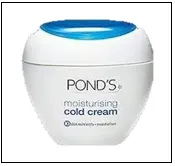
Fig No 1:- Ponds Cream
Nivea cream ( Brand B )
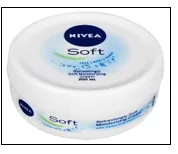
Fig No 2:- Nivea Cream
Wottagirl Cream ( Brand C )
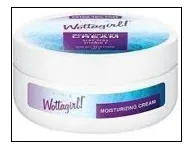
Fig No 3:- Wottagirl Cream
Vaseline ( Brand D )
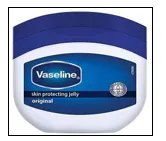
Fig No4:- Vaseline
Boroline ( Brand E )
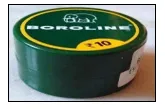
Fig No 5:-Boroline
Chemicals used for evaluation parameter:
Agar Media, Potassium Hydroxide, Phenolphthalein, Hydrochloride Acid, Ethanol, ether, NaOH , Amaranth Dye all the chemicals were issued from microbiology, chemistry, harmacognosy and Pharmacutics laboratory of Sonekar college of pharmacy, koradi.
Evaluation Parameters:
The assessment of these physical properties aids in determining the cream's uniqueness, potential market appeal and suitability for specific purposes. Furthermore, understanding the cream's color, odor, and appearance helps in establishing a baseline for future formulation optimization and quality control measures. By considering these key attributes, researchers and manufacturers can make informed decisions to meet consumer preferences and ensure the cream's overall effectiveness and marketability. The cream's color, odor, and appearance were meticulously observed and recorded following established protocols7 .
Washability; The cream's washability was tested by applying it to the hand and observing its behavior under running water7.
pH Measurement: The pH of the cream was determined by dissolving a sample in distilled water, and the pH meter was calibrated using standard buffer solutions7.
To assess the irritancy potential, a specified area on the left-hand dorsal surface was marked, and the cream was applied. The area was monitored for any signs of irritation. erythema, or edema at regular intervals for up to 24 hours7,8.
Agar media was prepared, and the formulated cream was inoculated using the steak plate method. A control plate was also prepared without the cream. Both plates were incubated at 37°C for 24 hours, and the microbial growth was compared 7,8
The saponification value of the cream was determined by refluxing a sample with 0.5 N alcoholic KOH and titrating it with 0.5 N HCI 7,8.
The acid value of the cream was determined by dissolving a sample in alcohol and solvent ether mixture, refluxing it, and titrating with 0.1 N NaOH7,8.
The emulsion type was determined by mixing the cream with water-soluble dye (amaranth) and observing under a microscope. Additionally, oil-soluble dye (Scarlet red C or Sudan III) was used to assess the emulsion type 7,8.
Homogeneity of the cream was assessed through visual appearance and test7,8.
RESULTS:
Organoleptic Properties:
The physical properties of formulated cream were observed by colour, odour and appearance.
Table No 1:- Organoleptic Properties
|
Test |
Brand A |
Brand B |
Brand C |
Brand D |
Brand E |
|
Colour |
White |
White |
White |
Colourless |
White |
|
Odour |
Characteristic |
Characteristic |
Characteristic |
Odourless |
Characteristic |
|
Appearance |
Semi-Solid |
Semi-Solid |
Semi-Solid |
Jelly |
Semi-Solid |
Washability:
The cream applied on skin was easily removed bywashing with tap water.
Table No 2- Washability test
|
Test |
Brand A |
Brand B |
Brand C |
Brand D |
Brand E |
|
Washability |
++++ |
++++ |
+++ |
+ |
++ |
The results of the washability test were summarized in Table No 2, where each brand was assigned a specific rating based on its washability performance. The ratings were represented using symbols: "++++" denoted excellent washability, indicating that the cream could be easily washed off with water. "+++" represented satisfactory washability, indicating that the cream was effectively removed with water but may have required slightly more effort compared to the top-rated "++++" brands. The "++" rating indicated that the cream was lightly washable, suggesting some residual cream may remain on the skin even after washing. Lastly, the lowest rating, "+," indicated that the cream was hardly washable with water.
pH test
Table No 3:- pH Test
|
Test |
Brand A |
Brand B |
Brand C |
Brand D |
Brand E |
|
pH |
6.11 |
6.08 |
6.01 |
6.39 |
6.46 |
The pH test results indicated that all the cream brands evaluated in this study were within the favorable pH range for skin health. Brand A had a pH of 6.11, Brand B had a pH of 6.08, Brand C had a pH of 6.01, Brand D had a pH of 6.39, and Brand E had a pH of 6.46. These pH values demonstrate that the creams are well-formulated to be compatible with the skin, reducing the likelihood of adverse reactions and promoting skin comfort.
Irritability Test
The results showed that the all the cream exhibited no indications of redness, edema, irritation, or inflammation, indicating its safety for use on the skin. These findings provide strong evidence that the cream is well-tolerated and poses minimal risk of causing adverse reactions, making it suitable for safe application on the skin.
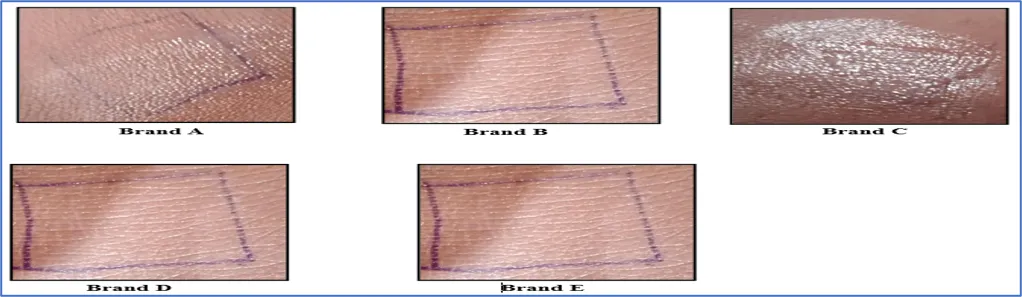
Fig No 6: Result of irritability test
Microbial Growth:
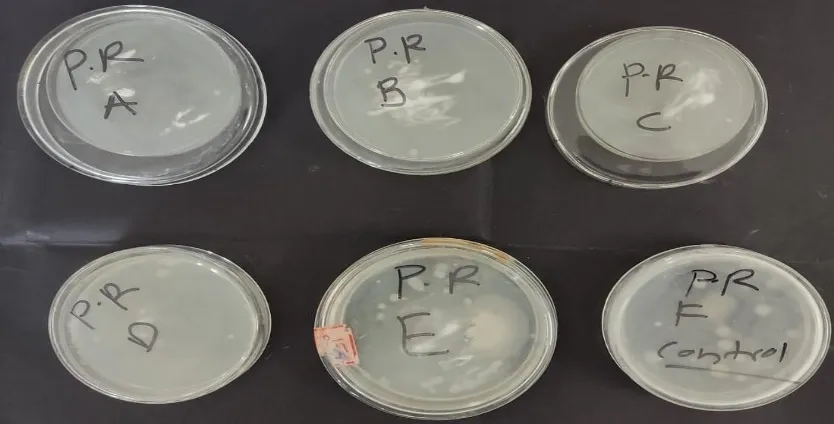
Fig No 7: Result of microbial test
The results revealed no signs of microbial growth in the formulated cream after the incubation period. Furthermore, the absence of microbial growth was found to be comparable with the control sample, indicating that the formulated cream maintained its microbial stability. These results demonstrate that the cream is well- preserved and free from microbial contamination, making it suitable for safe and long-lasting use.
Saponification value
Table No 4:- Saponification Value
|
Test |
Brand A |
Brand B |
Brand C |
Brand D |
Brand E |
|
Saponification value |
5.38 |
28.45 |
6.75 |
69.81 |
45.26 |
saponification value is a significant parameter used to assess the quality of fats and oils in the formulation. In this study, the saponification value of the formulated cream was determined and presented in Table No 4. The saponification value results demonstrated satisfactory values for the cream. Brand A had a saponification value of 5.38, Brand B had 28.45, Brand C had 6.75, Brand D had 69.81, and Brand E had 45.26. These values indicate the quantity of alkali required to saponify a specific weight of the cream, reflecting its fatty acid composition. The satisfactory saponification values obtained indicate that the formulated cream has a well-balanced and desirable fatty acid composition, ensuring its quality and effectiveness for potential applications.
Acid Value
Table No 5 : Acid value
|
Test |
Brand A |
Brand B |
Brand C |
Brand D |
Brand E |
|
Acid value |
2.90 |
7.56 |
7.01 |
0.33 |
3.19 |
Acid value is a crucial parameter used to assess the amount of free fatty acids present in the formulated cream. In this study, the acid value of the cream was determined and presented in Table No 5. The acid value results for each brand were as follows: Brand A had an acid value of 2.90, Brand B had 7.56, Brand Chad 7.01, Brand D had 0.33, and Brand E had 3.19. In this study, the creams, exhibited satisfactory acid values, suggesting a well- controlled amount of free fatty acids. The relatively low acid values for Brand A Brand D, and Brand E indicate a minimal concentration of free fatty acids, making them favorable choices for skincare applications. Brands B and C, with slightly higher acid values, still fall within acceptable limits and can be considered suitable for use, albeit with potentially slight variations in the fatty acid composition.
Dye test
Table No 6 : Dye Test
|
Test |
Brand A |
Brand B |
Brand C |
Brand D |
Brand E |
|
Dye test |
(O/W) |
(O/W) |
(O/W) |
(W/O) |
(W/O) |
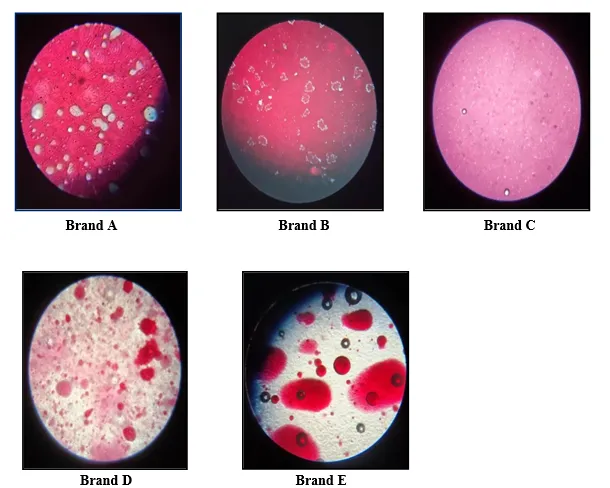
Fig No 8: Result of Dye test
Brand A Brand B, and Brand C exhibited an O/W type emulsion, as the continuous phase appeared red under the microscope. This emulsion type is generally preferred for cosmetic and skincare products, as it allows for better hydration and easy absorption by the skin due to the water being the external phase.
On the other hand, Brand D and Brand E demonstrated a W/O type emulsion, where the scattered globules appeared red, and the continuous phase remained colorless. While W/O emulsions have their specific applications, they are typically used in formulations that aim to provide a protective barrier on the skin or lock in moisture for longer-lasting hydration.
Homogeneity
The homogeneity of the formulated cream was judged by the visual appearance and touch. The appearance and touch of the cream were good.
DISCUSSION:
The present study comparatively evaluated five commercially available cold cream formulations using standard physicochemical, microbiological, and dermatological quality parameters. The selected evaluation criteria, including pH, acid value, saponification value, spreadability, washability, skin irritancy, and microbial limit test, are widely recognized indicators of the quality, safety, and performance of topical semisolid formulations.
The pH of all tested formulations was within the acceptable range for topical preparations, suggesting good compatibility with the physiological pH of the skin. Maintenance of an appropriate pH is essential to preserve the integrity of the skin barrier, minimize irritation, and ensure product stability during storage and use. The observed pH values indicate that all formulations are suitable for routine topical application.
Acid value and saponification value are important quality control parameters that reflect the composition and stability of lipid-based formulations. The acid values of all evaluated products were within acceptable limits, indicating minimal degradation of fatty constituents and satisfactory formulation quality. Similarly, the saponification values demonstrated appropriate fatty acid composition, confirming the consistency of the manufacturing process among the marketed products.
The spreadability and washability characteristics varied slightly among the formulations. Brands A, B, C, and E exhibited better spreadability, non-greasy texture, and easier washability, which are desirable characteristics for improving consumer acceptance and patient compliance. In contrast, Brand D demonstrated comparatively higher greasiness and lower washability, possibly due to differences in the type or proportion of oily components and emulsifying agents used in the formulation. Such variations may influence user preference without necessarily affecting product safety or therapeutic performance.
The skin irritancy test revealed that none of the formulations produced visible signs of erythema, edema, or allergic reactions, indicating good dermatological compatibility. These findings suggest that all evaluated products are suitable for topical application under the study conditions and possess a low potential for causing skin irritation.
Microbiological evaluation demonstrated the absence of objectionable microorganisms, including Escherichia coli, in all formulations, indicating compliance with acceptable microbiological quality standards for topical cosmetic preparations. The absence of microbial contamination reflects good manufacturing practices and appropriate preservation systems, both of which are essential for ensuring product safety and extending shelf life.
Overall, all five marketed cold cream formulations satisfied the evaluated quality parameters, although minor differences were observed in their physicochemical characteristics and application properties. Among the tested formulations, Brand B demonstrated comparatively better overall performance by exhibiting favorable physicochemical characteristics, good spreadability, acceptable washability, and satisfactory microbiological and dermatological safety. Nevertheless, statistical analysis of larger sample sizes and long-term stability studies would provide stronger evidence to support comparative performance claims.
The findings of the present study contribute to the quality assessment of marketed cold cream formulations and provide useful information for pharmaceutical researchers, cosmetic manufacturers, healthcare professionals, regulatory authorities, and consumers. Future investigations should include accelerated stability studies, instrumental skin hydration measurements, rheological evaluation, and in vivo clinical assessment to further establish the efficacy, stability, and consumer acceptability of marketed cold cream products.
CONCLUSION:
Based on the comprehensive evaluation, Brand B emerged as the best cold cream among the five brands, as it excelled in meeting the quality standards, demonstrated non- greasiness and ease of washability, and showed excellent safety performance.
REFERENCES



Pallavi Bansod*, Prasnjeet Raibole, N. D. Gaidhani, Cold Cream Conundrum: A Comparative Evaluation Of Marketed Products For Optimal Skincare, Int. J. of Pharm. Sci., 2026, Vol 4, Issue 7, 3629-3639. https://doi.org/ 10.5281/zenodo.21428994
 10.5281/zenodo.21428994