

We use cookies to ensure our website works properly and to personalise your experience. Cookies policy
School of Pharmaceutical Science, Shri Guru Ram Rai University, Dehradun
Chlorogenic acid, caffeic acid, and scopoletin have been reported as representative phytochemical markers of Solanum nigrum and are widely employed for its analytical evaluation and quality assessment. The present study investigated the degradation behaviour of a composite standard containing these three marker compounds under acidic, alkaline, oxidative, thermal, and photolytic stress conditions. Individual reference standard solutions were prepared separately and combined to obtain a composite working standard containing 50 ?g/mL of each analyte. Following stress treatment, the samples were analysed by reverse-phase high-performance liquid chromatography (RP-HPLC), which achieved complete chromatographic separation of the parent analytes from degradation-related peaks under all investigated stress conditions. Among the applied stress conditions, alkaline treatment produced the highest degradation of chlorogenic acid (16.13%), caffeic acid (20.86%), and scopoletin (18.54%), whereas oxidative stress resulted in comparatively greater degradation of scopoletin (12.18%). The stressed samples were subsequently analysed by liquid chromatography–mass spectrometry (LC–MS) using electrospray ionization in both positive and negative ionization modes. LC–MS analysis revealed the characteristic molecular ions of the parent compounds together with several additional ions generated under different stress conditions. Comparison of the observed m/z values with published LC–MS studies enabled the tentative assignment of degradation-related ions and the proposal of plausible degradation-related species. The combined application of RP-HPLC and LC–MS provided a comprehensive analytical approach for evaluating the degradation behaviour of chlorogenic acid, caffeic acid, and scopoletin and generated analytical information that may be useful for future investigations involving these reported phytochemical markers of Solanum nigrum.
Herbal medicines are widely used for the prevention and treatment of various diseases because of their diverse therapeutic potential. However, the complex chemical composition of herbal products and the variability arising from differences in plant source, cultivation, harvesting, processing, extraction, and storage present significant challenges for quality assessment and standardization. Therefore, the identification and evaluation of representative phytochemical marker compounds using reliable analytical techniques are essential to ensure the quality, safety, efficacy, and batch-to-batch consistency of herbal medicines [3].
Solanum nigrum L. (Makoy), a medicinal plant belonging to the family Solanaceae, has been extensively investigated owing to its antioxidant, anti-inflammatory, hepatoprotective, antimicrobial, and anticancer properties. Phytochemical studies have identified a wide variety of secondary metabolites, including phenolic acids, coumarins, flavonoids, steroidal glycoalkaloids, tannins, and polysaccharides[1,2,4]. Among these constituents, chlorogenic acid, caffeic acid, and scopoletin have been reported among the characteristic phenolic constituents of Solanum nigrum and are widely employed as analytical marker compounds for its phytochemical characterization and quality evaluation[2,6,7,27]. Chlorogenic acid, caffeic acid, and scopoletin represent three structurally distinct classes of phenolic phytochemicals, namely hydroxycinnamate esters, hydroxycinnamic acids, and coumarins, respectively[6,18,27]. Owing to their pharmacological relevance, analytical significance, and widespread occurrence in Solanum nigrum, these compounds were selected as representative marker analytes in the present study[2,6-8]. The chemical structures of chlorogenic acid, caffeic acid, and scopoletin are presented in (Figure 1).
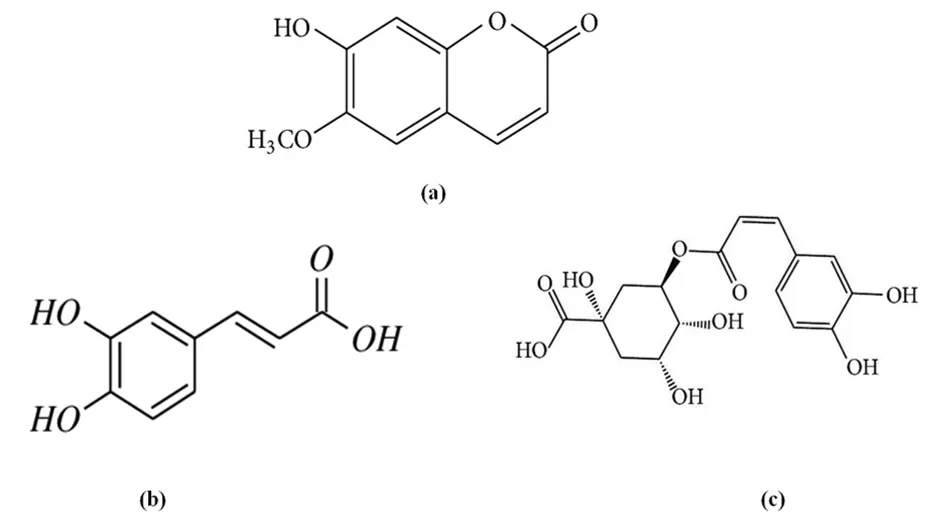
Figure 1: Chemical Structures of scopoletin(a), caffeic acid(b) and chlorogenic acid(c)
The chemical stability of marker compounds is an important consideration during phytochemical analysis because degradation may alter their concentration and generate degradation-related species, thereby affecting analytical reliability and quality evaluation. Forced degradation studies expose compounds to acidic, alkaline, oxidative, thermal, and photolytic stress conditions to investigate their intrinsic stability, identify degradation-prone conditions, and evaluate their behaviour under different environmental stresses. Information obtained from these studies is valuable for analytical method evaluation, impurity profiling, formulation development, storage recommendations, and pharmaceutical quality assurance [9-11].
Although chromatographic techniques are effective for monitoring degradation, they provide limited information regarding the molecular characteristics of degradation-related species. Liquid chromatography coupled with mass spectrometry (LC–MS) overcomes this limitation by combining chromatographic separation with molecular mass determination, enabling the detection of parent compounds together with degradation-related ions [19-23]. Previous LC–MS studies have established the characteristic molecular ions, mass spectral characteristics, and fragmentation behavior of chlorogenic acid, caffeic acid, and related hydroxycinnamate derivatives, providing valuable reference data for interpreting ions generated during degradation studies [13-16,30,31]. Consequently, LC–MS has become an important complementary analytical technique for investigating degradation behaviour and facilitating the tentative characterization of degradation-related ions.
Although chromatographic methods have been reported for the determination of chlorogenic acid, caffeic acid, scopoletin, and related phenolic compounds, studies specifically integrating forced degradation of these marker compounds with LC–MS characterization of degradation-related ions remain limited [5,7,8,12]. Therefore, the present study was undertaken to investigate the degradation behaviour of chlorogenic acid, caffeic acid, and scopoletin under acidic, alkaline, oxidative, thermal, and photolytic stress conditions using RP-HPLC, followed by LC–MS characterization of the resulting degradation-related ions.The findings of this study provide valuable analytical information for understanding the degradation behaviour of these representative phytochemical markers and may support future quality evaluation and stability studies of Solanum nigrum and related herbal formulations.
MATERIALS AND METHODS:
1. Materials
1.1 Chemicals, Reagents and Reference Standards
HPLC-grade methanol and acetonitrile, and analytical-grade sodium hydroxide (NaOH), were procured from Rankem (Avantor Performance Materials India Ltd., India). HPLC-grade water was obtained using a Milli-Q water purification system. Diethylamine (DEA), hydrochloric acid (HCl), and hydrogen peroxide (H₂O₂) were procured from LOBA Chemie Pvt. Ltd., India. Orthophosphoric acid (H₃PO₄) was obtained from Expersolv Ltd., while formic acid was procured from Fisher Chemicals. Certified reference standards of chlorogenic acid and scopoletin were procured from LGC Dr. Ehrenstorfer, whereas the caffeic acid reference standard was procured from Natural Remedies Pvt. Ltd., India.
1.2 Instrumentation
RP-HPLC analysis was performed using an Agilent 1260 Infinity II system equipped with a quaternary pump, autosampler, column oven, and diode array detector (DAD), controlled through OpenLab CDS software (Agilent Technologies, USA). LC–MS analysis was carried out using a Shimadzu LCMS-8045 system equipped with an electrospray ionization (ESI) source and operated using LabSolutions software (Shimadzu Corporation, Japan). UV spectral analysis was performed using a Shimadzu UV-1800 UV–Visible spectrophotometer.
2.1 Preparation of Standard Solution
Individual stock solutions of chlorogenic acid, caffeic acid, and scopoletin (500 μg mL⁻¹) were prepared separately by accurately weighing 50 mg of each reference standard, dissolving in methanol, and diluting to 100 mL in volumetric flasks. A composite working standard containing 50 μg mL⁻¹ of each analyte was prepared by transferring 5 mL of each stock solution into a 50 mL volumetric flask and diluting to volume with methanol.
2.2. LC–MS Conditions
Liquid chromatography–mass spectrometry analysis was performed using a Shimadzu LCMS-8045 system equipped with an electrospray ionization (ESI) source. Chromatographic separation was achieved using an isocratic mobile phase consisting of 0.1% formic acid in water (mobile phase A) and methanol (mobile phase B) (50:50, v/v) at a flow rate of 0.2 mL min⁻¹. The injection volume was 1 μL and the total run time was 2 min. Mass spectra were acquired in both positive and negative ionization modes using Q1 full-scan acquisition.
2.3 RP-HPLC Conditions
Chromatographic analysis was performed using an Agilent 1260 Infinity II HPLC system equipped with a diode array detector. Separation was achieved on a C18 analytical column (250 × 4.6 mm, 5 μm) using gradient elution. Mobile phase A consisted of water containing 0.1% (v/v) orthophosphoric acid and 0.1% (v/v) diethylamine, whereas mobile phase B consisted of acetonitrile. The flow rate was maintained at 1.0 mL min⁻¹, the column temperature at 25°C, and the injection volume at 5 μL. Detection was carried out at 325 nm, and the total run time was 50 min.
2.4 Forced Degradation Studies
The composite standard solution containing 50 μg mL⁻¹ each of chlorogenic acid, caffeic acid, and scopoletin was subjected to acidic (0.1 N HCl, 60°C for 30 min), alkaline (0.1 N NaOH, room temperature for 30 min), oxidative (3% H₂O₂, room temperature for 30 min), thermal (60°C for 24 h), and photolytic (UV light, 254 nm for 24 h) stress conditions. Following acidic and alkaline degradation, the stressed solutions were neutralized with an equivalent volume of the corresponding base or acid. All stressed samples were subsequently filtered through a 0.45 μm membrane filter prior to RP-HPLC analysis. The extent of degradation was evaluated by comparing the chromatographic peak areas of each stressed composite standard solution with those of the untreated composite standard solution, and the percentage degradation was calculated accordingly.
2.5 LC–MS Characterization of Stressed Sample
Following forced degradation, the stressed composite standard solutions were diluted with methanol–water (50:50, v/v) to obtain a final concentration of approximately 1 μg mL⁻¹ prior to LC–MS analysis. The diluted samples were analyzed under the LC–MS conditions described in Section 2.2. The observed m/z values of the parent analytes and degradation-related ions were compared with published literature for the tentative characterization of degradation-related species.
RESULTS AND DISCUSSION:
3.1 LC–MS Characterization of Forced Degradation Samples
Following exposure of the composite standard to acidic, alkaline, oxidative, thermal, and photolytic stress conditions, the stressed samples were analysed by LC–MS in both positive and negative electrospray ionization modes. Representative positive- and negative-ion mass spectra obtained under the different stress conditions are presented in (Figures 2 and 3), while the detected ions and their tentative assignments are summarized in (Tables 1 and 2).
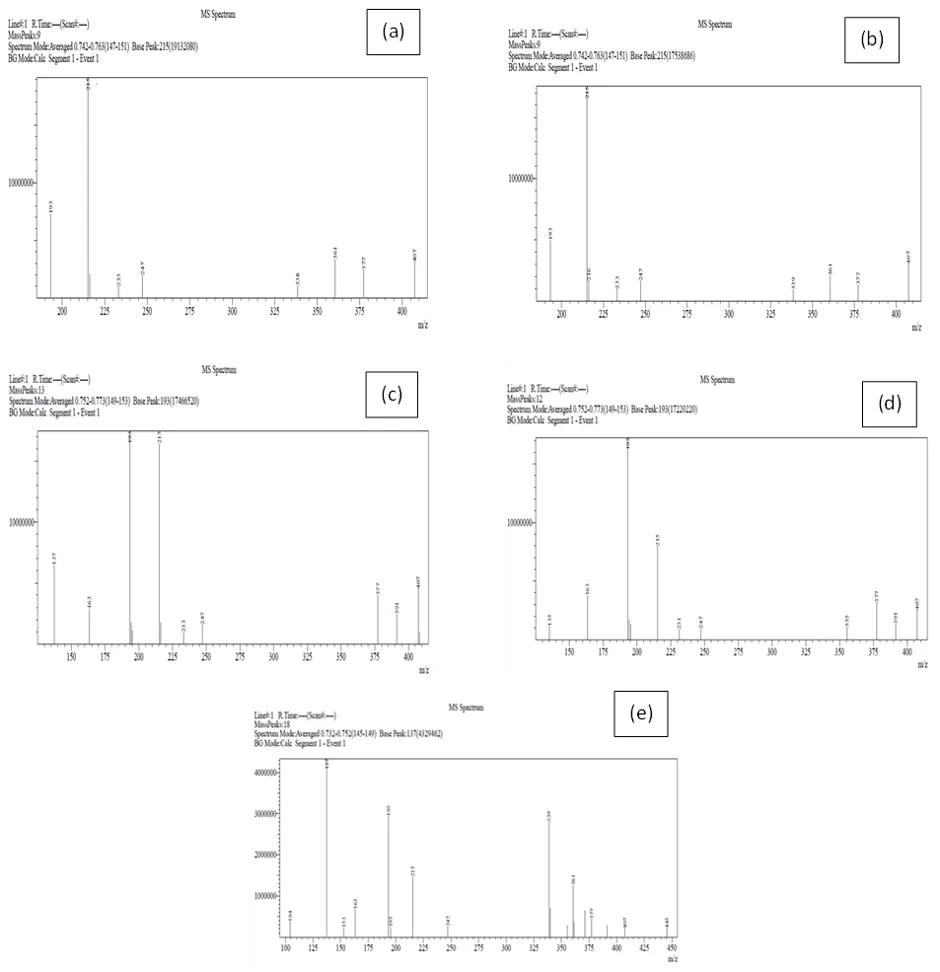
Figure 2: Representative LC–MS spectra (Positive(+)scan) of stressed samples (a)Acidic, (b)Alkaline , (c)Oxidative, (d)Thermal and (e)Photolytic
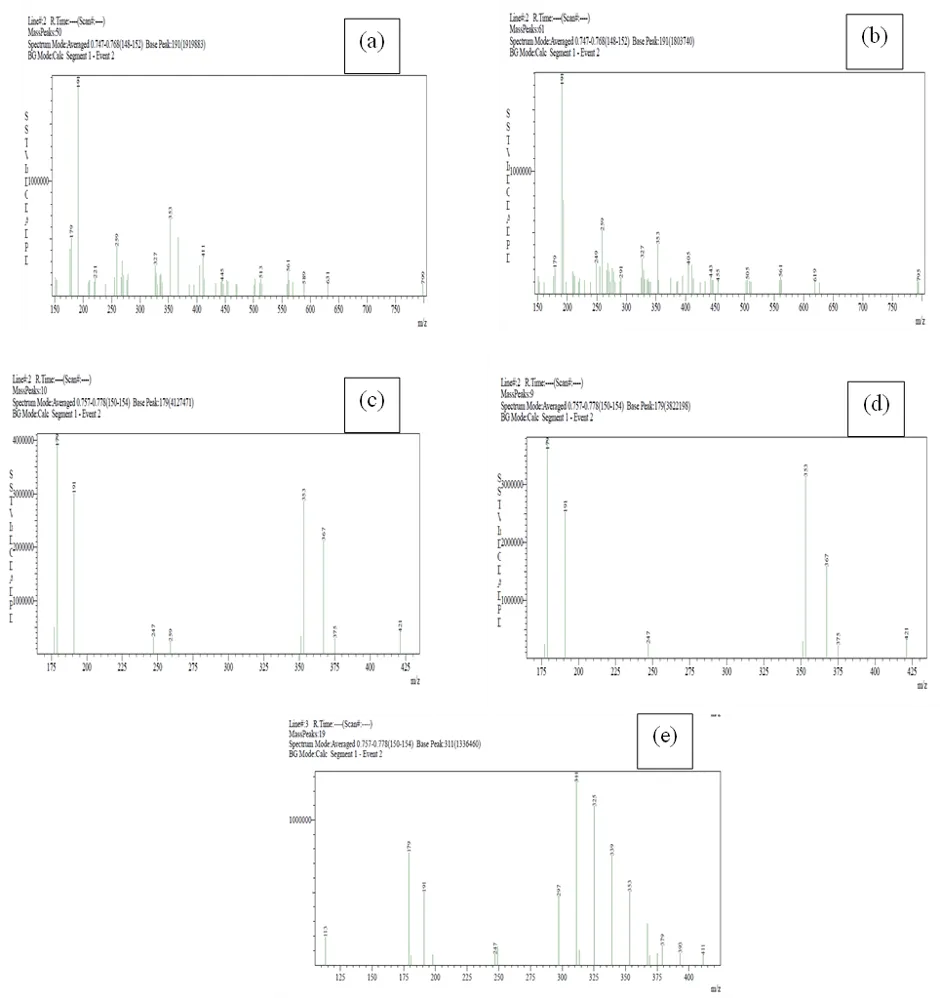
Figure 3: Representative LC–MS spectra (Negative(-)scan) of stressed samples (a)Acidic, (b)Alkaline , (c)Oxidative, (d)Thermal and (e)Photolytic
Table 1: LC–MS characterization of ions detected under different stress conditions
|
Stress Condition |
Positive Ion Scan (m/z) |
Negative Ion Scan (m/z) |
LC–MS Observation |
|
Acidic (0.1N HCl) |
193, 215, 233, 247, 338, 361, 377, 407 |
179, 191, 221, 259, 327, 353, 411, 445, 513, 561, 589, 631, 799 |
Parent analytes detected together with additional ions |
|
Alkaline (0.1N NaOH) |
193, 215, 216, 233, 247, 339, 361, 377, 407 |
179, 191, 249, 259, 291, 327, 353, 405, 443, 455, 505, 561, 619, 795 |
Highest number of additional ions observed |
|
Oxidative (3% H₂O₂) |
137, 163, 193, 215, 233, 247, 377, 391, 407 |
179, 191, 247, 259, 353, 367, 375, 421 |
Parent analytes and additional ions detected |
|
Thermal (60°C, 24 h) |
135, 163, 193, 215, 231, 247, 355, 377, 391, 407 |
179, 191, 247, 353, 367, 375, 421 |
Parent analytes remained detectable with additional ions |
|
Photolytic (UV, 24 h) |
104, 137, 153, 163, 193, 195, 215, 247, 339, 361, 377, 407, 445 |
113, 179, 191, 247, 297, 311, 325, 339, 353, 379, 393, 411 |
Parent analytes detected together with several additional ions |
Table 2: Tentative Proposed Structures of Major m/z Ions Detected in Forced Degradation Samples by LC–MS
|
Observed m/z |
Tentative Proposed Ion Assignment |
Tentative Proposed Structure |
|
179 |
Caffeic acid [M−H]⁻ |
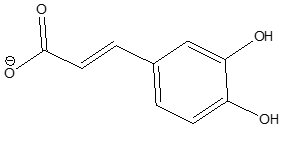
|
|
191 |
Quinic acid-related ion |

|
|
353 |
Chlorogenic acid [M−H]⁻ |

|
|
135 |
Tentative decarboxylated caffeic acid fragment ion |

|
|
137 |
Tentative low-molecular-weight phenolic fragment ion |

|
|
163 |
Tentative hydroxycinnamate-related fragment ion |

|
|
193 |
Tentative oxidized caffeic acid-related ion |

|
|
215 |
Tentative hydroxylated Ferulic acid |

|
|
231–247 |
Tentative chlorogenic acid-derived fragment ions |

|
|
297 |
Tentative chlorogenic acid-related ion |

|
|
311 |
Tentative oxidized chlorogenic acid-related ion |

|
|
339 |
Tentative dehydrated chlorogenic acid-related ion |

|
|
361–367 |
Tentative hydroxylated chlorogenic acid-related ions |

|
The characteristic molecular ions corresponding to chlorogenic acid (m/z 353) and caffeic acid (m/z 179) were consistently detected in the negative-ion spectra of the stressed samples. In addition, an ion at m/z 191, commonly associated with quinic acid-related species, was observed under several stress conditions. The continued detection of these characteristic ions indicated that the parent marker compounds remained detectable following exposure to all applied stress conditions. Representative LC–MS spectra of the acidic, alkaline, oxidative, thermal, and photolytic samples also revealed the presence of several additional ions, suggesting the formation of degradation-related species during stress treatment.
Besides the characteristic ions, several lower- and higher-molecular-weight ions were detected under different stress conditions. Among these, m/z 135 and 163 were observed in thermal and oxidative stress samples and are tentatively associated with degradation fragments of caffeic acid or related hydroxycinnamate derivatives. The ion at m/z 137 was detected predominantly under oxidative and photolytic conditions and may represent a low-molecular-weight phenolic degradation product. Additional ions including 193, 215, 231–247, 249, 259, 291, 297, 311, 325, 327, 338–339, 355, 361, 367, 375, 377, 379, 391, 393, 405, 407, 411, 421, and 443–799 were detected in different stressed samples, indicating the formation of multiple degradation-related species.
Among the investigated stress conditions, the alkaline-stressed sample exhibited the largest number of additional ions, while the acidic-stressed sample also showed numerous degradation-related ions. In contrast, oxidative, thermal, and photolytic stress generated comparatively fewer additional ions. The occurrence of ions over a broad m/z range suggests that multiple degradation pathways contributed to the formation of degradation-related species under the investigated stress conditions.
The observed m/z values were interpreted by comparison with previously reported LC–MS data for chlorogenic acid, caffeic acid, scopoletin, and related hydroxycinnamate compounds, enabling the tentative assignment of the detected ions presented in Table 2.
Overall, LC–MS characterization demonstrated that all stress conditions generated degradation-related ions while the characteristic ions of the parent analytes remained detectable. These findings provide valuable molecular-level information regarding the degradation behaviour of chlorogenic acid, caffeic acid, and scopoletin under the investigated stress conditions.
3.2 Forced Degradation Behaviour of Chlorogenic Acid, Caffeic Acid and Scopoletin
Forced degradation studies were performed to investigate the degradation behaviour of chlorogenic acid, caffeic acid, and scopoletin under acidic, alkaline, oxidative, thermal, and photolytic stress conditions. Representative chromatograms obtained following each stress treatment are presented in (Figure 4), while the percentage degradation observed under the investigated stress conditions is summarized in (Table 3).
Table 3: Percentage degradation of chlorogenic acid, caffeic acid, and scopoletin under different stress conditions
|
Stress condition |
Chlorogenic acid (% degradation) |
Caffeic acid (% degradation) |
Scopoletin (% degradation) |
|
Acidic (0.1 N HCl) |
11.20 |
10.59 |
9.15 |
|
Alkaline (0.1 N NaOH) |
16.13 |
20.86 |
18.54 |
|
Oxidative (3% H₂O₂) |
0.42 |
1.89 |
12.18 |
|
Thermal (60°C, 24 hr) |
1.77 |
0.52 |
7.78 |
|
Photolytic(UV light, 24 hr) |
1.59 |
0.72 |
1.54 |
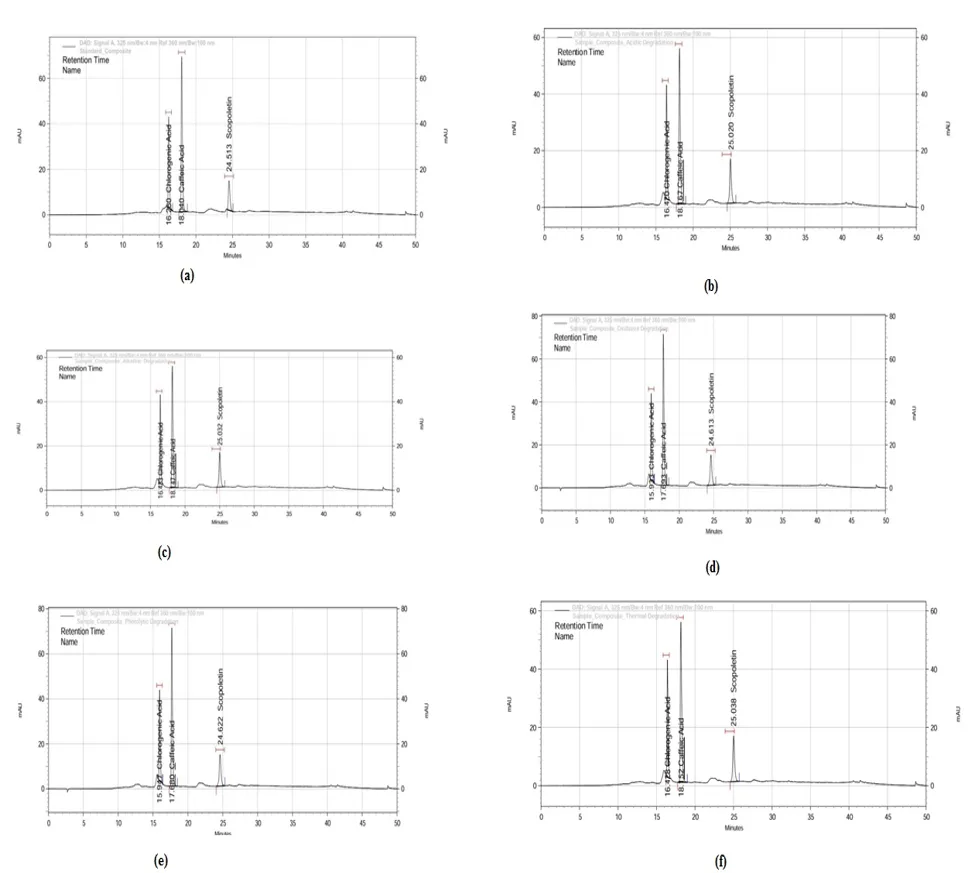
Figure 4. Representative RP-HPLC chromatograms of (a) Composite standard, (b) Acidic, (c) Alkaline, (d) Oxidative, (e) Photolytic, and (f) Thermal degradation.
The three marker compounds exhibited distinct degradation profiles under the investigated stress conditions (Table 3). Among the applied stress conditions, alkaline treatment produced the highest degradation of chlorogenic acid (16.13%), caffeic acid (20.86%), and scopoletin (18.54%), indicating that all three marker compounds were more susceptible to alkaline stress than to the other stress conditions. This observation was corroborated by the LC–MS results, where the alkaline-stressed sample exhibited the largest number of additional ions (Table 1). Comparison of the observed m/z values with previously reported LC–MS data enabled the tentative assignment of characteristic and degradation-related ions, and the corresponding tentative proposed fragment ions and structures are presented in (Table 2). Collectively, the higher percentage degradation observed by RP-HPLC, together with the increased number of detected LC–MS ions and their tentative proposed structures, indicates more extensive chemical transformation under alkaline stress than under the other investigated stress conditions.
Acidic stress also resulted in measurable degradation of all three analytes, with degradation values ranging from 9.15% to 11.20%, accompanied by the detection of several additional LC–MS ions. In contrast, chlorogenic acid and caffeic acid exhibited comparatively limited degradation under oxidative, thermal, and photolytic stress conditions, whereas scopoletin showed comparatively greater susceptibility to oxidative (12.18%) and thermal (7.78%) stress. The LC–MS observations and the corresponding tentative proposed structures further complemented the RP-HPLC results by providing molecular-level information on the degradation-related species formed under the investigated stress conditions.
The chromatograms obtained after stress treatment (Figure 4) showed that the chromatographic peaks corresponding to chlorogenic acid, caffeic acid, and scopoletin remained clearly distinguishable under all investigated stress conditions. The percentage degradation determined by RP-HPLC demonstrated that alkaline treatment produced the greatest degradation of all three marker compounds, whereas oxidative, thermal, and photolytic stress resulted in comparatively lower degradation. These findings were in agreement with the LC–MS results, where the alkaline-stressed sample exhibited the largest number of additional ions, while oxidative, thermal, and photolytic stress generated comparatively fewer ions.The complementary information obtained from RP-HPLC and LC–MS provides a comprehensive understanding of the degradation behaviour of the selected marker compounds under the investigated stress conditions.
Overall, the forced degradation study demonstrated that chlorogenic acid, caffeic acid, and scopoletin exhibit different degradation behaviours under the investigated stress conditions, with alkaline hydrolysis producing the greatest extent of degradation. These findings provide useful information regarding the relative degradation behaviour of the selected phytochemical markers and establish a chromatographic basis for the subsequent LC–MS characterization of degradation-related ions.
CONCLUSION
The present study systematically investigated the degradation behaviour of a composite analytical standard containing chlorogenic acid, caffeic acid, and scopoletin under acidic, alkaline, oxidative, thermal, and photolytic stress conditions using a combined RP-HPLC and LC–MS approach. Among the investigated stress conditions, alkaline hydrolysis produced the greatest extent of degradation for all three marker compounds, whereas chlorogenic acid and caffeic acid exhibited comparatively limited degradation under oxidative, thermal, and photolytic conditions. In contrast, scopoletin demonstrated greater susceptibility to oxidative and thermal stress, indicating distinct degradation characteristics among the selected phytochemical markers.
LC–MS analysis provided complementary molecular-level information by confirming the characteristic ions of the parent analytes together with the formation of multiple degradation-related ions following stress treatment. Comparison of the observed m/z values with published literature enabled the tentative interpretation of several degradation-related ions; however, definitive structural confirmation was beyond the scope of the present investigation because product-ion (MS/MS) fragmentation experiments were not performed.
Overall, the combined application of RP-HPLC and LC–MS provided a comprehensive analytical strategy for evaluating the degradation behaviour of chlorogenic acid, caffeic acid, and scopoletin. The findings generated in this study contribute useful analytical information for the quality evaluation, degradation assessment, and future stability investigations of these reported phytochemical markers in Solanum nigrum and may also serve as a reference for similar phytochemical and herbal drug studies.
REFERENCES


Kriti Pandey, Vinay Naithani, Dr. Meenu Chaudhary, Forced Degradation Studies And LC-MS Characterization of a Composite Standard Containing Chlorogenic Acid, Caffeic Acid and Scopoletin: Implications for Quality Control of Solanum Nigrum-Based Herbal Products, Int. J. of Pharm. Sci., 2026, Vol 4, Issue 8, 1347-1359. https://doi.org/10.5281/zenodo.21839976
 10.5281/zenodo.21839976