

We use cookies to ensure our website works properly and to personalise your experience. Cookies policy
Arunai College Of Pharmacy, Tiruvannamalai – 606803, Tamil Nadu
Diabetes mellitus is a chronic metabolic disorder characterized by persistent hyperglycemia resulting from impaired insulin secretion, insulin resistance, or both. The increasing prevalence of diabetes has encouraged the search for safer and more effective plant-based therapeutic agents with minimal adverse effects. The present study aimed to evaluate the in vitro antidiabetic activity of hydroalcoholic extracts of Mimosa pudica and Clitoria ternatea, both individually and in combination, using the ?-amylase inhibition assay. The extracts were subjected to qualitative phytochemical screening and Fourier Transform Infrared (FTIR) spectroscopy to identify their major bioactive constituents and functional groups. Phytochemical analysis confirmed the presence of alkaloids, flavonoids, tannins, phenolic compounds, saponins, glycosides, and terpenoids, while FTIR analysis indicated the presence of alcohols, phenols, amines, aromatic compounds, and carbonyl groups. The ?-amylase inhibition assay demonstrated concentration-dependent inhibitory activity for all the test samples. However, the individual extracts exhibited greater inhibitory activity than the combined extract. The observed antidiabetic activity may be attributed to the presence of bioactive phytochemicals capable of inhibiting carbohydrate-digesting enzymes and reducing postprandial blood glucose levels. The findings suggest that Mimosa pudica and Clitoria ternatea possess promising in vitro antidiabetic potential as individual herbal agents. Further in vivo and clinical studies are required to validate their efficacy, safety, and therapeutic applications in diabetes management.
Diabetes mellitus is a chronic metabolic disorder characterized by high blood glucose levels due to insufficient insulin production or ineffective insulin action. Insulin is a hormone produced by the pancreas that helps glucose enter body cells to provide energy. When insulin is absent or does not function properly, glucose accumulates in the bloodstream, resulting in hyperglycemia.
The main types of diabetes are Type 1, Type 2, and gestational diabetes. Type 1 diabetes occurs when the body's immune system destroys insulin-producing cells, leading to complete insulin deficiency. Type 2 diabetes is the most common form and develops due to insulin resistance and reduced insulin production. Gestational diabetes occurs during pregnancy and may increase the risk of developing Type 2 diabetes later in life.
Common symptoms include frequent urination, excessive thirst, increased hunger, fatigue, blurred vision, slow wound healing, and unexplained weight loss. If not properly managed, diabetes can lead to complications affecting the heart, kidneys, eyes, nerves, and blood vessels.
Diagnosis is based on blood glucose tests such as fasting blood glucose, HbA1c, and oral glucose tolerance tests. Management involves maintaining normal blood sugar levels through a balanced diet, regular physical activity, blood glucose monitoring, oral antidiabetic medications, and insulin therapy when necessary. Proper management helps prevent complications and improves quality of life.
PLANT PROFILE:
Mimosa pudica:
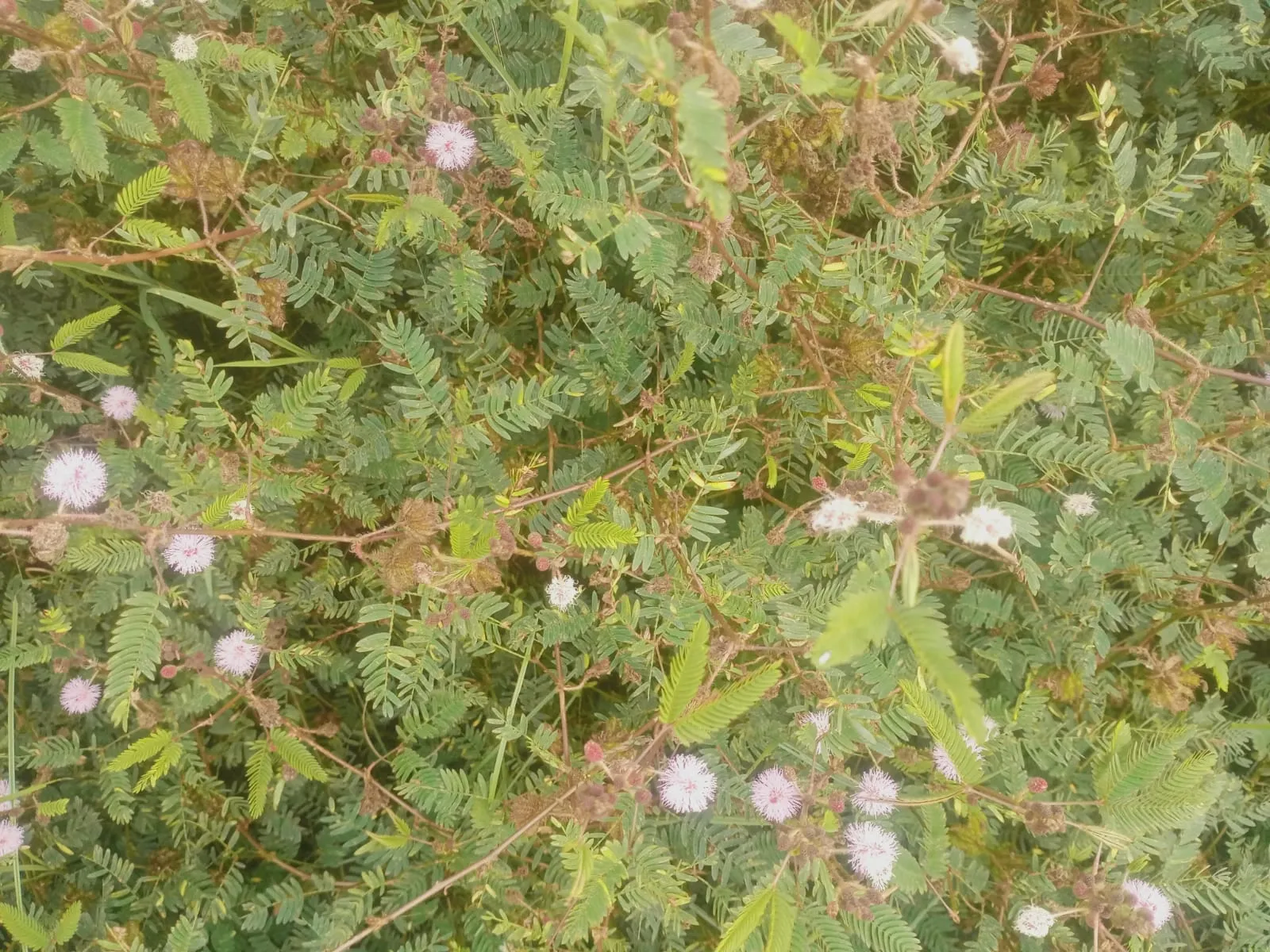
Common Names:
Sensitive plant, Touch-me-not, Sleepy grass, Action plant, Shame plant
Botanical Source:
Mimosa pudica L.
Family:
Fabaceae (Leguminosae)
Geographical Source:
Asia: India, Sri Lanka, South Asia
Southeast Asia: Thailand, Philippines, Indonesia
Africa: West Africa, Madagascar
Scientific Classification:
Parts Used:
• Leaves
Tamil Name:
Morphological Characters:
Texture and Size:
Chemical Constituents:
Pharmacological Activities:
Description:
Mimosa pudica is a creeping perennial herb from the Fabaceae family, widely known for its thigmonastic movement—its leaves fold rapidly when touched. It is commonly called the “touch-me-not” plant and is distributed across tropical regions.
Clitoria ternatea:
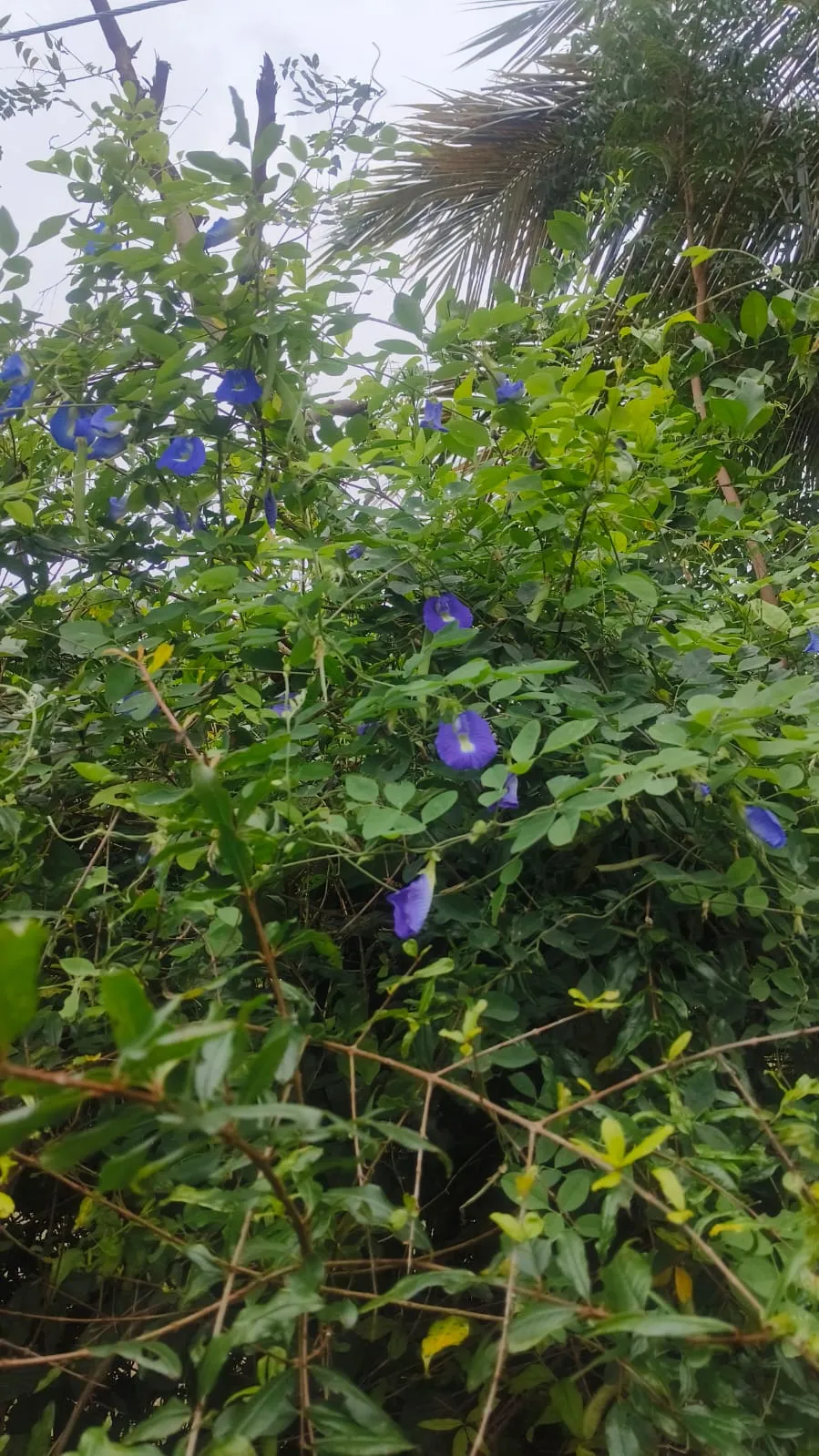
Common Names:
Butterfly pea, Blue pea, Asian pigeonwings, Bunga Telang
Scientific name:
Clitoria ternatea
Family:
Fabaceae (Leguminosae)
Geographical Source:
• Native to tropical Asia, particularly India.
• Widely distributed throughout South and Southeast Asia including Sri Lanka, Thailand,
Malaysia, Indonesia and the Philippines.
• Also found in tropical regions of Africa and Australia.
Parts Used:
• Leaves
Tamil Names:
• Sangu pushpam
• Sangu poo ilai
Scientific Classification:
• Kingdom: Plantae
• Phylum: Tracheophyta (Magnoliophyta)
• Class: Magnoliopsida
• Order: Fabales
• Family: Fabaceae
• Genus: Clitoria
• Subfamily: Faboideae
Morphological Characters:
• Shape: Ovate to elliptic
• Surface: Glabrous on upper surface and slightly pubescent on lower surface
• Colour: Bright to dark green
• Odour: Very subtle, mild faint scent
• Taste: Mild, earthy, slightly grassy
Texture and Size:
• Texture: Soft and thin, sometimes slightly hairy
• Length: 2–5 cm
• Width: 1.5–3 cm
Chemical Constituents:
• Flavonoids
• Anthocyanin glycosides
• Terpenoids
• Steroids
• Tannins
• Proteins
Authentificated by: Dr.J.Suresh Kumar.
Pharmacological Uses:
• Improves memory function
• Antioxidant activity
• Anti-inflammatory activity.
Authentifacted by: Dr. J. Suresh Kumar.
Description:
Clitoria ternatea is a perennial herbaceous plant belonging to the Fabaceae family. It is widely distributed in tropical and subtropical regions and is easily recognized by its vivid blue or white flowers. It is commonly known as butterfly pea and has been extensively used in traditional medicine systems such as Ayurveda.
The plant contains diverse phytoconstituents such as flavonoids, anthocyanins (especially delphinidins), alkaloids, and cyclotides. These compounds are responsible for their wide biological activities and medicinal importance.
MATERIALS AND METHOD:
1.1 COLLECTION OF PLANT:
Fresh plant material of Mimosa pudica and Clitoria ternatea was collected from a suitable location and thoroughly cleaned to remove adhering dirt and impurities. The material was shade-dried at room temperature for several days to preserve active phytoconstituents and prevent degradation caused by direct sunlight. After completing drying, the plant material was coarsely powdered using a mixer grinder and stored in a clean container for further use.
1.2 PREPARATION OF PLANT EXTRACT:
Extraction process of clitoria ternatea:
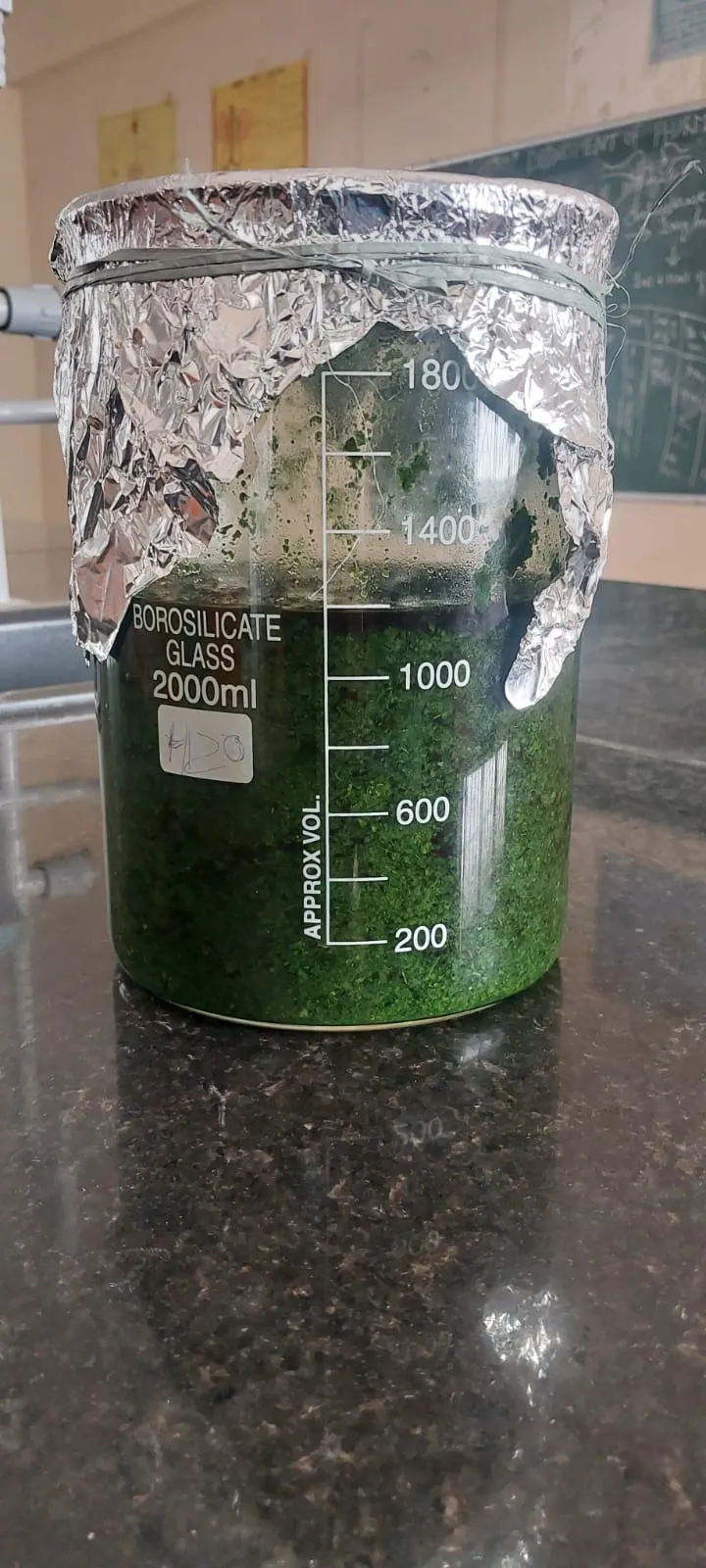
Approximately 100 g of the dried powder was accurately weighed and transferred into a clean, dry beaker. A hydroalcoholic solvent system was prepared using ethanol (700 mL) and distilled water (300 mL) and added to the powdered material to ensure complete immersion. The mixture was then subjected to maceration by keeping it covered at room temperature for 5–7 days, with occasional shaking or stirring to enhance the extraction of phytoconstituents into the solvent. After completion of the maceration process, the mixture was filtered using muslin cloth to separate the marc from the extract. The filtrate obtained was placed in a desiccator for slow evaporation of the solvent, which helps in preventing degradation of heat-sensitive constituents. A semi-solid extract was thus obtained, further dried, and stored in an airtight container for experimental use.
Extraction process of Mimosa pudica:
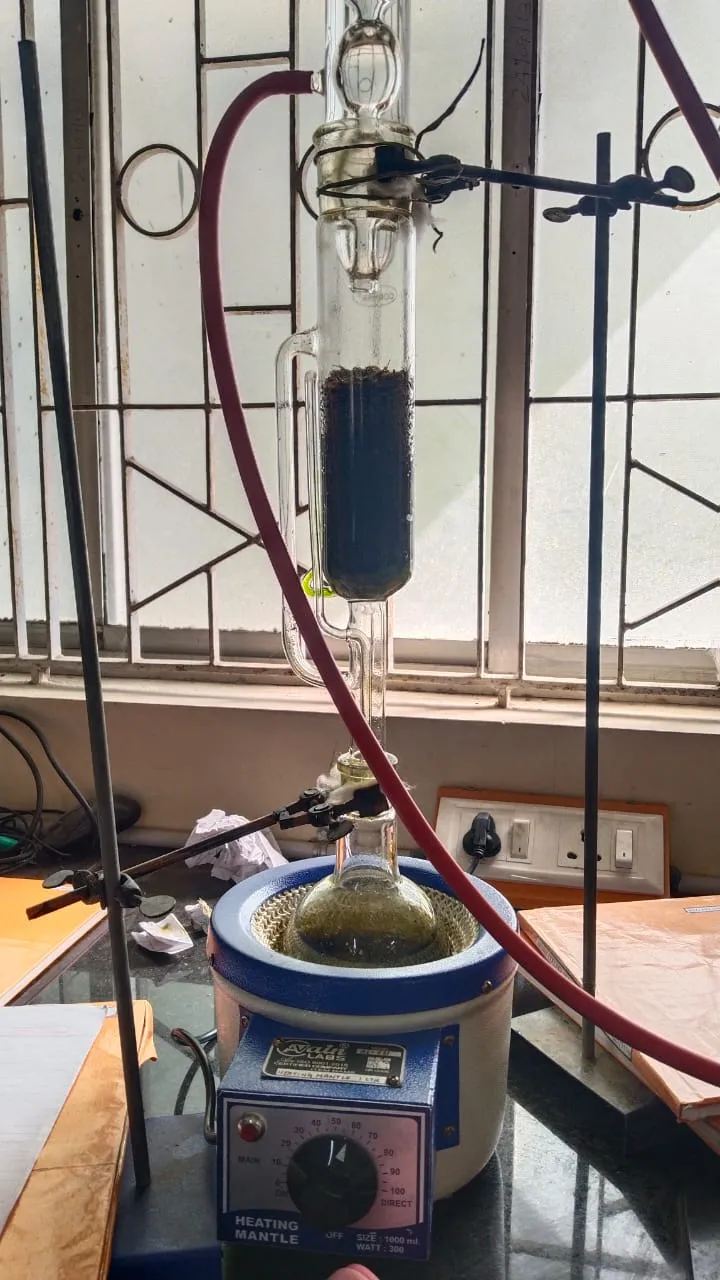
For extraction, about 60 g of the dried powdered material was accurately weighed and placed in the extraction chamber of the Soxhlet apparatus. A hydroalcoholic solvent mixture consisting of ethanol (175 mL) and single distilled water (75 mL) was prepared and taken in a round bottom flask attached to the Soxhlet extractor. The apparatus was assembled and heated on a heating mantle, allowing the solvent to boil, evaporate, and condense into the chamber containing the plant material, facilitating continuous extraction.
1.3 PHYTOCHEMICAL SCREENING:
A) Clitoria ternatea:
|
S.NO |
CHEMICAL CONSTITUENTS |
TEST |
ETHANOL
|
|
1. |
Alkaloids
|
Wagner’s test |
+ ve |
|
Dragendroff’s test |
+ ve |
||
|
2. |
Flavonoids |
Ferric chloride test |
+ ve |
|
Conc.H₂SO₄ |
+ ve |
||
|
3. |
Phenolic compound |
Ferric chloride test |
+ ve |
|
Iodine test |
+ ve |
||
|
4. |
Tannins test |
Bromine Water test |
+ ve |
|
Lead subacetate test |
+ ve |
||
|
5. |
Saponins test |
Foam test |
+ ve |
|
6. |
Anthocyanins test |
HCL test |
+ ve |
B) Mimosa pudica:
|
S.NO |
CHEMICAL CONSTITUENTS |
TEST |
ETHANOL
|
|
1. |
Alkaloids |
Dragendroff test |
+ ve |
|
Hager’s test |
+ ve |
||
|
2. |
Flavonoids |
Lead acetate test |
+ ve |
|
Ferric chloride test |
+ ve |
||
|
3. |
Saponins test |
Foam test |
+ ve |
|
Emulsification test |
+ ve |
||
|
Lead acetate test |
+ ve |
||
|
4. |
Glycosides |
Keller-killian test |
+ ve |
|
5. |
Terpenoids & steroids |
Salkowki test |
+ ve |
|
6. |
Tannins test |
Ferric chloride test |
+ ve |
|
Iodine test |
+ ve |
||
|
Ammonium hydroxide test |
+ ve |
||
|
Lead acetate test |
+ ve |
1.4 INFRARED SPECTROSCOPY:
In the procedure of infrared spectroscopy, the sample (solid, liquid, or gas) is first prepared appropriately (e.g., KBr pellet for solids or thin film for liquids). The IR radiation from a source is passed through the sample using an instrument such as a Fourier Transform Infrared (FTIR) spectrometer. Some wavelengths are absorbed while others pass through. The transmitted radiation is detected and converted into a spectrum of absorbance (or transmittance) versus wavenumber. The resulting spectrum is then analyzed to identify functional groups and molecular structure. The method is rapid, non-destructive, and requires minimal sample preparation.
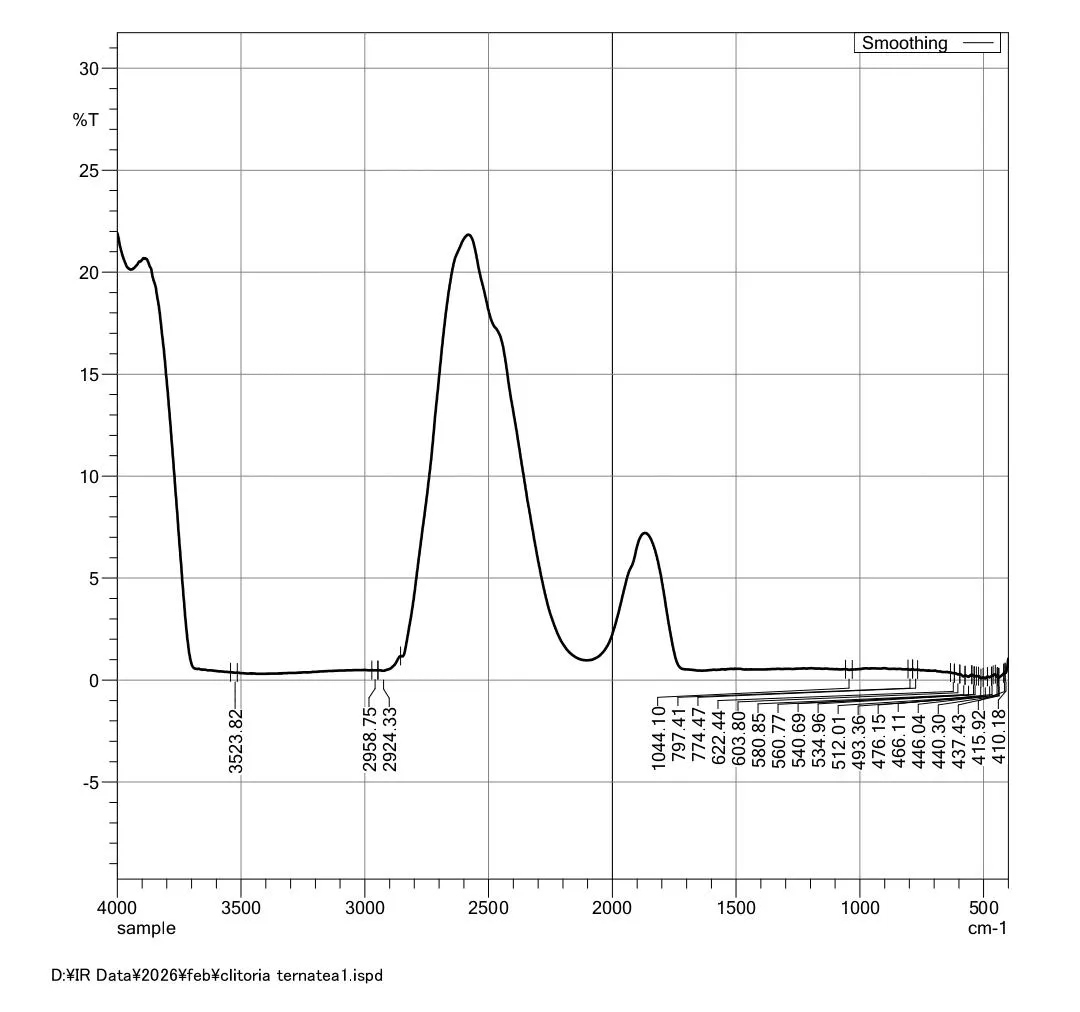
A. Clitoria ternatea
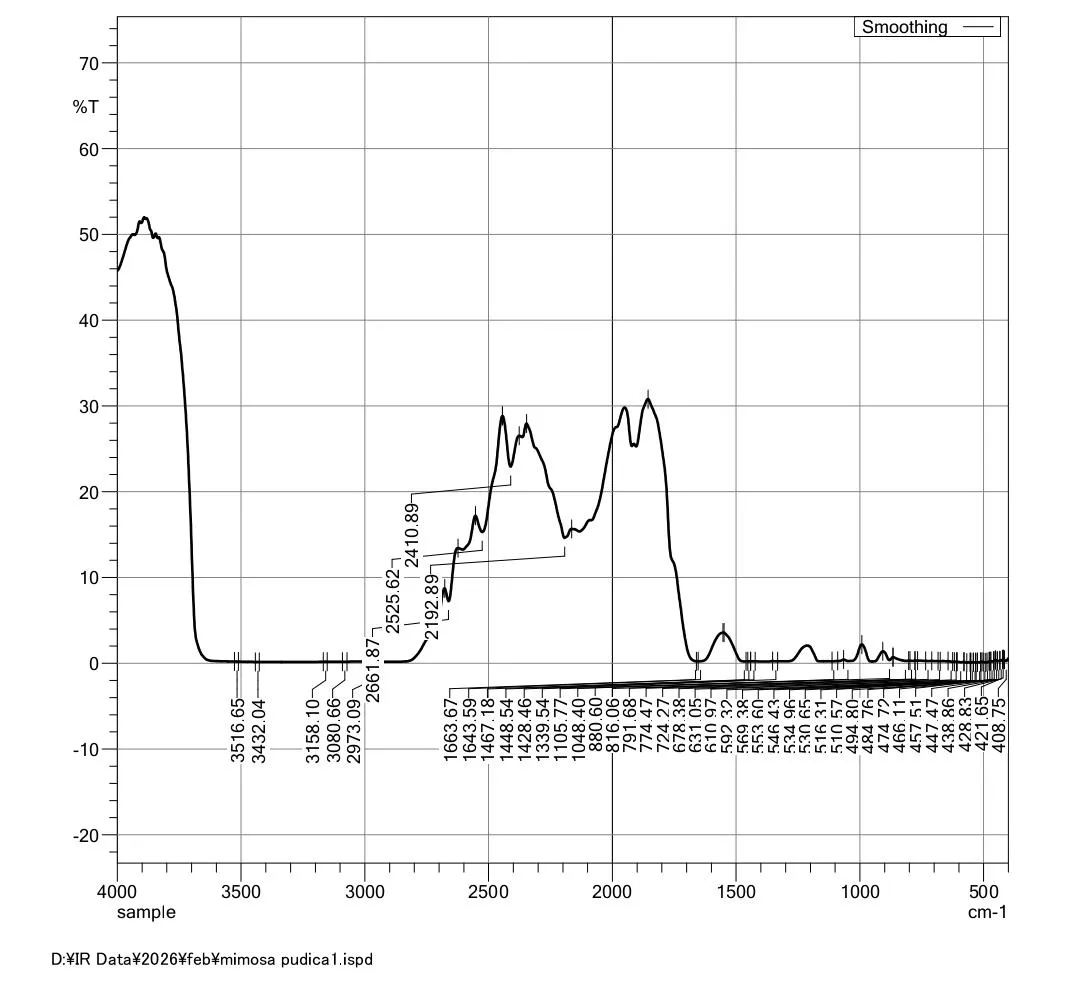
B. Mimosa pudica
IR Spectral Analysis – Clitoria ternatea
|
Wavenumber (cm⁻¹)
|
Functional Group |
Interpretation |
|
3523.82 |
O–H stretching |
Alcohols / Phenols |
|
2958.75,2924.33 |
C–H stretching |
Alkanes |
|
1044.19 |
C–O stretching |
Alcohol, ether |
|
791.47,774.47 |
C–H (bending) |
Aromatic |
|
622.44,603.80 |
C-Cl stretching |
Halogenated compounds |
|
580.85-410.18 |
C–Cl/C-Br stretching |
Halogen containing compounds |
IR Spectral Analysis – Mimosa pudica
|
Wavenumber (cm⁻¹)
|
| Functional Group |
Interpretation |
|
3516.65,3432.04 |
O–H stretching |
Phenols / Alcohols |
|
3158.10 |
N–H stretching |
Amines |
|
3080.66 |
=C-H stretching |
Aromatic compounds |
|
2973.09 |
C-H stretching |
Alkanes |
|
1663.67, 1643.59 |
C=C /C=O stretching |
Alkene /Aldehyde |
|
1467.17,1435.45 |
C–H bending |
Alkane |
|
1339.54 |
C-N stretching |
Amine |
|
1157.47,1048.40 |
C-O stretching |
Ether |
|
880.60 - 638.25 |
C-H bending |
Aromatic compounds |
1.5 METHODS:
Alpha-amylase is an enzyme that plays a crucial role in breaking or gantsms, including plants, animals, and microorganisms. Alpha-anylase down starch into simple Sugars like glucose and maltose, It is found in various activity can be influenced by factors lie temperature, pli and the presence of conditions like diabetes by siowing down the digestion of carbohydrates.certain metal ions, It is ai so target for inhibitors, which can be used to manage.
Principle:
Inhibiting alpha-amylase slows the breakdown of starch into glucose.
There by Reducing postprandial blood glucose spikes
BLANK:
Add 0.5ml of phosphate buffer solution
↓
Add 0.5ml of starch solution
↓
Incubate at 37 °C for 10 minutes
↓
1ml of DNS reagent
↓
Boil at 100°C for 5 minutes
↓
Makeup for 10ml with distilled water
↓
Measure absorbance at 540 nm
CONTROL:
Add 0.5 ml of α-amylase solution
↓
Add 0.5 ml of phosphate buffer solution
↓
Incubate at 37°C for 10 mins
↓
Add 0.5ml of starch solution
↓
Incubate at 37 °C for 10 minutes
↓
1ml of DNS reagent
↓
Boil at 100°C for 5 minutes
↓
Makeup for 10ml with distilled water
↓
Measure absorbance at 540 nm
STANDARD:
Add 0.5 ml of Acarbose solution
↓
Add 0.5 ml of α-amylase solution
↓
Add 0.5 ml of phosphate buffer solution
↓
Incubate at 37°C for 10 mins
↓
Add 0.5ml of starch solution
↓
Incubate at 37 °C for 10 minutes
↓
1ml of DNS reagent
↓
Boil at 100°C for 5 minutes
↓
Makeup for 10ml with distilled water
↓
Measure absorbance at 540 nm
TEST:
TEST FOR
200mcg/ml,400mcg/ml,600mcg/ml,800mcg/ml,1000mcg/ml
Add 0.5 ml of plant extract
↓
Add 0.5 ml of α-amylase solution
↓
Add 0.5 ml of phosphate buffer solution
↓
Incubate at 37°C for 10 mins
↓
Add 0.5ml of starch solution
↓
Incubate at 37 °C for 10 minutes
↓
1ml of DNS reagent
↓
Boil at 100°C for 5 minutes
↓
Makeup for 10ml with distilled water
↓
Measure absorbance at 540 nm
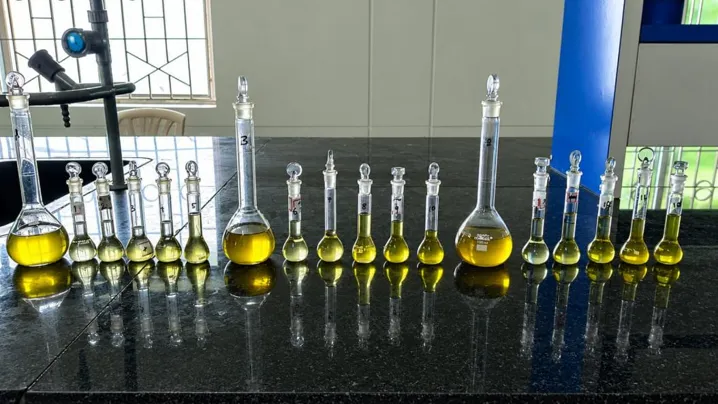
RESULT:
ALPHA-AMYLASE INHIBITION ASSAY REPORT
Table 1: Inhibition of Alpha-Amylase by Acarbose and clitoria ternatea
|
SAMPLE |
CONCENTRATION (μg/ml) |
ABSORBANCE (540nm) |
% INHIBITION |
|
Control |
--------- |
0.472 |
0% |
|
Acarbose |
|
0.227 |
51.90% |
|
Plant extract |
200 |
0.135 |
71.3% |
|
Plant extract |
400 |
0.130 |
74.2% |
|
Plant extract |
600 |
0.076 |
83.8% |
|
Plant extract |
800 |
0.456 |
47% |
|
Plant extract |
1000 |
0.450 |
42% |
Table 2: Inhibition of Alpha-Amylase by Acarbose and mimosa pudica
|
SAMPLE |
CONCENTRATION (μg/ml) |
ABSORBANCE (540nm) |
% INHIBITION |
|
Control |
--------- |
0.472 |
0% |
|
Acarbose |
|
0.227 |
51.90% |
|
Plant extract |
200 |
0.170 |
63.9% |
|
Plant extract |
400 |
0.159 |
66.3% |
|
Plant extract |
600 |
0.096 |
79.6% |
|
Plant extract |
800 |
0.095 |
53% |
|
Plant extract |
1000 |
0.090 |
46% |
Table 3: Inhibition of Alpha-Amylase by Acarbose and combined plant extract
|
SAMPLE |
CONCENTRATION (μg/ml) |
ABSORBANCE (540nm) |
% INHIBITION |
|
Control |
--------- |
0.472 |
0% |
|
Acarbose |
|
0.227 |
51.90% |
|
Plant extract |
200 |
0.121 |
74.3% |
|
Plant extract |
400 |
0.133 |
71.8% |
|
Plant extract |
600 |
0.143 |
69.7% |
|
Plant extract |
800 |
0.109 |
63.3% |
|
Plant extract |
1000 |
0175 |
62.9% |
CALCULATION FORMULA:
(Absorbance of control – Absorbance of test)
% Inhibitoin assay = ________________________________________ X 100Absorbance of control
OBSERVATION:
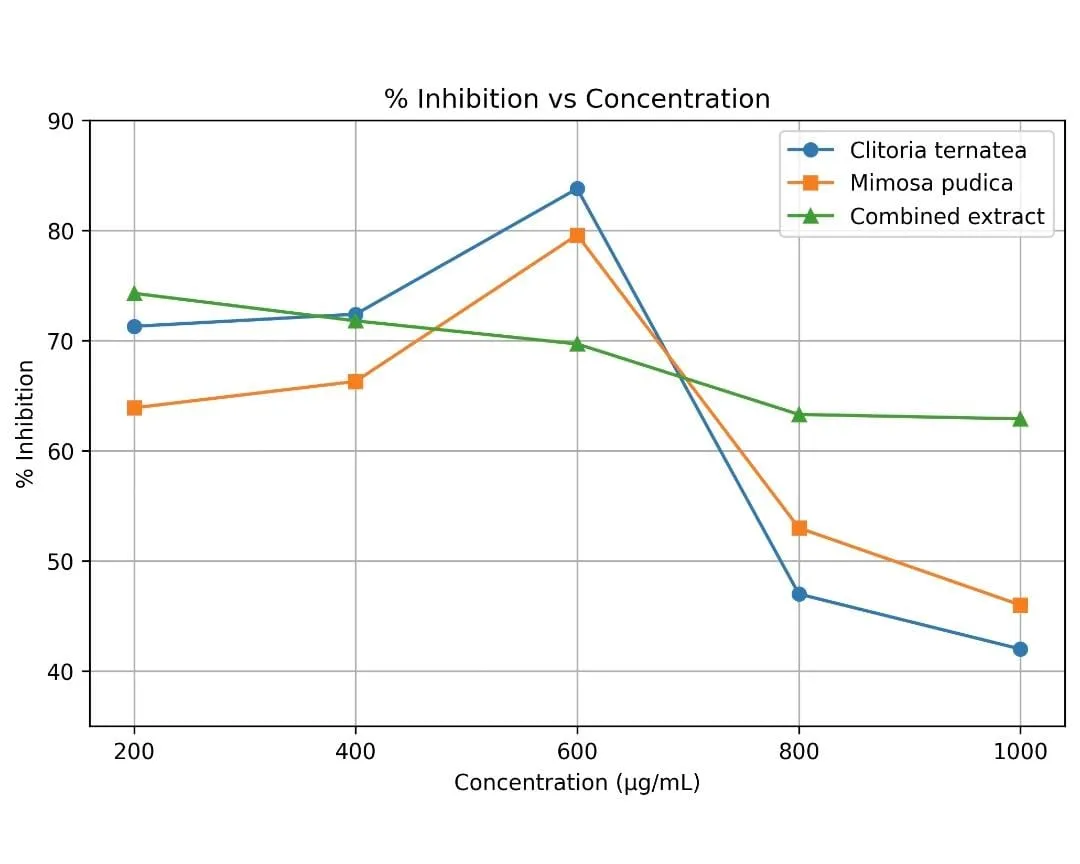
The standard drug Acarbose (100 µg/mL) showed 51.9% α-amylase inhibition. Among the individual extracts, Clitoria ternatea exhibited the highest inhibitory activity, reaching 83.8% at 600 µg/mL, while Mimosa pudica showed a maximum inhibition of 79.6% at the same concentration. In both extracts, the inhibitory activity decreased at higher concentrations (800 and 1000 µg/mL). The combined extract showed 74.3%, 71.8%, and 69.7% inhibition at 200, 400, and 600 µg/mL, respectively, followed by a further decline at higher concentrations. Overall, the individual extracts demonstrated greater α-amylase inhibitory activity than the combined extract.
DISCUSSION
The hydroalcoholic extracts of Clitoria ternatea and Mimosa pudica were evaluated for their in vitro antidiabetic activity using the α-amylase inhibition assay. Preliminary phytochemical screening and FTIR analysis confirmed the presence of bioactive compounds, including flavonoids, phenolics, alkaloids, tannins, saponins, and terpenoids, which are known to possess antidiabetic properties. Both individual extracts exhibited significant α-amylase inhibitory activity, with Clitoria ternatea (83.8%) and Mimosa pudica (79.6%) showing maximum inhibition at 600 µg/mL, exceeding the standard drug acarbose (51.9%). The combined extract also showed inhibitory activity but was less effective than the individual extracts. The observed enzyme inhibition is likely due to the presence of phenolic and flavonoid compounds, supporting the potential of these plants as natural antidiabetic agents.
CONCLUSION
The present study demonstrated that the hydroalcoholic extracts of Clitoria ternatea and Mimosa pudica possess significant in vitro antidiabetic activity through α-amylase inhibition. Phytochemical screening and FTIR analysis confirmed the presence of bioactive compounds that may contribute to this activity. Among the extracts, Clitoria ternatea showed the highest inhibitory activity (83.8%), followed by Mimosa pudica (79.6%), while the combined extract exhibited comparatively lower activity (69.7%). These findings suggest that the individual plant extracts have greater antidiabetic potential than the combined extract and may serve as promising natural sources for the development of safer antidiabetic agents.
REFERENCES


Dr. V. Suresh, Dr. S. K. Senthil Kumar, K. Divyavarshini. E. Elakkiyagan, A. Farzana, P. Geetha Priya, Combined Evaluation of Invitro Anti Diabetic Activity of Mmosa Pudica and Clitoria Ternatea by Alpha Amylase Inhibition Assay, Int. J. of Pharm. Sci., 2026, Vol 4, Issue 8, 241-252, https://doi.org/10.5281/zenodo.21772160
 10.5281/zenodo.21772160